

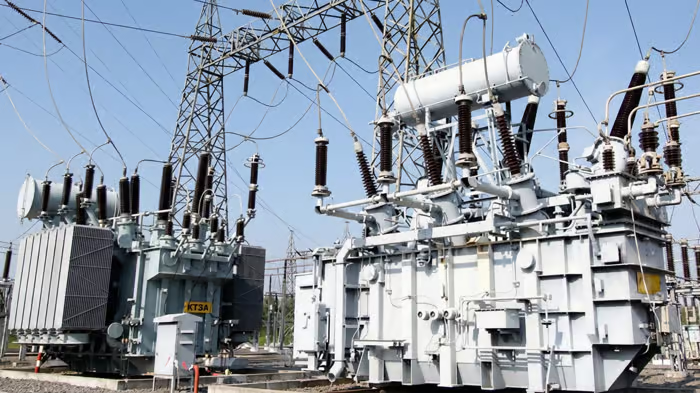

According to reporting by Premium Times, the Nigerian electricity supply has once again been thrown into total disarray following the collapse of the national power grid on Tuesday. This latest incident marks the second time in less than a week that the country has experienced a nationwide blackout, severely impacting economic activities and residential comfort across various states. Distribution companies, including those in Abuja and Eko, confirmed the loss of power supply, stating that they were awaiting technical resolution from the Transmission Company of Nigeria (TCN).
The recurring failure of the transmission system has sparked renewed concerns regarding the Federal Government’s ability to stabilize the energy sector. Analysts note that these frequent disturbances undermine industrial productivity and increase the cost of doing business as firms are forced to rely on expensive alternative energy sources. While the TCN typically attributes such collapses to technical “disturbances” or “system frequency fluctuations,” the lack of a permanent solution remains a point of contention for energy stakeholders.
The Daily Trust also confirmed the development, noting that “Nigeria’s electricity grid yesterday recorded its third collapse in a month,” highlighting a rapid decline in grid stability since the start of the year. Similarly, ThisDay reported on the widespread darkness, quoting an industry source who stated, “The national grid collapsed on Tuesday afternoon, leaving power supply across most of the country at near-zero levels.”
Echotitbits take: This frequent grid instability suggests deep-seated infrastructural decay that the 2026 budget allocations must address urgently. Watch for the Ministry of Power to provide a formal roadmap for grid decentralization, which experts argue is the only long-term solution to these recurring collapses.
Source: The Guardian – https://guardian.ng/news/national-grid-bounces-back-after-crashing-to-39mw/ January 28, 2026
Photo Credit: The Guardian