

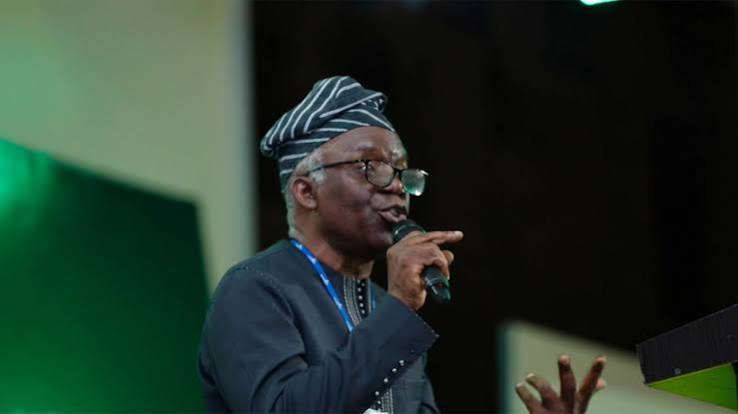

In an update published by Daily Post, human rights lawyer and Senior Advocate of Nigeria, Femi Falana, has asserted that the Economic and Financial Crimes Commission (EFCC) acts within existing legal parameters when freezing state government accounts. Falana clarified that anti-graft agencies retain statutory powers to impose temporary account restrictions provided judicial endorsement is secured.
Reacting to recent legal friction involving the Osun State Government account, Falana highlighted that the commission can apply a Post-No-Debit directive for up to 72 hours before obtaining an official court order. He emphasized that anti-corruption mandates remain active regardless of political calendars or pending elections.
The senior advocate cited established judicial precedents, including a landmark 2022 Court of Appeal judgment and a 2024 Supreme Court ruling, which affirmed the jurisdiction of federal anti-corruption agencies to investigate public funds at all levels of government. He noted that parties dissatisfied with current anti-corruption statutes should seek legislative amendments through the National Assembly.
Broadcasting on Channels Television, Falana elaborated on the legal framework, stating, “As far as the law is concerned, the EFCC has not acted illegally, provided it secures court validation within the statutory timeframe.” Concurrently, The Punch covered the development, reporting that Falana remarked, “We must be very careful not to give a dangerous impression that anti-graft agencies must suspend investigations simply because elections are near.”
Echotitbits take:
Falana’s legal intervention reinforces federal anti-graft jurisdiction over subnational finances, setting clear operational boundaries for state treasuries. Public administrators must navigate heightened compliance standards, while judicial challenges regarding temporary account freezes will shape federal-state fiscal friction.
Source: Punch – https://punchng.com/osun-account-freeze-efcc-acted-within-the-law-femi-falana/, August 7, 2026
Photo credit: The Guardian