Category: Banking

  • Banking Sector Crackdown: CBN Imposes Stiff Fines for Cheque Violations

    Banking Sector Crackdown: CBN Imposes Stiff Fines for Cheque Violations

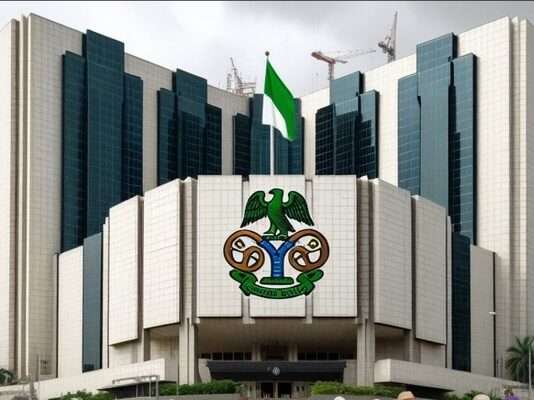
    Figures cited by Daily Post show that the Central Bank of Nigeria has introduced a new penalty regime for banks and printers found guilty of cheque-related violations. Under the new guidelines, infractions can now attract fines of up to N20 million, a significant increase from previous sanctions.

    Reporting by Daily Post indicates that the move is part of a broader effort to strengthen the integrity of the Nigerian payment system. The CBN is particularly concerned with the quality of cheque leaflets and the security features embedded in them, which are vital for preventing fraud and ensuring smooth interbank transactions.

    The apex bank warned that it would not hesitate to blacklist printers who fail to meet the required standards. Banks are also required to conduct more rigorous due diligence on their cheque clearing processes to protect customers from the rising wave of sophisticated financial crimes.

    Vanguard and ThisDay have verified the issuance of these new guidelines. Vanguard noted that “the policy aims to restore confidence in paper-based transactions,” while ThisDay quoted a banking executive stating, “these fines will force institutions to prioritize security over cost-cutting.”

    Echotitbits take: While the world is moving toward digital payments, cheques remain a staple for corporate transactions in Nigeria. This crackdown is a necessary evil to ensure the “old school” payment method doesn’t become the weakest link in the financial chain. Expect banks to pass on some of these compliance costs to corporate clients.

    Source: Channels TV – https://www.channelstv.com/2025/01/14/cbn-sanctions-banks-for-failing-to-dispense-cash-via-atms/, February 13, 2026

    Photo credit: Channels TV

  • First Bank Parent Company Slashes Bad Loans to Secure Long-Term Stability

    First Bank Parent Company Slashes Bad Loans to Secure Long-Term Stability

    In an update published by BusinessDay, FBN Holdings Plc, the parent entity of First Bank of Nigeria, witnessed its shares undergo the sharpest single-day decline in three months following a strategic decision to “clean” its books. The financial giant reported a significant impairment loss of N748 billion for the 2025 financial year, a move designed to write off legacy non-performing loans and align with stricter regulatory demands from the Central Bank of Nigeria.

    Despite the immediate hit to profitability, the bank’s leadership maintains that the gesture is a necessary “one-time pain” for long-term health. The chairman of the group noted that the underlying business remains robust, generating trillions in interest income, but admitted that the transparency regarding old bad debts was overdue. The market reaction has created a rare entry point for investors looking to buy into the country’s oldest commercial lender at a discount.

    The development was also extensively tracked by The ICIR and Premium Times. The ICIR highlighted the scale of the write-off, quoting an industry analyst who remarked, “You do not impair N748 billion in one year unless you are closing a messy chapter of the past.” Premium Times added that the move follows intense pressure from the apex bank, reporting that “the CBN is pushing banks to stop kicking problems down the road.”

    Echotitbits take: This “big bath” accounting strategy is a bold move by Femi Otedola’s leadership to de-risk the bank once and for all. While it hurts the current share price, it makes First Bank a much leaner and more transparent institution for future foreign investment. Expect other Tier-1 banks to follow suit if they have lingering legacy debts.

    Source: Vanguard – https://www.vanguardngr.com/2026/01/why-firstbank-wrote-off-n748bn-bad-loan-otedola/#google_vignette, February 3, 2026

    Photo credit: Vanguard

  • Nigerian Banks to Enforce Mandatory Tax ID for All Account Operations

    Nigerian Banks to Enforce Mandatory Tax ID for All Account Operations

    In an update published by Channels TV, Nigerian commercial banks have begun the full enforcement of mandatory Tax Identification Numbers (TIN) for both new and existing account holders. This policy, which stems from the new tax reforms, requires every individual and business to link their bank accounts with their tax records. Failure to comply will result in restricted access to banking services, including transfers and withdrawals, as the government seeks to widen the tax net and track illicit financial flows.

    The Central Bank of Nigeria (CBN) and the FIRS have collaborated on a unified platform that allows for real-time verification of tax IDs. Bank officials have urged customers to update their records immediately to avoid being locked out of the financial system. The policy is also aimed at identifying high-net-worth individuals who have previously evaded taxes while moving large sums of money through the banking sector.

    The enforcement was also documented by The Nation and Vanguard. The Nation reported that “banks have seen a surge in customers visiting branches to link their TINs,” while Vanguard noted that “the move is expected to significantly boost the government’s non-oil revenue.”

    Echotitbits take:

    This is the “no-escape” phase of Nigeria’s tax reform. By linking TIN to bank accounts, the government can now monitor income versus lifestyle in real-time. Watch for a rise in fintech usage and “under-the-mattress” cash holdings as some small businesses try to avoid the digital tax footprint.

    Source: Facebook – https://web.facebook.com/ReportYourself/posts/nigerian-govt-set-make-tax-identification-number-mandatory-for-bank-accounts-fro/1421006479380864/?_rdc=1&_rdr#, January 31, 2026

    Photo credit: Facebook

  • Local Currency Firms Up Against Dollar in Early 2026 Trading

    Local Currency Firms Up Against Dollar in Early 2026 Trading

    Local Currency Firms Up Against Dollar in Early 2026 Trading

    Figures cited by Vanguard show that the Nigerian Naira began the third week of January on a strong note, appreciating to approximately 1,418 per dollar in the official market. The move has been attributed to increased liquidity in the Nigerian Foreign Exchange Market (NFEM) and a drop in speculative demand. Analysts say the Central Bank’s efforts to clear outstanding obligations have restored some confidence among corporate buyers.

    In the parallel market, the currency also showed resilience, trading between 1,470 and 1,485 per dollar. Market watchers point out that the gap between official and street rates is narrowing—an objective of current monetary policy. Bureau De Change operators say typical New Year volatility has been tempered by a steady flow of diaspora remittances and improved oversight.

    The Guardian also reported that rate convergence is a positive signal for international investors. ThisDay quoted a financial analyst saying that improved transparency is contributing to market stability. The market remains optimistic that the Naira can hold its trajectory through the first quarter.

    Echotitbits take: Stability is the keyword. While 1,400+ remains a high level, reduced daily swings help businesses plan. The true stress-test will be sustaining liquidity without undue pressure on external reserves.

    Source: Reuters — https://www.reuters.com/world/africa/south-african-rand-firmer-ahead-local-inflation-data-2026-01-21/ (2026-01-23)

    Photo Credit: Reuters 2026-01-23

  • Alhamrani Universal, Stanchion Payments, INETCO Partner to Counter Payment Fraud Across Middle East

    Alhamrani Universal, Stanchion Payments, INETCO Partner to Counter Payment Fraud Across Middle East

    2026-01-21 09:00:00

    Alhamrani Universal, Stanchion Payments, INETCO Partner to Counter Payment Fraud Across Middle East

    Vancouver, Canada / Jeddah, Saudi Arabia — January 21, 2026

    Alhamrani Universal, a leading Saudi fintech solutions provider and the region’s largest ATM solution provider, has announced the deployment of INETCO BullzAI, an AI-powered cyber-fraud prevention platform, to strengthen payments security across the Middle East. The rollout is delivered through Stanchion Payments, INETCO’s global partner, as the three organizations position the initiative as a response to accelerating digital payments and increasingly sophisticated financial crime in the region.

    The companies said the deployment will provide real-time visibility into transactions across self-service terminals and digital payment channels, enabling Alhamrani Universal to validate terminal legitimacy, detect anomalies early, and protect transaction settlement workflows—an emphasis aligned with Saudi Arabia’s broader digital transformation agenda under Vision 2030.

    The announcement also pointed to heightened concern about cyber exposure across the Middle East’s financial services sector as cloud adoption and generative AI expand attack surfaces, referencing PwC’s 2025 Global Digital Trust Insights (Middle East) on breach impacts and costs.

    What INETCO BullzAI is expected to deliver

    • Real-time monitoring of every transaction with zero performance impact, improving visibility and helping identify unauthorized or unregistered terminals operating outside the licensed ecosystem.
    • Deeper payments intelligence using full transaction message-field access for flexible, no-code rule creation, behavioral modeling, and detailed reporting on volumes and terminal activity.
    • Rapid adaptation to evolving threats via self-training machine learning models that update after every transaction to detect emerging (“zero-day”) fraud patterns.
    • Pre-emptive blocking of high-risk activity through an AI-driven transaction firewall designed to stop attacks such as BIN attacks, malware, account takeovers, bot attacks, and card-present/card-not-present fraud without disrupting legitimate transactions.

    Echotitbits take: This partnership reflects a broader shift in payments security: fraud prevention is moving earlier in the transaction lifecycle—from post-incident investigation to real-time interdiction. The practical test will be measurable reduction in fraud losses and disputes, stronger compliance assurance, and improved settlement confidence without degrading customer experience.

    Source: Press Release (Alhamrani Universal / Stanchion Payments / INETCO) (2026-01-21)

  • Parallel Market Pressure Deepens as Naira Slides to ₦1,490 per Dollar

    Parallel Market Pressure Deepens as Naira Slides to ₦1,490 per Dollar

    According to Vanguard, the naira came under fresh pressure in the parallel market on Thursday, weakening to about ₦1,490/$—down from roughly ₦1,470/$ earlier in the week.

    Figures from the Nigerian Foreign Exchange Market (NFEM) also showed a mild softening in the official close, moving from about ₦1,416/$ to ₦1,421/$, widening the spread between official and street rates.

    Market watchers linked the renewed volatility to seasonal FX demand and speculative positioning, even as the central bank has continued to signal optimism around reserve buildup and longer-term convergence.

    **Echotitbits take:** The persistent gap between official and parallel rates remains a key credibility test for FX reforms. If liquidity at the retail end stays tight, expect more pressure on prices and confidence—watch closely for the CBN’s next market-facing intervention.
    Source: Guardian — https://guardian.ng/business-services/naira-eyes-n1300-at-parallel-market-as-speculators-offload-fx/ 2026-01-08

    Photo Credit: Guardian

  • CBN warns bank recapitalisation could crowd out other capital-market fundraising

    CBN warns bank recapitalisation could crowd out other capital-market fundraising

    Reporting by Punch indicates the Central Bank of Nigeria (CBN) is warning that the ongoing bank recapitalisation drive could tilt capital-market funding even more heavily toward banks, leaving other issuers struggling to attract investor attention.

    The concern is not that recapitalisation is unnecessary, but that liquidity could become concentrated in bank equity and related offers if multiple large fundraises hit the market around the same time.

    CBN’s outlook describes a generally bullish capital-market tone, but stresses that momentum can become fragile when one sector dominates deal flow, raising concentration risk.

    For corporates outside banking, the implication is tougher pricing and slower book-building if banks keep taking the front seat through 2026.

    Elsewhere, ThisDay quoted the apex bank warning the market could face “higher concentration risk” and that recapitalisation may “crowd-out other issuers.” Premium Times also noted the central bank’s caution that rising non-performing loans and concentration risks could weigh on growth outcomes.

    Echotitbits take: The sequencing of bank offers will matter. If multiple tier-1s fundraise in the same quarter, expect wider discounts and weaker demand for non-bank IPOs and bonds. Timing discipline and a deeper investor base are the pressure valves.

    Source: BusinessDay – https://businessday.ng/companies/article/cbn-sees-capital-market-extending-bullish-streak-on-bank-recapitalisation/ January 7, 2026
    BusinessDay  January 7, 2026

    Photo Credit: BusinessDay

  • Nigerian Capital Market Hits Historic ₦100 Trillion Milestone

    Nigerian Capital Market Hits Historic ₦100 Trillion Milestone

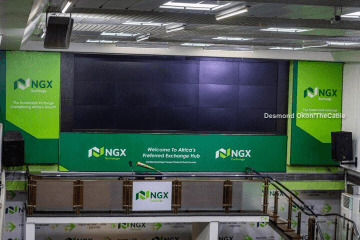
    Figures cited by Vanguard show that the Nigerian Exchange Limited (NGX) has crossed the ₦100 trillion market capitalization threshold for the first time in history. This unprecedented surge occurred during the opening sessions of the first week of 2026, driven by aggressive buying interest in blue-chip stocks. Analysts attribute this ‘January effect’ to renewed investor confidence in the federal government’s long-term economic stability measures.

    The rally reflects a significant shift in market sentiment as both domestic and institutional investors pivot toward high-yielding equity assets. Experts noted that the milestone is not merely a symbolic victory but a reflection of the deepening of the Nigerian financial sector, which has seen increased participation from local pension fund administrators and retail investors seeking a hedge against previous inflationary pressures.

    The development was also highlighted by The Nation and BusinessDay. The Nation reported that the ‘stock market capitalization hits ₦101 trillion,’ marking a rapid climb in valuation. Similarly, BusinessDay observed that ‘Nigeria crosses ₦100trn market cap on January effect,’ noting that the surge positions the NGX as a dominant force in sub-Saharan African capital markets.

    Echotitbits take: Hitting the ₦100 trillion mark is a psychological breakthrough for the Nigerian economy. It suggests that despite the hardships of 2025, the private sector is betting on a 2026 recovery. However, the concentration of wealth in a few blue-chip stocks means the government must work harder to ensure this liquidity trickles down to small and medium enterprises (SMEs).
    Guardian – https://guardian.ng/news/apc-draws-battle-line-with-wike-over-rivers-political-control/ January 6 2026

    Photo Credit: Guardian

  • Amaka Onwughalu Steps in as New Chairperson of Fidelity Bank Board

    Amaka Onwughalu Steps in as New Chairperson of Fidelity Bank Board

    According to The Guardian, Fidelity Bank Plc has officially transitioned its leadership, with Amaka Onwughalu assuming the role of Chairperson of the Board of Directors. She succeeds Mustafa Chike-Obi, whose highly successful tenure concluded on December 31, 2025. Onwughalu, a veteran with over three decades of experience in the banking sector, including senior roles at the former Mainstreet Bank and Skye Bank, is expected to lead the institution through its next phase of international expansion.

    The transition comes as the bank celebrates a period of significant growth, including the oversubscription of its recent public offer and its successful expansion into the United Kingdom market. The Board expressed confidence that Onwughalu’s deep expertise in risk management and corporate governance will sustain the bank’s upward trajectory and strengthen market confidence.

    This corporate update was also tracked by ThisDay and Leadership. ThisDay noted that ‘Onwughalu’s appointment aligns with the CBN’s guidelines on board diversity and tenure,’ while Leadership quoted an industry analyst who stated, ‘Replacing a titan like Chike-Obi is a tall order, but Onwughalu has the institutional memory to pull it off.’

    Echotitbits take: Fidelity Bank is currently one of the most aggressive ‘tier-2’ banks aiming for ‘tier-1’ status. Onwughalu’s primary challenge will be maintaining the digital innovation and Eurobond repayment momentum established by her predecessor. Watch for new retail banking products targeting the Nigerian diaspora in the UK under her leadership.
    Source: Fidelity Bank – https://www.fidelitybank.ng/fidelity-bank-appoints-onwughalu-as-chairman-following-completion-of-chike-obis-tenure/ January 5, 2026

    Photo Credit: Fidelity Bank

  • Fidelity Bank names Amaka Onwughalu board chair as governance changes continue

    Fidelity Bank names Amaka Onwughalu board chair as governance changes continue

    In an update published by Punch, Fidelity Bank announced the appointment of Amaka Onwughalu as board chair, a move aimed at strengthening corporate governance as the sector tightens oversight.

    The appointment comes amid heightened scrutiny of bank boards, risk management and capital adequacy, with stakeholders watching how leadership decisions translate into performance and compliance.

    Vanguard also reported the appointment, describing Onwughalu’s elevation as a notable board change at the lender. Punch’s report described the move as “appoints Onwughalu as board chair,” while Vanguard’s coverage similarly framed it as a chairmanship appointment.

    For investors, the practical signal will be follow-through: board composition, committee strength, and disclosures that show improved governance beyond titles.

    Echotitbits take: For investors, the practical signal will be follow-through: board composition, committee strength, and disclosures that show improved governance beyond titles.

    Source: The Punch — January 3, 2026 (https://www.google.com/amp/s/punchng.com/fidelity-bank-names-new-board-chairman-as-chike-obi-exits/%3famp)

    The Punch January 3, 2026

    Photo Credit: The Punch