Category: Business

  • ICPC Tracks 760 Road Projects for Possible Abandonment

    ICPC Tracks 760 Road Projects for Possible Abandonment

    The ICPC says it is monitoring 760 road projects across Nigeria to determine status, curb abandonment and strengthen accountability in capital-project delivery.

    The move signals tougher scrutiny of contract performance and value-for-money outcomes in public infrastructure.

    Source: Punch2025-12-08

  • NAFDAC warns on prohibited food imports

    NAFDAC warns on prohibited food imports

    Professor Mojisola Adeyeye
    Photo credit: mrctcenter.org

    NAFDAC has reiterated warnings against the importation of prohibited food items, stressing that offenders will face enforcement actions. The agency says the restrictions are tied to public-health safeguards and compliance with national food-safety standards. The warning fits into a broader posture of tightening border and market surveillance as regulators confront rising health risks linked to substandard and non-compliant consumables. (Source: The Punch, Dec 6, 2025.)

  • Osun LG funds: Supreme Court strikes out suit but faults FG action

    Osun LG funds: Supreme Court strikes out suit but faults FG action

    The Supreme Court has struck out Osun State’s suit seeking release of withheld local government allocations, ruling that the state attorney-general lacked standing to sue on behalf of the councils. However, reports indicate the Court also faulted the Federal Government’s withholding of the funds and reaffirmed the principle that allocations should be released directly to duly elected local governments. The judgment has sparked political reactions, including public commendation from Minister Adegboyega Oyetola, who described the ruling as reinforcing due process and local government autonomy. (Sources: The Punch, Premium Times, The Guardian, Dec 5–6, 2025.)

  • NEPZA seeks 10-year tax relief for SEZ operators

    NEPZA seeks 10-year tax relief for SEZ operators

    The Nigeria Export Processing Zones Authority (NEPZA) has urged the Federal Government to grant a 10-year tax relief for operators within Special Economic Zones, warning that failure to do so could weaken investor confidence and trigger disruptions across the free-zone ecosystem. The call comes as implementation of a new tax act approaches, with NEPZA framing the relief as a competitiveness tool to protect Nigeria’s FDI prospects amid rising global investment scrutiny. (Source: The Punch, Dec 6, 2025.)

  • Dangote to Nigerians: Stop buying Rolls-Royce, build industries

    Dangote to Nigerians: Stop buying Rolls-Royce, build industries

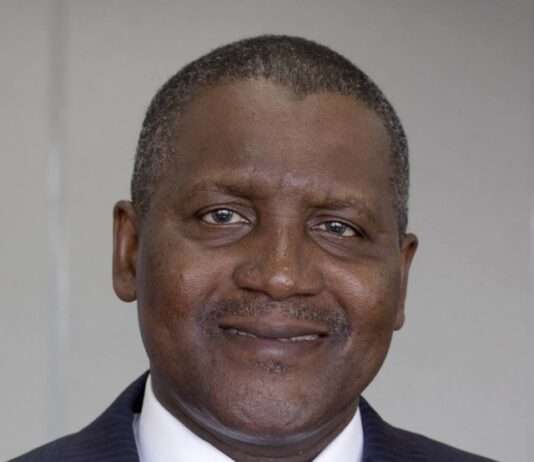
    After a meeting with President Tinubu, Aliko Dangote urged Nigeria’s wealthy class to channel spending away from luxury cars and private jets toward industrial investment that can drive growth and jobs. Punch reports that Dangote framed the call as a cultural and policy-era comparison, arguing that restrained elite consumption in earlier periods contrasted sharply with today’s conspicuous spending. He warned that capital tied up in prestige assets could be far more transformative if redirected into manufacturing and large-scale productive ventures. Source: Punch, December 7, 2025.

  • FG’s electronic transfer levy revenue doubles to N360bn

    FG’s electronic transfer levy revenue doubles to N360bn

    Federal revenue from the electronic money transfer levy hit about N360.29 billion between January and October 2025, more than doubling the comparable 2024 figure, according to an internal FIRS document cited by Punch. The year-on-year jump suggests increased taxable transfer volumes and/or stronger compliance, with the report noting monthly gains across the period. The data adds another angle to ongoing debates about the balance between broadening non-oil revenue and the public sensitivity around transaction-related taxes. Source: Punch, December 7, 2025.

  • Low offers halt sale of president’s jet

    Low offers halt sale of president’s jet

    The Federal Government has reportedly withdrawn Nigeria’s Presidential Boeing 737-700 Business Jet from an international sales listing after receiving offers deemed far below expectations. Sunday Punch cites senior presidency and security sources indicating that some bids were around $10 million, which officials considered inadequate for the 20-year-old aircraft. Aviation market logic mentioned in the report suggests older VIP jets attract fewer serious buyers, as high-net-worth purchasers often prefer newer airframes with stronger manufacturer support and updated bespoke interiors. Source: Punch, December 7, 2025.

  • Tinted Glass Permits: Why Nigerians Shouldn’t Pay Twice for One Car

    Tinted Glass Permits: Why Nigerians Shouldn’t Pay Twice for One Car


    Policeman checking vehicle particulars of a vehicle
    Policeman checking vehicle particulars of a vehicle

    For years, motorists in Nigeria have endured a frustrating ritual: registering their vehicles with the state licensing offices, only to be stopped on the highway by police officers demanding an additional permit for factory-fitted tinted glass. The irony is painful — every new vehicle, including those with tinted or shielded glass, is already captured in the National Vehicle Identification Scheme (NVIS), the centralized database managed by the Federal Road Safety Corps (FRSC). So why are Nigerians being compelled to re-register with the police?

    The answer lies not in necessity but in bureaucratic silos and institutional turf wars. By law, the Nigerian Police Force (NPF) retains the authority to issue tinted glass permits under the Motor Vehicles (Prohibition of Tinted Glass) Act of 1991. But in practice, FRSC already has the data. Every plate number, chassis number, and glass specification is captured the moment a car is registered. The logical solution would be for the police to access NVIS directly, extract a filtered report of all vehicles with factory-fitted shields, and enforce compliance seamlessly.

    Instead, motorists are dragged through a second, often opaque process at police stations. This duplication breeds confusion, harassment, and informal revenue collection on the highways. Worse, it undermines public trust in law enforcement, turning a legitimate security concern into yet another avenue for extortion.

    Yes, there are genuine worries. Aftermarket tinting is a security risk. Criminals exploit heavily darkened windows to evade detection. Police must have the authority to check and sanction illegal modifications. But this can be done through inspection points and digital cross-checks, not endless manual registrations.

    Nigeria cannot claim to be pursuing digital transformation while its agencies cling to outdated silos. A simple reform could save time, money, and lives:
    • Mandate FRSC to auto-flag tinted vehicles at registration.
    • Provide NPF secure access to NVIS.
    • Automate permit issuance electronically, with a transparent fee schedule.

    This way, motorists deal with one system, not two. Police officers enforce compliance using real-time data, not roadside guesswork. And the state builds trust by showing that regulation is about safety, not rent-seeking.

    The time has come to end this double compliance burden. Nigerians deserve a system where technology replaces intimidation, and where institutions collaborate rather than compete. In an era of insecurity, the Police need the public’s confidence more than ever. Simplifying tinted glass permits would be a small but powerful step in that direction.


  • Monetary tightening and increasing risks cause Nigeria’s capital inflow to falter

    Monetary tightening and increasing risks cause Nigeria’s capital inflow to falter

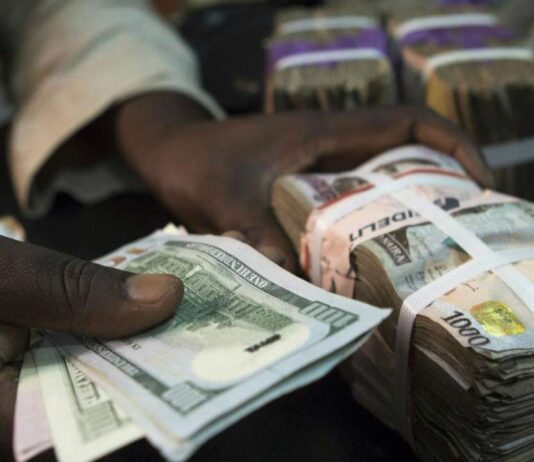
    The investment market in the country is feeling the effects of aggressive global monetary tightening and rising political and business risks, with capital importation dropping by 20% last year according to data released by the National Bureau of Statistics (NBS). This is according to a report by The Guardian, which further describes the situation as a significant decrease from $6.7 billion in 2021 to $5.33 billion in 2022, just ahead of the country’s general election. The impact of the election on the capital inflow, which is a measure of market attractiveness, was particularly felt in Q4, with a 51.51% decrease in year-on-year changes compared to Q4 2021. In addition, the recent fall in capital importation has been attributed to increasing business risk, insecurity, political risk, foreign exchange market rigidity, and the high arbitrage between official and black markets.

    READ ALSO: Twelve-Year-Old Girl dies in Car Crash – Police

    On a state-by-state analysis, Lagos accounted for the majority of the inflow at 68% or $3.61 billion, while the Federal Capital Territory (FCT) recorded $1.63 billion or 31%. Interestingly, 27 states, including Abia, Bauchi, Bayelsa, Benue, Borno, Cross Rivers, and Delta, did not receive any inflow, and Ogun and Rivers had zero capital importation for the entire year. Production, banking, and telecommunications received the bulk of the capital, accounting for 37.01%, 24.08%, and 15.86%, respectively. Share and trading received over 5% each, while oil and gas, which used to be a major foreign investment attraction, received only 0.21% of the total inflow.

    According to economist Eze Onyekpere, the uncertainty surrounding the 2023 elections and the likely policy direction of the new administration were key factors contributing to the poor performance of capital inflow. Onyekpere, who is the Lead Director of the Centre for Social Justice, explained that the fall was a result of investors adopting a wait-and-see approach in the lead-up to the first-quarter general elections.

    READ ALSO: NCC Refutes Phone Tracking and Leakage Allegations in Obi/Oyedepo Call Controversy

    “Many investors and stakeholders wanted to see the outcome of the elections, the new policy framework and whether there would be peace in the country before committing in terms of investment,” he said.

    According to him, if the new administration follows a policy direction that investors view as favourable and provides a positive economic outlook, there is a high possibility of a rebound.

  • Customer Calls Out Interswitch, Wema Bank for Month-old Unresolved Failed Transaction

    Customer Calls Out Interswitch, Wema Bank for Month-old Unresolved Failed Transaction

    Lagos based integrated payments and digital commerce platform, Interswitch has been called out by a customer for incompetency over a failed transaction left unresolved for about a month.

    The customer, identified as Oluwatoyosi Sokeye on microblogging site, LinkedIn expressed frustration that the issue, which she described as “trivial” could remain unresolved for about a month.

    “Interswitch Group I have never seen more incompetency from any company other than yours. Your level of incompetence is very astonishing for a company such as yours. Please scrap your Quickteller as it is very very useless (sic).

    “A transaction done on the 22nd of December has not been rectified until now. Something that trivial is very very amazing that it can’t be solved” Sokeye lamented.

    While she blamed herself for patronizing the company, Sokeye demanded a quick resolution to the failed transaction carried out via the company’s Quickteller platform.

    READ: Earthquakes: Death Toll Rises in Syria, Turkey

    “I may not be significant and I don’t care but I would like the money I paid for a failed transaction to be reversed to my account as soon as possible”, adding that the company has lost a customer in her.

    Similarly, she accused Wema Bank Plc of negligence over the same transaction, which is believed to involve the two companies.

    “Wema Bank Plc I guess you people are already full and have now become too pompous to work on a failed transaction that happened at your end on the 22nd of December.”

    In a swift reaction, Interswitch Group, through its official account on LinkedIn responded to Sokeye promising to address her situation.

    “This is certainly not the nature of feedback we look forward to reading about our solutions and services, and for this experience, we apologize to you unreservedly.

    “Please rest assured that we are keen to get to the core of the issues and to make this right as soon as possible”, the company stated.

    While the company has resolved Sokeye’s failed transaction issue after about a month, the incident is one of many frustrating experiences faced by customers of financial and payments companies in Nigeria.

    According to a report published in August 2021, The Cable quoted Central Bank of Nigeria (CBN) Governor, Godwin Emefiele saying “commercial banks have refunded N89.2 billion to customers over various financial-related complaints from 2012 to June 2021.

    In a press statement titled– CBN Revises Timelines for Dispense Errors, Refund Complaints, published June 1, 2020, the apex bank mandated that failed “Automated Teller Machine (ATM) transactions,” when customers used their cards on their bank ATMs, would now be instantly reversed from the current timelines of three days.

    According to the statement, where instant reversal failed due to any technical issue or system glitch, the timeline for manual reversal should not exceed 24 hours.

    READ ALSO: Controversial Actor Accuses 2baba of not Giving Scholarship to Sound Sultan’s Children

    The June 2020 statement reads below:

    “The Central Bank of Nigeria (CBN), in its determination to further enhance service quality, particularly quick refunds when customers experience failed transactions, dispense errors or disputes, has revised timelines for reversals and/or resolution of refund complaints on electronic channels, with effect from June 8, 2020, as follows:

    1) Failed “On-Us” ATM transactions (when customers use their cards on their bank’s ATMs) shall be instantly reversed from the current timeline of three (3) days. Where instant reversal fails due to any technical issue or system glitch, the timeline for manual reversal shall not exceed 24 hours.

    2) Refunds for failed “Not-on-Us” ATM transactions (where customers use their cards on other banks’ ATMs) shall not exceed 48 hours from the current 3-5 days.

    3) Resolution of disputed/failed PoS or Web transactions shall be concluded within 72 hours from the current five (5) days.

    4) All banks are directed to resolve backlog of all ATM, POS and Web customer refunds within two weeks starting June 8, 2020”.