Category: Business

  • Osun Local Government Workers Resume Work After 11-Month Strike

    Osun Local Government Workers Resume Work After 11-Month Strike

    Figures cited by Vanguard show that local government workers in Osun State have officially resumed their duties following a grueling 11-month industrial action. The strike was sparked by a violent clash between APC and PDP supporters over the control of local council secretariats last year. The Association of Concerned Local Government Workers (ACCLGW) has now urged its members to ‘eschew violence’ and maintain professional ethics as they return to their desks.

    The resumption follows a series of mediation efforts led by traditional rulers and the state government. While the political dispute over council leadership remains in court, a temporary agreement was reached to allow administrative staff to return to ensure that basic services, such as waste management and primary health monitoring, are restored to the communities.

    Validation of this return to work was provided by The Punch and Daily Post. The Punch noted that ‘council secretariats were heavily guarded by police on Monday morning,’ while Daily Post quoted a union leader: ‘Our priority is the welfare of our members and the service to the people of Osun.’

    Echotitbits take: An 11-month strike is a catastrophic failure of local governance. While the staff are back, the ‘peace’ is fragile and entirely dependent on the upcoming court ruling regarding the local government elections. Watch for whether the Ademola Adeleke administration can maintain this truce without further political skirmishes.
    Source: Vanguard – https://www.vanguardngr.com/2026/01/11-months-after-strike-union-warns-workers-against-violence/ January 5, 2026

    Photo Credit: Vanguard

  • NNPC Ordered to Disclose Full Details of $3 Billion ‘Crude-for-Cash’ Loan

    NNPC Ordered to Disclose Full Details of $3 Billion ‘Crude-for-Cash’ Loan

    In an update published by The Punch, a Federal High Court has ruled that the Nigerian National Petroleum Company (NNPC) Limited must release the full details of its controversial $3 billion ‘crude-for-cash’ loan. The judgment is seen as a massive victory for transparency advocates who have long questioned the terms and conditions of the deal, which used future oil production as collateral for immediate liquidity.

    The court’s decision compels NNPC to reveal the interest rates, repayment schedules, and the specific identities of the financiers involved in the transaction. Legal experts believe this sets a precedent for other state-owned enterprises (SOEs) that have previously operated under a veil of ‘commercial confidentiality.’ NNPC has not yet indicated whether it will appeal the ruling.

    Validation of this legal development appeared in Premium Times and Daily Post. Premium Times reported that ‘the ruling challenges the culture of secrecy in the oil sector,’ while Daily Post quoted a civil society leader: ‘Nigerians deserve to know how their future oil wealth is being mortgaged today.’

    Echotitbits take: This is a ‘litmus test’ for the NNPC’s claim of being a fully commercialized, transparent entity. If the details reveal unfavorable terms, it could lead to a significant political backlash against the leadership of the oil company. Watch for whether the Ministry of Justice supports an appeal or pushes for disclosure to appease international investors.
    Source: The Punch – https://punchng.com/court-orders-nnpc-to-disclose-details-of-3bn-crude-for-cash-loan/  January 5, 2026

    Photo Credit: The Punch

  • IEI shareholders approve ₦17.5bn recapitalisation drive amid tighter insurance rules

    IEI shareholders approve ₦17.5bn recapitalisation drive amid tighter insurance rules

    In an update published by Punch, shareholders of International Energy Insurance (IEI) approved a ₦17.5bn recapitalisation plan aimed at strengthening the firm’s capital base.

    The company says the move is designed to improve compliance and expand underwriting capacity as regulators and market expectations raise the bar for solvency and governance.

    Recapitalisation remains a defining test in Nigeria’s insurance sector, influencing reinsurance terms, corporate ticket size, and customer confidence.

    Echotitbits take: The key questions are who funds the raise, valuation terms, and how quickly cash is injected. Watch for filings, NAICOM response, and IEI’s post-raise strategy—whether it targets retail expansion or larger corporate lines.

    Source: The Punch — January 4, 2026 (https://punchng.com/iei-shareholders-approve-n17-5bn-recapitalisation/)

    The Punch January 4, 2026

    Photo Credit: The Punch

  • Petrol market tightens as depot owners raise ex-depot prices toward ₦800/litre

    Petrol market tightens as depot owners raise ex-depot prices toward ₦800/litre

    Reporting by Punch indicates private depot operators in Lagos have raised the ex‑depot price of petrol toward ₦800 per litre, a move that could ripple into higher retail pump prices if sustained.

    Traders and logistics players say the adjustment reflects supply uncertainty and financing/transport costs, while marketers watch whether the change will hold or ease as supply channels stabilise.

    TheCable quoted an industry source warning that “Prices will likely increase in the coming days,” even as another refinery source insisted “Production is still going on, of course.” Tell Magazine similarly noted that operators “increased the ex‑depot price of petrol to about N800 per litre.”

    If ex‑depot prices remain elevated, Lagos commuters and businesses may face another round of transport‑led inflation—so watch depot pricing, supply volumes, and any regulatory guidance.

    Echotitbits take: If ex‑depot prices remain elevated, Lagos commuters and businesses may face another round of transport‑led inflation—so watch depot pricing, supply volumes, and any regulatory guidance.

    Source: The Punch — January 4, 2026 (https://punchng.com/private-depots-hike-petrol-price-to-n800-litre-in-lagos/)

    The Punch January 4, 2026

    Photo Credit: The Punch

  • Massive Cocaine Haul Intercepted at Apapa Port on Marshall Islands Vessel

    Massive Cocaine Haul Intercepted at Apapa Port on Marshall Islands Vessel

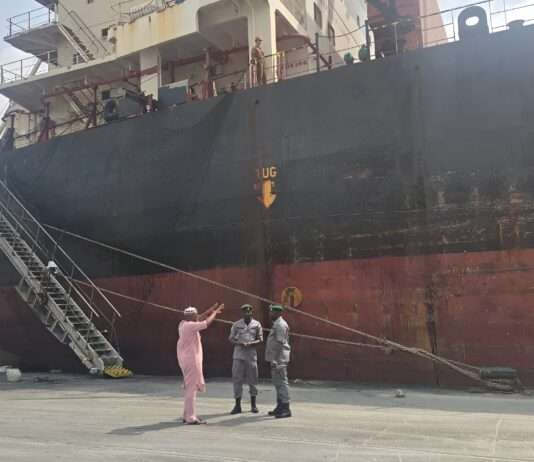
    According to The Guardian Nigeria, a joint operation by the Nigerian Customs Service and the NDLEA led to the seizure of 30.1kg of cocaine at the Apapa Port in Lagos. The illicit substance was discovered aboard a vessel flying the flag of the Marshall Islands, hidden within a specialized compartment.

    The interception is being hailed as a major victory in the ongoing war against international drug trafficking syndicates using Nigerian ports as transit hubs. Security agencies have already commenced a deep forensic investigation into the ship’s manifest and the identities of those involved in the logistics chain.

    Vanguard supported this report, highlighting that ‘Customs and NDLEA are stepping up vigilance at maritime gateways’ following several high-profile busts. BusinessDay also cited the development, quoting officials who noted that ‘illicit trade must be shunned’ to protect Nigeria’s international trade reputation.

    Echotitbits take: The use of a foreign-flagged vessel suggests a sophisticated international ring. While the seizure is commendable, the real challenge lies in prosecuting the high-level financiers behind these shipments, who often hide behind layers of corporate shell companies.

    Source: Vanguard — https://www.google.com/amp/s/www.vanguardngr.com/2026/01/customs-ndlea-intercept-30-1kg-cocaine-on-marshall-islands-flagged-vessel-at-lagos-port/amp/
    Vanguard January 3, 2026

    Photo Credit: Vanguard

  • Adoption of Electric Vehicles in Nigeria Surges by 400% Within Five Years

    Adoption of Electric Vehicles in Nigeria Surges by 400% Within Five Years

    Figures cited by The Guardian Nigeria indicate a monumental shift in Nigeria’s transport sector, with electric vehicle (EV) adoption growing by 400% over the last five years. Lagos State Deputy Governor, Dr. Obafemi Hamzat, revealed these statistics, linking the surge to the high cost of petroleum and new green energy incentives.

    The state government is reportedly planning to expand the network of charging stations across the Lagos metropolis to support this transition. This move aligns with Nigeria’s broader commitment to reducing carbon emissions and diversifying the nation’s energy consumption patterns in urban centers.

    Punch Newspaper validated the trend, reporting that ‘Nigerians are increasingly pivoting to alternative energy’ as fuel prices remain volatile. BusinessDay also noted that ‘growing sports and entertainment events are shaping youth’ to embrace modern, sustainable lifestyles including EV technology.

    Echotitbits take: A 400% increase sounds impressive, but it starts from a very low base. For EVs to become mainstream, the government must fix the underlying electricity crisis; otherwise, these cars will just be expensive driveway ornaments during power outages.

    Source: The Guardian — https://guardian.ng/technology/electric-vehicles-nigerian-economy-and-business-opportunities/
    The Guardian January 3, 2026

    Photo Credit: The Guardian

  • AI Poised to Revolutionize Risk Pricing and Fraud Detection in Nigerian Banking

    AI Poised to Revolutionize Risk Pricing and Fraud Detection in Nigerian Banking

    According to The Guardian Nigeria, financial experts are forecasting a major shift in the banking sector as Artificial Intelligence (AI) takes a lead role in real-time risk pricing. Omolade Oke, a prominent industry analyst, stated that AI will soon become the primary tool for fraud detection and personalized liquidity management across major Nigerian banks.

    This technological evolution is expected to significantly reduce the rate of non-performing loans by providing more accurate credit scoring models. Banks are already increasing their tech budgets to integrate these AI solutions, aiming to compete with the rising dominance of fintech platforms.

    BusinessDay supported this outlook, noting that ‘AI will revolutionise risk pricing’ and modernize how banks interact with their customers. Vanguard also reported on the trend, emphasizing that ‘Cardoso’s brilliant monetary management’ is creating the stability needed for such long-term tech investments.

    Echotitbits take: AI is the ‘silver bullet’ for Nigeria’s high credit risk environment. If banks can successfully automate fraud detection, we might finally see a reduction in the massive interest rate spreads that currently make borrowing so expensive for small businesses.

    Source: The Guardian — https://guardian.ng/interview/ai-will-revolutionise-risk-pricing-fraud-detection-and-personalised-liquidity-management-in-real-time-says-omolade-oke/
    The Guardian January 3, 2026

    Photo Credit: The Guardian

  • Naira Opens 2026 With Strong Gains as Reform Confidence Grows

    Naira Opens 2026 With Strong Gains as Reform Confidence Grows

    Figures cited by Daily Post show that the Nigerian Naira began the 2026 trading year on a positive note, appreciating to N1,430.84 against the U.S. dollar in the official market. This represents a 0.34% gain compared to the closing rate of N1,435.75 recorded on December 31, 2025.

    The currency’s performance is being linked to renewed investor confidence following the Central Bank of Nigeria’s (CBN) aggressive monetary tightening and structural reforms in the foreign exchange market. Market analysts suggest that the stability seen in the opening days of the year could signal a less volatile period for the local currency.

    In its first trading assessment of the year, BusinessDay noted that the ‘Naira extends rally in first trading day of 2026,’ as supply liquidity showed signs of improvement. Meanwhile, The Nation reported that the apex bank is betting on ‘structural changes in oil, tax, and foreign exchange markets to sustain growth and disinflation’ throughout the fiscal year.

    Echotitbits take: This early gain is a psychological victory for the CBN’s ‘orthodox’ monetary policy. If the bank can maintain this trajectory without depleting reserves too quickly, we may see a gradual convergence between the official and parallel market rates by the second quarter.

    Source: Nigeria Housing Market — https://www.nigeriahousingmarket.com/news/naira-outlook-2026-analysts-project-stronger-fx-stability-as-fundamentals-improve
    Nigeria Housing Market January 3, 2026

    Photo Credit: Nigeria Housing Market

  • Otedola Applauds FirstBank’s N500 Billion Capital Milestone

    Otedola Applauds FirstBank’s N500 Billion Capital Milestone

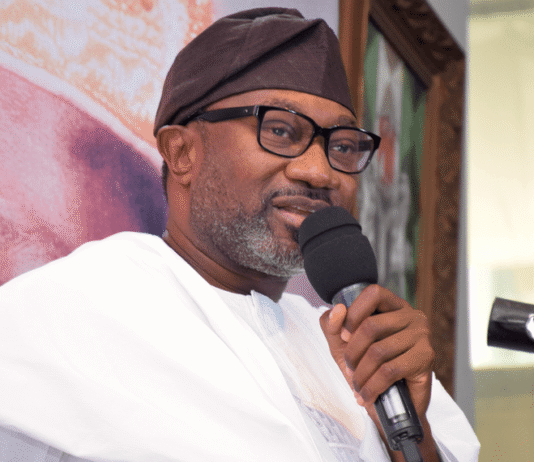
    Figures cited by Premium Times show that FirstBank of Nigeria has successfully completed its N500 billion capital raise, a move lauded by billionaire investor Femi Otedola. Otedola praised both President Tinubu and CBN Governor Yemi Cardoso for creating the regulatory environment that allowed for such a massive capital injection.

    The capital raise is part of the CBN’s mandate for commercial banks to strengthen their balance sheets to support a 1 trillion economy. FirstBank’s success is seen as a bellwether for the rest of the banking sector, many of whom are still in the middle of their own rights issues or public offers.

    The Nation added that the ‘economy will profit from financial sector reforms,’ noting that stronger banks will be better positioned to lend to the real sector. BusinessDay also listed this as one of the ’25 deals that shaped Nigeria’s corporate environment,’ marking it as a defining moment for 100-year-old institution.

    Echotitbits take: FirstBank reaching this goal ahead of schedule is a massive liquidity boost for the Nigerian stock exchange. Expect Otedola to continue pushing for a ‘N1 trillion capital base’ as the new gold standard for Tier-1 banks in Nigeria.

    Source: Premium Times — https://www.premiumtimesng.com/business/business-news/847084-otedola-urges-cbn-to-raise-banks-capital-to-%E2%82%A61-trillion-as-firstbank-meets-%E2%82%A6500bn-requirement.html
    Premium Times January 2, 2026

    Photo Credit: Premium Times

  • Lobito rail concession gets financing boost as AFC helps structure the deal

    Lobito rail concession gets financing boost as AFC helps structure the deal

    Lobito rail concession gets financing boost as AFC helps structure the deal

    Reporting carried via Africa Newsroom says Africa Finance Corporation (AFC) served as co-financial adviser on Angola’s Lobito Atlantic Railway concession, linked to a major financing package to scale corridor capacity.

    The update describes the corridor as a logistics backbone for regional trade—especially for critical minerals moving from inland producers toward global markets, where delays and costs can reshape competitiveness.

    AFC says the plan is expected to raise corridor capacity sharply and reduce freight costs, which could influence where downstream processing and investment ultimately concentrate.

    AFC’s own release repeats the same core projections, including “ten-fold” capacity growth and an “estimated 30 percent” cost reduction. Reuters has also covered the Lobito Corridor push, quoting U.S. officials describing it as a “commitment to advance” strategic infrastructure.

    Echotitbits take:
    Lobito is fast becoming a “strategic corridor brand.” Watch execution: timelines, community impacts, security along the route, and whether lower costs actually translate into better prices and higher volumes for exporters.

    Source: Africa Finance Corporation (AFC) — January 2, 2026 — https://www.africafc.org/news-and-insights/news/africa-finance-corporation-acts-as-co-financial-adviser-for-angolas-lobito-atlantic-railway-concession
    Africa Finance Corporation (AFC) 2026-01-02

    Photo Credit: Africa Finance Corporation (AFC)