Category: Economy

  • Central Bank Targets Exchange Rate Stability With New BDC Dollar Supply

    Central Bank Targets Exchange Rate Stability With New BDC Dollar Supply

    Reporting by BusinessDay indicates that the Central Bank of Nigeria (CBN) has reopened its foreign exchange window for Bureau De Change (BDC) operators. This strategic move is designed to narrow the widening gap between the official and parallel market rates, providing much-needed liquidity to the retail segment of the currency market.

    In an update published by the same outlet, the apex bank’s decision follows a period of heightened volatility that saw the Naira under significant pressure. By channeling funds directly through licensed BDCs, the CBN aims to decentralize access to foreign currency for small-scale users and travelers, thereby curbing speculative activities that have historically fueled inflation.

    Market analysts suggest that this intervention, coupled with the ongoing “clean-up” of the BDC sector, reflects a more aggressive stance by the regulator to maintain macroeconomic stability. The reopening of the “dollar tap” is expected to provide immediate relief to businesses that rely on the informal market for their foreign exchange needs.

    The Punch and The Nation have confirmed this development, noting the positive reception from financial stakeholders. The Punch reported that “operators expect the move to significantly reduce the premium between markets,” while The Nation quoted a source stating, “this is a vital step toward achieving a realistic exchange rate for the 2026 fiscal year.”

    Echotitbits take: This intervention is a reactive measure to the recent currency slide. While it offers short-term liquidity, the long-term stability of the Naira depends on Nigeria’s ability to boost non-oil exports and attract foreign direct investment. Watch for the CBN’s next Monetary Policy Committee (MPC) meeting to see if interest rates will be adjusted to complement this liquidity injection.

    Source: BusinessDay – https://businessday.ng/news/article/cbn-approves-150000-weekly-fx-sales-to-bdcs/, February 13, 2026

    Photo credit: BusinessDay

  • Nigeria Projected to Reach 5.5% GDP Growth as Economic Reforms Gain Traction

    Nigeria Projected to Reach 5.5% GDP Growth as Economic Reforms Gain Traction

    According to reporting by The Nation Newspaper, the Nigerian Economic Summit Group (NESG) has released a bullish forecast for the 2026 fiscal year, predicting a 5.5% expansion in the nation’s Gross Domestic Product. The group attributes this optimistic outlook to the maturation of bold policy shifts, including the stabilization of the foreign exchange market and a steady decline in headline inflation. This projection suggests that the “crisis conditions” which characterized the previous two years are finally giving way to a more sustainable growth trajectory.

    The NESG’s assessment emphasizes that while the macroeconomic indicators are turning green, the government must prioritize the institutionalization of these reforms to ensure they translate into tangible improvements in the welfare of citizens. The report highlights that the private sector is regaining confidence, which is expected to drive investment in critical sectors like manufacturing and agriculture throughout the year.

    Validation of this positive trend is found in reports from Vanguard News and S&P Global. Vanguard notes that PwC experts also see a brightening outlook for 2026, though they caution that “the gains remain fragile and highly exposed to oil market volatility.” Meanwhile, S&P Global’s latest analysis supports the growth narrative, stating, “We forecast Nigeria’s real GDP growth will average 3.7% to 5.5% over 2025-2026, supported by both the non-oil and oil sectors.”

    Echotitbits take: The 5.5% growth target is ambitious but achievable if the current exchange rate stability holds. However, the disconnect between GDP growth and the cost of living remains a significant political risk for the administration. Watch for the Q1 2026 productivity data to see if the manufacturing sector actually picks up the slack as predicted.

    Source: The Punch – https://punchng.com/impi-projects-nigerias-gdp-to-hit-5-5/ , February 3, 2026

    Photo credit: The Punch

  • National VAT Collections Hit Record N8.61 Trillion as Tax Reforms Yield Fruit

    National VAT Collections Hit Record N8.61 Trillion as Tax Reforms Yield Fruit

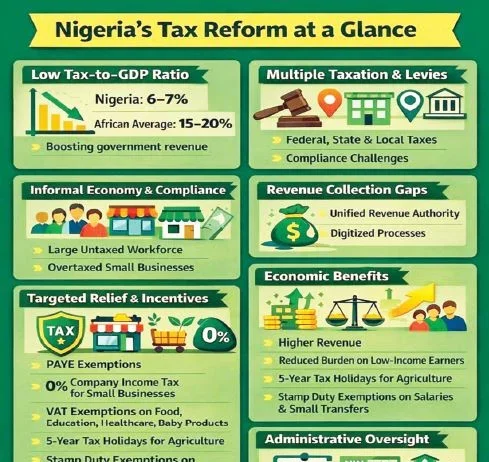
    Figures cited by The Punch show that Nigeria’s Value Added Tax (VAT) revenue experienced a historic surge, reaching N8.61 trillion for the 2025 fiscal year. This performance, reported on February 1st, 2026, is being attributed to the aggressive automation of tax collection systems and the broadening of the tax base to include more informal sector participants and digital service providers.

    In a report by The Sun, the Chairman of the Presidential Committee on Fiscal Policy and Tax Reforms, Taiwo Oyedele, noted that the focus has shifted from increasing tax rates to improving the efficiency of collection. “The 2025 figures are a testament to what happens when you simplify the tax code and eliminate multiple levies that previously stifled small businesses,” Oyedele was quoted as saying.

    According to Vanguard News, the Federal Inland Revenue Service (FIRS) has surpassed its revised targets, providing the government with much-needed fiscal space to service debts and fund infrastructure. The report quoted a financial analyst who stated: “While the revenue growth is impressive, the government must now ensure that these funds are transparently utilized to mitigate the impact of inflation on the average citizen.”

    Echotitbits take: This taxation milestone suggests that the government’s fiscal reforms are finally gaining traction. For businesses, the “tax harmonization” agenda is the real story to watch; if the government successfully collapses hundreds of taxes into a few single digits, it could trigger a significant boom in the SME sector by 2027.

    Source: The Punch – https://punchng.com/vat-collections-surged-to-n8-61tn-in-2025/, February 1, 2026

    Photo credit: The Punch

  • Clarivo Refinery Set to Drastically Cut Nigeria’s Fuel Imports

    Clarivo Refinery Set to Drastically Cut Nigeria’s Fuel Imports

    Reporting by Vanguard indicates that the management of Clarivo Refinery has announced a strategic roadmap to significantly reduce Nigeria’s dependence on imported petroleum products by the year 2035. The refinery, which is part of a new wave of private energy investments, aims to scale its production capacity to meet both domestic demand and export requirements. This announcement comes as the federal government continues to encourage private modular and large-scale refineries to stabilize the energy sector.

    The management emphasized that the refinery will focus on high-efficiency output and local value addition, ensuring that crude oil produced in Nigeria is refined within the country. This move is expected to save the nation billions in foreign exchange and create thousands of direct and indirect jobs in the downstream sector. The project is seen as a major win for the “Renewed Hope” economic agenda which prioritizes domestic energy security.

    The development was also validated by The Nation and Leadership. The Nation mentioned that “Clarivo is seeking further partnerships for its petrochemical wing,” while Leadership noted that “the refinery’s first phase is already 60% complete.”

    Echotitbits take:

    With the Dangote Refinery already operational, the addition of Clarivo suggests Nigeria is finally moving toward becoming a net exporter of refined products. Watch for the competition between these private giants to potentially drive down local pump prices through increased supply.

    Source: Vanguard – https://www.vanguardngr.com/2026/01/clarivo-oil-plans-world-class-refinery-in-nigeria-ceo-obidike/, January 31, 2026

    Photo credit: Vanguard

  • Creative Sector Identified as Primary Driver for 2026 GDP Growth

    Creative Sector Identified as Primary Driver for 2026 GDP Growth

    Figures cited by Leadership from the Minister of Interior, Olubunmi Tunji-Ojo, indicate that the creative sector is being prioritized as a primary engine for Nigeria’s economic growth in 2026. Following a strategic meeting with the leadership of the Theatre Arts and Motion Pictures Practitioners Association of Nigeria (TAMPAN), the government pledged to create a more enabling environment for filmmakers, musicians, and digital creators. The sector is expected to play a critical role in the government’s plan to bring 10 million Nigerians into productive economic activity.

    The Minister emphasized that the “orange economy” has the potential to generate massive foreign exchange and create jobs for the youth at a faster rate than traditional manufacturing. Plans are underway to provide better copyright protection and access to low-interest loans for creative projects. This shift reflects a broader policy move to diversify the economy away from oil and leverage Nigeria’s cultural influence globally.

    The story was also reported by The Punch and ThisDay. The Punch noted that “TAMPAN has requested for a dedicated creative industry bank,” while ThisDay highlighted that “creative exports could account for 5% of Nigeria’s GDP by 2027.”

    Echotitbits take:

    The government is finally putting its money where its mouth is regarding Nollywood and the music industry. By involving the Ministry of Interior, they are also likely looking at “visa facilitation” for international crews coming to film in Nigeria. Watch for the rollout of the “Creative Industry Fund” in the Q2 budget.

    Source: The Punch – https://punchng.com/creative-sector-key-to-growth-tunji-ojo/ , January 31, 2026

    Photo credit: The Punch

  • Fuel Prices Surge Toward N1,000 Milestone as Global Crude Rises

    Fuel Prices Surge Toward N1,000 Milestone as Global Crude Rises

    Figures cited by The Punch show that Nigerian fuel marketers are warning of a potential petrol price hike to ₦1,000 per litre as global crude oil prices cross the $70 per barrel mark. Marketers indicated that the current landing cost of Premium Motor Spirit (PMS) has been significantly impacted by the rising international oil prices and the continued volatility of the Naira. This development threatens to further strain the disposable income of citizens who are already grappling with high transport costs.

    The Nigerian Midstream and Downstream Petroleum Regulatory Authority (NMDPRA) is currently under pressure to review the pricing template to reflect these market realities. Industry experts suggest that without a significant appreciation of the Naira or a subsidy-like intervention, the ₦1,000 mark is nearly inevitable. This comes at a time when the federal government is shifting focus from economic stabilization to expansionary growth.

    This news was also covered by Leadership and ThisDay. Leadership reported that “marketers are calling for a transparent pricing mechanism to avoid supply disruptions,” while ThisDay noted that “the $70 crude price is a double-edged sword for Nigeria’s oil-dependent budget.”

    Echotitbits take:

    Rising fuel prices are the most potent trigger for inflation in Nigeria. If the price hits ₦1,000, we expect another wave of transport fare hikes and a possible spike in food prices. Watch for the government’s “Renewed Hope” ward development programs to be fast-tracked as a palliative measure to douse public tension.

    Source: The Punch – https://punchng.com/petrol-to-hit-n1000-litre-as-crude-crosses-70-marketers/, January 31, 2026

    Photo credit: The Punch

  • Nigeria and United States Reinforce Strategic Trade and Investment Ties

    Nigeria and United States Reinforce Strategic Trade and Investment Ties

    The Guardian reports that Nigeria and the United States reaffirmed plans to deepen bilateral economic relations after a high-level Commercial and Investment Partnership meeting in Lagos.

    Nigeria’s Minister of Industry, Trade and Investment, Dr. Jumoke Oduwole, said the engagement is intended to streamline trade processes and attract sustainable U.S. capital into emerging sectors.

    Discussions reportedly centered on agriculture, the digital economy, and manufacturing, with both sides looking to reduce trade barriers and improve investor confidence through policy consistency.

    Channels TV and BusinessDay also covered the meeting, noting expectations of a more predictable operating environment for U.S. firms and potential FX benefits tied to stronger commercial flows.

    Echotitbits take: The timing is strategic as Nigeria tries to diversify away from crude oil. The reported involvement of U.S. agriculture-linked stakeholders hints at food-security collaboration via technology transfer. Watch for follow-on instruments such as export incentives for non‑oil products and targeted investor protections.

    Source: The Guardian – https://guardian.ng/business-services/nigeria-u-s-remain-committed-to-economic-ties-says-oduwole/ 2026-01-30

    Photo Credit: The Guardian

  • Controversy Swirls Around Federal Government’s New Tax Reform Law

    Controversy Swirls Around Federal Government’s New Tax Reform Law

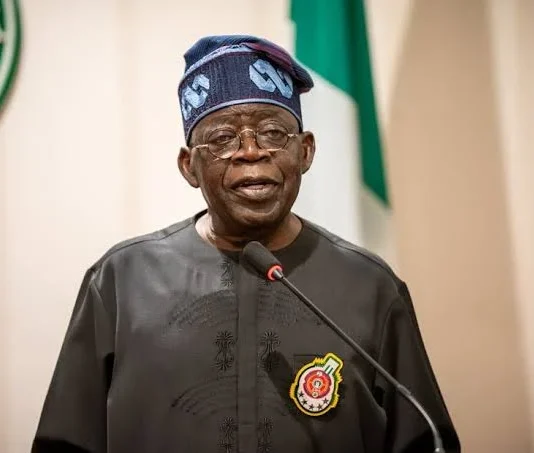
    Vanguard reports that controversy is growing over the exact version of a tax reform law signed by President Bola Tinubu, with claims that the enacted document contains “differentials” from the version debated and passed by the National Assembly.

    The reforms aim to simplify the tax code and improve collection efficiency, but some lawmakers and critics argue alleged discrepancies could impose undue burdens on small businesses and the middle class.

    The Nation and Daily Trust also reported on the dispute, including claims of administrative discrepancies in the final draft and legislative concerns about possible alterations before presidential assent.

    Echotitbits take: If the alleged differentials are material, implementation will face legal and political headwinds—potentially including injunctions and corporate challenges. The fastest de‑risking move is immediate publication of the clean legislative text trail (passed version vs assented version) and an agreed correction mechanism to preserve reform credibility.

    Source: The Punch – https://punchng.com/tax-laws-that-split-abuja-how-tinubus-reforms-sparked-governance-storm/ 2026-01-30

    Photo Credit: The Punch

  • Nigeria’s Crude Oil Exports to the U.S. and India Show Significant Growth

    Nigeria’s Crude Oil Exports to the U.S. and India Show Significant Growth

    Tribune reports that Nigeria’s share of crude oil exports to the United States and India has risen, with recent surveys putting Nigeria’s share at 3.3% in those markets as other suppliers’ shares declined.

    The growth is attributed to pricing competitiveness for Nigerian sweet crude and geopolitical shifts affecting global supply chains.

    The Guardian and ThisDay also referenced the trend, including demand diversification dynamics and Nigeria’s positioning for Asian refinery demand.

    Echotitbits take: Higher export share is only a win if Nigeria can sustain volumes and reduce leakages. Oil theft, high operating costs, and downtime can erase headline gains. The strategic upside is using export momentum to stabilize FX inflows while domestic refining ramps up—if feedstock supply becomes more reliable.

    Source: The Punch –  https://punchng.com/nigeria-exports-2-57bn-crude-to-us-highest-in-africa/  2026-01-30

    Photo Credit: The Punch

  • Nigeria Moves to Terminate Rice Importation Windows to Protect Local Farmers

    Nigeria Moves to Terminate Rice Importation Windows to Protect Local Farmers

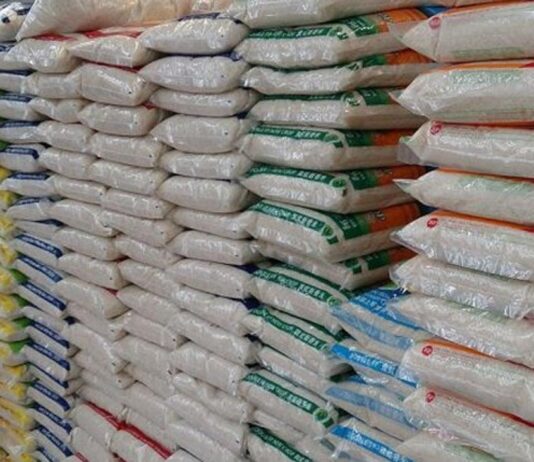
    Nigeria is moving to shut down rice import windows following a national policy review that reportedly found imports have created surplus supply, depressing prices and worsening losses for domestic farmers.

    Officials linked to the Presidential Food Systems Coordinating Unit reportedly stated that maize and rice farmers recorded negative margins during the 2025 wet season, driven by high production costs and weak sale prices. The government’s new direction is expected to prioritize local production while introducing price protection mechanisms to safeguard farmer livelihoods and preserve national food security.

    Supporters argue the policy reset will stabilize rural incomes and reduce exposure to import shocks. Critics caution that if local output cannot meet demand, consumers—particularly in urban centers—could face renewed price pressures. Separate reporting has also referenced national food balance figures indicating a notable surplus in late 2025.

    Echotitbits take: This is a return to protectionist policies. While it helps farmers, the government must ensure that local supply is actually sufficient to prevent a price spike for consumers in urban areas.
    Source: BusinessDay – https://businessday.ng/news/article/nigeria-to-shut-rice-import-windows-as-data-exposes-farmers-losses/ 2026-01-26

    Photo Credit: BusinessDay