Category: News

  • Senate Rejects 10-Year Jail Term for PVC Buyers and Sellers

    Senate Rejects 10-Year Jail Term for PVC Buyers and Sellers

    In an update published by Vanguard, the Nigerian Senate has turned down a proposal to impose a 10-year prison sentence on individuals involved in the buying and selling of Permanent Voter Cards (PVCs). During the debate on the Electoral Amendment Bill, lawmakers opted to retain the existing two-year imprisonment term. However, the Senate agreed to significantly increase the financial penalty, raising the fine from ₦2 million to ₦5 million under Clause 22 of the bill.

    The decision was reached following heated deliberations on the proportionality of the punishment. Proponents of the 10-year term argued that stiff penalties are necessary to deter electoral fraud ahead of the 2027 general elections. Conversely, the majority of senators felt that the increased fine, combined with the current jail term, provides a sufficient deterrent without overburdening the judicial system.

    Premium Times and ThisDay have reported on the legislative session. Premium Times noted that “the rejection of the longer jail term has sparked debate among electoral reform activists.” ThisDay cited a senator who remarked, “we must focus on the enforceability of these laws rather than just the severity of the sentences.”

    Echotitbits take:

    While the increase in fines is a step toward making electoral malpractice “expensive,” the rejection of a longer jail term might be seen by critics as a soft stance on vote-buying. With the 2027 elections approaching, the focus should now shift to how INEC and security agencies will actually catch and prosecute those participating in the PVC black market.

    Source: Vanguard – vanguardngr.com/2026/02/senate-rejects-10-year-jail-term-for-pvc-traders-amends-electoral-timelines/, February 5, 2026

    Photo credit: Vanguard

  • South East Governors Propose Regional Common Market to Drive Growth

    South East Governors Propose Regional Common Market to Drive Growth

    Figures cited by Champion Newspapers show a renewed push for regional integration as Governor Peter Mbah of Enugu State called for the creation of a “South East Common Market.” During a developmental launch where Vice President Kashim Shettima unveiled the Vision 2050 blueprint for the region, Governor Mbah argued that reimagining the five states as a single economic bloc is essential for industrialization. The proposal aims to harmonize trade policies and infrastructure projects across the South East.

    The Vision 2050 blueprint is designed to leverage the region’s entrepreneurial strength while addressing long-standing infrastructure deficits. The Vice President highlighted the Federal Government’s commitment to supporting regional initiatives that align with national economic goals. This collaborative approach is expected to attract significant foreign direct investment (FDI) into the region’s manufacturing and technology sectors.

    The Sun and Leadership Newspaper have also reported on the Enugu summit. The Sun stated that “the governors have agreed to set up a technical committee to oversee the integration process.” Leadership Newspaper quoted a regional trade leader who said, “a unified market will eliminate the double taxation that currently plagues inter-state commerce in the East.”

    Echotitbits take:

    A South East Common Market could be a game-changer for Nigerian internal trade, mirroring the success of the EU on a smaller scale. If the states can successfully integrate their rail and power projects, the region could become the nation’s primary industrial hub. The biggest challenge remains the “sit-at-home” disruptions which must be permanently resolved to ensure the market’s viability.

    Source: DailyTrust – https://dailytrust.com/shettima-unveils-25-year-economic-blueprint-for-southeast/, February 5, 2026

    Photo credit: DailyTrust

  • Federal Government Sets Ambitious 2.5 Million BPD Oil Target for 2027

    Federal Government Sets Ambitious 2.5 Million BPD Oil Target for 2027

    In an update published by Vanguard, the Federal Government has called on International Oil Companies (IOCs) to take decisive action to ramp up crude oil production. Speaking at the 2026 Nigerian International Energy Summit (NIES) in Abuja, the Minister of State for Petroleum Resources (Oil), Senator Heineken Lokpobiri, emphasized that the country aims to reach a production capacity of 2.5 million barrels per day (bpd) by 2027. This follows a 2025 average of 1.6 million bpd, which fell short of the 2.06 million bpd budget benchmark.

    The Minister stressed that the success of the entire petroleum value chain—from refining to distribution—is fundamentally dependent on the upstream sector’s performance. He reassured investors that the Petroleum Industry Act (PIA) provides a level playing field for both indigenous and foreign operators. The government’s renewed focus comes as the economy seeks to bolster foreign exchange earnings through increased energy exports.

    The Nation and BusinessDay are also tracking these developments from the NIES summit. The Nation noted that “the government is looking to eliminate technical hitches and oil theft that have historically hindered production.” BusinessDay highlighted the private sector’s response, quoting an industry executive who said, “the roadmap is clear, but the infrastructure for evacuation must match the production targets.”

    Echotitbits take:

    Achieving 2.5 million bpd is a tall order considering the aging infrastructure of many onshore assets. However, if the recent divestments by IOCs to local firms lead to more aggressive drilling in marginal fields, we might see a significant uptick. The government must ensure that the “enabling environment” mentioned includes physical security for pipelines to prevent the return of large-scale crude theft.

    Source: Arise – https://www.arise.tv/tinubu-reaffirms-nigerias-3-million-bpd-oil-output-target-by-2030/, February 5, 2026

    Photo credit: Arise

  • President Tinubu Deploys Army Battalion to Kwara Following Deadly Terror Attack

    President Tinubu Deploys Army Battalion to Kwara Following Deadly Terror Attack

    Reporting by Premium Times indicates that President Bola Tinubu has ordered the immediate deployment of an army battalion to Woro village in the Kaiama Local Government Area of Kwara State. The directive follows a devastating overnight attack by Boko Haram terrorists, reportedly under the command of Mallam Sadiku, which resulted in scores of fatalities. The Presidency confirmed that the new military command will spearhead “Operation Savannah Shield” to secure the border communities and prevent further incursions from the nearby Kainji forest reserve.

    The state government initially placed the death toll at 75, while the Red Cross reported as many as 162 confirmed deaths by Wednesday evening. Residents revealed that the terrorists invaded the community around 5:00 p.m. on Tuesday, continuing their assault into the early hours of Wednesday. The victims were allegedly targeted for refusing to subscribe to extremist ideologies or be conscripted into the group’s ranks.

    The Daily Trust and Channels TV have also provided extensive coverage of the massacre. Daily Trust quoted a local survivor who stated, “the attackers came in large numbers and showed no mercy to those who stood their ground.” Channels TV reported that “security forces have begun a massive manhunt in the Kainji forest reserve,” with a military source confirming that “no stone will be left unturned in neutralizing the Sadiku-led faction.”

    Echotitbits take:

    The relocation of Boko Haram elements to the North-Central axis (Kwara/Niger borders) represents a dangerous geographical shift in the insurgency. While the deployment of a full battalion is a necessary reactive measure, the long-term security of the Savannah belt will depend on intelligence-led operations within the Kainji National Park. This development may force a redirection of security spending in the 2026 supplementary budget.

    Source: DailySabah – https://www.dailysabah.com/world/africa/nigeria-deploys-military-after-latest-massacre-kills-at-least-162, February 5, 2026

    Photo credit: DailySabah

  • Naira Strengthens Against Dollar as Market Liquidity Stabilizes

    Naira Strengthens Against Dollar as Market Liquidity Stabilizes

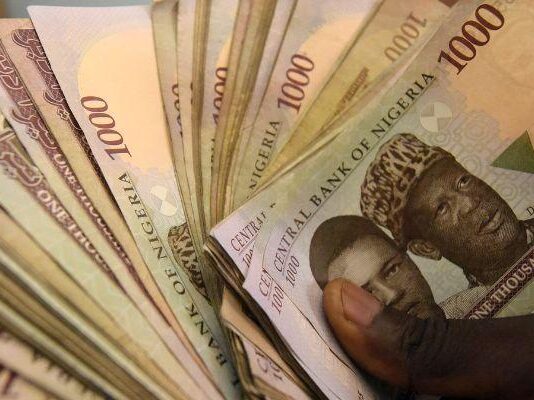
    According to reporting by Vanguard, the Nigerian Naira sustained its positive momentum against the United States dollar during the early trading hours of Thursday, February 5, 2026. The local currency opened at approximately 1,368.56 per dollar at the Nigerian Foreign Exchange Market (NFEM), reflecting a steady appreciation from the 1,388 levels recorded only 24 hours prior. This recovery is largely attributed to the Central Bank of Nigeria’s (CBN) aggressive market-matching strategies and a robust increase in external reserves.

    The Electronic Foreign Exchange Matching System (EFEMS) has been cited as a primary driver for narrowing bid-ask spreads, fostering greater transparency within the official window. In the parallel market, the dollar exchanged between 1,450 and 1,465 across major hubs like Lagos and Abuja. Bureau De Change operators noted that while a premium remains, the gap between official and informal rates has contracted to one of its lowest margins in several months due to steady supply from diaspora remittances.

    The Punch and ThisDay have corroborated this downward trend in exchange volatility. Business analysts at The Punch remarked that “the Naira’s resilience this week suggests a shift from speculative behavior to demand-driven market fundamentals.” Similarly, ThisDay reported that “investor confidence is returning as the CBN stabilizes the liquidity pool,” with one analyst noting that “we are seeing the most stable foreign exchange window since the unification reforms of 2024.”

    Echotitbits take:

    The narrowing gap between the official and parallel market rates is a significant victory for the CBN’s monetary policy. If the current liquidity levels are maintained through Q1 2026, we expect a further reduction in imported inflation, which could lead to a potential softening of interest rates by mid-year. Watch for the next Monetary Policy Committee (MPC) meeting to see if these gains trigger a shift from the current 27% MPR.

    Source: BusinessDay – https://businessday.ng/news/article/naira-maintains-steady-rise-hits-n1358-28-as-reserves-grow/, February 5, 2026

    Photo credit: BusinessDay

  • Grammys 2026: Tyla Secures Victory as Tinubu Honours Fela Kuti

    Grammys 2026: Tyla Secures Victory as Tinubu Honours Fela Kuti

    Reporting by Channels TV indicates that South African star Tyla has once again triumphed over Nigerian heavyweights Davido, Burna Boy, and Ayra Starr to win the “Best African Music Performance” category at the 2026 Grammy Awards. Despite the disappointment for Nigerian fans, the night was historic as the legendary Fela Anikulapo Kuti was posthumously honored with a Lifetime Achievement Award.

    President Bola Tinubu hailed the late Afrobeat pioneer as the “fearless voice of the people,” noting that the award is a testament to the enduring global impact of Nigerian culture. The President’s message emphasized that Fela’s music continues to inspire generations toward social justice and cultural pride, cementing Nigeria’s place as a global entertainment powerhouse.

    Validation of the awards and the President’s reaction came from The Nation and Daily Post. The Nation reports that “the 2026 Grammys saw a massive turnout of the Nigerian contingent,” quoting a music critic who said, “Fela’s recognition is long overdue and validates the roots of the current Afrobeats explosion.” Daily Post adds that the APC National Chairman echoed the President’s sentiments, stating, “Our artists are our greatest ambassadors on the world stage.”

    Echotitbits take: While Nigerian artists missed out on the top African performance prize, the Lifetime Achievement Award for Fela Kuti is arguably a bigger win for the nation’s cultural heritage. It shifts the conversation from modern commercial success to the foundational influence of Afrobeat. Expect a surge in Fela-themed events and documentaries throughout the year as this global recognition sinks in.

    Source: The Punch – https://punchng.com/fearless-voice-of-the-people-tinubu-salutes-felas-posthumous-grammy-recognition/, February 4, 2026

    Photo credit: The Punch

  • Health Experts Warn Against Traditional Snakebite Treatments Following Surge in Cases

    Health Experts Warn Against Traditional Snakebite Treatments Following Surge in Cases

    According to The Punch reporting on February 4, 2026, medical experts from the Toxinological Society of Nigeria have warned that traditional methods of treating snakebites, such as tying the affected limb, are significantly reducing victims’ chances of survival. Data released by the society indicates that Nigeria records approximately 43,000 snakebite cases annually, resulting in nearly 1,900 deaths due to improper first aid and lack of anti-venom.

    The experts are calling on the Federal Government to provide emergency funding for snakebite control, particularly in rural farming communities where the risk is highest. They noted that many Primary Healthcare Centres (PHCs) lack the necessary anti-snake venom, forcing victims to rely on herbalists or unproven traditional remedies that often lead to complications like gangrene.

    Additional reporting from Channels TV and Vanguard validates the call for government intervention. Channels TV highlights a recent tragedy involving a singer whose death was linked to a lack of immediate medical antidotes, quoting a doctor who said, “PHCs should have anti-snake venom as a basic medicine, not a luxury.” Vanguard reports on efforts in the Federal Capital Territory (FCTA) to curb snakebite deaths, with an official stating, “We are launching a prevention awareness campaign across all area councils.”

    Echotitbits take: Snakebites remain a neglected tropical disease that affects the most vulnerable—rural farmers. The lack of anti-venom in PHCs is a systemic failure that directly impacts food security, as farmers fear going to their fields. This is an area where state and federal governments need to collaborate on local production of anti-venom to reduce costs and save lives.

    Source: The Punch – https://punchng.com/tying-legs-after-snakebite-reduces-victims-chances-of-survival-experts/, February 4, 2026

    Photo credit: The Punch

  • Finance Minister Targets 7% Economic Growth via Private Investment

    Finance Minister Targets 7% Economic Growth via Private Investment

    As reported by Punch on February 4, 2026, Nigeria’s Minister of Finance has reasserted the government’s commitment to achieving a 7% economic growth rate by 2027. The Minister emphasized that the primary driver for this ambitious target would be the scaling up of private sector investments and the continuation of aggressive fiscal reforms aimed at deregulating key sectors like energy and transport.

    The administration’s strategy involves leveraging public-private partnerships (PPPs) to address the country’s infrastructure deficit. The Minister noted that Nigeria is “ready to collaborate with global partners” to deliver inclusive growth, particularly in the digital economy and clean energy sectors, which are seen as the next frontiers for Nigerian development.

    Validation of this economic outlook comes from ThisDay and Leadership. ThisDay reports that “global investors are showing renewed interest in Nigeria’s energy sector,” quoting a Standard Chartered analyst who says, “The 7% target is achievable if the current reform momentum is sustained.” Leadership also highlights the role of the Nxtra Data Centre in Lagos as a model for private-led growth, with a tech executive stating, “Digital infrastructure is the backbone of the new Nigerian economy.”

    Echotitbits take: A 7% growth target is highly ambitious given the current inflationary environment. However, the focus on private investment rather than government spending is a shift in the right direction. The key challenge will be ensuring that this macro-level growth trickles down to reduce the high unemployment rate and poverty levels.

    Source: The Punch – https://punchng.com/reforms-private-investment-crucial-for-7-growth-edun/, February 4, 2026

    Photo credit: The Punch

  • US Congress Panel Holds Hearing on Insecurity and Religious Freedom in Nigeria

    US Congress Panel Holds Hearing on Insecurity and Religious Freedom in Nigeria

    In an update published by Daily Post, the United States Congress is set to hold a high-level joint hearing today, February 4, 2026, to examine the deteriorating security situation and religious freedom in Nigeria. Written testimonies released ahead of the session by the House Foreign Affairs Committee describe Nigeria as a “global flashpoint,” with witnesses warning that unresolved violence could lead to a deeper humanitarian crisis.

    Former US Ambassador-at-Large Sam Brownback, in his prepared remarks, labeled the current situation as extremely perilous for faith communities. The hearing, titled “Defending Religious Freedom Around the World,” seeks to evaluate how foreign actors from countries like China and Russia are influencing Nigeria’s security environment and what role the US should play in mediating these tensions.

    Supporting reports from Premium Times and The Guardian verify the international focus on Nigeria’s domestic affairs. Premium Times notes that the hearing will feature testimony from the US Commission on International Religious Freedom (USCIRF), which stated that “early warning signs of mass displacement are evident.” The Guardian quotes a diplomatic source who mentioned, “This hearing will likely shape future US military aid and sanctions policy toward Nigeria depending on the findings.”

    Echotitbits take: This congressional hearing is a double-edged sword for the Nigerian government. While it brings international attention to the security crisis, it also risks placing Nigeria back on the “Country of Particular Concern” (CPC) list, which could hamper diplomatic relations and military procurement. The government’s response to the allegations of religious persecution will be critical in the coming days.

    Source: Daily Post – https://dailypost.ng/2026/02/04/genocide-us-congress-panels-hold-hearing-on-religious-freedom-raise-concerns-over-nigeria/, February 4, 2026

    Photo credit: Daily Post

  • NESG Report Links Slow Business Growth to High Taxes and Fuel Costs

    NESG Report Links Slow Business Growth to High Taxes and Fuel Costs

    Reporting by Vanguard indicates that the Nigerian Economic Summit Group (NESG) has identified rising tax burdens and fuel price adjustments as the primary drivers behind a slowdown in business growth during January 2026. According to the latest Business Confidence Monitor (BCM) report, business optimism has hit a six-month low as enterprises struggle with the rising cost of operations.

    The report emphasizes that while the government’s reform agenda is necessary for long-term stability, the immediate impact on small and medium enterprises (SMEs) has been severe. The NESG warns that without targeted interventions to cushion the effects of these fiscal policies, the pace of industrial productivity may continue to decline in the first quarter of the year.

    Validation from Channels TV and The Nation underscores these concerns. Channels TV reports that “the manufacturing sector is feeling the pinch of energy costs,” with a spokesperson for the Manufacturers Association of Nigeria (MAN) stating, “We are operating at the edge of viability due to the triple threat of fuel, power, and taxes.” The Nation also cites the report, quoting an economist who notes, “The government must balance its revenue drive with the survival of the private sector to avoid a stagflation scenario.”

    Echotitbits take: The NESG report is a wake-up call for the fiscal authorities. While tax reforms are essential for reducing the budget deficit, the timing and execution are hitting the productive sector hard. Watch for a potential review of tax incentives or a push for more “pro-growth” adjustments in the coming mid-year budget review.

    Source: BusinessDay – https://businessday.ng/business-economy/article/cost-of-doing-business-rises-to-90-5-in-january-on-tax-reforms-fuel-price-adjustments/?utm_source=auto-read-also&utm_medium=web&amp, February 4, 2026

    Photo credit: BusinessDay