Category: National

  • NOA, NBC Push for 70% Local Content in Children’s Cartoons

    NOA, NBC Push for 70% Local Content in Children’s Cartoons

    The National Orientation Agency and National Broadcasting Commission have formed a committee to ensure at least 70% of cartoon content on Nigerian TV is locally produced. They say the policy will strengthen culture and create opportunities for local animators.

    PUNCH, 11 Dec 2025

  • U.S. Delegation Meets Benue Traditional and Faith Leaders

    U.S. Delegation Meets Benue Traditional and Faith Leaders

    A U.S. congressional delegation met with Benue clerics and traditional leaders to discuss recurring violence and insecurity, signalling heightened international concern.

    Local leaders reportedly pressed for stronger protection of rural communities and accountability for perpetrators.

    Source: Punch, 2025-12-09

  • IGP Warns Misinformation Hurts Police Reputation

    IGP Warns Misinformation Hurts Police Reputation

    Inspector-General Kayode Egbetokun warned that misinformation—including recycled videos and edited images—has significantly harmed the Nigeria Police Force’s reputation.

    He urged police PROs to respond faster and more professionally to false narratives to protect public trust.

    Source : The Nation, 2025-12-08

  • Osun LG funds: Supreme Court strikes out suit but faults FG action

    Osun LG funds: Supreme Court strikes out suit but faults FG action

    The Supreme Court has struck out Osun State’s suit seeking release of withheld local government allocations, ruling that the state attorney-general lacked standing to sue on behalf of the councils. However, reports indicate the Court also faulted the Federal Government’s withholding of the funds and reaffirmed the principle that allocations should be released directly to duly elected local governments. The judgment has sparked political reactions, including public commendation from Minister Adegboyega Oyetola, who described the ruling as reinforcing due process and local government autonomy. (Sources: The Punch, Premium Times, The Guardian, Dec 5–6, 2025.)

  • Heavy security in Sokoto prison over Nnamdi Kanu

    Heavy security in Sokoto prison over Nnamdi Kanu

    Security around the Sokoto Correctional Centre has reportedly remained unusually tight weeks after the transfer of IPOB leader Nnamdi Kanu. Punch states that Kanu was sentenced to life imprisonment on November 20, 2025, after being found guilty on terrorism-related counts, and that the court raised concerns about his safety at Kuje, given past jailbreak incidents. The report describes a visible security buildup including armoured presence and heavily armed personnel, with journalists denied access without clearance from national headquarters. The paper also notes that only family, lawyers, and select high-profile visitors are reportedly permitted limited access. Source: Punch, December 7, 2025.

  • NAF pilots escape death as fighter jet crashes in Niger

    NAF pilots escape death as fighter jet crashes in Niger

    Two Nigerian Air Force Alpha Jet pilots reportedly survived an in-flight emergency during a post-inspection functional check flight from the Kainji base in Niger State. The story says the pilots ejected safely after steering the aircraft away from populated areas, helping to prevent civilian casualties. The Air Force spokesperson, Air Commodore Ehimen Ejodame, confirmed the incident and noted that the pilots were undergoing routine medical evaluation. The Chief of Air Staff also reportedly ordered a Board of Inquiry to investigate the cause of the crash, reiterating the NAF’s commitment to operational safety. Source: The Nation, December 7, 2025.

  • 156 additional seats to be injected into parliament

    156 additional seats to be injected into parliament


    A constitutional amendment proposal seeking reserved seats for women could add 156 new positions across national and state legislatures if passed and assented to. The report explains that advocates view the measure as a strategic corrective response to Nigeria’s long-standing gender imbalance in political representation. The bill’s architecture reportedly includes one reserved seat for women per state in both chambers of the National Assembly and three per state assembly, though the Senate is said to be considering an alternative model that would allocate reserved seats by geopolitical zones. Proponents insist the plan is designed to expand representation rather than displace male legislators, and may run for a defined number of election cycles as a temporary special measure, though extensions or removal of a sunset clause are also being discussed. Source: The Nation, December 7, 2025.

  • Tinted Glass Permits: Why Nigerians Shouldn’t Pay Twice for One Car

    Tinted Glass Permits: Why Nigerians Shouldn’t Pay Twice for One Car


    Policeman checking vehicle particulars of a vehicle
    Policeman checking vehicle particulars of a vehicle

    For years, motorists in Nigeria have endured a frustrating ritual: registering their vehicles with the state licensing offices, only to be stopped on the highway by police officers demanding an additional permit for factory-fitted tinted glass. The irony is painful — every new vehicle, including those with tinted or shielded glass, is already captured in the National Vehicle Identification Scheme (NVIS), the centralized database managed by the Federal Road Safety Corps (FRSC). So why are Nigerians being compelled to re-register with the police?

    The answer lies not in necessity but in bureaucratic silos and institutional turf wars. By law, the Nigerian Police Force (NPF) retains the authority to issue tinted glass permits under the Motor Vehicles (Prohibition of Tinted Glass) Act of 1991. But in practice, FRSC already has the data. Every plate number, chassis number, and glass specification is captured the moment a car is registered. The logical solution would be for the police to access NVIS directly, extract a filtered report of all vehicles with factory-fitted shields, and enforce compliance seamlessly.

    Instead, motorists are dragged through a second, often opaque process at police stations. This duplication breeds confusion, harassment, and informal revenue collection on the highways. Worse, it undermines public trust in law enforcement, turning a legitimate security concern into yet another avenue for extortion.

    Yes, there are genuine worries. Aftermarket tinting is a security risk. Criminals exploit heavily darkened windows to evade detection. Police must have the authority to check and sanction illegal modifications. But this can be done through inspection points and digital cross-checks, not endless manual registrations.

    Nigeria cannot claim to be pursuing digital transformation while its agencies cling to outdated silos. A simple reform could save time, money, and lives:
    • Mandate FRSC to auto-flag tinted vehicles at registration.
    • Provide NPF secure access to NVIS.
    • Automate permit issuance electronically, with a transparent fee schedule.

    This way, motorists deal with one system, not two. Police officers enforce compliance using real-time data, not roadside guesswork. And the state builds trust by showing that regulation is about safety, not rent-seeking.

    The time has come to end this double compliance burden. Nigerians deserve a system where technology replaces intimidation, and where institutions collaborate rather than compete. In an era of insecurity, the Police need the public’s confidence more than ever. Simplifying tinted glass permits would be a small but powerful step in that direction.


  • Medical Doctors Draw Battle Line Over Proposed Five-Year Mandatory Practice Bill

    Medical Doctors Draw Battle Line Over Proposed Five-Year Mandatory Practice Bill

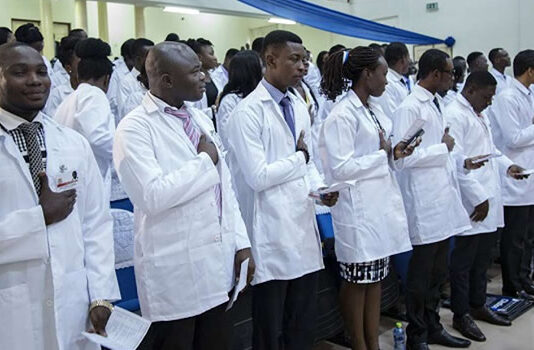
    Nigeria’s House of Representatives is in the spotlight for proposing a bill that would prevent medical doctors from seeking better job opportunities within five years of completing their medical education.

    The bill was introduced in response to the alarming trend of brain drain in the country’s healthcare sector, with many healthcare professionals leaving Nigeria for other countries.

    This crisis has left government officials scrambling for a solution, as the nation suffers from an acute shortage of doctors, with a doctor-patient ratio over five times lower than the World Health Organization’s recommendation. The problem has been particularly acute in the United Kingdom, which has seen an exodus of over 5,600 Nigerian medical doctors in the last eight years.

    FILE PHOTO: Members of the House of Representatives during plenary

    The Nigerian Medical Association has warned that the health sector is on the brink of collapse if urgent measures are not taken to address the issue of brain drain.

    The association has called for an emergency solution, stating that Nigeria may need to recruit doctors from foreign countries in the future. Recently, the National President of the Medical and Dental Consultants of Nigeria revealed that over 500 medical consultants have left the country in the past two years.

    READ ALSO: Police Officer Detained for Fatal Shooting of Delta Trader Claims Innocence: ‘It Was Not Intentional

    “This figure is as of March last year; so it is far more than that,” Makanjuola said during a National Executive Committee meeting of the Association in Enugu.

    He added that, “we are not where we are supposed to be; we are faced with poor budgetary allocation, poor infrastructure, lack of incentives leading to brain-drain, challenge of power generation and distribution in most of our facilities.

    “It has become difficult for administrators to run the facilities smoothly and provide efficient medical care for the citizens.”

    The Kaduna State Chapter of the Nigeria Medical Association (NMA) sounded the alarm in October of last year, urging authorities to take immediate action to curb the ongoing brain drain of medical personnel in the state.

    The NMA noted that over the last seven years, no fewer than 10,000 doctors had left Nigeria in search of better opportunities, a worrisome trend.

    Similarly, the Nigeria Governors’ Forum, comprising the governors of all 36 states, expressed concern about the prevalence of brain drain in the health sector towards the end of last year. Sokoto State Governor and Forum Chairman Aminu Waziri Tambuwal highlighted these concerns during a visit to Dr Osagie Ehanire, the Minister of Health, in Abuja.

    “We are witnessing brain drain over the years. It is alarming, and I believe it has something to do with the welfare of medical personnel.

    “I urge the federal government to do something about this urgently,” Tambuwal said.

    In March of this year, the World Health Organization (WHO) identified 55 countries, including Nigeria, as facing the most significant workforce challenges related to Universal Health Coverage. In response, the UK placed Nigeria and 53 other countries on its red list, advising health and social care employers not to actively target recruitment from these nations. Factors contributing to this problem include low salaries, poor working conditions, lack of career advancement opportunities, inadequate resources and infrastructure, political instability, and insecurity.

    READ ALSO: Twelve-Year-Old Girl dies in Car Crash – Police

    Concerned about the impending threat of brain drain in Nigeria’s healthcare sector, the House of Representatives proposed a bill to address the crisis.

    Sponsored by Ganiyu Johnson, who represents Oshodi-Isolo Federal Constituency 2 of Lagos State in the House of Representatives, the bill aims to amend the Medical and Dental Practitioners Act to require Nigerian-trained medical or dental practitioners to work in the country for at least five years before being granted full licenses. However, the bill has encountered opposition from healthcare professionals.

    According to Johnson, “It was only fair for medical practitioners, who enjoyed taxpayer subsidies on their training, to give back to society”.

    Uzoma Nkem-Abonta, who represents Abia State on the platform of the Peoples Democratic Party (PDP), voiced opposition to the bill, arguing that it would restrict doctors in Nigeria for five years before they could pursue employment opportunities in foreign countries.

    Similarly, Mark Gbillah, a lawmaker from Benue, opposed the bill, citing clauses that would infringe on the fundamental human rights of Nigerian-trained doctors.

    “A person in such a critical field as medicine — how would you give somebody a temporary licence? You would need a licence to be certified to practice.

    “Do we try to restrict these people and infringe on their fundamental human rights or apportion more resources to the medical profession?” Gbillah said.

    The National Association of Resident Doctors (NARD) expressed its opposition to the bill, as stated in a communique issued at the end of the association’s extended National Officers’ Committee (NOC) meeting.

    “The extended NOC observed with shock and disappointment the infuriating attempts by Honourable Ganiyu Abiodun Johnson and the Federal House of Representatives to enslave Nigerian-Trained Medical Doctors for five years post-graduation before they can be issued full practising licences or allowed to travel abroad if they so wished,” it said.

    In an interview with DAILY POST, Dr Okwudili Obayi, a Consultant Psychiatrist at the Alex Ekwueme Federal University Teaching Hospital, Abakaliki, and a Public Relations Officer of the Association of Psychiatrists in Nigeria, expressed his disappointment with the bill proposed by the National Assembly.

    Dr Obayi believed that the bill infringes on the freedom of young health practitioners by denying them a licence unless they practise for at least five years. He also argued that the bill would not alleviate the problem of brain drain but would instead exacerbate it.

    He said, “It is a very unfortunate thing for anybody to think; very unfortunate in the sense that you are infringing on people’s human right to freedom.

    “Even if the person was sponsored or trained free by the country, the country can not say don’t leave, unless there is a bond signed. Look at it; why select doctors? Every other person has the right to travel; why should it only be doctors that should not travel?

    “Brain drain is in all aspects. In recent times, we have witnessed a wave of people leaving the health sector; doctors, nurses, pharmacists and all that; it is higher than what it used to be in the past. But then denying them a licence unless they practise for at least five years is not the answer to it.”

    According to the psychiatrist, “We know the main causes of brain drain; and that they are large. Supposing one wants to look at what makes people leave the health sector, one may say services, salary, rewards, poor working conditions, general insecurity ( doctors have been kidnapped more than any other profession in the country), unemployment of young doctors even in the state of this mass exodus and many others are responsible.”

    READ ALSO: Peter Obi Reveals Intense Pressure to Flee Nigeria Amidst Political Turmoil

    Obayi further advised the government to create an enabling environment and address the issue of insecurity head-on in order to curtail brain drain.

    “Regarding the proposed bill, it is unfortunate that a normal human should think about it. It is an embarrassing bill, to say the least.

    “If they would want to proffer a solution to brain drain in the health sector, they should look at the working condition, enabling environment, and take home an average worker. A doctor’s lifespan is known to be low compared to any other profession simply because of overworking.

    “Burnout is high in the health profession, both among doctors, nurses and other healthcare workers. These are the major reasons people say, ‘we should leave to where our services are more appreciated and our reward better’.

    “The impact is much when people leave; it is enormous. It is not good for any country that its young graduates are leaving en masse.

    “The government should create an enabling environment and address the issue of insecurity head-on,” he said.

    In an interview with DAILY POST, Dr Okwudili Obayi, a Consultant Psychiatrist at the Alex Ekwueme Federal University Teaching Hospital, Abakaliki, and a Public Relations Officer of the Association of Psychiatrists in Nigeria, expressed his disappointment with the bill proposed by the National Assembly.

    Dr Obayi believed that the bill infringes on the freedom of young health practitioners by denying them a licence unless they practise for at least five years. He also argued that the bill would not alleviate the problem of brain drain but would instead exacerbate it.

    “Well, I think in the first instance, the bill smarks ignorance on the person proposing the bill. I have tried to read the bill a bit, and it does not even look like somebody who understands the dynamics of the medical profession, training and practice.

    “I give one example- in the entire world, there is no place where anybody has to wait for five years before he would be given a licence to practise medicine. It supposes that there would be a kind of five years of house-manship; it does not happen in any part of the world. The maximum anywhere anybody has done is a year.

    “As a matter of fact, in some countries, when they have a crisis, even as recent as the Ebola crisis, people shorten such a period. In some places, medical students were not even examined; they were brought out to help in the workforce.

    “What it means is that if you say somebody would stay five years before licensing the person, you are saying that the person cannot take responsibility for managing a patient. The brain he is trying to gain, he is not actually gaining it; he is losing it because you finish training the person for another five years – a post-training, yet he is not a doctor; he is a supervisee to be supervised.

    “So he cannot take responsibility for a patient. So what kind of gain is it in a human being who is only existing in name and not in activity?

    “The other aspect of it is that the labour law says you cannot force somebody to do a particular work or to work in a particular place or work under a particular circumstance. This is modern-day slavery. This is subjecting and forcing people to say, ‘You must work here’. This is actually usurping their rights as human beings to move.

    “The mobility of labour is known all over the world; people can choose where they want to be.”

    According to him, the proposed bill will compound brain drain more than it can solve the problem.

    The health expert believed that the government should identify the causes before it could proffer a good solution to the crisis.

    “What is even the status of these people vis-a-vis their salaries? They won’t have any status in Nigerian medical practice where we have levels of employment. What are you calling them? Even when someone is fully employed, promotion takes place every three years.

    “So when are they going to be promoted? Are you going to promote them after three years or what? Because their careers don’t really start until they have a full licence. So these are the issues.

    “Talking about the bursary, saying medical students are paid with taxpayers’ money; they get bursaries from the government. Is there anybody who attended a public university who got a different treatment vis-a-vis expenses from the rest?

    “Engineers, lawyers, sociologists, teachers, all of us that went to Nigerian public universities, let’s assume there is a subsidy, everybody enjoyed that subsidy. How can you single out medical doctors to say, ‘Okay, you cannot move around; you cannot choose where to go because the government funded your education. Whose education was not funded by the government?

    “This is the same National Assembly that has recently thrown away a bill trying to stop them from sending their children abroad for education. This is the same National Assembly that is refusing the Medical and Dental Council of Nigeria to regulate the influx of foreign-trained doctors into this country. I mean Nigerians that trained abroad.

    “Some people have gone to places where their medical education is sub-optimal. And the National Assembly refuses MDCN to re-examine these people before they can be licensed; they have refused it to happen. I cannot explain what they are thinking about healthcare delivery in our country. The reality of what they are proposing will compound brain drain more than it can solve it.

    “The bill targets people who just graduated, but professors and consultants are leaving, and very senior medical doctors are leaving the country too.

    “The bill did not even identify the causes of brain drain. Unless you identify the causes, you cannot proffer a good solution. And that is exactly what this bill has failed to do- to identify and properly diagnose the problem and proffer a very good solution,” he said.

    Medical Doctors Draw Battle Line Over Proposed Five-Year Mandatory Practice Bill

    Nigeria’s House of Representatives is in the spotlight for proposing a bill that would prevent medical doctors from seeking better job opportunities within five years of completing their medical education.

    The bill was introduced in response to the alarming trend of brain drain in the country’s healthcare sector, with many healthcare professionals leaving Nigeria for other countries.

    This crisis has left government officials scrambling for a solution, as the nation suffers from an acute shortage of doctors, with a doctor-patient ratio over five times lower than the World Health Organization’s recommendation. The problem has been particularly acute in the United Kingdom, which has seen an exodus of over 5,600 Nigerian medical doctors in the last eight years.

    The Nigerian Medical Association has warned that the health sector is on the brink of collapse if urgent measures are not taken to address the issue of brain drain.

    The association has called for an emergency solution, stating that Nigeria may need to recruit doctors from foreign countries in the future. Recently, the National President of the Medical and Dental Consultants of Nigeria revealed that over 500 medical consultants have left the country in the past two years.

    “This figure is as of March last year; so it is far more than that,” Makanjuola said during a National Executive Committee meeting of the Association in Enugu.

    He added that, “we are not where we are supposed to be; we are faced with poor budgetary allocation, poor infrastructure, lack of incentives leading to brain-drain, challenge of power generation and distribution in most of our facilities.

    “It has become difficult for administrators to run the facilities smoothly and provide efficient medical care for the citizens.”

    The Kaduna State Chapter of the Nigeria Medical Association (NMA) sounded the alarm in October of last year, urging authorities to take immediate action to curb the ongoing brain drain of medical personnel in the state.

    The NMA noted that over the last seven years, no fewer than 10,000 doctors had left Nigeria in search of better opportunities, a worrisome trend.

    Similarly, the Nigeria Governors’ Forum, comprising the governors of all 36 states, expressed concern about the prevalence of brain drain in the health sector towards the end of last year. Sokoto State Governor and Forum Chairman Aminu Waziri Tambuwal highlighted these concerns during a visit to Dr Osagie Ehanire, the Minister of Health, in Abuja.

    “We are witnessing brain drain over the years. It is alarming, and I believe it has something to do with the welfare of medical personnel.

    “I urge the federal government to do something about this urgently,” Tambuwal said.

    In March of this year, the World Health Organization (WHO) identified 55 countries, including Nigeria, as facing the most significant workforce challenges related to Universal Health Coverage. In response, the UK placed Nigeria and 53 other countries on its red list, advising health and social care employers not to actively target recruitment from these nations. Factors contributing to this problem include low salaries, poor working conditions, lack of career advancement opportunities, inadequate resources and infrastructure, political instability, and insecurity.

    Concerned about the impending threat of brain drain in Nigeria’s healthcare sector, the House of Representatives proposed a bill to address the crisis.

    Sponsored by Ganiyu Johnson, who represents Oshodi-Isolo Federal Constituency 2 of Lagos State in the House of Representatives, the bill aims to amend the Medical and Dental Practitioners Act to require Nigerian-trained medical or dental practitioners to work in the country for at least five years before being granted full licenses. However, the bill has encountered opposition from healthcare professionals.

    READ ALSO: TikTok Pays Price for Breaking Age Limit: UK Imposes $15.9 Million Fine

    According to Johnson, “It was only fair for medical practitioners, who enjoyed taxpayer subsidies on their training, to give back to society”.

    Uzoma Nkem-Abonta, who represents Abia State on the platform of the Peoples Democratic Party (PDP), voiced opposition to the bill, arguing that it would restrict doctors in Nigeria for five years before they could pursue employment opportunities in foreign countries.

    Similarly, Mark Gbillah, a lawmaker from Benue, opposed the bill, citing clauses that would infringe on the fundamental human rights of Nigerian-trained doctors.

    “A person in such a critical field as medicine — how would you give somebody a temporary licence? You would need a licence to be certified to practice.

    “Do we try to restrict these people and infringe on their fundamental human rights or apportion more resources to the medical profession?” Gbillah said.

    The National Association of Resident Doctors (NARD) expressed its opposition to the bill, as stated in a communique issued at the end of the association’s extended National Officers’ Committee (NOC) meeting.

    “The extended NOC observed with shock and disappointment the infuriating attempts by Honourable Ganiyu Abiodun Johnson and the Federal House of Representatives to enslave Nigerian-Trained Medical Doctors for five years post-graduation before they can be issued full practising licences or allowed to travel abroad if they so wished,” it said.

    In an interview with DAILY POST, Dr Okwudili Obayi, a Consultant Psychiatrist at the Alex Ekwueme Federal University Teaching Hospital, Abakaliki, and a Public Relations Officer of the Association of Psychiatrists in Nigeria, expressed his disappointment with the bill proposed by the National Assembly.

    Dr Obayi believed that the bill infringes on the freedom of young health practitioners by denying them a licence unless they practise for at least five years. He also argued that the bill would not alleviate the problem of brain drain but would instead exacerbate it.

    He said, “It is a very unfortunate thing for anybody to think; very unfortunate in the sense that you are infringing on people’s human right to freedom.

    “Even if the person was sponsored or trained free by the country, the country can not say don’t leave, unless there is a bond signed. Look at it; why select doctors? Every other person has the right to travel; why should it only be doctors that should not travel?

    “Brain drain is in all aspects. In recent times, we have witnessed a wave of people leaving the health sector; doctors, nurses, pharmacists and all that; it is higher than what it used to be in the past. But then denying them a licence unless they practise for at least five years is not the answer to it.”

    According to the psychiatrist, “We know the main causes of brain drain; and that they are large. Supposing one wants to look at what makes people leave the health sector, one may say services, salary, rewards, poor working conditions, general insecurity ( doctors have been kidnapped more than any other profession in the country), unemployment of young doctors even in the state of this mass exodus and many others are responsible.”

    Obayi further advised the government to create an enabling environment and address the issue of insecurity head-on in order to curtail brain drain.

    “Regarding the proposed bill, it is unfortunate that a normal human should think about it. It is an embarrassing bill, to say the least.

    “If they would want to proffer a solution to brain drain in the health sector, they should look at the working condition, enabling environment, and take home an average worker. A doctor’s lifespan is known to be low compared to any other profession simply because of overworking.

    “Burnout is high in the health profession, both among doctors, nurses and other healthcare workers. These are the major reasons people say, ‘we should leave to where our services are more appreciated and our reward better’.

    “The impact is much when people leave; it is enormous. It is not good for any country that its young graduates are leaving en masse.

    “The government should create an enabling environment and address the issue of insecurity head-on,” he said.

    In an interview with DAILY POST, Dr Okwudili Obayi, a Consultant Psychiatrist at the Alex Ekwueme Federal University Teaching Hospital, Abakaliki, and a Public Relations Officer of the Association of Psychiatrists in Nigeria, expressed his disappointment with the bill proposed by the National Assembly.

    Dr Obayi believed that the bill infringes on the freedom of young health practitioners by denying them a licence unless they practise for at least five years. He also argued that the bill would not alleviate the problem of brain drain but would instead exacerbate it.

    “Well, I think in the first instance, the bill smarks ignorance on the person proposing the bill. I have tried to read the bill a bit, and it does not even look like somebody who understands the dynamics of the medical profession, training and practice.

    “I give one example- in the entire world, there is no place where anybody has to wait for five years before he would be given a licence to practise medicine. It supposes that there would be a kind of five years of house-manship; it does not happen in any part of the world. The maximum anywhere anybody has done is a year.

    “As a matter of fact, in some countries, when they have a crisis, even as recent as the Ebola crisis, people shorten such a period. In some places, medical students were not even examined; they were brought out to help in the workforce.

    “What it means is that if you say somebody would stay five years before licensing the person, you are saying that the person cannot take responsibility for managing a patient. The brain he is trying to gain, he is not actually gaining it; he is losing it because you finish training the person for another five years – a post-training, yet he is not a doctor; he is a supervisee to be supervised.

    “So he cannot take responsibility for a patient. So what kind of gain is it in a human being who is only existing in name and not in activity?

    “The other aspect of it is that the labour law says you cannot force somebody to do a particular work or to work in a particular place or work under a particular circumstance. This is modern-day slavery. This is subjecting and forcing people to say, ‘You must work here’. This is actually usurping their rights as human beings to move.

    “The mobility of labour is known all over the world; people can choose where they want to be.”

    According to him, the proposed bill will compound brain drain more than it can solve the problem.

    The health expert believed that the government should identify the causes before it could proffer a good solution to the crisis.

    “What is even the status of these people vis-a-vis their salaries? They won’t have any status in Nigerian medical practice where we have levels of employment. What are you calling them? Even when someone is fully employed, promotion takes place every three years.

    “So when are they going to be promoted? Are you going to promote them after three years or what? Because their careers don’t really start until they have a full licence. So these are the issues.

    “Talking about the bursary, saying medical students are paid with taxpayers’ money; they get bursaries from the government. Is there anybody who attended a public university who got a different treatment vis-a-vis expenses from the rest?

    READ ALSO: NCC Refutes Phone Tracking and Leakage Allegations in Obi/Oyedepo Call Controversy

    “Engineers, lawyers, sociologists, teachers, all of us that went to Nigerian public universities, let’s assume there is a subsidy, everybody enjoyed that subsidy. How can you single out medical doctors to say, ‘Okay, you cannot move around; you cannot choose where to go because the government funded your education. Whose education was not funded by the government?

    “This is the same National Assembly that has recently thrown away a bill trying to stop them from sending their children abroad for education. This is the same National Assembly that is refusing the Medical and Dental Council of Nigeria to regulate the influx of foreign-trained doctors into this country. I mean Nigerians that trained abroad.

    “Some people have gone to places where their medical education is sub-optimal. And the National Assembly refuses MDCN to re-examine these people before they can be licensed; they have refused it to happen. I cannot explain what they are thinking about healthcare delivery in our country. The reality of what they are proposing will compound brain drain more than it can solve it.

    “The bill targets people who just graduated, but professors and consultants are leaving, and very senior medical doctors are leaving the country too.

    “The bill did not even identify the causes of brain drain. Unless you identify the causes, you cannot proffer a good solution. And that is exactly what this bill has failed to do- to identify and properly diagnose the problem and proffer a very good solution,” he said.


  • Pro-democracy Group Protests Against Opposition’s Plot to Undermine Nigerian Democracy

    Pro-democracy Group Protests Against Opposition’s Plot to Undermine Nigerian Democracy

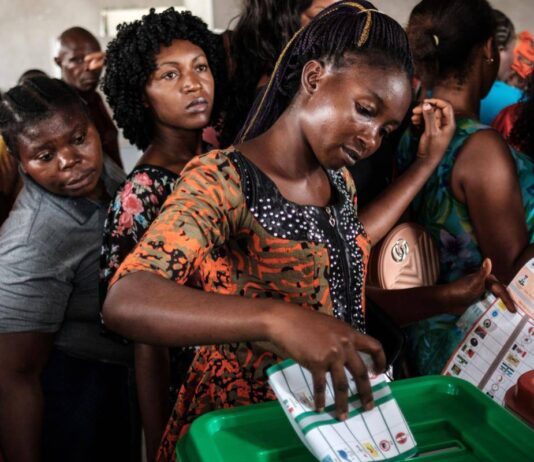
    In other news, a pro-democracy group known as The Natives staged a peaceful protest in Abuja, asserting their determination to resist clandestine plots by opposition political parties to undermine democratic rule in the country. Led by Smart Edwards, the protesters marched to the headquarters of the Independent National Electoral Commission (INEC), urging the authorities in the United States, Britain, and other nations not to fall for the opposition’s ploy to incite insurrection in Nigeria. The group reiterated its support for the declaration of Tinubu as the winner of the presidential election held recently and warned politicians to desist from inciting Nigerians against the citizens and democratic processes. Edwards cautioned Yusuf Datti, the Vice-Presidential candidate of the Labour Party (LP), to refrain from making inflammatory statements.

    READ ALSO: Soyinka Advocates Southeast Presidency for Civil War Healing

    “We want to particularly warn the LP vice president candidate, Yusuf Datti-Ahmed, to apply caution because Nigeria is a country and not Baze University.

    “Some people have been going round the country inciting others, calling for a taboo, they are calling for ING that will never happen, not in Nigeria, not in any African country that we support.

    “America is currently handling insurrection against her own state, so, we are certain that America, Britain and other nations will not promote insurrection in our nation.”

    The Commission’s Director of Security, Lebari Sam Nduh, received a letter addressed to the INEC chairman, Prof. Mahmood Yakubu, and responded by assuring that INEC would carry out its constitutional duties impartially and without prejudice.

    READ ALSO: Editorial: Strengthening Inspection of Election Materials to Deepen Poll Credibility

    Nduh said: “We want to thank you for being very responsible in your protest. We want to thank you for bearing in mind that we have no other country to call our own than Nigeria. We want to thank you for the civil manner you have conducted yourself. We want to assure you, on behalf of the management of INEC, that your message will be delivered to the Chairman. It is not going to pass through any other source than the Director of Security himself who will personally take it and deliver it to the Chairman, who is my direct boss.

    “I assure you that INEC will continue to do its optimum best in all that the law require it to do. Nigeria will be greater,” he said.