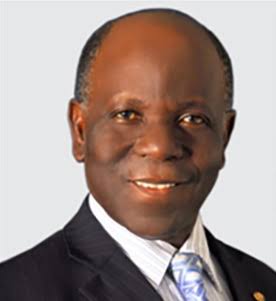
Today, I celebrate my father, mentor and helper, Chief Olusegun Osunkeye, who clocks 80 today.
Since my encounter with you about 15 years, I have had every cause to appreciate God for granting me the opportunity to meet and know you. You’ve ever since then embraced and adopted me as your son, and you’re always ready to support my vision.
I would always appreciate your impactful words of wisdom and encouragement. You’re always everly ready to listen, advise, guide and guard me accordingly, counselling and providing alternative viewpoints where necessary to achieve better results.
Thank you for your fatherly support and wonderful show of love over the years. Thank you sir for granting me the initial capital for the ongoing project I’m executing. Thank you for supporting my vision. Thank you for offering me fresh and new perspectives all the times.
Even when I don’t remember to call or update you on the status of the project, you’ll call me to inquire to know and find out if there’s any difficulty on my way. What a wonderful father I’ve got in you!
Ten years ago, we gathered to mark your 70th birthday anniversary and it was indeed a celebration of your great deeds as one of Nigeria’s most influential personalities of all times.
At 80, you remain one of the greatest and most outstanding Nigerians who has essentially contributed to the development and transformation of our dear country.
Your indelible marks of achievement, most importantly, your quests for investment and encouragement of local content remain subjects of reference while you served as the Managing Director/Chief Executive Officer of Nestle Nigeria Plc; Chairman, GlaxoSmithKline Consumer Nigeria; Chairman, Lafarge Plc; Chairman, International Chamber of Commerce Nigeria; and President, Society for Corporate Governance in Nigeria.
You have touched many lives with your managerial acumen, creating employment opportunities for a large number of people. And you remain one of Nigeria’s finest boardroom gurus and excellent administrators of all times.
As you celebrate your 80th birthday anniversary today, I pray Almighty God to continue to sustain you with good health and grant you fresh grace to enjoy your old age. Amen.
Happy birthday to you, my dearest father and mentor.
Today marks the anniversary of June 12, 1993, the day on which a general election was held in which my father, Chief M.K.O. Abiola, was elected President of the Federal Republic of Nigeria. Now, 27 years later, tragically, his campaign promise that Nigerians would say farewell to poverty remains unfulfilled.
My father had campaigned on a platform of restoring hope after General Ibrahim Babangida laid waste to a once vibrant economy with years of neoliberal economic policies. Within two weeks of M.K.O.’s election, on June 23, the military regime, inexplicably, annulled the results. By 1994, he was in jail, setting in motion a pro-democracy movement that continued until democracy was restored in 1999.
After 21 years, Nigeria now ranks as the wealthiest country in Africa. It is also the most populous with 200 million people. Yet, everyone feels the reality of deepening poverty across the country, causing many to question whether the democracy movement was worth the sacrifice.
Where did we go wrong? When that historic election was annulled, people power was ignited. Ordinary Nigerians led the struggle with their mother serving as the face of the movement. But we made a huge mistake. We thought our work was done when democracy was restored. With the benefit of hindsight, it is clear that our work had only just begun.
M.K.O.’s date with destiny should have been June the 12th. He, my mother, and so many students and activists are now dead. But Nigerians still have the prospect of realising the dream. If there’s anything we can learn from that time, it is this: the people must again take the lead.
In a world that is waking up to the fact that black lives matter, Nigeria’s demand for economic justice in the global system may finally be heard.
So let this be a day on which we renew our commitment to liberate ourselves from the shackles of poverty. United, we defeated a military dictatorship. United, once again, we can really fulfill the promise and eradicate poverty in our land.
In most developed and some developing climes that have evolved over time and have entrenched democracy and sustainable tenets of social and economic development, certain indices of development are not debatable as to whether desirable or otherwise. Whichever Government holds power, either liberal or conservative or even socialist, such tenets are usually sustained with some minor or operational changes in line with its ideological orientation that doesn’t undermine the fundamentals of such programs in the society.
In Canada for example, three provinces have successfully transitioned from a joint provincial- local funding system to a provincial-level funding system—a system that has the potential to promote at least equality, if not equity, in the funding of education.
In essence, it is almost unthinkable for a new Government at the Provincial level to change this major principle about educational funding irrespective of its ideological bias. This system or arrangement of funding schools has become a norm and tradition that is now immune from ideological shift of a new government. This continuity in policy has ensured stability of funding and assured sustainability of qualitative education.
The United States of America has developed its social security program over 200 years through successive governments of different persuasions. This program has retained its core elements with only minor adjustments to its operations and procedures over time.
Some countries and provincial governments in Africa have embraced this approach to development. Rwanda’s Strategic approach to developing its health sector is worthy of being a case study. According to the World Bank, in line with the 2018/24 National Health Sector Strategic Plan, the Rwandan authorities have set a bold target for all districts to decrease a stunting rate to 19% by 2024. To succeed in this endeavor, the Rwanda Economic Update makes several policy recommendations. One of such is for Rwanda to adopt a mass approach, targeting the poorest children less than 2 years of age during the critical 1,000-day development window; beyond which stunting is largely irreversible.
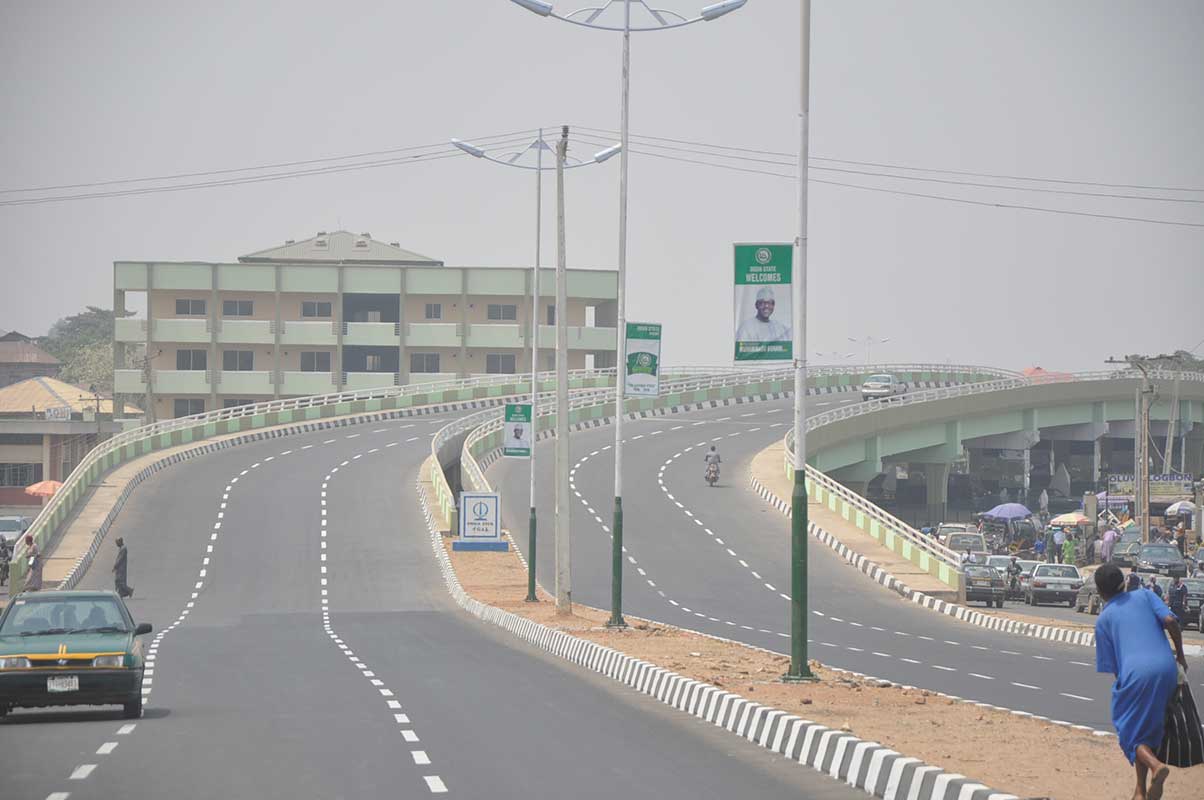
In Nigeria, the Ogun State government developed a 20 year plan and aggressively pursue its implementation. This plan now running into its fourth year is designed to achieve sustainable development which requires continuity in its implementation in order to realize the dream of irreversible growth, and consolidate on the current gains made in the development of infrastructure.
Proposed Abeokuta City Centre under construction by Governor Amosun’s government
Infrastructural development as it is currently being pursued will propel the state’s socio-economic potentials; act as driver for productivity and critical enabler of sustainable economic growth. The provision of infrastructure in forms of roads, bridges, schools, water etc, will certainly lead to creation of new jobs in the retail and industrial sectors. The bottom line effects are significant reduction in poverty, accelerated human capital development and a successful record of realizing the Millennium Development Goals (MDGs).
Aerial view of road network in Abeokuta, Ogun state
In his conference paper titled “Infrastructure Problems of Developing Nations and Sustainable Development: August 2006”, an independent researcher Olufemi Adedamola Oyedele lend credence to the Ogun State Government’s trajectory. He stated that: “there is no doubt that infrastructure is the key component of the investment climate…” He argued further that “fundamentally, infrastructure promotes trade and integration into world markets…”
At this stage of Ogun State development, one would wish it were possible to legislate for a certain percentage of CAPEX to be pegged at a certain bracket for a number of years just to accelerate development. There is no doubt that many states in Nigeria are far behind in infrastructural development. However, the quantum leap Ogun State achieved under the leadership of Senator Ibikunle Amosun FCA, CON has significantly accelerated development and gratify the needs and demands of the residents for a better socio-economic wellbeing.
Ogun State leaps from the 29th position it occupied prior to the advent of the Amosun administration to its 2nd position in Internally Generated Revenue (IGR) in 7 years to the admiration of many States. What the Senator Ibikunle Amosun led government has achieved proves that if we cannot establish or legislate some development principles, we can at least crave sustainable growth and have convergence of ideas on certain indices as path to socio-economic development in terms of the emerging paradigm shift.
In 2016 the National Bureau of Statistics released its report on Internally Generated Revenue (IGR) of all the states in Nigeria for 2015. The statistics showed a decrease in the total IGR of all the states of the federation by comparing the IGR of 2014 and 2015. The IGR of 2014 was N707.8 billion while that of 2015 stood at N683.6 billion. Even in the face of this decline, Ogun State still recorded one of the highest increases in IGR (49.42%). This feat was maintained in 2018 according to BudgIT, a civic and IT organization. It is being projected that Ogun State IGR is marching towards N10 billion a month by the last quarter of 2019.
As the electorates gears up to elect a new leadership in February, some questions agitate the mind. How can Ogun State continue to be more prosperous through increase in IGR that will provide the badly needed resources to develop all rural and urban areas of the State? What fate awaits the 20-year development plan? And which candidate can be trusted to continue the progressive development plan?
There are four candidates from four political parties amongst many that are the top contenders for the coveted seat. They are Gboyega Nasiru Isiaka (ADC), Abdulkabir Adekunle Akinlade (APM), Buruji Kashamu/ Ladi Adebutu (PDP) and Dapo Abiodun (APC).
Considering their antecedents and campaign promises, the Allied Peoples Movement (APM) gubernatorial candidate, AbdulKabir Adekunle Akinlade fits the bill. He is credited with having played a major role in the financial re-engineering of the Ogun State Internal Revenue Service (OGIRS). Akinlade, in 2011 was in the team that prepared the tax template that progressively delivered a sustained growth for the State. By 2016, that template achieved a 49.42% increase in Internally Generated Revenue.
In 2017, the State ranked 3rd behind Lagos and Rivers on IGR.
Since the inception of the current administration in 2011, over 700 companies have berthed in Ogun State. Reforms by the Amosun administration paid off and were recognized by the World Bank that it ranked the State 2nd in Ease of Doing Business. A feat only achieved by dedication and hard work.
The latest IGR report published in December 2018 revealed that only Lagos and Ogun State generated more IGR than the revenue received from the Federal Allocation by 105% and 107% respectively.
Undoubtedly, these feats were not achieved by the Governor alone. The credit goes to him and his team, which included Abdulkabir Adekunle Akinlade who is now vying for the seat of governor.
Having witnessed this much infrastructural development in almost 8 years, it is expected that Ogun residents would wish for nothing but sustainable growth. This can only be achieved by continuing the Mission to Rebuild Ogun State (MITROS). APM Gubernatorial candidate can be trusted to continue the implementation of the 20-year development plan.T
Tobiloba Kolawole is a public affairs analyst and public relations expert.
Keen observers of Ogun State political developments are still trying to discern the outcome of the All Progressives Congress (APC) primaries. On one hand, the Peoples Democratic party (PDP) seems to be irreconcilably divided with the Dayo Adedayo led faction emerging victorious through the judicial process. This has almost certainly assured Senator Buruji Kashamu the gubernatorial ticket.
On the other hand, the Ogun APC primaries brought a different dimension. While the PDP gladiators fought their battles in courts, the Ogun APC leaders opted to settle scores through the ballots. A former Governor of the State, in tango with an erstwhile Governor of Lagos State have pitched their tent with the official APC candidate, Prince Dapo Abiodun, who emerged through a process described by most observers as lacking democratic participation by APC party members. In essence, Prince Abiodun’s emergence as the gubernatorial candidate was ordained by the aforementioned erstwhile Governors through the National Chairman of APC Comrade Adams Oshiomhole.
The other party in the Ogun APC, simply opted to restructure their electoral participation through the Allied Peoples Movement (APM), where Governor Amosun’s preferred gubernatorial candidate and many others emerged as INEC recognised candidates for various elective offices.
So what could have led to this scenario? Is this a case of Ogun APC becoming the jewel of the shrine in the 2023 political calculations of Capo Du Tutti? Or as some have suggested that the Governor is an “Alaseju”.
Be that as it may, the point must be made that as fractious as APC appears, the opposition, as personified by PDP, is equally so weak that it poses little threat to the outcomes of the 2019 Ogun electoral battles.
But in order to comprehend the causal factor of the Ogun APC fracture, it is necessary to highlight the departing pressure points. First is the October 2nd 2018 gubernatorial primary and second the October 7th primary. Both primaries were conducted by two different NWC panels led by Indabawa and Col. Ali Ciroma (Rtd.). The October 2nd 2019 primary conducted by the Indabawa NWC panel became controversial following the annulment of the primary results that threw up Hon. Abiodun Akinlade as the winner. On another note, the October 7th national and state assembly primaries were rancour-free and the results were declared by the NWC Panel Chairman Col. Ali Ciroma (Rtd). These results, won fairly by Amosun loyalists, were also jettisoned by the Chairman of APC Comrade Adams Oshiomhole on the instigation of the aforementioned erstwhile Governors. It is this that finally led to the parting of ways by the Ogun APC leaders.
Bearing these in mind, the question that lingers in the minds of some who desired mechanical unity is that “Is Amosun an Alaseju?” As the leader of APC in Ogun State, Senator Amosun has tried his best to keep the party together as one family. Up till September 2018, before the primaries, the party was strong and united. If all other things were to remain equal, there is a high probability that the APC will coast home to victory in the 2019 governorship election without much ado.
But the same cannot be said of Ogun APC today. The party is now in a big mess following the controversial primary election in which the mandate given to Hon. Adekunle Abdulkabir Akinlade was annulled and handed over to Mr. Dapo Abiodun by the Oshiomhole-led National Working Committee (NWC) of the party. This was a rape of democracy, the height of injustice and the most inglorious electoral robbery ever perpetrated in the history of APC.
It is only natural that the governor, who is the leader and conscience of the party, must respond to that development. In the midst of his response, which was not palatable to his detractors, we often hear a riposte that Senator Amosun is an “alaseju”, meaning, when literally translated, that he is overdoing things and cannot be kept under check. Haba! I am tempted to say that this kind of riposte on the part of some supposedly learned individuals lacks a sense of history and fails to understand the power play within the party.
A recount of how the APC under Senator Amosun got to where it was, before hell was let loose, will clear the air. Prior to the 2015 elections, a group within the party led by a respected former governor of Ogun State, Chief Olusegun Osoba, stirred the hornets’ nest and decided to organise a parallel governorship primary in Ogun APC, which did not jell. In an attempt to avoid the shame of losing out in the primaries, Chief Osoba and co, including all their disgraced candidates, left APC to contest the election under the banner of Social Democratic Party (SDP). Osoba boasted to high heavens that the SDP would win the 2015 elections and put the Amosun-led APC to ignominy. As it turned out, the results showed that Chief Osoba and his group were electoral liabilities as they lost the 2015 elections woefully.
The Amosun-led APC won the said elections with a landslide victory. Senator Amosun immediately initiated policies that transformed the APC into a virile and the most organised chapter of the party in the country. As it were, the rancour-free congresses of the party in May 2018 had kept the other chapters in the country wondering how the Ogun State chapter did it.
Though Chief Osoba and co found themselves back in APC on the eve of 2015 elections, one cannot really blame them for this. Chief Osoba is a well discerned politician. He realised that while he was outside the APC, Senator Amosun had used his resources to build the party. There is nothing bad in wanting to be part of the success story. However, Chief Osoba and co had a different agenda; the intention was to come and hijack the APC structure and feed fat where they didn’t sow.
What happened before, during and after the primaries in Ogun APC is no longer news. Chief Osoba, in concert with Asiwaju Bola Ahmed Tinubu and the National Chairman of the party, Mr. Adams Oshiomhole, upturned the will of the people and imposed Mr. Dapo Abiodun as the governorship candidate of APC in Ogun State. The imposition of Mr. Dapo Abiodun was a volte-face.
In his response to this treachery, Senator Amosun didn’t do anything unwieldy to warrant the shout of “alaseju” as some gullible observers would want us to believe. He only allowed those who were cheated in the primaries to exercise their democratic rights. Would it be right for Senator Amosun to stop them from dumping APC and moving to a new party?
Indeed it is unreasonable to expect Senator Amosun to agree to the Oshiomhole-led treachery. It would have amounted to committing a political hara-kiri, just as Wole Soyinka said: “The man dies in him who keeps silence in the face of tyranny.”
Senator Amosun is perceived to have acted rightly by standing firm without betraying his conscience.
We use cookies to ensure that we give you the best experience on our website. If you continue to use this site we will assume that you are happy with it.