Category: Africa

  • African Union Commission Inaugurates AfCFTA Permanent Secretariat in Ghana

    African Union Commission Inaugurates AfCFTA Permanent Secretariat in Ghana

    With a provision of a $5 million institutional support grant by the African Development Bank Group, African Union Commission has launched the permanent secretariat of the African Continental Free Trade Area (AfCFTA) to ensure the economic transformation of the continent.

    AfCFTA permanent secretariat would be located in an ultra-modern office complex in the Central Business District of Ghanaian capital, Accra.

    Ghana’s President Nana Akufo-Addo hands over the AfCFTA permanent secretariat to African Union, Monday August 17, 2020. Image: CGTN

    Speaking at the ceremony on Monday, Ghana’s President Nana Akufo-Addo and Chairperson, AU Commission, Moussa Faki Mahamat, reaffirmed the importance of the body to the continent’s economic transformation agenda.

    “The economic integration of Africa will lay strong foundations for an Africa beyond aid. Africa’s new sense of urgency and aspiration of true self-reliance will be amply demonstrated by today’s ceremony,” Akufo-Addo said.

    Akufo-Addo appealed to member states that have not ratified to do so before the next AU summit in December in order “to pave the way for the smooth commencement of trading from 1 January, 2021.”

    The global novel Coronavirus (COVID-19) pandemic has heightened the importance of the success of AfCFTA, the Ghanaian president said.

    “The destruction of global supply chains has reinforced the necessity for closer integration amongst us so that we can boost our mutual self-sufficiency, strengthen our economies and reduce our dependence on external sources,” he said.

    Ghana was selected as the venue for the headquarters by African leaders during a Summit of AU Heads of states in Niamey in July last year, to launch the implementation phase of the agreement, which is expected to spur regional trade among member countries.

    Currently, 54 states have signed on to AfCFTA, out of which 28 have ratified the agreement.

    AfCFTA, the world’s largest free trade area, has the potential to transform the continent with its potential market of 1.2 billion people and combined GDP of around $3 trillion across the 54-member states of AU.

    Mahamat said the opening of the secretariat marked a milestone in the vision of Africa’s founding founders for continental integration.

    Also speaking, the first AfCFTA Secretary-General, Wamkele Mene, said the agreement offered an opportunity for Africa to confront the significant trade and economic development challenges: market fragmentation, small national economies, over-reliance on primary commodity exports, narrow export base, lack of export specialisation, under-developed regional value chains and high regulatory and tariff barriers to trade.

    “We have to take action now. We have to take action to dismantle the colonial economic model that we inherited,” Mene reiterated.

    The Vice President for the Private Sector, Infrastructure and Industrialisation of the African Development Bank, Solomon Quaynor, said the establishment of AfCFTA permanent secretariat is in keeping with the bank’s role of continental leadership in helping to build special-purpose vehicles that are critical to the successful implementation of crucial institutions to accelerate Africa’s economic development objectives.

    “The African Development Bank congratulates the AU/AfCFTA on the investiture of the Secretariat hosted by Ghana on 17 August 2020.

    “The bank is delighted to be associated with this groundbreaking, game-changing, transformational continental initiative in furtherance of the objective to create the Africa we want.

    “Our support to AfCFTA is in keeping with the bank’s role of continental leadership in helping to build special-purpose vehicles that are critical to the successful implementation of crucial institutions to accelerate Africa’s economic development objectives,” Quaynor added.

    The event also featured virtual goodwill remarks from AU Chairman, President Cyril Ramaphosa of South Africa, and Nigerien President Mahamadou Issoufou.

    Idowu Sowunmi

  • African Development: Gbajabiamila pushes for debt cancellation, spearheads Conference of Speakers

    African Development: Gbajabiamila pushes for debt cancellation, spearheads Conference of Speakers

    • Nigeria to host maiden Conference of African Speakers and Heads of Parliament

    The Speaker of the House of Representatives, Femi Gbajabiamila on Monday convened a meeting of some African Speakers of Parliaments where it was agreed that there is an urgent need to push for debt cancellation for the continent from their multilateral and bilateral partners.

    At the virtual meeting, the Speaker’s proposed initiative to establish the Conference of African Speakers and Heads of Parliament (CoSAP), a body that will facilitate increased collaboration between Speakers, Heads of Parliament and National Assemblies across Africa got a boost.

    READ ALSO:

    International Flight Operations Resume in Nigeria Aug 29, Says FG

    The African Speakers will also seek to advance the African development agenda within and outside the continent in conjunction with both the executive arms of government as well as African regional institutions.

    African Heads of Parliament who participated in the meeting include Hon. Tagesse Chafo, Speaker, House of Peoples Representatives, Ethiopia; Rt. Hon. Prof. Aaron Mike Oquaye, PhD, Speaker of Parliament, Ghana; Hon. Justin Bedan Muturi, Speaker, National Assembly, Republic of Kenya; Rt. Hon. Donatille Mukabalisa, Speaker, Chamber of Deputies, Rwanda; and President Moustapha Niasse, AFP, President, National Assembly, Senegal.

    In his opening remarks, Gbajabiamila said there was an urgent need to join local and global efforts to push for the cancellation of external debt owed by various countries on the continent.

    He submitted that development across the continent has become stunted due to the heavy burden of the debts, noting that the outbreak of the coronavirus (COVID-19) has compounded the issue for the continent, considering the socio-political and economic consequences of the disease.

    “We all agree that Africa’s debt burden has become an existential threat to our societies, our economies and the future; we leave to posterity, and we need to do something about this and treat it as a continent-wide priority.

    “It is safe to say that the burden of debt servicing, vis-à-vis spending on education and health care for example, is a threat to our continent’s stability and development, especially in the era of Covid-19.

    “When we find ourselves having to make policy choices between paying debts or saving lives, we know something is not morally right. And as democratically elected representatives of our people, we cannot be silent. We must speak up and we must act. And the time to act is now.

    “Furthermore, is the need for us to reflect on, the processes that led to Africa’s heavy indebtedness in the first place, the role parliamentarians can play to address this going forward and what assurances we as parliamentarians can give our borrowers that if our debt is cancelled, the freed-up resources will be invested in social and economic development of our citizens.

    “If we want debt cancellation, we must be able to build the confidence of the borrowers that the cancellation will indeed save lives and livelihoods across the continent, and we, as Speakers and Heads of our parliaments, will ensure that is indeed the case”.

    READ ALSO:

    Buhari’s aide tells Oyedepo – Abide by CAMA or manufacture your own country


    On the need for the establishment of the Pan-African Speaker’s Conference, Gbajabiamila noted that collective efforts at tackling challenges facing the continent have become expedient.

    He said: “The motive behind this initiative is that each year we identify a theme, issue, or challenge that is pan-African in scope and we meet to deliberate on how we can work together across parliaments in Africa to tackle these continental issues and challenges.

    “As heads of our respective parliamentary entities, it will also be a good platform to share experiences and expertise in different aspects of our legislative duties pertinent to the growth, development and sustenance of our economies and our societies; and on ways to enhance the capacity and impact of our parliaments on our democracies and the lives of the peoples we all represent.

    “We have spent decades learning from the rest of the world, now we must begin to learn from one another”.

    Throwing his weight behind the two initiatives, Hon. Tagesse Chafo, Speaker, House of Peoples Representatives, Ethiopia, noted that though almost every government on the continent has been trying to seek debt forgiveness, this should not, however, stop the parliaments from contributing to the efforts through a platform such as this.

    “As representatives of our people, we are to come together, advise and campaign about the issue, we don’t have to keep quiet because debt cancellation would be good for the resuscitation of our economies that have been ravaged by the COVID-19 pandemic,” he added.

    In the same vein, Rt. Hon. Prof. Aaron Mike Oquaye, Speaker of Parliament, Ghana noted that the debt burden is essentially a common challenge on the continent, as most African countries have to depend on foreign loans to execute their national budgets.

    He, however, noted that the Speaker’s group, in its efforts to push for debt cancellation must be able to convince the creditors about accountability if they hope to succeed.

    He said: “Donor agencies are interested in accountability because they are confounded about the issue of corruption, and we must be able to give the assurance and that is why the Speakers Conference is critical. And if nothing is done, there may be no economy to service the loans”

    Hon. Justin Bedan Muturi, Speaker, National Assembly, Republic of Kenya also emphasised the need for the initiative, adding that, the coronavirus pandemic has undermined most African economies because conditions attached to most of the loans have been eroded by the consequences of the novel pandemic.

    On her part, Rt. Hon. Donatille Mukabalisa, Speaker, Chamber of Deputies, Rwanda, while noting that African countries depend on and are heavily burdened by loans even before the pandemic, however, added that the group must be clear about the kind of debt it is seeking to address and from which partners.

    READ ALSO:

    Bayelsa Governor Heads to Appeal Court over Tribunal Ruling


    While President Moustapha Niasse, AFP, President, National Assembly, Senegal also regretted that the pandemic has affected all economies on the continent negatively, he, however, suggested that opinions of members of the forum must be sought on how to solve the issues between suspension or cancellation of debt

    “We must be convinced that we have a job to do at the level of parliament,” he added.

    It was also agreed that a Communique would be released in the first week of September 2020, while the campaign for implementations of the plan of action would begin in the second week of September 2020 as well.

    According to the forum, the third week of September would be devoted to the planning for the 2021 conference by the Secretariat.

    While it was decided that Nigeria would host the maiden edition of CoSAP, chaired by Nigerian Speaker the Rt. Hon Femi Gbajabiamila, the new body is expected to meet again in the first week of September to approve the plans and swing into action.

    Nigeria Speaker, House of Representatives, Rt. Honourable Femi Gbajabiamila. Monday, August 17, 2020. Photo- Office of the Speaker.

    Tobiloba Kolawole

  • Video: Another ‘Trade War’ is Brewing Between Nigeria and Ghana

    Video: Another ‘Trade War’ is Brewing Between Nigeria and Ghana

    Another round of ‘retail trade war’ is now brewing between Nigerian traders and their Ghanaian counterparts over the legal status of traders that should operate at the retail market located at Kwame Nkrumah Interchange (Circle) in Ghana.

    While Nigerians under the aegies of the Nigerian Union of Traders Association Ghana (NUTAG) expressed shock at the Ministry of Trade and Industry for locking up nearly 50 shops of its members in Accra on Thursday under what it described as questionable circumstances, the Ghana Union of Traders Association (GUTA) claimed that majority of foreign retailers in the country do not have permits to engage in retailing.

    But, NUTAG President, Chukwuemeka Nnaji, said his members have the right documentation to operate in the retail market and they also comply with the taxes they are expected to pay.

    Nnaji, in an interview, said the Nigerian traders were not treated fairly, even with their official and legal documentations to support their business operations in Ghana.

    According to him, “We got a notice that a Ghanaian committee will come to inspect the documentations of the Nigerian traders. We alerted all our members to get ready for the inspection.

    “The Ghanaian Task Force began the inspection at Abossey Okai and arrived at Kwame Nkrumah Interchange (Circle) on Thursday.

    “But we were shocked to see the task force forcefully try to lock up our shops even though we have the right documents to operate in Ghana.”

    It’s alleged that Ghanaian traders have been mounting pressure on their Nigerian counterparts to pay more for their business operations in Ghana.

    The Nigerian traders were initially asked to pay a sum of $300,000 to register for retail trade in Ghana, which runs contrary to the treaty of the Economic Community of West African States (ECOWAS). For them to remain in business, the traders rallied round themselves and put resources together to get a group licence with which they were able to secure different shop outlets.

    The latest information alleged that Ghanaian government is now demanding for a sum of $1 million to be paid by the Nigerian traders in order to remain in business.

    It would be recalled that GUTA had been accusing majority of foreign retailers in Ghana of not having permits to engage in retailing.

    Relying on the GIPC Act, 2013 (865), GUTA argued that the law spells out the terms and conditions under which foreigners can engage in retailing in Ghana.

    The law bars the “sale of goods or provision of services in a market, petty trading or hawking or selling of goods in a stall at any place” by foreigners.

    GUTA recently warned Ghanaian government of an impending massive job losses in the retail market if proposals to review restrictions in that space are allowed.

    In November 2019, GUTA closed about 600 shops owned by foreigners, mainly Nigerians, relying on the GIPC Act.

    The shops were reopened after months of closure. In order to address all the grey areas, a Presidential Committee on Foreign Retail Trade was instituted in February 2020.

    Speaking on the matter on February 4, 2020, a representative of the Minster of Trade, Ntim Odonkor, said: “The issue of foreigners taking over trading activities reserved for Ghanaians which has been your concern sometime has also come to the notice of government.

    “As directed by his Excellency, a technical sub-committee has been put together to ensure the implementation of the president’s directives on this matter.

    “Secondly, parliament has charged its subsidiary committee on Trade, Industry to study and make recommendations in a by-partisan manner with a view to finding a sustainable solution to this issue.”

    It’s not cleared if the the Ghanaian Task Force is implementing the modified directives of Mr. President (Nana Akufo-Addo) or fresh recommendations by the subsidiary committee on trade and industry in the parliament.

    Video:


    By Idowu Sowunmi

  • AU, Ecobank Launch MSME Academy for Africa’s Micro, Small and Medium Enterprises 

    AU, Ecobank Launch MSME Academy for Africa’s Micro, Small and Medium Enterprises 

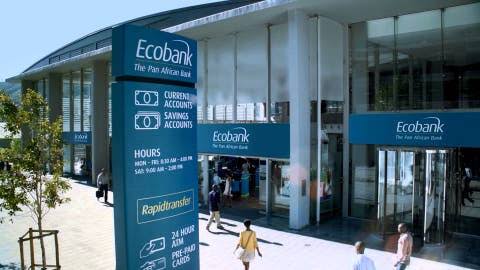
    New Partnership for Africa’s Development (NEPAD), a socio-economic flagship programme of the African Union Development Agency (AUDA), otherwise called AUDA-NEPAD, has launched the Micro, Small and Medium Enterprises (MSME) Academy, in partnership with Ecobank Group.

    Spearheaded under AUDA-NEPAD ‘100,000 MSMEs by 2021’ (100K MSMEs) programme for Africa’s Micro, Small and Medium Enterprises, the Academy provides easy access to practical training and resources on financing opportunities in various countries, materials on how to build digital presence for businesses and how to adapt business operations in the era of the novel Coronavirus (COVID-19) pandemic.

    (more…)

  • Putin: World’s First Vaccine against COVID-19 to Be Registered in Russia

    Putin: World’s First Vaccine against COVID-19 to Be Registered in Russia

    Russian President Vladimir Putin Monday disclosed that the world’s first vaccine against the novel Coronavirus (COVID-19) would be registered in his country in a few days.

    Putin, who stated this on his Facebook page, explained that Russian scientists have passed necessary test stages and proved the safety and effectiveness of the drug.

    India records over 30,000 coronavirus deaths as US tops 4m cases

    According to him, “The world’s first vaccine against coronavirus will be registered in Russia in a few days.

    “Russian scientists passed necessary test stages and proved the safety and effectiveness of the drug.

    “Our medicine has adequately coped with the epidemic and now gives hope not only to our country, but to the whole world.

    After 11 days in isolation, Gov. Fayemi survives Coronavirus

    “Once the Soviet satellite paved the way for humanity into space, now the Russian vaccine will pave the way to the future without COVID-19, masks and social isolation.”

  • Seven Multilateral Development Banks Contribute $61.6bn to Reduce Global Warming

    Seven Multilateral Development Banks Contribute $61.6bn to Reduce Global Warming

    A 2019 Joint Report on Multilateral Development Banks’ Climate Finance has disclosed that climate financing by seven of the world’s largest multilateral development banks (MDBs) now totalled $61.6 billion as at 2019, of which $41.5 billion (67 per cent) was in low- and middle-income economies.

    The study expanded the scope of reporting for the first time to all countries with multilateral development bank operations, providing data on MDB climate finance commitments beyond those directed solely at developing and emerging economies, but with the focus remaining on low- and middle-income countries.

    This year the report combined data from the African Development Bank, the Asian Development Bank (ADB), the European Bank for Reconstruction and Development (EBRD), the European Investment Bank (EIB), the Inter-American Development Bank Group (IDB Group), the World Bank Group (WBG) and – for the first time – the Islamic Development Bank (IsDB), which joined the working group in October 2017.

    In 2019, the Asian Infrastructure Investment Bank (AIIB) also joined MDB working groups, and its data was presented separately within the current report.

    The 2019 report showed that $46.6 billion, or 76 per cent of total financing for the year, was devoted to climate change mitigation investments that aim to reduce harmful greenhouse gas emissions and slow down global warming. Of this, 59 per cent went to low- and middle-income economies.

    The remaining $15 billion, or 24 per cent, was invested in adaptation efforts to help countries build resilience to the mounting impacts of climate change, including worsening droughts, extreme flooding and rising sea levels. Ninety-three percent of this finance was directed at low- and middle-income economies.

    Additional climate funds channelled through MDBs, such as the Climate Investment Funds (CIF), the Global Environment Facility (GEF), Trust Fund, the Global Energy Efficiency and Renewable Energy Fund (GEEREF), the European Union’s funds for Climate Action, and the Green Climate Fund (GCF), which play an important role in boosting MDB climate financing.

    In 2019, MDBs reported a further $102.7 billion in net climate co-finance – investments from the public and private sector – taking the total of climate activity financed in the year to $164.3 billion.

    MDBs have reported on climate finance since 2011, based on a jointly developed methodology for climate finance tracking.

    The 2019 edition of the Joint Report on MDBs’ Climate Finance was published in the midst of the novel Coronavirus (COVID-19) pandemic, which has caused significant social and economic disruption, temporarily reducing global carbon emissions to 2006 levels.

    Speaking on this development, the Director of Climate Change and Green Growth at the African Development Bank, Anthony Nyong, noted: “Our investments that contribute to the goals of the Paris Agreement continue to grow. The climate finance provided by the bank increased from $3.2 in 2018 to $3.5 billion in 2019 – representing 35 per cent of total project approvals worth $10.2 billion.”

    The largest climate finance investments were made in the energy, agriculture and transport sectors.

    Importantly, the bank exceeded its target of achieving parity between adaptation and mitigation finance by allocating 55 per cent of its climate finance resources to adaptation and 45 per cent to mitigation, whereas globally more than 70 per cent of climate finance is allocated to mitigation. More global efforts are needed to build climate change resilience and adaptation in Africa.

    “As African economies face the devastating impacts of the COVID-19 pandemic, slacking action or redirecting financial resources from climate change will further compound these impacts in a diverse and complex manner,” Nyong said.

    Idowu Sowunmi

  • ‘Investment Committee will provide a bridge between investors and African energy industry’

    ‘Investment Committee will provide a bridge between investors and African energy industry’

    African Energy Chamber Wednesday announced the appointment of a seven-man member to its Investment Advisory Committee, the last body to serve on its Advisory Board for 2020 and 2021.

    The chamber said the new Investment Committee would provide solutions towards financing Africa’s energy resurgence.

    The members of the committee include: Global Head, Client Relations, Afreximbank, René Awambeng; Managing Director, EnergyInc Advisors and Senior Africa Advisor, IFU Danish Investment Fund, Rolake Akinkugbe-Filani; former Oil Executive and Energy Consultant, Abongwa Ndumu; Partner and Executive Director – Upstream, Cayo Energy LP, Robert Erlich; Vice President – Africa, ION, Folarin Lajumoke; Executive Chairman/Founder, Raise Africa Investments, Nosizwe Nokwe-Macamo; and CEO, Afara Solutions, Rachelle Yayi.

    Members of the Investment Committee have been serving in their personal capacity and have gathered a wide range of expertise in finance, legal and consulting.

    Beyond this, the members would play a key role in supporting the African Energy Chamber’s investment outreach initiatives.

    “Our Investment Committee is central to the African Energy Chamber’s objective of providing a bridge between investors and the continent’s energy industry.

    “Africa has limitless investment opportunities across energy sources and across value-chains, and there is a pressing need to communicate better with financiers and investors to increase investments in the continent.

    “The African Energy Chamber has made it its mission to boost capital and technology inflow on the continent, from engaging with new capital providers interested in Africa to advising on the structuring of better and future deals,” said the Executive Chairman at the African Energy Chamber, NJ Ayuk.

    With billions of dollars required every year to upgrade its energy infrastructure and fight energy poverty, the continent needs to successfully mobilise a wide variety of capital and financing.

    In doing so, African energy markets should be engaging with a broader range of capital providers, from traditional lenders to global institutional investors and private equity firms to venture capitalists.

    The energy resurgence of the continent following the novel Coronavirus (COVID-19) would require all stakeholders to come together and find new ways to structuring deals and raising capital for the benefits of local economies and jobs creation.

    Landmark gas projects across Africa have managed to attract regional and global capital in recent months and years.

    From Senegal to Mozambique and Equatorial Guinea, Africa has demonstrated its ability to attract funding. However, investment is still falling short of market needs.

    While Nigeria’s ongoing Marginal Fields Bidding Round stands to be a success, access to financing the development of such fields will remain a key challenge for the operators.

    African energy companies in Nigeria, Cameroon, Gabon, Ghana, Mozambique and South Sudan, Uganda and South Africa continue to see capital as their biggest obstacle when it comes to developing African natural resources or even competing for service contracts.

    Idowu Sowunmi

  • WAEC releases timetable for 2020 WASSCE

    WAEC releases timetable for 2020 WASSCE

    West African Examinations Council (WAEC) Tuesday released the final international timetable for the conduct of the 2020 West African Senior School Certificate Examination (WASSCE).

    READ ALSO: Abiodun bows to pressure, cancels N25,000 COVID-19 test for SS3 students

    The council, which took to its Twitter handle to break the news in a statement by its spokesperson, Demainus Ojijeogu, enjoined the general public to disregard “several versions of the examination timetable that have been in circulation.”

    The statement stated that the examination would begin effective from August 17 to September 12, 2020.

    READ ALSO: How we spent N500m on school feeding programme during lockdown – Minister

    “The council hereby urges the candidates to abide by the rules and regulations guiding the conduct of the examination by shunning all acts of malpractice and obeying all COVID-19 protocols that have been put in place at the examination centres,” WAEC said.

    Idowu Sowunmi

  • Energy Chamber strengthens quest for enabling environment with key appointments 

    Energy Chamber strengthens quest for enabling environment with key appointments 

    African Energy Chamber has announced the appointment of some prominent experts in the oil and gas industry into its Regulatory Affairs Committee to serve on its Advisory Board for 2020 and 2021.

    The experts so appointed include: Regional CTO, Strategy and Innovation at Microsoft, Jovita Nsoh; Associate Attorney, Centurion Law Group, Oneyeka Ojogbo; Managing Director, Africa Oil & Gas Limited, Nicolas Bonnefoy; President/CEO, WTD Resources LLC, Bill Drennen; Managing Director/CEO, Ocean Deep Drilling ESV Nigeria Limited (ODENL), Chijioke Akwukwuma; and Bruce Falkenstein of Upstream Advisory and Consulting.

    The committee would be central to the chamber’s policy advocacy and advisory efforts across the continent to provide an enabling business environment for investors and entrepreneurs.

    READ ALSO:

    How we spent N500m on school feeding programme during lockdown – Minister

    Members of the Regulatory Affairs Committee act in their personal capacity and gather decades of experience within the public and private sector, with a strong legal expertise of African and global energy markets.

    “African markets must stay competitive and must do better at attracting investment and respecting the sanctity of contracts.

    “From adopting progressive local content legislation to implementing better fiscal regimes, African energy markets must seize the opportunity offered by the global pandemic to review their existing frameworks, keep what is working and amend what is slowing down the pace of investment in the continent,” said the Executive Chairman at the African Energy Chamber, Nj Ayuk.

    READ ALSO:

    Air Peace admits 40% salary cut, silent on sacked pilots figure

    Given increasing competition for investment and challenging market conditions, the right to adopt market-driven policies and promote an enabling business environment across Africa is greater than ever.

    Acting as the link between the public and private sector, the African Energy Chamber strongly believes that a recovery from the novel Coronavirus (COVID-19) pandemic would require a stronger emphasis on market-driven policies, investors-friendly environments and regulations that embrace digitisation so African markets could compete for capital and technology globally.

    Idowu Sowunmi

  • COVID-19: President Buhari donates N67M PPEs to Sao Tome and Principe

    COVID-19: President Buhari donates N67M PPEs to Sao Tome and Principe

    Nigerian President, Muhammadu Buhari has donated N67m worth of Personal Protective Equipment (PPE) to Sao Tome and Principe, a gesture to assist the African Island nation in its fight against COVID-19.

    The Chairman, Presidential Task Force (PTF) on COVID-19, Boss Mustapha, disclosed this on Monday during a briefing in Abuja.

    READ ALSO: Don’t reopen worship centres in Lagos, Bakare warns Churches

    “I am happy to inform you that as ECOWAS champion in the containment of COVID-19 in the West African sub-region, Mr President made a donation of 67 million naira worth of PPEs and medical supplies to the government and people of Sao Tome and Principe,” Boss Mustapha Stated.

    The SGF, Mr Boss Mustapha, addressing reporters at a PTF briefing in Abuja.

    This donation was a response to a request by the government of Sao Tome, seeking aid to help the country effectively manage the coronavirus pandemic which is ravaging the world.

    Medical equipment donated include units of test kits, extraction kits, infrared thermometers, and other items of personal protective equipment to treat and test thousands in Sao Tome and Principe.

    READ ALSO:

    Abiodun bows to pressure, cancels N25,000 COVID-19 test for SS3 students

    In a similar vein, the goods that were procured by the West African Health Organization (WAHO), and have been brought into the hub in Abuja will soon be distributed following orders by President Buhari.

    Mustapha noted during his remark that starting from Wednesday, August 3, the Nigerian Air Force (NAF) will play a vital role in the distribution process from Nigeria to other West African countries.