

According to Vanguard reporting, global oil prices have crossed the critical $100 per barrel mark as tensions between the United States, Israel, and Iran intensify. This price surge presents a double-edged sword for the Nigerian economy, potentially boosting foreign exchange reserves while simultaneously threatening to drive up the domestic cost of refined petroleum products.
Industry analysts suggest that while the windfall from crude exports could improve the federal government’s fiscal position, the lack of full domestic refining capacity remains a vulnerability. The Nigerian National Petroleum Company (NNPC) Limited is currently navigating these volatile market shifts to prevent a total collapse of the current price stability in the local energy sector.
Economic observers emphasize that the sustainability of the current pump price depends heavily on the production levels from the Dangote Refinery and other modular facilities. If local production does not meet demand, the government may face renewed pressure to intervene in pricing or risk widespread inflation across all sectors of the economy.
The Guardian and ThisDay have corroborated this development. The Guardian reports that “the IEA forecasts a potential 8 million bpd supply loss if the conflict escalates further,” while ThisDay notes that “Nigeria’s 2026 budget, predicated on $64.85 per barrel, now faces a massive revenue-to-cost realignment.”
Echotitbits take: While the $100+ price point is great for the Federation Account, the “subsidy-free” regime will be put to its ultimate test. Watch for the NNPC’s next pricing template; if they don’t hold the line, transport and food costs will skyrocket by next week.
Source: The Guardian – https://guardian.ng/energy/oil-rebounds-above-100-millions-displaced-as-middle-east-crisis-bites-harder/, March 13, 2026
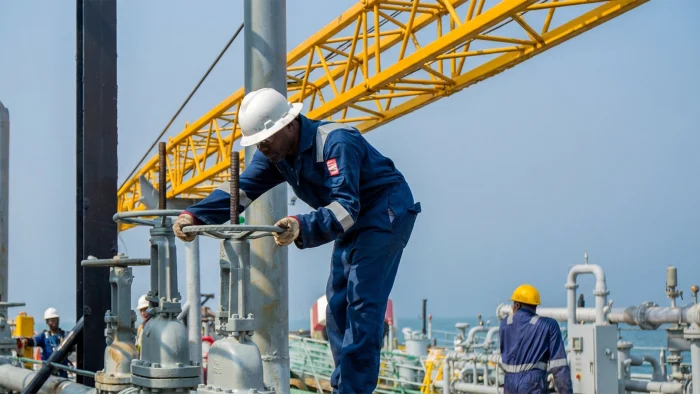
Photo credit: The Guardian