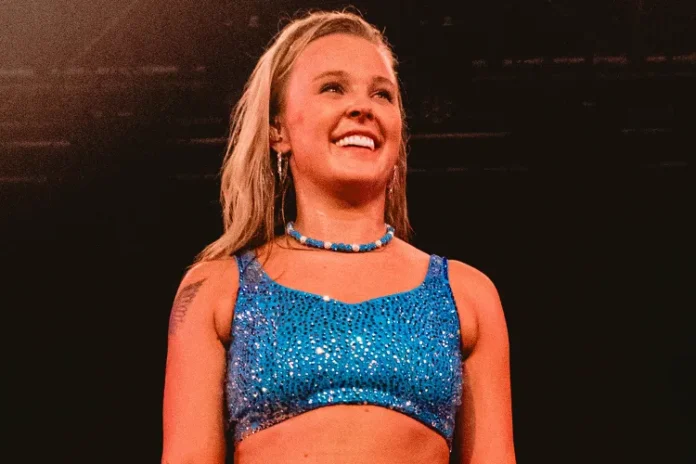
According to PEOPLE, JoJo Siwa updated her TikTok name to “Joelle Siwa,” sparking immediate chatter that a bigger 2026 rebrand is underway.
Fans read the change as a signal of a more grown-up era, especially for a star whose identity was built on a highly recognizable childhood brand.
Online reactions range from excitement about a fresh creative chapter to curiosity about whether the new name will carry into music credits and official press.
E! News (Outlet): “Her changing her name from jojo to Joelle has to be the biggest pull ever!!!”
Page Six (Outlet): “2026 is gonna be crazy!!!”
Echotitbits take: On TikTok, identity is discovery: a name tweak can be the first breadcrumb before new music, a doc, or a style pivot. Watch next for synchronized handle changes across platforms, updated visuals, and any rollout announcements that confirm whether “Joelle” is a permanent professional shift or a temporary social experiment.
Source: PEOPLE — January 2, 2026 — https://people.com/jojo-siwa-changes-her-name-2026-plans-11878210
According to TMZ, rapper G Herbo proposed to longtime partner Taina Williams on New Year’s Eve, quickly turning the moment into one of the first major relationship headlines of 2026.
Reports describe the proposal as part of a celebratory night, with fans immediately shifting from congratulations to ring details and wedding timeline talk.
The engagement is also feeding the familiar hip‑hop cycle where personal milestones become full media moments across outlets and socials.
BET (Outlet): “G Herbo ended 2025 by proposing.”
Hot 97 (Outlet): “G Herbo closed out 2025 with a milestone moment.”
Echotitbits take: Hip‑hop relationships now function as pop‑culture events—driving headlines, brand chatter, and sometimes even streaming attention around an artist. Watch next for any official posts from the couple (photos, ring close‑ups, engagement captions), because that’s what typically locks the story down beyond outlet reporting.
Source: TMZ — January 1, 2026 — https://www.tmz.com/2026/01/01/g-herbo-taina-williams-engaged/
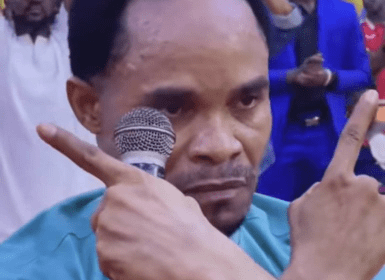
In an update reported by TheCable Lifestyle, controversial cleric Odumeje declared 2026 a year of “kabush kabash,” a phrase that instantly jumped from crossover service theatrics to social feeds.
The slogan is already being remixed into captions, soundbites, and memes—classic Nigeria-in-January internet behavior.
But it also revives the recurring argument about performative preaching and the influence economy that thrives on viral ministry moments.
NigerianEye (Outlet): “2026 is a year of kabush kabash.”
Instagram reel caption (Instagram): “2026 is a year of Dabush Kabash.”
Echotitbits take: Odumeje-style virality sits at the crossroads of religion, entertainment, and influencer culture—where a single soundbite can dominate the week. If you treat it as pure comedy, it spreads faster; if you treat it as serious prophecy, it can shape narratives. Watch next for mainstream pushback, platform amplification, or further ‘crossover’ clips that keep the meme alive.
Source: TheCable Lifestyle — January 1, 2026 — https://lifestyle.thecable.ng/extra-2026-is-a-year-of-kabush-kabash-odumeje-declares/
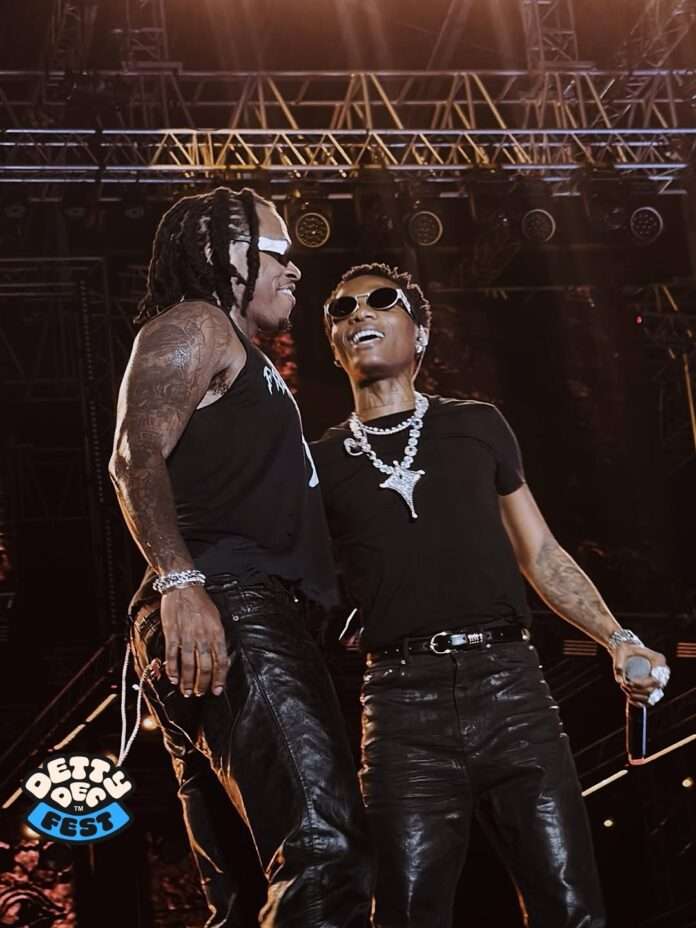
In a report published by BellaNaija, Wizkid made a surprise appearance during Gunna’s Detty December Fest performance, sending the crowd into instant frenzy.
The moment is being shared as another example of Lagos’ December pipeline—global acts arriving, then colliding with Nigerian star power on stage.
Beyond the hype, fans are already asking the practical question: was it a one-off cameo, or the start of a wider collaboration push?
Vanguard (Outlet): “Wizkid thrilled fans with a surprise appearance.”
Instagram clip share (Instagram): “Moment Wizkid joined Gunna on stage.”
Echotitbits take: Surprise stage link-ups now function like mini marketing campaigns: the clips travel, the festival gets free press, and both artists benefit from cross‑audience exposure. Watch next for any official reposts, backstage footage, or remix chatter—those are usually the signals that a viral performance is being turned into a deliberate rollout.
Source: BellaNaija — December 31, 2025 — https://www.bellanaija.com/2025/12/wizkid-gunna-surprise-detty-december-fest/
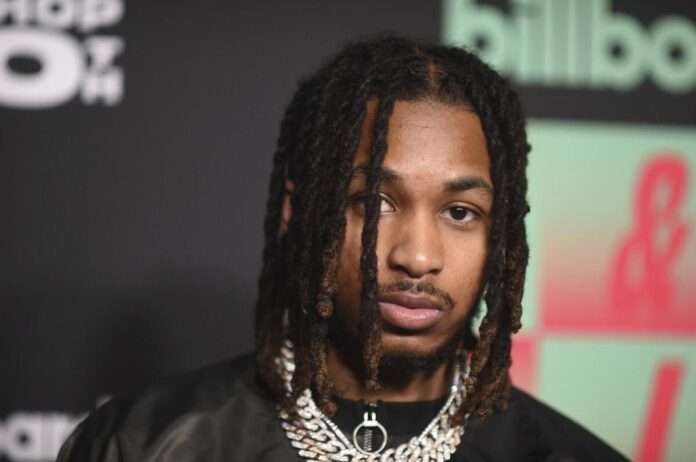
According to PM News Nigeria, rapper DDG said the United States is more dangerous than Nigeria, pushing back on what he described as exaggerated fear narratives.
The comment split reactions online: supporters praised the outsider perspective while critics said it glosses over complex security realities.
The clip adds to a growing trend where celebrity travel content shapes perception almost as much as official advisories.
Daily Post (Outlet): “gun violence and gangsterism is not common in Nigeria as in America.”
TheCable Lifestyle (Outlet/X): “Nigeria is nowhere near as dangerous as America.”
Echotitbits take: Pop-culture voices can move travel sentiment quickly—especially for diaspora audiences deciding whether to visit. Still, a single visitor’s experience isn’t a national security assessment. Watch next for more on-the-ground posts from DDG (and others) that either reinforce his point or add nuance when real-life frictions show up.
Source: PM News Nigeria — January 1, 2026 — https://pmnewsnigeria.com/2026/01/01/nigeria-is-safer-than-america-rapper-ddg/
In a report by BellaNaija, Nathaniel Bassey has started the year with a fresh worship release titled “The Glory of His Presence.”
Early listener reactions frame it as a “January devotion soundtrack,” with fans sharing snippets and favorite moments online.
The drop reinforces how Nigerian gospel continues to command huge digital attention—often driven by community sharing rather than mainstream promo.
Nathaniel Bassey (Facebook (verified/official page)): “GLORY OF HIS PRESENCE… coming in January 2026.”
Apple Music (Platform listing): “Released 2 January 2026.”
Echotitbits take: Gospel releases launched early in the year can become long‑tail staples for churches and personal devotion for months. Watch next for live‑ministry clips, choir-led performances, and worship sessions—those formats usually sustain gospel streaming long after the initial release buzz fades.
Source: BellaNaija — January 2, 2026 — https://www.bellanaija.com/2026/01/nathaniel-bassey-releases-the-glory-of-his-presence-to-start-the-new-year/
Reporting by Channels Television indicates Adekunle Gold received a plaque recognizing a sold‑out show at the renovated National Theatre complex in Lagos.
Fans are calling it both an artist win and a venue win, reading it as a sign that Nigeria’s big‑ticket live entertainment is regaining confidence.
The moment is also fueling fresh talk about how the refurbished space could become a new benchmark for Lagos headline concerts.
TheCable Lifestyle (Outlet): “the first artist to sell out the Wole Soyinka Centre.”
BellaNaija (Outlet): “North America is up next…”
Echotitbits take: Plaques like this aren’t just mementos—they’re signals to sponsors, venue operators, and touring partners that audiences will show up at scale. Watch for a rush of bookings from other top acts, and whether the venue’s programming stays consistent enough to cement it as Lagos’ new prestige stage.
Source: Channels Television — January 2, 2026 — https://www.google.com/amp/s/www.channelstv.com/2026/01/01/adekunle-gold-receives-plaque-for-becoming-first-artiste-to-sell-out-wole-soyinka-centre/amp/
Channels Television
2026-01-02
Photo Credit: Instagram
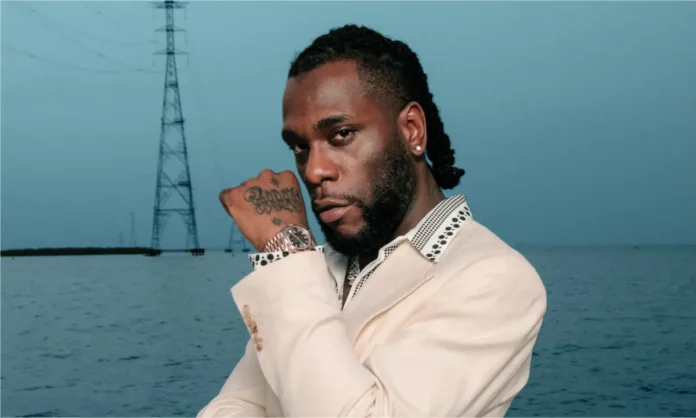
Figures reported by Pulse Nigeria suggest Burna Boy ended 2025 as the most‑streamed African artist on Spotify, with totals shared widely across entertainment pages.
The milestone is being framed online as another proof‑point of Burna’s global pull, especially in markets where playlists drive discovery.
As the numbers circulate, the fan debate is shifting toward context—regional splits, catalog impact, and how “streams” compare with touring power.
GossipMillTV (Instagram): “Burna Boy has become the most streamed African artiste in 2025.”
Echotitbits take: End‑of‑year streaming stats increasingly influence bookings, sponsorship interest, and international festival positioning. The next thing to watch is whether platform recaps and third‑party trackers publish clearer regional breakdowns—because that’s where the biggest arguments (and bragging rights) live.
Source: dailypost — January 2, 2026 — https://dailypost.ng/2026/01/02/burna-boy-sets-record-for-biggest-streaming-year-by-african-artist-on-spotify/
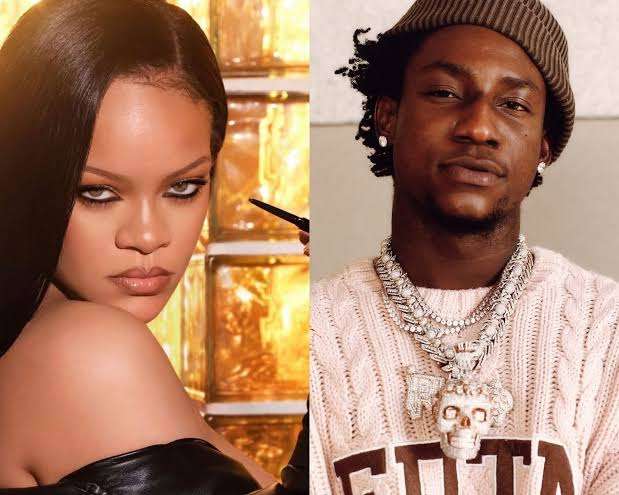
According to Pulse Nigeria, a short clip circulating online appears to show Rihanna vibing along to Shallipopi’s “Laho,” and fans are treating it like an unexpected Afrobeats co‑sign.
The video has kicked off celebratory reactions across Nigerian social media, with listeners saying moments like this can accelerate global discovery.
As the clip spreads, attention is shifting from “did you see it?” to “will the momentum translate into streams, Shazams, and playlist adds?”
HypeTribeNG (Instagram): “Rihanna vibing hard to shallipopi’s ‘Laho’ in Barbados.”
Officially Urban (Instagram): “Rihanna Vibing hard to Shallipopi’s ‘Laho’ in Barbados.”
Echotitbits take: A casual celebrity moment can move faster than a label rollout—especially when it’s a global star connecting with a Nigerian sound in real time. If the clip keeps circulating, the smart play is for the camp to ride it with performance snippets, remix chatter, or a visual push that converts virality into sustained listening.
Source: Facebook — January 2, 2026 — https://web.facebook.com/watch/?v=2299884327145462
Nigeria’s recently introduced student loan scheme aims to expand access to higher
education, reduce economic and financial exclusion, and democratize opportunity.
While the intention is laudable, the scheme’s design and implementation raise
concerns about sustainability. Examining the features of the programme reveal some
structural vulnerabilities that call for some tweaking and reforms.
The Main Problem: Mismatched Priorities
The scheme targets the wrong set of students, favoring academic pathways over
technical and vocational education. This approach ignores labor market demands,
earnings potential, and Nigeria’s economic needs.
Key Issues:
1. Loans Are Targeted at the Wrong Set of Students
The scheme doesn’t distinguish between courses with strong labor-market demand and
those with weak employability outcomes. This creates a predictable outcome: large
volumes of debt extended to graduates who’ll struggle to repay.
2. Nigeria’s Economy Would Be Better Served by Prioritizing Technical Education
Nigeria needs skilled workers, not just degree holders. Technical and vocational
education and training (TVET) can provide easily absorbed, productive, and employable
skills. Countries like Germany, South Korea, and Singapore have successfully
industrialized by prioritizing technical education.
3. Technical Vocations Are Better Suited to Entrepreneurship and Employment
Absorption
Technical skills lend themselves to self-employment and small enterprise creation that
are better suited to the reduction of structural unemployment. A trained technician can
start a micro-business, absorb informal-sector labor, and serve domestic and regional
markets more easily than a white collared graduate whose fortunes are limited at
absorption into a seemingly saturated job market. Saturated because of the increasing
discordance between academic curricula and actual job market needs.
4. Nigeria Leaks Foreign Exchange on Imported Technical Skills whilst stockpiling
difficult to assimilate university graduates
Nigeria imports technical expertise at high forex cost, while exporting the few fit for
purpose graduates it creates. This results in a significant economic leakage that cannot
be corrected just by student loan schemes. Currently, our universities are struggling
with raising the funds needed for the significant capital assets and human resource
retooling that is required to bring them up to date. Funds that the government alone
cannot bear. The current structure of the scheme will therefore exacerbate the
economic imbalances and further systemic inefficiencies.
5. Universities Require Far More Capital to Meet Global Standards
Nigerian universities need significant investment to achieve global competitiveness.
Modern laboratories, updated curricula, and robust research infrastructure are capital-
intensive and slow to yield returns.
A separate but focused endeavour to tackle this problem must be embarked upon,
starting with the honest consideration of whether the Federal and State Governments
should own the reported 70 universities each. 140 institutions offering God knows how
many courses, that are unlikely to be anywhere near the world standards that Nigeria
was known for in the 60s, 70s and 80s. At the same time, the 130 odd technical colleges
lie comatose on aggregate as regards quality of instructors and teaching tools.
6. Collectibility Will Be Severely Constrained by Weak Data and Enforcement Systems
Nigeria’s loan recovery capacity is weak due to inadequate identity management
systems, unreliable income data, poor institutional communication links and
fragmented payroll systems. Without improvement, default rates will be high, and fiscal
burden will increase.
7. Additional Structural Risks
Demographic pressures, moral hazard, institutional capture, and macroeconomic
volatility compound the problem. These factors strain sustainability and are
destabilizing.
Recommendations:
1. Prioritize TVET: Focus on technical and vocational education.
2. Link Loans to Employability: Tie loans to labor market demands and earnings
potential.
3. Strengthen Institutional Capacity: Improve loan recovery mechanisms and improve
systemic communication efficiencies.
4. Invest in Data and Tracking: Enhance graduate tracking and income verification.
5. Reform University Funding: Explore alternative funding models, seek ownership
partnerships for universities.
6. Streamline university courses on offer and consider consolidating university charters.
7. Encourage Entrepreneurship: Support technical skills and small enterprise creation.
8. Track and report data and value details of imported technical skills. Make this front
and center of national awareness.
9. Incentivize technical education by diverting more loans and scholarships in this
direction.
10. Embark on a national enlightenment campaign that will place more prestige and
respect on technical education.
Conclusion
Nigeria’s student loan scheme requires strategic alignment with economic reality and
national needs. By addressing these key issues and implementing reforms, we can
create a sustainable system that benefits students, the economy, and future
generations.
A student loan scheme that truly supports Nigeria’s development must address the
country’s strategic needs, industrialization requirements, enhance the country’s global
competitiveness and reduce our human resource development vulnerabilities.
We use cookies to ensure that we give you the best experience on our website. If you continue to use this site we will assume that you are happy with it.