Blog

  • Peter Obi Reveals Intense Pressure to Flee Nigeria Amidst Political Turmoil

    Peter Obi Reveals Intense Pressure to Flee Nigeria Amidst Political Turmoil

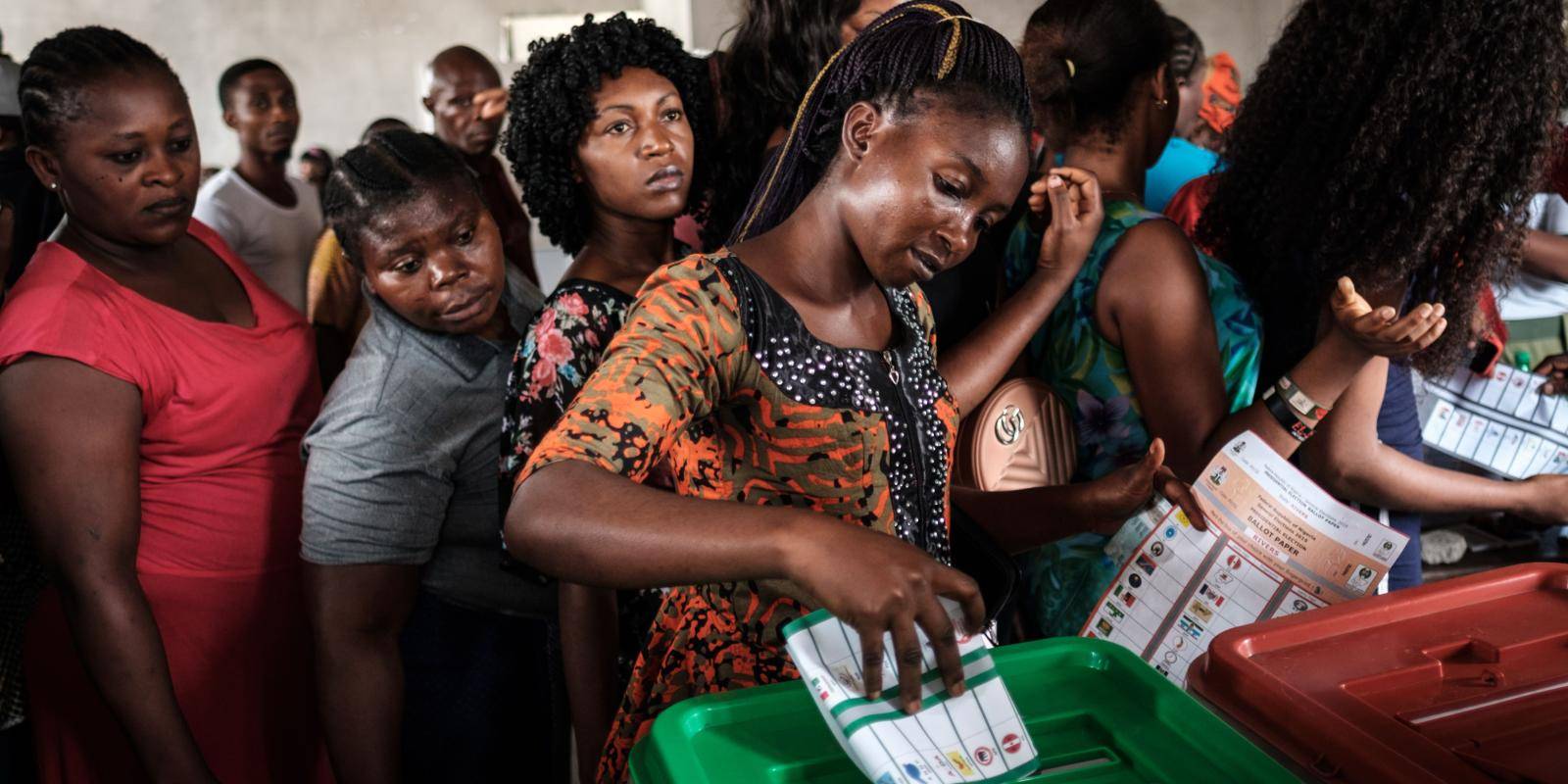
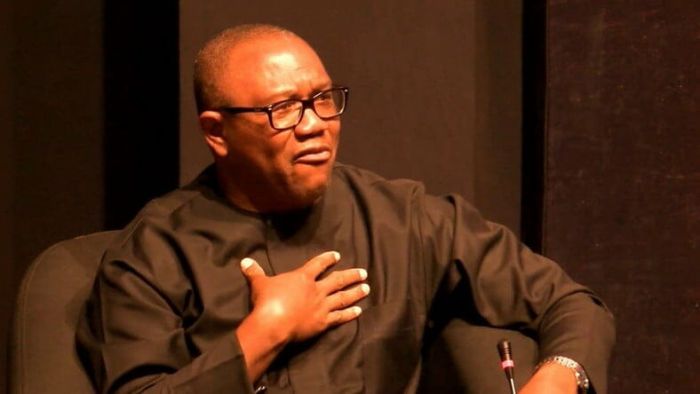
    On Wednesday night, Peter Obi, the Labour Party’s presidential candidate, claimed that he is facing pressure to leave Nigeria.

    In a statement, Obi accused the All Progressives Congress (APC) and various government agencies of attempting to divert attention from the shortcomings in this year’s elections by attacking his character.

    READ ALSO: NCC Refutes Phone Tracking and Leakage Allegations in Obi/Oyedepo Call Controversy

    The former governor of Anambra State also addressed the issue of a viral audio recording that purportedly featured him speaking with Bishop David Oyedepo of Winners Chapel, urging the religious leader to support his presidential aspirations in order to secure victory for Christians in Nigeria’s “religious war.”

    Obi dismissed the alleged audio as fraudulent.

    “The present attempts by the APC as a Party, and the APC Led-government through some government officials and agencies to divert our attention from our blatantly stolen mandate is unfortunate and sad,” Obi said.

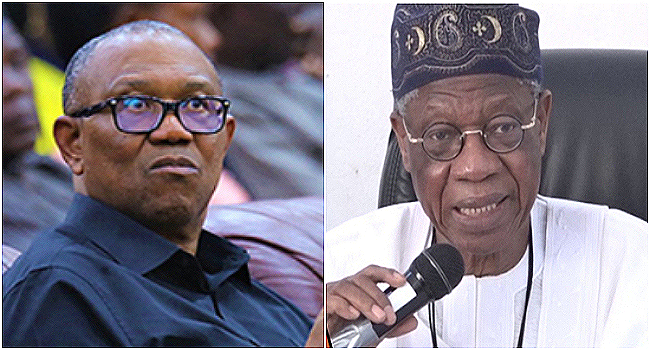
    “These have come and continued to manifest in different ways, such as the malicious accusation of the Minister of Information, Mr Lai Mohammed, the circulation of a fake doctored audio call, and a pressure on me to leave the country.

    “Let me reiterate that the audio call being circulated is fake, and at no time throughout the campaign and now did I ever say, think, or even imply that the 2023 election is, or was a religious war.”

    READ ALSO: Monetary tightening and increasing risks cause Nigeria’s capital inflow to falter

    He appealed to Nigerians and the international community to intervene and pressure the APC to halt their assaults.

    Furthermore, he emphasized his dedication and determination to lawfully and peacefully reclaim the people’s mandate.

  • Monetary tightening and increasing risks cause Nigeria’s capital inflow to falter

    Monetary tightening and increasing risks cause Nigeria’s capital inflow to falter

    The investment market in the country is feeling the effects of aggressive global monetary tightening and rising political and business risks, with capital importation dropping by 20% last year according to data released by the National Bureau of Statistics (NBS). This is according to a report by The Guardian, which further describes the situation as a significant decrease from $6.7 billion in 2021 to $5.33 billion in 2022, just ahead of the country’s general election. The impact of the election on the capital inflow, which is a measure of market attractiveness, was particularly felt in Q4, with a 51.51% decrease in year-on-year changes compared to Q4 2021. In addition, the recent fall in capital importation has been attributed to increasing business risk, insecurity, political risk, foreign exchange market rigidity, and the high arbitrage between official and black markets.

    READ ALSO: Twelve-Year-Old Girl dies in Car Crash – Police

    On a state-by-state analysis, Lagos accounted for the majority of the inflow at 68% or $3.61 billion, while the Federal Capital Territory (FCT) recorded $1.63 billion or 31%. Interestingly, 27 states, including Abia, Bauchi, Bayelsa, Benue, Borno, Cross Rivers, and Delta, did not receive any inflow, and Ogun and Rivers had zero capital importation for the entire year. Production, banking, and telecommunications received the bulk of the capital, accounting for 37.01%, 24.08%, and 15.86%, respectively. Share and trading received over 5% each, while oil and gas, which used to be a major foreign investment attraction, received only 0.21% of the total inflow.

    According to economist Eze Onyekpere, the uncertainty surrounding the 2023 elections and the likely policy direction of the new administration were key factors contributing to the poor performance of capital inflow. Onyekpere, who is the Lead Director of the Centre for Social Justice, explained that the fall was a result of investors adopting a wait-and-see approach in the lead-up to the first-quarter general elections.

    READ ALSO: NCC Refutes Phone Tracking and Leakage Allegations in Obi/Oyedepo Call Controversy

    “Many investors and stakeholders wanted to see the outcome of the elections, the new policy framework and whether there would be peace in the country before committing in terms of investment,” he said.

    According to him, if the new administration follows a policy direction that investors view as favourable and provides a positive economic outlook, there is a high possibility of a rebound.

  • Twelve-Year-Old Girl dies in Car Crash – Police

    Twelve-Year-Old Girl dies in Car Crash – Police

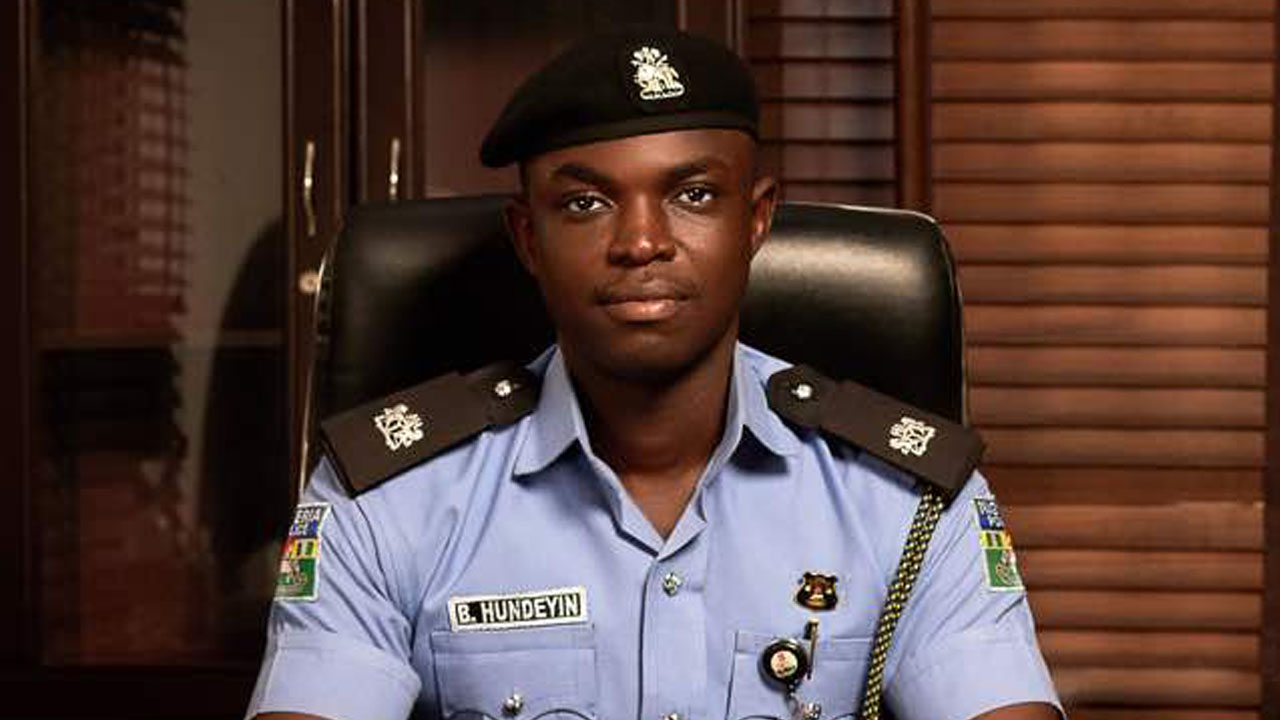
    On Wednesday, the Lagos State Police Command spokesperson, SP Benjamin Hundeyin, confirmed that a 12-year-old girl named Kope Mary had been hit by a vehicle.

    The driver of the Toyota Camry car with registration number BDG 839 FS, identified as Kunle Ogungbeje, claimed to have lost control of the car. The incident occurred on Monday at around 6:40 p.m. at Olubunmi Junction by Mashalashi Street in the Iwaya Area.

    READ ALSO: NCC Refutes Phone Tracking and Leakage Allegations in Obi/Oyedepo Call Controversy

    The victim sustained a head injury and died while being transported to the hospital. Traffic police officers took photographs of the scene, and the victim’s body was deposited at Mainland General Hospital Mortuary, Yaba, for autopsy.

    The vehicle involved in the accident has been moved to the Office of the Vehicle Inspection Officer (V.I.O) for inspection. The police investigation is ongoing.

    READ ALSO: 2023 Polls: Accusations of Treason Fly Between FG and Obi


  • NCC Refutes Phone Tracking and Leakage Allegations in Obi/Oyedepo Call Controversy

    NCC Refutes Phone Tracking and Leakage Allegations in Obi/Oyedepo Call Controversy

    • Timi Frank criticizes DSS as Buhari seeks Senate’s approval for Data Protection Bill.

    The Nigerian Communications Commission (NCC) refutes claims of telephone tracking and leakage made against it in the media.

    According to Reuben Muoka, NCC’s Director of Public Affairs, the commission has been receiving numerous inquiries from the media regarding allegations of telephone tracking and leakage made by some individuals and groups on social and traditional media.

    NCC denies these allegations completely and states that it is not authorized under the Nigerian Communication Act (NCA) 2003 and other relevant laws to track or leak telephone conversations of anyone. The commission further states that it has reported these serious allegations to appropriate security agencies for investigation and necessary action.

    “For the avoidance of doubt, the commission denies these allegations and advises the public to disregard them,” it added.

    READ ALSO: 2023 Polls: Accusations of Treason Fly Between FG and Obi

    Timi Frank, a former Deputy National Publicity Secretary of the All Progressives Congress (APC), has criticized the leakage of a conversation between the presidential candidate of the Labour Party (LP) and Bishop David Oyedepo of the Living Faith Church Worldwide.

    Frank, who is from Bayelsa, released a statement yesterday in which he called the act highly unprofessional and partisan, allegedly perpetrated by the Department of State Services (DSS).

    He suggested that the DSS has become an intelligence arm of the APC and urged a complete overhaul of the security organization. Frank also urged the DSS to restore the lost confidence of Nigerians in its leadership by taking action.

    He said: “It is worrisome when the most sophisticated security agency in the country descends into the arena of politics to favour the ruling party.”

    President Muhammadu Buhari has written to the President of the Senate, Ahmad Lawan, requesting that the Nigerian Data Protection Bill be considered and approved by the Senate. The President’s letter, which was read on the floor of the red chamber, cites Section 58 (2) of the 1999 Constitution, as amended. The Nigerian Data Protection Bill aims to provide a legal framework for the safeguarding of personal information and the creation of the Nigerian Data Protection Commission, which will regulate laws concerning personal information.

    READ ALSO: Afenifere, Ohanaeze and Arewa Youths Unite Against Interim Government Scheme

    In addition to this, the President has also written separate letters to the Senate requesting the approval of Abdul Abubakar’s re-appointment as a Non-Executive Director of the Central Bank of Nigeria (CBN) for a second and final term, and the establishment of the Nigeria Police Force College Training School and Institution.

    Furthermore, President Buhari has sought the Senate’s approval for the reimbursement of Plateau and Borno states, in the amounts of N6.6 billion and N3.8 billion, respectively, for road projects executed on behalf of the Federal Government. The reimbursement is to be made through the issuance of promissory notes.


  • 2023 Polls: Accusations of Treason Fly Between FG and Obi

    2023 Polls: Accusations of Treason Fly Between FG and Obi

    After being embroiled in a controversy over a leaked conversation with Dr. David Oyedepo, Founder and Presiding Bishop of Living Faith Church Worldwide, presidential candidate of Labour Party (LP), Peter Obi, found himself under scrutiny again when the Federal Government accused him of treason. This accusation came weeks after the ruling party’s candidate, Bola Tinubu, won the presidential election.

    The Minister of Information, Lai Mohammed, spoke to journalists in Washington D.C. about the government’s position on the matter. Mohammed accused Obi of inciting violence over the election outcome, which he deemed to be a treasonable offense. Obi, who finished third in the election, along with the Peoples Democratic Party (PDP) candidate, Atiku Abubakar, who finished second, is currently challenging the results in court.

    While both Obi and Atiku have urged their supporters to avoid violence, Mohammed believes that seeking redress in court and inciting violence is unacceptable. Mohammed is currently engaging with international media organizations and think-tanks about the 2023 polls. He has already spoken to the Washington Post, Voice of America, Associated Press, and Foreign Policy Magazine. “Obi and his running mate, Yusuf Datti-Ahmed, cannot be threatening Nigerians that if the President-elect, Tinubu, is sworn in on May 29, it will be the end of democracy in Nigeria.

    READ ALSO: Afenifere, Ohanaeze and Arewa Youths Unite Against Interim Government Scheme

    “This is treason. You cannot be inviting insurrection, and this is what they are doing. Obi’s statement is that of a desperate person, he is not a democrat that he claimed to be. A democrat should not believe in democracy only when he wins election,” he said.

    According to him, neither Obi nor Atiku have a pathway to victory in challenging the election results because they did not meet the constitutional requirements necessary to be declared president.

    “The Constitution has stringent criteria for anybody who wants to be president of the country. Not only must he have the plurality of votes cast in an election, he must also have scored one-quarter of votes cast in at least 25 states.

    “Only the President-elect met the criteria by scoring 8.79 million votes and having one-quarter of all the votes cast in 29 states of the federation. Atiku came second with 6.9 million votes, but was only able to make one-quarter of the votes cast in 21 states, while Obi came third with 5.8 million votes, but won only one-quarter of the votes cast in 15 states.

    “You cannot win an election in a poll where you came a distant third position and failed to meet constitutional requirements. Obi, while complaining of fraud, has not disowned his victory in Lagos,” he said.

    Mohammed explained that his purpose for being in the U.S. was to counteract the negative narratives that were being spread by the opposition and naysayers about the election.

    He revealed that the opposition, who lost in the election, was making allegations of fraud and demanding the election be cancelled and an interim government be formed.

    In response to this, Obi stated: “I have never discussed or encouraged anyone to undermine the Nigerian state; I have never sponsored or preached any action against the Nigerian state. Those initiating these actions have increasingly used their official positions and agents to make false allegations against me.

    “I am on record as always, advocating peace and issue-based campaign and never campaigned based on ethnicity or religion. I am committed to due process, and presently seeking redress in the court.

    “I urge those engaged in this de-marketing process to stop presenting Nigeria in such bad light. Our future generations deserve a new Nigeria, where they can live a secure and decent life like their counterparts in other climes. It is possible.”

    Additionally, he stated that the current strategy of demarketing and slanderous campaigns against him by certain government and political party representatives would negatively portray Nigeria to the world.

    He said: “It is most unfortunate that these consistent efforts to portray me quite contrary to what I am and my core values, is coming from such high quarters. Minister Lai accusing me of stoking insurrection is malicious and fictitious.”

    Furthermore, the National Chairman of LP, Comrade Julius Abure, criticized the Minister of Information and advised him to refrain from misinforming the international community about the political situation in Nigeria. He suggested that Mohammed should instead reprimand the spokespersons of the ruling party.

    READ ALSO: Soyinka Advocates Southeast Presidency for Civil War Healing

    “Our presidential candidate is a peaceful and law-abiding person. Despite the fact that the election was provocatively rigged, he decided to be peaceful and toe the part of justice. In spite of all pressures from our supporters to move into the street to protest the outcome of the general election and to reclaim the mandate freely given to our candidate by the people, he has decided to calm the nerves in other to give the judicial process a chance.

    “The presidential candidate of LP is the only candidate whose campaign  was issue-based. In spite of all provocation, it was LP and its candidates that were attacked in Lagos, Rivers and other states, but we have continued to promote peace. Therefore, for the Minister of Information to be admonishing our presidential candidate, was done in bad fate.”

    The Human Rights Writers Association of Nigeria (HURIWA), a civil rights advocacy group, expressed disagreement with Mohammed’s warning that Obi would be committing treason if he continues to challenge the supposed victory of President-elect Tinubu.

    In a statement by its National Coordinator, Emmanuel Onwubiko, the group stated that such a warning is unfounded since a President-elect does not hold any constitutional powers, authority, or duties on behalf of the Federal Republic of Nigeria.

    “Chapter 4 of the Constitution guarantees every citizen of Nigeria, including Obi, the fundamental freedoms, including freedom to associate with everyone and to exercise his freedom of speech.

    “We are urging Mohammed to stop overheating the polity because there is no law that says persons who feel cheated in an election should sit indoors.

    “President-elect is simply someone on rehearsal and hasn’t yet been conferred with any legal powers exercisable by a sitting President. And even a citizen President can be thoroughly criticised by the people of Nigeria, who owns the sovereignty of Nigeria,” HURIWA said.


  • Afenifere, Ohanaeze and Arewa Youths Unite Against Interim Government Scheme

    Afenifere, Ohanaeze and Arewa Youths Unite Against Interim Government Scheme

    In a week that has been described as a dust storm, leading groups from the three major geopolitical zones in Nigeria have issued strong statements condemning an interim government, which has crept into national discourse, a report by The Guardian stated. The Yoruba, Igbo, and Hausa groups all joined voices in condemnation of the plot, which was uncovered by the Department of State Services (DSS) last Wednesday.

    According to the DSS, some key players are plotting to install an interim government and prevent President-elect Asiwaju Bola Tinubu from being inaugurated as president. The Afenifere, a Yoruba socio-political organization, has warned against any action that could jeopardize the handing over of power to elected officers on May 29.

    Mr. Jare Ajayi, the embattled National Publicity Secretary of Afenifere, issued a statement yesterday, purportedly on behalf of the group. In the statement, he expressed concern about the steps being taken that could be prejudicial to the swearing-in of the winners of the just concluded general elections.

    Ajayi highlighted attempts to rubbish the outcome of the elections, especially the presidential election that held on February 25, as well as the resuscitation of calls for the formation of an interim government. He also noted protests or rallies being conducted, especially in Abuja and America, against the result of the said election.

    Afenifere is worried about the untoward development because of how it is gaining currency in the country and even outside the shores of the land. Ajayi reminded those fanning the embers of non-inauguration of elected officers to be aware that the monster being courted would affect not only the presidency to be headed by the winner of the election, Tinubu.

    READ ALSO: Pro-democracy Group Protests Against Opposition’s Plot to Undermine Nigerian Democracy

    “The disruption will affect all other tiers of government as well as governors at the state level, lawmakers at the national and state levels, and perhaps, the local councils.

    “There is, therefore, the need to exercise a lot of caution. The laws of the land created avenues to seek redress when we are aggrieved. We enjoin those who may not be satisfied with the outcome of the concluded elections to seek redress through the established channels and not through any other means. It is also important to let members of the public realise that anything short of following due process, particularly, in the swearing-in of winners of the just concluded elections, constitutes grave dangers for the country. This must not be accepted or encouraged at all because of its dire consequences,” the group said.

    Ajayi, in addition, urged the judiciary not to entertain any cases that may be brought to derail the hard-earned civil rule, and consequently, scuttle Nigeria’s democracy. However, when asked to clarify the statement, the leader of Afenifere, Pa Ayo Adebanjo, said that Ajayi has no authority to issue statements on behalf of the organization, as he had been suspended, as announced in a previous communiqué.

    Adebanjo went on to urge the public, particularly the media, to disregard any statements made by Ajayi on behalf of the group. Similarly, the Chidi Ibeh-led faction of Ohanaeze Ndigbo released a statement yesterday, asserting that the Ndigbo will not participate in any conspiracy to install an interim government. Instead, they are making arrangements to attend the inauguration of Tinubu on May 29.

    In a statement released in Abakaliki, the Secretary-General of Ohanaeze Ndigbo, Mazi Okechukwu Isiguzoro, challenged the DSS to arrest those behind the interim government scheme and ensure that they are brought to justice “those unpatriotic elements of destruction did not derail our democracy,” adding that their evil intent to forestall the smooth transition of power have hit the rock.

    He emphasized that the Ndigbo not only denounce the demand for an interim government but also demands that the President-elect be inaugurated by May 29th. He also pointed out that the Ndigbo have been a marginalized group in Nigeria and have been endangered and “never again will Igbos be used as sacrificial lambs as we were used in 1993 during the Abiola saga, where a lot of Igbos were bullied, maimed, killed and their property looted.”

    According to the statement: “Ndigbo will never recognise any interim government or be part of the evil scheme, as the clamour for an interim government is unconstitutional, satanic and atrocious, and those behind the call are only trying to plunge the country into avoidable political crises and make the Igbos scapegoats as Nigerians witnessed in 1993.

    “The proponents of an interim government are already setting the stage through systematic burning of Igbo populated markets in Lagos (President-elect’s state) and Borno (Vice President-elect’s state) and promotion of hate campaigns against the Igbo. These are castles built on quicksand.

    READ ALSO: Editorial: Strengthening Inspection of Election Materials to Deepen Poll Credibility

    “Igbos are wiser and sophisticated now and we will continue to support the President-elect and ask him to commence the healing process tour from the Southeast by releasing IPOB leader, Nnamdi Kanu and incorporate the Southeast into the Government of National President (GNU) by giving the President of the Senate to the people of the region.

    “Ndigbo will participate fully in all pre-inauguration and swearing-in ceremonies of the President-elect on May 29 and caution all of those who are working behind the scenes for the enthronement of an illegitimate interim government to use the courts to vent their resentments and grievances.

    “We are satisfied that Atiku Abubakar and Peter Obi have explored the legal options to recover their mandates and challenging the outcomes of presidential election in court is better than restraining a smooth transition of power. We will not allow unpatriotic monsters to truncate our hard-earned democracy,” the group said.

    A Northern group, Arewa Youth Assembly (AYA), has voiced its strong opposition to the suggestion of an interim government in Nigeria. On Monday, the group issued a statement through its Speaker, Mohammed Salihu Danlami, stating that such calls were not in the country’s best interests and could result in increased instability and political uncertainty.

    The group maintained that there was no need for such calls as the recently held elections were fair and credible.

    To him, “as a youth organisation committed to the unity and progress of Nigeria, we are deeply concerned about the recent calls for an interim government to take over from the current administration. We believe that such a move would be unconstitutional and could set a dangerous precedent for our democracy.

    “We are of the view that since the general elections were largely fair and credible due to the introduction of the Bimodal Voter Accreditation System (BVAS) and winners have emerged, there is nothing that should warrant calls for the formation of an Interim National Government (ING).

    “We believe that supporting the transition programme of the present government while taking advantage of the courts to seek redress is the best way to ensure political stability and continuity in Nigeria.

    “We also urge all stakeholders to engage in constructive dialogue and work towards finding solutions to the challenges facing our nation because it is only by working together that we can build a strong, united, and prosperous Nigeria for all.

    “AYA strongly opposes any move to enforce an interim government in Nigeria. We call on all Nigerians to support the current administration and Tinubu, and work towards a better future for our nation,” he said.

    In related news, Dr. Olisa Agbakoba, a former president of the Nigerian Bar Association (NBA), has proposed that the speedy handling of presidential election petitions is a crucial strategy against the possibility of an interim government.

    In a statement issued on Thursday, Agbakoba urged all Nigerians to reject any secret plans that might be in place to derail the country’s democratic system. In a subsequent statement on Friday, the senior advocate suggested that an interim government would be unnecessary if the petitions are heard and resolved before May 29th.

    “The tension around the call for an interim government is that the presidential election petition may not conclude before the inauguration of a new president on May 29, but it’s very possible to conclude these petitions, provided the court systems are very proactive.

    “Under arbitration matters, procedural orders and or directions issue peremptorily to resolve sometimes very complex jurisdictional and procedural issues. The presidential election tribunals are urged to adapt the procedures very familiar with speedy conclusion of arbitration matters.”

    Agbakoba identified three critical issues in the presidential election petitions that, he believes, can be resolved through the implementation of procedural orders and directions.

    READ ALSO: Soyinka Advocates Southeast Presidency for Civil War Healing

    “The first is the interpretation of Section 134 of the 1999 Constitution of Nigeria as to whether securing 25 per cent of votes in the Federal Capital Territory (FCT), Abuja, is compulsory to be a president.

    “Secondly, is a candidate permitted to stand for presidential or vice presidential election when he is at the same time a senatorial candidate?

    “The third point is the issue relating to the qualification of candidates to stand for presidential election.

    “If the petitions were arbitration proceedings, an arbitrator may issue a procedural order directed to counsel to address all complex disputes and the arbitral tribunal will deliver what is called a partial final award,” Agbakoba said.

    “In the case of the presidential election tribunal, including the Supreme Court, they can also direct procedural orders with very short timelines given to counsel, to address the complex jurisdictional issues raised in the petitions and the tribunal/supreme court will then issue final summary judgment as appropriate.

    “We strongly believe that between the tribunal and Supreme Court, the petitions can be resolved within seven days from today. This will cool the temperature in Nigeria on the issue of interim government etc.

    “The speed proposed here requires a radical departure from our present judicial policy where case management plays a very limited role in judicial outcomes. Case management is the spirit and driving force of modern adjudication. Speed of justice is the mantra that our judiciary must proclaim very loudly. This is needed in the presidential petition proceedings urgently,” he said in the statement.

    The time limit prescribed by law for the hearing and delivery of judgment on an election petition is 180 days from the date of filing the petition. Similarly, an appeal arising from the decision of an election tribunal or court must be heard and concluded within 60 days from the date of the tribunal’s judgment.

    Source: The Guardian
  • Pro-democracy Group Protests Against Opposition’s Plot to Undermine Nigerian Democracy

    Pro-democracy Group Protests Against Opposition’s Plot to Undermine Nigerian Democracy

    In other news, a pro-democracy group known as The Natives staged a peaceful protest in Abuja, asserting their determination to resist clandestine plots by opposition political parties to undermine democratic rule in the country. Led by Smart Edwards, the protesters marched to the headquarters of the Independent National Electoral Commission (INEC), urging the authorities in the United States, Britain, and other nations not to fall for the opposition’s ploy to incite insurrection in Nigeria. The group reiterated its support for the declaration of Tinubu as the winner of the presidential election held recently and warned politicians to desist from inciting Nigerians against the citizens and democratic processes. Edwards cautioned Yusuf Datti, the Vice-Presidential candidate of the Labour Party (LP), to refrain from making inflammatory statements.

    READ ALSO: Soyinka Advocates Southeast Presidency for Civil War Healing

    “We want to particularly warn the LP vice president candidate, Yusuf Datti-Ahmed, to apply caution because Nigeria is a country and not Baze University.

    “Some people have been going round the country inciting others, calling for a taboo, they are calling for ING that will never happen, not in Nigeria, not in any African country that we support.

    “America is currently handling insurrection against her own state, so, we are certain that America, Britain and other nations will not promote insurrection in our nation.”

    The Commission’s Director of Security, Lebari Sam Nduh, received a letter addressed to the INEC chairman, Prof. Mahmood Yakubu, and responded by assuring that INEC would carry out its constitutional duties impartially and without prejudice.

    READ ALSO: Editorial: Strengthening Inspection of Election Materials to Deepen Poll Credibility

    Nduh said: “We want to thank you for being very responsible in your protest. We want to thank you for bearing in mind that we have no other country to call our own than Nigeria. We want to thank you for the civil manner you have conducted yourself. We want to assure you, on behalf of the management of INEC, that your message will be delivered to the Chairman. It is not going to pass through any other source than the Director of Security himself who will personally take it and deliver it to the Chairman, who is my direct boss.

    “I assure you that INEC will continue to do its optimum best in all that the law require it to do. Nigeria will be greater,” he said.

  • Soyinka Advocates Southeast Presidency for Civil War Healing

    Soyinka Advocates Southeast Presidency for Civil War Healing

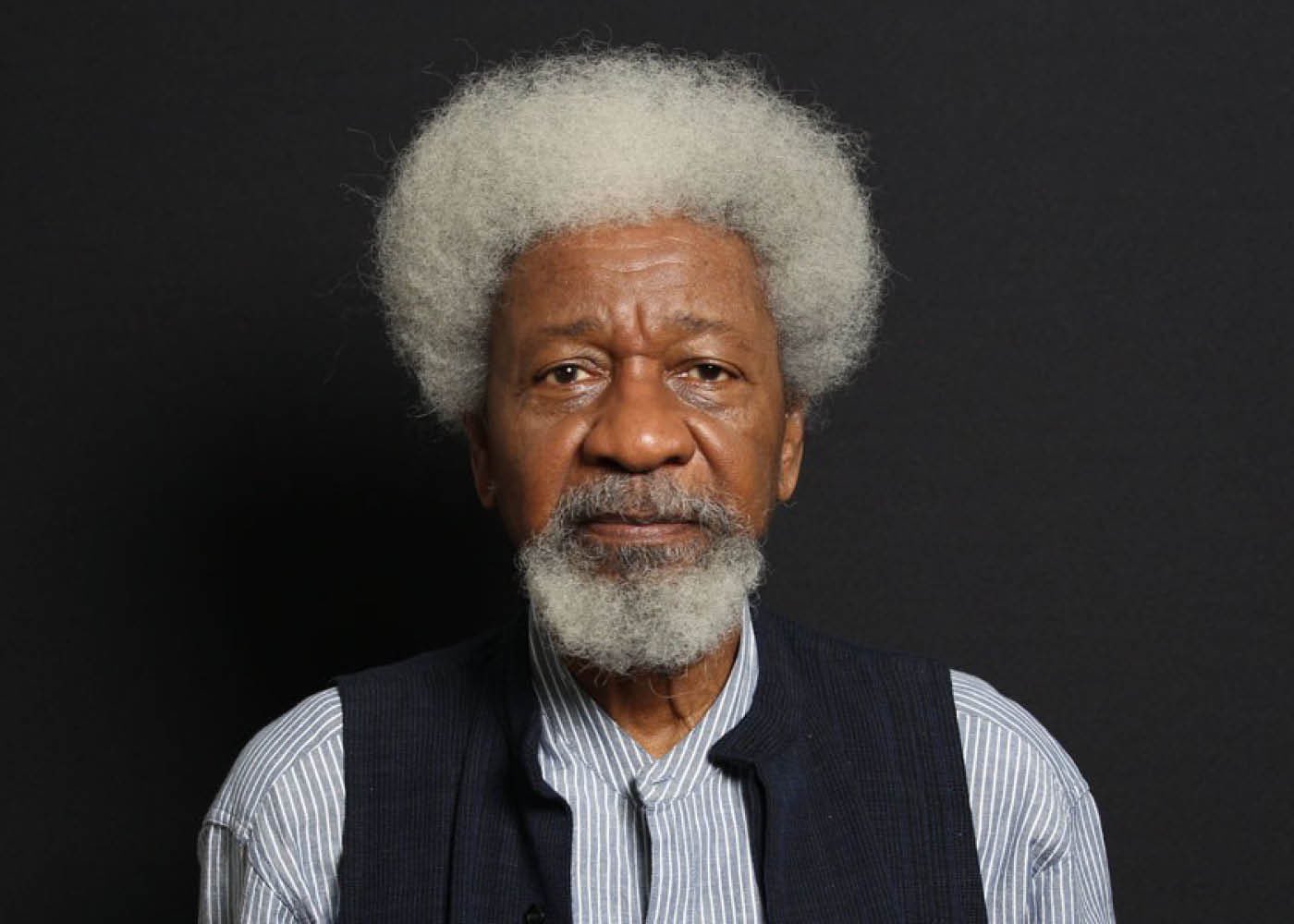
    Prof. Wole Soyinka, a recipient of the Nobel Prize, has proposed that the Nigerian presidency should be given to the southeastern region in order to address the lingering scars of the civil war. Despite the passage of over fifty years since the conflict ended, there are still activists advocating for independence in the area, underscoring the ongoing impact of the war. Soyinka believes that placing the presidency in the southeast could serve as a means of “rewriting history” and fostering healing.

    “It is not just about reconstruction, it is also about rewriting of history,” Soyinka said in an interview aired on Channels Television on Monday.

    “We believe that to close the circle of negativity, that we have embarked on before and during the civil war, I believe, the presidency, as soon as possible, should go towards the eastern region which lost a war.

    “This is one of the ways to heal the wounds of the nation – that is a principle and philosophy.”

    READ ALSO: Editorial: Strengthening Inspection of Election Materials to Deepen Poll Credibility

    Prof. Wole Soyinka, a vocal proponent of restructuring, reiterated his belief that Nigeria must undergo a restructuring process. While discussing the lead-up to and aftermath of the 2023 election, the Nobel laureate noted that none of the top presidential contenders presented a credible plan for restructuring, which is why he chose not to endorse any candidate.

    “In fact one of the reasons I refused to endorse any candidate is because none of the candidates addressed the things closest to my heart, like again, reconstructing the nation,” Soyinka said.

    “I did not see any genuine commitment, any believable agenda about restructuring, decentralization of Nigeria which is at the heart of the problem for me at the moment.

    “People were more concerned with just aiming for power.”

    According to Soyinka, criticisms suggesting that Nigeria has not yet grasped the concept of democracy in light of the 2023 election are unfounded, as he disagrees with such assessments.

    “I do not think we do not understand democracy, certain stakes have been catapulted to the fore and over – have come to overwhelm what should be the real stuffing of the democratic process,” Soyinka said.

    READ ALSO: Art: Between the Snake Goddess and Bust of Nefertiti

    “We can still come back to that phase where we had a common purpose that enough of military rule, I’m talking about June 12, and demonstrated, not just to ourselves but to the whole world.

    “Yes, we know what democracy is and we know how to practice it and unfortunately, we seem not to have succeeded in reaching that level of democratic concert that we exhibited when said, look, let us take back our own political violation and get rid of the Kaaki boys and we can still come back to it.”

    However, he did point out that the election outcome indicated that a “point has been scored” and “people now know the power they have and the youths have woken up.”


  • Editorial: Strengthening Inspection of Election Materials to Deepen Poll Credibility

    Editorial: Strengthening Inspection of Election Materials to Deepen Poll Credibility

    Transparent and fair elections are fundamental to the democratic process. The credibility of an election hinges on its transparency and fairness. To achieve this, INEC (Independent National Electoral Commission) has a critical role to play in ensuring that the process is free, fair, and transparent. One way that INEC ensures transparency is by conducting the inspection of election materials. In this article, I will explore the importance of inspection of election materials at INEC in Nigeria, the legal framework guiding it, the challenges faced during the process of inspecting election materials.

    Inspection of election materials is the examination or scrutiny of materials used during an election. These materials include ballot papers, result sheets, registers, and other relevant documents. The inspection is conducted to ensure that the election was free and fair, and to address any discrepancies or irregularities that may have occurred during the process.

    The inspection of election materials is a critical component of post-election activities. It helps to identify any discrepancies or irregularities that may have occurred during the election process. This, in turn, enhances the credibility of the election and ensures that the will of the people is reflected in the final outcome.

    The legal framework for the inspection of election materials in Nigeria is provided for in the Electoral Act 2010 (as amended). The Act stipulates that any person who participated in an election has the right to inspect the election materials used in that election. The Act also provides for the procedure for inspection and the fees to be paid for the service.

    Unhindered inspection of election materials by unsatisfied contestants after an election process is crucial for transparent and fair elections. It helps to identify any discrepancies or irregularities that may have occurred during the election process. This, in turn, enhances the credibility of the election and ensures that the will of the people is reflected in the final outcome.

    Inspection of election materials also helps to identify any issues or challenges that may have arisen during the election process. This information can be used to improve the electoral process and prevent similar issues from occurring in future elections.

    Furthermore, inspection of election materials provides an opportunity for stakeholders to verify the election results. This helps to build trust and confidence in the electoral process, which is essential for the stability of democracy.

    The inspection of election materials is not without its challenges. One of the major challenges is the lack of access to election materials. Some election officials may refuse to grant access to the materials, which can hinder the inspection process. Additionally, the process can be time-consuming and costly, which can discourage some stakeholders from undertaking it.

    Another challenge is the lack of adequate storage facilities for election materials. This can result in damage to the materials, making it difficult to conduct a proper inspection.

    Despite the challenges, there have been success stories of the inspection of election materials in Nigeria. For example, in the 2019 governorship election in Osun State, the inspection of election materials played a significant role in resolving the dispute between the two leading candidates. The inspection of election materials helped to identify irregularities and discrepancies in the election results, which led to the rerun of the election in some polling units. The rerun election was conducted, and the winner was declared based on the results of the rerun.

    The inspection of election materials at INEC is a critical component of the electoral process in Nigeria. It helps to ensure transparency and fairness in elections and promotes the credibility of the process. However, there are challenges to the inspection process that must be addressed to enhance its effectiveness.

    To promote transparent and fair elections in Nigeria, stakeholders must work together to address the challenges faced during the inspection of election materials. INEC must also ensure that the process is conducted in a transparent and fair manner to enhance the credibility of the electoral process.

    Let us work together to promote transparent and fair elections in Nigeria by supporting the inspection of election materials at INEC. Request for inspection of election materials where necessary and report any irregularities or discrepancies observed during the process. Together, we can build a better democracy.

  • Art: Between the Snake Goddess and Bust of Nefertiti

    Art: Between the Snake Goddess and Bust of Nefertiti

    Comparing Ancient and Classical Art

    The Snake Goddess art and Bust of Nefertiti are two renowned pieces of art from distinct civilizations that showcase their unique styles, cultural values, and design elements. The Snake Goddess art, crafted around 1600 BCE, is a Minoan sculpture discovered in ancient Crete. It portrays a female figure holding snakes, draped in a long, flowing dress and a headdress. The sculpture’s material is faience, a ceramic material popular in the Bronze Age, and it stands at a height of approximately 12 inches.

    The Mysterious Minoan Snake Goddess. Credit: Erik Törner/Flickr CC BY-NC-SA 2.0

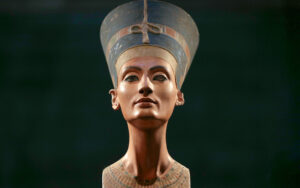
    In contrast, the Bust of Nefertiti is a limestone sculpture from the Amarna period of ancient Egypt, created approximately in 1340 BCE. It portrays the queen Nefertiti, the wife of Pharaoh Akhenaten, wearing a unique crown with a long neck and an exquisite face. The sculpture stands at around 20 inches tall. The Snake Goddess and the Bust of Nefertiti share some similarities and differences.

    Both sculptures depict powerful female figures, but the Snake Goddess is more stylized and abstract, while the Bust of Nefertiti is more realistic and intricate. Although they use a blue and gold color palette, the Snake Goddess’s color scheme is more vibrant and playful, while the Bust of Nefertiti is more restrained and elegant.

    Nefertiti’s bust (c1350s-1340s BCE) on display at the Neues Museum in Berlin in 2012. Photo by Michael Sohn/Reuters

    Each artwork’s design elements reflect its distinctive style and place of origin. The Snake Goddess art incorporates curvilinear shapes, asymmetry, and flowing lines, which are typical of Minoan art. Conversely, the Bust of Nefertiti has a more balanced and symmetrical composition, with meticulous attention to detail and precise proportions, typical of Egyptian art.

    READ ALSO: Police Seizes Nearly 1000 Ilegal Weapons and Ammo

    The cultural values of the civilizations that created them are also evident in the works. The Minoans had a deep reverence for nature and goddesses, as well as a focus on beauty, sensuality, and creativity, which the Snake Goddess art embodies through its expressive style, feminine form, and playful colors. In contrast, the Egyptians valued order, stability, and eternity, as well as their rulers and gods, which the Bust of Nefertiti captures through its idealized portrayal of the queen, elegant style, and precise proportions.

    Today, both works serve as significant cultural artifacts, offering insights into their respective civilizations’ art, culture, and history, and are celebrated for their beauty, craftsmanship, and artistic merit. The Heraklion Archaeological Museum in Crete houses the Snake Goddess art, while the Bust of Nefertiti is on display at the Neues Museum in Berlin, Germany.

    To summarize, the Snake Goddess art and the Bust of Nefertiti are two exceptional artworks that highlight their civilizations’ unique styles, cultural values, and design elements. They continue to captivate and inspire people today, reminding us of the rich artistic legacy of ancient civilizations.

    Classical Periods in Art History

    Middle Ages (400-1300 CE): Visual arts flourished during the Middle Ages, reflecting the period’s aesthetic values. The Catholic Church heavily influenced the art of this period, and the wealthiest members of society commissioned artworks for religious purposes. Gothic architecture, with tall spires, pointed arches, and intricate stone carvings, became popular. Artworks during this period often featured religious themes, emphasizing symbolic representations of religious stories rather than realistic portrayals. The Middle Ages laid the groundwork for the development of art in the following Renaissance era.

    Renaissance (1400-1600 CE): During the Renaissance era, there was a renewed fascination with classical art forms and the human form. Artists in this era aimed to create realistic and lifelike depictions of people and the world around them, popularizing the use of perspective and chiaroscuro to create the illusion of depth through light and shadow. Renaissance artists were interested in exploring the natural world through their art and placed great emphasis on individualism. The Renaissance movement subsequently influenced the Baroque era that followed.

    READ ALSO: Controversial Actor Accuses 2baba of Not Giving Scholarship to Sound Sultan’s Children

    Baroque Era (1600-1750 CE): Grandeur, dramatic lighting, and intense emotions defined the Baroque era. Baroque artists utilized light and shadow to produce dramatic effects and utilized ornate embellishment to convey the grandeur of the period. Artworks of this era were typically large and featured intricate details. The Neoclassical era that followed was influenced by the Baroque era.

    Neoclassical Era (1750-1820 CE): Classical art of ancient Greece and Rome had a profound influence on the Neoclassical era. This period emphasized simplicity, order, and rationality and artists strived to create idealized depictions of the human form. The art of this era often portrayed historical and mythological themes and was marked by clean lines, symmetry, and balance. The Neoclassical period’s impact was evident in the Romanticism era that succeeded it.

    Romanticism Era (1790-1860 CE): The Romanticism era was identified by its emphasis on emotion and imagination. Romantic artists placed importance on individualism, nature, and the supernatural. Natural landscapes were a frequent subject of Romantic art, and it explored themes of love, death, and the sublime. The era was a response to the Neoclassical period’s emphasis on rationality and order, and it had an influence on the art’s development in the 19th century.