Blog

  • 5 Consequences of Staying Behind a Digital Future

    5 Consequences of Staying Behind a Digital Future

    By Tobiloba Kolawole

    We couldn’t have forgotten so soon how Ebola, Zika, and Severe Acute Respiratory Syndrome (SARS) viruses have in recent years ravaged the world’s social-economic settings.

    More than we could ever imagine, with thousands of people dead including many business and institutional deaths, the year 2020 will remain a remarkable year for millions of people around the world. From South Africa to Nigeria, Britain to United States, China to Korea, our lives, businesses have experienced a kind of disruption that is only to be imagined.

    In no small ways, organizations and businesses in Nigeria, just like in any other parts of the world have been severely impacted and are still experiencing COVID-19 disruptions. There were concerns about how Board of Directors of organizations would meet as the law requires, how Annual General Meeting were to hold and even conduct elections and how to keep the distribution channel running. In other areas, there were issues of how pensioners, who only rely on monthly pension allowances would be verified so their pay doesn’t stop. Organizations like cooperative societies, professional and societal associations whose administration rely on elected officials had to think outside the box to carry on pending election electronically, yes, this is possible with some electronic voting system.

    Organization’s exposure to COVID-19 did not only leave many Nigerians unemployed, it impaired distribution network, increased cyber security and fraud risk, increased the burden of both customer and employee relations.

    COVID-19 isn’t the only disruption that we have seen, it is a part of the black swan experience of 2020 if we consider the changes in global oil prices, Naira devaluation and the EndSARS protest that turned violent. All of these fuels the shocks that test the balance and survival of organizations – where their operations are directly or indirectly affected.

    As though the COVID-19 lockdown of not less than 4 months and attendant restrictions following the gradual easing wasn’t disruptive enough, the EndSARS protest also added its bite on an already stressed business environment.

    These disruptions gave credence to the campaign ‘The Future is Digital’. Organizations had to seek alternatives

    Because we haven’t possessed the capacity to really figure out when the next crisis will happen, it is important for businesses and organizations to position for resilience in the face of the next global threat.

    “We expect that the COVID-19 threat will eventually fade, as the Ebola, Zika, and Severe Acute Respiratory Syndrome (SARS) viruses have in recent years. However, social-economic impact will still be felt long after the virus fades”, KPMG stated in an introduction to its series of publications under the title COVID-19: A Business Impact Series.

    The words out there now is that The Future is Digital. Embracing digital processes is what has aided the survival of a many organizations in the tumultuous 2020 year of the COVID-19.

    In just three months from May to July, Zoom reportedly recorded higher sales and profit than it did in all of 2019, as more people work and learn remotely during the coronavirus pandemic.

    Getting onboard digital cannot be overemphasized as those who fail to do so will suffer the consequences. The world will apparently not remain the same, digital is its future. Whether for strategic meetings, corporate sector elections, verification processes and or any other identification needs, the solutions are available.

    For some organizations, digital transformation may appear costly and unnecessary investment. Although, the process takes time, investment and patience, ultimately, it’s the businesses that adapt and adopt that are reaping the rewards. In other words, going digital isn’t really an option. It’s a necessity.

    Here is what organizations and businesses that won’t digitalize are likely to suffer.

    1) Competitive disadvantage

    It is not easy keeping up when new companies come in with innovation that disrupt the industry. You should know that keeping up is pertinent, and digital capabilities are the best ways to stay sprightly. A popular reference is the Blockbuster and Netflix story.

    In the predigital era, you’d have to walk into a Blockbuster to rent a film or video game. Blockbuster is one of the most glaring examples of a business unwilling to adapt to digital. The mistake cost them an entire empire.

    You must have learned about the story. Netflix’s Reed Hastings approached former Blockbuster CEO John Antioco in 2000 and asked him to pay $50 million for the company he founded. Today Reed Hastings is worth $5 billion.

    Apparently, Antioco didn’t take the offer to buy Netflix as he couldn’t imagine a film business without customers walking into a rental store just like many Nigerians would not foresee that elections at all levels, especially private sector elections, can be conducted without voters walking into a polling venue and get the process done fast and with less cost.

    Netflix, an online DVD ordering and mailing service at the time saw a world of digital transactions and convenience.

    Take a big turn from that box of traditional methods and think outside it innovatively. Failure to think outside the box and innovate can keep companies moored to traditional tried and tested methods. In today’s digital landscape, experimentation is required to find new paths to a customer and new ways to make revenue.

    2) Inability to collect key analytics

    In today’s world, consumers are far less brand loyal than they were 3 decades ago. This is a wakeup call to businesses and organizations on the need to understand their stakeholders and consumers to promote loyalty.

    In the case of an election, unlike the paper-based polling process with all the attendant manual input of data, an electronic voting solution simplifies the rigorous processes and draw data in the simplest form.

    Data allows companies to tailor content, engage on the platforms that matter, and continuously learn what does and doesn’t work. Without this type of insight, companies and organizations can make detrimental strategy errors.

    Data provided by digital platforms is invaluable in shaping the knowledge a process or brand has of a stakeholders and customers respectively. By missing the opportunity to capitalize on data and take a digital approach, companies can struggle to thrive and even survive.

    3) Lose relevance

    It is so easy to be lost in an ocean of high speed-moving digital era when an organization is not digitally positioned. The speed at which digital move is as much as 5 times faster than traditional business methods.

    When the iPhone 6 launched consumers realized the new model of phones were prone to bending. Seeing an opportunity, Kit Kat’s marketing department took to Twitter to play off the news cycle.

    Kit Kat leveraged hashtags that were trending and news that was hyped across hundreds of news outlets to gain visibility.

    Their quick wit and digital effort made the brand relevant at the right moment, and the company achieved over 25,000 retweets bringing them timely exposure.

    Wise digital strategists look for these types of opportunities every day, and those who are successful continue to steal the spotlight. Without a digital presence, it is impossible to compete with the pace of modern marketers. https://digitalmarketinginstitute.com/blog/what-is-the-cost-of-not-going-digital-for-a-business

    4) Stifle company and revenue growth

    A lack of digital activity will make growth a challenge. Take Kodak as an example. The decades-long decline of film-based business ended in bankruptcy due to the resistance of change. For the company, digital change was realized as early as 1975.

    And, in 1981 researchers at Kodak suggested the company still had the chance to stay relevant if they embraced a digital transformation. Researchers anticipated, that for a full business revamp, the change would take approximately 10 years— but it was still possible.

    The problem is that, during the 10-year window, Kodak did little to change. Even as late as 2007, a Kodak marketing video continued to emphasize “Kodak is back” disregarding the new digital landscape.

    These strategic errors stifled the company’s ability to grow and in January 2012, Kodak filed for Chapter 11 bankruptcy.

    Acknowledging change is not enough, a company needs to embed that change into its practices, culture and processes in order to realize its full potential. The change apparent and it will sweep away resistance.

    In June, the Governor of Lagos State, Babajide Sanwo-Olu demonstrated an understanding of the changing times from traditional tom digital process when he approved the conduct of year 2020 biometric verification of pensioners tagged “I am Alive” virtually (online) in line with government’s efforts to reduce the effect of COVlD-19 pandemic in the state and ensure physical distancing.

    When it comes to digital transformation, brands and indeed organizations need to engage in the process and look at how it can be integrated to drive digital maturity.

    5) Struggle to retain (and hire) valuable talent

    The largest demographic in the current workforce is millennials, and soon Gen Z will infiltrate.

    Both of these generations grew up in a digital world, where technological innovations are an expectation rather than a novel thought. As such, when given the choice, it’s likely that these cohorts will opt to work for companies that embrace digital workflows.

    This is proving true with the rise of the gig economy, which now accounts for 34% of the US workforce.

    More specifically, we can point to Uber vs taxi services, and the growth of each industry. As taxis fail to take a digital approach, they continue to lose staff numbers.

    Currently, there are 13,587 yellow cabs on New York City streets. The total number of black cars associated with ride-hailing apps total 60,000, with more than 46,000 specifically connected with Uber.

    The imbalance between drivers for Uber and taxi are accounting for a large productivity difference. As of December 2017, ride-hail apps performed 65% more rides per month than taxi drivers did in New York City.

    Though yellow cabs are still in business, as more drivers shift to jobs at Uber, Lyft, and other app-driven taxi services, the fate of old-school taxi and cab services looks uncertain.

    As more digital disrupters enter the marketplace across industries, it’s key to have an agile workforce that can adapt to change and rise to challenges. Cultivate a culture of collaboration and learning that prepares employees for the pace of the digital world.

    #tech #technology #covid19 #future #digital #futureisdigital
  • Afenifere Spokesman, Yinka Odumakin has died

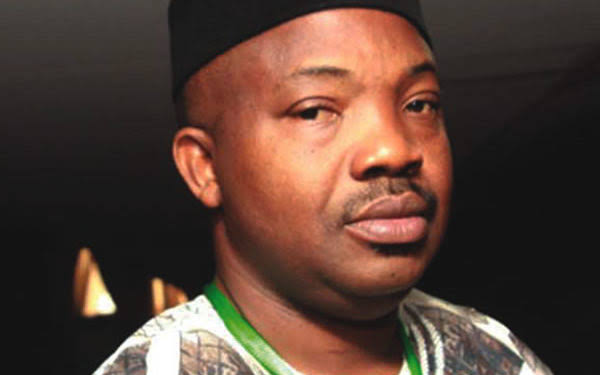
    Afenifere Spokesman, Yinka Odumakin has died

    The National Publicity Secretary of the Pan-Yoruba group- Afenifere, Yinka Odumakinn has died early Saturday at the intensive care unit of the Lagos State University Teaching Hospital (LASUTH).

    The 56 year old outspoken Odumakin died due to a respiratory failure despite showing signs of recovery from complications he suffered from COVID-19, Joe Odumakin, wife of the deceased revealed in a statement.

    Joe, in a shaky voice while confirming the passing of her husband told The Nations that a big part of her is gone.

    She described him as an “irreplaceable soulmate”, stating he died of complications from respiratory issues due to complications from COVID-19 from which she claimed he already recovered from.

    In a statement on Saturday, She said: “With gratitude to the Supreme Being for a life well spent, I announce the passing on of my beloved husband, Comrade Yinka Odumakin to the great beyond after a brief illness.

    “The sad event happened this morning (Saturday, 3/4/2021) at the intensive care unit of LASUTH where he was being managed for respiratory issues due to complications from COVID-19 which he had recovered from about a week ago.

    “I appreciate the outpouring of grief and sympathy from home and abroad as I mourn my irreplaceable soul mate.

    “I urge us all to remain steadfast in the cause of the masses to which he dedicated his life.

    “Burial arrangement will be made public in due course.”

  • Lagos Gov Okays Body Worn Cameras for LASTMA, VIS, Safety Corps, Others

    Lagos Gov Okays Body Worn Cameras for LASTMA, VIS, Safety Corps, Others

    • ‘Initiative Will Enhance Safety, Boost Investors’ Confidence’ – Governor Sanwo-Olu

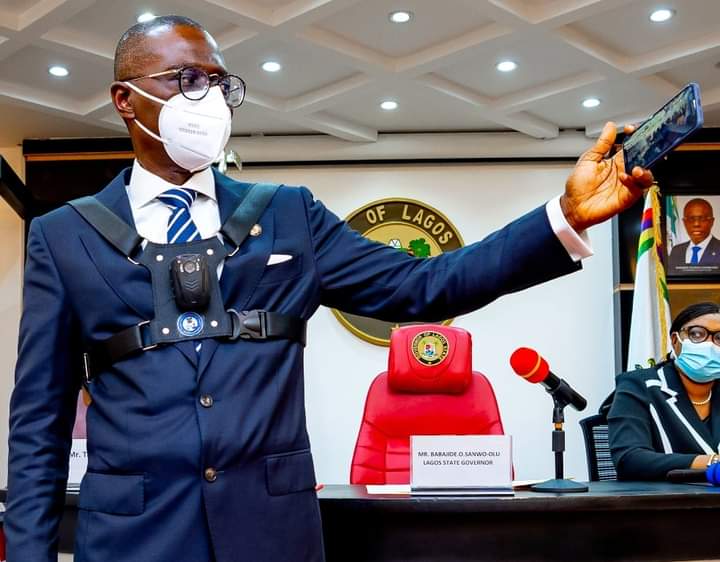
    Governor Babajide Sanwo-Olu, on Wednesday, rolled out a groundbreaking plan for the enhancement of security and safety in Lagos State. The Governor approved a mass training for the State’s law enforcement personnel on the use of body worn cameras, ahead of the deployment of the digital tools for security operations across the State.

    The three-day training, which will commence in May, will be facilitated by the State’s Law Enforcement Training Institute (LETI), headed by Prince Oyekan Falade. After the training, all State-funded law enforcement officers will be commissioned to wear body cameras for their operations.

    Sanwo-Olu said the move would improve transparency and accountability in the activities of law enforcement agencies, and put the State Government in a better position to respond to security challenges in real time.

    Provision of adequate security, the Governor said, is a key pillar of his administration’s T.H.E.M.E.S. agenda, stressing that the initiative reflected his Government’s resolution to ensure Lagos remained secure for residents and investors.

    He said: “I am pleased to inaugurate the use of body-worn cameras by law enforcement officers in Lagos and this is a groundbreaking move to enhance safety in the State, as well as increase transparency and accountability in the activities of our law enforcement agencies. Lagos State has strategically set the pace among other States in Nigeria to launch the use of body worn cameras by law enforcement officers.

    “The security challenges in different parts of the country are worrisome, but with proactive action, the use of modern technological tools, and a mix of well-trained and intelligent officers, we will successfully combat many of these challenges. With body-worn cameras, our law enforcement officers are better equipped to protect lives and properties, thereby, making Lagos safer for us all.”

    Sanwo-Olu said the launch of the body-worn cameras would take the Government a step closer towards fulfilling its security agenda, stressing that the introduction of devices to frontline security team and officers would enhance their productivity and professionalism, while also fast-tracking law enforcement process.

    The cameras, the Governor pointed out, will help the State Government check abuse of power and excesses by security personnel, while also improving the safety and accountability of officers, who will use the devices for evidence sharing and intelligence gathering.

    “I am hopeful that all officers will optimise the cameras that will be assigned to them for the furtherance of justice and improvement of the law enforcement process. Our Government will continue to prioritise the welfare of our law enforcement officers whose pivotal efforts we acknowledge in the entrenchment of a safe city,” Sanwo-Olu said.

    Permanent Secretary of the Ministry of Justice, Mrs. Khadijat Shittabey, applauded the Governor for approving the initiative, stressing that the body worn cameras would help the ministry in the administration of justice.

    She said: “The cameras will also help to enhance professionalism on the part of the law enforcement agents, provide digital evidence of events and provide additional means of protection for officers. The cameras will be used to establish guilt or innocence of officers when confronted with allegations of wrongdoing.”

    Falade, after demonstrating the operation of the camera on the Governor, said 7,000 officers will be trained in the Lagos State Traffic Management Authority (LASTMA), Vehicle Inspection Service (VIS), Lagos Neighborhood Safety Corps (LNSC), and the Lagos Environmental Sanitation Corps (LAGESC).

    The training, LETI boss disclosed, will be done in 26 batches to reduce crowding of the training centre.

    LETI was established in 2013 through an Executive Order, to set standards for recruitment of law enforcement agents, training and development of the officers.

  • Lagos Govt hammers on adherence to corporate governance in parastatals

    Lagos Govt hammers on adherence to corporate governance in parastatals

    Lagos State Government, through the Parastatals Monitoring Office, PMO, has organised a Workshop tagged “Corporate Governance: Series II” for Chief Executive Officers (CEOs) of Government Parastatals in the State to reiterate the continuous adherence to the journey for a better and more prosperous Lagos.

    The Special Adviser, Parastatals Monitoring Office, Mr. Afolabi Ayantayo, while declaring the workshop open on Tuesday, March 16, 2021, explained that the workshop is to further enlighten the CEOs on the T.H.E.M.E.S agenda.

    “The T.H.E.M.E.S agenda is an elaborate plan of action based on extensive accurate data gathering, empirical studies and research, including projections based on collected data for realistic postulations on derivables expected from all sectors of government, all aimed at uplifting the living standards of Lagosians in a manner that is of both sustainable and enduring for generations to come”, he said.

    In order to achieve this, Ayantayo advised all CEOs of State government parastatals to ensure prompt, proper and excellent service delivery on various mandates in fulfilment of the Greater Lagos Agenda.

    The Special Adviser recalled that the first series of the workshop tagged “Digging Deep into the T.H.E.M.E.S Agenda”, was focused on the sectoral spread of the T.H.E.M.E.S agenda by exploring pillar by pillar, the functionality of each pillar of the agenda that governed with the ideals, tenets and principles of corporate establishments aimed toward enhanced efficiency for better result.

    “Just like we did in the first series, we have facilitators, as well as experts in all the sectoral divisions of the T.H.E.M.E.S Agenda, who will guide participants through and impact further knowledge and expertise that will enhance our grasp in our various fields with capabilities to perform our duties better”.

    He then enjoined all participants to utilise all principles and ideas gathered at the workshop in their respective sectors, towards achieving a Greater Lagos.

  • Fake Travel Agent Bags Seven Years for N9m Visa Scam

    Fake Travel Agent Bags Seven Years for N9m Visa Scam

    Justice Emeka Isiagor of the Federal High Court sitting in Umuahia, Abia State has convicted and sentenced a fake travel agent Iheanacho Chikwendu, to seven years imprisonment for defrauding his victims the sum of N9,000,000.00 (Nine Million Naira only).

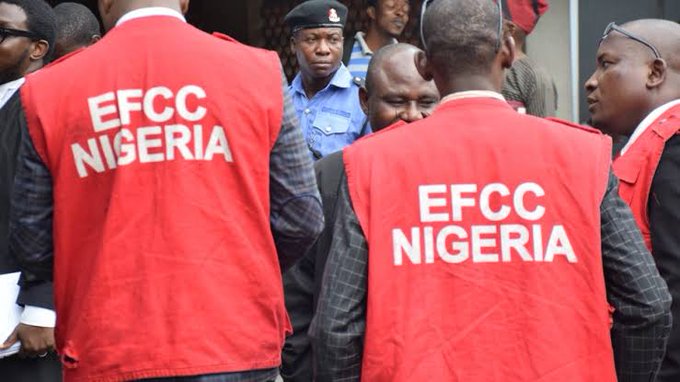
    He was jailed on March 19, 2021 after a four- year trial in a 10-count charge preferred against him by the Port Harcourt Zonal Office of the Economic and Financial Crimes Commission, EFCC. The charges bordered on obtaining money by false pretense.

    Count One of the charges reads: “That you Iheanacho Chikwendu on or about the 15th September, 2016 at Umuahia, Abia State within the jurisdiction of this Honourable Court, with intent to defraud obtained the sum of Four Million Naira only N4,000,000.00 through your First Bank Plc Account number 3078148618 by false pretense, when you presented yourself as a travel agent to Mary Nwankwo and capable of procuring a Canadian Visa for her daughters,  a pretense you knew to be false and thereby committed an offence contrary Section 1 (1) (b) of the Advance Fee Fraud and Other fraud Related Offences Act 2006 and punishable under 1(3) of the same Act”.

    The defendant pleaded “not guilty” to the charges, thereby prompting a full-trial of the case that lasted four years.

    Justice Isiagor, in his judgment, found Chikwendu guilty, convicted and sentenced him to seven years imprisonment on counts 2, 3, 5, 6, 7, and 8, and discharged him on counts 1, 4, 9, & 10 of the charges. He ordered him to make a restitution of N9million to the victim.

  • Nigeria, Morocco extends phosphate supply agreement for new $1.3b fertilizer plant

    Nigeria, Morocco extends phosphate supply agreement for new $1.3b fertilizer plant

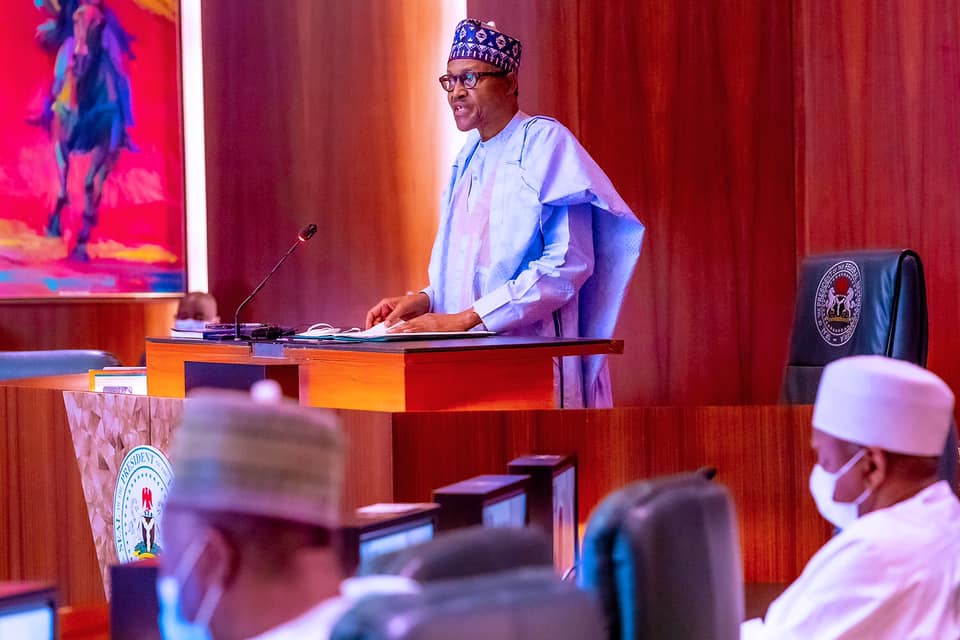
    President Muhammadu Buhari Thursday in Abuja said a new basic chemicals platform worth $1.3b that will produce ammonia and fertilizers in Nigeria will be ready for commissioning in the coming months.

    Speaking at an audience with Fertilizer Producers and Suppliers Association of Nigeria (FEPSAN), President Buhari said the new plant will be built in partnership with the Kingdom of Morocco.

    ‘‘His Majesty, the King of Morocco and I, have agreed to extend the current Phosphate supply agreement between the Kingdom of Morocco and Nigeria.

    ‘‘We both believe that to consolidate and expand on the successes recorded thus far, we must secure raw material supplies to our blenders.

    ‘‘Furthermore, to improve the balance of trade between Nigeria and Morocco, the two countries have signed an agreement to develop a $1.3 billion Basic Chemicals Platform in Nigeria that will produce Ammonia, Phosphoric Acid, Sulphuric Acid and various Nitrogen, Phosphorus and Potassium (NPK) and Diammonium Phosphate (DAP) fertilisers using Nigeria’s gas reserves, ’’ he said.

    The President added that the new plant when completed would complement the existing Dangote and Indorama Chemicals facilities which produce urea, ammonia and other industrial raw materials.

    ‘‘When we combine these projects with the existing 44 blending plants, Nigeria will indeed become a regional and global fertiliser power house,’’ he said.

    On the activities of the FEPSAN, President Buhari expressed delight on the progress they have made over the past five years, saying that despite the country going through recessions during the period, investments in the fertiliser and agricultural inputs sector continued to grow.

    President Buhari with Governor Atiku Bagudu of Kebbi State, Governor Abubakar Badaru of Jigawa State and Central Bank Governor Godwin Emefiele as he receives Virtual Update from Fertiliser Producers and Supplier’s Association of Nigeria (FEPSAN) in State House on 25th Mar 2021

    ‘‘Though many investors chose to take their monies out of Nigeria, you continued to invest. Today, we are seeing the fruits of your smart, long term and patriotic decisions.

    ‘‘This is why all Nigerians should be proud of the personal commitments and sacrifices you all made in getting us to where we are today.

    ‘‘Another commendable trait worth mentioning is that all your investments have been balanced between urban and rural Nigeria. These are the types of investments needed to address the unemployment and security challenges our nation is facing today,’’ he said.

    He assured them that the Federal Government would continue to ensure a conducive business environment for these investments to flourish.

    On the issue of security, the President expressed concern that the lack of employment prospects and opportunities in most rural communities had remained a major contributor to insecurity.

    He noted that for decades, previous Government policies have focused on urban development at the expense of rural inclusion.

    ‘‘In the last four years, we have worked hard to bridge some of these economic imbalances through our various agricultural and financial policies to attract employment opportunities to rural areas.

    ‘‘As we continue to expand our security operations to bring an end to these challenges, it is important to note that peace and prosperity can only be sustained if we collectively and actively support investments that take opportunities to our rural citizens.

    ‘‘I therefore urge our governors, bankers, investors and entrepreneurs to look beyond our cities when it comes to investments.

    ‘‘As we have seen from Nigeria’s 5-year fertiliser revolution, if investors are willing to endure the short term ‘start-up’ pains, they will surely benefit from long term sustainable and substantial gains,’’ he said.

    The President commended Governor Muhammad Badaru Abubakar of Jigawa State, Mr Thomas Etuh and his FEPSAN team, the Central Bank of Nigeria, the Nigeria Sovereign Investment Authority, security and intelligence agencies and all Federal and State Government agencies for their collaboration in making the project possible.

    ‘‘I will also use this opportunity, on behalf of Nigerians, to thank my brother and friend, His Majesty, the King of Morocco for being with us during this difficult but exciting journey.

    ‘‘This mutually beneficial partnership between our two countries is a true example of how intra-Africa trade and partnership should work,’’ he said.

    In his remarks, Mr Thomas Etuh, FEPSAN President recounted that in their first meeting with the President five years ago, he gave the association a mission to reduce Nigeria’s reliance on import, enhance fertiliser availability and affordability and create jobs over a 4-year period.

    ‘‘Today, 4 years later Mr President, I am proud to inform Your Excellency, and indeed all Nigerians, that mission is accomplished,’’ he said.

    Etuh told the President that from 3 blending plants operating at 40 per cent capacity in 2016, today Nigeria has 44 blending plants most of which are operating at full capacity.

    ‘‘From focusing on one fertiliser blend (NPK20:10:10) in 2017, today, we have countless numbers of crop specific blends coming up across the country.

    ‘‘From being reliant on imports, today over 60 per cent of raw materials used in fertiliser production are locally sourced.

    ‘‘From having fertiliser scarcity which led to rationing, today any farmer can buy as many bags as he or she wants.

    ‘‘As a matter of fact, some farmer associations even give customised orders for their specific crops. On behalf of the Nigerian farmers we wish to thank Mr President for empowering them,’’ he said.

    The FEPSAN leader added that from being an unbankable sector that was on the verge of bankruptcy, the members of the association in the last 3 months alone have been able to raise bank guarantees and funding of close to N100 billion.

    ‘‘Mr President, just 4 years ago, FEPSAN used to beg for money. Today Sir, the banks are begging us to take their money,’’ he said.

  • Militants in surveillance contract tussle, set Agip pipeline ablaze in Bayelsa

    Militants in surveillance contract tussle, set Agip pipeline ablaze in Bayelsa

    Youths block firms’ premises in Rivers over alleged negligence

    The attack on the Nigerian Agip Oil Company (NAOC) crude oil pipeline at the weekend might not be unconnected with the battle to control and influence surveillance contracts being handled by Dalong Security Company.

    Sources in the Igbomotoru Community, in the Southern Ijaw Council of Bayelsa State, where there has been tension since the attack by suspected militant told The Guardian.

    According to report, a former militant leader, ‘General’ Endurance, allegedly involved in illegal bunkering, was suspected to be behind the attack, which has now forced other crude oil platforms on the Ogboinbiri axis and adjourning communities to shut down to prevent fire outbreak and damage to the crude oil supply route in the area.

    ‘General’ Endurance is said to be engaged in a battle of supremacy with another former militant leader from neigbouring Peremabiri Community in an attempt to dominate and take over oil pipeline security surveillance job in the area.

    It was also learnt that residents of the community contacted the Joint Military Task Force (JTF) code named Operation Delta Safe and reported the activities of the militants, but they were still awaiting the deployment of security operatives.

    A source in the community said: “We have reported their activities to security agencies and we expect to curtail their activities. Most members of the community are afraid to speak out.

    “The boys engaged in sporadic shooting and they vandalised two Agip pipelines and set them ablaze close to the Beninkurukuru bush. The fire has led to the shutting down of some other facilities in the area.”

    Another community source said the Igbomotoru people have dissociated themselves from the activities of Endurance and his boys, while a JTF source, who confirmed the development, said the Sector 2 Command of the JTF in the state, was investigating the incident.

    When contacted, spokesman for the Joint Military Task Force, Major Victor Odukoya, said he would get back with details, but he could not do so as at the time of filling this report.

    Similarly, no fewer than 100 youths yesterday demanded for the reinstatement of two of their Chiefs, who were disengaged from surveillance contracts by the company without cogent reasons.

    The youths from Ayamakede and Ugamakede communities in Andoni Council of Rivers State, aided by juju priests, blocked the premises of Green Energy International Limited and Lekoil in the GRA area of Port Harcourt

    They are accusing the firms of negligence and insensitivity to their plight.

    Speaking to newsmen during the protest, their spokesman, Awaji Etemila, said the firms had not employed indigenes of the communities for over five years, adding that the companies promised to provide electricity for them but had failed to fulfill their pledge.

    Responding, Assistant Community Relations Manager of Green Energy, Enya Goodluck, appealed to the protesting youths to nominate three persons to negotiate with its management on the issues bothering them.

  • Lawan rules out impeachment over insecurity despite ‘executive failure’

    Lawan rules out impeachment over insecurity despite ‘executive failure’

    The President of the Nigerian Senate has ruled out impeachment of President Muhammadu Buhari by the National Assembly over insecurity in the country despite attributing the persistent insecurity in the country to “failure of the executive”.

    Senate President Lawan made the comment during finals of the first Plateau North Peace, Unity and Reconciliation football tournament organised by Istifanus Gyang, representing Plateau North District in the Senate, saying such action would not solve the problem.

    Lawan, who was represented by Senator representing Benue North-East District, Gabriel Suswan, said: “Impeaching President Buhari is not the focus of the National Assembly as that may not solve the problem of insecurity in the country. But desperate action is needed by the commander-in-chief to allay the fears of Nigerians.”

    According to Suswan, any incident of insecurity that has persisted, like what the country is witnessing today, is failure of the executive, either at the state or national level. “What we are facing today requires desperate action by the executive but that is forthcoming.”

    He reminded Buhari that he is President for all, and should, therefore, act in the interest of Nigerians.

    “We in the National Assembly have continued to do our best. We have passed motions and resolutions, but most of them have not been respected. The president needs to put the interest of Nigeria above any other,” the former governor said.

    Suswan expressed backing for the bill to establish a special commission for armed forces, which recently divided the Senate. He, however, said that the bill, which seeks to take the power to appoint service chiefs, hire and retire them from the president, was not as crucial as deployment of troops to take out insurgents terrorising communities.

    At the tournament, a former governor of Plateau State, Senator Jonah Jang and Gyang appealed to President Buhari to grant executive pardon for former governor of the state, Joshua Dariye and his Taraba State counterpart, Jolly Nyame, who are in prison.

    Gyang said: “We from Plateau North are appealing to the president that in view of the recent judgment by Supreme Court that absorbed Dariye of criminal misappropriation, and on health grounds, he should be granted executive pardon.”

  • Local investors fear ‘forceful takeover’ by foreigner, against converting dividends to shares

    Local investors fear ‘forceful takeover’ by foreigner, against converting dividends to shares

    Local investors have expressed fear that economic challenge in Nigeria, said to have continued to dampen investment drive and trigger apathy in the Nigerian capital market since the 2016 recession and now fueled by the effect of COVID-19 lockdown may lead to a forceful takeover of investments by foreigners.

    The Chief Research Officer of Investdata Consulting Limited, Ambrose Omordion said if the Federal Government fails to make Forex available to foreign investors to repatriate their dividend, it would not only push local investors away from multinationals operating in Nigeria, it would also increase the quantum of unclaimed dividend in the capital market.

    “If they find it difficult at the Forex market, they may decide to buy more shares with the money and if this happens, Nigerian investors will be short-changed while foreign investors will eventually take over the companies.

    Omordion exercised fear about the unhealthiness of the situation for the market and urged that local investors must be encouraged to participate actively in multinational firms to create more wealth for the country.

    The fear is might be valid as a research by The Guardian revealed that foreign investors constitute a large proportion of unclaimed dividends in multinational firms listed on the Nigerian Stock Exchange (NSE) such as Nestle, Unilever, and Nigerian Breweries, among others.

    It was further reported that shareholding structure of Nestle Plc, the biggest multinational company on the NSE showed that Nestle S.A Switzerland controls 66.50 per cent, while Stanbic IBTC Nominees hold 6.28 percent. Free float (Others) constitute 27 per cent. For Unilever Plc, Unilever Overseas have 75.96 per cent stake Stanbic IBTC Nominees control 5.01 per cent, while 19.03 per cent is free float.

    “The Securities and Exchange Commission (SEC) and NSE have been working hard to reduce the quantum of unclaimed dividend so that people will have access to their return on investment.

    “Government should find a way to make sure that these people have access to Forex, even if they want to invest, it should be a fresh investment. Before now, they find it easy to repatriate their money and that is why they can invest more because they know that they are getting good returns from Nigerian companies” Omordion said.

    Sunny Nwosu, the founder of the Independent Shareholders Association of Nigeria (ISAN), said local investors are ready to sell off their shares to foreign investors at any additional value on the share price.

    “If they add N10 or N20 to the value of shares, Nigerians will sell because there is much hunger in the land, most of these retail shareholders have no money to meet needs of their families.

  • DRC: State police battles former head of intelligence, Mutond, raids home

    DRC: State police battles former head of intelligence, Mutond, raids home

    The home of Kalev Mutond, the DRC’s former head of the intelligence agency ‘Agence Nationale de Renseignements’ (ANR) was heavily surrounded by armed police officers 3am on 11 March.

    The Africa Report wrote that Kalev Mutond’s residence in Binza/Ma Campagne, located in the Joli Parc district of Ngaliema, Kinshasa was searched during the night of 10 to 11 March and he has since pleaded his case before a loyal government minister.

    It was reported that arrest and search warrants, which had been signed on 10 March by public prosecutor and magistrate Robert Kumbu Phanzu, were presented to his daughter, Isabelle Ihemba Kayombo, at around 5am. Magistrate Phanzu had however been recused from this case on 8 March, reports stated.

    National deputy Kayombo, who also lives in the residence, agreed to accompany the police officers while they searched her father’s office, his vehicles, main house and two outbuildings. While they did not remove anything, they refused to leave copies of the two warrants.

    A former director-general of the Agence Nationale de Renseignements (ANR), Mutond has received around a dozen complaints filed by people who present themselves as victims of former President Joseph Kabila’s rule. In a letter dated 12 February and addressed to Justin Inzun Kakiak, the current head of the ANR, the Public Prosecutor’s Office at the Court of Appeal of Kinshasa/Gombe requested the latter’s approval as required by law to initiate proceedings against his predecessor.

    In a letter addressed to the prosecutor general on 23 February, which we were able to consult, Mutond wrote that Kakiak felt launching this procedure against his predecessor would be a bad idea.

    According to our The Africa Reports, the same prosecutor general asked the prosecutor at the Court of Appeal of Kinshasa/Gombe on 11 March to “reassign” all of Mutond’s cases to another magistrate, for the “serenity” of justice. Mutond had argued that, as a former head of the ANR, he had the rank of minister and could not be judged by the Court of Cassation.

    On the evening of 11 March, Mutond discreetly visited Kitenge Yesu, President Tshisekedi’s high representative. To help him plead his case, the former ANR boss was accompanied by Adolphe Lumanu, a former minister who has remained close to Kabila. Their host was not receptive to their approach and told Mutond to cooperate with the justice system. Thisekedi was later informed of this meeting.

    Already under US sanctions since December 2016 and regularly targeted by human rights groups, Mutond is – according to this document – implicated for “physical and moral torture, arbitrary arrests, illegal detention, death threats, and the attempted assassination” of Jean-Claude Muyambo Kyassa, the former president of the Lubumbashi bar association who was arrested in 2015 and pardoned in early 2019, and Cyrille Doee Mumpapa. These two men have been fierce opponents of Kabila since 2015.

    Mutond’s legal troubles began after he was arrested and had his passport confiscated in February 2020 at Ndjili international airport in Kinshasa. His team of lawyers, led by president of the bar Cyprien Mbere Moba, have denounced this “political-judicial and tribal relentlessness”, The Africa Reports wrote.