
32.6 C
Lagos
Monday, February 9, 2026
Header1
Home Blog Page 64

Rihanna’s Barbados groove sparks fresh global buzz for Shallipopi’s “Laho”

0

2026-01-02 09:00:00

According to Pulse Nigeria, a short clip circulating online appears to show Rihanna vibing along to Shallipopi’s “Laho,” and fans are treating it like an unexpected Afrobeats co‑sign.

The video has kicked off celebratory reactions across Nigerian social media, with listeners saying moments like this can accelerate global discovery.

As the clip spreads, attention is shifting from “did you see it?” to “will the momentum translate into streams, Shazams, and playlist adds?”

  • HypeTribeNG (Instagram): “Rihanna vibing hard to shallipopi’s ‘Laho’ in Barbados.”
  • Officially Urban (Instagram): “Rihanna Vibing hard to Shallipopi’s ‘Laho’ in Barbados.”

Echotitbits take: A casual celebrity moment can move faster than a label rollout—especially when it’s a global star connecting with a Nigerian sound in real time. If the clip keeps circulating, the smart play is for the camp to ride it with performance snippets, remix chatter, or a visual push that converts virality into sustained listening.

Source: Facebook — January 2, 2026 — https://web.facebook.com/watch/?v=2299884327145462

Facebook
2026-01-02
Photo Credit: Facebook

Inline1

Rethinking Nigeria’s Student Loan Scheme: A Call for Strategic Alignment – Tunde Sodade Ph.D

0

Nigeria’s recently introduced student loan scheme aims to expand access to higher
education, reduce economic and financial exclusion, and democratize opportunity.
While the intention is laudable, the scheme’s design and implementation raise
concerns about sustainability. Examining the features of the programme reveal some
structural vulnerabilities that call for some tweaking and reforms.

The Main Problem: Mismatched Priorities
The scheme targets the wrong set of students, favoring academic pathways over
technical and vocational education. This approach ignores labor market demands,
earnings potential, and Nigeria’s economic needs.

Key Issues:
1.⁠ ⁠Loans Are Targeted at the Wrong Set of Students
The scheme doesn’t distinguish between courses with strong labor-market demand and
those with weak employability outcomes. This creates a predictable outcome: large
volumes of debt extended to graduates who’ll struggle to repay.

2.⁠ ⁠Nigeria’s Economy Would Be Better Served by Prioritizing Technical Education
Nigeria needs skilled workers, not just degree holders. Technical and vocational
education and training (TVET) can provide easily absorbed, productive, and employable
skills. Countries like Germany, South Korea, and Singapore have successfully
industrialized by prioritizing technical education.

3.⁠ ⁠Technical Vocations Are Better Suited to Entrepreneurship and Employment
Absorption
Technical skills lend themselves to self-employment and small enterprise creation that
are better suited to the reduction of structural unemployment. A trained technician can
start a micro-business, absorb informal-sector labor, and serve domestic and regional
markets more easily than a white collared graduate whose fortunes are limited at
absorption into a seemingly saturated job market. Saturated because of the increasing
discordance between academic curricula and actual job market needs.

4.⁠ ⁠Nigeria Leaks Foreign Exchange on Imported Technical Skills whilst stockpiling
difficult to assimilate university graduates
Nigeria imports technical expertise at high forex cost, while exporting the few fit for
purpose graduates it creates. This results in a significant economic leakage that cannot
be corrected just by student loan schemes. Currently, our universities are struggling
with raising the funds needed for the significant capital assets and human resource
retooling that is required to bring them up to date. Funds that the government alone
cannot bear. The current structure of the scheme will therefore exacerbate the
economic imbalances and further systemic inefficiencies.

5.⁠ ⁠Universities Require Far More Capital to Meet Global Standards
Nigerian universities need significant investment to achieve global competitiveness.
Modern laboratories, updated curricula, and robust research infrastructure are capital-
intensive and slow to yield returns.
A separate but focused endeavour to tackle this problem must be embarked upon,
starting with the honest consideration of whether the Federal and State Governments
should own the reported 70 universities each. 140 institutions offering God knows how
many courses, that are unlikely to be anywhere near the world standards that Nigeria
was known for in the 60s, 70s and 80s. At the same time, the 130 odd technical colleges
lie comatose on aggregate as regards quality of instructors and teaching tools.

6.⁠ ⁠Collectibility Will Be Severely Constrained by Weak Data and Enforcement Systems
Nigeria’s loan recovery capacity is weak due to inadequate identity management
systems, unreliable income data, poor institutional communication links and
fragmented payroll systems. Without improvement, default rates will be high, and fiscal
burden will increase.

7.⁠ ⁠Additional Structural Risks
Demographic pressures, moral hazard, institutional capture, and macroeconomic
volatility compound the problem. These factors strain sustainability and are
destabilizing.

Recommendations:
1.⁠ ⁠Prioritize TVET: Focus on technical and vocational education.

2.⁠ ⁠Link Loans to Employability: Tie loans to labor market demands and earnings
potential.

3.⁠ ⁠Strengthen Institutional Capacity: Improve loan recovery mechanisms and improve
systemic communication efficiencies.

4.⁠ ⁠Invest in Data and Tracking: Enhance graduate tracking and income verification.
5.⁠ ⁠Reform University Funding: Explore alternative funding models, seek ownership
partnerships for universities.

6. Streamline university courses on offer and consider consolidating university charters.

7. ⁠Encourage Entrepreneurship: Support technical skills and small enterprise creation.

8. Track and report data and value details of imported technical skills. Make this front
and center of national awareness.

9. Incentivize technical education by diverting more loans and scholarships in this
direction.

10. Embark on a national enlightenment campaign that will place more prestige and
respect on technical education.

Conclusion
Nigeria’s student loan scheme requires strategic alignment with economic reality and
national needs. By addressing these key issues and implementing reforms, we can
create a sustainable system that benefits students, the economy, and future
generations.

A student loan scheme that truly supports Nigeria’s development must address the
country’s strategic needs, industrialization requirements, enhance the country’s global
competitiveness and reduce our human resource development vulnerabilities.

– Tunde Sodade Ph.D

Inline1

CPPE: 2026 stability hinges on sustaining reforms, but manufacturing remains fragile without cost relief

0

2026-01-02 09:00:00
In an analysis published by The Guardian, the Centre for the Promotion of Private Enterprise (CPPE) projects Nigeria could see greater stability and growth in 2026 if reforms are sustained, but cautions that manufacturing remains fragile under persistent structural constraints.

The analysis highlights how energy, logistics and financing costs continue to weigh on factories, arguing that macro stability alone won’t lift the real sector without targeted execution that reduces operating costs.

CPPE’s framing is that reform continuity must translate into measurable improvements in business conditions, otherwise growth remains narrow and disconnected from jobs and purchasing power.

Validation: Vanguard echoed the execution theme, reporting that gains hinge on “effective execution” of incentives and enabling measures. AllAfrica reinforced CPPE’s structural-risk warning and quoted: “Nigeria’s manufacturing revival hinges on managing structural risks…”

Echotitbits take: Reforms must translate into lower production costs. Watch early-2026 signals—grid stability versus self-generation expense, FX predictability for inputs and whether tax changes simplify compliance rather than create new leak points.

Source: The Guardian — 2025-12-29 (https://guardian.ng/business-services/cppe-projects-stability-growth-in-2026-with-sustained-reforms/)
The Guardian 2025-12-29

Photo Credit: The Guardian

Inline1

Tinubu insists new national tax laws start January 1 despite calls for delay over “gazette” dispute

0

2026-01-02 09:00:00
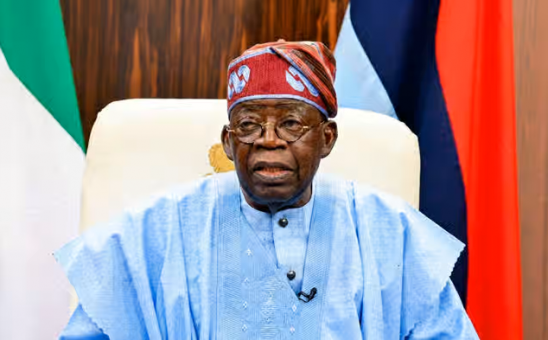
In a report filed by Reuters, President Bola Tinubu said Nigeria will proceed with implementing new tax laws from January 1, 2026, despite criticism and calls for delay tied to disputes over the gazetted text versus what lawmakers passed.

The dispatch notes that opponents have alleged unauthorized insertions and warned about expanded enforcement powers, while the presidency argued there was no substantial issue that should pause the reforms and described the change as a major fiscal reset.

The controversy is unfolding alongside broader reforms, with the government leaning on a tax overhaul as a revenue and efficiency lever.

Validation: TheCable reported legislative voices urging suspension until allegations are resolved, noting the rollout is “scheduled to begin in January.” Reuters quoted Tinubu’s framing of the reform as a “once-in-a-generation” fiscal reset.

Echotitbits take: The reform will be judged by whether it reduces friction (harmonisation, clarity, lower compliance pain) or becomes an enforcement brawl. Watch the implementation guidelines, dispute-resolution mechanics and whether businesses see predictable rules rather than surprise powers.

Source: Reuters — 2025-12-30 (https://www.reuters.com/world/africa/nigeria-implement-new-tax-laws-january-1-despite-calls-delay-tinubu-says-2025-12-30/)
Reuters 2025-12-30

Photo Credit: Reuters

Inline1

Listed insurers project N10.59bn combined Q1 profit as NGX forecasts highlight sector momentum

0

2026-01-02 09:00:00
According to Punch, multiple listed insurers filed earnings forecasts indicating a combined profit after tax of N10.59bn for Q1 2026, with major contributions expected from AIICO, AXA Mansard, Regency Alliance and International Energy Insurance.

The projection is framed as filing-driven rather than speculative—anchored on company guidance submitted to the Nigerian Exchange—signalling expectations around premium growth and investment income performance.

Analysts caution that profit forecasts assume stable conditions; swing factors include claims ratios, investment yields, FX exposure on assets and consumer pressures that can dampen premium uptake.

Validation: DMarketForces reported AIICO’s disclosed target and quoted: “AIICO Insurance Plc has set N5.088 billion as expected profit…” TradingView’s Reuters earnings snippet reported AXA Mansard’s outlook and quoted: “insurance revenue 47.18 billion naira, PBT 4.24 billion naira.”

Echotitbits take: Insurance is quietly becoming a capital-market story. Watch whether these forecasts translate into stronger solvency buffers, broader product innovation beyond compulsory covers and better claims trust—profit is good, credibility is the long-term asset.

Source: The Punch — 2026-01-02 (https://punchng.com/insurance-firms-project-n10-59bn-combined-q1-profit/)
The Punch 2026-01-02

Photo Credit: The Punch

Inline1

Regulator says petroleum vessel approvals are faster, with most clearances now under 24 hours

0

2026-01-02 09:00:00
In an update published by Punch, the Nigerian Midstream and Downstream Petroleum Regulatory Authority (NMDPRA) says it has accelerated petroleum vessel clearance processes, reporting that most approvals are being granted in under 24 hours.

The regulator presents the change as a throughput push to reduce delays that translate into higher landing costs, demurrage exposure and supply disruptions.

Industry observers note that clearance speed only becomes meaningful if port-side coordination—terminal readiness, documentation and inspections—matches regulator timelines.

Validation: MarketForces quoted the regulator’s service-level framing, noting “accelerated approvals and permits under clear service-level agreements.” Extractive360 also reported the same theme and described the push as “accelerating permits under clear service-level timelines.”

Echotitbits take: If NMDPRA’s clearance gains are consistent, the downstream market benefits via steadier supply and lower friction costs. Watch for published performance data and whether Customs/NPA/terminal operators align—multi-agency alignment is the real test.

Source: The Punch — 2026-01-02 (https://punchng.com/nmdpra-speeds-up-petroleum-vessel-clearance-processes/)
The Punch 2026-01-02

Photo Credit: Premium Time

Inline1

NCDMB opens 2025/2026 tech challenge to fund innovations for Nigeria’s energy value chain

0

2026-01-02 09:00:00
In a statement carried by Punch, the Nigerian Content Development and Monitoring Board (NCDMB) announced its 2025/2026 research, innovation and technology challenge to support deployable solutions across the energy value chain.

The programme is positioned as a competitive pipeline that targets practical outcomes—funding, piloting and partnerships—rather than proposals that end at the concept stage.

Stakeholders note that innovation programmes deliver the most impact when winners are connected to real industry offtakers, procurement lanes and test-bed opportunities.

Validation: Premium Times reported the launch as a push to spur “innovation and technology” within Nigeria’s content ecosystem. Vanguard also covered it as an “innovation challenge,” reinforcing the emphasis on converting research into market-ready products.

Echotitbits take: NCDMB has leverage—if it plugs winners into procurement and operations, this becomes an industrialisation tool. Watch the judging criteria (commercial viability vs. concept) and whether pilot funding is released fast enough to keep teams alive.

Source:  The Punch — 2026-01-01 (https://punchng.com/ncdmb-unveils-2025-2026-tech-innovation-challenge/)
The Punch 2026-01-01

Photo Credit: The Punch

Inline1

Manufacturers forecast stronger 2026 output but say policy execution will decide the results

0

2026-01-02 09:00:00
According to Punch, the Manufacturers Association of Nigeria (MAN) projects improved output in 2026, with estimates pointing to stronger real growth and a higher contribution to GDP if enabling policies are implemented effectively.

The report links the optimism to reforms that could stabilise key macro variables, but notes manufacturers remain exposed to structural constraints—energy costs, logistics bottlenecks, and expensive financing.

Industry voices continue to push for a predictable policy environment and practical support that reduces operating costs, warning that growth projections can be missed if business conditions tighten.

Validation: Vanguard reported MAN’s forecast and quoted: “Real growth is projected to reach 3.1 percent… contribution… rise to 10.2 percent.” AllAfrica carried CPPE-linked commentary warning that “Nigeria’s manufacturing revival hinges on managing structural risks…”

Echotitbits take: Manufacturing is one of the fastest routes from ‘GDP growth’ to jobs. Watch Q1 indicators—grid stability vs. self-generation costs, FX predictability for imported inputs, and whether tax reforms reduce friction rather than add new compliance pain.

Source: The Punch — 2026-01-02 (https://punchng.com/manufacturing-tipped-for-3-1-growth-10-2-gdp-contribution/)
The Punch 2026-01-02

Photo Credit: The Punch

Inline1

Kogi signs two revenue bills to align state collections with Nigeria’s new tax reform direction

0

2026-01-02 09:00:00
Figures cited by Punch show Kogi State has signed into law two revenue-related bills intended to strengthen tax administration and align with the Federal Government’s broader tax reform agenda.

The measures include a state internal revenue service establishment framework and a harmonised approach to collecting taxes and levies, presented as a way to boost transparency and reduce leakages.

Officials argue that clearer rules can improve compliance and expand the revenue base beyond a narrow set of collection points, if the rollout avoids harassment and multiple taxation traps.

Validation: The Guardian reported Kogi “signed into law two key revenue bills” aligned with the federal reform direction. PM News echoed the expected impact, quoting a government statement that the move is “expected to boost state revenue, enhance transparency, and promote economic growth.”

Echotitbits take: Tax reform succeeds or fails in execution. Watch for whether Kogi digitises collections, curbs informal levies at local levels and sets a credible appeals process—business confidence depends on predictability, not just new laws.

Source: The Punch — 2026-01-02 (https://punchng.com/kogi-gov-signs-tax-reform-laws/)
The Punch 2026-01-02

Photo Credit: The Punch

Inline1

Oyo says Bodija intervention N30bn remains untouched while FG balance stays pending

0

2026-01-02 09:00:00
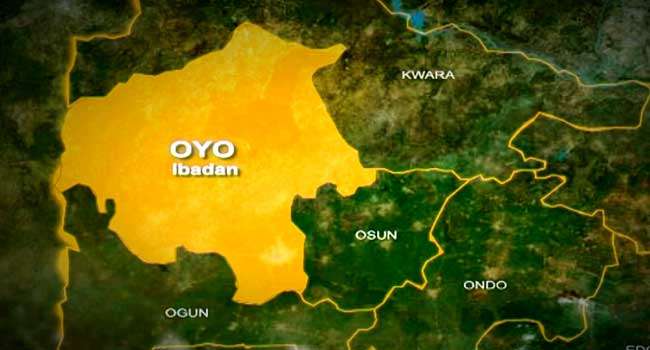
In an update published by The Nation, the Oyo State Government says the N30bn released by the Federal Government for Bodija explosion intervention remains in a bank account and has not been accessed while it awaits an outstanding N20bn balance.

The state’s position is that it kept the funds idle pending full release of the approved package, arguing that proceeding without the remaining tranche could complicate sequencing, accountability and delivery planning.

The statement also sought to counter political claims around the money, pointing to account details and inviting independent verification through the bank where the funds are domiciled.

Validation: Punch quoted the state’s claim: “As of Thursday, December 31, 2025, the N30bn remained untouched…” The Guardian similarly reported the fund has “remained untouched” while the “outstanding N20 billion balance” is yet to be released.

Echotitbits take: The bigger governance question is whether states should wait for “full tranches” or publish phased plans and start transparently. Watch for a costed implementation schedule, procurement framework and independent audit plan—those details will matter more than the political noise.

Source: The Nation — 2026-01-01 (https://thenationonlineng.net/bodija-explosion-n30bn-in-bank-awaiting-n20bn-balance-from-fg-oyo/)
The Nation 2026-01-01

Photo Credit: The Nation

Inline1