Tag: economy

  • Federal Government Targets $1 Trillion GDP Through Radical Investment Mobilization

    Federal Government Targets $1 Trillion GDP Through Radical Investment Mobilization

    According to The Guardian Nigeria, the Federal Government has unveiled a strategic roadmap to propel Nigeria toward a $1 trillion Gross Domestic Product (GDP) by 2036. The 2026 phase of this plan focuses on ‘stabilization to expansion,’ prioritizing the removal of regulatory barriers to unlock private capital.

    The Minister of State for Finance, Dr. Doris Uzoka-Anite, emphasized that the government is moving away from purely fiscal management to a sector-led growth model. This involves fast-tracking ‘bankable projects’ in agriculture, manufacturing, and tech to attract both domestic and foreign investors.

    Proshare confirmed the policy direction, reporting that ‘the FG outlines key policies to accelerate growth and job creation’ in the coming months. AllAfrica further validated the story, stating that ‘2026 marks a turning point’ where the government will pivot decisively toward attracting long-term capital.

    Echotitbits take: Ambition is good, but the $1 trillion target requires consistent double-digit growth, which Nigeria hasn’t seen in decades. The success of this agenda hinges entirely on whether the government can provide ‘policy clarity’ that actually survives the frequent shifts in political leadership.

    Source: The Guardian — https://guardian.ng/news/fg-targets-1tr-economy-through-investment-local-production/
    The Guardian January 3, 2026

    Photo Credit: The Guardian

  • AI Poised to Revolutionize Risk Pricing and Fraud Detection in Nigerian Banking

    AI Poised to Revolutionize Risk Pricing and Fraud Detection in Nigerian Banking

    According to The Guardian Nigeria, financial experts are forecasting a major shift in the banking sector as Artificial Intelligence (AI) takes a lead role in real-time risk pricing. Omolade Oke, a prominent industry analyst, stated that AI will soon become the primary tool for fraud detection and personalized liquidity management across major Nigerian banks.

    This technological evolution is expected to significantly reduce the rate of non-performing loans by providing more accurate credit scoring models. Banks are already increasing their tech budgets to integrate these AI solutions, aiming to compete with the rising dominance of fintech platforms.

    BusinessDay supported this outlook, noting that ‘AI will revolutionise risk pricing’ and modernize how banks interact with their customers. Vanguard also reported on the trend, emphasizing that ‘Cardoso’s brilliant monetary management’ is creating the stability needed for such long-term tech investments.

    Echotitbits take: AI is the ‘silver bullet’ for Nigeria’s high credit risk environment. If banks can successfully automate fraud detection, we might finally see a reduction in the massive interest rate spreads that currently make borrowing so expensive for small businesses.

    Source: The Guardian — https://guardian.ng/interview/ai-will-revolutionise-risk-pricing-fraud-detection-and-personalised-liquidity-management-in-real-time-says-omolade-oke/
    The Guardian January 3, 2026

    Photo Credit: The Guardian

  • Otedola Applauds FirstBank’s N500 Billion Capital Milestone

    Otedola Applauds FirstBank’s N500 Billion Capital Milestone

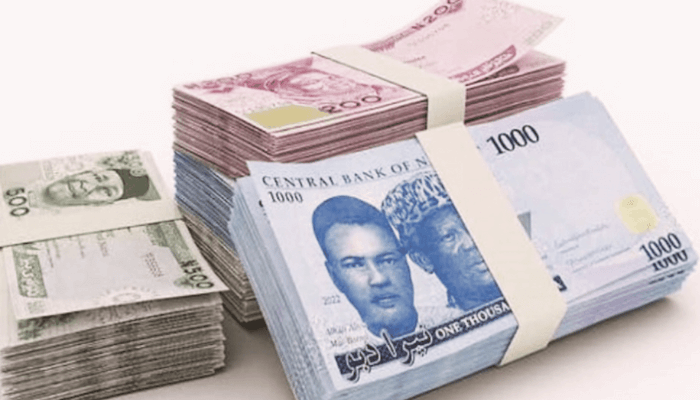
    Figures cited by Premium Times show that FirstBank of Nigeria has successfully completed its N500 billion capital raise, a move lauded by billionaire investor Femi Otedola. Otedola praised both President Tinubu and CBN Governor Yemi Cardoso for creating the regulatory environment that allowed for such a massive capital injection.

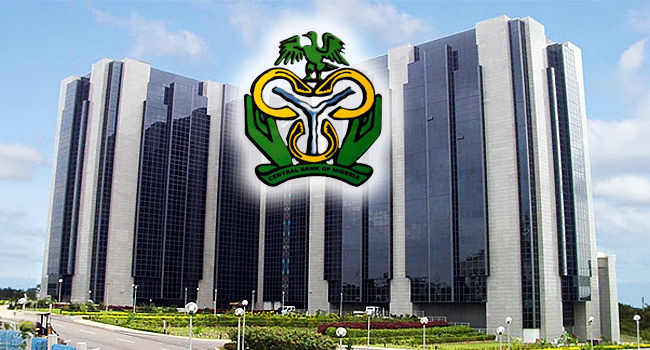
    The capital raise is part of the CBN’s mandate for commercial banks to strengthen their balance sheets to support a 1 trillion economy. FirstBank’s success is seen as a bellwether for the rest of the banking sector, many of whom are still in the middle of their own rights issues or public offers.

    The Nation added that the ‘economy will profit from financial sector reforms,’ noting that stronger banks will be better positioned to lend to the real sector. BusinessDay also listed this as one of the ’25 deals that shaped Nigeria’s corporate environment,’ marking it as a defining moment for 100-year-old institution.

    Echotitbits take: FirstBank reaching this goal ahead of schedule is a massive liquidity boost for the Nigerian stock exchange. Expect Otedola to continue pushing for a ‘N1 trillion capital base’ as the new gold standard for Tier-1 banks in Nigeria.

    Source: Premium Times — https://www.premiumtimesng.com/business/business-news/847084-otedola-urges-cbn-to-raise-banks-capital-to-%E2%82%A61-trillion-as-firstbank-meets-%E2%82%A6500bn-requirement.html
    Premium Times January 2, 2026

    Photo Credit: Premium Times

  • New Federal Tax Laws Take Effect With Mandatory Electronic Receipting System

    New Federal Tax Laws Take Effect With Mandatory Electronic Receipting System

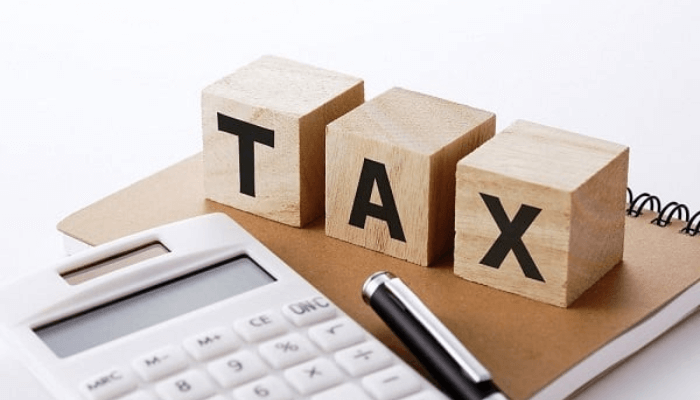
    In an update published by AllAfrica, the Federal Government of Nigeria officially commenced the implementation of new tax laws on January 1, 2026. A central feature of this reform is the rollout of a ‘Revenue Optimization Platform’ which makes electronic receipts the only legal proof of payment for federal services.

    The policy aims to eliminate cash leakages and ensure that all royalties, tariffs, and fees are remitted directly to the Treasury Single Account (TSA). This move is part of the broader 2026 Economic Growth Agenda which focuses on deepening domestic value creation and fiscal transparency.

    Vanguard highlighted the urgency of these reforms, noting that ‘revenue without trust is not reform’ and emphasizing the need for public accountability. Additionally, The Guardian reported that the Ministry of Finance is moving to ‘take over CBN development finance functions’ to better align fiscal policy with tax collection goals.

    Echotitbits take: Digitalizing the tax trail is a massive step toward curbing corruption in MDAs. The real test will be the ‘visibility’ the Ministry of Finance gains over daily collections and whether this leads to a tangible reduction in the budget deficit.

    Source: The Guardian — https://guardian.ng/news/new-tax-laws-to-take-effect-jan-1-as-scheduled-presidency/
    The Guardian January 3, 2026

    Photo Credit: The Guardian

  • US tariff shock: Nigeria’s export earnings take a hit as trade gap risks widen

    US tariff shock: Nigeria’s export earnings take a hit as trade gap risks widen

    Photo credit: The Punch

    2025-12-22 09:00:00

    Figures cited by *The Punch* show Nigeria’s exports to the United States have taken a major hit in the wake of higher US tariffs, with the report estimating a roughly ₦1tn-scale export loss and a sharper trade imbalance.

    The data-driven argument is that once tariffs rise, marginal cargoes—especially non-oil shipments—lose competitiveness quickly, while buyers switch to alternative suppliers.

    Economists warn that tariff pressure can ripple beyond customs: export earnings affect FX inflows, port activity, manufacturing orders, and jobs tied to the export chain.

    The story also revives an old weakness—Nigeria’s narrow export basket—where shocks to market access translate fast into national revenue and FX volatility.

    BusinessDay reported that “Nigerian exports to the United States will now attract a 15 percent tariff,” while Nigeria Info FM similarly reported exports “will now face a 15% tariff” following an executive order—supporting the tariff-change backbone of the Punch analysis.

    **Echotitbits take:** The policy response can’t be vibes: Nigeria must diversify export destinations, improve standards compliance, and negotiate carve-outs where possible. Watch for whether Abuja pursues targeted trade diplomacy—or quietly absorbs the loss and shifts focus to other markets.

    Source: The Punch — December 22, 2025 (https://punchng.com/nigeria-suffers-nearly-n1tn-export-loss-after-trump-tariff/)

  • ADC asks Tinubu to halt tax reforms amid claims final law was altered

    ADC asks Tinubu to halt tax reforms amid claims final law was altered

    Photo Credit: The Punch
    2025-12-20 09:00:00

    Reporting by Punch indicates the African Democratic Congress (ADC) is demanding a suspension of Nigeria’s newly introduced tax laws, alleging that key sections were changed after National Assembly passage and presidential assent.

    The party frames the claim as a constitutional issue—arguing that post-assent changes would undermine legislative process and separation of powers.

    ADC says it wants a full investigation to determine who handled the alleged edits and whether prosecution should follow if wrongdoing is established.

    Daily Post said the ADC urged suspension over “alleged forged provisions,” while TheCable’s coverage captured ADC’s warning that “It is time to rethink our tax laws.”

    Echotitbits take:
    Whether proven or not, legitimacy is everything for compliance. Watch for certified “as-passed” copies, side-by-side comparisons with gazetted versions, and clear implementation guidance before take-off.

    Source: Punch — December 20, 2025 (https://punchng.com/adc-demands-suspension-of-tax-laws-over-modification-allegations/)
    Punch 2025-12-20

  • Nigeria Issues First Gas Trading Licence to Deepen Market Liquidity

    Nigeria Issues First Gas Trading Licence to Deepen Market Liquidity

    Photo Credit:Punch Newspapers

    The Federal Government has approved the country’s first gas trading licence aimed at boosting liquidity and transparent pricing in the domestic gas market. The Nigerian Midstream and Downstream Petroleum Regulatory Authority said the new framework will allow licensed entities to aggregate and trade gas volumes across multiple contracts and buyers.

    Officials believe the regime will attract fresh investments into gas infrastructure, enhance market competition and support power generation, industries and household consumption. The step also aligns with Nigeria’s gas‑as‑transition‑fuel strategy and broader plans to diversify revenues away from crude oil.

    Source: Punch Newspapers – 12 Dec 2025

    2025-12-12 10:00:00 Punch Newspapers – 12 Dec 2025 2025-12-12

  • Tinubu Okays 94,000 New Security Recruits to Tackle Insecurity

    Tinubu Okays 94,000 New Security Recruits to Tackle Insecurity

    Photo Credit:Punch Newspapers

    President Bola Tinubu has approved the enlistment of 94,000 new personnel into the armed forces and other security agencies as part of fresh measures to confront worsening insecurity across the country. The recruits will be spread across the Army, Air Force, Navy and paramilitary outfits to reinforce operations in insurgency‑hit and vulnerable areas.

    Top security officials disclosed that the recruitment drive targets improved presence in rural communities, better border control and faster response to attacks. The government insists the expansion will be accompanied by new equipment, training and welfare packages, as it seeks to restore public confidence and protect economic activities disrupted by banditry and terrorism.

    Source: Punch Newspapers – 12 Dec 2025

    2025-12-12 10:00:00 Punch Newspapers – 12 Dec 2025 2025-12-12

  • Nigeria National Assembly Passes N13.5trn 2021 Budget, N500bn Higher than Initial Proposal

    The Senate on Monday passed the 2021 Appropriation Bill of N13.5 trillion.

    This followed the adoption of the report of Senate Committee on Appropriations at plenary.

    The News Agency of Nigeria (NAN), reports that President Muhammadu Buhari had on Oct. 8, presented the 2021 budget of N13.08 trillion to the joint session of the National Assembly for approval.

    Similarly, the House of Representatives also passed the 2021 budget of N13.5 trillion for the Year 2021 has been passed by Nigeria’s National Assembly on Monday ahead of the Christmas and New Year break.

    READ ALSO:

    COVID-19 Second Wave: Lagos Restricts Church Gathering Again, Bans Concerts, Others

    The passing of the budget, which followed consideration of a report by the committee on appropriation is N500bn higher than the N13.08 Trillion earlier presented before the joint session of the National Assembly by President Muhammadu Buhari.

    Details of the budget include about N6 Trillion allocated for recurrent expenditure, N4.2 trillion for Capital expenditure and N3.32 Trillion for Debt servicing.

    READ ALSO:

    SIM registration: FG Backtracks on NIN Retrieval Fee

    Presenting the report on the floor of the house, Chairman of the Committee on appropriation, Alhaji Aliyu Betera, while presenting the committee’s report on the floor of the House confirmed that sectors with highest allocation in the 2021 Appropriation Bill includes Defence with about N840bn (eight hundred and forty Billion naira); education with over N545bn (five hundred and forty five Billion naira), Police Affairs about N438bn (four hundred and thirty eight Billion naira) while health sector received over N380 (three hundred and eighty Billion naira.)

    The nation’s 2021 budget estimate is based on a $40 per barrel assumption, with crude oil production at 1.86million barrel per day.

  • Recall, Recalibrate Your 2021 Budget to Save Nigeria’s Economy, Atiku Tells Buhari

    Recall, Recalibrate Your 2021 Budget to Save Nigeria’s Economy, Atiku Tells Buhari

    Former Vice President and Peoples Democratic Party (PDP) presidential candidate in 2019 general elections, Atiku Abubakar, has berated President Muhammadu Buhari over his 2021 budget proposal recently presented to the National Assembly.

    Atiku, in a statement on Saturday titled: “The 2021 Budget Proposal Contravenes The Fiscal Responsibility Act,” charged the President to be courageous enough to recall and recalibrate the 2021 budget proposal to reflect the provisions of the Fiscal Responsibility Act (FRA) of 2007 and the current economic realities in Nigeria.

    According to him, “The budget deficit in the proposal is ₦5.21 trillion. This amount is just over 3.5 per cent of Nigeria’s 2019 GDP.

    READ ALSO:

    Buhari Presents ₦13trillion Budget, National Assembly Gets ₦128b, Housing ₦20b

    “This is contrary to the Fiscal Responsibility Act of 2007, which provides in Part II, Section 12, subsection 1 that: ‘Aggregate Expenditure and the Aggregate amount appropriated by the National Assembly for each financial year shall not be more than the estimated aggregate revenue plus a deficit, not exceeding three per cent of the estimated Gross Domestic Product or any sustainable percentage as may be determined by the national Assembly for each financial year.’”

    He explained that the deficit of 2021 budget shows the precarious state of Nigeria’s finances, which have since been overburdened by excessive borrowing on the part of the Buhari administration.

    Atiku, who stated that he could itemise several reasons why Buhari’s 2021 budget is not feasible and realisable, insisted that the President should be patriotic enough to recall the budget otherwise it would be catastrophic for Nigeria’s economy.

    The statement reads in part: “Looking at the 2021 Budget Proposal placed before the National Assembly by President Muhammadu Buhari on Thursday, October 8, 2020, a number of issues, very grave and perhaps disturbing issues arise.

    “I could bring up several of them, but for the sake of its direness and consequence to our economy, permit me to address one very important issue.

    “The budget deficit in the proposal is ₦5.21 trillion. This amount is just over 3.5 per cent of Nigeria’s 2019 GDP. This is contrary to the Fiscal Responsibility Act of 2007, which provides in Part II, Section 12, subsection 1 that: ‘Aggregate Expenditure and the Aggregate amount appropriated by the National Assembly for each financial year shall not be more than the estimated aggregate revenue plus a deficit, not exceeding three per cent of the estimated Gross Domestic Product or any sustainable percentage as may be determined by the national Assembly for each financial year.’

    “Nigeria had a GDP of approximately $447 billion in 2019. Three percent (three per cent) of this amount is $13.3 billion, which at the current official exchange rate of ₦379 to $1, gives you a figure of ₦5.07 trillion.

    “So clearly, the budget deficit of ₦5.21 trillion, as announced by President Muhammadu, is above three per cent of our GDP and is therefore in contravention of the Fiscal Responsibility Act of 2007.

    “Even more disturbing is the fact that our GDP has fallen sharply from its 2019 figures, and has been projected by the World Bank and other multilateral institutions at somewhere between $400 billion and $350 billion. Meaning that in actual sense, the ₦5.21 trillion budget deficit is actually far above the three per cent threshold stipulated by the FRA.

    “That this escaped the notice of the Buhari administration shows a glaring lack of rigour in the formulation of the Budget. A very disturbing development.

    READ ALSO:

    Ministry of Works Effects 2day Total Shutdown of Third Mainland Bridge

    “Furthermore, this deficit shows the precarious state of our national finances, which have since been overburdened by excessive borrowing on the part of the Buhari administration.

    “It has not escaped my attention that the Fiscal Responsibility Act of 2007 makes provision for the National Assembly to raise the threshold of the budget deficit from three per cent to a higher figure. However, if this is done, they will be serving this administration’s interests, not Nigeria’s, because the Act says that such a threshold must be sustainable. Is it sustainable when our budget makes almost as much provision for debt servicing, as it does for capital expenditure?

    “As such, I call on the President, to recall this budget, and recalibrate it to reflect the provisions of the Fiscal Responsibility Act of 2007, and the current economic realities of the nation. To do otherwise will not only be unpatriotic, it will also be catastrophic for our nation’s economy.”

    Idowu Sowunmi