Tag: El Rufai

  • Controversy Erupts Over Attempted Airport Detention of Former Governor El-Rufai

    Controversy Erupts Over Attempted Airport Detention of Former Governor El-Rufai

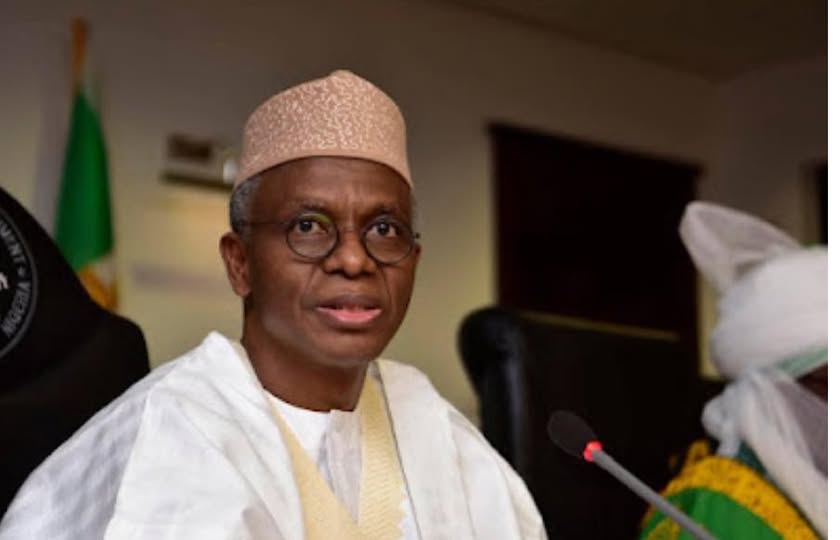
    According to Premium Times, security agents attempted to intercept and arrest Nasir El-Rufai, the former Governor of Kaduna State, at the Nnamdi Azikiwe International Airport in Abuja. The incident occurred as the former governor was preparing to board a flight, leading to a tense standoff between his aides and the security personnel on site.

    In an update published by his media team, it was alleged that the agents attempted to seize El-Rufai’s passport without a valid warrant. The former governor has since spoken out, describing the incident as an example of “executive overreach” and a threat to the democratic rights of citizens who hold opposing views to the current administration.

    The situation has sparked widespread debate across the political spectrum, with allies of the former governor claiming the move was politically motivated. Conversely, security sources have remained tight-lipped about the specific reasons for the attempted detention, though rumors of investigations into past administrative actions continue to circulate.

    Vanguard and The Sun also covered the confrontation at the airport. Vanguard noted that “the heavy security presence caused a temporary stir at the terminal,” while The Sun featured a quote from an aide saying, “we will not allow the rule of law to be trampled upon by faceless agents.”

    Echotitbits take: This incident highlights the deepening friction between the federal government and influential political figures ahead of the 2027 election cycle. It raises concerns about the use of state apparatus for political intimidation. Keep an eye on the Department of State Services (DSS) for an official statement, as this could lead to a protracted legal battle.

    Source: BBC – https://www.bbc.com/pidgin/articles/cn87g9n875jo, February 13, 2026

    Photo credit: BBC

  • Opinion: Nation Building Over Party Politics – Nigeria’s Path for the Next 24 Years

    Opinion: Nation Building Over Party Politics – Nigeria’s Path for the Next 24 Years

    The Aso Rock, Nigeria

    Opinion: Nation Building Over Party Politics – Nigeria’s Path for the Next 24 Years

    Nigeria stands at a crossroads where the choice between perpetual political brinkmanship and purposeful nation building will determine the fate of over 200 million people. For decades, our politics has revolved around personalities, ethnic arithmetic, and empty party slogans, rather than coherent ideologies or long-term visions. Today, no major political party in Nigeria sincerely advances a consistent political philosophy; instead, parties often serve as shifting platforms for elites to capture power, switch allegiances, and share spoils.

    Given this reality, it is neither radical nor undemocratic to argue that the country’s focus over the next generation must shift decisively from party-centered politics to nation-centered governance. If those entrusted with leadership — regardless of partisan labels — dedicate themselves to genuine social and economic transformation, it should matter less whether they belong to one party or a hundred. What matters is progress, stability, and prosperity.

    Critics may call this a drift toward a de facto one-party state, but it is better understood as a call for ideological unity on nation building. Nigeria desperately needs leaders who see beyond election cycles and prioritize industrialization, quality education, universal healthcare, modern infrastructure, and social justice. We need continuity in policies that work, not endless resets every four or eight years just because a new party wants to mark its territory.

    History shows us that countries like Singapore and Rwanda achieved rapid development not by fetishizing partisan competition but by forging a national consensus on discipline, economic planning, and inclusive growth. In these contexts, the energy spent on political bickering was redirected into building systems, attracting investment, and delivering results.

    Of course, the danger of unchecked power is real; accountability must never be sacrificed. But accountability can come through institutions — independent courts, vibrant civil society, free media — rather than the illusion of multiparty rivalry that offers no ideological choice. When opposition parties simply mirror ruling parties in opportunism, democracy becomes a hollow ritual.

    For Nigeria, the question is simple: if a government is genuinely transforming the economy, empowering citizens, and entrenching good governance, why should the nation interrupt that trajectory in the name of an election that merely swaps one set of self-interested politicians for another? Why not build a broad coalition of stakeholders — across regions, ethnicities, faiths — around a shared developmental agenda and hold leaders accountable to that, rather than to party colors?

    Over the next 24 years, what Nigeria needs is not a rotating door of politicians but a sustained national project: one that creates jobs, ends poverty, secures lives and property, modernizes agriculture, and raises Nigeria’s human capital. We should champion policies, not parties; performance, not propaganda; and unity, not division.

    The time has come for Nigerians to reject the empty spectacle of party politics without ideology and embrace a renewed, patriotic commitment to nation building — for the sake of today’s citizens and generations yet unborn.

    Bunmi Adebayo, writes from Abeokuta