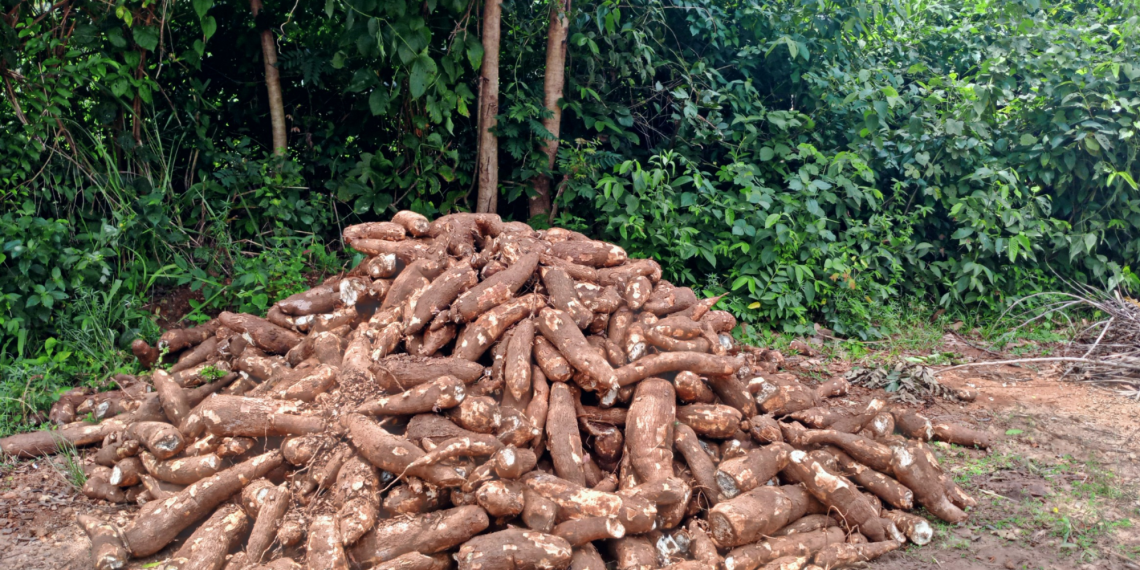
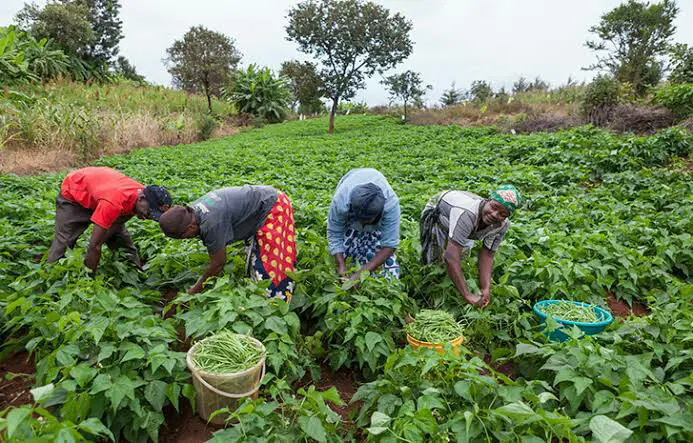
Reporting by Premium Times indicates that the Nigerian government has reaffirmed its commitment to nutrition security by aggressively expanding the cultivation of biofortified crops. The Permanent Secretary of the Federal Ministry of Agriculture and Food Security, Marcus Ogunbiyi, revealed that Nigeria now holds the largest portfolio of these crops globally. This strategy aims to combat “hidden hunger” by providing essential vitamins and minerals through staple foods like cassava, maize, and sweet potatoes.
The announcement was made during a national workshop in Kano, where officials highlighted the role of biofortification in reducing malnutrition-related illnesses. By integrating these crops into the national food system, the government hopes to improve the health of millions of Nigerians, particularly children and pregnant women in rural areas.
Stakeholders at the event emphasized the need for better seed distribution networks to ensure that smallholder farmers can access these improved varieties. The government is partnering with international agricultural organizations to provide technical support and scale up production across the six geopolitical zones.
Vanguard verified the initiative, reporting that the government is also linking biofortified crop production to the National Home-Grown School Feeding Programme. A nutrition specialist quoted in The Guardian said, “Biofortification is a cost-effective way to deliver micronutrients to the most vulnerable populations.” Daily Trust also covered the workshop, quoting a farmer who stated, “These new varieties are not just healthy; they are yielding better than our traditional seeds.”
Echotitbits take: This is a major win for Nigeria’s agricultural sector. Beyond health, this move positions Nigeria as a leader in African agritech. The next challenge will be ensuring these crops reach the market at competitive prices to displace less nutritious alternatives.
Source: Premium Times – https://www.premiumtimesng.com/agriculture/agric-news/856749-nigerian-govt-commits-to-adoption-of-biofortified-crops.html, and February 15, 2026
Photo credit: Premium Times
Tag: Food Security
-

Nigeria Expands Food Security Drive with Largest Global Biofortified Crop Portfolio
-

Nigeria Moves to Terminate Rice Importation Windows to Protect Local Farmers
Nigeria is moving to shut down rice import windows following a national policy review that reportedly found imports have created surplus supply, depressing prices and worsening losses for domestic farmers.
Officials linked to the Presidential Food Systems Coordinating Unit reportedly stated that maize and rice farmers recorded negative margins during the 2025 wet season, driven by high production costs and weak sale prices. The government’s new direction is expected to prioritize local production while introducing price protection mechanisms to safeguard farmer livelihoods and preserve national food security.
Supporters argue the policy reset will stabilize rural incomes and reduce exposure to import shocks. Critics caution that if local output cannot meet demand, consumers—particularly in urban centers—could face renewed price pressures. Separate reporting has also referenced national food balance figures indicating a notable surplus in late 2025.
Echotitbits take: This is a return to protectionist policies. While it helps farmers, the government must ensure that local supply is actually sufficient to prevent a price spike for consumers in urban areas.
Source: BusinessDay – https://businessday.ng/news/article/nigeria-to-shut-rice-import-windows-as-data-exposes-farmers-losses/ 2026-01-26Photo Credit: BusinessDay
-

Dramatic Drop in Nigeria Food Prices Sparks Mixed Reactions Among Stakeholders
The Nation reports a notable decline in the prices of staple foods across parts of Nigeria, delivering relief to consumers while triggering concern among agricultural producers and intermediaries. In states including Ogun, Oyo, and Kwara, the price of a 50kg bag of rice was reported to have dropped substantially from previous peaks above N100,000.
The report linked the shift to a combination of improved yields and policy interventions, while noting that stakeholders differ on what is driving the price movement and whether the trend is sustainable. Some farmers and market middlemen argue they are being squeezed by sudden changes in market conditions.
The Punch and Tribune Online also reported on the changing dynamics, with The Punch highlighting easing inflation pressures, while Tribune Online emphasized producers’ complaints that selling prices may now be below cost.
Echotitbits take: Lower food prices are politically valuable for the federal government, but a producer-side backlash can translate into reduced planting next season. Watch for targeted support measures—credit, guaranteed offtake, input subsidies, or a “farmer support” package—to prevent a supply shock later in the year.
Source : Daily Post — https://dailypost.ng/2025/10/28/economists-explain-why-rice-price-drop-sparks-mixed-reactions-among-nigerians-traders/ 2026-01-24Photo Credit: Daily Post
-

Macro-Strategy: VP Shettima Reclassifies Food Security as National Security
Vice President Kashim Shettima says Nigeria is now treating food security as a core national security and macroeconomic priority, unveiling a ‘Back to the Farm’ push aimed at reducing inflation and food-import FX pressure.
Additional coverage across Nigerian media and stakeholder reactions indicate that the implications of the development will be closely watched in the coming days as policy, security, and market signals evolve.
Echotitbits take: Framing food as a security issue allows the government to deploy more resources and potentially protect farming clusters more aggressively. Success depends on whether food-basket regions are actually made safe from banditry.
Source: Channel TV – https://www.channelstv.com/2025/07/30/nigerias-target-is-to-attain-food-sovereignty-shettima/ (2026-01-22)
Photo credit: Channel TV
2026-01-22 13:00:00
-

The Gambia’s national university renames its agriculture school after Akinwumi Adesina
According to Africa Newsroom (via APO Group), the University of The Gambia has renamed its School of Agriculture and Environmental Sciences in honour of Dr. Akinwumi Adesina, citing his long-standing impact on agriculture and development across Africa.
The move positions the faculty as a symbolic rallying point for food-security research, climate-smart agriculture, and youth-focused agripreneurship—areas that continue to dominate policy conversations across West Africa.
It also signals a reputational bet: when institutions attach a global development figure’s name to a school, stakeholders expect the standard to rise—through partnerships, research output, and funding.
Punch also reported the renaming and quoted Adesina’s reaction, including the phrase “deep sense of gratitude.” The Guardian Nigeria similarly confirmed the development, noting the university “renamed its School” in his honour.
Echotitbits take:
This is soft power turning into institutional opportunity. Watch for what follows the ceremony—new grants, exchange programmes, and targeted research labs that can turn the name into measurable outcomes.Source: The Punch — January 2, 2026 — https://punchng.com/the-gambia-varsity-renames-faculty-after-ex-afdb-president-adesina/
The Punch 2026-01-02Photo Credit: The Punch
-

NIRSAL says 2025 credit guarantees crossed ₦100bn as banks expand agribusiness lending
2025-12-29 09:00:00
According to Punch, NIRSAL Plc says it is closing out 2025 with more than ₦100bn in approved credit guarantees for agriculture and agribusiness loans, positioning the guarantees as a de-risking tool that helps banks back projects they would normally avoid.The milestone is framed as part of a broader push to widen formal credit into farming, processing, logistics and market access—areas often constrained by price volatility, climate risk and weak collateral structures.
The claim lands amid persistent concerns about food inflation and supply disruptions, where policymakers and lenders are searching for instruments that can crowd-in private capital rather than rely solely on direct public spending.
The core message is that credit can scale faster when the risk is shared—especially for value-chain activities that are commercially viable but too risky for traditional underwriting.
BusinessDay also reported the milestone, noting that NIRSAL “approved credit guarantees covering more than ₦100 billion… in 2025,” while The Guardian similarly wrote that NIRSAL “has closed 2025 with over ₦100 billion in approved credit guarantees.”
Echotitbits take: If the guarantee pipeline is real and transparent, the next question is where the credit actually landed—by crop, region and borrower type—and what default ratios look like. Watch for independent portfolio data and sector-by-sector breakdowns.
Source: BusinessDay — https://businessday.ng/news/article/nirsal-guarantees-record-%E2%82%A6100bn-in-agriculture-lending/#:~:text=The%20Nigeria%20Incentive%2DBased%20Risk,risk%2Dsharing%20tools%20to%20expand – December 29, 2025
BusinessDay 2025-12-29Photo Credit: BusinessDay
-

NIRSAL highlights wider 2013–2025 impact: ₦290bn+ finance facilitated and jobs claims
2025-12-28 09:00:00
Figures cited by The Nation show NIRSAL says it facilitated over ₦290bn in finance between 2013 and 2025 across production, processing, logistics, market development and exports, alongside job and beneficiary impact claims.NIRSAL positions its role as facilitation rather than direct lending—using risk-sharing, guarantees and technical assistance to help banks and partners extend credit to agribusiness segments seen as too risky.
The narrative is reinforced in NIRSAL’s communications, where it frames credit guarantees as a mechanism that expands partner financial institutions’ appetite for agriculture lending.
Set against Nigeria’s food-security pressures, the big question is whether the cumulative numbers translate to measurable productivity gains or mainly reflect credit intermediation and programme counting.
The Nation reported NIRSAL “has facilitated more than N290 billion” in finance, while NIRSAL communications said it was “closing 2025… with… credit guarantees for over N100 billion” in agriculture and agribusiness.
Echotitbits take: Impact claims need independent verification. Watch for audited portfolio outcomes, borrower performance data and state-by-state breakdowns—especially default rates and whether credit reached smallholders or stayed concentrated in large firms.
Source: The Nation — https://thenationonlineng.net/nirsal-facilitates-over-n100bn-in-2025-drives-159-jobs/ — December 28, 2025
The Nation 2025-12-28Photo Credit: The Nation
-

FG begins phased rollout of grazing reserves amid herders–farmers tensions
2025-12-15 02:19:00
According to The Punch, the Federal Government says it has commenced phased development of grazing reserves, revisiting a long-running livestock policy debate.
The report highlights the plan as a structured rollout, often discussed in the context of reducing pressure on farmlands and improving livestock productivity.
Grazing reserve initiatives are politically sensitive, with stakeholders typically demanding clarity on land acquisition, community consent, and security governance.
Analysis/Echotitbits take: The key issue is implementation legitimacy: land rights, funding, and how the programme interacts with ranching and anti-open-grazing laws. Watch for pilot locations, stakeholder consultations, and conflict-resolution frameworks.
Source: The Punch — December 15, 2025 — https://punchng.com/fg-begins-phased-development-of-grazing-reserves/
Photo credit: The Punch
The Punch https://punchng.com/fg-begins-phased-development-of-grazing-reserves/ December 15, 2025
-

IITA, IFAD and Partners to Train 30,000 Nigerian Agripreneurs
Photo Credit:Punch Newspapers
The International Institute of Tropical Agriculture, the International Fund for Agricultural Development and other partners have launched a programme to empower 30,000 Nigerian agripreneurs. The initiative will provide training, mentorship and access to finance for youths involved in crop production, processing and agritech ventures.
Project coordinators say the goal is to make agriculture more attractive and profitable, reduce rural‑urban migration and support food security. The programme will target value chains with strong market demand, while promoting climate‑smart practices and digital tools for farm management.
Source: Punch Newspapers – 12 Dec 2025
2025-12-12 10:00:00 Punch Newspapers – 12 Dec 2025 2025-12-12