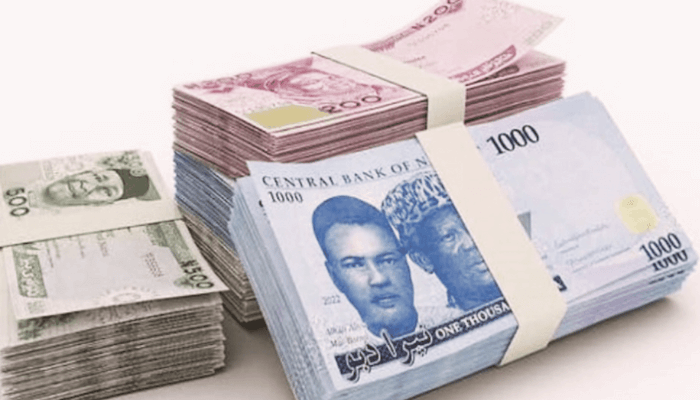
Figures cited by Leadership Newspaper show a significant stabilization in Nigeria’s Foreign Exchange (FX) market, following a high-profile meeting between President Bola Tinubu and the Chairman of Heirs Holdings, Tony Elumelu. Elumelu informed reporters at the State House that the era of acute dollar scarcity is largely over, attributing the progress to recent central bank reforms and improved investor confidence.
During the briefing, Elumelu praised the government’s efforts in harmonizing the FX windows and ensuring a more transparent liquidity flow. He noted that the private sector is beginning to feel the positive impact of these fiscal policies, which has allowed for better planning and increased foreign direct investment into critical sectors like power and manufacturing.
Reports from The Nation and Vanguard corroborate Elumelu’s optimistic outlook. The Nation mentioned that “the Naira has maintained a steady range against the dollar for the third consecutive week,” and Vanguard quoted Elumelu saying: “The FX market is sorted; what we see now is the result of painstaking reforms that have finally gained traction.”
Echotitbits take: While the declaration of the “end” of dollar scarcity is bold, the stability Elumelu references is essential for business planning in 2026. However, the true test remains the sustained availability of FX for small and medium-sized enterprises (SMEs) who often lack the access of larger conglomerates.
Source: The Punch – https://punchng.com/elumelu-meets-tinubu-says-dollar-scarcity-over-fx-market-sorted/, February 14, 2026
Photo credit: The Punch
Tag: Foreign Exchange
-

Tony Elumelu Meets President Tinubu, Declares End to Dollar Scarcity
-

Central Bank Targets Exchange Rate Stability With New BDC Dollar Supply
Reporting by BusinessDay indicates that the Central Bank of Nigeria (CBN) has reopened its foreign exchange window for Bureau De Change (BDC) operators. This strategic move is designed to narrow the widening gap between the official and parallel market rates, providing much-needed liquidity to the retail segment of the currency market.
In an update published by the same outlet, the apex bank’s decision follows a period of heightened volatility that saw the Naira under significant pressure. By channeling funds directly through licensed BDCs, the CBN aims to decentralize access to foreign currency for small-scale users and travelers, thereby curbing speculative activities that have historically fueled inflation.
Market analysts suggest that this intervention, coupled with the ongoing “clean-up” of the BDC sector, reflects a more aggressive stance by the regulator to maintain macroeconomic stability. The reopening of the “dollar tap” is expected to provide immediate relief to businesses that rely on the informal market for their foreign exchange needs.
The Punch and The Nation have confirmed this development, noting the positive reception from financial stakeholders. The Punch reported that “operators expect the move to significantly reduce the premium between markets,” while The Nation quoted a source stating, “this is a vital step toward achieving a realistic exchange rate for the 2026 fiscal year.”
Echotitbits take: This intervention is a reactive measure to the recent currency slide. While it offers short-term liquidity, the long-term stability of the Naira depends on Nigeria’s ability to boost non-oil exports and attract foreign direct investment. Watch for the CBN’s next Monetary Policy Committee (MPC) meeting to see if interest rates will be adjusted to complement this liquidity injection.
Source: BusinessDay – https://businessday.ng/news/article/cbn-approves-150000-weekly-fx-sales-to-bdcs/, February 13, 2026
Photo credit: BusinessDay
-

Naira Strengthens Against Dollar as Market Liquidity Stabilizes
According to reporting by Vanguard, the Nigerian Naira sustained its positive momentum against the United States dollar during the early trading hours of Thursday, February 5, 2026. The local currency opened at approximately 1,368.56 per dollar at the Nigerian Foreign Exchange Market (NFEM), reflecting a steady appreciation from the 1,388 levels recorded only 24 hours prior. This recovery is largely attributed to the Central Bank of Nigeria’s (CBN) aggressive market-matching strategies and a robust increase in external reserves.
The Electronic Foreign Exchange Matching System (EFEMS) has been cited as a primary driver for narrowing bid-ask spreads, fostering greater transparency within the official window. In the parallel market, the dollar exchanged between 1,450 and 1,465 across major hubs like Lagos and Abuja. Bureau De Change operators noted that while a premium remains, the gap between official and informal rates has contracted to one of its lowest margins in several months due to steady supply from diaspora remittances.
The Punch and ThisDay have corroborated this downward trend in exchange volatility. Business analysts at The Punch remarked that “the Naira’s resilience this week suggests a shift from speculative behavior to demand-driven market fundamentals.” Similarly, ThisDay reported that “investor confidence is returning as the CBN stabilizes the liquidity pool,” with one analyst noting that “we are seeing the most stable foreign exchange window since the unification reforms of 2024.”
Echotitbits take:
The narrowing gap between the official and parallel market rates is a significant victory for the CBN’s monetary policy. If the current liquidity levels are maintained through Q1 2026, we expect a further reduction in imported inflation, which could lead to a potential softening of interest rates by mid-year. Watch for the next Monetary Policy Committee (MPC) meeting to see if these gains trigger a shift from the current 27% MPR.
Source: BusinessDay – https://businessday.ng/news/article/naira-maintains-steady-rise-hits-n1358-28-as-reserves-grow/, February 5, 2026
Photo credit: BusinessDay
-

Nigerian Naira Maintains Resilience as Official Exchange Rate Dips Below 1,400
Figures cited by Vanguard show the Naira holding below the 1,400-per-dollar threshold in the official market. On Thursday morning, the currency opened around 1,395.09/$ in the Nigerian Foreign Exchange Market (NFEM), supported by liquidity improvements and the Central Bank’s Electronic Foreign Exchange Matching System (EFEMS).
While the parallel market remained higher, the narrowing premium suggests speculative pressure may be easing. Analysts attribute the resilience to efforts to clear FX backlogs and to a rise in external reserves, giving the central bank more room to intervene and smooth volatility.
The Punch noted the currency’s benefit from improved price discovery, while ThisDay quoted market analysts pointing to reduced panic buying and improving investor confidence.
Echotitbits take: Staying below the 1,400 psychological level is a notable win for the CBN narrative on stability. The next key signal is the MPC decision: holding rates could protect the FX gains, while easing could support growth but risk renewed pressure if liquidity tightens.
Source: Facebook/TheCable – https://web.facebook.com/thecableng/posts/naira-appreciates-to-n1400-at-official-market-strongest-performance-since-may-20/1213502280966076/?_rdc=1&_rdr# 2026-01-29
Photo Credit: Facebook/TheCable
-

Nigerian Naira Gains Ground in Official Market as Reserves Hit $46 Billion
Reporting by Vanguard indicates that the Nigerian Naira has maintained a strong positive trajectory against the United States Dollar during the mid-week trading session. In the Nigerian Foreign Exchange Market (NFEM), the local currency strengthened significantly, settling at approximately 1,400.66 per dollar. This appreciation is being fueled by increased liquidity and a surge in the country’s external reserves, which have now surpassed the $46 billion mark, providing a substantial buffer for the Central Bank of Nigeria (CBN).
The stability in the official window is starting to reflect in the parallel market, where panic buying has largely subsided. While the “black market” rate remains slightly higher, trading between 1,480 and 1,485, the narrowing gap between the two rates suggests that the CBN’s recent monetary policy adjustments are beginning to take hold. Financial experts predict that if the current liquidity levels are sustained, the Naira could settle into a predictable range of 1,400 to 1,500 for the remainder of the fiscal year.
Market data from MarketForces Africa corroborated the gains, noting that the “Naira touched N1,400 per Dollar in the Nigerian currency market” following a series of aggressive interventions. The Nation also reported on the currency’s resilience, with a financial analyst quoted as saying, “The absence of speculative pressure is a clear signal that the market is beginning to trust the current FX management framework.”
Echotitbits take: The growth in external reserves is a vital sign of economic recovery, likely driven by improved crude oil production and foreign portfolio inflows. Watch for whether this stability translates into a reduction in the prices of imported consumer goods over the next quarter.
Source: BusinessDay – https://businessday.ng/business-economy/article/naira-gains-as-reserves-reach-eight-year-high-of-46bn/ January 28, 2026
Photo Credit: BusinessDay
-

Diaspora Remittances Hit Record High as Nigeria Simplifies FX Inflows
Diaspora remittances into Nigeria reportedly hit a record monthly high in January 2026, driven by FX market reforms that narrowed the gap between official and parallel market rates and encouraged formal channels.
The CBN’s incentive approach and the licensing of new International Money Transfer Operators (IMTOs) have helped reduce transfer costs, with analysts describing remittances as a key pillar for reserves stability.
Policy discussions are also shifting toward remittance-backed bonds that would allow diaspora funds to support infrastructure projects, converting consumption inflows into long-term development capital.
Echotitbits take: For years, billions bypassed the official system. Better FX transparency is restoring diaspora confidence in formal channels. The next step—Diaspora Bonds—could help close Nigeria’s infrastructure funding gap, but only if managed transparently and credibly.
Source: This Day – https://www.thisdaylive.com/2026/01/17/how-cbn-reforms-are-boosting-nigerias-fx-inflows-balance-of-payments/ 2026-01-27Photo Credit: This Day
-

Diaspora Affairs: Nigeria Moves to Formalize Remittance Channels
The Federal Government has introduced a policy package to streamline remittances by lowering fees and proposing ‘Remittance Bonds,’ aiming to route more FX inflows through official channels and support reserves and liquidity.
Additional coverage across Nigerian media and stakeholder reactions indicate that the implications of the development will be closely watched in the coming days as policy, security, and market signals evolve.
Echotitbits take: Remittances are a major FX pillar after oil. Success depends on trust: diaspora senders will follow official channels if pricing is competitive and the exchange-rate gap remains tight.
Source: The Punch – https://punchng.com/diaspora-remittances-hit-600m-monthly-dabiri-erewa-cbn/ (2026-01-22)
Photo credit: The Punch
2026-01-22 17:00:00
-

Parallel Market Pressure Deepens as Naira Slides to ₦1,490 per Dollar
According to Vanguard, the naira came under fresh pressure in the parallel market on Thursday, weakening to about ₦1,490/$—down from roughly ₦1,470/$ earlier in the week.
Figures from the Nigerian Foreign Exchange Market (NFEM) also showed a mild softening in the official close, moving from about ₦1,416/$ to ₦1,421/$, widening the spread between official and street rates.
Market watchers linked the renewed volatility to seasonal FX demand and speculative positioning, even as the central bank has continued to signal optimism around reserve buildup and longer-term convergence.
**Echotitbits take:** The persistent gap between official and parallel rates remains a key credibility test for FX reforms. If liquidity at the retail end stays tight, expect more pressure on prices and confidence—watch closely for the CBN’s next market-facing intervention.
Source: Guardian — https://guardian.ng/business-services/naira-eyes-n1300-at-parallel-market-as-speculators-offload-fx/ 2026-01-08Photo Credit: Guardian
-

FX reserves climb by $4.39bn in 12 months, CBN data shows
2025-12-29 09:00:00
Figures published by Punch indicate Nigeria’s external reserves rose by $4.39bn between December 23, 2024 and December 23, 2025, reaching about $45.24bn over the period, based on data sourced from the Central Bank of Nigeria.The rise adds to a late-2025 picture of stronger buffers, with other market trackers also placing Nigeria’s gross reserves above $45bn in December and describing it as a multi-year high.
Beyond the headline number, the key question for businesses and households is whether the reserve build-up translates to steadier FX supply and narrower spreads across official and parallel channels.
MoneyCentral reports that “Gross dollar reserves stood at $45.04 billion as at December 4, 2025,” citing CBN data, while TELL notes reserves “hit $45bn” in early December 2025.
Echotitbits take: Reserves are a confidence barometer—but they can rise and still feel “tight” if FX demand stays hot. Watch whether the trend holds into Q1 2026 and whether gaps between rates meaningfully narrow.
Source: The Punch — December 29, 2025 (https://punchng.com/fx-reserves-add-4-39bn-in-one-year/)
The Punch 2025-12-29Photo Credit: The Punch
-

CBN’s BDC approvals deliver ₦192m in licensing fees as FX clean-up continues
Photo credit: The Guardian Nigeria News — CBN HQ Abuja:
2025-12-20 12:25:00
Reporting by Punch indicates the Central Bank of Nigeria has collected ₦192 million in licensing-related fees after issuing final approvals to 82 bureau de change operators.
The approvals sit within the CBN’s broader attempt to formalise retail FX activity, reduce leakages and improve traceability in foreign-exchange transactions.
Beyond the revenue, the regulatory signal is the big story: tighter licensing and supervision could reshape the BDC landscape by pushing informal operators out and strengthening compliance expectations for approved players.
For consumers, the outcome to watch is whether a more regulated ecosystem improves transparency and pricing—or simply shifts activity into other channels if supply remains constrained.
Reuters reported the same final-licence milestone, describing approvals for “82 BDCs” and linking it to efforts to curb street trading.
CBN guidance on BDC licensing also details fee requirements, including a “non-refundable final licence fee,” consistent with a structured licensing process.
Echotitbits take: The real test is enforcement. If street trading remains unchecked, licensing reforms won’t translate into stability. Also watch how banks and fintechs integrate retail FX flows as regulators tighten the market structure.
Source: The Guardian Nigeria News — December 20, 2025 https://guardian.ng/featured/cbn-issues-82-new-bdc-licences-moves-to-curb-unregistered-fx-operators/