Tag: Petrol Price Increase

  • Wabba: Labour Unions Will Soon Speak on Hike in Prices of Fuel and Electricity Tariff

    Wabba: Labour Unions Will Soon Speak on Hike in Prices of Fuel and Electricity Tariff

    Nigeria Labour Congress (NLC) has said the organised labour would at appropriate time come out with a position on the recent increases in prices of various essential commodities, including fuel and electricity.

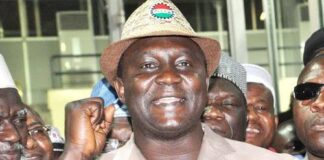
    NLC President, Ayuba Wabba, stated this while speaking with the News Agency of Nigeria (NAN) in Lagos on Saturday in reaction to the increases in the prices of petrol and electricity.

    NAN reports that the Petroleum Products Pricing Regulatory Agency (PPPRA) announced that the ex-depot price of premium motor spirit (petrol) has been increased to N151.60 per litre from N138.62 with effect from September 2.

    READ ALSO:

    NLC Suspends Planned Protest in Port Harcourt

    Also, electricity tariff was increased effective September 1 by the Nigerian Electricity Regulatory Commission (NERC) from N30.23 per one kwh to N62.33.

    Wabba, who spoke on the issues, said the organised labour would not protest until the Central Working Committee (CWC) has been able to meet and agree on appropriate action.

    He said: “Labour takes one battle at a time. It does not make announcement without backing it with action.”

    The labour leader noted that NLC has remained consistent on neo-liberal policies, and would take appropriate action in respect of the increases in order to achieve desired result.

    He added that it was high time Nigeria started refining products locally to solve importation challenges.

    On the suspended planned protest against Rivers State Government, Wabba said there was the need to mend fences between the state and labour to ensure harmonious relationship.

    He pointed out that the will of the people should not always be taken for granted “as injury to one is injury to all.”

    Wabba called on other state governments to take appropriate steps toward addressing labour issues so as to avoid the wrath of the organised labour.

    “We will take up any state that undermines the rights of workers. Workers should be conscious of their rights.

    READ ALSO:

    Buhari-led Government Approves Additional N8.9bn COVID-19 Allowance For Medical Workers

    “There is synergy and we will confront recalcitrant employers to respect the law, so that we don’t give room for sudden situations to rise,” Wabba said.

    He explained that Rivers State Government and labour unions have concluded negotiations on minimum wage, and the enabling circular would be released for a collective bargaining agreement to be signed.

    Idowu Sowunmi

  • Buhari Gives Reasons for New Prices of Petrol, Electricity, Appeals for Understanding

    Buhari Gives Reasons for New Prices of Petrol, Electricity, Appeals for Understanding

    President Muhammadu Buhari Monday attempted to justify the new prices of petrol and electricity, describing the timing of implementation of both tariffs as a mere coincidence.

    Speaking at the First Year Ministerial Performance Review Retreat at the State House Conference Centre in Abuja, the President said increase in price of electricity and deregulation of the petroleum sector were crucial decisions that were taken at the beginning of the year, preceding the novel Coronavirus (COVID-19) pandemic.

    He described the continuous delay in implementation of the policy of the “Willing Buyer, Willing Seller” and deregulation of the petroleum as detrimental to the economy, placing the burden of regular light cuts and fuel queues on Nigerians.

    Buhari, whose speech was read at the event by Vice President Yemi Osinbajo, assured Nigerians of the willingness and determination of the Federal Government to provide stable electricity to every home and industry, while considering the economic challenges before individuals, families and businesses, explaining that “implementation of a Willing buyer, Willing Seller Policy for the power sector has opened opportunities for increased delivery of electricity.”

    He added that the target of providing 11,000 megawatts by 2023 was realistic and realisable, and would provide a lifeline for many businesses and improve the living conditions of many Nigerians.

    “Implementation of a Willing Buyer, Willing Seller Policy for the power sector, has opened up opportunities for increased delivery of electricity to homes and industries. We are also executing some critical projects through the Transmission, Rehabilitation and Expansion Programme, which will result in the transmission and distribution of a total of 11,000 Megawatts by 2023.

    “On transportation, we are growing the stock and quality of our road, rail, air and water transport infrastructure. The Presidential Infrastructure Development Fund projects are also progressing very well. These include the 11.9 km Second Niger Bridge, 120 km Lagos-Ibadan Expressway, and 375 km Abuja-Kaduna-Zaria-Kano Expressway. At the same time, we are actively extending and upgrading our railway networks, as well as our airports which are being raised to international standard with the provision of necessary equipment, to guarantee world class safety standard,” he said.

    The President said the COVID-19 pandemic led to severe downturn in the funds available to finance the nation’s budget.

    According to him, “One of the steps we took at the beginning of the crisis in March when oil prices collapsed at the height of the global lockdown, was the deregulation of the price of Premium Motor Spirit (PMS) such that the benefit of lower prices at that time was passed to consumers.

    “This was welcome by all and sundry. The effect of deregulation though is that PMS prices will change with changes in global oil prices. This means quite regrettably that as oil prices recover we would see some increases in PMS prices. This is what has happened now. When global prices rose, it meant that the price of petrol locally would go up.

    “There are several negative consequences if Government should even attempt to go back to the business of fixing or subsidizing PMS prices. First of all, it would mean a return to the costly subsidy regime. Today we have 60 per cent less revenues, we just cannot afford the cost. The second danger is the potential return of fuel queues – which has, thankfully, become a thing of the past under this administration.

    “Nigerians no longer have to endure long queues just to buy petrol, often at highly inflated prices. Also, as I hinted earlier, there is no provision for fuel subsidy in the revised 2020 budget, simply because we are not able to afford it, if reasonable provisions must be made for health, education and other social services. We now simply have no choice.

    “Nevertheless, I want to assure our compatriots that Government is extremely mindful of the pains that higher prices mean at this time, and we do not take the sacrifices that all Nigerians have to make for granted. We will continue to seek ways and means of cushioning pains especially for the most vulnerable in our midst. We will also remain alert to our responsibilities to ensure that marketers do not exploit citizens by raising pump price arbitrarily.

    “This is the role that government must now play through the Petroleum Products Pricing Regulatory Agency (PPPRA). This explains why the PPPRA made the announcement a few days ago setting the range of price that must not be exceeded by marketers. The advantage we now have is that anyone can bring in petroleum products and compete with marketers, that way the price of petrol will be keep coming down.”

    On electricity, the President added that the recent service-based tariff adjustment by the DisCos had also been a source of concern for the government.

    “Let me say frankly that like many Nigerians I have been very unhappy about the quality of service given by the DisCos, but there are many constraints including poor transmission capacity and distribution capacity. I have already signed off on the first phase of the Siemens project to address many of these issues.

    “Because of the problems with the privatisation exercise, government has had to keep supporting the largely privatised electricity industry. So far to keep the industry going we have spent almost 1.7 trillion, especially by way of supplementing tariffs shortfalls. We do not have the resources at this point to continue in this way and it will be grossly irresponsible to borrow to subsidise a generation and distribution which are both privatised.

    “But we also have a duty to ensure that the large majority of those who cannot afford to pay cost reflective tariffs are protected from increases. NERC, the industry regulator, therefore approved that tariff adjustments had to be made but only on the basis of guaranteed improvement in service. Under this new arrangement only customers who are guaranteed a minimum of 12 hours of power and above can have their tariffs adjusted. Those who get less than 12 hours supply, or the Band D and E Customers MUST be maintained on lifeline tariffs, meaning that they will experience no increase.

    “Government has also taken notice of the complaints about arbitrary estimated billing. Accordingly, a mass metering program is being undertaken to provide meters for over five million Nigerians, largely driven by preferred procurement from local manufacturers – creating thousands of jobs in the process. NERC has also committed to strictly enforcing the capping regulation which will ensure that unmetered customers are not charged beyond the metered customers in their neighbourhood,” he noted.

    On the timing of implementation, the President said: “There has been some concern expressed about the timing of these two necessary adjustments. It is important to stress that it is a mere coincidence in the sense that the deregulation of PMS prices happened quite some time ago, it was announced on 18 March 2020 and the price moderation that took place at the beginning of this month was just part of the on-going monthly adjustments to global crude oil prices.

    “Similarly, the review of service-based electricity tariffs was scheduled to start at the beginning of July but was put on hold to enable further studies and proper arrangements to be made. This government is not insensitive to the current economic difficulties our people are going through and the very tough economic situation we face as a nation, and we certainly will not inflict hardship on our people.

    “But we are convinced that if we stay focused on our plans, brighter, more prosperous days will come soon. Ministers and senior officials must accordingly ensure the vigorous and prompt implementation of the ESP programmes, which will give succour to Nigerians.”

    Buhari, in a statement by his Special Adviser on Media and Publicity, Femi Adesina, pointed out that many Nigerians were yet to be connected to electricity, assuring that the Economic Sustainability Plan would provide solar home systems to five million Nigerian households in the next 12 months.

    “We have already begun the process of providing financing support through the CBN for manufacturers and retailers of Off Grid Solar Home Systems and Mini-Grids who are to provide the systems. The Five million systems under the ESP’s Solar Power Strategy will produce 250,000 jobs and impact up to 25 million beneficiaries through the installation. This means that more Nigerians will have access to electricity via a reliable and sustainable solar system.

    “The support to Solar Home System manufacturers and the bulk procurement of local meters will create over 300,000 local jobs while ensuring that we set Nigeria on a path to full electrification. The tariff review is not about the increase, which will only affect the top electricity consumers, but establishing a system which will definitely lead to improved service for all at a fair and reasonable price.”

    He said the economy recovered from a recession and witnessed eleven quarters of consecutive GDP growth before COVID-19 pandemic, admonishing ministers and senior government officials to stay focused on delivering results that would improve the welfare of Nigerians.

    The President said the government has continued to support the agricultural sector, the key to diversification of the economy, through schemes such as the CBN Anchor Borrowers Programme and the Presidential Fertiliser Initiative programme.

    On security, Buhari said: “Nigeria’s Law Enforcement Agencies have significantly scaled up their footprint across the country. As part of the efforts towards strengthening our internal security architecture, the Ministry of Police Affairs was created.

    “Amongst others, we have increased investments in arms, weapons and other necessary equipment, expanded the National Command and Control Centre to 19 states of the federation, and established a Nigerian Police Trust Fund, which will significantly improve funding for the Nigeria Police Force.

    “We have also approved the sum of N13.3 billion for the take-off of the Community Policing initiative across the country, as part of measures adopted to consolidate efforts.”

    Idowu Sowunmi

  • Petrol Marketers ask FG To Take Further Step To Full Deregulation

    Petrol Marketers ask FG To Take Further Step To Full Deregulation

    The Depot and Petroleum Products Marketers Association of Nigeria (DAPPMAN) says full deregulation will enhance national economic growth, while it also urged the Federal Government to take a further step towards full deregulation of the downstream sector.

    The Chairman of DAPPMAN, Winifred Akpani, who comended government for its consistency in seeking ways to reposition the oil sector for effectiveness and profitability said, the association is in full support of the implementation of a fully deregulated regime which would make the downstream sector operations more seamless, enhance transparency, competitiveness and sustainable growth.

    “DAPPMAN is mindful of the commitment of the government and the functional organs managing the sector to ensuring value to every Nigerian, and we salute them for this as we are indeed up against uncertain times. However, we believe that full deregulation of the sector remains the most viable option for Nigeria to effectively navigate this period and ultimately safeguard the future of our economy and wellbeing of 200 million Nigerians,” she said.

    The association’s Chairman noted that deregulation will open up the sector for fresh investments, market deepening, diversification, and expansion.

    She added that these will bring about stable demand and supply regimes that are critical to ensuring that consumers have uninterrupted access to affordable quality products without the huge financial burden currently borne by government.

    “DAPPMAN is aware of the considerations that have dogged the issue of deregulation over the years and we believe they are very important.

    “However, we believe these considerations will be duly addressed with a deregulation regime that guarantees long-term benefits and empowers the government to commit savings made in the process to infrastructure development, job creation, agricultural revolution, education and health.

    “This will spur growth of Small and Medium scale Enterprises (SMEs) as well as large corporates, that would increase Nigeria’s human capacity index, competitiveness and ultimately drive inflow of foreign investments,” she added.

    Akpani, who is also the managing director and chief executive officer of Northwest Petroleum and Gas Company Limited, recounted the response of DAPPMAN to the COVID-19 pandemic by contributing towards the upgrade of medical facilities, distributing thousands of face masks and sanitizers, and donating relief items to thousands of beneficiaries across the country.

    “It has been a privilege for DAPPMAN to reach out to the vulnerable at this time through the association’s intervention projects and the individual efforts of our members. We continue to urge the good people of Nigeria to stay safe by strictly observing all precautionary measures to stop the spread of the virus. We will certainly overcome the pandemic working together,” she said.

    The Federal Government had In March 2020 introduced a price modulation policy where international product prices and associated landing costs in Nigeria are used as input in the determination of final pricing in the local market through the Petroleum Products Pricing and Regulatory Agency (PPPRA).