Tag: trade policy

  • Customs Intercepts N3.3 Billion Contraband in South-West Operations

    Customs Intercepts N3.3 Billion Contraband in South-West Operations

    The Nigeria Customs Service (NCS) has recorded a significant breakthrough in its anti-smuggling campaign, seizing contraband valued at N3.32 billion within the last five weeks. According to Vanguard, the Federal Operations Unit (FOU), Zone ‘A’ in Ikeja, intercepted 144 smuggling attempts across the South-West corridor. The seized items include prohibited pharmaceutical products, foreign parboiled rice, and environmentally hazardous waste such as used refrigerator compressors.

    Reporting by Daily Post indicates that the operations also yielded the rescue of four live pangolins, highlighting the Service’s role in wildlife protection. The Customs Area Controller noted that the seizures were made possible through intelligence-led operations and increased surveillance at border points. Leadership validated these claims, quoting the Controller who said: “Our officers remain vigilant against those who seek to undermine our economy and the health of our citizens through illicit trade.”

    In an update published by The Nation, the NCS confirmed that several suspects were apprehended during the raids and are currently assisting with investigations. The report cited a spokesperson from the National Drug Law Enforcement Agency (NDLEA), who praised the synergy between the agencies: “The collaboration between Customs and NDLEA is crucial in choking the supply chains of narcotics and dangerous substances entering the country.”

    Echotitbits take:

    The sheer volume of these seizures reflects both the persistence of smugglers and the increasing effectiveness of the Customs Service’s tactical units. The inclusion of wildlife and hazardous waste shows a broadening of the NCS mandate beyond just revenue collection. Watch for a possible hike in the price of certain black-market goods as these supply routes remain under heavy pressure.

    Source: Vanguard – https://www.vanguardngr.com/2026/02/customs-intercepts-144-smuggling-attempts-seizes-n3-3bn-contraband/, February 9, 2026

    Photo credit: Vanguard

  • Nigeria and United States Reinforce Strategic Trade and Investment Ties

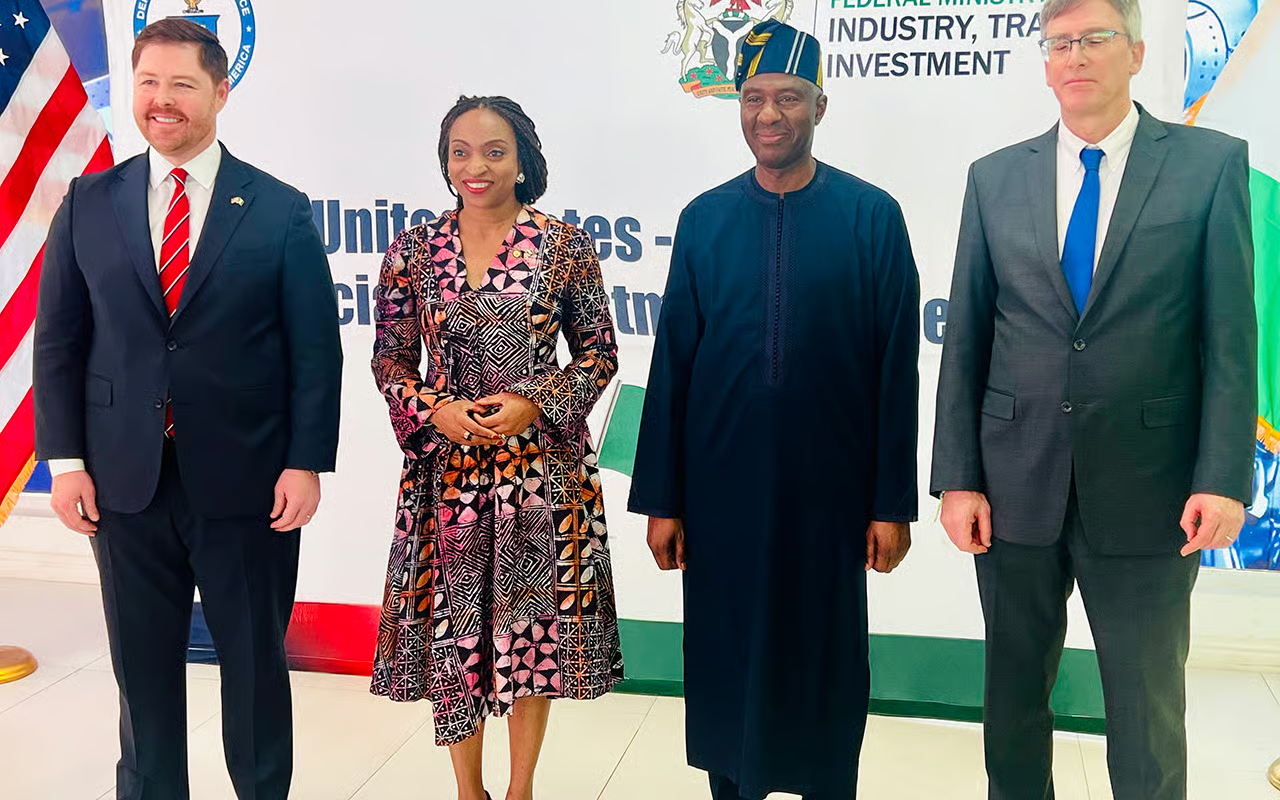
    Nigeria and United States Reinforce Strategic Trade and Investment Ties

    The Guardian reports that Nigeria and the United States reaffirmed plans to deepen bilateral economic relations after a high-level Commercial and Investment Partnership meeting in Lagos.

    Nigeria’s Minister of Industry, Trade and Investment, Dr. Jumoke Oduwole, said the engagement is intended to streamline trade processes and attract sustainable U.S. capital into emerging sectors.

    Discussions reportedly centered on agriculture, the digital economy, and manufacturing, with both sides looking to reduce trade barriers and improve investor confidence through policy consistency.

    Channels TV and BusinessDay also covered the meeting, noting expectations of a more predictable operating environment for U.S. firms and potential FX benefits tied to stronger commercial flows.

    Echotitbits take: The timing is strategic as Nigeria tries to diversify away from crude oil. The reported involvement of U.S. agriculture-linked stakeholders hints at food-security collaboration via technology transfer. Watch for follow-on instruments such as export incentives for non‑oil products and targeted investor protections.

    Source: The Guardian – https://guardian.ng/business-services/nigeria-u-s-remain-committed-to-economic-ties-says-oduwole/ 2026-01-30

    Photo Credit: The Guardian

  • Nigeria Moves to Terminate Rice Importation Windows to Protect Local Farmers

    Nigeria Moves to Terminate Rice Importation Windows to Protect Local Farmers

    Nigeria is moving to shut down rice import windows following a national policy review that reportedly found imports have created surplus supply, depressing prices and worsening losses for domestic farmers.

    Officials linked to the Presidential Food Systems Coordinating Unit reportedly stated that maize and rice farmers recorded negative margins during the 2025 wet season, driven by high production costs and weak sale prices. The government’s new direction is expected to prioritize local production while introducing price protection mechanisms to safeguard farmer livelihoods and preserve national food security.

    Supporters argue the policy reset will stabilize rural incomes and reduce exposure to import shocks. Critics caution that if local output cannot meet demand, consumers—particularly in urban centers—could face renewed price pressures. Separate reporting has also referenced national food balance figures indicating a notable surplus in late 2025.

    Echotitbits take: This is a return to protectionist policies. While it helps farmers, the government must ensure that local supply is actually sufficient to prevent a price spike for consumers in urban areas.
    Source: BusinessDay – https://businessday.ng/news/article/nigeria-to-shut-rice-import-windows-as-data-exposes-farmers-losses/ 2026-01-26

    Photo Credit: BusinessDay

  • US tariff shock: Nigeria’s export earnings take a hit as trade gap risks widen

    US tariff shock: Nigeria’s export earnings take a hit as trade gap risks widen

    Photo credit: The Punch

    2025-12-22 09:00:00

    Figures cited by *The Punch* show Nigeria’s exports to the United States have taken a major hit in the wake of higher US tariffs, with the report estimating a roughly ₦1tn-scale export loss and a sharper trade imbalance.

    The data-driven argument is that once tariffs rise, marginal cargoes—especially non-oil shipments—lose competitiveness quickly, while buyers switch to alternative suppliers.

    Economists warn that tariff pressure can ripple beyond customs: export earnings affect FX inflows, port activity, manufacturing orders, and jobs tied to the export chain.

    The story also revives an old weakness—Nigeria’s narrow export basket—where shocks to market access translate fast into national revenue and FX volatility.

    BusinessDay reported that “Nigerian exports to the United States will now attract a 15 percent tariff,” while Nigeria Info FM similarly reported exports “will now face a 15% tariff” following an executive order—supporting the tariff-change backbone of the Punch analysis.

    **Echotitbits take:** The policy response can’t be vibes: Nigeria must diversify export destinations, improve standards compliance, and negotiate carve-outs where possible. Watch for whether Abuja pursues targeted trade diplomacy—or quietly absorbs the loss and shifts focus to other markets.

    Source: The Punch — December 22, 2025 (https://punchng.com/nigeria-suffers-nearly-n1tn-export-loss-after-trump-tariff/)