

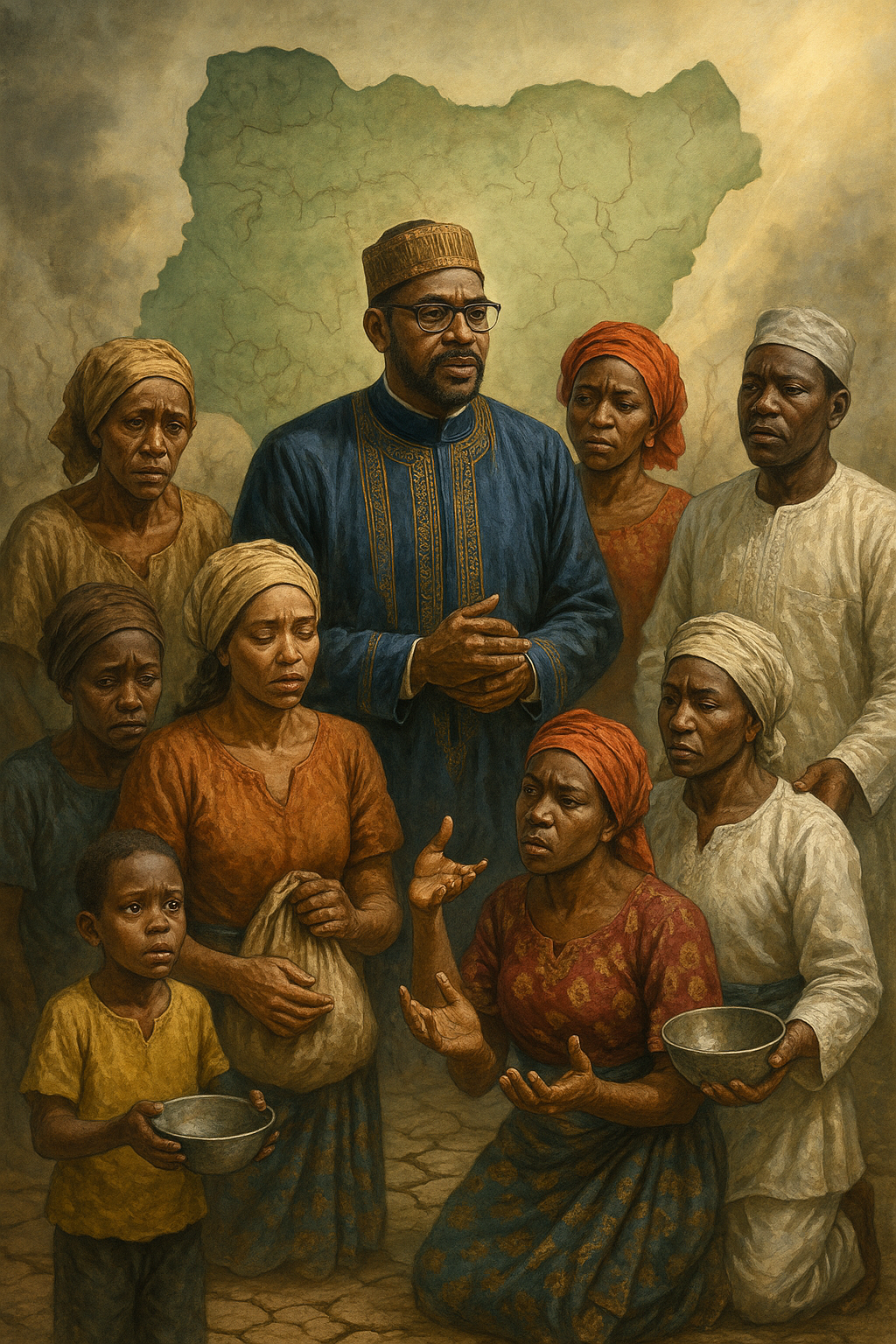

Not too long ago, a former senator of the Federal Republic of Nigeria—no longer in office, no longer surrounded by the trappings of power—was approached by a young citizen. In response to a casual exchange, the former lawmaker, with a tone of sincerity and fatigue, uttered a deeply revealing phrase:
“May Nigeria not happen to you.”
That brief remark has reverberated beyond its moment. It wasn’t just a statement—it was a confession, an admission of how quickly the illusion of safety and privilege dissolves when public office ends. It was also a mirror held up to the very soul of Nigeria’s dysfunctional socio-political system.
This man had once been part of the machinery that ran the country. He had the power to influence budgets, pass laws, and shape policy. And yet, as soon as his tenure ended, he found himself swallowed by the same dysfunction that haunts ordinary Nigerians daily: insecurity, administrative chaos, crumbling infrastructure, and the silent indifference of the system.
If a former senator can be so brutally vulnerable, what hope is there for the average Nigerian—those who never had the benefit of title, privilege, or armed escort?
This story is not unique, but it is symbolic. It exposes a fundamental failure in our approach to governance. Public office in Nigeria is too often treated as a sanctuary from the hardship of the nation, rather than as a platform to transform that hardship. For many, leadership is reduced to a fleeting window of protection and accumulation—a time to secure wealth, enjoy prestige, and escape the daily grind of the masses.
But here’s the painful truth: that escape is temporary.
When power fades, the failing system you helped uphold comes for you too. That reality should frighten anyone in leadership who still believes that political office is about securing the moment instead of changing the system.
This is a moral reckoning. We must ask: Why should any citizen have to fear that their country might “happen” to them? Why do even our lawmakers, governors, and ministers dread the same system they once managed? Why is Nigeria a place you survive while in office, but suffer once you’re out?
Until we abandon the model of power as refuge and embrace leadership as responsibility, we will remain in this cycle. We need leaders who understand that the true measure of success is not what they gain while in power, but what they leave behind after power.
A senator should not have to plead for mercy from the same country he helped lead. And a citizen should not have to pray that their nation does not “happen” to them.
Leadership must become a legacy, not an escape.
It is time to stop using the privilege of office for pecuniary gain, and start using it to build the kind of nation we won’t have to apologize for—even after we leave office.