Category: Business

  • Adesina Set to Be Re-elected as African Development Bank President This Week

    Adesina Set to Be Re-elected as African Development Bank President This Week

    Incumbent President of the African Development Bank, Akinwumi Adesina, is set to be re-elected for the second term in office as the multilateral development institution, for the first time in the history, holds its Annual Meetings virtually to comply with the novel Coronavirus (COVID-19) pandemic-related social-distancing guidelines.

    Adesina is running as the sole candidate for a new five-year term.

    The bank’s Governors’ Dialogue and the election of the president would be top of the agenda of the upcoming meetings scheduled to take place from August 26 to 27.

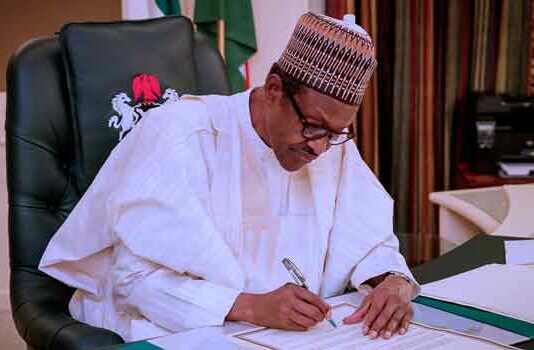
    File photo: Nigerian President Muhammadu Buhari meets African Development Bank’s (AfDB) President, Dr. Akinwunmi Adesina

    This year, which marks the 55th meeting of the bank’s Board of Governors and the 46th Annual Meeting of the African Development Fund, has the significance of being an election year for the bank’s president.

    During the meetings, bank’s governors are expected to receive updates on a range of developments since the previous Annual Meetings held in Malabo, Equatorial Guinea in June 2019.

    READ ALSO:

    Buhari celebrates as Independent probe panel exonerates AfDB President Adesina

    This would include the bank’s seventh General Capital increase, which the Board of Governors approved in Abidjan, Cote D’Ivoire on October 31, 2019, and which increased the bank’s capital base by a historic $115 billion to $208 billion.

    The governors would vote on August 27 to re-elect Adesina as the eighth president of the bank being a sole candidate.

    Adesina, the first Nigerian to hold the post, was elected for a five-year term on May 28, 2015, by the bank’s Board of Governors during that year’s Annual Meetings held in Abidjan, Côte d’Ivoire.

    The bank’s governors are typically the finance and economy ministers or Central Bank Governors of the 54 African regional member countries and 27 non-regional member countries.

    Since the COVID-19 pandemic hit the continent’s shores in early March, over 1,000,000 confirmed cases of the virus have been recorded in Africa. The pandemic has hit the region’s economies hard in the wake of falling commodity prices and containment measures by governments that have led to country lockdowns.

    READ ALSO: Lagos health commissioner, Prof. Akin Abayomi tests positive to COVID-19

    For several months, the bank has been extending support to regional member countries in cushioning their economies, health systems, and citizens’ livelihoods from parallel health and economic impacts from COVID-19.

    In April 2020, the bank established a COVID-19 Response Facility of up to $10 billion to extend flexible support to African sovereign and non-sovereign operations. As of August 20, $2.29 billion in CRF funding had been approved for bank’s member countries.

    A further $1.186 billion has been disbursed to bank’s member countries, with approvals ongoing.

    In March, the bank also raised a record $3 billion with a COVID-19 social bond floated on London Stock Exchange.

    READ ALSO:

    5yr Free Fall: Naira crashes 108% against ‘French imprint’ CFA

    The institution reached some major milestones during the trying times of lockdown with both Fitch and Standard & Poor credit rating agencies reaffirming the bank’s AAA rating with a stable outlook.

    In December 2019, African Development Fund Donors pledged $7.6 billion, the fifteenth such replenishment, to help Africa’s poorest countries.

    Idowu Sowunmi

  • 5yr Free Fall: Naira crashes 108% against ‘French imprint’ CFA

    5yr Free Fall: Naira crashes 108% against ‘French imprint’ CFA

    A Central Bank of Nigeria (CBN) data has revealed that the naira has fallen by 108 per cent against the West African CFA (popularly known as CFA).

    As the West African CFA rallies to wipe out the hitherto wide trading gap between the two currencies, it gained 36 kobo from August 19, 2015 to close at 0.6888 CFA/N1 on the CBN rate last week. This translates to a 108-per cent loss for the struggling naira.

    Exactly five years ago on August 21, 2015, the CFA, used by eight former West African colonies – Benin, Burkina Faso, Côte d’Ivoire, Guinea-Bissau, Mali, Niger, Senegal and Togo – exchanged for 33k.

    READ ALSO:

    For the first time, CBN sells pound above N500

    Records show further that the naira, which performed better against the now-aggressive CFA in the first half of the decade reviewed, closed at approximately 29 kobo for one CFA on August 21, 2010.

    Until 2013 when it started a gradual easing, it maintained its market dominance. It was not until 2015 when CFA began to take a spot as a competitive currency and started an aggressive rally that would remarkably close the previous wide differential between the two currencies. Between August 2015 and August 2016, the naira lost about 69 percent against CFA year-on-year.

    The currency has recorded a similar leap in its value appreciation against the naira year-to-date, climbing from 0.5228/N1 it opened the year with to 0.6888 /N1 (translating to 32 percent) at the close of last week’s trading. The CFA, a currency that symbolises French economic imprint on the West Africa sub-region, gained 23 kobo over the naira within 12 months.

    At the turn of this millennium, the CFA only traded for about 15 kobo. Currently being considred for a replacement with Eco, the proposed West Africa regional legal tender, not many Nigerians knew much about the CFA, not until the West Africa trade corridor opened for unprecedented smuggling.

    CFA’s current resurgence is coming on the heels of the continued closure of the country’s border against neighbouring West African countries, especially the Republic of Benin, where Nigerians engage in unrestrained trade.

    WHAT A WEAKENING exchange rate against CFA means for the economy of the eight neighbouring countries is that, it is cheaper for citizens to import their goods from Nigeria and it is more expensive for Nigerian traders to do business in those countries.

    READ ALSO:

    CAMA: CAC Insists Registered Organisations, Including Religious Bodies, Must Submit Finances Details

    But while the cost of importing from those countries is on the increase with an average Nigerian household feeling the pains, the country does not seem to gain much in terms of export injections into Benin, Togo and others in the category.

    The West Africa region, for instance, accounted for just 11.5 percent of the country’s total export value in 2019, which the National Bureau of Statistics (NBS) put at N19.2 trillion. Nigeria was not also among Beninoise top 10 import sources last year. The only two of Africa’s countries that made the list dominated by Europe and Asia were Togo, its neighbour, and Morocco.

    Benin, topmost Nigeria’s smuggling source, procured 13.6 percent and 11 percent of its last year imports from India and China respectively. Much of the imported goods were passed on to Nigeria through the porous borders – a trade practice many experts have blamed for the country’s troubled real sector.

    THE Federal Government, last year, closed the country’s land borders against Benin, Chad and Niger as a major strategy to battle insecurity and dumping – twin challenges that have stunted growth in recent times.

    READ ALSO:

    NCC charges telcos on improving quality of service delivery

    One major factor that decides Nigeria’s food price inflation is unofficial trade between it and Benin.

    Last year for example, the price of rice experienced a spark few weeks after the Federal Government announced the border closure. The price has thus increased by around 100 percent in the past year.

  • For the first time, CBN sells pound above N500

    For the first time, CBN sells pound above N500

    The Central Bank of Nigeria (CBN) for the first time last week sold the pound above N500, as naira continues to battle major headwinds.

    On Wednesday, the nation’s apex bank sold a pound for N501.98 and quoted N500.659 as its buying rate.

    At the parallel market, the currency is going for as much as N600. With the official rate hitting and surpassing N500 before the naira gained a momentary respite on Thursday, a new yardstick may have been set at the foreign exchange market.

    READ ALSO:

    CAMA: CAC Insists Registered Organisations, Including Religious Bodies, Must Submit Finances Details

    Since the beginning of the year, the naira has faced daunting challenges. The apex bank’s plan to converge the rates has faced serious scrutiny.

    While speaking during a talk show on Nigeria Info radio in Lagos, The Managing Director of Financial Derivatives Company and a member of President Muhammadu Buhari’s Economic Advisory Council, Bismarck Rewane, said unification is a tough policy option the Central Bank would need to make, Echotitbits gathered.

  • African Trade Insurance Agency Appoints Moses, Others into Management Team

    African Trade Insurance Agency Appoints Moses, Others into Management Team

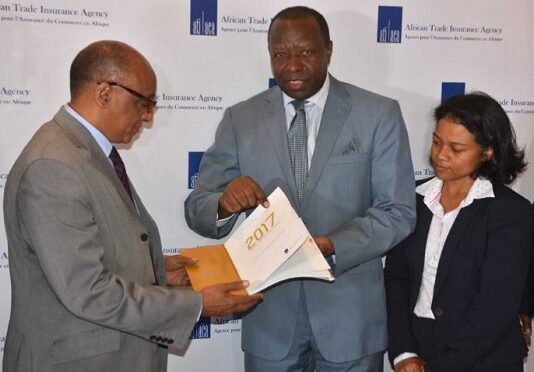
    African Trade Insurance Agency (ATI) has confirmed key senior-level positions that would play an important role in steering critical support to member governments.

    The appointments, which were approved by the Board of Directors, included a veteran of the World Bank’s IFC, Manuel Moses, who has been appointed as the new ATI Chief Executive Officer.

    Moses would assume office on November 1, 2020.

    During its recently concluded virtual 20th annual meeting, ATI’s shareholders ratified the appointment of Moses as the new Chief Executive Officer based on the board’s recommendation.

    Moses is a Zimbabwean national, who brings 15 years of experience from the IFC, where he most recently held the post of Country Manager of Kenya. He holds an MBA from University of Leicester in the UK and a BSc in Civil Engineering from University of Zimbabwe.

    In the interim, ATI’s Chief Financial Officer (CFO), Toavina Ramamonjiarisoa, would fill the position of Acting Chief Executive Officer.

    Ramamonjiarisoa has been an integral part of ATI’s management team since she was appointed CFO in 2011, where, in this position, she has helped guide the institution towards its current eight-year record-setting growth rates along with ensuring maintenance of ATI’s investment grade ratings from both S&P and Moody’s (A/Stable and A3/Stable respectively)

    While Ramamonjiarisoa would be serving as the Acting CEO, the board approved Rodgers Siachitema would serve as the Acting CFO.

    In addition, Benjamin Mugisha has been confirmed as the substantive ATI Chief Underwriting Officer (CUO).

    Mugisha, a Senior Underwriter, who joined ATI in 2010, has been Acting CUO for the past year. He has served various functions including as ATI’s Uganda Representative, where he was responsible for field offices in Burundi, Rwanda and Uganda; and, subsequently as Senior Underwriter, where he managed ATI’s day-to-day business and a portfolio of international financial partners.

    The board also recognised the substantial contribution and 19 years of service to ATI by the General Counsel and Corporate Secretary, Cyprien Sakubu, who has recently retired from the institution.

    The board has constituted a special committee to oversee the recruitment of a new General Counsel and in the interim, the current Legal Expert, Elizabeth Mutafungwa, has been appointed Acting General Counsel.

    ATI is increasingly recognised by the IMF, S&P, Moody’s and others as a strategic development institution for Africa that is well-positioned to provide effective support to its member governments through the pandemic.

    Specifically, with the support of ATI, governments are able to manage their growing debt levels by re-profiling their costlier and riskier debts and replacing them with longer-term, cheaper debts from international commercial lenders.

    ATI is currently insuring one to two per cent of the GDP of its member countries and is expected to facilitate US$2 billion of additional investments to the continent in the next 12 to 24 months.

    ATI was founded in 2001 by African states to cover the trade and investment risks of companies doing business in Africa.

    ATI predominantly provides political risk, credit insurance and, surety insurance. In 2019, ATI closed the year with exposures of US$6.4 billion and continued to post record results for the eighth consecutive year with 132 per cent growth on the net profit over 2018 owing to strong demand for ATI’s insurance solutions from the international financial sector and from African governments.

    Since inception, ATI has supported US$62 billion worth of investments and trade into Africa. And for over a decade, ATI has maintained an ‘A/Stable’ rating for Financial Strength and Counterparty Credit by Standard & Poor’s, and in 2019, ATI obtained an A3/Stable rating from Moody’s.

    Idowu Sowunmi

  • Ohuabunwa at 70: Buhari Praises His Contributions to Transform Nigerian Economy

    Ohuabunwa at 70: Buhari Praises His Contributions to Transform Nigerian Economy

    President Muhammadu Buhari has warmly felicitated with former Chairman of Nigerian Economic Summit Group (NESG), Sam Ohuabunwa, on his 70th birthday on August 16, joining friends and family members to celebrate the visionary leader, whose competence and influence have greatly impacted on the Nigerian economy and beyond.

    Buhari congratulated Ohuabunwa, who is currently President of the Pharmaceutical Society of Nigeria, for many years of service to the nation, starting out early as staff of Pfizer, and phenomenally rising to become Chairman/CEO of the pharmaceutical company within 15 years, and leading a management team to buy over Pfizer Inc shares after four years at the helm of affairs.

    The President believed “Ohuabunwa’s contributions in the private sector greatly shaped and transformed the Nigerian economy, especially the leading role he played as NESG Chairman, a think-tank that periodically sets development targets for the private and public sectors, and works diligently to harmonise their energy for measurable results.”

    Aig-Imoukhuede, PSHAN unveil new initiative to improve PHCs

    Buhari affirmed that “the recognitions and awards given to the entrepreneur over the years, home and abroad, are well deserved, commending his pivotal leadership in the country, which include President, Nigeria Employers Consultative Association; Chairman, Manufacturers Association of Nigeria, Ikeja; President of the Nigerian American Chamber of Commerce and founding of Sam Ohuabunwa Foundation for Economic Empowerment.”

    COVID-19: President Buhari donates N67M PPEs to Sao Tome and Principe

    The President, in a statement by his Special Adviser on Media and Publicity, Femi Adesina, prayed God to greatly increase the wisdom of Ohuabunwa, who is also a Knight of Saint Christopher of the Anglican Communion, and bless his family.

    Idowu Sowunmi

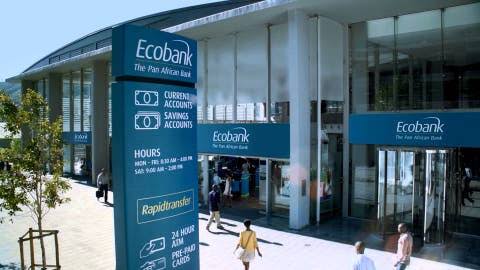
  • AU, Ecobank Launch MSME Academy for Africa’s Micro, Small and Medium Enterprises 

    AU, Ecobank Launch MSME Academy for Africa’s Micro, Small and Medium Enterprises 

    New Partnership for Africa’s Development (NEPAD), a socio-economic flagship programme of the African Union Development Agency (AUDA), otherwise called AUDA-NEPAD, has launched the Micro, Small and Medium Enterprises (MSME) Academy, in partnership with Ecobank Group.

    Spearheaded under AUDA-NEPAD ‘100,000 MSMEs by 2021’ (100K MSMEs) programme for Africa’s Micro, Small and Medium Enterprises, the Academy provides easy access to practical training and resources on financing opportunities in various countries, materials on how to build digital presence for businesses and how to adapt business operations in the era of the novel Coronavirus (COVID-19) pandemic.

    (more…)

  • Buhari Signs Amended Companies and Allied Matters Bill 30 Years After

    Buhari Signs Amended Companies and Allied Matters Bill 30 Years After

    President Muhammadu Buhari Friday in Abuja assented to the Companies and Allied Matters Bill, 2020 recently passed by the National Assembly.

    The President’s action on this important piece of legislation, therefore, repealed and replaced the extant Companies and Allied Matters Act, 1990, introducing after 30 years, several corporate legal innovations geared toward enhancing ease of doing business in the country.

    Some of the innovations include:

    “Filing fee reductions and other reforms to make it easier and cheaper for small and medium-sized enterprises to register and reform their businesses in Nigeria;

    “Allowing corporate promoters of companies to establish private companies with a single member or shareholder, and creating limited liability partnerships and limited partnerships to give investors and business people alternative forms of carrying out their business in an efficient and flexible way; Innovating processes and procedures to ease the operations of companies, such as introducing Statements of Compliance; replacing ‘authorised share capital’ with minimum share capital to reduce costs of incorporating companies; and providing for electronic filing, electronic share transfers, e-meetings as well as remote general meetings for private companies in response to the disruptions to close contact physical meetings due to the COVID-19 pandemic;

    “Requiring the disclosure of persons with significant control of companies in a register of beneficial owners to enhance corporate accountability and transparency; and

    “Enhancing the minority shareholder protection and engagement; introducing enhanced business rescue reforms for insolvent companies; and permitting the merger of Incorporated Trustees for associations that share similar aims and objectives,” said Buhari’s Special Adviser on Media and Publicity, Femi Adesina.

    Idowu Sowunmi

  • Elumelu’s Heirs Holdings  appoints Okeke as Group Executive Director

    Elumelu’s Heirs Holdings appoints Okeke as Group Executive Director

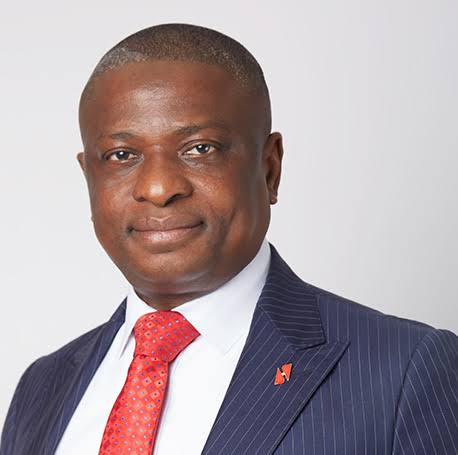
    A pan-African investment company, Heirs Holdings, has announced the appointment of Dan Okeke as the Group Executive Director with effect from August 1.

    Okeke has had a distinguished three-decade career at the United Bank for Africa Plc (UBA), where he recently served as an Executive Director in charge of leading consumer, commercial and public-sector businesses.

    As Group Executive Director, he would be responsible for business coordination and growth across Heirs Holdings’ portfolio.

    A file photo of Founder/Chairman, Heirs Holdings, Tony Elumelu.

    Driven by the Africapitalism philosophy of the group’s founder, Tony Elumelu, which positions the private sector as the catalyst of African growth and seeks both social and economic returns on investment, Heirs Holdings invests for the long-term, bringing strategic capital, sector expertise, a track record of business turnaround accomplishment and operational excellence to companies within its investment portfolio.

    READ ALSO:

    ‘Investment Committee will provide a bridge between investors and African energy industry’

    Celebrating its 10th anniversary this year, Heirs Holdings has recorded consistent business success across its portfolio of investments.

    Commenting on the appointment, Elumelu said: “As we continue to grow in scale and complexity, Dan’s appointment demonstrates our ongoing commitment to institutionalisation. We have always recognised the need to invest in human capital.

    “This announcement is a clear demonstration of our intent and determination to create sustainable value in all our business operations.”

    READ ALSO:

    Petrol: PPMC fixes ex-depot price at N138.62 per litre

    On his part, Okeke said he was delighted to take on the new challenge, adding that he was prepared to contribute towards the fulfillment of Heirs Holdings’ objective of improving lives and transforming the continent.

    Heirs Holdings is a family-owned investment company committed to improving lives and transforming Africa. Its portfolio spans power, oil and gas, financial services, hospitality, real estate, and healthcare sectors, operating in 23 countries.

    Idowu Sowunmi

  • Bristow Helicopters sacks 100 Pilots hours after Air Peace layoffs

    Bristow Helicopters sacks 100 Pilots hours after Air Peace layoffs

    The management of Bristow Helicopters Limited has terminated the appointment of no fewer than 100 pilots.

    Bristow Helicopters, in a statement on Tuesday, said those sacked comprised both Nigerian nationals and expatriates working with the company.

    It explained that the decision to sack the pilots was due to the severe impact of the novel Coronavirus (COVID-19) pandemic.

    This was coming barely 24 hours after another Nigerian airline, Air Peace, sacked over 70 pilots over the COVID-19 crisis.

    Bristow Helicopters added that it had engaged with the National Association of Aircraft Pilots and Engineers to negotiate a fair and equitable redundancy compensation for those affected.

    “The spread of the COVID-19 virus has severely impacted all sectors in the aviation industry including our market, which primarily serves the Nigerian oil and gas sector.

    “In addition, the ongoing downturn in the global oil and gas market continues to influence and determine the demand for our services.

    “The combined effects of these ‘arisings’ has resulted in very significant reductions to our business particularly a reduction in the number of contracted aircraft in Nigeria.

    “As a result, the company must now restructure all aspects of its business model (both Rotary & Fixed Wing), including an extensive review of its operations and we continue to drive efficiencies, but with zero compromise to safety and our core values.

    “One of these measures includes the right sizing of the business to ensure that the company has the optimal level of personnel to continue the safe delivery of its services to its clients, whilst allowing the appropriate capacity for future growth.

    “Accordingly, and with much regret, the company has taken the very difficult decision to release over 100 pilots and engineers (both National and Expatriates) over the next couple of weeks.

    “In compliance with the relevant labor and local content laws and also best practices; the company has engaged the leadership of the National Association of Aircraft Pilots and Engineers (NAAPE) to negotiate a fair and equitable redundancy compensation for the affected individuals,” the statement explained.

    Idowu Sowunmi

  • Breaking News: Shoprite begins process to exit Nigeria

    Breaking News: Shoprite begins process to exit Nigeria

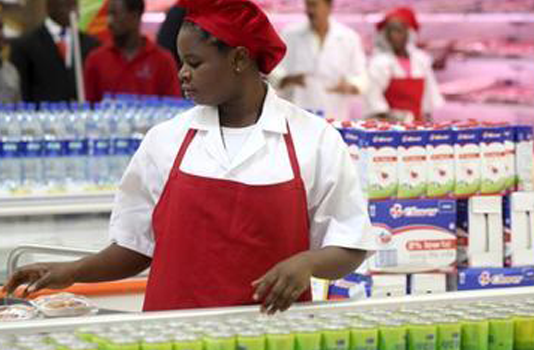
    One of Africa’s largest food retailers, Shoprite, has announced plans to exit the Nigerian market after posting continuous losses from its operations in the world’s populous Black nation.

    Shoprite, in a trading update filed at the Johannesburg Stock Exchange (JSE) on Monday morning, said it was planning to discontinue its operations in Nigeria.

    “Following approaches from various potential investors, and in line with our re-evaluation of the Group’s operating model in Nigeria, the Board has decided to initiate a formal process to consider the potential sale of all, or a majority stake, in Retail Supermarkets Nigeria Limited, a subsidiary of Shoprite International Limited.

    READ ALSO: Energy Poverty: African Energy Chamber makes key appointments into advisory board

    “As such, Retail Supermarkets Nigeria Limited may be classified as a discontinued operation when Shoprite reports its results for the year. Any further updates will be provided to the market at the appropriate time,” the update stated.

    It would be recalled that Shoprite launched its Nigeria operations some 15 years ago, by opening its first store in Lagos in December 2005.

    That chain has grown from one to more than 25 retail stores across Nigeria — including some of the biggest retail stores in West Africa region.

    Idowu Sowunmi