Category: Economy

  • Tinted Glass Permits: Why Nigerians Shouldn’t Pay Twice for One Car

    Tinted Glass Permits: Why Nigerians Shouldn’t Pay Twice for One Car


    Policeman checking vehicle particulars of a vehicle
    Policeman checking vehicle particulars of a vehicle

    For years, motorists in Nigeria have endured a frustrating ritual: registering their vehicles with the state licensing offices, only to be stopped on the highway by police officers demanding an additional permit for factory-fitted tinted glass. The irony is painful — every new vehicle, including those with tinted or shielded glass, is already captured in the National Vehicle Identification Scheme (NVIS), the centralized database managed by the Federal Road Safety Corps (FRSC). So why are Nigerians being compelled to re-register with the police?

    The answer lies not in necessity but in bureaucratic silos and institutional turf wars. By law, the Nigerian Police Force (NPF) retains the authority to issue tinted glass permits under the Motor Vehicles (Prohibition of Tinted Glass) Act of 1991. But in practice, FRSC already has the data. Every plate number, chassis number, and glass specification is captured the moment a car is registered. The logical solution would be for the police to access NVIS directly, extract a filtered report of all vehicles with factory-fitted shields, and enforce compliance seamlessly.

    Instead, motorists are dragged through a second, often opaque process at police stations. This duplication breeds confusion, harassment, and informal revenue collection on the highways. Worse, it undermines public trust in law enforcement, turning a legitimate security concern into yet another avenue for extortion.

    Yes, there are genuine worries. Aftermarket tinting is a security risk. Criminals exploit heavily darkened windows to evade detection. Police must have the authority to check and sanction illegal modifications. But this can be done through inspection points and digital cross-checks, not endless manual registrations.

    Nigeria cannot claim to be pursuing digital transformation while its agencies cling to outdated silos. A simple reform could save time, money, and lives:
    • Mandate FRSC to auto-flag tinted vehicles at registration.
    • Provide NPF secure access to NVIS.
    • Automate permit issuance electronically, with a transparent fee schedule.

    This way, motorists deal with one system, not two. Police officers enforce compliance using real-time data, not roadside guesswork. And the state builds trust by showing that regulation is about safety, not rent-seeking.

    The time has come to end this double compliance burden. Nigerians deserve a system where technology replaces intimidation, and where institutions collaborate rather than compete. In an era of insecurity, the Police need the public’s confidence more than ever. Simplifying tinted glass permits would be a small but powerful step in that direction.


  • EDITORIAL : Budget integrity is NOT budget padding.

    EDITORIAL : Budget integrity is NOT budget padding.

    Nigerian National Assembly

    A recent statement by Senator Solomon Adeola, Chairman of the Senate Committee on Appropriations and Senator representing Ogun West Senatorial District, published under the title “The Role of Legislature in Shaping a Holistic Budget for Nigeria,” has reignited public debate over the controversial practice of legislative budget insertions—commonly referred to as “budget padding.”

    In his article, the Senator defends the legislature’s role in adjusting the federal budget, dismissing terms like “padding,” “insertions,” and “constituency projects” as misrepresentations of legitimate legislative contributions to the budgetary process.

    At Echotitbits.com, we fully acknowledge the constitutional role of the National Assembly in reviewing and approving the national budget. However, we must respectfully challenge the narrative that legislative insertions are harmless or beneficial acts of “democracy in action.” On the contrary, such adjustments—when carried out outside the framework of national planning—continue to undermine Nigeria’s development agenda, weaken fiscal discipline, and compromise the integrity of public finance.

    The Purpose of the Envelope

    Nigeria operates a Medium-Term Expenditure Framework (MTEF), an internationally recognized tool designed to align national spending with realistic revenue projections, development priorities, and sustainable debt levels.

    Within this framework, each sector—education, health, roads, power—is assigned a budget “envelope” based on available funds and national strategic plans. These envelopes are not arbitrary figures. They are carefully calculated to ensure that the nation’s most pressing needs are funded first and that public spending remains sustainable.

    When the legislature inserts hundreds of small, fragmented projects into the budget without reference to the MTEF, these envelopes are breached. Ministries are then forced to spread their limited resources across too many projects—many of which are duplicative, unviable, or politically motivated.

    This is not merely a budgeting problem. It is a national development crisis.

    A Real-World Example

    Consider a real scenario:

    • Let’s assume under the MTEF, ₦2 trillion is allocated to the Federal Ministry of Works and Housing.

    • National Planning identifies critical projects, including:

    • The Lagos–Ibadan Expressway

    • The Abuja–Kaduna–Zaria–Kano Road

    • However, during the budget process, the National Assembly inserts hundreds of new road projects, each valued between ₦50 million and ₦200 million, scattered across various constituencies nationwide.

    The result?

    • Funding for the major highways—projects vital for national connectivity and economic growth—is slashed.

    • Many of the smaller inserted roads are abandoned or remain incomplete due to inadequate funding and planning.

    • The national transport strategy suffers, and Nigeria’s development goals are delayed.

    This is a clear example of how legislative insertions can derail national priorities, waste resources, and leave citizens stranded with half-completed projects.

    Insertions vs. National Priorities

    Legislative insertions are often justified under the banner of promoting equity or delivering development to neglected areas. While this may sound noble in theory, it frequently leads to waste and inefficiency in practice. Projects inserted late into the budget process are rarely subjected to rigorous planning. They often lack feasibility studies, are poorly costed, and fail to align with sectoral strategies.

    We have witnessed the consequences firsthand: unfinished health centres, abandoned rural roads, ghost ICT hubs, and duplicated training workshops. Meanwhile, large-scale national infrastructure—projects with the potential to drive economic growth, create jobs, and reduce poverty—remains underfunded or delayed.

    This is not equity. It is inefficiency.

    Who Really Benefits?

    The Senator is correct in stating that lawmakers do not execute projects directly; instead, implementation falls to Ministries, Departments, and Agencies (MDAs). However, this misses the critical issue. The core concern is how these projects enter the budget in the first place—and whose interests they ultimately serve.

    Many inserted projects are awarded to politically connected contractors with little or no accountability to the communities they are meant to benefit. The result is an erosion of public trust in both the budget process and governance as a whole.

    Strengthening the Budget Process

    A credible budget process demands transparency, fiscal discipline, and a clear connection to national priorities. To achieve this:

    1. All budget insertions must be made public, including details of their origin and justification.

    2. Constituency needs should be integrated into national planning frameworks through structured dialogue—not through last-minute lobbying.

    3. Sectoral envelopes must be respected, not breached.

    4. The National Assembly should focus on strong oversight, ensuring that public funds deliver value for money rather than becoming vehicles for political patronage.

    This is how democracy should function—not through distortions of the budget, but through accountability and measurable results.

    Conclusion

    The term “budget padding” is not a media invention. It reflects a budgeting culture that too often prioritizes political interests over Nigeria’s broader development goals. Rebranding insertions as “legislative adjustments” does not erase the very real consequences they have had on project execution, fiscal stability, and the welfare of ordinary Nigerians.

    At Echotitbits.com, we believe that budget integrity is the cornerstone of responsible governance. If democracy is truly about the people, then our budget must reflect their genuine needs—not merely the influence of political actors.

     Echotitbits.com Editorial Board

     July 7, 2025

  • Monetary tightening and increasing risks cause Nigeria’s capital inflow to falter

    Monetary tightening and increasing risks cause Nigeria’s capital inflow to falter

    The investment market in the country is feeling the effects of aggressive global monetary tightening and rising political and business risks, with capital importation dropping by 20% last year according to data released by the National Bureau of Statistics (NBS). This is according to a report by The Guardian, which further describes the situation as a significant decrease from $6.7 billion in 2021 to $5.33 billion in 2022, just ahead of the country’s general election. The impact of the election on the capital inflow, which is a measure of market attractiveness, was particularly felt in Q4, with a 51.51% decrease in year-on-year changes compared to Q4 2021. In addition, the recent fall in capital importation has been attributed to increasing business risk, insecurity, political risk, foreign exchange market rigidity, and the high arbitrage between official and black markets.

    READ ALSO: Twelve-Year-Old Girl dies in Car Crash – Police

    On a state-by-state analysis, Lagos accounted for the majority of the inflow at 68% or $3.61 billion, while the Federal Capital Territory (FCT) recorded $1.63 billion or 31%. Interestingly, 27 states, including Abia, Bauchi, Bayelsa, Benue, Borno, Cross Rivers, and Delta, did not receive any inflow, and Ogun and Rivers had zero capital importation for the entire year. Production, banking, and telecommunications received the bulk of the capital, accounting for 37.01%, 24.08%, and 15.86%, respectively. Share and trading received over 5% each, while oil and gas, which used to be a major foreign investment attraction, received only 0.21% of the total inflow.

    According to economist Eze Onyekpere, the uncertainty surrounding the 2023 elections and the likely policy direction of the new administration were key factors contributing to the poor performance of capital inflow. Onyekpere, who is the Lead Director of the Centre for Social Justice, explained that the fall was a result of investors adopting a wait-and-see approach in the lead-up to the first-quarter general elections.

    READ ALSO: NCC Refutes Phone Tracking and Leakage Allegations in Obi/Oyedepo Call Controversy

    “Many investors and stakeholders wanted to see the outcome of the elections, the new policy framework and whether there would be peace in the country before committing in terms of investment,” he said.

    According to him, if the new administration follows a policy direction that investors view as favourable and provides a positive economic outlook, there is a high possibility of a rebound.

  • Local investors fear ‘forceful takeover’ by foreigner, against converting dividends to shares

    Local investors fear ‘forceful takeover’ by foreigner, against converting dividends to shares

    Local investors have expressed fear that economic challenge in Nigeria, said to have continued to dampen investment drive and trigger apathy in the Nigerian capital market since the 2016 recession and now fueled by the effect of COVID-19 lockdown may lead to a forceful takeover of investments by foreigners.

    The Chief Research Officer of Investdata Consulting Limited, Ambrose Omordion said if the Federal Government fails to make Forex available to foreign investors to repatriate their dividend, it would not only push local investors away from multinationals operating in Nigeria, it would also increase the quantum of unclaimed dividend in the capital market.

    “If they find it difficult at the Forex market, they may decide to buy more shares with the money and if this happens, Nigerian investors will be short-changed while foreign investors will eventually take over the companies.

    Omordion exercised fear about the unhealthiness of the situation for the market and urged that local investors must be encouraged to participate actively in multinational firms to create more wealth for the country.

    The fear is might be valid as a research by The Guardian revealed that foreign investors constitute a large proportion of unclaimed dividends in multinational firms listed on the Nigerian Stock Exchange (NSE) such as Nestle, Unilever, and Nigerian Breweries, among others.

    It was further reported that shareholding structure of Nestle Plc, the biggest multinational company on the NSE showed that Nestle S.A Switzerland controls 66.50 per cent, while Stanbic IBTC Nominees hold 6.28 percent. Free float (Others) constitute 27 per cent. For Unilever Plc, Unilever Overseas have 75.96 per cent stake Stanbic IBTC Nominees control 5.01 per cent, while 19.03 per cent is free float.

    “The Securities and Exchange Commission (SEC) and NSE have been working hard to reduce the quantum of unclaimed dividend so that people will have access to their return on investment.

    “Government should find a way to make sure that these people have access to Forex, even if they want to invest, it should be a fresh investment. Before now, they find it easy to repatriate their money and that is why they can invest more because they know that they are getting good returns from Nigerian companies” Omordion said.

    Sunny Nwosu, the founder of the Independent Shareholders Association of Nigeria (ISAN), said local investors are ready to sell off their shares to foreign investors at any additional value on the share price.

    “If they add N10 or N20 to the value of shares, Nigerians will sell because there is much hunger in the land, most of these retail shareholders have no money to meet needs of their families.

  • Lekki deep seaport begins operations in 2023, investor assures Lagos govt

    Lekki deep seaport begins operations in 2023, investor assures Lagos govt

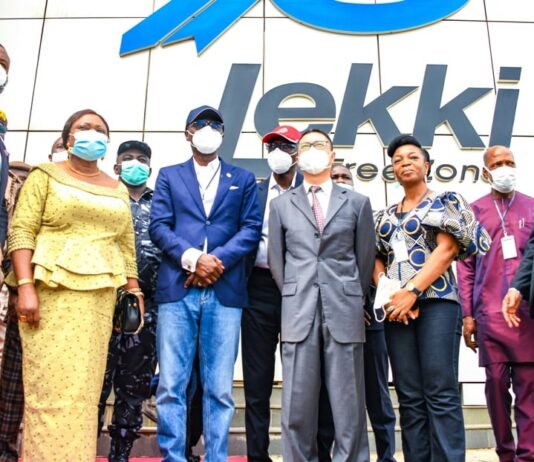
    Commercial operations at the Lekki Deep Seaport in Lagos Free Zone (LFZ) will begin in the first quarter of 2023, Governor Babajide Sanwo-Olu, on Friday, Tolaram Group, the frontline investor handling the project gave the assurance on Friday.

    The Governor and members of the State’s cabinet are currently on a two-day working tour of the three free trade zones established in Ibeju Lekki area of Lagos.

    The port, which is being constructed by China Habour Engineering firm, is occupying 90 hectares in the entire 830 hectares of land carved out for the Lagos Free Zone, created in 2012 to enhance economic position of Lagos as manufacturing and logistics hub in West Africa.

    The first phase of the seaport project, which is being financed by $629 million facility from China Development Bank (CDB), is at 48 per cent completion.

    After going through the project master plan, Sanwo-Olu said his administration remained committed to delivering project, stressing that the deep seaport and other investments happening in the corridor had the potential to increase the State’s GDP in multiple folds.

    He said: “Given the report I got and what I have seen here, I can say that Lagos Free Zone has made tremendous improvement. We have seen the level of partnership Tolaram Group is bringing in terms of international investment and local brands on this corridor.

    “I commend all stakeholders that are with us on this journey we have found ourselves. With the level of work we have seen, I’m truly excited. It is more gratifying that, we are taking up this assignment with all energies required and we all can see what we can achieve when we work together.

    “Since we signed a loan agreement less than 18 months ago, we have demonstrated strong capability in bringing the project to reality. This is the first quarter of 2021 and we have seen the project in about 48 per cent completion. The investors have given us the commitment on first quarter of 2023 completion date. We will fulfill all our parts to make sure this date becomes reality.”

    Sanwo-Olu, who noted that he had been part of the conversation for the development of the free zones as a Commissioner for Commerce and Industry in 2006, said his administration had recorded significant progress in bringing the projects to reality.

    The Governor said the priority accorded to the construction of complementary infrastructure projects along the corridor was a demonstration of his Government’s fulfillment of its pledge to Lagos residents. He promised the State would work with the timeline to ensure all projects mapped out in the zones are deliver.

    Sanwo-Olu said the size of the deep seaport will allow 18,000 TEU capacity vessels, which are four times bigger than the ones berthing at Apapa seaports, thereby scaling down the cost of container transportation from any part of the world.

    He said: “The interesting part is that, our youths and young women will be the beneficiaries of this project. The project managers have engaged large number of our citizens in the construction parts of the work; all personnel are not expatriates. All the technical work and technology deployed have local component to it.

    “For us a Government, this is the strongest point we have made with the project. I am fully convinced that the delivery of this project will transform commercial architecture of West Africa and bring about quick turnaround time in maritime sector.”

    When it is completed, the deep seaport is expected to generate more than 170,000 direct and indirect job opportunities for Lagos residents, and serve as alternative in an effort to decongest the Federal Government-owned seaports in Apapa.

    Chief Executive Officer of Lagos Free Zone, Mr. Dinesh Rathi, said Tolaram Group, a Singaporean coy, initiated a $2 billion investment in the Lagos Free Zone, out of which the investor committed $950 million to developing manufacturing hub in the zone.

    When the deep seaport is completed, Rathi said the maritime project was expected to generate more than 170,000 direct and indirect job opportunities for Lagos residents, and would serve as alternative in an effort to decongest the Federal Government-owned seaports in Apapa.

    Chairman of Lagos Free Zone Development Company, Mr. Biodun Dabiri, hailed the State Government for its commitment towards changing face of commerce in Africa, stressing that all statutory permits, licenses and endorsement for the Lekki port project were already secured.

    “There is strong guarantee that the port will be delivered before time, going by the inflow of capital investment and technical services,” Dabiri said.

    The Governor and his entourage also visited Africa’s second largest manufacturing plant of Kellogg Tolaram, manufacturer of cornflakes, which is built in Lagos Free Zone. The Governor toured the processing unit of the firm and inspected the production chain.

    Also joining the Government’s team in the tour are the Chief Executive Officer of Lekki Freeport LFZ, Mr Du Ruogang, and Head of Marketing for LFZ, Ms. Chinju Udora, among others.

    CAPTION:

    PIX 1 L-R: C.E.O, Lagos Free Zone, Mr. Dinesh Rathi; Director, Lekki Port; Alhaji Bode Oyedele; Lagos State Governor Mr. Babajide Sanwo-Olu; Chairman, Lekki Free Zone Development Company, Mr. Abiodun Dabiri; Commissioner for Commerce, Industry & Cooperatives, Dr. (Mrs) Lola Akande; Special Adviser to the Governor on Commerce & Industry, Mr. Oladele Ajayi and Commissioner for the Environment and Water Resources, Mr. Tunji Bello, during the Governor’s working visit to the Lekki Free Trade Zone, Ibeju-Lekki, on Friday, March 19, 2021.

    PIX 2 L-R: Chief Technical Officer, Lekki Port, Mr. Steven Heukelom; Managing Director, Lekki Port, Mr. Du Ruogang; Lagos State Governor Mr. Babajide Sanwo-Olu; Commissioner for the Environment and Water Resources, Mr. Tunji Bello; Chairman, Lekki Free Zone Development Company, Mr. Abiodun Dabiri and Commissioner for Commerce, Industry & Cooperatives, Dr. (Mrs) Lola Akande, during the Governor’s working visit to the Lekki Free Trade Zone, Ibeju-Lekki, on Friday, March 19, 2021.

    PIX 3 L-R: Chairman, Lekki Free Zone Development Company, Mr. Abiodun Dabiri, Lagos State Governor Mr. Babajide Sanwo-Olu and Chief Technical Officer, Lekki Port, Mr. Steven Heukelom during the Governor’s working visit to the Lekki Free Trade Zone, Ibeju-Lekki, on Friday, March 19, 2021.

    PIX 4: Lagos State Governor Mr. Babajide Sanwo-Olu, pointing to a place of interest on the Lekki Port architectural presentation board during his working visit to the Lekki Free Trade Zone, Ibeju-Lekki, on Friday, March 19, 2021.

    PIX 5 L-R: Special Adviser to the Governor on Commerce & Industry, Mr. Oladele Ajayi; Managing Director, Lekki Port, Mr. Du Ruogang, presents a pictorial frame of the Lekki Port to Lagos State Governor Mr. Babajide Sanwo-Olu; Chairman, Lekki Free Zone Development Company, Mr. Abiodun Dabiri and Commissioner for Commerce, Industry & Cooperatives, Dr. (Mrs) Lola Akande, during the Governor’s working visit to the Lekki Free Trade Zone, Ibeju-Lekki, on Friday, March 19, 2021.

    PIX 6 R-L: Managing Director, Lekki Port, Mr. Du Ruogang; Lagos State Governor Mr. Babajide Sanwo-Olu; Commissioner for Commerce, Industry & Cooperatives, Dr. (Mrs) Lola Akande; Special Adviser to the Governor on Commerce & Industry, Mr. Oladele Ajayi; Commissioners for Physical Planning and Urban Development, Dr. Idris Salako and others during the Governor’s working visit to the Lekki Free Trade Zone, Ibeju-Lekki, on Friday, March 19, 2021.

    PIX 7 R-L: Lagos State Governor Mr. Babajide Sanwo-Olu, Managing Director, Lekki Port, Mr. Du Ruogang and Chief Technical Officer, Lekki Port, Mr. Steven Heukelom during the Governor’s working visit to the Lekki Free Trade Zone, Ibeju-Lekki, on Friday, March 19, 2021.

    PIX 8 L-R: Deputy Managing Director, Lekki Free Zone Development Company (LFZDC), Mr. Emmanuel Balogun; Commissioner for Commerce, Industry & Cooperatives, Dr. (Mrs) Lola Akande; Lagos State Governor, Mr. Babajide Sanwo-Olu; Managing Director of LFZDC, Mr. Huang Xigong; Executive Director, Finance & Administration, Mrs. Yemi Olusunya; Assistant General Manager, Stakeholders’ Management, Mr. Emmanuel Aguda and Commissioner for the Environment and Water Resources, Mr. Tunji Bello, during the Governor’s working visit to the Lekki Free Trade Zone at Ibeju-Lekki, on Friday, March 19, 2021.

    PIX 9: Aerial view of the ongoing Lekki Port project inspected by Lagos State Governor, Mr. Babajide Sanwo-Olu during his working visit to the Lekki Free Trade Zone, Ibeju-Lekki, on Friday, March 19, 2021.


  • Nigeria National Assembly Passes N13.5trn 2021 Budget, N500bn Higher than Initial Proposal

    The Senate on Monday passed the 2021 Appropriation Bill of N13.5 trillion.

    This followed the adoption of the report of Senate Committee on Appropriations at plenary.

    The News Agency of Nigeria (NAN), reports that President Muhammadu Buhari had on Oct. 8, presented the 2021 budget of N13.08 trillion to the joint session of the National Assembly for approval.

    Similarly, the House of Representatives also passed the 2021 budget of N13.5 trillion for the Year 2021 has been passed by Nigeria’s National Assembly on Monday ahead of the Christmas and New Year break.

    READ ALSO:

    COVID-19 Second Wave: Lagos Restricts Church Gathering Again, Bans Concerts, Others

    The passing of the budget, which followed consideration of a report by the committee on appropriation is N500bn higher than the N13.08 Trillion earlier presented before the joint session of the National Assembly by President Muhammadu Buhari.

    Details of the budget include about N6 Trillion allocated for recurrent expenditure, N4.2 trillion for Capital expenditure and N3.32 Trillion for Debt servicing.

    READ ALSO:

    SIM registration: FG Backtracks on NIN Retrieval Fee

    Presenting the report on the floor of the house, Chairman of the Committee on appropriation, Alhaji Aliyu Betera, while presenting the committee’s report on the floor of the House confirmed that sectors with highest allocation in the 2021 Appropriation Bill includes Defence with about N840bn (eight hundred and forty Billion naira); education with over N545bn (five hundred and forty five Billion naira), Police Affairs about N438bn (four hundred and thirty eight Billion naira) while health sector received over N380 (three hundred and eighty Billion naira.)

    The nation’s 2021 budget estimate is based on a $40 per barrel assumption, with crude oil production at 1.86million barrel per day.

  • SIM registration: FG Backtracks on NIN Retrieval Fee

    SIM registration: FG Backtracks on NIN Retrieval Fee

    The N20 USSD fee imposed by Nigerian telecommunications and National Identity Management Commission on subscribers for National Identification Number retrieval requests has been canceled.

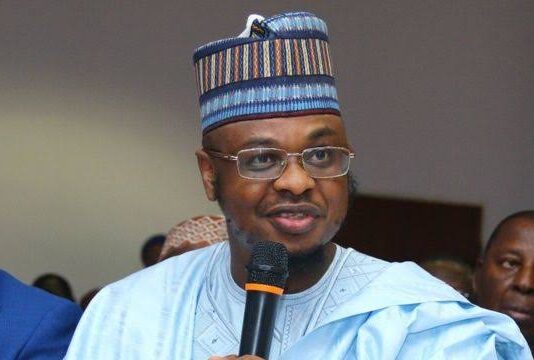
    The Minister of Communications and Digital Economy, Isa Pantami directed the Nigerian Communications Commission and the National Identity Management Commission to remove the fee.

    Recently, NCC directed telecommunication service providers to block SIM cards not registered with NIN, giving a two weeks deadline for SIM holders in Nigeria to respond.

    Authorities had listed 173 centres and 30 state government institutions approved for NIN enrolment across country.

    Part of issues arising from the directive was that subscribers who had enrolled for NIN in the past might not remember their identification numbers, a situation telecos and government’s registration agency, NIN sought to exploit by requiring citizens to pay a fee for the retrieval.

    According to a statement on Friday by the spokesperson for the minister, Uwa Suleiman, the government ordered telcos to stop the deduction for NIN retrieval.

    “The Minister of Communication and Digital Economy, Isa Pantami, Orders Cancellation Of NIN Retrieval Charge Across All Networks’.

    “The Minister’s directive which takes immediate effect, is an intervention aimed at making the process easier and affordable.

    “In a letter conveying the implementation of the directive, the Executive Vice Chairman NCC and the Director-General of NIMC informed Dr Pantami that the relevant authorities had met with, and negotiated a waiver with the Mobile Network Operators in that regard.

    “By this waiver, all Nigerians, subscribers and applicants can access the service using the *346# code for their NIN retrieval at no charge for the duration of the NIN/SIM Card integration exercise”, the statement read.

  • AfDB Tasks African Leaders on Industrialisation towards Transforming the Continent’s Economies

    AfDB Tasks African Leaders on Industrialisation towards Transforming the Continent’s Economies

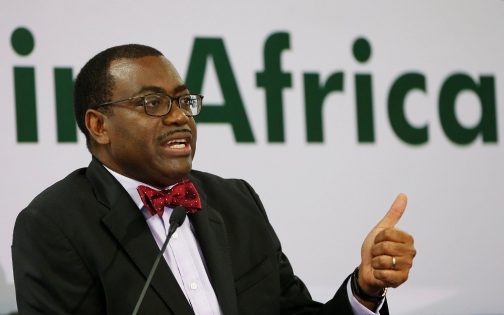
    African Development Bank (AfDB) has urged the continent to accelerate industrialisation for the transformation of African economies.

    The multilateral development bank has been at the forefront in promoting smart industrial policies and mobilising infrastructure development funding for Africa.

    To this end, the bank has described Industrialising Africa as one of its High-5 key strategic aims, critical for the transformation of African economies.

    “Industrialisation, where we add value to what we competitively produce and then export, and also trade among ourselves on the back of African Continental Free Trade Area (AfCFTA) within a market of 1.3 billion people, should be prioritised and delivered,” said the bank’s Vice President, Private Sector, Infrastructure and Industrialisation, Solomon Quaynor, in a message to mark Africa Industrialisation Day 2020, themed: “Inclusive and Sustainable Industrialisation in AfCFTA Era.”

    Quaynor noted that the Coronavirus (COVID-19) pandemic had sharpened the need to accelerate industrialisation and urged a greater role for the private sector, including as a partner to the public sector.

    “Resilience is key, and that means no matter the external shocks in the future, we should rebuild so that our people, particularly youth and women who head our households, have jobs and better incomes,” he said.

    The bank assured of its commitment to the operationalisation of AfCFTA. In August 2019, the institution extended a sum of $4.8 million grant to support the establishment of AfCFTA Secretariat in Ghana.

    AfDB is also working with African countries that are developing strategies for implementation of AfCFTA, helping them to build capacity and leverage opportunities provided by freer trade.

    When businesses could trade across borders, then industry could expand, economies could be diversified, and countries could move up the value chain, said the bank’s 2020 Annual Development Effectiveness Review (ADER) released this week.

    The report suggested that the bank’s investments in 2019 benefited one million people. Micro, small and medium enterprises (MSMEs) that benefited from bank projects trebled their turnover to $1 billion.

    Several projects recently approved by the bank are expected to help regional member countries exploit opportunities, including the construction and operation of a submarine internet cable in Seychelles and a project to expand access to finance for small and medium-sized enterprises in West Africa, the report noted.

    The African Development Bank is also promoting development of economic zones that bring together an enabling business environment, backbone integrated infrastructure and transport near to agricultural production hubs.

    “Agro-Industrial Processing Zones aim to train young people in rural areas with the needed skills and attract companies, particularly SMEs,” the bank’s Director, Agricultural Finance and Rural Development, Atsuko Toda, also commented.

    The pandemic has also spurred opportunities for Africa to strengthen local manufacturing capabilities for basic and essential medicines, personal protective equipment and other medical equipment.

    “The bank is undertaking a ground-breaking study to develop a plan for this, which will be ready before the end of the year. The plan will highlight opportunities, challenges, policy reforms required, financing windows and strategic partnerships to be forged to make this happen,” said Director of Industrial and Trade Development at the African Development Bank, Abdu Mukhtar.

    Celebrated each year on November 20, Africa Industrialisation Day offers governments and development partners opportunities to explore or highlight initiatives that advance Africa’s industrialisation.

    Idowu Sowunmi

  • Unstable Economy Due to Lack of Seasoned Economists in Buhari’s Cabinet – NES

    Unstable Economy Due to Lack of Seasoned Economists in Buhari’s Cabinet – NES

    The Nigeria Economic Society (NES) has accused the Muhamadu Buhari-led government of lacking seasoned economists which has led the nation into an unstable state of the economy.

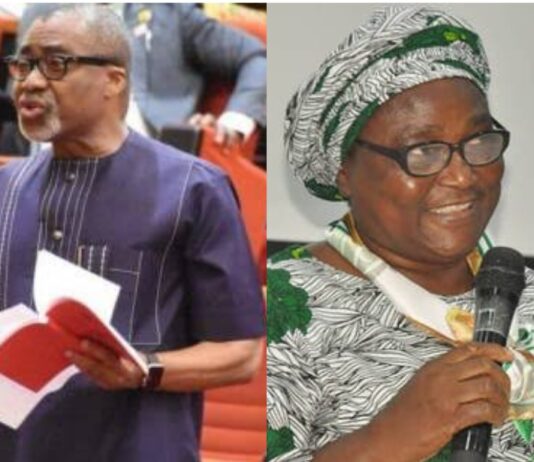
    The claim was made on Tuesday by the President of Nigeria Economic Society (NES), Professor Sarah Anyanwu, during a courtesy visit on the senator representing Abia South and Senate Minority Leader, Enyinnaya Abaribe.

    The leader of the body of professional economists in her remark stated that the unsavoury state of the economy was due to the exclusion of NES members from National Economic Management Team.

    “Members of the Nigeria Economic Society (NES) had in the past been included in the National Economic Management Team for the required professional advice and guidance on whatever economic policy to be adopted by the federal government.

    “The practice assisted the past government in making sound economic policies required by circumstances or situations on the ground.

    “But the exclusion of economists in the National Economic Team under the present administration has glaringly shown the adverse effects on the economy which by those who can read the indices and indicators correctly, is nose-diving.

    “Our exclusion from the NEMT is seriously making the Nation’s economy to be unstable and somewhat directionless.”

    Responding to Prof. Anyanwu’s remark, Senator Abaribe assured that the National Assembly would give expeditious passage to the Bill.

    “We are not surprised that the economy went into recession and moving towards that direction again, since as disclosed here, required knowledge from the experts are not even sought for.”

    Members of the NES visiting team include Professors Peter Shibayan of the Department of Economics, University of Abuja; Eyilola Olaniyi also from the same Department, University of Abuja, amongst others.

  • Food Price Hike Compounds With Border Closure, VAT Increment – University Don

    Food Price Hike Compounds With Border Closure, VAT Increment – University Don

    A professor of Finance and Capital Market at the Nassarawa State University, Uche Uwaleke, says the rise in commodity prices experienced across Nigeria was expected, but that it would trend down by December.

    Reacting to inflation rates which picked at 13.22% according to Consumer Price Index (CPI), which measures prices of goods and services, released by the National Bureau of Statistics (NBS) on Tuesday, Prof Uwaleke stated that the pressure is not unconnected to the effect of the COVID-19 pandemic, security challenges in the country and other fiscal policies of government.

    READ ALSO:

    Food Price Hikes As Inflation Rate Hits 13.22% Amid VAT Regime, Others

    “The uptick in inflation rate in August was expected and will likely continue till the harvest season sets in,” Uwaleke said. “This is particularly so, given the fact that the inflationary pressure is coming more from the food component which increased by as much as 16 per cent.

    “ It is not difficult to see where the pressure is coming from. The economy is still reeling from the negative impact of COVID’19 on the food supply chain. This situation is compounded by the border closure, increase in VAT, electricity tariff, stamp duties and upward exchange rate adjustments by the CBN to ease pressure on the market.”

    The University don also observed that the recent increase in pump price of fuel presented downside risks to inflation, as well as insecurity.

    READ ALSO:

    It’s Fake News, There’s No Embankment Collapse at Kainji Dam, Says Commission

    “There is also the insecurity challenge affecting the food belts of the country, and this partly explains the high rate of food inflation, at over 20 per cent, in states like Kogi. I expect the inflation rate to moderate towards the end of Q4 2020 in the wake of the harvest season as well as a likely increase in external reserves following gradual recovery in crude oil price, which helps stabilise exchange rate.

    “I also think the COVID’19 interventions by government and the CBN, especially in the Agric value chain will begin to manifest in Q4 2020.The way forward to rein in inflation is for government to tackle insecurity so that farmers can return to their farms and put in place deliberate policy to promote large-scale mechanised Agriculture. This will involve scaling up interventions in Agriculture, including recapitalizing of Development Finance institutions like the Bank of Agriculture,” Prof. Uwaleke advised.