


A 2025 health statistics report from the Federal Ministry of Health and Social Welfare identifies road traffic accidents as the most frequently reported cause of death in federal tertiary hospitals, followed by cancer, hypertension, and diabetes. Punch highlights that the findings underscore the twin burden of preventable trauma and rising non-communicable diseases. The report also points to maternal and infection-related causes such as postpartum haemorrhage and sepsis among significant contributors. Beyond the mortality list, the ministry’s data reportedly flags the need for stronger health system monitoring, better resource allocation, and improved data quality, including resolving inconsistencies in hospital reporting. Source: Punch, December 7, 2025.
Heavy security in Sokoto prison over Nnamdi Kanu

Security around the Sokoto Correctional Centre has reportedly remained unusually tight weeks after the transfer of IPOB leader Nnamdi Kanu. Punch states that Kanu was sentenced to life imprisonment on November 20, 2025, after being found guilty on terrorism-related counts, and that the court raised concerns about his safety at Kuje, given past jailbreak incidents. The report describes a visible security buildup including armoured presence and heavily armed personnel, with journalists denied access without clearance from national headquarters. The paper also notes that only family, lawyers, and select high-profile visitors are reportedly permitted limited access. Source: Punch, December 7, 2025.
Buratai, Malami, Yahaya deny links with terrorism financiers
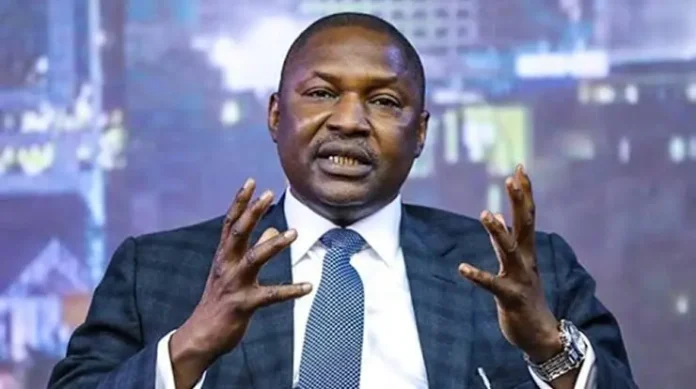
Senior former officials—ex-COAS Tukur Buratai, ex-AGF Abubakar Malami, and ex-COAS Faruk Yahaya—have pushed back against allegations linking them to terrorism financiers. The Nation reports that the claims, said to have been amplified by an online publication referencing a retired officer, were described by Yahaya’s camp as false, malicious, and agenda-driven. Buratai also reportedly rejected the accusations, stating he has never been investigated or indicted for terrorism financing by any competent authority. The account suggests the officials may pursue legal redress if retractions are not issued. Source: The Nation, December 7, 2025.
NAF pilots escape death as fighter jet crashes in Niger
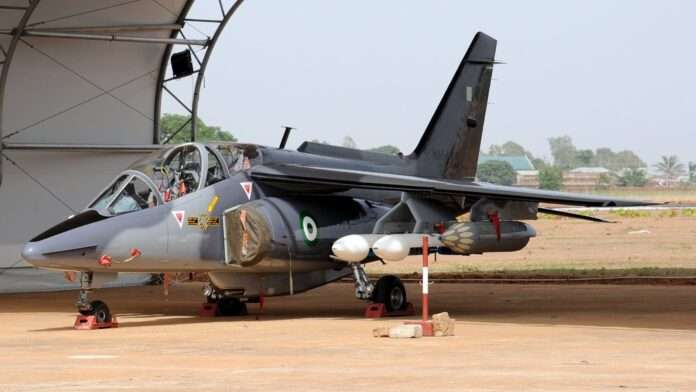
Two Nigerian Air Force Alpha Jet pilots reportedly survived an in-flight emergency during a post-inspection functional check flight from the Kainji base in Niger State. The story says the pilots ejected safely after steering the aircraft away from populated areas, helping to prevent civilian casualties. The Air Force spokesperson, Air Commodore Ehimen Ejodame, confirmed the incident and noted that the pilots were undergoing routine medical evaluation. The Chief of Air Staff also reportedly ordered a Board of Inquiry to investigate the cause of the crash, reiterating the NAF’s commitment to operational safety. Source: The Nation, December 7, 2025.
156 additional seats to be injected into parliament

A constitutional amendment proposal seeking reserved seats for women could add 156 new positions across national and state legislatures if passed and assented to. The report explains that advocates view the measure as a strategic corrective response to Nigeria’s long-standing gender imbalance in political representation. The bill’s architecture reportedly includes one reserved seat for women per state in both chambers of the National Assembly and three per state assembly, though the Senate is said to be considering an alternative model that would allocate reserved seats by geopolitical zones. Proponents insist the plan is designed to expand representation rather than displace male legislators, and may run for a defined number of election cycles as a temporary special measure, though extensions or removal of a sunset clause are also being discussed. Source: The Nation, December 7, 2025.
Emefiele Denies Terror-Funding Claims, Labels Report “Fabricated”
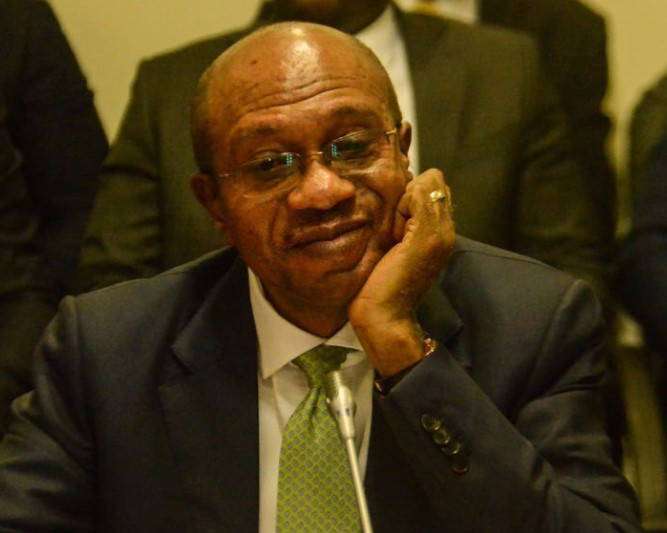
Former Central Bank of Nigeria governor Godwin Emefiele has rejected reports alleging he is among those financing terrorism in Nigeria. He described the allegation as fake and baseless, saying it was designed to tarnish his reputation and mislead the public.
Emefiele said he has never been involved in terrorism financing, has not been invited, questioned, or investigated over such claims, and has no connection with the person referenced in the allegation. He urged Nigerians to disregard the report and called on the media to verify sensitive claims before publication.
Source credit: Vanguard News — “Emefiele rejects terrorism funding allegation,” published December 7, 2025.
URL: https://www.vanguardngr.com/2025/12/emefiele-rejects-terrorism-funding-allegation/
Tinted Glass Permits: Why Nigerians Shouldn’t Pay Twice for One Car


For years, motorists in Nigeria have endured a frustrating ritual: registering their vehicles with the state licensing offices, only to be stopped on the highway by police officers demanding an additional permit for factory-fitted tinted glass. The irony is painful — every new vehicle, including those with tinted or shielded glass, is already captured in the National Vehicle Identification Scheme (NVIS), the centralized database managed by the Federal Road Safety Corps (FRSC). So why are Nigerians being compelled to re-register with the police?
The answer lies not in necessity but in bureaucratic silos and institutional turf wars. By law, the Nigerian Police Force (NPF) retains the authority to issue tinted glass permits under the Motor Vehicles (Prohibition of Tinted Glass) Act of 1991. But in practice, FRSC already has the data. Every plate number, chassis number, and glass specification is captured the moment a car is registered. The logical solution would be for the police to access NVIS directly, extract a filtered report of all vehicles with factory-fitted shields, and enforce compliance seamlessly.
Instead, motorists are dragged through a second, often opaque process at police stations. This duplication breeds confusion, harassment, and informal revenue collection on the highways. Worse, it undermines public trust in law enforcement, turning a legitimate security concern into yet another avenue for extortion.
Yes, there are genuine worries. Aftermarket tinting is a security risk. Criminals exploit heavily darkened windows to evade detection. Police must have the authority to check and sanction illegal modifications. But this can be done through inspection points and digital cross-checks, not endless manual registrations.
Nigeria cannot claim to be pursuing digital transformation while its agencies cling to outdated silos. A simple reform could save time, money, and lives:
• Mandate FRSC to auto-flag tinted vehicles at registration.
• Provide NPF secure access to NVIS.
• Automate permit issuance electronically, with a transparent fee schedule.
This way, motorists deal with one system, not two. Police officers enforce compliance using real-time data, not roadside guesswork. And the state builds trust by showing that regulation is about safety, not rent-seeking.
The time has come to end this double compliance burden. Nigerians deserve a system where technology replaces intimidation, and where institutions collaborate rather than compete. In an era of insecurity, the Police need the public’s confidence more than ever. Simplifying tinted glass permits would be a small but powerful step in that direction.
Middlesex County, New Jersey, Elevates Nigeria’s Independence Day Celebration to Countywide Recognition
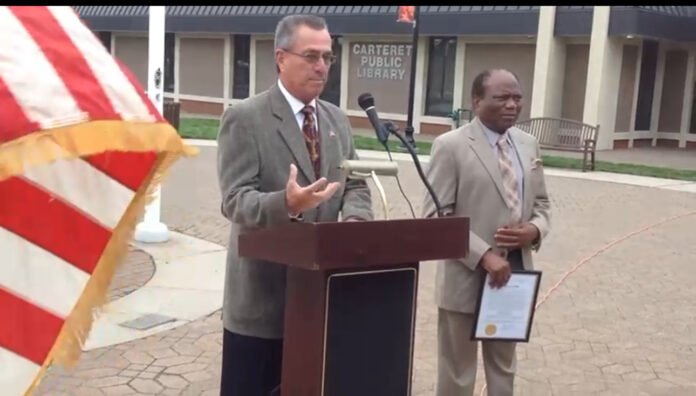

Carteret, New Jersey — On October 1st, Nigeria’s green-and-white flag once again flew proudly in Carteret Borough, New Jersey, but with an added historic touch this year. The Middlesex County Board of Commissioners officially extended its recognition of Nigeria’s Independence Day beyond Carteret Borough to the entire county. This marks a new milestone for the Nigerian community in America’s Northeast corridor.
At the heart of the celebration was Otunba Olusoga Onafowora, a respected son of Ijebu-Ode, Ogun State, Nigeria, and a cultural pillar of the Nigerian diaspora. Otunba Onafowora, who serves as a Commissioner at the Middlesex County Utilities Authority (MCUA), is a retired Permanent Secretary from Ogun State and former Bursar of Essex County College, Newark, New Jersey. He has long championed initiatives that project Nigerian culture, values, and civic contributions in the United States.
Official Proclamations: From Carteret to County

The event began with speeches at the historic Carteret Memorial Municipal Building, one of the last standing World War I memorial municipal halls in New Jersey. The Mayor of Carteret emphasized the symbolism of holding the ceremony at the monument, flanked by two lions named Liberty and Justice.
The highlight came when Ronald G. Rios, Director of the Middlesex County Board of Commissioners, presented a formal proclamation:
“On October 1, 1960, Nigeria gained its independence from the United Kingdom… In 2014, Nigeria became Africa’s largest economy, worth over $500 billion. By 2050, it is expected to be one of the world’s top 20 economies. Today, Middlesex County stands with Nigerians in recognizing their independence and their contributions here.”
Rios further acknowledged the Nigerian diaspora’s “hard work and dedication,” describing them as a community that has “helped make Middlesex County stronger through cultural, civic, and economic contributions.”
Nigerian Voices: Pride and Continuity

Taking the podium, Otunba Olusoga Onafowora expressed gratitude to the Borough of Carteret, the Middlesex County Freeholders, and the wider community for institutionalizing the annual Independence Day celebration:
“This has become a tradition in the city of Carteret. With the support of our leaders here, we are ensuring that Nigeria is recognized in this country. We thank the Board of Commissioners and extend this declaration as proof that Nigeria’s presence is felt and respected in America.”
He emphasized that such recognition serves as encouragement for Nigerians abroad and also strengthens ties with government leaders back home in Nigeria.
Community members in colorful Nigerian attire—agbadas, iro and bubas, and green-white scarves—joined in singing, prayers, and solidarity pledges. Many noted that this celebration, once limited to Carteret Borough, has now become a county-level recognition, symbolizing the growing influence of the Nigerian community in New Jersey.

Middlesex County: Economic Context
The importance of this recognition is amplified by Middlesex County’s economic weight:
• GDP (2023): $83.7 billion — larger than any Nigerian state except Lagos.
• Population: ~863,600 — the second most populous county in New Jersey.
• Per Capita Income: $75,352 — higher than U.S. national averages.
For perspective, leading Nigerian states such as Ogun, Rivers, Akwa Ibom, Imo, and Delta each have GDPs in the range of $11–20 billion, underscoring the significance of Middlesex County acknowledging Nigeria at this scale.

Conclusion
The 2025 celebration in Carteret was more than a cultural festival. It was a symbol of integration, recognition, and pride for Nigerians in America. With the proclamation elevated to a countywide declaration, Middlesex County has affirmed the Nigerian diaspora’s place in its multicultural tapestry.
For Otunba Olusoga Onafowora and the Nigerian community, the moment underscored a simple but powerful truth: wherever Nigerians go, the green-white-green flag flies high.
Editorial Opinion: When Nigeria Happens to the Powerful: A Wake-Up Call for Leadership Beyond Privilege
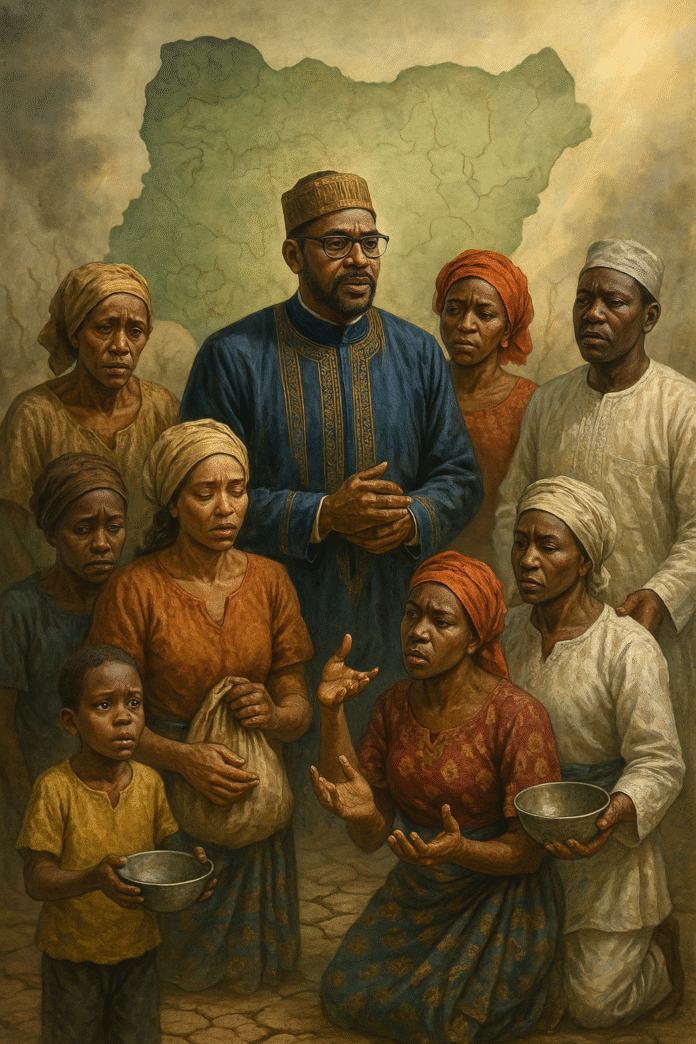
Not too long ago, a former senator of the Federal Republic of Nigeria—no longer in office, no longer surrounded by the trappings of power—was approached by a young citizen. In response to a casual exchange, the former lawmaker, with a tone of sincerity and fatigue, uttered a deeply revealing phrase:
“May Nigeria not happen to you.”
That brief remark has reverberated beyond its moment. It wasn’t just a statement—it was a confession, an admission of how quickly the illusion of safety and privilege dissolves when public office ends. It was also a mirror held up to the very soul of Nigeria’s dysfunctional socio-political system.
This man had once been part of the machinery that ran the country. He had the power to influence budgets, pass laws, and shape policy. And yet, as soon as his tenure ended, he found himself swallowed by the same dysfunction that haunts ordinary Nigerians daily: insecurity, administrative chaos, crumbling infrastructure, and the silent indifference of the system.
If a former senator can be so brutally vulnerable, what hope is there for the average Nigerian—those who never had the benefit of title, privilege, or armed escort?
This story is not unique, but it is symbolic. It exposes a fundamental failure in our approach to governance. Public office in Nigeria is too often treated as a sanctuary from the hardship of the nation, rather than as a platform to transform that hardship. For many, leadership is reduced to a fleeting window of protection and accumulation—a time to secure wealth, enjoy prestige, and escape the daily grind of the masses.
But here’s the painful truth: that escape is temporary.
When power fades, the failing system you helped uphold comes for you too. That reality should frighten anyone in leadership who still believes that political office is about securing the moment instead of changing the system.
This is a moral reckoning. We must ask: Why should any citizen have to fear that their country might “happen” to them? Why do even our lawmakers, governors, and ministers dread the same system they once managed? Why is Nigeria a place you survive while in office, but suffer once you’re out?
Until we abandon the model of power as refuge and embrace leadership as responsibility, we will remain in this cycle. We need leaders who understand that the true measure of success is not what they gain while in power, but what they leave behind after power.
A senator should not have to plead for mercy from the same country he helped lead. And a citizen should not have to pray that their nation does not “happen” to them.
Leadership must become a legacy, not an escape.
It is time to stop using the privilege of office for pecuniary gain, and start using it to build the kind of nation we won’t have to apologize for—even after we leave office.
Beyond Sacking: CNPP, CSOs Demand Arrest of Mele Kyari, Public Probe into NNPCL
Echotitbits.com – Abuja, Nigeria
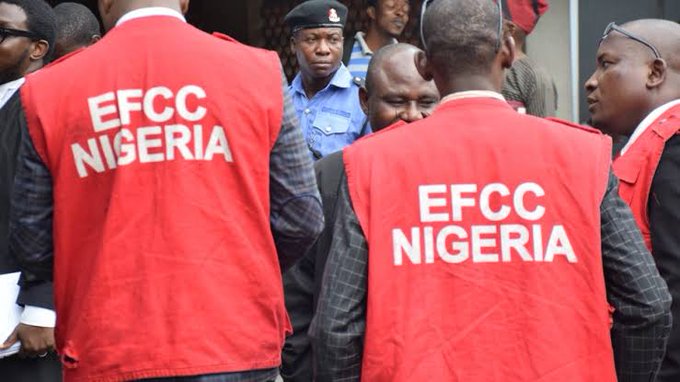
In a powerful joint statement, the Conference of Nigeria Political Parties (CNPP) and over 75 Civil Society Organisations (CSOs) under the Coalition of National Civil Society Organisations (CNCSOs) have called on President Bola Ahmed Tinubu to take decisive action beyond the recent dismissal of Mele Kyari as Group Chief Executive Officer of the Nigerian National Petroleum Company Limited (NNPCL). The coalition is demanding Kyari’s immediate arrest and the launch of a transparent judicial inquiry into the affairs of the state-run oil company.
Speaking at a media briefing in Abuja, CNCSOs National Publicity Secretary, Dr. Agaba Iduh Fidel, described the situation at NNPCL as a “national emergency of historic proportions,” accusing the former leadership of “industrial-scale corruption, reckless mismanagement, and economic sabotage.”
While acknowledging Tinubu’s decision to relieve Kyari and his team of their duties as “bold and commendable,” the coalition argued that such a move falls woefully short of the accountability Nigerians deserve.
According to Dr. Iduh, the CNPP and its civil society partners have consistently raised alarms over corruption and opacity in the oil sector, dating back years. He cited a 2021 expose on fraudulent recruitments into the dormant Port Harcourt Refinery, which cost taxpayers billions despite the facility’s inactivity.
The coalition further accused the NNPCL under Kyari’s watch of ignoring Freedom of Information (FOI) requests between April and May 2025, which sought contract details and expenditures related to over $4 billion allegedly allocated for refinery rehabilitation projects.
“This silence wasn’t just bureaucratic—it was a deliberate act of evasion,” Dr. Iduh said. “Nigerians deserve full disclosure, not cover-ups.”
The group referenced the August 2024 fuel contamination crisis and persistent subsidy frauds as examples of how NNPCL’s leadership allegedly enabled fuel import cartels at the expense of local refining and economic stability.
Most damning, however, is the recent disclosure of ₦210 trillion in unreconciled transactions within NNPCL’s audited accounts spanning 2017 to 2023. The coalition dismissed attempts to downplay the figure as an accounting error.
“This isn’t a clerical slip—it’s a financial calamity,” the statement read. “Those responsible must be held accountable.”
They also condemned NNPCL’s current management for snubbing the Senate Public Accounts Committee by prioritizing a management retreat over a formal summons—a move the coalition branded as “insulting to the suffering Nigerian masses.”
Among other red flags cited were inconsistencies uncovered by NEITI, dubious oil swap deals, and longstanding audit queries from the Auditor-General’s office.
Despite arrests of former NNPCL officials over the $7.2 billion refinery rehabilitation scandal, the coalition lamented that Mele Kyari has not faced any investigation or legal scrutiny.
“Is Kyari above the law?” they questioned. “Does he enjoy some kind of immunity that shields him from prosecution?”
Dr. Iduh also reignited the unresolved 2015 saga involving the alleged illegal sale of 48 million barrels of Bonny Light crude, which reportedly occurred while Kyari was Group General Manager of NNPC’s Crude Oil Marketing Division. He demanded answers on who authorized the transaction, where the proceeds are, and why there’s been no prosecution.
While praising Tinubu’s resolve to reform the oil sector, the coalition insisted that cosmetic changes are not enough.
“Mere sacking is insufficient. Nigerians demand a forensic audit, a full public probe, and a total cleansing of the corrupt cabal controlling the oil industry,” Dr. Iduh declared.
The coalition warned that Tinubu’s “Renewed Hope Agenda” and his vision of a $1 trillion economy by 2030 would remain elusive without urgent and uncompromising reforms in the oil sector.
A 21-day ultimatum has now been issued to the Federal Government. If unmet, the coalition vowed to embark on nationwide protests, pursue international petitions, initiate lawsuits, and launch a global media campaign to expose the systemic rot in the petroleum sector.
“This is not a battle against individuals,” Dr. Iduh concluded. “It’s a fight for Nigeria’s economic survival, for the millions of poor citizens suffering daily, and for generations yet unborn. Mr. President, the time to act decisively is now. The nation—and the world—are watching.”
— Echotitbits.com Newsroom