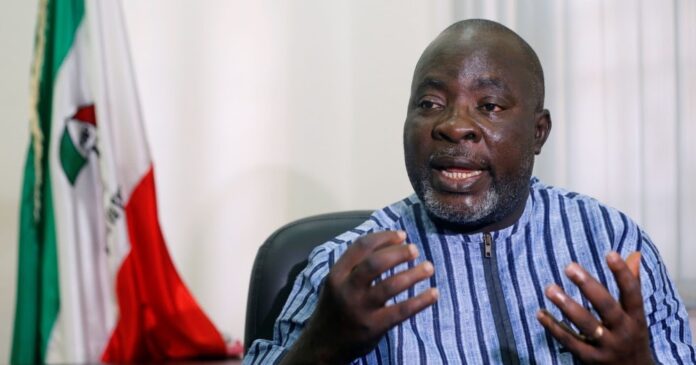
File photo of Spokesman of the opposition Peoples Democratic Party (PDP), Kola Ologbodiyan.
Peoples Democratic Party (PDP) Wednesday vehemently rejected the fresh increase in the price of fuel to N151 per litre and electricity tariff to N66 per kwh by the President Muhammadu Buhari-led Federal Government.
The opposition party described the All Progressives Congress (APC) and its government as callous, cruel and punishing.
The party demanded an immediate reversal of the prices to avert what it described as “a national crisis,” noting that “the increase will result in upsurge in costs of goods and services and worsen the biting hardship being faced by Nigerians, who are already impoverished and overburdened by APC-imposed high cost of living in the last five years.”
“Our party asserts that by increasing the price of fuel from the N87 per litre it sold under the PDP to an excruciating N151 while at the same time allowing the hike in electricity tariff from N30.23 per kwh to over N66, the APC has left no one in doubt that its agenda is to inflict pain and hardship on Nigerians to satisfy their selfish interests.
“The unjustifiable increase in the price of these essential supplies, coming barely a week after the APC brazenly posted a support for fuel price hike, while attempting to rationalise the excruciating hardship being suffered by Nigerians under the Buhari administration, has further confirmed that the APC is at the centre of the harsh policies of the Buhari Presidency.
“It is distressing that the APC administration increased the cost of essential commodities at the time the leadership of other countries are offering palliatives to their citizens to cushion the effect of the COVID-19 pandemic. It is instructive to add that our nation is doomed under the APC watch.
“We know that the APC is an unfeeling party but it is indeed shocking that it could go to the extent of approving such a hike at this trying time, when many Nigerians are struggling to afford staple foods and other necessities of life.
“Our party challenges the APC and the Buhari administration to publish the parameters with which it arrived at the increase of fuel price to N151 per litre given that with the prevailing values in the international market, the appropriate price template for domestic pump price in Nigeria ought not to be above N100 per litre.
“Our party further challenges the APC-led Federal Government to publish details of its sleazy and over-bloated oil subsidy regime, including the involvement of APC interests in the claimed under-recovery for unnamed West African countries, running into trillions of naira, while Nigerians are made to bear the burden of high fuel costs.
“Moreover, the APC and its government have failed to allow an open investigation into allegations of fuel price overcharge as well as the fraudulent subsidy regime through which over N14 trillion had allegedly been frittered by unscrupulous individuals in the APC.
“Our fear is that the APC is pushing Nigerians to the wall with its obnoxious and anti-people proclivities and we caution that nobody should misinterpret the peaceful and law-abiding nature of Nigerians as a sign of weakness.
“Our party therefore restates our call on the National Assembly to save the nation by calling the APC and its administration to order before they plunge our nation into chaos,” PDP alleged, in a statement by its National Publicity Secretary, Kola Ologbondiyan.
National Agency for the Control of AIDS (NACA) has corrected itself, saying the number of people who died of AIDS-related causes in Nigeria within the first six months of year 2020 is 20,500, rather than the 51,000 it stated in a media interview.
NACA Director-General, Gambo Aliyu, had told a national newspaper in an interview published on August 30 that the number of deaths among the People Living with HIV/AIDS (PLWHA) might worsen if the disruption to HIV/AIDS treatment persists for another six months.
“For now, we can tentatively say as of June this year, an estimated number of 51,000 people had lost their lives.
“We fear that it is due to lack of access to medication and the disruption that COVID-19 brought.
“We are likely to experience more because a recent work we did, a rigorous module, shows that treatment disruption for another six months is likely to cause double of mortality in Sub-Saharan Africa,” he had said in the interview.
But, NACA spokesperson, Toyin Aderibigbe, admitted the error and offered needed correct information.
Aderibigbe said: “The 51,000 is actually ‘lost to follow up,’ meaning, those people that registered for HIV treatment but have not been coming for treatment for the past six months due to either death, relocation or because of COVID-19 lockdown or personal decision to stop the treatment, etc.
“The estimated number of deaths is 20,500 from January to June.
“The mistake is from a programmatic language, because ‘lost’ in Monitoring and Evaluation language means ‘lost to follow up’ and not necessarily lost to death.”
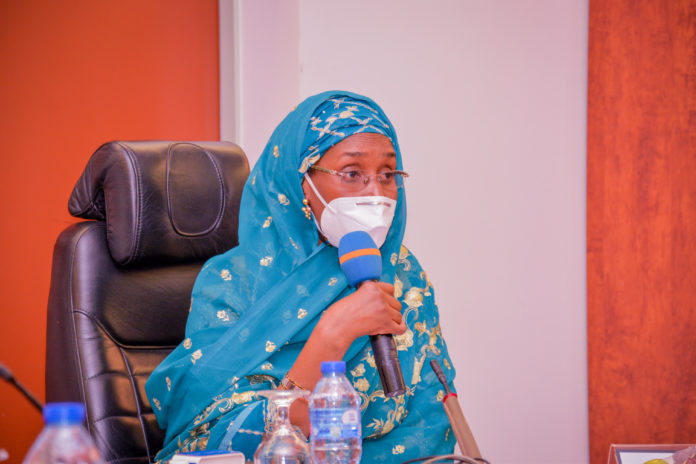
The Honourable Minister of Humanitarian Affairs, Disaster Management and Social Development, Sadiya Umar Farouq during the inauguration of the National Humanitarian Co-ordination Working Group NHCWG, on Tuesday 1st, 2020 in Abuja.
A 27-man National Humanitarian Co-ordination Technical Working Group (NHCTWG) has been inaugurated to provide technical support to the National Humanitarian Coordination Committee (NHCC) constituted by President Muhammadu Buhari to oversee all humanitarian actions in the country.
This was disclosed Wednesday by Special Adviser on Media to the Minister of Humanitarian Affair, Disaster Management and Social Development, Nneka Ikem Anibeze.
Anibeze noted that the Working Group which was inaugurated on Tuesday September 1, 2020 by the Minister of Humanitarian Affair, Disaster Management and Social Development, Sadiya Umar Farouq, is expected to enhance coordination and seamless delivery of humanitarian aid to affected communities in the country.
According to Anibeze At the minister charged the members to ensure the implementation of all NHCC recommendations related to the operationalization of the CiSEC framework and guidelines and to propose a national vision for humanitarian action.
“It is important that you understand that your Committee will not only cater to the North East but will take into context, Nigeria as a whole.
“Your Terms of Reference also include proposal of policies that will enhance coordination and seamless delivery of humanitarian aid to affected communities in the country; Ensure that CiSEC guidelines and related action plans reflect adherence to humanitarian principles and best practices while engaging all parties in crisis response situations, taking cognisance of Nigeria’s national security interests”.
Hajiya Umar Farouq also emphasized the need to ensure that functional engagements between security and humanitarian actors remain consistent with the principles under the CiSEC framework and also promote advocacy on humanitarian access, protection and logistics issues as required.
In his acceptance speech, the Chairman of The Working Group Grema Ali. who is also the Permanent Secretary overseeing the Ministry, thanked the Minister for the privilege to serve in the group.
“Thank you for finding us worthy of working in this technical group and for the confidence reposed in us. By the grace of God, we shall not disappoint you”.
The TWG is made up of critical stakeholders comprising of Commissioners in charge of Humanitarian issues in Borno, Adamawa and Yobe; heads of NEMA, NEDC and NCFRMI; representatives of Operations of the Armed Forces, the European Union Commision, United States Agency for International Development and United Nations Office for the Coordination of Humanitarian Affairs
Ahead of the September 5 re-opening of airspace for international flights, Lagos State Governor, Babajide Sanwo-Olu, Tuesday met with the management team of the Federal Airport Authority of Nigeria (FAAN).
Discussions at the meeting focused partly on actionable steps being put in place at Murtala Mohammed International Airport (MMIA) by the federal and state governments to give travellers comfort and better experience when the facility is re-opened for air traffic.
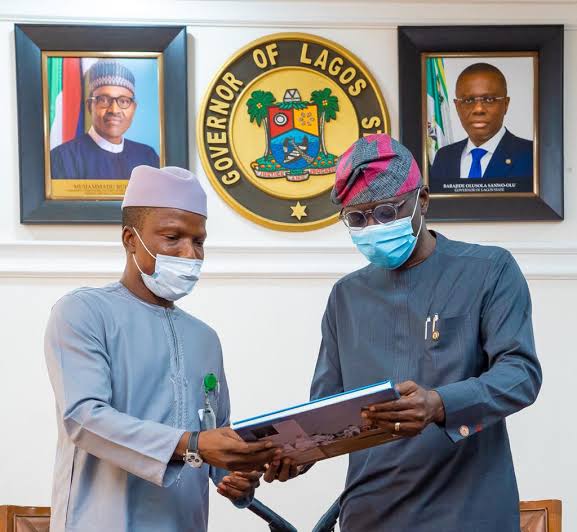
L-R: Company Secretary/Legal Adviser, Federal Airports Authority of Nigeria (FAAN), Mr. Clifford Omozehian; Director, Finance & Accounts, FAAN, Mrs. Nike Abodemi; Managing Director/CE, FAAN, Capt. Rabiu Hamisu Yadudu; Lagos State Governor, Mr. Babajide Sanwo-Olu and the Deputy Governor, Dr. Obafemi Hamzat, during a courtesy visit to the Governor by FAAN management, at Lagos House, Alausa, Ikeja, on Tuesday, September 1, 2020
FAAN team, led by its Managing Director, Rabiu Yadudu, harped on the need for state government’s interventions to ensure seamless operations at Lagos airport, which contributes 70 per cent of FAAN’s total revenue.
Yadudu used the opportunity to thank the state government for the construction of the airport road from Oshodi, noting that the intervention had strengthened the partnership between Lagos State Government and FAAN.
The managing director, however, pleaded with Sanwo-Olu to intervene in ensuring smooth safety compliance and provision of services as the airport prepared to re-open for commercial activities.
Other requests made by FAAN included: provision of BRT buses to commute passengers from car park to departure and arrival halls, expansion of strategic airport roads, and halting of encroachment on the airport land around Ajao Estate and Shasha, among others.
Responding, Sanwo-Olu said his administration has been working round the clock with the Federal Government to put in place safety protocols at the airport and drive compliance. The effort, he said, would be followed by a joint assessment of the airport facility with FAAN and other agencies.
The governor used the occasion to explain the development activities embarked on by the state government to ensure travellers have better experience, while passing through the airport, disclosing that the state had already started the construction of a world-class bus terminal close to the airport.
The bus terminal, Sanwo-Olu said, would serve as holding station for international passengers who would not be driving into the airport. He added that the bus station would be complemented with rail infrastructure to shuttle air passengers from the metropolis departure terminals.
According to him, “An airport is a gateway that defines the nation, because it is the first facility to be seen by international travellers. Murtala Mohammed International Airport is an important asset, not only to the Federal Government but also to Lagos State.
“The strategic use of this airport should necessitate that need for us to fully harness the asset and make it a bubbling destination for tourists and businessmen coming into the country.
“As a state government, we are taking complementary efforts to ensure the airport promotes business and is safe for travellers. We have started the construction of a massive bus terminal along the airport road, which will be complemented with a rail project.
“The rail project is part of the Red Line Rail project which will start from Ebute Metta and pass through Oshodi. The right-of-way of this project has been determined and we are hoping the project will start before the end of the year.”
Sanwo-Olu charged FAAN management on remodelling of the airport’s facilities to become a hub of business and tourism. He said some of the facilities installed in the airport at inception were due for modernisation and upgrading.
The governor particularly made a case for the provision of fast free internet connectivity within lounges at the airport, noting that the era of passengers sitting for long without internet access has passed.
He said the functionality of the airport must be fully explored, urging the management to invest in facilities that would drive more passenger traffic to the airport.
“Travellers across the world are looking for destinations where things they enjoy in their comfort zones are provided. When we provide services and infrastructure that will drive traffic to our airport, not only will it triple the revenue generated for the government, it will also improve the status of the airport within the continent,” he said.
The governor promised further engagements with the Aviation Minister on ways to resolve other issues around Lagos airport.
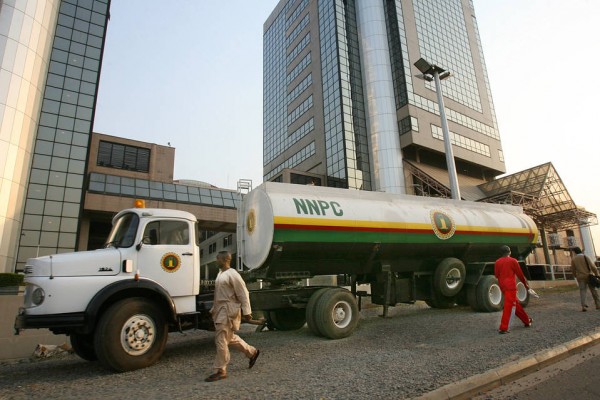
The President Muhammadu Buhari-led Federal Government Wednesday increased the depot price of Premium Motor Spirit popularly known as petrol to N151.56 per litre.
This is expected to lead to an increase in the pump price of petrol nationwide.
This was disclosed by the Pipelines and Product Marketing Company (PPMC), a subsidiary of the Nigerian National Petroleum Corporation (NNPC).
PPMC, in a statement by D. O. Abalaka, said the pump price of petrol has increased to N151.56 per litre and effected accordingly.
According to him, “Please be informed that a new product price adjustment has been effected on our payment platform.
“To this end, the price of Premium Motor Spirit (PMS) is now one hundred and fifty-one naira, fifty-six kobo (N151.56k) per litre.
“This takes effect from September 2, 2020.”
The company directed all operators to abide accordingly.
PPMC, in a statement by D. O. Abalaka, said the pump price of petrol has increased to N151.56 per litre and effected accordingly.
According to him, “Please be informed that a new product price adjustment has been effected on our payment platform.
“To this end, the price of Premium Motor Spirit (PMS) is now one hundred and fifty-one naira, fifty-six kobo (N151.56k) per litre.
“This takes effect from September 2, 2020.”
The company directed all operators to abide accordingly.
Meanwhile, the Independent Petroleum Marketers Association of Nigeria (IPMAN) has directed its members in the Southwest region of the country to begin sales of the Premium Motor Spirit (PMS) popularly referred to as petrol at N162 per litre.
The southwest Zonal Chairman of IPMAN, Alhaji ‘Dele Tajudeen in a telephone chat with journalists in Abeokuta, the Ogun state capital, said his members would be left with no other option than to dispense the product at a price of N162.
Tajudeen said, the directive followed the increase in the deport loading price of the product by the federal government, which placed a new price regime of the product at N151. 56k.
He explained that since the federal government has decided and puts the price of the product at N151. 56k, IPMAN has no option than to sell at N162 to be able to meet up with the overhead cost.
Companies in Nigeria’s mining sector including other operators in the Minerals and Metals Sector have been urged to operate within the operational guidelines in the nation’s Mining Act.
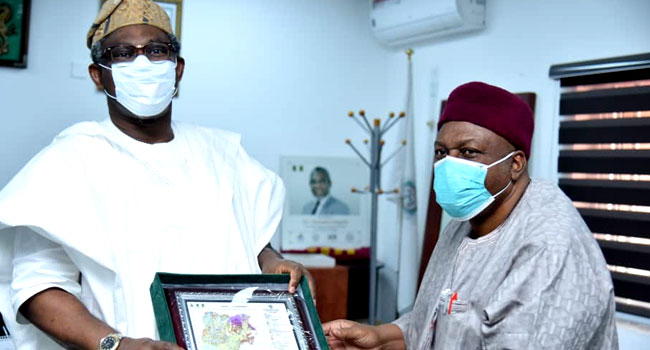
The Minister of Mines and Steel Development, Olamilekan Adegbite made the call in Abuja when he played host to the Governor of Taraba state, Darius Ishaku.
While he commended Governor Ishaku for his determination to improve the economic status of Taraba through mining and making efforts to visit the Ministry to seek clarification on development in the sector to “Know exactly what Taraba State is doing right or wrong in mineral exploration”, the Minister assured that States would be carried along in the efforts geared towards sanitizing the sector to make it viable for investment.
Adegbite noted that Taraba State is richly endowed with abundant mineral resources especially Gemstone which is a veritable source of revenue generation, but said that mining of the minerals by mining companies must follow laid down procedures including obtaining operational mining licenses as well as payment of royalties to Federal Government.
In his remark earlier, the Taraba State Governor, Darius Ishaku said the purpose of his visit was for Taraba State to be carried along by the Federal Government in its plan on mineral exploration and mining.
He said they were a lot of illegal miners operating in the state and has come to the ministry to seek ways utilizing opportunities that would place the state in the right path to benefit maximally from mining of mineral resources in the Taraba.
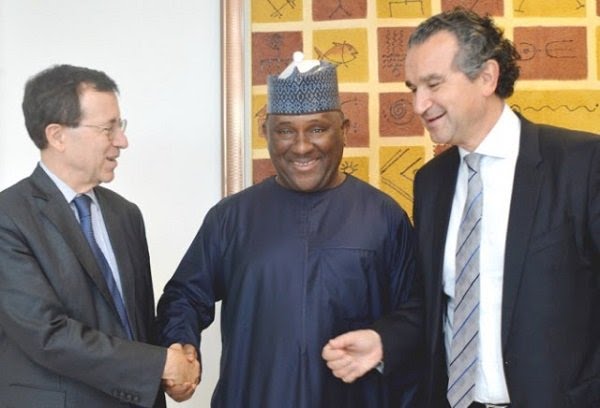
A leading Nigerian conglomerate with focus on manufacturing, infrastructure and agriculture, BUA Group, has ventured into oil and gas sector and signed a deal with France’s largest hydrocarbons group, Axens, to refine 200,000 barrels per day of crude oil in Nigeria.
Located in Akwa Ibom State, South-south Nigeria, the project is expected to see Axens license key refinery technologies to BUA Group. This was contained in a contract that was signed between both parties in France on Tuesday.
Chairman of BUA Group, Abdulsamad Rabiu, signed on behalf of his company, while the Chief Executive Officer of Axens, Jean Sentenac, did same at a ceremony presided over by France’s Minister Delegate for Foreign Trade and Economic Attractiveness, Franck Riester.
Speaking after signing the contract, Rabiu described the project as a very viable one given the economics of fuel importation in Nigeria.
“Nigeria imports 90 per cent of its petroleum products. We spend 35 per cent of our foreign exchange on importing petroleum products.
“President Emmanuel Macron has given special determination and support to this project,” Rabiu told The Africa Report.
BUA Group chairman expressed belief in the project’s sustainability, noting that the investment would pay off in the long run, as new fuel standards continue to evolve along with the climate crisis.
According to him, “It is in the DNA of BUA Group; look at our cement plants, the most sustainable in Nigeria, same with our sugar plants. This is the hard part, we cannot get this wrong. It is like in an aeroplane, you always look at who built the engine, it is the most important thing.”
Rabiu said there’s space for another project, despite the growing international glut of refinery projects, the tapering of transport fuel use globally and the strong local competition.
His projection was based on the high rate of fuel consumption in Nigeria, saying the country today consumes about 500,000 to 550,000 barrels a day of petrol and partly because of demand in the region.
He said: “We will have the marine infrastructure for easy export, and the external market for polypropylene (the other major product from the refinery) is very strong.”
Rabiu has been serving as the Chairman of the Macron-initiated Franco-Nigerian Investors’ Club.
Also speaking, Sentenac described the technologies that Axens would be licencing as a chance to breathe easier in Nigeria, with the plant having the ability to refine biofuels.
Sentenac said: “We are the world leader in the Euro 5 fuel standard; this has already reduced car pollution in Europe by a factor of 5 or 6, and it also allows Nigeria to start using the latest generation of fuel efficient engines, the first step towards fighting global warming.”
He added that his company, which makes systems to convert oil and biomass to cleaner fuels, would provide technology for the greenfield project designed to produce Euro-V fuels and polypropylene targeted at domestic and regional markets.
In his remarks, Riester said the deal would be “one of the things that will help build up the necessary intrapersonal relationships” between industrial players in the two countries, part of a wider French strategy of greater engagement in Anglophone Africa.”
The new refinery is expected to be operational in 2024. The refinery would be built using an undisclosed mix of debt and equity, with several development and commercial banks in negotiations with BUA Group.
The new project is expected to directly compete with Nigeria’s other large refinery project, piloted by Dangote Group, which would be operational by 2021.
Axens beat the US company, Honeywell UOP, which got through to the final round, according to sources close to the bid.
The bidding process was managed by energy consultants, KBR, which would also be handling subsequent rounds for the engineering and construction phase, currently underway.
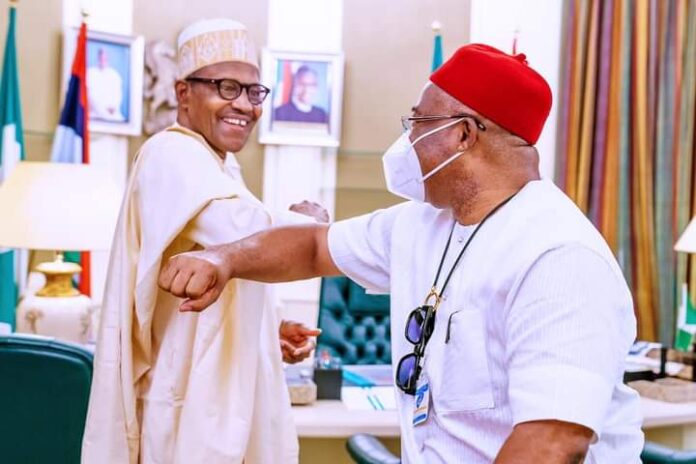
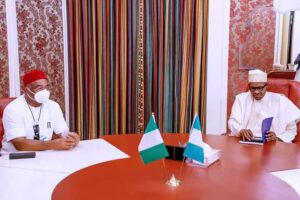
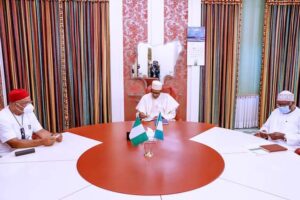
Imo State Governor, Hope Uzodimma, Tuesday met with President Muhammadu Buhari and seized the opportunity to intimate him on how his administration is working to better the lot of all Imolites.
The governor also informed the President of his administration’s readiness to ensure a free and fair election in Okigwe Senatorial zone bye-election coming up in October 2020.
Speaking with State House correspondents at the Presidential Villa in Abuja after after a closed-door meeting with Buhari, Uzodinma said the emergence of presidential candidates for 2023 general elections should not be on a tribal basis.
He said: “We are practising partisan democracy, not tribal democracy. So, the emergence of presidential candidates will come on a party-by-party basis, not tribe-by-tribe basis.”
Uzodimma dismissed the emergence of presidential candidates along tribal or ethnic lines, but argued that leadership of each political party has the sole responsibility to determine that.
According to him, “If there are some other internal factors that will form part of the considerations for parties taking decisions, of course, that will be entirely the job of the leadership of those political parties and I think that is the right thing to do.”
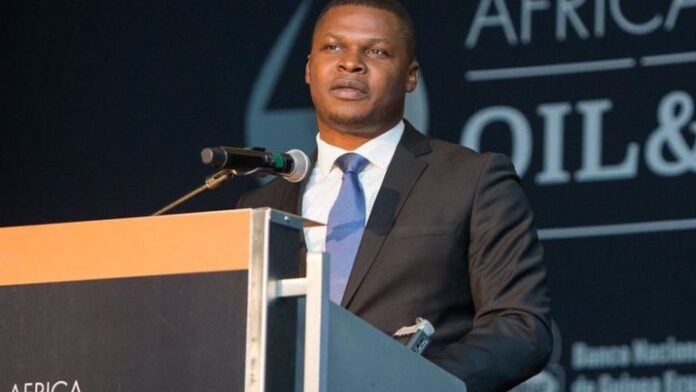
NJ Ayuk, Executive Chairman at the African Energy Chamber
African Energy Chamber’s Local Content Advisory Committee has held its first meeting, placing local content development at the core of its activities towards the continent’s economic recovery.
The meeting agreed that with several established markets like Nigeria or Angola and frontier energy markets such as Senegal or Uganda, the oil and gas sector has been supporting several of Africa’s economies.
“As a result, the African local content has become a key priority for government, regulators and industry stakeholders. Issues around the perceptions and understanding of local content dynamics were major topics of discussion.
“Key points put forward included the need for African governments and companies to develop better implementation of local content policies and come up with new approaches putting entrepreneurship and capacity building as priorities.
“From financing African starts ups, SMEs and companies to promoting an enabling business environment, it was agreed that African governments and regulators need to rise up to the task and provide for better conditions and environments for African entrepreneurs to thrive,” the committee stated.
The committee members include: the Chief Executive Officer, Shoreline Energy International, Kola Karim; Managing Director, Saipem Contracting Nigeria Limited, Walter Peviani; and Managing Director, Jagal Energy, Jorg Kohnert.
Others are: Managing Director/Chief Executive Officer, Ocean Deep Drilling ESV Nigeria Limited (ODENL), Chijioke Akwukwuma; President, Kearney Africa, Jude Kearney; President, Royal Triangle Energy Solutions, Eric Williams; CEO, Equatorial Resources, Pablo Memba; Country Manager, SpringRock Group, Ogutu Okudo; and Operations Director and President of the Executive Board, IFP Training, Rémi Mouchel.
The chamber’s advisory committee added that established African energy markets such as Congo Brazzaville, Equatorial Guinea or Gabon are still missing a pool of strong local companies across the value-chain, and especially in upstream.
“Despite producing oil and gas for decades, their environment has remained until now unfavourable to the nurturing of entrepreneurs in oil and gas, especially because of a lack of domestic financing.
“The regionalisation of the African content was identified as a key trend for the short and medium-term.
“With the roll out of the African Continental Free Trade Area (AfCTFA) and upcoming first oil and gas in many African markets, the potential to have local content move away from a pure international-local perspective is real.
“This is especially an opportunity for local companies within established markets, be it Nigerian companies regionalising the oil and gas content or South African and Kenyan companies regionalising content within the renewable energy space.
“African companies have the means and opportunities to create regional ventures and partnerships taking the African content development to a new level, and must be seizing them.
“Finally, inclusion in the workforce is set to become a major focus for the chamber and its committee, especially when it comes to promoting youth and women inclusion in the extractive industries.
“A sustainable African energy industry will only be as strong as it is inclusive, and better mechanisms and policies need to be put in place to ensure African women and youth can build successful careers in the sector.
“In that regard, upcoming producers such as Senegal, Mozambique or Uganda have a unique opportunity to truly innovate as they develop their own approach to capacity building and local content development.
“As the novel Coronavirus (COVID-19) pandemic further increases the need for localising value chains in Africa, local content development is set to become even more important for all industry stakeholders.
“Its success will ultimately depend on the nurturing of capable and patient African entrepreneurs able to raise capital and engage regionally with the right partners to build successful ventures. In such a journey, cooperation with international companies, but especially amongst African entities, will be crucial,” the committee noted.
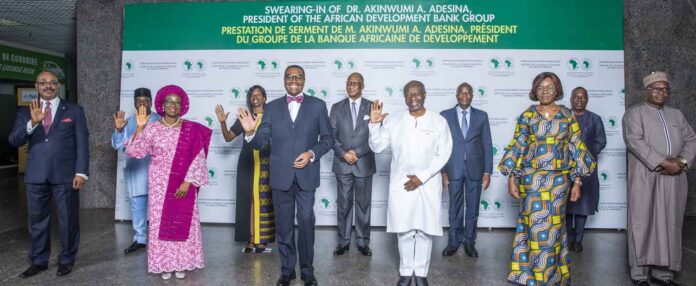
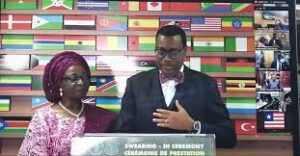
The re-elected president of the African Development Bank (AfDB), Dr. Akinwunmi Adesina has assured African leaders and stakeholders that Africa will be stronger and more resilient in his second term at the continent’s biggest lender.
Adesina, who gave the assurance in a speech during his swearing-in ceremony and oath-taking, which took place on Tuesday and broadcast virtually said:
“We’ve achieved impressive results. The Bank’s High5 programmes have impacted 335 million people. That’s what the African Development Bank – your Bank – is all about…‘people impact.’
“The COVID-19 pandemic has changed everything globally. It has thrown Africa’s growth back. The continent has lost gains and economic growth that were achieved over the last decade. Africa’s recovery will therefore be long and challenging.
“Now, we must help Africa build back boldly, but smartly, paying greater attention to quality growth: especially in the areas of health, climate and the environment.
“As we look to the future, working with the Board of Directors, the bank will pay increased attention to supporting Africa with quality health care infrastructure, and building on its comparative advantage in infrastructure.
“The bank’s infrastructure work will focus on economic infrastructure, quality physical infrastructure and quality health infrastructure.
“More than ever before, we will expand partnerships – financial partnerships, knowledge partnerships, and investment partnerships. Stronger inclusive partnerships with civil society, academia and knowledge centers of excellence.
“So, our focus will be on ‘Institution,’ ‘People,’ ‘Delivery,’ and ‘Sustainability.’ Each of these are encapsulated in the following five areas which combine with the programmatic High 5s to transform the development landscape of Africa.
“We will reach out and tilt more global capital towards Africa — joining investment hands across the globe to support the needs of the continent.
“We will build on the great successes we have had in agriculture, by scaling up technologies to reach tens of millions of farmers and supporting Africa to build competitive agricultural value chains. We will add value to what we produce in Africa, and provide creative and high-tech opportunities for massive youth engagement in agriculture and agribusiness.
“The future beckons the bank to be more agile and more selective; to scale up what’s working already and reinforce its own institutional and human capacity.
“Our bank must ensure its own long-term financial sustainability to drive Africa’s growth further, deeper and faster in the years to come. We must realise the dreams of a more prosperous Africa. A healthier Africa. A more resilient Africa. And, a more developed Africa.”
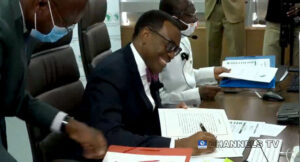
With these words, Akinwumi Adesina assumed office as the newly re-elected eighth President of the African Development Bank (AfDB) for a second term.
The event was attended by Heads of States, governors, Nigeria’s former vice president, Atiku Abubakar, and over 200 external stakeholders who joined physically and virtually.
The new AfDB Chairperson, Board of Governors and Ghana’s Finance Minister, Kenneth Ofori-Attah, administered the oath of office.
In their various tributes, African leaders took turns to commend Adesina and charged him to prepare for future tasks.
President George Weah of Liberia told Adesina: “Your reelection signifies Africa and the world’s confidence in your leadership. Liberia looks forward to continued partnership under your leadership. All the best my brother, and congratulations.”
To President Umaro Sissoco Embaló Guinea Bissau, “Having an election with 100 per cent of votes is something that could serve as a roadmap for you to forge ahead in your mission. I wish you congratulate you and your family and the African Development Bank team.”
Also, President Paul Kagame of Rwanda said: “You have our full support as you continue to lead the African Development Bank through this COVID-19 period, marked by turmoil, but also the prospect of new opportunity for our continent.
“Dr. Adesina has led the bank with integrity and purpose over the past five years. The next five years promise to be even more noteworthy. Know that you have our full support…”
Adesina, Nigeria’s former Minister of Agriculture and Rural Development, was re-elected on August 27 to serve a second five-year term, after a unanimous vote of all governors, regional and non-regional members of the bank.
The election was announced by the immediate past Chairperson of the bank’s Board of Governors, Niale Kaba, who is also Minister of National Planning of Côte d’Ivoire.
The reelection, which took place on the last day of the 2020 55th Annual Meetings of bank, was described by Adesina as historic.
Read the full text of the speech by Akinwumi Adesina here:
Being the Text of Inauguration Speech by Dr. Akinwumi A. Adesina for the Second Term in Office on September 1, 2020
Protocols,
Your Excellency, President Alassane Ouattara, President of the Republic of Côte d’Ivoire
Your Excellency, President Muhammadu Buhari, President of the Federal Republic of Nigeria
Your Excellencies, Heads of State and Governments
Excellencies former Heads of State and Governments
Chairperson of the African Union Commission
The Former Commonwealth Secretary General
Honourable Niale Kaba, the outgoing Chairperson of the Bureau of Governors of the African Development Bank Group and Minister of National Planning of Côte d’Ivoire— Madam “Quiet Force” or “Force tranquille”
The new Chairperson of the Bureau of the Board of Governors, Honourable Ken Ofori Ata, Minister of Finance of Ghana
Governors of the African Development Bank, from 81 capitals around the world
Members of the Board of Directors of the African Development Bank
Honourable Ministers, Heads of Regional Economic Communities
Excellencies, Executive Governors of States from Nigeria
Heads of diplomatic institutions
Members of staff of the African Development Bank
My friends and family members
My darling wife, Grace — my rock, my helper, my counselor, my sweetheart and my children, Rotimi and Segun, Alex, Emily, and our granddaughters, Noemi, and Audra…who was born just two days ago!
Distinguished ladies and gentlemen
I thank God Almighty for making me able to stand before you today. I give God all the glory for all He has done and continues to do in my life – a life which I have dedicated to Him for selfless service to humanity. And above all, I am grateful for the opportunity to serve Africa passionately, to the very best of my God-given ability.
I stand before you today to speak, but I speak for two people: myself and my darling wife, Grace. For without Grace (Yemisi) I will not be here today. I love you honey — thank you for always standing with me, with prayers, and encouragement. I love you!
I would definitely not be here without the extraordinary support of my country, Nigeria, and my President H.E. Muhammadu Buhari.
Mr. President, you nominated me, you stood by me, you supported me. Thank you very much Sir.
I am grateful to the Minister of Finance, the Minister of Foreign Affairs, and the entire Government and people of Nigeria who supported me.
I would not be here without the strong support of the African Union.
I would not be here without the strong support of all African Heads of State and governments, starting with my host President – H.E. President Alassane Ouattara.
I would not be here without the strong support of Africa’s retired heads of state and government, led by H.E. President Olusegun Obasanjo.
I would not be here without the youth of Africa, the elders of Africa, the women of Africa and the prayers of Africa.
I would not be here without the incredible decision of all my governors, shareholders of the Bank, from 81 countries around the world, for getting me here. I stand on their collective pedestal.
I stand tall today because of you all … your support, prayers, and good wishes inspired us.
We are grateful to you all. Thank you all very much!
Your Excellencies,
Four days ago, on August 27, 2020, I was re-elected as President of the African Development Bank Group. I wish to thank you all for your incredible support and for the mark of confidence you all collectively placed in me. You elected me with 100% of all the votes of regional and non-regional shareholders of the Bank — without any exception. This is unparalleled in the Bank’s 56-year history. And for this, I am exceedingly grateful.
What honor. What confidence. And what affirmation!
You our shareholders have showcased the African Development Bank’s exceptionally high standards and its commitment to transparency and good corporate governance. I am deeply grateful for your collective trust, confidence and support. Above all, I am greatly honored — and humbled.
Your Excellencies,
Today, a rainbow stretches from the 81 member countries of the African Development Bank across the deep blue skies of Africa, with one message — the rain is gone. Gone are the dark clouds that held us down.
I stand today, with all humility, as the President elected by all.
I will be the President for all.
Your Excellencies, ladies and gentlemen,
Over the past five years, since you first elected me as President, we have collectively charted a new way forward for Africa; one that has given stronger hope for the continent’s development.
The High5s of the Bank (Light up and Power Africa; Feed Africa; Industrialize Africa; Integrate Africa; and Improve the Quality of Life of the people of Africa) which were developed to accelerate the delivery of the Ten-Year Strategy, have been implemented with deliberateness, speed and rigor.
The High5s have taken hold on the continent and become the keys for accelerating Africa’s development. The UNDP has shown that achieving the High5s would lead to achievement of 90% of the SDGs and the Agenda 2063 of the African Union.
Your Excellencies,
Over the past five years, the Bank has delivered impressive results on these High 5s:
18 million people with access to electricity
141 million people had access to improved agricultural technologies for food security
15 million people with access to finance from private investments
101 million people with access to improved transport from infrastructure
60 million people with access to water and sanitation
We’ve achieved impressive results. The Bank’s High5 programmes have impacted 335 million people. That’s what the African Development Bank – your Bank – is all about … ‘people impact’.
Our non-sovereign operations for the private sector increased 40% from $1.5 billion in 2015 to $ 2.1 billion in 2019, with the highest level of $ 2.5 billion achieved in 2016.
We have been accountable for the climate since COP 21 in Paris. The Bank’s climate financing expanded from 9% when you elected me in 2015 to 36 % by 2019 – an increase of 400%. We’ve now targeted to reach $25 billion in climate finance by 2021.
Through the innovative and groundbreaking Africa Investment Forum in 2018 and 2019, we were able to attract a combined $78.8 billion worth of investment interests into Africa.
In every country, the Bank’s impacts are felt. We expanded our presence to 44 countries, including across fragile states. Our staff risk their lives to deliver.
And we are delivering more for women with the implementation of the Affirmative Finance Action for Women (AFAWA), to leverage $3 billion for women and women businesses.
We have launched a Gender Equality Trust Fund, the first ever in the Bank, and are advancing on gender markers for all projects of the Bank. We must continue to strongly support women. When women win, Africa wins!
Your Excellencies, Governors,
Winning for Africa’s development is what you set us up to do!
You the shareholders supported the historic General Capital Increase of the Bank, raising the capital of the Bank from $93 billion to $208 billion. This represents an increase of $115 billion, the highest in the history of the Bank.
As shareholders, you strongly supported a 32% increase in resources for the African Development Fund (ADF) 15th replenishment, to support low income countries and fragile states. Today, the ADF countries receive 700% larger resources than they did in 2015.
Your Excellencies,
We’ve delivering value for money for our shareholders. The Bank has the lowest cost among all multilateral development banks.
The African Development Fund has also been rated as the 2nd best managed concessional financing institution globally.
Over the past five years we have maintained our AAA rating by all three major rating agencies — thanks to your continued extraordinary support as shareholders.
The Multilateral Organization Performance Assessment Network, otherwise known as MOPAN, ranked the African Development Bank as number one along with the World Bank.
Publish What You Fund ranked the Bank as the fourth most transparent globally.
In terms of organizations that people wish to work for in Africa, the Bank’s position as an employer of choice increased from number 82 out of 100 top companies in 2015, to number 4 in 2018 and number 3 in 2019.
Your Excellencies,
We are also a very responsive Bank.
As COVID-19 shocks began, the Bank’s Board of Directors approved a $10 billion COVID-19 response facility to address immediate and project investments for countries, especially to contain fiscal meltdowns.
We launched a $3 billion social bond on the global market – the largest US dollar denominated social bond ever in world history.
These actions reflect our ambitions, our unshaken commitment and unyielding responsibility to support, stabilize and strengthen African economies.
The COVID-19 pandemic has changed everything globally. It has thrown Africa’s growth back. The continent has lost gains and economic growth that were achieved over the last decade. Africa’s recovery will therefore be long and challenging.
Now, we must help Africa build back boldly, but smartly, paying greater attention to quality growth: especially in the areas of health, climate and the environment.
As we look to the future, working with the Board of Directors, the Bank will pay increased attention to supporting Africa with quality health care infrastructure, and building on its comparative advantage in infrastructure.
The Bank’s infrastructure work will focus on economic infrastructure, quality physical infrastructure and quality health infrastructure.
COVID-19 opens up new opportunities and a greater sense of urgency to build up Africa’s manufacturing capacity, industrial development, and critically needed industrial value chains, that must be supported by enabling infrastructure and policies.
Special attention will be given to regional industrial value chains and the strengthening of financial markets in order to expand intra-regional trade and competitiveness, and boost the Africa Continental Free Trade Area.
Your Excellencies, let there be no doubt, the challenges ahead are still many — including poverty, inequality, fragility, high youth unemployment, significant infrastructure financing gaps, and sustainable debt management.
As we look to the future, let me assure you that the Bank will play a greater role in policy dialogues with countries. We will support sustainable debt management, boost green growth and accelerate the promotion of jobs for youth on the continent.
More than ever before, we will expand partnerships – financial partnerships, knowledge partnerships, and investment partnerships. Stronger inclusive partnerships with civil society, academia and knowledge centers of excellence.
We will reach out and tilt more global capital towards Africa — joining investment hands across the globe to support the needs of the continent.
The Bank will leverage its brand, its knowledge and resources to help do more and better for Africa. We will deepen the Africa Investment Forum and make it a critical driver for this bold investment partnership to help move Africa forward.
Your Excellencies,
We will ensure that Africa’s youth potential is fully unleashed. In this regard, the Bank will support the establishment of Youth Entrepreneurship Investment Banks. Banks that will help to mobilize and deploy capital to drive the entrepreneurship of the youth of Africa — in ways that are systemic, scalable and sustainable.
The shadows of youth unemployment and migration out of Africa must give way to a glowing light of successful youth-driven businesses across Africa. Africa’s youth must stay in Africa, develop Africa, and project Africa’s future.
We will build on the great successes we have had in agriculture, by scaling up technologies to reach tens of millions of farmers and supporting Africa to build competitive agricultural value chains. We will add value to what we produce in Africa, and provide creative and high-tech opportunities for massive youth engagement in agriculture and agribusiness.
The future beckons the Bank to be more agile and more selective; to scale up what’s working already and reinforce its own institutional and human capacity.
Our Bank must ensure its own long-term financial sustainability to drive Africa’s growth further, deeper and faster in the years to come. We must realise the dreams of a more prosperous Africa. A healthier Africa. A more resilient Africa. And, a more developed Africa.
Your Excellencies, Governors, distinguished ladies and gentlemen,
When you first elected me five years ago, I had a vision. Five years later, I have yet a vision to build on our collective achievements over the next five years. A vision to build a much stronger and resilient African Development Bank Group with the leadership and capacity to deliver greater quality impacts for the people of Africa, while remaining financially strong and sustainable.
So, our focus will be on ‘Institution’, ‘People’, ‘Delivery, and ‘Sustainability.’ Each of these are encapsulated in the following five areas which combine with the programmatic High 5s to transform the development landscape of Africa.
Build a stronger institution
Strengthen human capacity
Enhance effectiveness
Deepen quality and impact
Maintain financial sustainability
Stronger institution
Strengthen institutional capacity
Improve Human Resources
Build a top-notch IT capacity to enhance effectiveness and productivity in an increasingly digital age
Strengthen accountability, oversight and compliance systems
Promote a stronger performance culture
Strengthening human capacity
Preferred employer in Africa
Hire and retain top talent
Improve staff experiences and value propositions
Enhance career development and mobility
Enhanced Effectiveness
Improving responsiveness to clients
Decentralized decision making
More efficient systems and processes
Cost effectiveness and value for money
Accelerated Quality and Impacts
Quality operations
Enhance policy dialogues, knowledge, and debt management
Strengthen environmental and social safeguards
Accelerate development impacts
Financial Sustainability
Stabilize prudential ratios
Drive a culture of cost effectiveness
Balance development objectives and financial sustainability
Optimize the Bank’s balance sheet
Leverage global private capital to complement Bank resources
Ensure the Bank attains its own intrinsic stand-alone ‘AAA’ rating for long term sustainability
With the strong support of the African Heads of State and Governments, Governors of the Bank, Ministers of Finance, the Board of Directors and staff, we will be ready from today, yet again, to roll up our sleeves and continue our collective work to deliver even greater results on our High5s to: Light up and Power Africa; Feed Africa; Industrialize Africa; Integrate Africa; and Improve the Quality of Life of the People of Africa.
The future beckons us for a more developed Africa and a much stronger and resilient African Development Bank.
In our time, Africa must shine like the brightness of the sun.
Together … united, we will achieve this.
So, today, yet again, let us move forward, driven by the power of our mission, inspired by the primacy of our vision and emboldened by the strength of our togetherness.
Together — we are stronger
Together — we achieve more
Together — we become resilient
Together — we build a better Bank
Together — we win for Africa!
We use cookies to ensure that we give you the best experience on our website. If you continue to use this site we will assume that you are happy with it.