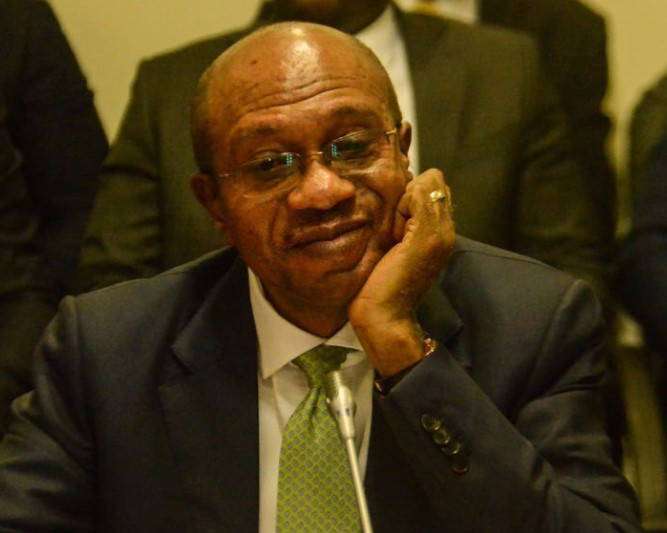
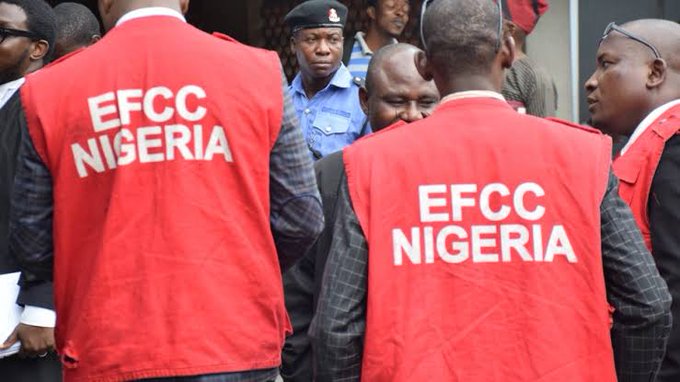
Former Central Bank of Nigeria governor Godwin Emefiele has rejected reports alleging he is among those financing terrorism in Nigeria. He described the allegation as fake and baseless, saying it was designed to tarnish his reputation and mislead the public.
Emefiele said he has never been involved in terrorism financing, has not been invited, questioned, or investigated over such claims, and has no connection with the person referenced in the allegation. He urged Nigerians to disregard the report and called on the media to verify sensitive claims before publication.
Source credit: Vanguard News — “Emefiele rejects terrorism funding allegation,” published December 7, 2025.
Policeman checking vehicle particulars of a vehicle
Policeman checking vehicle particulars of a vehicle
For years, motorists in Nigeria have endured a frustrating ritual: registering their vehicles with the state licensing offices, only to be stopped on the highway by police officers demanding an additional permit for factory-fitted tinted glass. The irony is painful — every new vehicle, including those with tinted or shielded glass, is already captured in the National Vehicle Identification Scheme (NVIS), the centralized database managed by the Federal Road Safety Corps (FRSC). So why are Nigerians being compelled to re-register with the police?
The answer lies not in necessity but in bureaucratic silos and institutional turf wars. By law, the Nigerian Police Force (NPF) retains the authority to issue tinted glass permits under the Motor Vehicles (Prohibition of Tinted Glass) Act of 1991. But in practice, FRSC already has the data. Every plate number, chassis number, and glass specification is captured the moment a car is registered. The logical solution would be for the police to access NVIS directly, extract a filtered report of all vehicles with factory-fitted shields, and enforce compliance seamlessly.
Instead, motorists are dragged through a second, often opaque process at police stations. This duplication breeds confusion, harassment, and informal revenue collection on the highways. Worse, it undermines public trust in law enforcement, turning a legitimate security concern into yet another avenue for extortion.
Yes, there are genuine worries. Aftermarket tinting is a security risk. Criminals exploit heavily darkened windows to evade detection. Police must have the authority to check and sanction illegal modifications. But this can be done through inspection points and digital cross-checks, not endless manual registrations.
Nigeria cannot claim to be pursuing digital transformation while its agencies cling to outdated silos. A simple reform could save time, money, and lives:
• Mandate FRSC to auto-flag tinted vehicles at registration.
• Provide NPF secure access to NVIS.
• Automate permit issuance electronically, with a transparent fee schedule.
This way, motorists deal with one system, not two. Police officers enforce compliance using real-time data, not roadside guesswork. And the state builds trust by showing that regulation is about safety, not rent-seeking.
The time has come to end this double compliance burden. Nigerians deserve a system where technology replaces intimidation, and where institutions collaborate rather than compete. In an era of insecurity, the Police need the public’s confidence more than ever. Simplifying tinted glass permits would be a small but powerful step in that direction.
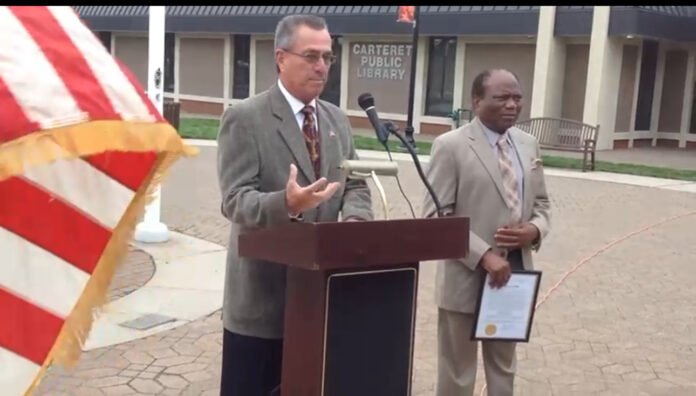
Carteret, New Jersey — On October 1st, Nigeria’s green-and-white flag once again flew proudly in Carteret Borough, New Jersey, but with an added historic touch this year. The Middlesex County Board of Commissioners officially extended its recognition of Nigeria’s Independence Day beyond Carteret Borough to the entire county. This marks a new milestone for the Nigerian community in America’s Northeast corridor.
At the heart of the celebration was Otunba Olusoga Onafowora, a respected son of Ijebu-Ode, Ogun State, Nigeria, and a cultural pillar of the Nigerian diaspora. Otunba Onafowora, who serves as a Commissioner at the Middlesex County Utilities Authority (MCUA), is a retired Permanent Secretary from Ogun State and former Bursar of Essex County College, Newark, New Jersey. He has long championed initiatives that project Nigerian culture, values, and civic contributions in the United States.
Official Proclamations: From Carteret to County
The event began with speeches at the historic Carteret Memorial Municipal Building, one of the last standing World War I memorial municipal halls in New Jersey. The Mayor of Carteret emphasized the symbolism of holding the ceremony at the monument, flanked by two lions named Liberty and Justice.
The highlight came when Ronald G. Rios, Director of the Middlesex County Board of Commissioners, presented a formal proclamation:
“On October 1, 1960, Nigeria gained its independence from the United Kingdom… In 2014, Nigeria became Africa’s largest economy, worth over $500 billion. By 2050, it is expected to be one of the world’s top 20 economies. Today, Middlesex County stands with Nigerians in recognizing their independence and their contributions here.”
Rios further acknowledged the Nigerian diaspora’s “hard work and dedication,” describing them as a community that has “helped make Middlesex County stronger through cultural, civic, and economic contributions.”
Nigerian Voices: Pride and Continuity
Taking the podium, Otunba Olusoga Onafowora expressed gratitude to the Borough of Carteret, the Middlesex County Freeholders, and the wider community for institutionalizing the annual Independence Day celebration:
“This has become a tradition in the city of Carteret. With the support of our leaders here, we are ensuring that Nigeria is recognized in this country. We thank the Board of Commissioners and extend this declaration as proof that Nigeria’s presence is felt and respected in America.”
He emphasized that such recognition serves as encouragement for Nigerians abroad and also strengthens ties with government leaders back home in Nigeria.
Community members in colorful Nigerian attire—agbadas, iro and bubas, and green-white scarves—joined in singing, prayers, and solidarity pledges. Many noted that this celebration, once limited to Carteret Borough, has now become a county-level recognition, symbolizing the growing influence of the Nigerian community in New Jersey.
Middlesex County: Economic Context
The importance of this recognition is amplified by Middlesex County’s economic weight:
• GDP (2023): $83.7 billion — larger than any Nigerian state except Lagos.
• Population: ~863,600 — the second most populous county in New Jersey.
• Per Capita Income: $75,352 — higher than U.S. national averages.
For perspective, leading Nigerian states such as Ogun, Rivers, Akwa Ibom, Imo, and Delta each have GDPs in the range of $11–20 billion, underscoring the significance of Middlesex County acknowledging Nigeria at this scale.
Cross-section of US-based Nigerians at the event
Conclusion
The 2025 celebration in Carteret was more than a cultural festival. It was a symbol of integration, recognition, and pride for Nigerians in America. With the proclamation elevated to a countywide declaration, Middlesex County has affirmed the Nigerian diaspora’s place in its multicultural tapestry.
For Otunba Olusoga Onafowora and the Nigerian community, the moment underscored a simple but powerful truth: wherever Nigerians go, the green-white-green flag flies high.
Not too long ago, a former senator of the Federal Republic of Nigeria—no longer in office, no longer surrounded by the trappings of power—was approached by a young citizen. In response to a casual exchange, the former lawmaker, with a tone of sincerity and fatigue, uttered a deeply revealing phrase:
“May Nigeria not happen to you.”
That brief remark has reverberated beyond its moment. It wasn’t just a statement—it was a confession, an admission of how quickly the illusion of safety and privilege dissolves when public office ends. It was also a mirror held up to the very soul of Nigeria’s dysfunctional socio-political system.
This man had once been part of the machinery that ran the country. He had the power to influence budgets, pass laws, and shape policy. And yet, as soon as his tenure ended, he found himself swallowed by the same dysfunction that haunts ordinary Nigerians daily: insecurity, administrative chaos, crumbling infrastructure, and the silent indifference of the system.
If a former senator can be so brutally vulnerable, what hope is there for the average Nigerian—those who never had the benefit of title, privilege, or armed escort?
This story is not unique, but it is symbolic. It exposes a fundamental failure in our approach to governance. Public office in Nigeria is too often treated as a sanctuary from the hardship of the nation, rather than as a platform to transform that hardship. For many, leadership is reduced to a fleeting window of protection and accumulation—a time to secure wealth, enjoy prestige, and escape the daily grind of the masses.
But here’s the painful truth: that escape is temporary.
When power fades, the failing system you helped uphold comes for you too. That reality should frighten anyone in leadership who still believes that political office is about securing the moment instead of changing the system.
This is a moral reckoning. We must ask: Why should any citizen have to fear that their country might “happen” to them? Why do even our lawmakers, governors, and ministers dread the same system they once managed? Why is Nigeria a place you survive while in office, but suffer once you’re out?
Until we abandon the model of power as refuge and embrace leadership as responsibility, we will remain in this cycle. We need leaders who understand that the true measure of success is not what they gain while in power, but what they leave behind after power.
A senator should not have to plead for mercy from the same country he helped lead. And a citizen should not have to pray that their nation does not “happen” to them.
Leadership must become a legacy, not an escape.
It is time to stop using the privilege of office for pecuniary gain, and start using it to build the kind of nation we won’t have to apologize for—even after we leave office.
In a powerful joint statement, the Conference of Nigeria Political Parties (CNPP) and over 75 Civil Society Organisations (CSOs) under the Coalition of National Civil Society Organisations (CNCSOs) have called on President Bola Ahmed Tinubu to take decisive action beyond the recent dismissal of Mele Kyari as Group Chief Executive Officer of the Nigerian National Petroleum Company Limited (NNPCL). The coalition is demanding Kyari’s immediate arrest and the launch of a transparent judicial inquiry into the affairs of the state-run oil company.
Speaking at a media briefing in Abuja, CNCSOs National Publicity Secretary, Dr. Agaba Iduh Fidel, described the situation at NNPCL as a “national emergency of historic proportions,” accusing the former leadership of “industrial-scale corruption, reckless mismanagement, and economic sabotage.”
While acknowledging Tinubu’s decision to relieve Kyari and his team of their duties as “bold and commendable,” the coalition argued that such a move falls woefully short of the accountability Nigerians deserve.
According to Dr. Iduh, the CNPP and its civil society partners have consistently raised alarms over corruption and opacity in the oil sector, dating back years. He cited a 2021 expose on fraudulent recruitments into the dormant Port Harcourt Refinery, which cost taxpayers billions despite the facility’s inactivity.
The coalition further accused the NNPCL under Kyari’s watch of ignoring Freedom of Information (FOI) requests between April and May 2025, which sought contract details and expenditures related to over $4 billion allegedly allocated for refinery rehabilitation projects.
“This silence wasn’t just bureaucratic—it was a deliberate act of evasion,” Dr. Iduh said. “Nigerians deserve full disclosure, not cover-ups.”
The group referenced the August 2024 fuel contamination crisis and persistent subsidy frauds as examples of how NNPCL’s leadership allegedly enabled fuel import cartels at the expense of local refining and economic stability.
Most damning, however, is the recent disclosure of ₦210 trillion in unreconciled transactions within NNPCL’s audited accounts spanning 2017 to 2023. The coalition dismissed attempts to downplay the figure as an accounting error.
“This isn’t a clerical slip—it’s a financial calamity,” the statement read. “Those responsible must be held accountable.”
They also condemned NNPCL’s current management for snubbing the Senate Public Accounts Committee by prioritizing a management retreat over a formal summons—a move the coalition branded as “insulting to the suffering Nigerian masses.”
Among other red flags cited were inconsistencies uncovered by NEITI, dubious oil swap deals, and longstanding audit queries from the Auditor-General’s office.
Despite arrests of former NNPCL officials over the $7.2 billion refinery rehabilitation scandal, the coalition lamented that Mele Kyari has not faced any investigation or legal scrutiny.
“Is Kyari above the law?” they questioned. “Does he enjoy some kind of immunity that shields him from prosecution?”
Dr. Iduh also reignited the unresolved 2015 saga involving the alleged illegal sale of 48 million barrels of Bonny Light crude, which reportedly occurred while Kyari was Group General Manager of NNPC’s Crude Oil Marketing Division. He demanded answers on who authorized the transaction, where the proceeds are, and why there’s been no prosecution.
While praising Tinubu’s resolve to reform the oil sector, the coalition insisted that cosmetic changes are not enough.
“Mere sacking is insufficient. Nigerians demand a forensic audit, a full public probe, and a total cleansing of the corrupt cabal controlling the oil industry,” Dr. Iduh declared.
The coalition warned that Tinubu’s “Renewed Hope Agenda” and his vision of a $1 trillion economy by 2030 would remain elusive without urgent and uncompromising reforms in the oil sector.
A 21-day ultimatum has now been issued to the Federal Government. If unmet, the coalition vowed to embark on nationwide protests, pursue international petitions, initiate lawsuits, and launch a global media campaign to expose the systemic rot in the petroleum sector.
“This is not a battle against individuals,” Dr. Iduh concluded. “It’s a fight for Nigeria’s economic survival, for the millions of poor citizens suffering daily, and for generations yet unborn. Mr. President, the time to act decisively is now. The nation—and the world—are watching.”
Ile-Ife, Nigeria — The Ooni of Ife, His Imperial Majesty Ooni Adeyeye Enitan Ogunwusi, CFR, Ojaja II, has extended heartfelt congratulations to renowned journalist and cultural advocate, Chief Akogun Tola Adeniyi, as he marks his 80th birthday.
Describing the milestone as more than just a celebration of age, the Ooni hailed it as a tribute to Adeniyi’s decades-long contributions to truth, culture, nation-building, and the advancement of the Yoruba people.
“Akogun Tola Adeniyi has stood tall like a towering iroko in Nigeria’s media landscape,” the Ooni said in a statement issued by his Director of Media and Public Affairs, Otunba Moses Olafare. “He has wielded his pen like a sword, speaking up for the voiceless and confronting injustice with uncommon bravery.”
Over the years, Adeniyi has become a household name through his incisive columns, essays, and public commentary, which the Ooni described as a “sacred altar for justice, conscience, and cultural revival.”
In recognition of his commitment to Yoruba heritage and his wide influence across Yorubaland, Adeniyi has been conferred with several chieftaincy titles, including:
The Araba of Remoland
Bobagunwa of Ago-Iwoye
Akogun of Ijebu
Iroko of Yewaland
Aare Agbaakin of Ede
Otunba Awubiowu of Ijebu Ife
Aare Ologundudu of Lagos
Irunmole of Isamuro
Jagun Oodua of Yorubaland
At 80, the Ooni described Chief Adeniyi as “a beacon of wisdom, a fountain of cultural pride, and an unwavering voice in the storm,” whose legacy is etched not only in ink but in the hearts of all who cherish Yoruba values and identity.
“On behalf of the House of Oduduwa and the global Yoruba family, we celebrate you as a true Iroko of our time for your life of purpose and enduring inspiration,” the monarch said.
“May the spirits of our ancestors continue to strengthen you. Happy birthday, Akogun!”
A recent statement by Senator Solomon Adeola, Chairman of the Senate Committee on Appropriations and Senator representing Ogun West Senatorial District, published under the title “The Role of Legislature in Shaping a Holistic Budget for Nigeria,” has reignited public debate over the controversial practice of legislative budget insertions—commonly referred to as “budget padding.”
In his article, the Senator defends the legislature’s role in adjusting the federal budget, dismissing terms like “padding,” “insertions,” and “constituency projects” as misrepresentations of legitimate legislative contributions to the budgetary process.
At Echotitbits.com, we fully acknowledge the constitutional role of the National Assembly in reviewing and approving the national budget. However, we must respectfully challenge the narrative that legislative insertions are harmless or beneficial acts of “democracy in action.” On the contrary, such adjustments—when carried out outside the framework of national planning—continue to undermine Nigeria’s development agenda, weaken fiscal discipline, and compromise the integrity of public finance.
The Purpose of the Envelope
Nigeria operates a Medium-Term Expenditure Framework (MTEF), an internationally recognized tool designed to align national spending with realistic revenue projections, development priorities, and sustainable debt levels.
Within this framework, each sector—education, health, roads, power—is assigned a budget “envelope” based on available funds and national strategic plans. These envelopes are not arbitrary figures. They are carefully calculated to ensure that the nation’s most pressing needs are funded first and that public spending remains sustainable.
When the legislature inserts hundreds of small, fragmented projects into the budget without reference to the MTEF, these envelopes are breached. Ministries are then forced to spread their limited resources across too many projects—many of which are duplicative, unviable, or politically motivated.
This is not merely a budgeting problem. It is a national development crisis.
A Real-World Example
Consider a real scenario:
• Let’s assume under the MTEF, ₦2 trillion is allocated to the Federal Ministry of Works and Housing.
• National Planning identifies critical projects, including:
• The Lagos–Ibadan Expressway
• The Abuja–Kaduna–Zaria–Kano Road
• However, during the budget process, the National Assembly inserts hundreds of new road projects, each valued between ₦50 million and ₦200 million, scattered across various constituencies nationwide.
The result?
• Funding for the major highways—projects vital for national connectivity and economic growth—is slashed.
• Many of the smaller inserted roads are abandoned or remain incomplete due to inadequate funding and planning.
• The national transport strategy suffers, and Nigeria’s development goals are delayed.
This is a clear example of how legislative insertions can derail national priorities, waste resources, and leave citizens stranded with half-completed projects.
Insertions vs. National Priorities
Legislative insertions are often justified under the banner of promoting equity or delivering development to neglected areas. While this may sound noble in theory, it frequently leads to waste and inefficiency in practice. Projects inserted late into the budget process are rarely subjected to rigorous planning. They often lack feasibility studies, are poorly costed, and fail to align with sectoral strategies.
We have witnessed the consequences firsthand: unfinished health centres, abandoned rural roads, ghost ICT hubs, and duplicated training workshops. Meanwhile, large-scale national infrastructure—projects with the potential to drive economic growth, create jobs, and reduce poverty—remains underfunded or delayed.
This is not equity. It is inefficiency.
Who Really Benefits?
The Senator is correct in stating that lawmakers do not execute projects directly; instead, implementation falls to Ministries, Departments, and Agencies (MDAs). However, this misses the critical issue. The core concern is how these projects enter the budget in the first place—and whose interests they ultimately serve.
Many inserted projects are awarded to politically connected contractors with little or no accountability to the communities they are meant to benefit. The result is an erosion of public trust in both the budget process and governance as a whole.
Strengthening the Budget Process
A credible budget process demands transparency, fiscal discipline, and a clear connection to national priorities. To achieve this:
1. All budget insertions must be made public, including details of their origin and justification.
2. Constituency needs should be integrated into national planning frameworks through structured dialogue—not through last-minute lobbying.
3. Sectoral envelopes must be respected, not breached.
4. The National Assembly should focus on strong oversight, ensuring that public funds deliver value for money rather than becoming vehicles for political patronage.
This is how democracy should function—not through distortions of the budget, but through accountability and measurable results.
Conclusion
The term “budget padding” is not a media invention. It reflects a budgeting culture that too often prioritizes political interests over Nigeria’s broader development goals. Rebranding insertions as “legislative adjustments” does not erase the very real consequences they have had on project execution, fiscal stability, and the welfare of ordinary Nigerians.
At Echotitbits.com, we believe that budget integrity is the cornerstone of responsible governance. If democracy is truly about the people, then our budget must reflect their genuine needs—not merely the influence of political actors.
Opinion: Nation Building Over Party Politics – Nigeria’s Path for the Next 24 Years
Nigeria stands at a crossroads where the choice between perpetual political brinkmanship and purposeful nation building will determine the fate of over 200 million people. For decades, our politics has revolved around personalities, ethnic arithmetic, and empty party slogans, rather than coherent ideologies or long-term visions. Today, no major political party in Nigeria sincerely advances a consistent political philosophy; instead, parties often serve as shifting platforms for elites to capture power, switch allegiances, and share spoils.
Given this reality, it is neither radical nor undemocratic to argue that the country’s focus over the next generation must shift decisively from party-centered politics to nation-centered governance. If those entrusted with leadership — regardless of partisan labels — dedicate themselves to genuine social and economic transformation, it should matter less whether they belong to one party or a hundred. What matters is progress, stability, and prosperity.
Critics may call this a drift toward a de facto one-party state, but it is better understood as a call for ideological unity on nation building. Nigeria desperately needs leaders who see beyond election cycles and prioritize industrialization, quality education, universal healthcare, modern infrastructure, and social justice. We need continuity in policies that work, not endless resets every four or eight years just because a new party wants to mark its territory.
History shows us that countries like Singapore and Rwanda achieved rapid development not by fetishizing partisan competition but by forging a national consensus on discipline, economic planning, and inclusive growth. In these contexts, the energy spent on political bickering was redirected into building systems, attracting investment, and delivering results.
Of course, the danger of unchecked power is real; accountability must never be sacrificed. But accountability can come through institutions — independent courts, vibrant civil society, free media — rather than the illusion of multiparty rivalry that offers no ideological choice. When opposition parties simply mirror ruling parties in opportunism, democracy becomes a hollow ritual.
For Nigeria, the question is simple: if a government is genuinely transforming the economy, empowering citizens, and entrenching good governance, why should the nation interrupt that trajectory in the name of an election that merely swaps one set of self-interested politicians for another? Why not build a broad coalition of stakeholders — across regions, ethnicities, faiths — around a shared developmental agenda and hold leaders accountable to that, rather than to party colors?
Over the next 24 years, what Nigeria needs is not a rotating door of politicians but a sustained national project: one that creates jobs, ends poverty, secures lives and property, modernizes agriculture, and raises Nigeria’s human capital. We should champion policies, not parties; performance, not propaganda; and unity, not division.
The time has come for Nigerians to reject the empty spectacle of party politics without ideology and embrace a renewed, patriotic commitment to nation building — for the sake of today’s citizens and generations yet unborn.
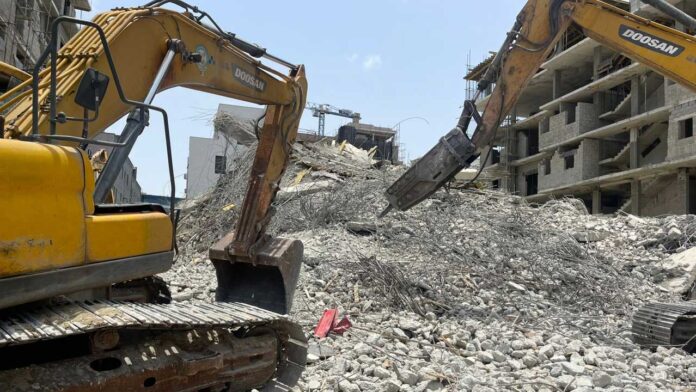
Site of the Collapsed Multi Storey Building, Banana Island, Lagos.
As rescue efforts continue in the search for missing persons at the collapsed seven-storey building at Banana Island in Ikoyi area of Lagos State, the authorities in Lagos engaged in buck-passing. The building, which was being developed by Joe Faraday, collapsed while workers were still on site on April 12, 2023.
The Lagos State government has now directed that all developments on Banana Island be placed on hold pending a comprehensive audit by the Lagos State Building Control Agency (LASBCA). The audit will also be extended to other estates and gated communities.
In a statement, the Ministry of Physical Planning and Urban Development, led by Tayo Bamgbose-Martins, revealed that the collapsed seven-floor building was unapproved by the Ministry. The statement released by Deputy Director, Public Affairs, Mukaila Sanusi, confirmed that there were no fatalities and that the few people who sustained injuries during the unfortunate incident while casting was being done were being treated.
Officials from the Lagos State Emergency Management Agency (LASEMA), who arrived on the site less than an hour after the building collapsed, claimed that only one person was missing in the incident. However, some construction workers insisted that an engineer and a 30-year-old man lost their lives, and others were yet to be found.
The management of Banana Island Property Owners and Residents Association (BIPORAL) prevented newsmen from accessing the collapsed building site, with only foreign media practitioners allowed access.
Speaking to newsmen, the Special Assistant to the Lagos State Governor, Babajide Sanwo-Olu, on Special Duty and Intergovernmental Relations, Mobolaji Ogunlende, said seven persons who sustained minor injuries were treated on the spot, without any record of major casualties, while only one person was unaccounted for. The Permanent Secretary of LASEMA, Dr. Oluwafemi Oke-Osanyintolu, reassured the public that the government was on top of the situation and would take appropriate action.
He said: “We moved in swiftly when the incident happened with all the primary stakeholders. Our response time was 10 minutes. We checked with our life detector and did not locate anybody under the debris. We were able to rescue seven people alive and only one of the persons injured was taken to a private hospital, and he’s receiving adequate care.
“Regarding other buildings, we are going to carry out a holistic investigation.”
Dr. Akingbehin Samuel, the Head of Environmental Services in Ikoyi-Obalende, provided his assessment of the environmental health of the construction site, said: “Getting here, we can say there is no biological effect in this place. So, what we have to do is that people are cordoned off, we want to take stock of people coming here.
“We are much on the ground to prevent possible contamination and spread of diseases. Residents should maintain their peace because there is no danger to their health and the environment. Everyone should remain calm and this shouldn’t be seen as a tourist centre.”
Gbolahan Owodunni Oki, the General Manager of LASBCA, has instructed the private security personnel stationed at the facility to vacate the premises, as it is now under the ownership of the Lagos State government. He oversaw the welding of all gates on the property to secure it.
Meanwhile, the former President of the Nigerian Institute of Building (NIOB), Mr. Kunle Awobodu, has decried the collapse of a building in Banana Island estate, citing it as evidence of a lack of professionalism in the country. He urged the Lagos authorities to apprehend and prosecute those responsible for the structural failure.
In an interview with The Guardian in Lagos, Awobodu expressed his disappointment that a building of such magnitude could collapse if professionals were involved in its construction and management. He also noted that the Building Collapse Prevention Guild (BCPG) has revised its tally of building collapses in Nigeria from 1974 to 2023 to 552, with Lagos State accounting for 59.06% of the incidents.
Awobodu stressed the need for the government to identify and punish those responsible for overseeing the building’s construction.
“This culture of forgiving or verbally reprimanding those who committed offences or fouled building regulations will encourage them to go back home and commit more wrongs, and it is not helping. That is why we keep having a repeat of such incidents.
“Building collapse within the most expensive terrain, a community well-organised or deemed well-organised in Nigeria sounded an aberration. Banana Island is the pride of all who admire the environment. This is a threat to the safety of human life and the value of land in one of the highly rated and secured abodes in Africa.”
“The image and reputation of those of us in the Nigerian building industry are at stake before the whole world. What excuses are we going to offer for the latest building collapse? It is unfortunate that nobody has been successfully prosecuted for building collapse offences in Nigeria.
“Quackery, compromise and impunity proceed unchecked. When human beings are not subjected to the law of consequence, misdeeds are absolved in sentiments. Alas, loss of life and property becomes a continuum,” he added.
The Lagos State government has initiated an investigation into the incident on the directive of Governor Babajide Sanwo-Olu, while stating that no fatalities occurred. In a statement released by the commissioner for Information and Strategy, Gbenga Omotoso, yesterday, it was revealed that 25 individuals were rescued from the site. Additionally, LASEMA utilized a high-precision 3-D Laser Imagery System to search for any signs of individuals trapped in the rubble, but found no evidence. Site supervisors have also conducted a roll call and confirmed that everyone is accounted for.
He said: “LASEMA has continued with the excavation of the site, using the architectural designs. The site has been divided into quadrants for a painstaking search and rescue operation.
“Presently, quadrants two and three have been levelled to ground zero, with the search operation completed. Quadrants one and four are ongoing.
“Physical Planning and Urban Development Commissioner, Bamgbose-Martins, an engineer, and Special Duties Adviser, Mobolaji Ogunlende, are co-ordinating the operations. LASEMA Permanent Secretary, Dr. Olufemi Oke-Osanyintolu, is leading the search-and-rescue efforts.
“Commissioner for Health, Prof. Akin Abayomi has visited the site and hospitals where victims of the incident were admitted.
“Of the 25 persons rescued by LASEMA, 16 with moderate injuries were admitted at General Hospital, Odan, Lagos Island and Police Hospital Falomo for treatment and care. Nine others with minor injuries, such as bruises, were treated and discharged at the site by Lagos State Ambulance Services (LASAMBUS).
“Of the 16 persons on admission, 11 were taken to Police Hospital Falomo. Some are required to come for daily follow-up and management. Three with various injuries, including blunt traumatic chest injury, knee injuries, deep lacerations and others, are on admission.
“At the General Hospital Odan, Lagos Island, there are five patients with more serious injuries.
“The state government, as a matter of policy, will be responsible for the emergency treatment and care, including the medical bills of the patients on admission, It will also provide a post-trauma counselling support and care for all victims through the Lagos MiND programme (Mental Health in Development), a free mental health counselling and support service provided by the Ministry of Health.”
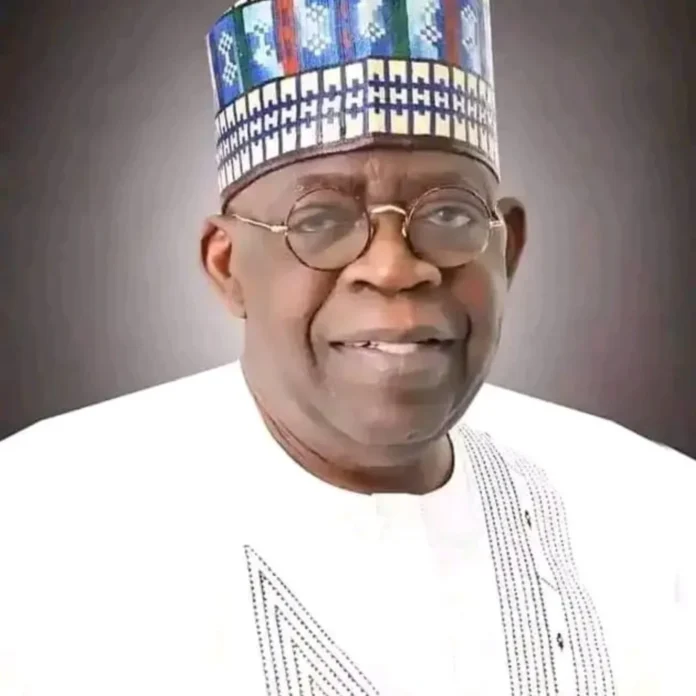
On Thursday, the All Progressives Congress (APC) announced that Bola Tinubu, the President-elect, is currently taking a break in Europe before his inauguration on May 29.
This information was provided by Felix Morka, the APC National Publicity Secretary, during an appearance on Channels Television’s Politics Today show. Morka added that Tinubu will be ready to take action as soon as he returns from Europe.
When questioned about Tinubu’s location, Morka responded, “He [Tinubu] is likely in Europe. He’s doing well. After the strenuous election period, he decided to take some time to rest.”
“Once he returns and he’s inaugurated on May 29, there will be no dulling. He’ll be saddled with the responsibility of running a country as massive and complex as Nigeria.
“I know he’ll be back in the country very shortly.”
He added, “It is working rest because even in his rest, he is also taking the time to reach out to heads of government and other levels of leadership of other countries that are vital to the agenda that he’s bringing in his new government.
“So, he’s not sleeping in his bed; he’s also in meetings regularly with all kinds of people who are travelling from other countries to see him preparatory to his inauguration. So, it’s a working visit.”
INEC declared Tinubu as the President-Elect on February 25 following his victory in the Presidential election.
We use cookies to ensure that we give you the best experience on our website. If you continue to use this site we will assume that you are happy with it.