Tag: Democracy

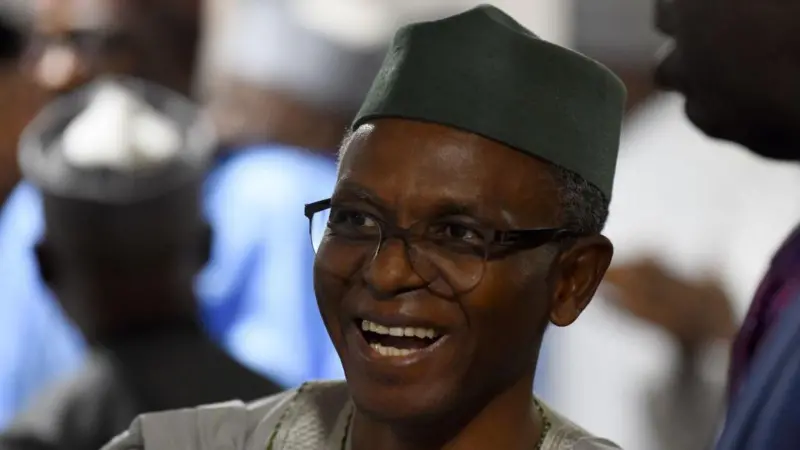
  • Controversy Erupts Over Attempted Airport Detention of Former Governor El-Rufai

    Controversy Erupts Over Attempted Airport Detention of Former Governor El-Rufai

    According to Premium Times, security agents attempted to intercept and arrest Nasir El-Rufai, the former Governor of Kaduna State, at the Nnamdi Azikiwe International Airport in Abuja. The incident occurred as the former governor was preparing to board a flight, leading to a tense standoff between his aides and the security personnel on site.

    In an update published by his media team, it was alleged that the agents attempted to seize El-Rufai’s passport without a valid warrant. The former governor has since spoken out, describing the incident as an example of “executive overreach” and a threat to the democratic rights of citizens who hold opposing views to the current administration.

    The situation has sparked widespread debate across the political spectrum, with allies of the former governor claiming the move was politically motivated. Conversely, security sources have remained tight-lipped about the specific reasons for the attempted detention, though rumors of investigations into past administrative actions continue to circulate.

    Vanguard and The Sun also covered the confrontation at the airport. Vanguard noted that “the heavy security presence caused a temporary stir at the terminal,” while The Sun featured a quote from an aide saying, “we will not allow the rule of law to be trampled upon by faceless agents.”

    Echotitbits take: This incident highlights the deepening friction between the federal government and influential political figures ahead of the 2027 election cycle. It raises concerns about the use of state apparatus for political intimidation. Keep an eye on the Department of State Services (DSS) for an official statement, as this could lead to a protracted legal battle.

    Source: BBC – https://www.bbc.com/pidgin/articles/cn87g9n875jo, February 13, 2026

    Photo credit: BBC

  • Senate Under Fire as Stakeholders Reject Changes to Electoral Act

    Senate Under Fire as Stakeholders Reject Changes to Electoral Act

    In an update published by Premium Times, civil society organizations and political analysts have voiced a strong rejection of the Senate’s recent vote on the Electoral Act amendment bill. The upper chamber’s decision to decline provisions for the mandatory real-time electronic transmission of results has sparked fears that the 2027 general elections could be compromised, as critics argue that digital transparency is essential for credible outcomes.

    The legislative move has been described as a setback for Nigeria’s democratic evolution, with experts warning that it risks erasing the progress made during the 2023 polls. Opponents of the Senate’s stance argue that without a legal mandate for electronic results, the window for manual manipulation during collation remains dangerously wide.

    This growing outcry was corroborated by Daily Post, where analyst Mahdi Shehu stated, “The Senators have abandoned the very reasons Nigerians elected them,” emphasizing that the move is an “assault” on the electorate. Similarly, The Nation reported that legal experts are already preparing for a constitutional challenge, with one lawyer noting that “the law must reflect the technological realities of the 21st century to ensure every vote counts.”

    Echotitbits take: This is a high-stakes political tug-of-war. By stripping away mandatory electronic transmission, the National Assembly is essentially opting for a “status quo” that favors established political structures over grassroots transparency. Expect this to become a primary rallying cry for opposition parties and the “Obidient” movement as the 2027 election cycle begins to heat up.

    Source: Premium Times – https://www.premiumtimesng.com/news/headlines/854928-csos-reject-senate-vote-on-electoral-bill-warn-of-threat-to-credible-elections.html?tztc=1, February 7, 2026

    Photo credit: Premium Times

  • Supreme Court Warns Judiciary Against Political Interference

    Supreme Court Warns Judiciary Against Political Interference

    In an update published by Daily Post, the Peoples Democratic Party (PDP) has echoed a growing concern that Nigerian courts are “gradually becoming politicians” due to their frequent involvement in internal party disputes. The party’s National Publicity Secretary, Ini Ememobong, called on the judiciary to maintain its independence and stay away from partisan matters to preserve public faith in the legal process. This comes as several high-profile political cases continue to saturate the Federal High Courts.

    The PDP also pointed to a “perception problem” where judicial officers are seen soliciting favors from government officials, which they claim compromises the appearance of neutrality. Legal experts have warned that if the judiciary does not self-regulate, the outcome of the 2027 elections could be decided in courtrooms rather than at the ballot box. This tension has led to calls for a reform that limits the types of political cases that can be brought before the bench.

    The issue was also covered by The Guardian and ThisDay. The Guardian reported that “the Chief Justice is facing pressure to issue new guidelines on political litigation,” while ThisDay noted that “civil society groups are planning a march for judicial independence.”

    Echotitbits take:

    The “judicialization of politics” is at an all-time high. When the court becomes the final arbiter of who leads a party, it loses its “impartial priest” status. Watch for a possible constitutional amendment aimed at limiting the court’s jurisdiction over internal party congresses.

    Source: The Guardian – https://guardian.ng/politics/adebayo-hails-supreme-court-victory-warns-inec-against-interference-in-sdp-affairs/, January 31, 2026

    Photo credit: The Guardian

  • Myanmar’s junta pushes election plan amid five-year civil conflict

    Myanmar’s junta pushes election plan amid five-year civil conflict

    Photo Credit: RFI
    2025-12-28 09:00:00

    In an update published by Punch, Myanmar’s military authorities said they intend to press ahead with an election plan, coming after roughly five years of civil conflict and political turbulence.

    Opposition groups and several international observers have questioned whether the conditions for a credible vote exist amid security operations, detentions, and restrictions on political activity.

    Echotitbits take: Elections in conflict settings often become legitimacy contests rather than dispute-resolution tools. Watch who is allowed to register, independent monitoring access, and whether violence intensifies around campaign periods.
    https://www.rfi.fr/en/international-news/20251223-myanmar-junta-stages-election-after-five-years-of-civil-war
    Source: RFI — December 28, 2025 (https://www.rfi.fr/en/international-news/20251223-myanmar-junta-stages-election-after-five-years-of-civil-war)

    RFI 2025-12-28

  • Nigeria Helped Prevent Bloodshed in Benin Coup Attempt – Minister

    Nigeria Helped Prevent Bloodshed in Benin Coup Attempt – Minister

    Photo Credit:Punch Newspapers

    Nigeria’s Minister of Foreign Affairs has revealed that Abuja played a key role in averting large‑scale bloodshed during an attempted coup in neighbouring Benin Republic. He said discreet diplomatic engagement, coordination with regional leaders and support for Benin’s legitimate authorities helped defuse the crisis before it escalated into open conflict.

    The minister noted that instability in Benin would have had spill‑over effects on Nigeria’s border communities, trade routes and security operations against cross‑border crime. Nigeria’s intervention is being presented as part of its longstanding commitment to democratic governance and stability in West Africa.

    Source: Punch Newspapers – 11 Dec 2025

    2025-12-12 10:00:00 Punch Newspapers – 11 Dec 2025 2025-12-11

  • Debate Relevance of N’Assembly to Nigerians, not ‘Jumbo Pay’ – Senate President

    Debate Relevance of N’Assembly to Nigerians, not ‘Jumbo Pay’ – Senate President

    President of the Nigerian Senate, Ahmad Lawan has challenged those who are critical of the National Assembly to a debate on the relevance of the Legislature to Nigerians rather than criticising the funding of the Assembly.

    Lawan threw up the challenge in Abuja on Friday while declaring open a retreat for top management staff of the National Assembly and National Assembly Service Commission.

    “What does the National Assembly mean to Nigerians what does the legislature mean to Nigerians.

    “We need to understand what the National Assembly or what the Legislature is to Nigerians,” Lawan said.

    According to a statement issued by the
    Special Adviser on Media
    to President of the Senate, Ola Awoniyi, Lawan called for a proper debate on what the functions of the National Assembly and Indeed the Legislature should be rather than talking about the Jumbo pay.

    “Where is the Jumbo pay? We should be looking for value for money. Without this National Assembly or the Legislature across the country, what we have is no democracy anymore. So the value of the National Assembly or the Legislature to Nigeria is democracy.

    “We always debate on Jumbo pay instead of what should be the functions and hold us responsible for what we are able to do and for what we are not able to do.

    “Ask for what you think we should be doing rather than saying ‘close the Senate’ or ‘close the National Assembly.’ Do you understand the implication of this.

    “You close the Senate, for example, not because I’m in the Senate but the Senate is a leveller. Senate is a leveller because in the House of Representatives, population is the major consideration and that’s why some States will have five or six members of the House and others will have more than 20.

    “So if you say ‘close the Senate,’ you can be sure that there will be a day when people will cry foul of the tyranny of the majority.

    “But you come to the Senate, what Kano state produces in the Senate is what Bayelsa produces – three Senators in Kano and you have three Senators from Bayelsa.

    “That gives everyone the advantage and the opportunity to be represented fully and properly and equally in the Senate. So that stabilises the system.

    “That tells you that that representation in the Senate that provides equality of states is to work to ensure that every part of this country is fully represented and protected.”

    The Senate President said the National Assembly is allocated less than one percent of the National Budget yearly.

    “So where is the remaining 99 percent. Yet instead of trying to see how the 125 billion to 128 billion naira will be utilised by the National Assembly system, what will be the output from the National Assembly, how useful are the output to the Nigerian public, we will always argue ‘cut the funding to the National Assembly.’ ‘Its bogus.’

    “I’m not here to defend the National Assembly but I’m here to encourage a debate on what the National Assembly means to us as a country or what our legislature means to us as a country and as a people.

    “If you don’t like the set of members in the Ninth National Assembly, change all of us in 2023. Get better people but help support the system to function because that is your protection,” Lawan said.

    By Tobiloba Kolawole

  • June 12 2020: Fulfilling the Promise by Hafsat Abiola-Costello

    June 12 2020: Fulfilling the Promise by Hafsat Abiola-Costello

    Hafsat Abiola-Costello
    Today marks the anniversary of June 12, 1993, the day on which a general election was held in which my father, Chief M.K.O. Abiola, was elected President of the Federal Republic of Nigeria. Now, 27 years later, tragically, his campaign promise that Nigerians would say farewell to poverty remains unfulfilled.
    My father had campaigned on a platform of restoring hope after General Ibrahim Babangida laid waste to a once vibrant economy with years of neoliberal economic policies. Within two weeks of M.K.O.’s election, on June 23, the military regime, inexplicably, annulled the results. By 1994, he was in jail, setting in motion a pro-democracy movement that continued until democracy was restored in 1999.
    After 21 years, Nigeria now ranks as the wealthiest country in Africa. It is also the most populous with 200 million people. Yet, everyone feels the reality of deepening poverty across the country, causing many to question whether the democracy movement was worth the sacrifice.
    Where did we go wrong? When that historic election was annulled, people power was ignited. Ordinary Nigerians led the struggle with their mother serving as the face of the movement. But we made a huge mistake. We thought our work was done when democracy was restored. With the benefit of hindsight, it is clear that our work had only just begun.
    M.K.O.’s date with destiny should have been June the 12th. He, my mother, and so many students and activists are now dead. But Nigerians still have the prospect of realising the dream. If there’s anything we can learn from that time, it is this: the people must again take the lead.
    In a world that is waking up to the fact that black lives matter, Nigeria’s demand for economic justice in the global system may finally be heard.
    So let this be a day on which we renew our commitment to liberate ourselves from the shackles of poverty. United, we defeated a military dictatorship. United, once again, we can really fulfill the promise and eradicate poverty in our land.
    A luta continua.