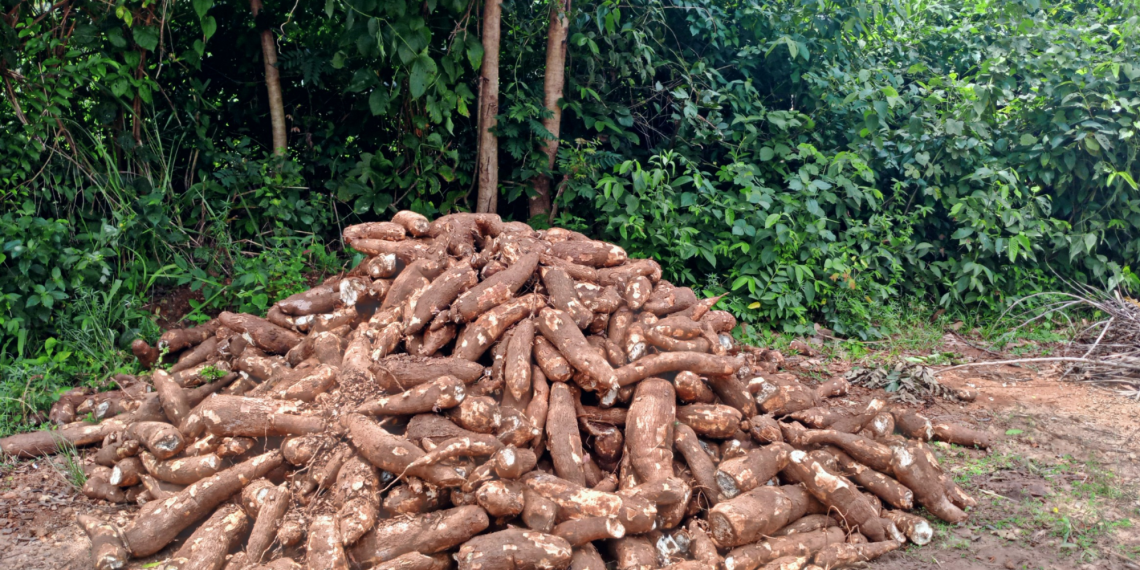
Reporting by Premium Times indicates that the Nigerian government has reaffirmed its commitment to nutrition security by aggressively expanding the cultivation of biofortified crops. The Permanent Secretary of the Federal Ministry of Agriculture and Food Security, Marcus Ogunbiyi, revealed that Nigeria now holds the largest portfolio of these crops globally. This strategy aims to combat “hidden hunger” by providing essential vitamins and minerals through staple foods like cassava, maize, and sweet potatoes.
The announcement was made during a national workshop in Kano, where officials highlighted the role of biofortification in reducing malnutrition-related illnesses. By integrating these crops into the national food system, the government hopes to improve the health of millions of Nigerians, particularly children and pregnant women in rural areas.
Stakeholders at the event emphasized the need for better seed distribution networks to ensure that smallholder farmers can access these improved varieties. The government is partnering with international agricultural organizations to provide technical support and scale up production across the six geopolitical zones.
Vanguard verified the initiative, reporting that the government is also linking biofortified crop production to the National Home-Grown School Feeding Programme. A nutrition specialist quoted in The Guardian said, “Biofortification is a cost-effective way to deliver micronutrients to the most vulnerable populations.” Daily Trust also covered the workshop, quoting a farmer who stated, “These new varieties are not just healthy; they are yielding better than our traditional seeds.”
Echotitbits take: This is a major win for Nigeria’s agricultural sector. Beyond health, this move positions Nigeria as a leader in African agritech. The next challenge will be ensuring these crops reach the market at competitive prices to displace less nutritious alternatives.
Source: Premium Times – https://www.premiumtimesng.com/agriculture/agric-news/856749-nigerian-govt-commits-to-adoption-of-biofortified-crops.html, and February 15, 2026
Photo credit: Premium Times
Tag: health
-

Nigeria Expands Food Security Drive with Largest Global Biofortified Crop Portfolio
-

Federal Government Approves 300% Increase in Uniform Allowance for Nurses
In a major update published by The Punch, the Federal Government has officially approved a 300% hike in the annual uniform allowance for Nigerian nurses, raising the payment to N80,000 effective from January 2026. This move is part of a broader strategy to improve welfare in the health sector and stem the “Japa” syndrome—the mass exodus of medical professionals to the UK, US, and Canada.
The decision comes on the heels of the Joint Health Sector Unions (JOHESU) suspending an 84-day nationwide strike. While the allowance increase is a win for the unions, the government is also looking at more holistic reforms, including updated cancer control roadmaps and better equipment distribution for primary health centers.
This development was also covered by Daily Post, which noted that “the allowance increase is a symbolic gesture of the government’s commitment to healthcare workers.” Tribune highlighted the human angle, quoting a nurse who said, “While N80,000 isn’t enough to solve all our problems, it shows the government is finally listening to the cries of the frontline workers.”
Echotitbits take: This is a classic “cooling” tactic to maintain industrial peace in the health sector. However, a uniform allowance won’t stop the brain drain alone. The real test will be whether the government can improve the actual working conditions and security of these nurses in rural areas.
Source: NigerianEye – nigerianeye.com/2026/02/fg-approves-300-increase-in-nurses.html, February 7, 2026
Photo credit: NigerianEye
-

Health Journalism: How the Reporting of Covid-19 Has Transformed the Jobs of African Journalists
By Wole Elegbede
Health journalists in Africa have been given fecund avenue to discuss the impact of Covid-19 on their works at the 16th edition of the African Investigative Journalism Conference (AIJC2020) hosted by the Journalism Programme of the University of Witwatersrand, Johannesburg, South Africa.
This year’s conference (October 6-30) holds virtually for the first time because of coronavirus concerns, and boasts of being the African continent’s biggest gathering of journalists. The conference deals with varied topics where the journalists shared experiences and learn new skills, techniques and tools to enhance their work.
On 13th October 2020, there was a session on the topic “Journalism in the time of Covid” which dwelt on those issues and provided solutions on how journalists can navigate the complexities of reporting the virus. The session’s panel was moderated by Mia Malan, Editor-in-chief/Executive Director of Bhekisica Centre for Health Journalism in Johannesburg, South Africa, who opened up on the core issue of how the pandemic forced journalists to become emergency health reporters to “report on science research results and health policies that they were previously unfamiliar with”. She then posed thought-provoking questions like “Is this kind of situation good for health journalism or does it lead to misinformation, and how have business, investigative and political journalists cope with the situation?”
Ferial Haffajee, influential South African journalist well-known for business, investigative and political reporting before the outbreak of the virus and who has never reported on a pandemic before now, said after her dive into reporting Covid-19 pandemic, she discovered the stereotype about the health beat as “soft” was wrong, adding that it is “probably the most vital of the beats; it’s literally a matter of life and death”.
Hafajee has been able to overcome the challenges by her sheer resoluteness, and the epidemiological course she undertook in July this year in India together with other journalists from across the world. Journalists from 18 African countries participated in the training and a third of the total number of participants are non-health journalists.
“For me, that (epidemiological course) is the way to go because it used every single technology, and then together with people like Dr. Taryn Young (an epidemiologist), it taught us how to ensure that we knew about vaccine trials, how to ensure that we understood the signs and that has been completely invaluable to me”, she opined.
While on coronavirus beat, Haffajee learned that reporting the virus could lend itself to the methods of conventional investigation because of the fall outs of the disease such as Covid-19 corruption, police brutality, human rights abuses and unscientific vaccine claims.
She said the reporting of Covid-19 “did become more conventionally investigative”, adding “that’s when we learned that all the billions of Rand (South Africa’s currency) that were being invested into the response in South Africa, but I know it’s also happening in the rest of Africa, was as usual being corrupted. We have to get at the top and watch how the money is planned and then how It’s spent, and for me, that’s where health reporting should go, in the next couple of years, to catch corruption before it happens”.
Asha Mwilu, a Kenyan traditional television journalist and CNN African journalist of year 2016, disclosed that coronavirus changed her life and that she had to put aside her role as an editor to go to the field to report on the virus.
“I started going to the markets and talking to people and seeing how coronavirus was affecting lives and livelihoods, and I just had to go back to the basics of reporting, and then I had to re-learn a lot of things”, she remarked.
After Mwilu resigned from her post as Editor, Special Projects, Citizen Television, Kenya, she launched Debunk Media on July 1, 2020, where she currently serves as Founder/Editor-at-large. The platform came in the midst of Covid-19 and this development changed its orientation.
“The plan was to launch Debunk in April, but we had to put it on hold”, she explains. “First and foremost, the content that we had created could not even resonate with the audience because everyone was talking about coronavirus. We had created content around issues like legalization of marijuana, feel good content around music but using data to drive those stories. What coronavirus did for us is to really center us into what Debunk Media wanted to do, and is now doing, which is putting data at the center of storytelling “.
At a time that fatigue was setting in the coverage of the pandemic, her team decided to look for areas that had not been reported on, and learned how to scrape data from the web to give new dimensions to reporting the disease.
Professor Taryn Young, an epidemiologist and Director of the Centre for Evidence-based Healthcare at Stellenbosch University, South Africa, who has collaborated effectively with journalists, said health reporters need basic knowledge of science and research assessment to be able to write critically on health, and to prevent misinformation.
“Yes, I have seen misinformation and flawed research being reported in the media”, she disclosed. “An example is linked to the big difference between association and causation. For instance, there have been reports linked to smoking, that if you smoke more, you are less likely to become inflicted with Covid-19 but these studies are reported without critically about how big was the study. Was the result big enough to give a robust answer?”
Speaking on the epidemiological course in which she was one of the hosts, Young said on a certain day at the event “there were more than 60 people online all joining to learn more about epidemiology, to learn more about different types of research designs, different types of bias, and talking about error, and also covering tips on how to critically appraise medical research”.Journalists and medical researchers need to work together to enhance the reporting of research findings, she suggests.
In her own contribution, Ida Jooste, who works for the International Media Development Organization called Internews, said Covid-19 had brought many other areas of life into storytelling and cited the instance of mathematics and statistics.
“It’s brought mathematics and statistics and dealing with numbers right into our faces every single day”, adding that this is something that journalists should learn to add to their understanding of Covid-19 reporting.
The author:
Elegbede is a Multimedia journalist and Project Director of Press Attack Monitor, a platform that exposes press freedom violations in Nigeria. He was chosen by the Journalism Program (Wits Journalism) of the University of Witwatersrand, Johannesburg, South Africa, as a fellow of the African Investigative Journalism Conference 2020 hosted by Wits Journalism. -

Sanwo-Olu’s Govt Rallies Support for Epileptic Patients
The Governor Babajide Sanwo-Olu-led Lagos State Government has charged the general public to give necessary support to persons suffering from epilepsy and desist from the act of discriminating against people with hereditary medical conditions, especially diseases that are not self-imposed.
Sanwo-Olu, who stated this through Lagos State Commissioner for Youth and Social Development, Segun Dawodu, explained that people with epileptic diseases suffer much stigma and discrimination, hence the need for a change of mindset towards them.

Lagos State Commissioner for Youth and Social Development, Segun Dawodu The commissioner made the call while declaring open a virtual training programme organised by the ministry for social workers and caregivers themed: “Sensitisation and Training the Trainers on Epilepsy and Its Management.”
Dawodu said it’s a well-known fact that epilepsy is like any other hereditary disease that affects people of all ages, noting that it’s not infectious but called for a stop to the stigmatisation and discrimination against victims of the terrible ailment.
He noted that the virtual training was designed to create awareness and also train social workers and caregivers on how to handle people suffering from epilepsy, adding that this was necessary because of their huge roles in managing and caring for sufferers.
Dawodu, therefore, urged the participants to make judicious use of the training opportunity, describing the facilitators selected for the programme as specialists in their field with years of experience about the disease.
In her contribution at the event, the Permanent Secretary, Ministry of Youth and Social Development, Yewande Falugba, stated that the awareness programme was to further enhance the knowledge of social workers and caregivers for proper handling of epileptic cases.
Affirming that the wellbeing of citizens is vital for improved productivity, Falugba maintained that the virtual training programme would be rewarding to participants as seasoned experts in the field of neuropsychology discussed important issues about epilepsy.
Also speaking at the training programme, a leading Consultant Neurologist in the state, Seyi Roberts, applauded Lagos State Government for its efforts in creating awareness about the disease, noting that it would go a long way in erasing all erroneous beliefs and misconceptions people have about the disease.
The Chief Executive Officer of Mary Special Needs Foundation, Adedoyin Oseni, expressed optimism that participants would benefit from the experience garnered by her organisation through its dedication to creating awareness on the causes, prevention and management of epilepsy, among others.
Idowu Showunmi
-

Lagos Workers: Wellness centre timely to check stress, depression – Youth Commissioner
Lagos State Commissioner for Youth and Social Development, Mr. Segun Dawodu has stated that the Lagos Sate Employee Wellness (LASWELL) centre initiative of the Governor Babajide Sanwo-Olu-led administration is timely and in consonance with the Health and Environment pillar of the T.H.E.M.E.S. Agenda, which represents Traffic Management and Transportation; Health and Environment; Education and Technology; Making Lagos a 21st Century state; Security and Governance.
Dawodu stated this at the launch of the Wellness Centre by the Head of Service, Mr. Hakeem Muri-Okunola.

He noted that the appropriate timing of the project will afford civil servants the opportunity to present themselves for medical advice in this era of ever-increasing socio-economic challenges, in addition to work-related stress and home front challenges.
READ ALSO: Lagos – Onigbongbo LCDA Chairman, Babatunde Oke Is dead
“The fact that the rate of depression, hopelessness and lack of self-actualisation has assumed unprecedented dimension in our society today is enough to invest in the system. As a responsible government, we are taking this step to nip the development in the bud”, Dawodu added.
The Permanent Secretary, Ministry of Youth and Social Development, Mrs. Yewande Falugba explained that the Lagos State Employee Wellness Centre (LASWELL) was set up for the mental stability and management of common mental health disorders of Lagos State Public Servants.
She revealed that employees can only continue to contribute their quota to the attainment of a Greater Lagos when they are alive and in good health.
She implored Civil Servants to take advantage of the Centre as a way of regaining self-confidence, self-worth and self-actualisation, and even reintegration to the society rather than submitting to hopelessness, depression, substance abuse or considering suicide as an option.
READ ALSO:
Sanwo-Olu Commissions Oshodi-Abule Egba BRT Corridor, Unveils New Smart Ticketing System
LASWELL Centre, with the motto: “Total Wellness for Public Servants”, is located within the Folarin Coker Staff Clinic at the Secretariat, Alausa.
Services like mental health counselling, psychotherapy, initial diagnostic assessment, organisational psychology and referral, among others, will be provided by Psychiatrists, Clinical Psychologist and Social Welfare Officers.
-

Sanwo-Olu Promises to Revive Organic Farm in Badagry to Boost Food Security
Lagos State Governor, Babajide Sanwo-Olu, Friday visited Badagry, where he promised to revive a 279-hectare Avia-Igborosun Organic Farm, which was acquired by the state government in 2012 for commercial agricultural project.
He assured that his administration was ready to revive the abandoned farmland for the take-off of Lagos State Food Production Park project.
The governor disclosed that the state would be engaging private sector to secure an investment into the project, which, when completed, he said, would create thousands of direct jobs and improve the wellbeing of the residents.
READ ALSO:
Sanwo-Olu’s Wife to Mothers: Embrace exclusive breastfeeding to improve child growth
“I have been fully briefed about this project but I considered it necessary to personally embark on this journey to Badagry in order to take assessment and see what exactly we need to do in terms of intervention.
“After taking a tour of the project site, what I observed is that the entire project looks more as a job that has not been completed. Therefore, we need to improve on the interventions to the Ministry of Agriculture.
“With very minimal resources, we have seen what the ministry has done to keep the project afloat. Government will raise the resources and turn around this project to the level it should be. We will need to deploy more resources to revive and scale up all the machinery and systems put already in place. We will complete the project and open it for commercial production,” he said.
The governor added that the revival of Badagry Organic Farm and creation of more food production parks across the state were part of the strategies designed by his administration to increase food security level from 20 per cent to 50 per cent, thereby raising Lagos’ food sufficiency.
He noted that the project would give rise to similar agro-allied businesses that would open up Badagry’s economy for more growth, while also boosting its tourism business.
Sanwo-Olu said: “Lagos is a big state in terms of population, but we also can intervene in our food production value chain. What we are also trying to do with the revival of the project is that, we want to produce various agricultural products we can consume internally in order to reduce our dependence on external food sources. The Food Production Park, which we are creating across the state, will be a trigger to other value-added agricultural production our citizens can provide.”
As part of the move to turn around the Organic Farm, Sanwo-Olu promised a total rehabilitation of Igborosun Road that leads to the farm.
Some of the agricultural projects to be developed for commercial production in the organic farm include fishing, poultry, piggery and agro-forestry, among others.
Sanwo-Olu also inspected a 105-bed Mother and Child Care (MCC) recently completed by the state government in the premises of Badagry General Hospital. The MCC would be commissioned in September, the governor assured.
READ ALSO:
Edo Assembly Crisis: Tinubu berates Obaseki, says he’s dictatorial
During a tour of the hospital, Sanwo-Olu proposed an expansion of the Accident and Emergency Department. The project, he said, would take off in the next nine months.
The governor also stopped at Marina area of Badagry town, where the state government would be building a modern jetty. The project, Sanwo-Olu explained, was part of his administration’s blueprint to promote waterways transportation across the state.
Photos:

Idowu Sowunmi
-

World Diabetes Day 2018: 400 people, including children around the world at risk
By Tobiloba Kolawole
The International Diabetes Federation has urged families to learn more about the warning signs of diabetes. This was the call by members of the body around the world to mark Diabetes Awareness Month and World Diabetes Day 2018, which also held in across Nigeria last Wednesday.
In a statement, the body revealed that new research from IDF has discovered that parents would struggle to spot this serious life-long disease in their own children. Despite the majority of people surveyed having a family member with diabetes, an alarming four-in-five parents would have trouble recognizing the warning signs. One-in-three wouldn’t spot them at all. The IDF also said these challenges and recent findings underline the need for education and awareness to help people, particularly families, spot the diabetes warning signs early.
This year’s event was marked with the theme of Diabetes and the Family because the impact of diabetes on the family has been described as a big challenge to raising healthy children.
Since 1980 Diabetes cases have risen from 100million to 400 million people living with diabetes in 2018. In a television interview, a Lagos based medical doctor, Tuyi Mebawondu said: “as non-communicable disease, we are seeing a kind of pandemic of diabetes and its impact is essentially a burden on the family”.
Tuyi emphasized that parents ought to make it a priority to ensure every member of the family is tested for diabetes, including children. He stressed that early detection will help in the effective treatment and management of the disease. “The diagnosis of diabetes at the early stage is key because if you don’t pick it at the early stage you will pick it when life-threatening complication sets in” he stated.
“Our lifestyle has to change a lot. This is because as much as you want to alter your diet, as much as you don’t exercise, you smoke and live a sedentary life, the chances of having diabetes is higher” Tuyi said.
Again, diabetes has a critical impact on the organs of the body. It increases the risk of heart diseases, stroke and hypertension; in fact, it is the most common cause of blindness and amputation. Unfortunately, treating diabetes is becoming more challenging and expensive placing a burden on the family”.
LIFESTYLE CHANGES
The medical doctor advises people living with diabetes to have lifestyle changes starting with their diet. He said “the more your weight increases the more the challenge of your body using sugar, especially in type 2 diabetes. Type 2 diabetes constitutes about 90% of diabetes cases all over the world”.
DIFFERENCE BETWEEN TYPE 1 & TYPE 2
In his analysis, Tuyi explained that “the difference between type 1 and type 2diabetes is in their etiological factors, that is how they originate. Type 1 diabetes is what we call childhood-onset, which depends on insulin. In this case, the pancreas, the organ responsible for making insulin is not producing sufficient insulin”.
He further said that “In type 2 the usage of sugar at the cellular level is having challenge because the body is not taking in the sugar and as you know sugar is the biological fuel that the body uses to get energy. So because most adults have loads of sugar in their system there could be a challenge for the body to take care of those sugars”.
HOW DIABETES IMPACT ON THE FAMILY
“It could be a big challenge to diagnose or quickly spot diabetes in children. One of the signs could be a mother having to change her baby’s diaper frequently, or a child not seeing properly. If there is a family history of diabetes then it is important to screen the children for diabetes” Tuyi said.
WHY WOMEN ARE MORE PRONE TO DIABETES
Tuyi also explained why women might be more prone to diabetes than men. He said “the disease has sex and age preference. For women, it could be because women are more likely to gain lots of weight or lifestyle peculiar to women. Also, when women pass through pregnancy, they pass through what is called gestational diabetes. So that puts a lot of load on the system to process sugar. There are about 400million people living with diabetes worldwide and about $1.2 trillion is being spent in terms of direct spending for treatment.
The theme for World Diabetes Day and diabetes awareness month 2018 and 2019 is The Family and Diabetes. A two-year time frame has been chosen to best facilitate planning, development, promotion, and participation. Materials and actions that IDF will develop over the two years of the campaign will aim to raise awareness of the impact that diabetes has on the family and support network of those affected. Also to promote the role of the family in the management, care, prevention, and education of diabetes.