Category: Money

  • Monetary tightening and increasing risks cause Nigeria’s capital inflow to falter

    Monetary tightening and increasing risks cause Nigeria’s capital inflow to falter

    The investment market in the country is feeling the effects of aggressive global monetary tightening and rising political and business risks, with capital importation dropping by 20% last year according to data released by the National Bureau of Statistics (NBS). This is according to a report by The Guardian, which further describes the situation as a significant decrease from $6.7 billion in 2021 to $5.33 billion in 2022, just ahead of the country’s general election. The impact of the election on the capital inflow, which is a measure of market attractiveness, was particularly felt in Q4, with a 51.51% decrease in year-on-year changes compared to Q4 2021. In addition, the recent fall in capital importation has been attributed to increasing business risk, insecurity, political risk, foreign exchange market rigidity, and the high arbitrage between official and black markets.

    READ ALSO: Twelve-Year-Old Girl dies in Car Crash – Police

    On a state-by-state analysis, Lagos accounted for the majority of the inflow at 68% or $3.61 billion, while the Federal Capital Territory (FCT) recorded $1.63 billion or 31%. Interestingly, 27 states, including Abia, Bauchi, Bayelsa, Benue, Borno, Cross Rivers, and Delta, did not receive any inflow, and Ogun and Rivers had zero capital importation for the entire year. Production, banking, and telecommunications received the bulk of the capital, accounting for 37.01%, 24.08%, and 15.86%, respectively. Share and trading received over 5% each, while oil and gas, which used to be a major foreign investment attraction, received only 0.21% of the total inflow.

    According to economist Eze Onyekpere, the uncertainty surrounding the 2023 elections and the likely policy direction of the new administration were key factors contributing to the poor performance of capital inflow. Onyekpere, who is the Lead Director of the Centre for Social Justice, explained that the fall was a result of investors adopting a wait-and-see approach in the lead-up to the first-quarter general elections.

    READ ALSO: NCC Refutes Phone Tracking and Leakage Allegations in Obi/Oyedepo Call Controversy

    “Many investors and stakeholders wanted to see the outcome of the elections, the new policy framework and whether there would be peace in the country before committing in terms of investment,” he said.

    According to him, if the new administration follows a policy direction that investors view as favourable and provides a positive economic outlook, there is a high possibility of a rebound.

  • Customer Calls Out Interswitch, Wema Bank for Month-old Unresolved Failed Transaction

    Customer Calls Out Interswitch, Wema Bank for Month-old Unresolved Failed Transaction

    Lagos based integrated payments and digital commerce platform, Interswitch has been called out by a customer for incompetency over a failed transaction left unresolved for about a month.

    The customer, identified as Oluwatoyosi Sokeye on microblogging site, LinkedIn expressed frustration that the issue, which she described as “trivial” could remain unresolved for about a month.

    “Interswitch Group I have never seen more incompetency from any company other than yours. Your level of incompetence is very astonishing for a company such as yours. Please scrap your Quickteller as it is very very useless (sic).

    “A transaction done on the 22nd of December has not been rectified until now. Something that trivial is very very amazing that it can’t be solved” Sokeye lamented.

    While she blamed herself for patronizing the company, Sokeye demanded a quick resolution to the failed transaction carried out via the company’s Quickteller platform.

    READ: Earthquakes: Death Toll Rises in Syria, Turkey

    “I may not be significant and I don’t care but I would like the money I paid for a failed transaction to be reversed to my account as soon as possible”, adding that the company has lost a customer in her.

    Similarly, she accused Wema Bank Plc of negligence over the same transaction, which is believed to involve the two companies.

    “Wema Bank Plc I guess you people are already full and have now become too pompous to work on a failed transaction that happened at your end on the 22nd of December.”

    In a swift reaction, Interswitch Group, through its official account on LinkedIn responded to Sokeye promising to address her situation.

    “This is certainly not the nature of feedback we look forward to reading about our solutions and services, and for this experience, we apologize to you unreservedly.

    “Please rest assured that we are keen to get to the core of the issues and to make this right as soon as possible”, the company stated.

    While the company has resolved Sokeye’s failed transaction issue after about a month, the incident is one of many frustrating experiences faced by customers of financial and payments companies in Nigeria.

    According to a report published in August 2021, The Cable quoted Central Bank of Nigeria (CBN) Governor, Godwin Emefiele saying “commercial banks have refunded N89.2 billion to customers over various financial-related complaints from 2012 to June 2021.

    In a press statement titled– CBN Revises Timelines for Dispense Errors, Refund Complaints, published June 1, 2020, the apex bank mandated that failed “Automated Teller Machine (ATM) transactions,” when customers used their cards on their bank ATMs, would now be instantly reversed from the current timelines of three days.

    According to the statement, where instant reversal failed due to any technical issue or system glitch, the timeline for manual reversal should not exceed 24 hours.

    READ ALSO: Controversial Actor Accuses 2baba of not Giving Scholarship to Sound Sultan’s Children

    The June 2020 statement reads below:

    “The Central Bank of Nigeria (CBN), in its determination to further enhance service quality, particularly quick refunds when customers experience failed transactions, dispense errors or disputes, has revised timelines for reversals and/or resolution of refund complaints on electronic channels, with effect from June 8, 2020, as follows:

    1) Failed “On-Us” ATM transactions (when customers use their cards on their bank’s ATMs) shall be instantly reversed from the current timeline of three (3) days. Where instant reversal fails due to any technical issue or system glitch, the timeline for manual reversal shall not exceed 24 hours.

    2) Refunds for failed “Not-on-Us” ATM transactions (where customers use their cards on other banks’ ATMs) shall not exceed 48 hours from the current 3-5 days.

    3) Resolution of disputed/failed PoS or Web transactions shall be concluded within 72 hours from the current five (5) days.

    4) All banks are directed to resolve backlog of all ATM, POS and Web customer refunds within two weeks starting June 8, 2020”.

  • Local investors fear ‘forceful takeover’ by foreigner, against converting dividends to shares

    Local investors fear ‘forceful takeover’ by foreigner, against converting dividends to shares

    Local investors have expressed fear that economic challenge in Nigeria, said to have continued to dampen investment drive and trigger apathy in the Nigerian capital market since the 2016 recession and now fueled by the effect of COVID-19 lockdown may lead to a forceful takeover of investments by foreigners.

    The Chief Research Officer of Investdata Consulting Limited, Ambrose Omordion said if the Federal Government fails to make Forex available to foreign investors to repatriate their dividend, it would not only push local investors away from multinationals operating in Nigeria, it would also increase the quantum of unclaimed dividend in the capital market.

    “If they find it difficult at the Forex market, they may decide to buy more shares with the money and if this happens, Nigerian investors will be short-changed while foreign investors will eventually take over the companies.

    Omordion exercised fear about the unhealthiness of the situation for the market and urged that local investors must be encouraged to participate actively in multinational firms to create more wealth for the country.

    The fear is might be valid as a research by The Guardian revealed that foreign investors constitute a large proportion of unclaimed dividends in multinational firms listed on the Nigerian Stock Exchange (NSE) such as Nestle, Unilever, and Nigerian Breweries, among others.

    It was further reported that shareholding structure of Nestle Plc, the biggest multinational company on the NSE showed that Nestle S.A Switzerland controls 66.50 per cent, while Stanbic IBTC Nominees hold 6.28 percent. Free float (Others) constitute 27 per cent. For Unilever Plc, Unilever Overseas have 75.96 per cent stake Stanbic IBTC Nominees control 5.01 per cent, while 19.03 per cent is free float.

    “The Securities and Exchange Commission (SEC) and NSE have been working hard to reduce the quantum of unclaimed dividend so that people will have access to their return on investment.

    “Government should find a way to make sure that these people have access to Forex, even if they want to invest, it should be a fresh investment. Before now, they find it easy to repatriate their money and that is why they can invest more because they know that they are getting good returns from Nigerian companies” Omordion said.

    Sunny Nwosu, the founder of the Independent Shareholders Association of Nigeria (ISAN), said local investors are ready to sell off their shares to foreign investors at any additional value on the share price.

    “If they add N10 or N20 to the value of shares, Nigerians will sell because there is much hunger in the land, most of these retail shareholders have no money to meet needs of their families.

  • Telcos suspend withdrawal of bank transfer service as CBN, NCC okays N6 per transaction

    Telcos suspend withdrawal of bank transfer service as CBN, NCC okays N6 per transaction

    Planned withdrawal of Unstructured Supplementary Service Data (USSD) short code service that enables bank transfer from mobile device, has been suspended by telecommunications operators in the country.

    The withdrawal of the said suspension of service, which was to take effect from Monday, March 15, came as the Central Bank of Nigeria (CBN) and Nigerian Communications Commission (NCC) announced that bank customers would begin to pay N6.98 kobo per USSD transaction as against N4.

    The telco’s decision to suspend the USSD bank transfer service was justified by the failure of banks and other financial service providers to remit the sum of N42 billion debts incurred by banks in the last eight months through the use of the service.

    But at a meeting of stakeholders on Monday evening in Abuja by the Minister of Communications and Digital Economy, Dr. Isa Pantami, the telcos agreed to suspend service withdrawal.

    All parties at the meeting on Monday agreed that effective March 16, USSD services for financial transactions conducted at DMBs and all Central Bank of Nigeria (CBN) licensed institutions would be charged at a flat rate of N6.98 per transaction. The agreed new price regime now replaces the current N4 per session billing.

    The Acting Director, Corporate Communications, Central Bank of Nigeria (CBN), Osita Nwanisobi, and the Director of Public Affairs at NCC, Dr. Ikechukwu Adinde, said in a joint statement that the new approach will ensure transparency and same cost, regardless of number of sessions per transaction.

    With the new USSD price structure, there is now a flat fee per USSD session however long or whatever the number of messages making up the session.

    Before this new rate, a session usually last 20 seconds, meaning that for each session N4 is charged, even if the transaction is not completed or failed along the line. But in this new rate, 20 seconds session has been abolished, and no cost implication until a transaction is completed.

    According to CBN’s Nwanisobi and NCC’s Adinde, the new USSD charges will be collected on behalf of MNOs directly from customers’ bank accounts. It pointed out that banks would not impose additional charges on customers for the use of USSD Channel.

    On the N42 billion USSD service debt owed by banks, stakeholders came to terms on settlement plan for outstanding.

    The statement restated DMBs and MNOs’ commitment to strategies that lower cost and enhance access to financial services.

    “With the above resolutions, the impending suspension of DMBs from the USSD channel is hereby vacated. Therefore, DMBs shall no longer be disconnected from the USSD channel.

    “The general public is hereby reminded that the USSD channel is optional, as several alternative channels such as mobile apps, Internet banking and ATMs may be used for financial transactions.

    “The CBN and NCC shall continue to engage relevant operators and all stakeholders to promote cheaper, seamless access to mobile and financial services for all Nigerians,” the statement read.

    A source at the meeting told The Guardian that the two sectors agreed on N1.63k price and N4.50 price cap while a flat fee of N6.98k will be for the transaction.

    According to the source, banks will now charge customers for the USSD transaction done on their accounts and settle the telecom operators.

    He said the two parties also agreed to work together to deepen and expand digital financial inclusion of the Federal Government and come out with modalities and strategies on USSD.

    Stakeholders who attended the meeting included the Deputy Governor, Financial Systems Stability Central Bank Of Nigeria, Aisha Ahmad, who represented the CBN Governor, Godwin Emfiele; Access Bank Group MD, Herbert Wigwe, Chairman of the Committee of Bank CEOs; MTN Nigeria CEO, Karl Toriola; Airtel Nigeria CEO, Segun Ogunanya; 9mobile Executive Director, Abdulrahman Ado; the EVC of NCC, Prof. Umar Danbatta; and Executive Commission, Technical Services, NCC, Ubala Maska and among several banking and telecom stakeholders.

  • Nigeria National Assembly Passes N13.5trn 2021 Budget, N500bn Higher than Initial Proposal

    The Senate on Monday passed the 2021 Appropriation Bill of N13.5 trillion.

    This followed the adoption of the report of Senate Committee on Appropriations at plenary.

    The News Agency of Nigeria (NAN), reports that President Muhammadu Buhari had on Oct. 8, presented the 2021 budget of N13.08 trillion to the joint session of the National Assembly for approval.

    Similarly, the House of Representatives also passed the 2021 budget of N13.5 trillion for the Year 2021 has been passed by Nigeria’s National Assembly on Monday ahead of the Christmas and New Year break.

    READ ALSO:

    COVID-19 Second Wave: Lagos Restricts Church Gathering Again, Bans Concerts, Others

    The passing of the budget, which followed consideration of a report by the committee on appropriation is N500bn higher than the N13.08 Trillion earlier presented before the joint session of the National Assembly by President Muhammadu Buhari.

    Details of the budget include about N6 Trillion allocated for recurrent expenditure, N4.2 trillion for Capital expenditure and N3.32 Trillion for Debt servicing.

    READ ALSO:

    SIM registration: FG Backtracks on NIN Retrieval Fee

    Presenting the report on the floor of the house, Chairman of the Committee on appropriation, Alhaji Aliyu Betera, while presenting the committee’s report on the floor of the House confirmed that sectors with highest allocation in the 2021 Appropriation Bill includes Defence with about N840bn (eight hundred and forty Billion naira); education with over N545bn (five hundred and forty five Billion naira), Police Affairs about N438bn (four hundred and thirty eight Billion naira) while health sector received over N380 (three hundred and eighty Billion naira.)

    The nation’s 2021 budget estimate is based on a $40 per barrel assumption, with crude oil production at 1.86million barrel per day.

  • Ogun revises 2020 budget from over N449b to N280b

    Ogun revises 2020 budget from over N449b to N280b

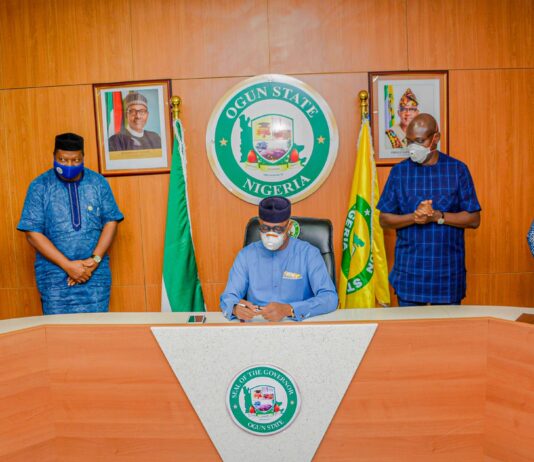
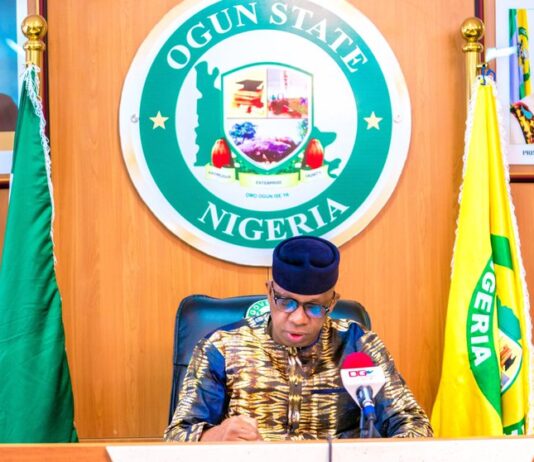
    The Ogun State Governor, Prince Dapo Abiodun on Wednesday signed Today into law the Revised 2020 Appropriation Bill, which reduced the state’s budget from 449.97 billion Naira to 280 billion Naira.

    In a statement by the Governor, the revision of the Budget which was presented to Abiodun by the Speaker of the Ogun State House of Assembly, Rt. Hon. Olakunle Oluomo, was due to the economic effects of the COVID-19 pandemic.

    “I appreciate our Lawmakers for taking State matters as a priority of office. This, the Executive will work to compensate with a focus on critical sectors that impact positively on our people”, Governor Abiodun said.

  • CBN demands power to freeze accounts linked to criminals; credit tribunal

    CBN demands power to freeze accounts linked to criminals; credit tribunal

    The Central Bank of Nigeria (CBN) Wednesday demanded statutory powers from the Nigerian Senate to enable freeze bank accounts that are linked to criminal suspects.

    This demand was made on behalf of CBN by the Director, Legal Services, Mr Kofo Salam-Alade, who appeared before a Senate Committee Hearing for a new Act seeking to replace the Banks and Other Financial Institutions Act (BOFIA) of 2004.

    The lawmakers have commenced the process of repealing/replacing BOFIA 2004 with the re-enactment of BOFIA 2020. However, a particular omission in the new bill has the CBN worried.

    In his presentation to the committee, Salam-Alada pointed out that the new BOFIA bill has ‘inadvertently’ omitted a clause that should normally grant the CBN Governor the power to freeze any bank accounts linked to criminals, subject court order.

    In 2004, the BOFIA Act had contained this clause. However, the new bill seeking to re-enact BOFIA does not have it. Interestingly, this new bill has passed its second reading at the senate, meaning that it could soon become law.

    According to Salam-Alade, the clause should be re-introduced into the new BOFIA bill in order not to frustrate the CBN’s fight against fraud and other financial crimes.

    “This omission erodes the powers of the CBN and creates a huge gap in the regulatory and resolution framework. Therefore, we propose that the extant provisions should be reinstated,” Salam-Alada argued.

    Also, the CBN director called on the lawmakers to consider the creation of a credit tribunal saddled with the responsibility of addressing persistent issue of non-performing loans in the banking sector.

    Salam-Alada explained that such tribunal will fast-track the recovery of loans from banks and other financial institutions through the enforcement of rights over collaterals.

    “As part of measures to address the role of nonperforming loans, we propose the creation of a credit tribunal. The overarching objective is to create an efficient regime for the recovery of eligible loans of banks and other financial institutions and enforcement of rights over collateral securities.

    “Several new types of licensed institutions have entered the Nigerian financial services sector since the enactment of the 1991 Act. These include the non-interest banks, credit bureaux, payment system service providers, among others. There is a compelling need to introduce new provisions in the bill to address the unique peculiarities of these institutions”, he said.

    As a matter of importance to the Apex bank, Salam-Alade also raised the issue of intervention, pointing to the committee the omission of  power granted the CBN to intervene and rescue a failing bank in the new BOFIA bill.

  • Finally, US Charges Hushpuppi to Court, Accuses Him of Frauds, Money Laundering

    Finally, US Charges Hushpuppi to Court, Accuses Him of Frauds, Money Laundering

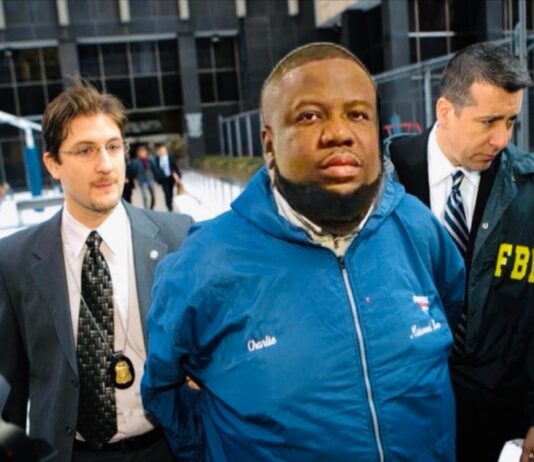
    Government of the United States of America (USA) has finally charged Ramon Abbas Olorunwa Igbalode popularly known as Ray Hushpuppi to court in Los Angeles for allegedly committing frauds and laundering ‘millions of dollars from cybercrime schemes.’”

    The government, in a comprehensive affidavit on Friday by the US Department of Justice, said Hushpuppi carried out business email compromise frauds that targeted US law firm, a foreign bank and an English Premier League soccer club.

    The charges against Hushpuppi compiled by a Special Agent of the Federal Bureau of Investigation (FBI), Andrew John Innocent, was filed before the US Magistrate Judge, Honourable Rozella Oliver.

    Though the affidavit discussed several fraudulent schemes involving Hushpuppi, it failed to disclose the identity of the law firm, foreign bank and the English Premier League club he allegedly defrauded.

    If found guilty, Hushpuppi may end up spending many years in prison in the US.

    The affidavit reads in part:

    “RAMON OLORUNWA ABBAS is a Nigerian national living in the
    United Arab Emirates (the “U.A.E.”), whose social media accounts frequently
    show him in designer clothes, wearing expensive watches, and posing in or with
    luxury cars and charter jets.

    “The FBI’s investigation has revealed that ABBAS finances this opulent lifestyle through crime, and that he is one of the leaders of a transnational network that facilitates computer intrusions, fraudulent schemes(including BEC schemes),1 and money laundering, targeting victims around the world in schemes designed to steal hundreds of millions of dollars.

    “ABBAS participated in these fraudulent schemes and money laundering in coordination with multiple coconspirators, including the persons referred to herein as Coconspirator 1 and Coconspirator 2.

    “This affidavit discusses several fraudulent schemes involving
    ABBAS. First, messages found on the iPhone of Coconspirator 1 (reviewed
    pursuant to a federal search warrant issued in this District) reflect that ABBAS, Coconspirator 1, and Coconspirator 2, with others, committed a BEC scheme that defrauded a victim in the United States of approximately $922,857.76, including 1 BEC fraud schemes often involve a computer hacker gaining unauthorized access to a business-email account, blocking or redirecting communications to and/or from that email account, and then using the compromised email account or a separate fraudulent email account (sometimes called a “spoofed” email account) to communicate with personnel from a victim company and to attempt to trick them into making an unauthorized wire transfer. The fraudster will direct the unsuspecting personnel of the victim company to wire funds to the bank account of a third party (sometimes referred to as a “money mule”), which is often a bank account owned, controlled, and/or used by individuals involved in the scheme based in the United States. The money may then be laundered by wiring or transferring it through numerous bank accounts to launder the money, or by quickly withdrawing it as cash, by check, or by cashier’s check, approximately $396,050 that ABBAS, Coconspirator 1, and Coconspirator 2 laundered while Coconspirator 2 was in Los Angeles, California.

    “Second, ABBAS and Coconspirator 1 conspired to launder funds intended to be stolen through fraudulent wire transfers from a foreign financial
    institution (the “Foreign Financial Institution”), in which fraudulent wire transfers, totaling approximately €13 million (approximately USD $14.7 million), were sent to bank accounts around the world in February 2019. Coconspirator 1 conspired with the persons who initiated the fraudulent wire transfers, and also conspired with a number of others, including ABBAS, to launder the funds that were intended to be stolen. ABBAS, specifically, provided Coconspirator 1 with two bank accounts in Europe that ABBAS anticipated would each receive €5 million of the fraudulently obtained funds.

    “Other communications between ABBAS and Coconspirator 1 indicate
    that, in addition to these schemes, ABBAS and Coconspirator 1 conspired to launder tens, and at times hundreds, of millions of dollars that were proceeds of other fraudulent schemes and computer intrusions, including a fraudulent scheme to steal from an English Premier League football club.
    III. STATEMENT OF PROBABLE CAUSE
    A. Identification of ABBAS.

    “Analysis of Coconspirator 1’s iPhone and other online accounts showed that Coconspirator 1 operated and tasked money mule crews for a number of fraudulent schemes, including BEC schemes and cyber-heists. Analysis also
    showed that Coconspirator 1 communicated with the U.A.E. phone number +971543777711 (“Phone Number 1”) about multiple fraudulent schemes and money laundering. As described below, Phone Number 1 was one of the phone numbers ABBAS used during 2019 and 2020.

    “Based on my review (pursuant to federal search warrants obtained in
    this District) of data from Coconspirator 1’s iPhone and from an online account connected to that phone (the “Online Account”), other law enforcement personnel’s review of that digital data, and from discussions with United States Secret Service (“USSS”) and FBI personnel, I know the following:

    “Coconspirator 1’s iPhone listed Phone Number 1 (+971543777711) with the contact name “Hush.” The phone also contained a contact for Snapchat username “hushpuppi5,” which listed the Snapchat contact name “The Billionaire Gucci Master!!!”

    “Searches of Phone Number 1 and the contact name “Hush” in Coconspirator 1’s iPhone revealed messaging conversations between “Hush,”
    using Phone Number 1, and Coconspirator 1. (For ease of reference, communications with this moniker and Phone Number 1 are referred to as communications with ABBAS in the remainder of this affidavit.)

    “In or around December 2019, April 2020, and June 2020, I reviewed the publicly viewable Instagram account of “hushpuppi” at www.instagram.com/hushpuppi. Based on information available on the profile page, the user of that account made more than 500 posts and had 2.3 million followers as of June 2020.

    “This Instagram account included numerous publicly viewable images
    of a man who appeared to be ABBAS, based on comparisons to photographs of ABBAS in passports and other identification documents referenced below inparagraphs 16.c to 16.c.iv. Hundreds of these images on the Instagram account showed ABBAS in designer clothing and shoes, posing on or in luxury vehicles, wearing high-end watches, or possessing other luxury items, indicating substantial wealth.

    “For example, on June 6, 2020, ABBAS posted a photograph of
    a white Rolls Royce Cullinan that included the hashtag “#AllMine.” On February 27, 2019, ABBAS posted a photograph of himself in front of two vehicles, one of which he described as his new Rolls Royce Wraith. Based on review of publicly available pricing information, the starting price for each of these vehicles is approximately $330,000.

    “More than two dozen images showed ABBAS in front of, on top of, or inside other luxury vehicles, including multiple models of Bentley, Ferrari, Mercedes, and Rolls Royce.

    “On numerous occasions, ABBAS posted photos of himself wearing items and/or holding shopping bags from luxury stores such as Gucci, Louis Vuitton, Channel, Versace, Fendi, and more.

    “On multiple dates, including April 17, 2020, June 19, 2019, and July 1, 2019, ABBAS posted images of himself inside or in front of private jets.

    “Multiple photographs also appeared to show ABBAS posing in locations around the world (such as Dubai and Paris).” and attached.

    Hushpuppi in one of his Luxurious Vehicles

    Luxury displays

    Hushpuppi Passorts

  • IGR: We earned over N81.4 billion in 2019 – says Ogun Government

    IGR: We earned over N81.4 billion in 2019 – says Ogun Government

    The Ogun State government has reacted to some media reports that erroneously claimed the state generated merely Seventy billion, nine hundred and twenty two million, five hundred and ninety thousand, four hundred and ninety five naira, eighty nine kobo (N70,922,590,495.89) as internally generated revenue for year 2019 In their review of Internally Generated Revenues record of the 36 States of the Federation.

    A statement by the Information Officer, Ministry of Finance, Segun Craig, Friday said “from the audited account of the state for 2019, which was published in some national newspapers, the actual figure of Ogun State Internally Generated Revenue stands at N81,420,131,107.30 (Eighty one Billion, four hundred and twenty million, one hundred and thirty one thousand, one hundred and seven naira, thirty kobo only)”.

    Craig noted that whatever figure that is being quoted differently from the official number by the State Ministry of Finance should be disregarded.

    READ ALSO: President Buhari requests house approval for fresh N5.513 billion

    In his words of caution, Craig advised all stakeholders, including the general public to stay guided by on information pertaining to he state so as not to be misled.

    “The State Government, through the office of the Hon. Commissioner of Finance and Chief Economic Adviser to the Governor hereby deems it highly expedient to advise all relevant stakeholders in the financial sector and beyond, and to also call on the reading public to be properly guided” he added.

  • Breaking: President Buhari requests House approval for fresh $5.513 billion

    Breaking: President Buhari requests House approval for fresh $5.513 billion

    The Presidency says it will require additional fresh external loan of $5.513 billion to finance 2020 budget deficit.

    In a letter addressed to the House of Representatives to seek approval and read during Thursday’s plenary by the Speaker, Rt. Honourable Femi Gbajabiamila, President Muhammadu Buhari appealed that the fresh funds will be used to fund the 2020 budget deficit, finance critical projects and some States needing financial assistance.

    READ ALSO: NDDC Crisis: Acting Finance Director is dead, sources suspect poisoning

    As part of his correspondence to the House, President Buhari presented a reviewed 2020 Appropriation Bill and 2020-20222 Medium Term Expenditure Framework and Fiscal Strategy Paper.

    While another $22.79 billion request is still pending before the House, recall that the National Assembly had recently approved a loan of N850 billion for the use of the Federal Government.