Category: National

  • Soyinka Advocates Southeast Presidency for Civil War Healing

    Soyinka Advocates Southeast Presidency for Civil War Healing

    Prof. Wole Soyinka, a recipient of the Nobel Prize, has proposed that the Nigerian presidency should be given to the southeastern region in order to address the lingering scars of the civil war. Despite the passage of over fifty years since the conflict ended, there are still activists advocating for independence in the area, underscoring the ongoing impact of the war. Soyinka believes that placing the presidency in the southeast could serve as a means of “rewriting history” and fostering healing.

    “It is not just about reconstruction, it is also about rewriting of history,” Soyinka said in an interview aired on Channels Television on Monday.

    “We believe that to close the circle of negativity, that we have embarked on before and during the civil war, I believe, the presidency, as soon as possible, should go towards the eastern region which lost a war.

    “This is one of the ways to heal the wounds of the nation – that is a principle and philosophy.”

    READ ALSO: Editorial: Strengthening Inspection of Election Materials to Deepen Poll Credibility

    Prof. Wole Soyinka, a vocal proponent of restructuring, reiterated his belief that Nigeria must undergo a restructuring process. While discussing the lead-up to and aftermath of the 2023 election, the Nobel laureate noted that none of the top presidential contenders presented a credible plan for restructuring, which is why he chose not to endorse any candidate.

    “In fact one of the reasons I refused to endorse any candidate is because none of the candidates addressed the things closest to my heart, like again, reconstructing the nation,” Soyinka said.

    “I did not see any genuine commitment, any believable agenda about restructuring, decentralization of Nigeria which is at the heart of the problem for me at the moment.

    “People were more concerned with just aiming for power.”

    According to Soyinka, criticisms suggesting that Nigeria has not yet grasped the concept of democracy in light of the 2023 election are unfounded, as he disagrees with such assessments.

    “I do not think we do not understand democracy, certain stakes have been catapulted to the fore and over – have come to overwhelm what should be the real stuffing of the democratic process,” Soyinka said.

    READ ALSO: Art: Between the Snake Goddess and Bust of Nefertiti

    “We can still come back to that phase where we had a common purpose that enough of military rule, I’m talking about June 12, and demonstrated, not just to ourselves but to the whole world.

    “Yes, we know what democracy is and we know how to practice it and unfortunately, we seem not to have succeeded in reaching that level of democratic concert that we exhibited when said, look, let us take back our own political violation and get rid of the Kaaki boys and we can still come back to it.”

    However, he did point out that the election outcome indicated that a “point has been scored” and “people now know the power they have and the youths have woken up.”


  • Editorial: Strengthening Inspection of Election Materials to Deepen Poll Credibility

    Editorial: Strengthening Inspection of Election Materials to Deepen Poll Credibility

    Transparent and fair elections are fundamental to the democratic process. The credibility of an election hinges on its transparency and fairness. To achieve this, INEC (Independent National Electoral Commission) has a critical role to play in ensuring that the process is free, fair, and transparent. One way that INEC ensures transparency is by conducting the inspection of election materials. In this article, I will explore the importance of inspection of election materials at INEC in Nigeria, the legal framework guiding it, the challenges faced during the process of inspecting election materials.

    Inspection of election materials is the examination or scrutiny of materials used during an election. These materials include ballot papers, result sheets, registers, and other relevant documents. The inspection is conducted to ensure that the election was free and fair, and to address any discrepancies or irregularities that may have occurred during the process.

    The inspection of election materials is a critical component of post-election activities. It helps to identify any discrepancies or irregularities that may have occurred during the election process. This, in turn, enhances the credibility of the election and ensures that the will of the people is reflected in the final outcome.

    The legal framework for the inspection of election materials in Nigeria is provided for in the Electoral Act 2010 (as amended). The Act stipulates that any person who participated in an election has the right to inspect the election materials used in that election. The Act also provides for the procedure for inspection and the fees to be paid for the service.

    Unhindered inspection of election materials by unsatisfied contestants after an election process is crucial for transparent and fair elections. It helps to identify any discrepancies or irregularities that may have occurred during the election process. This, in turn, enhances the credibility of the election and ensures that the will of the people is reflected in the final outcome.

    Inspection of election materials also helps to identify any issues or challenges that may have arisen during the election process. This information can be used to improve the electoral process and prevent similar issues from occurring in future elections.

    Furthermore, inspection of election materials provides an opportunity for stakeholders to verify the election results. This helps to build trust and confidence in the electoral process, which is essential for the stability of democracy.

    The inspection of election materials is not without its challenges. One of the major challenges is the lack of access to election materials. Some election officials may refuse to grant access to the materials, which can hinder the inspection process. Additionally, the process can be time-consuming and costly, which can discourage some stakeholders from undertaking it.

    Another challenge is the lack of adequate storage facilities for election materials. This can result in damage to the materials, making it difficult to conduct a proper inspection.

    Despite the challenges, there have been success stories of the inspection of election materials in Nigeria. For example, in the 2019 governorship election in Osun State, the inspection of election materials played a significant role in resolving the dispute between the two leading candidates. The inspection of election materials helped to identify irregularities and discrepancies in the election results, which led to the rerun of the election in some polling units. The rerun election was conducted, and the winner was declared based on the results of the rerun.

    The inspection of election materials at INEC is a critical component of the electoral process in Nigeria. It helps to ensure transparency and fairness in elections and promotes the credibility of the process. However, there are challenges to the inspection process that must be addressed to enhance its effectiveness.

    To promote transparent and fair elections in Nigeria, stakeholders must work together to address the challenges faced during the inspection of election materials. INEC must also ensure that the process is conducted in a transparent and fair manner to enhance the credibility of the electoral process.

    Let us work together to promote transparent and fair elections in Nigeria by supporting the inspection of election materials at INEC. Request for inspection of election materials where necessary and report any irregularities or discrepancies observed during the process. Together, we can build a better democracy.

  • Economists Laud Buhari’s Take on Old N200 Notes 

    Economists Laud Buhari’s Take on Old N200 Notes 

    Several financial analysts applaud President Muhammadu Buhari for permitting the use of the outdated N200 notes alongside the newly designed banknotes for a period of 60 days.

    From February 10 to April 10, when the old N200 notes no longer qualify as legal currency, the old N200 banknotes will be accepted in circulation alongside the new N200, N500, and N1000 banknotes.

    In separate interviews with the News Agency of Nigeria (NAN) on Thursday in Lagos, the financial gurus expressed their praise.

    They contend that the old N200 notes will still be used, which will lessen the pain of the majority of the poor people.

    The central bank should expand the availability of lesser denomination notes and raise the maximum cash withdrawal amount to at least N100,000, according to Prof. Uche Uwaleke, professor of capital markets at Nasarawa State University, Keffi.

    READ ALSO: Police Seizes Nearly 1000 Ilegal Weapons and Ammo

    “More Point of Sale (PoS) machines should be procured, especially by petroleum marketers or petrol stations as many of it currently in use are malfunctioning.’’

    Prof. Hassan Oaikhenan of the Department of Economics, University of Benin Benin-City, also agreed that it would reduce the difficulties being experienced by Nigerians due to cash swap policy.

    “It will ease the suffering of the Nigerian people to the extent that they can at least transact business with the old N200 notes alongside the new denominations.

    “Meanwhile, by implication, the president is saying that N500 and N1000 old notes still remain unusable. The question is how does that tie in with the Supreme Court’s position? That all matters should be put on hold until the issue is determined?’’ he asked.

    The President’s comments, according to Dr. Boniface Chizea, Managing Director of BIC Consulting Services, were consoling and demonstrated empathy for the common people.

    “I think it’s a welcome development; the President is compassionate about the poor people and I think we can manage the N200 notes.

    “This will also accommodate one of the central thrusts of this exercise, which is to stop people from buying votes.

    He encouraged the top bank to take ownership of its part in the situation and make sure that bottlenecks were found and removed.

    READ ALSO: Giants of Industry: Adesola Falaiye, MD, AFKAR Printing and Publishing

    He said, “If the obstacle is because the Naira that they have printed and released into the system has been underestimated, then they should print more.’’

    A professor of Economics and Public Policy at the University of Uyo, Akwa Ibom, Akpan Ekpo stated that the decision to circulate the old N200 notes for another 60 days isn’t the solution to the yearnings of the poor mases.

    “The President’s position is not fully reassuring. He should allow the old denominated notes and the new notes to be used side by side. As the banks get the old notes, they keep them, and then later, the central bank can exchange them.

    READ ALSO: Customer Calls Out Interswitch, Wema Bank for Month-old Unresolved Failed Transaction

    “Allowing just the old N200 is just temporary, though it is something, but it won’t solve the problem of the poor people,” Ekpo said.

    According to NAN, some traders and small retail outlet owners expressed relief that the additional 60 days announced by the President would allow their business return to what it used to be before the announcement of the new Naira notes saga. Although, some of them vowed they will not collect any old notes from consumers.

  • Police Seizes Nearly 1000 Ilegal Weapons and Ammo

    Police Seizes Nearly 1000 Ilegal Weapons and Ammo

    Police seize nearly 1000 illegal weapons and ammo

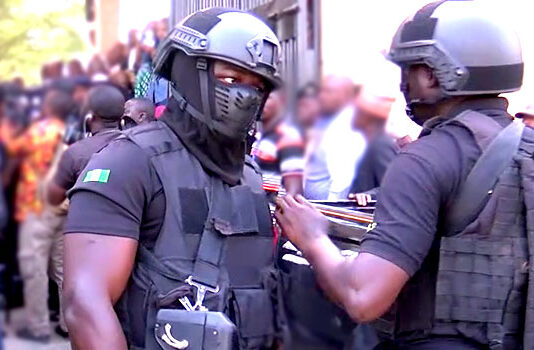
    The top leadership of the Nigerian Police has rounded up thousands of weapons and rounds of ammunition across the nation.

    READ ALSO: Giants of Industry Adesola Falaiye, MD AFKAR Printing and Publishing

    The National Centre for the Control of Small Arms and Light Weapons in Abuja received the cleaned-up weapons today.

    During an handing over event, the Inspector General of Police, Usman Alkali Baba, pointed out that banditry, kidnapping, and armed robbery are all fueled by small arms and light weapons across the nation as he attended the delivery of the rifles.

    READ ALSO: Customer Calls Out Interswitch, Wema Bank for Month-old Unresolved Failed Transaction

    Among the many weaponry given to the center were 265 automatic rifles and rocket launchers.

  • Wield ‘freedom responsibly’, President Buhari tells Nigerian media

    Wield ‘freedom responsibly’, President Buhari tells Nigerian media

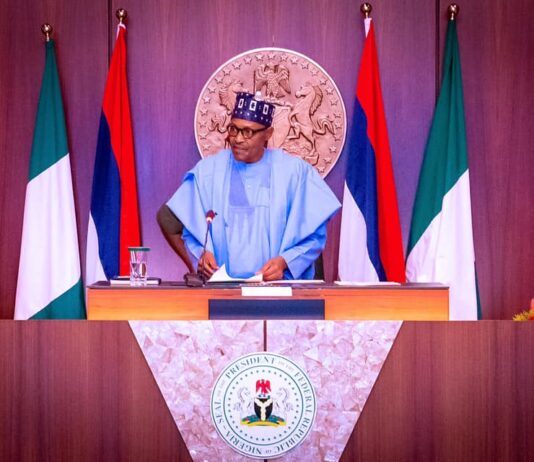
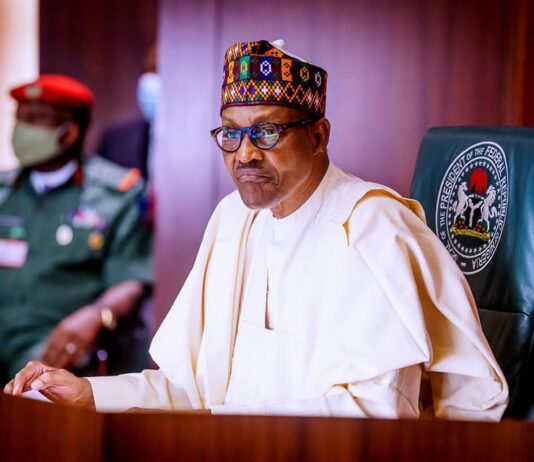
    On the occasion of World Press Freedom Day, observed globally every May 3, President Muhammadu Buhari recommits to freedom of the press, and urges media professionals to wield freedom responsibly, and without licentiousness.

    The Special Adviser to the President on Media and Publicity, Femi Adesina noted that while celebrating the landmark day with the media, the President notes that freedom of the press is an irreducible minimum in a democracy that would flourish, adding that freedom must, however, be used responsibly.

    “That everything is permitted does not mean that there are no rules of correctness, particularly in a polity seriously challenged as ours now,” President Buhari says. “The media must be sensitive to what we are going through as a country, and anything that would exacerbate the situation, and further inflame passions and emotions, should be avoided.

    The media needs to ensure that while informing, educating, entertaining and setting agenda for public discourse, it does not encourage incendiary words and actions that could further hurt our unity in diversity.”

    Licentious freedom, the President says, is different from freedom with responsibility, and charges the Nigerian media to embrace the latter, rather than the former.

    On the part of government, President Buhari pledges greater cooperation with the media to discharge its duties, in line with the theme of this year’s World Press Freedom Day, ‘Information as a Public Good.’

    He charges those who manage information for government to do everything in public interest, while also encouraging the media to use the Freedom of Information Act available to make its jobs easier.

    The President submits that it is very vital to have access to reliable information in an era of misinformation, disinformation and hate speech, all to cause discord in society.

  • If they kill Gov Ortom, you’ll be responsible – Gov Wike to Buhari-led Government

    If they kill Gov Ortom, you’ll be responsible – Gov Wike to Buhari-led Government

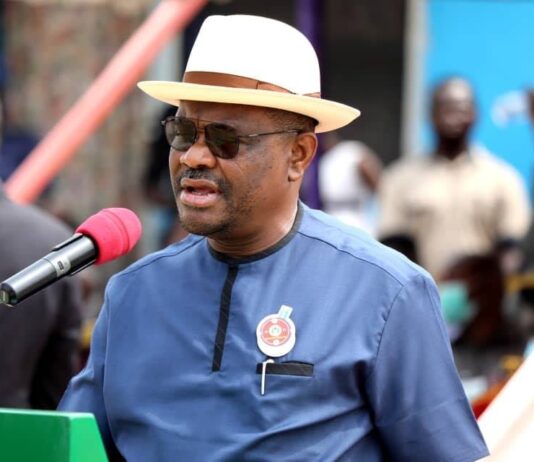
    Governor of Rivers state, Nyesom Wike Saturday warned that should his counterpart in Benue State, Governor Samule Ortom be killed, the Federal Government of Nigeria be ready for a civil war.

    The threat was coming after the alleged assassination attempt on the life of Governor Ortom by “herdsmen”.

    “The Muhammadu Buhari-led Federal Government would be held responsible if Governor Ortom is assassinated. If they kill Ortom, they should be prepared that there will be no more Nigeria. It could lead the nation to a civil war and they should be prepared to bury Nigeria.

    “This is not a first, during the 2019 elections the former General Officer Commanding (GOC) 6 Division of the Nigerian Army in Port Harcourt, Major General Jamil Sarham, and APC Chieftains had concluded plans to assassinate me.

    “We have gotten to such a low point where even incumbent Governors are brazenly threatened with death”, Governor Wike lamented.

    Also, the Peoples Democratic Party (PDP) on Saturday condemned the attack on Benue State Governor Samuel Ortom, describing it as “reckless” and an “assassination attempt”.

    Governor Ortom was attacked earlier on Saturday by suspected herdsmen while visiting a farm in Makurdi.

    But his security detail was able to repel them.

    Mr Ortom said he ran for “more than one and a half kilometres without stopping” to escape the assault.

    “The party calls on President Muhammadu Buhari to put machinery in motion by ordering an immediate manhunt, arrest and prosecution of the assailants and beef up security around the governor,” the PDP said in a statement signed by spokesman Kola Ologbondiyan.

    “The PDP expresses shock that the assailants trailed Governor Ortom and opened fire on him and his aides along Makurdi/Gboko road, in an attack that by every indication is aimed to assassinate the governor.

    “Our party is worried that this brazen attempt at Governor Ortom’s life is coming on the heels of his outspokenness in exposing those allegedly behind the incessant attacks of communities in the state and demanding that the Federal Government to live up to its responsibility on the protection of life and property in the state.

    “The PDP fears for the life of Governor Ortom and we urge Nigerians to hold the All Progressives Congress (APC)-led administration responsible over its failure to take a decisive step to check the escalated insecurity and brazen attacks on innocent Nigerians.

    “The PDP however calls on Governor Ortom not to be deterred by the attack but to remain courageous and at alert, at all times while providing leadership to the people of his state.

    “The party also calls on the people of Benue State to be calm and vigilant while providing useful information to security agencies to flush bandits and criminal elements out of the state and other parts of the country.”

  • FG Inaugurates Reconstituted National Productivity Order Of Merit Award Committee

    FG Inaugurates Reconstituted National Productivity Order Of Merit Award Committee

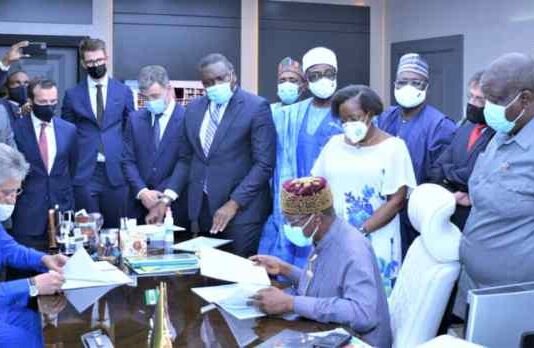
    The Federal Government has inaugurated the reconstituted National Productivity Order of Merit Award Committee, for the purpose of selecting deserving awardees for conferment.

    The Committee is tasked with the responsibility of selecting and recommending individuals and organisations for confernment of the National Productivity Order of Merit (NPOM) Award by Mr President.

    Inaugurating the Committee in Abuja, Minister for Labour and Employment, Dr Chris Ngige, stated that “the reconstitution of this Committee and its inauguration today demonstrate Government’s commitment to issues of productivity and its enhancement in Nigeria.”

    Ngige enjoined the Committee to come up with a list of awardees for 2019 and 2020 for approval for conferment of the 2021 NPOM Award by Mr President.

    He urged the Committee to apply probity and fairness in the discharge of their responsibility.

    He disclosed that the NPOM Award was “instituted by Government to recognize and honour productive individuals and organizations in Nigeria in the year of the award for achievements made in the three preceding years.”

    The Committee has Barrister Ikechi Uko, a representative of the Productive Sector, as Chairman, and Ms A.O Adenugba, a Director in National Productivity Centre, as Secretary.

    The other members of the Committee are Alhaji Habu Adamu Jajere, representing Nigerian Association of Chamber of Commerce, Industry, Mines and Agriculture (NACCIMA); Mr Uche Nwokedi, SAN, representing Nigeria Bar Association (NBA); Senator Adawari Pepple, representing Manufacturers Association of Nigeria (MAN); Mr Jamiu A. Abdulkareem, representing the Office of the Secretary to the Government of the Federation (OSGF), and Mr Victor Eburajojo, mni, representing Nigeria Employers’ Consultative Association (NECA).

    The rest of the members are Mr Jatau Kandu, representing Senate Committee on Labour, Employment and Productivity; Hon. Adamu Ali Wudil, representing House Committee on Labour, Employment and Productivity; Chief Hilary Edime Amodu, representing the Creative Sector; Dr Yerima Peter Tarfa, Permanent Secretary, Federal Ministry of Labour and Employment, and Dr Kashim Akor, Director General, National Productivity Centre (NPC).

    The Minister noted that the specific objectives of the NPOM Award are to institutionalize productivity consciousness and excellence in service among workers and organizations in both the public and private sectors in Nigeria; and to recognize and highlight the contributions of the individual workers, as well as organizations, to higher productivity.

    The other objectives of the Award are to reward the most productive workers and organizations in both public and private sectors for diligence, high performance, high productivity and research achievements; encourage and foster the spirit of healthy competition amongst workers, firms and companies in Nigeria, and encourage the spirit of self-reliance.

  • Nigerian Govt okays N813b for road, water projects, explains Ogoni cleanup delay

    Nigerian Govt okays N813b for road, water projects, explains Ogoni cleanup delay

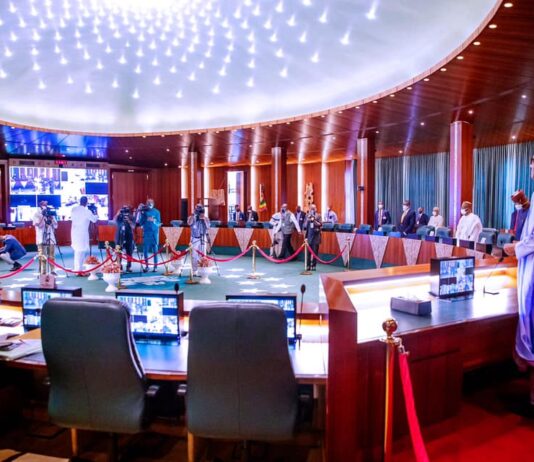
    Nigeria’s Federal Executive Council (FEC), chaired by President Muhammadu Buhari on Wednesday approved a number of projects including the change of scope for the construction of the Abuja-Kaduna-Kano highway from N155b to N797.2b and a N10.4b for the procurement of fire fighting vehicles and equipment for the Federal Fire Service.

    Also, for provision of potable water across the four Ogoni council areas of Rivers State, Gokana, Khana, Eleme and Tai, FEC approved the sum of N6b.

    FEC’s approval was confirmed by the Minister of Works and Housing, Babatunde Fashola in Abuja, adding that the road, hitherto undergoing renovation, would be completely reconstructed, thereby changing the cost of the project from N155b to N797.2b.

    The Minister said: “I presented one memorandum and one report with respect to the Abuja-Kaduna-Zaria-Kano highway, which was to change the scope of work from rehabilitation previously awarded because parts of the pavement had deteriorated, to full reconstruction of two lanes on both sides.

    “The council considered and approved the request for the change of scope and the incidental cost consequence, which changed the existing contract for N155b to N797.2b for full reconstruction of the main carriageway, trailer parks, way bridges, toll stations and additional side lanes in the built-up areas across the FCT, Niger Kaduna and Kano states, served by the road and FEC approved it for the same contractor.”

    According to Fashola, rehabilitated roads, which would soon be handed are the Benin-Asaba, Abuja-Lokoja, Kano-Katsina, Onitsha-Aba, Sagamu-Benin, Kano-Maiduguri, Enugu-Port Harcourt, Ilorin-Jebba and Lagos-Badagry highways.

    Likewise, Fashola’s counterpart in the Ministry of Interior, Rauf Aregbesola said: “The council considered and approved N10.4b to cover the supply of 44 firefighting engines, 15 water tankers, 15 rapid intervention fire engines to respond to distressed calls.

    “The approval also covers the supply of 20 basic life support ambulances. So, we are looking at 79 firefighting equipment and support vehicles.”

    While assuring that the procurement of the vehicles would enhance the capacity of the Federal Fire Service to effectively control and manage fire emergencies, Aregbesola called on State Governments to also equip their fire services, noting that operations of the Federal Fire Service would be complimented in those states.

    The sum of N353.2m was released to the Ministry for the purpose of deploying integrated real time data repository equipment for the Nigeria Immigration Service (NIS) Headquarters, Abuja, among others.

    In the Ministry of Humanitarian Affairs, Disaster Management and Social Development, a N2.1b contract for the design, development, deployment and management of the National Social Investment Management System for the National Social Investment Programme was approved by FEC.

    Minister Sadiya Umar Farouk who made this known said the contract, which is to be completed within 24 months, will tackle sundry issues in the operations of N-Power, N-SIP, National Cash Transfer, and National Home-Grown School Feeding programmes.

    “We are starting with N-Power, which is immediate. Afterwards, we will add other clusters of the National Social Investment Programme into the platform. Council has approved and we will go ahead,” she said.

    Also speaking FEC’s deliberation on the Ogoni clean up that has always generated public sentiment, Minister of the Environment, Mahmud Mohammad, said the FEC meeting recalled that the Hydrocarbon Pollution Remediation Project (HYPREP) was commissioned in 2016 for the cleanup but impacted areas based on UNEP report.

    “We have had some delays when we came to assess the project and we went to Geneva, met with UNEP that designed the project, conducted the studies and made recommendations for the cleanup of Ogoniland,” he said.

  • Insecurity in Nigeria: President Buhari Replaces Service Chiefs

    Insecurity in Nigeria: President Buhari Replaces Service Chiefs

    Amidst rising insecurity in Nigeria and the clamour by citizens for the sack of heads of the nation’s security agencies, President Muhammadu Buhari on Tuesday accepted the immediate resignation of the Service Chiefs, and their retirement from service.

    Those involved are the Chief of Defence Staff, General Abayomi Olonisakin; Chief of Army Staff, Lt-Gen. Tukur Buratai; Chief of Naval Staff, Vice Admiral Ibok Ekwe Ibas; and Chief of Air Staff, Air Marshal Sadique Abubakar.

    READ ALSO:

    Fire Razes Sunday Igboho House Days After Giving Fulanis Ultimatum to Leave Oyo

    Presidency spokesman, Femi Adesina in a statement Tuesday afternoon said: “President Buhari thanks the outgoing Service Chiefs for what he calls their “overwhelming achievements in our efforts at bringing enduring peace to our dear country,” wishing them well in their future endeavours”.

    The new Service Chiefs are: Major-General Leo Irabor, Chief of Defence Staff; Major-General I. Attahiru, Chief of Army Staff; Rear Admiral A.Z Gambo, Chief of Naval Staff; and Air-Vice Marshal I.O Amao, Chief of Air Staff.

    The President congratulates the new Service Chiefs, and urges them to be loyal and dedicated in the discharge of their responsibilities.

  • Nigeria to Post 95 Ambassadors-Designate as President Buhari Gives Approval

    Nigeria to Post 95 Ambassadors-Designate as President Buhari Gives Approval

    President Muhammadu Buhari has approved the posting of Ambassador-Designates to Nigerian Missions abroad.

    A statement by the Ministry of Foreign Affairs says the list includes 43 career ambassadors and 52 non-career ambassadors.

    The Ministry of Foreign Affairs disclosed this in a statement on Tuesday by its Permanent Secretary, Ambassador Gabriel Aduda.

    While Aduda did not state when the President gave the approval, he noted that those to be posted included 43 career ambassadors and 52 non-career ambassadors.

    He said following the development, the government has already commenced the process of requesting Agrément from the prospective host countries.

    The permanent secretary revealed that the ministry would organise an induction course for the ambassadors-designate and their spouses.

    He explained that the event which would hold on a date to be announced soon was to prepare and facilitate the movement of the ambassadors-designate to their respective missions.

    In a letter dated May 6, 2020, about nine months after the President nominated 42 career ambassadors-designate to the Senate for confirmation, Buhari informed the lawmakers that his request was in accordance with section 171 (1),(2)(c), and subsection (4) of the 1999 Constitution of the Federal Republic of Nigeria, as amended.

    “I have the honour to forward for confirmation by the Senate, the under-listed forty-two (42) names of nominees as Career Ambassadors-Designate,” he had said in the letter.

    The ambassadors-designate who were nominated included C.O Nwachukwu; A. Kafas, R. U. Brown, G. A. Odudigbo, O. C. Onowu, Y. S. Suleiman, E. S. Agbana, B. B. M. Okoyen, G. M. Okoko, A. M. Garba, M. l. Bashir, M. O. Abam, A. E. Allotey, G. E. Edokpa, and A. N. Madubuike.

    Others are Adamu Lamuwa, Innocent lwejuo, M. S. Abubakar, Y. A. Ahmed, S. D. Umar, A. Sule, G. Y. Hamza, N. Rimi, L S. Ahmed-Remawa, M. Manu, l. R. Ocheni, l. A. Yusuf, M. Abdulraheem, W. A. Adedeji, and A. U. Ogah.

    Also among the ambassadors-designate are A. A. Musa, N. A. Kolo, S. O. Olaniyan, A. R. Adejola, E. Awe, O. Aluko, I. A. Alatishe, V. A. Adeleke, M. S. Adamu, l. N. Charles, Z M. lfu, and B. B. Hamman.

    In another letter dated July 1, 2020, the President asked the Senate to confirm one career ambassador-designate and 39 non-career ambassadors- designate.