One person has been killed on Wednesday after South African police fired rubber bullets to disperse a group of student protesters, at Wits University in Johannesburg.
Spokeswoman for the Wits University, Shirona Patel told AFP that: “My understanding so far is that the protestors blocked a public road, the police tried to disperse them, and the passerby was shot in the crossfire,”
It was reported that the killing of the “passerby” further enraged the protesting students who gathered near the lifeless body of the victim and demanding, at the top of their voices, that police personnel leave the area. A student was reported screaming “Kill all of us”.
However, Spokeswoman Patel confirmed that the victim of the shootout was not a student of the university.
In early January, Wits University students began series of protests against government’s action that allegedly excluded some students by a government-sponsored tuition aid scheme.
The students, who vowed to continue their protest against the financial exclusion of students in the university are demands that Wits University allows all students with outstanding debt to register for the 2021 academic year.
The university authority however argued that the institution of learning will however become financially unsustainable if it continues to accept students who have historical debt.
According to the university, outstanding fees owed has accumulated to R1 billion over the past seven years.
Wits University added that it has made available R20 million for indigent students who are facing financial hardship and R100 million has been allocated to financial aid through bursaries and scholarships.
Student’s representative put the number of students that are still not registered at about 80, 000 as a result of the “financial exclusion problem”.
They are demanding that those who owe the university up to 150,000 rand ($9,850) in fees still be allowed to register for the new academic year.
President Muhammadu Buhari has expressed optimism that improvement in relations between Nigeria and South Africa will speed up the process of development on the African continent.
Speaking in concurrence with the Chairman of the African National Congress (ANC) and South Africa’s Minister of Mineral Resources and Energy, Gwede Mantashe, who came to the State House, Abuja on Friday as Special Envoy of his country, President Buhari cited his last trip to South Africa during which he and President Cyril Ramaphosa worked together in resolving the migrants’ crisis between two brotherly nations, Senior Special Assistant to the President on Media & Publicity, Garba Shehu disclosed in a statement.
“There was this ‘small problem’ between our countries. I went there and we resolved it,” the Nigerian President told the envoy.
He directed the Minister of State, Petroleum Resources, Timipre Sylva to work with his South African counterpart on the requests he brought and report back to him for his action.
The South African minister, who presented a letter from President Ramaphosa, said the relationship between Nigeria and his country was key to the development aspirations of the continent.
While emphasising that the two nations need to work as partners, Mantashe said “this relationship will determine the future of Africa.”
Zimbabwean socialite and businessman Genius ‘Ginimbi Kadungure’ has died on the spot early Sunday morning in a head-on car accident along Borrowdale Road, in Harare, capital of the South African nation.
New Zimbabwe’s Alois Vinga gathered from sources that Ginimbi, who owns Pioneer Gas and PIKO Group, was speeding when he crashed and was helped out of the vehicle, which later burst into flames.
An exiled former minister in the South African nation, Saviour Kasukuwere was said to have expressed bitterness at the passing of the young businessman.
The luxury car that would eventually take his life.
“This is unbearable. A young man who worked hard and enjoyed hard is no more! The flower has wilted! Go well Boss Ginimbi. MHDSRIP,” said Kasukuwere.
According to New Zimbabwe’s Alois Vinga, a relative told the media this morning that the businessman had two other passengers in his car who were “burnt beyond recognition”.
Reports stated that the identities of the co-passengers in the bentley luxury car driven by Kandungure could not be readily established.
Ginimbi’s lifeless body lies on the ground covered by tree branches.
It was said that a relative explained Kadungure was pulled out of the car soon after the crash but died immediately.
The crash happened along a curve just before Hatcliff suburb on the road to Domboshava. The businessman, whose mother died only months ago, owned a mansion in the peri-urban settlement.
In a video that has now circulated on social media since the unfortunate incident Sunday morning, Kandungure was seen hours before the crash preparing to attend a birthday party and later seen driving at night as it was dark.
According to reports, witnesses at the scene of the fatal crash stated that the socialite, who was popular in Harare was speeding.
New Zimbabwe had reported that the driver of the Honda Fit car that got involved in the accident with Ginimbi survived the crash but is said to be in shock.
South Africa’s Minister of Defence, Nosiviwe Mapisa-Nqakula, has been sanctioned for using a state jet for political trip, which is clearly outside official activities permitted for such.
The nation’s President, Cyril Ramaphosa stated that Mapisa-Nqakula’s salary would be docked for three months over her use of state jet for an ANC September trip to Zimbabwe.
The Defence Minister also gave a jet-ride to an entire ANC delegation including Secretary General Ace Magashule, who traveled to meet with members of the Zanu-PF, Zimbabwe’s ruling party, over political happenings in the nation.
According to acting president’s spokesman Tyrone Seale “The President has further sanctioned the Minister by imposing a salary sacrifice on the Minister’s salary for three months, starting from 1 November 2020,”
President Ramaphosa said: “it was an error of judgment” to use a state aircraft to deliver a political message to another country.
The amount would be paid to the Solidarity Fund set up to respond to the COVID-19 pandemic.
Ramaphosa has also informed the minister to direct the ANC to repay the costs of the flight to Harare and report to him once that has been completed.
In the worst-case scenario, growth in Southern Africa would fall to -6.6 per cent in 2020 before recovering to 2.2 per cent in 2021.
Growth is projected at –4.9 per cent in the baseline case, mainly driven by the deep recession in South Africa, induced by a fall in commodity prices, containment measures, weather-related events, and the structural issues related to public utilities. The region’s growth is projected to be the most affected by the novel Coronavirus (COVID-19) pandemic.
Before COVID-19, Southern Africa’s economy was projected to recover from an estimated 0.7 per cent growth in 2019 to 2.1 per cent in 2020.
As has been the case historically, South Africa, the region’s largest economy, is projected to contribute an average of 60 per cent of regional economic output in 2020.
These are some of the highlights contained in the new Southern Africa Regional Economic Outlook released on Monday by the African Development Bank (AfDB).
Released annually since 2003, the African Economic Outlook provides compelling up-to-date evidence and analytics to inform and support African decision makers.
Since 2018, the publication of the African Economic Outlook has been coordinated with the release of five Regional Economic Outlook Reports for Central, East, North, Southern and West Africa.
“This year’s third edition of the Southern Africa Regional Outlook report offers robust options for policy makers at national and sub-regional levels to confront the challenges of sustainable economic development through skills development for the future of the workforce in the post-COVID-19 era,” said the African Development Bank’s Acting Director General for Southern Africa, Josephine Ngure.
The report recommended inclusive, broad-based and pro-poor policies to address inequality and reduce poverty rates, adding that a higher level of preparedness is urgently needed to prevent and mitigate the COVID-19 pandemic in Southern Africa, including additional resources for testing and to reduce the impact on households and the economy.
Following the outbreak of COVID-19, economic growth forecasts declined by seven percentage points from the original projection under the baseline scenario, and 8.7 percentage points under the worst-case scenario.
Botswana, Eswatini, Lesotho and Namibia are seen as more vulnerable to South Africa’s impending contraction in economic growth, while Mozambique’s sales of gas and electricity could be adversely affected.
Liquefied natural gas, Mozambique
In addition, countries that rely on tourism, such as Mauritius, would be adversely affected.
Eureka House is reputed to be one of the largest houses on the island, with 109 doors and windows. The Eureka house was restored and opened to the public as a museum in 1986. The museum has areas dedicated to music, art, antique maps, Chinese and Indian house wares and quirky contraptions like a colonial-era shower.
However, the immediate outlook depends on the spread of new cases. South Africa is now the fifth-worst affected country in the world, with close to 400,000 confirmed cases.
The service sector, which accounts for over 50 per cent of the GDP of most of the regional economies, is projected to be negatively impacted by the pandemic, worsened by travel bans, as well as disruption to transport, distribution, hotels and restaurants, entertainment, retail and trade.
Economic diversification, characterized by commodity-driven industrialisation, would help boost the region’s resilience during downturns, the report noted.
The outlook identified poverty and inequality as twin challenges affecting the Southern Africa region and called for policies aimed at making growth inclusive, broad-based and pro-poor if growth is to substantially address both issues.
Compared with other regions in Africa, the region has the highest unemployment levels, averaging 12.5 per cent between 2011 and 2019, followed by North Africa averaging11.8 per cent over the same period.
Unemployment is likely to escalate, especially in hardest-hit sectors such as tourism and hospitality, entertainment, retail and trade and agriculture, where most of the people in the region are employed.
Improving business environment competitiveness in the region is therefore critical.
African Continental Free Trade Area (AfCFTA) is projected to provide medium- and long-term opportunities for markets to spur economic growth. The intra-African market is expected to mitigate some of the negative effects of COVID-19.
The publication identified the provision of, and access to, quality education and skills as the basis of prosperity, dignity and well-being for individuals, and forms the backbone of successful economies.
To achieve economic diversification and structural change towards high-productivity sectors, a better skilled and more adaptable labour force is necessary, the report recommended.
Click here (https://bit.ly/2P6nu6p) to access the full report.
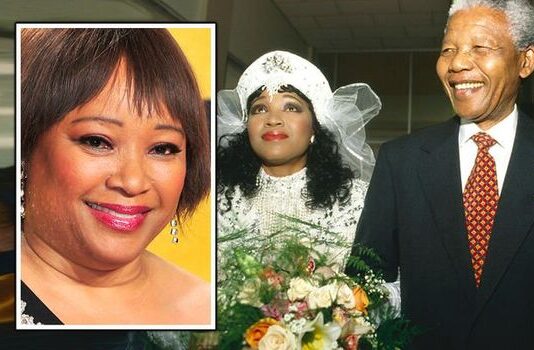
Mama Zindzi Mandela, South Africa’s Ambassador to Denmark and youngest daughter of struggle icons, Nelson Mandela and Winnie Madikizela-Mandela, has died at the age of 59.
She died on Sunday night at a hospital in Johannesburg, but the cause of her death has not been ascertained as at press time.
She’s survived by her four children: Zoleka, Zondwa, Bambatha and Zwelabo and her husband Molapo.
Confirming the unfortunate incident, the Mandela Family, in a statement, said: “It is with great sadness that we announce the death of Mama Zindzi Mandela, youngest daughter of the late ANC (African National Congress) stalwarts Nelson Rolihlahla Mandela and Winnie Madikizela-Mandela.
“She is survived by her children and grandchildren. Memorial service and funeral arrangements to be announced in the course of the week.”
Also, Nelson Mandela Foundation was heartbroken by the news of the passing of Mama Zindzi.
The foundation said: “We have been shocked to wake to the news of the untimely passing of Zindziswa Mandela. On a day when we are marking the anniversary of another terrible moment – when Madiba’s son Thembekile died in a car accident in 1969. Zindzi was someone we had come to know well and to love. She was our friend.
“Our thoughts are with her family and friends.
“Zindzi will be remembered for a rich and extraordinary life, marked by many iconic moments. The years she spent banished with Mama Winnie Madikizela-Mandela to the small town of Brandfort. That summer’s day in February 1985 at Jabulani Stadium when she read to the world Madiba’s rejection of President Botha’s offer of a conditional release from prison.
“We will also remember her as a special soul. She worked with the Foundation on many projects over the years, for instance the book Hunger for Freedom, by author Anna Trapido. We valued her generosity, her warmth and her sense of humour. She was always patient in responding to our requests for information and other forms of assistance. And we admired her strength in dealing with life’s challenges and tragedies.
“Madiba’s personal archive speaks to this strength, as well as to the nature of her relationship with her father. Just two examples as illustration. In a 1969 letter from prison, Madiba noted that her ‘heart is sore because I am not at home and wants to know when I will come back.
“In a 1987 letter to Zindzi, Madiba told her that he had heard from an acquaintance that she was as strong as a rock. He went on: ‘That is just the kind of remark a father would like to hear about his beloved child. I literally swelled with pride and satisfaction. That remark reached me at the right time, shortly after you had just gone through a rather harrowing experience.
“He ended the letter: ‘Tons and tons of love darling, and a million kisses.
“We join with many in saying hamba kakuhle to an outstanding South African. We will miss you Zindziswa; you who were named after the daughter of that great South African poet S.E.K. Mqhayi. We will miss you Ambassador Mandela. Lala ngoxolo Madiba, Zondwa, Ngqolomsila, Sophitsho, Yem-yem,” Nelson Mandela Foundation said, in a statement by Luzuko Koti.
President Cyril Ramaphosa of South Africa also offered his condolences.
“I offer my deep condolences to the Mandela family as we mourn the passing of a fearless political activist who was a leader in her own right. Our sadness is compounded by this loss being visited upon us just days before the world marks the birthday of the great Nelson Mandela.
“Zindzi Mandela was a household name nationally and internationally, who during our years of struggle brought home the inhumanity of the apartheid system and the unshakeable resolve of our fight for freedom.
“After our liberation she became an icon of the task we began of transforming our society and stepping into spaces and opportunities that had been denied to generations of South Africans,” Ramaphosa said.
The Director-General of the World Health Organisation (WHO), Tedros Adhanom Ghebreyesus, in his tribute, said: “Saddened to hear the news about Zindzi Mandela passing. I am sending my deepest condolences to the Mandela family and the people of South Africa. Zindzi was an inspirational leader and we all will miss her greatly.”
We use cookies to ensure that we give you the best experience on our website. If you continue to use this site we will assume that you are happy with it.