Category: World

  • US Export-Import Bank Constitutes Sub-Saharan Africa Advisory Committee

    US Export-Import Bank Constitutes Sub-Saharan Africa Advisory Committee

    The US Export-Import Bank has reaffirmed its commitment to the growth of the US-African cooperation by constituting Sub-Saharan Advisory Committee for 2020 and 2021.

    The committee is composed of pro-investment and pro-business advisors who understand Africa and would be instrumental in growing the US-African cooperation and flows of goods, services and technology.

    The Sub-Saharan Advisory Committee is chaired by the Senior Vice President and Director of the Programme on Prosperity and Development at the Centre for Strategic and International Studies (CSIS), Daniel Runde.

    African Development Bank Approves $27.33m to Ramp Up AU’s COVID-19 Response

    Other members of the committee include: Chief Executive Officer, Energy and Natural Resource Security, Inc., Derek Campbell; Senior Vice President, African Affairs and President, US-Africa Business Centre, US Chamber of Commerce, Scott Eisner; Founder and Chief Executive Officer, AppsTech, Rebecca Enonchong; Executive Director/Americas Export Finance Head, JPMorgan Chase Bank, Lori Helmers; President and Chief Executive Officer, Corporate Council on Africa, Florizelle Liser, Chairman, AfricaGlobal Schaffer,
    Mima Nedelcovych; Principal, The OKPA Co., EE Okpa; Director Customer and Industry Relations, Progress Rail, a Caterpillar Company, Marise Duff Stewart; President – International Business, Acrow Bridge, Paul Sullivan; and Chief Executive Officer, United Bank for Africa (UBA), America, Sola Yomi-Ajayi.

    By working to provide funding for trade and development deals in Africa for American companies, the US EXIM Bank could become an increasingly important source of financing for Africa’s critical energy infrastructure.

    US companies have important products, experience and expertise in several key segments of the energy value chain that would be extremely beneficial if properly matched with opportunities on the continent.

    This is especially relevant to the natural gas value-chain which has become a key priority for most African governments, and for which American technology and services could help transform the continent’s energy industry.

    Equally important is the focus given to small and medium-sized enterprises (SMEs) within the committee.

    The African Energy Chamber’s own US-Africa Committee has identified the collaboration between US and African SMEs as a major requirement to grow investment and technology transfers between the US and Africa.

    Commenting on the latest appointments, a prominent member of the Africa Energy Chamber’s US-Africa Committee, Jude Kearney, said: “The African Energy Chamber notes and welcomes the recent appointment of the US Exim Bank’s Sub-Saharan Advisory Committee.

    “The renewed interest and appetite for investing in Africa shown by Exim Bank and other US trade agencies is welcome in Africa, and the continent’s energy sector is listening and open to doing business and making the kind of deals that will propel the continent towards a prosperous future.”

    “The African Energy Chamber looks forward to supporting further US involvement in Africa and to developing new ways of working together and pushing for a pro-African investment agenda in the US public and private sectors,” said Kearney, who’s also the former Deputy Assistant Secretary for Service Industries and Finance at the US Department of Commerce during the Clinton Administration and currently President of Kearney Africa Advisors.

    On his part, Director of Strategy at the Africa Energy Chamber, Mickael Vogel, said: “We are very proud to see Rebecca Enonchong on this board. She more than anyone understands the challenges of small businesses and has personally built and mentored many such businesses.

    African Energy Chamber’s Committee Harps on Local Content as a Panacea Towards Africa’s Economic Recovery

    “With her you know you have someone who will work towards making America a good partner of the African business community and ensuring that civil society is not left behind. She is an inspiration for so many women in business.”

    “We are grateful that our own C. Derek Campbell will add value to this work.

    “Derek has a proven track-record on issues that concern trade with Africa and also on Energy Security.

    “Advancing and protecting Africa’s energy sector, empowering Africans and openings doors for so many that he has never met has been the work of his life,” noted the Executive Chairman at the African Energy Chamber, NJ Ayuk.

    The increased attention given to SMEs on both sides of the Atlantic is extremely encouraging for the future of US-African cooperation and its ability to create jobs and value for both regions.

    Idowu Sowunmi

  • Mali: Military-Appointed Experts Propose 2-Year Transition With President Chosen By Junta

    Mali: Military-Appointed Experts Propose 2-Year Transition With President Chosen By Junta

    A two-year transitional government led by a president chosen by the army has been proposed by Experts appointed by Mali’s military junta on Friday.

    AFP reported that the proposed deal was contained in a document that has been submitted to hundreds of participants at a three-day forum in Bamako aimed at mapping a way forward for the troubled country.

    The transitional government proposal stated that the president would be a “civil or military personality”.

    READ ALSO:

    ECOWAS gives Mali junta 7day ultimatum to name civilian transitional president

    The ongoing dialogue, which is in its second is between the young officers who overthrew President Ibrahim Boubacar Keita on August 18 and civilian representatives, many of whom had taken to the streets to demand for the resignation of the ousted president.

    Hours after the August coup, the coup leaders pledged to restore civilian government and stage elections within a “reasonable time”.

    However, a major concern for participants at the ongoing forum is how long a transition government should last and what role the army should play. These issues have now divided the discussants at the ongoing talks expected to conclude on Sunday.

    READ ALSO:

    Buhari priotises securing Mali “largely occupied by terrorists” 

    While the 15-nation Economic Community of West African States (ECOWAS) has insisted that the junta hand over power within 12 months, an influential imam viewed as the figurehead of the June 5 Movement which waged a protest campaign against Keita Mahmoud Dicko, has also backed a swift return to civilian rule.

  • Make Global Trade System Fairer and More Transparent, Africa’s Chief Executive Officers Demand

    Make Global Trade System Fairer and More Transparent, Africa’s Chief Executive Officers Demand

    Chief Executive Officers (CEOs) in African private sector have expressed optimism about the future of the continent.

    In a survey, which was commissioned by the Pan-African Private Sector Trade and Investment Committee (PAFTRAC), and conducted by African Business magazine in partnership with the Afreximbank, to gauge the private sector view around trade, the research highlighted the private sector’s desire for considerable reforms to make the global trade rules system fairer and more transparent.

    Two hundred CEOs were surveyed around issues concerning the World Trade Organisation (WTO) and trade in general.

    It was done in light of the next phase of ongoing consultations to select the institution’s next Director General. Three of the eight candidates are African: Nigeria’s Ngozi Okonjo-Iweala, Kenya’s Amina Mohamed and Egypt’s Abdel-Hamid Mamdouh.

    The CEOs were also optimistic about the future outlook: over 50 per cent of the CEOs believed global trade would increase over the next 12 months; and over 70 per cent of CEOs believe intra-africa trade would increase over the next 12 months.

    The survey covered a number of areas which revealed a general consensus that the current rules penalise the African continent and its private sector.

    86.6 per cent of the respondents understand the role of WTO in global trade. However, majority of the CEOs believed WTO is not effective in fulfilling its role.

    As much as infrastructure, logistics and human capital were cited as two major constraints to growth in Africa, the CEOs also noted the skewed international trade regime as another key constraint.

    President of Afreximbank, Benedict Oramah, said: “As the pan-African trade finance bank, Afreximbank has been mandated to host PAFTRAC secretariat. Any reform needs to support a burgeoning African private sector and an increasingly integrated Africa.

    “We have seen, over the past quarter of a century since WTO was formed, the emergence of a robust and dynamic African private sector, and more recently significant steps to integrate Africa under the African Continental Free Trade Agreement (AfCFTA).

    “WTO and its new leadership will need to recognise the imperative of African integration and put development at the centre of any trade agenda.”

    Interestingly, if the majority of CEOs believed that the global trading system was unfair, most also see the multilateral system strengthening in the coming years.

    They outlined a set of reforms that should be undertaken for a fairer and more transparent trading system, including in the areas of voice and participation, tariffs and non-tariff barriers, agriculture and subsidies.

    Speaking on the matter, PAFTRAC Chair, Pat Utomi, stated that unless reform was forthcoming the current global crisis may penalise the African private sector even further.

    “We have seen during this pandemic companies in the industrialised world have received massive bailouts, tax incentives, not to mention government contracts and fiscal stimuli.

    “Companies in Africa were not so fortunate and will have to deal with a world where trade will be depressed because of the post-covid environment. As such, a fairer global trade environment and trading system is more urgent today than ever,” he said.

    The survey as well as a debate around a communiqué to be sent to all candidates who are in the race for the directorship of WTO would be presented at a webinar to be hosted by Afreximbank.

    PAFTRAC unites African leaders from the private sector and provides a unique advocacy platform bringing together the African private sector and African policymakers to support extra and intra-African trade, investment and pan-African enterprise.

    The platform drives pan-African results by providing a framework for private sector engagement in trade and investment issues in Africa, including policy formulation and trade negotiations to support African economies in line with the ambitions of Agenda 2063: “The Africa We Want.”

    PAFTRAC enhances advocacy and supports policy actions and recommendations of the private sector on trade; and investment issues at the national, trade corridor, regional and multilateral levels.

    Idowu Sowunmi

  • African Development Bank Approves $27.33m to Ramp Up AU’s COVID-19 Response

    African Development Bank Approves $27.33m to Ramp Up AU’s COVID-19 Response

    In order to complement various national and sub-regional operations, African Development Bank’s Board of Directors Wednesday approved $27.33 million in grants to boost the efforts of the African Union (AU) to mobilise a continental response to curb the novel Coronavirus (COVID-19) pandemic.

    The approval followed a meeting of the extended Bureau of the Conference of Heads of State and Government with Africa’s private sector on April 22 was chaired by President Cyril Ramaphosa of South Africa and AU chairperson.

    READ ALSO: Adesina Assures of Stronger Africa as He’s Sworn-in for 2nd Term as AfDB President

    The bank’s President, Akinwumi Adesina, had pledged strong support for AU’s COVID-19 initiative.

    President of the African Development Bank (AfDB), Dr. Akinwunmi Adesina

    Speaking after the board’s approval, Adesina said: “With this financing package, we are reaffirming our strong commitment to a coordinated African response in the face of COVID-19.

    “Most importantly, we are sending a strong signal that collectively, the continent can address the pandemic, which is straining health systems and causing unprecedented socio-economic impacts on the continent.”

    Also speaking on the approval, the bank’s Acting Vice President, Agriculture, Human and Social Development, Wambui Gichuri, said: “Our response today and support to the African Union is timely and will play a crucial role in helping Africa look inward for solutions to build resilience to this pandemic and future outbreaks.”

    READ ALSO:

    Buhari Unveils Agenda 2050, Envisions 100 Million Nigerians Out Of Poverty By 2030

    AU Bureau meeting had called for contributions to the African Union’s COVID-19 Response Fund established by the AU Commission chairperson, Moussa Faki Mahamat, in March 2020.

    The bank’s grant financing would support the Africa Centres for Disease Control and Prevention (Africa CDC) in providing technical assistance and building capacity for 37 African Development Fund (ADF) eligible countries, particularly the Transition States, to combat the COVID-19 pandemic and mitigate its impact.

    ADF is the bank’s concessional window.

    Sourced from ADF’s Regional Operations/Regional Public Goods envelope and the Transition Support Facility, these two grants would support the implementation of Africa CDC’s COVID-19 Pandemic Preparedness and Response Plan through strengthening surveillance at various points of entry (air, sea, and land) in African countries; building sub-regional and national capacity for epidemiological surveillance; and ensuring the availability of testing materials and personal protective equipment for frontline workers deployed in hotspots.

    The operation would also facilitate collection of gender-disaggregated data and adequate staffing for Africa CDC’s emergency operations centre.

    At the beginning of February 2020, only two reference laboratories – in Senegal and in South Africa – could run tests for COVID-19 on the continent.

    READ ALSO:

    Southern Africa growth may contract by -6.6% in 2020, says AfDB

    Africa CDC, working with governments, the World Health Organisation (WHO), and several development partners and public health institutes, have increased this capacity to 44 countries currently.

    Despite this progress, Africa’s testing capacity remains low, with the 37 ADF-eligible countries accounting for only 40 per cent of completed COVID-19 tests to date.

    Idowu Sowunmi

  • ECOWAS gives Mali junta 7day ultimatum to name civilian transitional president

    ECOWAS gives Mali junta 7day ultimatum to name civilian transitional president

    By News Agency

    ECOWAS leaders who met in Niamey, Niger on Monday have given the military junta in Mali until Sept. 15 to name a transitional president and a prime minister, according to a statement read at the end of a summit on Monday.

    The 15-nation bloc said the president and prime minister, who will lead the transitional government, should be civilians.

    The meeting maintained the sanctions it imposed on Mali in the aftermath of the coup.

    But it also welcomed steps taken by the junta in the past week to start talks with Mali’s political parties and civil society groups over the transition.

    ECOWAS closed its borders with landlocked Mali and halted financial flows amid concerns that the military coup could undermine the democratic gains in the region.

    A group of army colonels has ruled Mali since ousting President Ibrahim Boubacar Keita on Aug. 18.

    No consensus has yet been reached on the make-up and duration of a transitional government ahead of promised elections.

    ECOWAS is calling for a swift return to civilian rule and a vote within a year, a timeline the junta, the National Committee for the Salvation of the People (CNSP), has not committed to.

    ECOWAS Commission President Jean-Claude Kassi Brou, said both the president and prime minister must be appointed by Sept. 15 at the latest.

    Talks in the capital Bamako about the transition period got off to a bumpy start on Saturday, when supporters of the influential M5-RFP political coalition accused the junta of sidelining them.

    The junta’s negotiations, which are also being held in regional capitals across Mali, will continue later this week.

  • Gbajabiamila’s Legislative Diplomacy to Accra, Akufo-Addo Endorses Nigeria-Ghana Business Council to Resolve Trade & Investment Disputes

    Gbajabiamila’s Legislative Diplomacy to Accra, Akufo-Addo Endorses Nigeria-Ghana Business Council to Resolve Trade & Investment Disputes

    President Nana Akufo Ado of Ghana has endorsed a proposal for the establishment of a Nigeria-Ghana Business Council to be established by law in both countries.

    The Ghanaian leader has also suggested the setting up of a joint ministerial committee between the two countries that would “shepherd” issues between Ghana and Nigeria.

    Speaking at a meeting with the Speaker of the House of Representatives, Femi Gbajabiamila, who was in Accra for a two-day extensive dialogue towards resolving some of the challenges confronting Nigerians doing business in Ghana, Akufo-Addo said a request by the speaker for a review of Ghana Investment Promotion Centre (GIPC) Act to make certain concessions was in order as it “makes a lot of sense”.

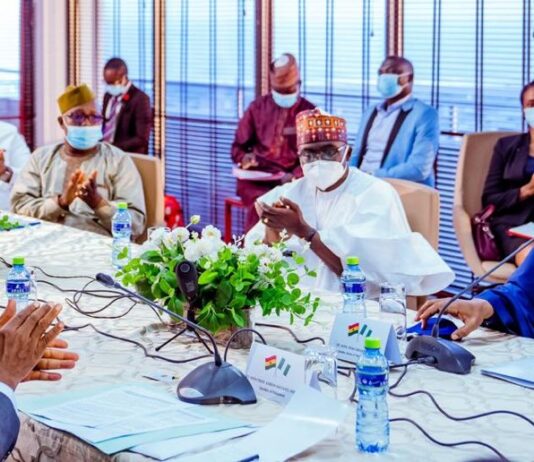
    Speaker of the Nigerian House of Representatives, Femi Gbajabiamila & his Ghanaian counterpart, Rt. Hon. Prof. Mike Oquaye, PhD co-chairing a Bilateral Committee Meeting aimed at resolving issues between the two countries at the Ghanaian Parliament House in Accra on Wednesday 09/ 02/ 2020.

    The President promised to also raise the issue with President Muhammadu Buhari when they meet at the ECOWAS Summit on Monday.

    He assured Gbajabiamila of the readiness of the Ghanaian government to consider the resolutions reached at the ‘Legislative Diplomacy Bilateral Meeting’ between Nigeria and Ghana’s senior legislators on September 2 at the Ghanaian Parliament House.

    Speaker of Ghana’s parliament, Mike Oquaye, led his Nigerian counterpart on a courtesy visit to the President at the Jubilee House in Accra on Thursday.

    The legislative diplomacy dialogue became imperative as the parliaments of the two countries sought modalities to resolve challenges and provide an enabling business environment for foreign traders including Nigerians doing business in Ghana.

    Several foreign businesses, many Nigerian-owned, in Ghana have been facing challenges in the demand for $1m capital base for foreign traders, as enshrined in the Ghana Investment Promotion Center GIPC Act (2013).

    “I think the way forward, which is really what matters in situations like this, that is being suggested, one that I find very acceptable, the idea of legislation, a Nigeria-Ghana Business Council that will superintend trade matters and investment matters between our two countries, maybe long overdue.

    Speaker of the Nigerian House of Representatives, Femi Gbajabiamila & his Ghanaian counterpart, Rt. Hon. Prof. Mike Oquaye, PhD co-chairing a Bilateral Committee Meeting aimed at resolving issues between the two countries at the Ghanaian Parliament House in Accra on Wednesday 09/ 02/ 2020.

    “The time has come for us to take these worthwhile steps. I suggested to Mr. President that it will be a good idea to set up a joint ministerial committee of ministers from both sides who will be responsible for shepherding Ghana and Nigeria issues, reporting to both presidents at any one time, and that is how they should be resolved.

    “I am hoping when I see him on Monday at the ECOWAS Summit, we can advance these discussions and come to a final conclusion.

    “The way you yourselves have come about this matter is very satisfactory, and it requires our support. The review that you are asking for, why not? if it works in our mutual perspectives, we can take it for granted that your request will be taken seriously. We will have a look at it.

    “So, the request for the review makes a lot of sense,” Akufo-Addo said.

    Earlier, Gbajabiamila, who was in the company of some of his colleagues in Nigeria’s House of Representatives, which included the Chairmen of House Committees on Foreign Affairs, Media and Public Affairs, deputy chairmen of committee on Diaspora, Federal road safety and a member of the ECOWAS Parliament, told the Ghanaian President that they were in Ghana to “make efforts through parliamentary diplomacy to resolve the issues at stake.”

    According to him, “We have appealed to the (Ghanaian) Parliament that if it’s possible at all to look again at the issues, as far as the Ghana Investment Promotion Centre Act is concerned, they should please do so.

    “If it is not possible, then let us look at ways the pain can be reduced, like those expectations required in the law.

    “We’ve proffered a few suggestions one of which is the establishment of Ghana-Nigeria Business Council backed by legislation on both sides,” Gbajabiamila said.

    Meanwhile, in a communique issued jointly at the end of the bilateral meeting between members of the two parliaments led by their respective Speakers, Gbajabiamila and Oquaye, it was resolved that “measures will be adopted to support law-abiding traders to properly regularise their business operations to alleviate the trade challenges occasioned by the alleged closure of the retail stores, in view of the ravaging impact of COVID-19 pandemic on businesses and families in both countries.”

    They acknowledged that many stakeholders in the retail sector have limited appreciation of the trade laws of Ghana, in particular, Section 28 of the GIPC Act, which provides for the conditions under which non-Ghanaians could engage in trading activities.

    They urged the relevant regulatory authorities including the GIPC and Trade Attaches of foreign missions to educate their citizens on the trade laws.

    They equally emphasised the need to respect the sovereignty of member states of ECOWAS and their laws, but, in doing so, efforts must be made to ensure that the ECOWAS Agenda for free movement of people and goods in furtherance of a shared and prosperous future of citizens of the sub-region is not compromised.

    “A meeting will be held between the Trade and Foreign Affairs Committees of both Legislatures to deliberate on applications of Trade Laws, in particular, the GIPC Act, 2013 (Act 865) and make recommendations for appropriate solutions; and

    “A Joint Committee will be established and composed of Members of both Legislatures to explore the possible passage of reciprocal legislation, which could be potentially called the “Ghana-Nigeria Friendship Act” which shall propose “Ghana-Nigeria Business Council” to provide a framework to sustain the friendship and benefits to citizens of the two nations.”

    Departing Ghana on Thursday, Gbajabiamila expressed his gratitude to his counterpart for his statesmanship, leadership and hospitality, which made it possible for both countries to resolve thorny issues through legislative diplomacy.

    Idowu Sowunmi

  • AU Patners Novartis to Facilitate Affordable COVID-19-related Supplies to Africa

    AU Patners Novartis to Facilitate Affordable COVID-19-related Supplies to Africa

    Novartis and the African Union (AU) through the Africa Medical Supplies Platform (AMSP) have announced a new collaboration to facilitate the supply of medicines from the Novartis Pandemic Response Portfolio to AU member-states and Caricom countries.

    AMSP portal is an online marketplace that enables the supply of COVID-19-related critical medical equipment in Africa. It was developed under the leadership of the AU Special Envoy, Strive Masiyiwa, and powered by Janngo, on behalf of Africa Centres for Disease Control and Prevention (Africa CDC).

    The platform was also developed in partnership with African Export-Import Bank (Afreximbank) and the United Nations Economic Commission for Africa (ECA).

    The new collaboration would help alleviate supply and logistical constraints by ensuring efficient and rapid access to the pandemic portfolio medicines to African and Caricom governments.

    AU comprises 55 member-states, representing all the countries on the African continent, while 15 Caricom countries are eligible for the pandemic portfolio.

    “Our collaboration with AMSP is a continuation of our efforts at Novartis to combat COVID-19 across the world.

    “Together, we are aiming to accelerate and expand access to affordable essential medicines in Africa to meet the very urgent patient needs across the continent as it continues battling this pandemic,” said Chief Executive Officer of Novartis, Vas Narasimhan.

    AMSP was developed to ease the difficulties and open up the medical supplies market to Africa, and as part of the Partnership to Accelerate COVID-19 Testing (PACT) of Africa CDC.

    It’s designed to integrate African and globally vetted medical suppliers to ensure cost-effectiveness and transparency in the procurement and distribution of the COVID-19-related supplies.

    Speaking on the collaboration, Masiyiwa said: “Following the successful listing of test kits, personal protective equipment, and clinical management devices, the African Union Chairperson has expanded our mandate to include groundbreaking medicines to treat the COVID-19 patients in Africa.

    “As a global pharmaceutical leader, Novartis is a strategic partner for AMSP to unlock access to the latest and best-performing medicines for Africans in an affordable way.”

    There was a shortage of diagnostics, medical supplies and essential medical equipment such as personal protective equipment for healthcare workers, face masks, ventilators, and many others in the wake of the COVID-19 pandemic and its spread worldwide.

    Many African governments had severe challenges with the procurement of essential supplies to support their response activities and face stiff competition with the more industrialised countries for the limited available supplies.

    “As a continental body, we are working with several partners to ensure smooth and predictable access to essential medical supplies.

    “We found that during the Ebola outbreak in 2014, many people died because of Ebola but not due to Ebola. This is because they did not have access to essential medicines needed for treatment.

    “With AMSP, countries don’t have to search the market for supplies. The prices are negotiated and fixed to unlock the supply space,” said Director of Africa CDC, John Nkengasong.

    Novartis Pandemic Response Portfolio from Sandoz, the generics and biosimilar division of Novartis, comprises 15 medicines: Amoxicillin, Ceftriaxone, Clarithromycin, Colchicine, Dexamethasone, Dobutamine, Fluconazole, Heparin, Levofloxacin, Loperamide, Pantoprazole, Prednisone, Prednisolone, Salbutamol, Vancomycin.

    The portfolio was launched in July 2020 and sells medicines at zero-profit to governments, non-governmental organisations and other institutional customers in up to 79 eligible countries to address the urgent unmet needs of low-and lower-middle-income countries for medicines to be used for symptomatic treatment at various stages of the COVID-19.

    Eligible countries must be included on the World Bank’s list of Low-Income Economies and Lower-Middle-Income Economies.

    Idowu Sowunmi

  • African Energy Chamber’s Committee Harps on Local Content as a Panacea Towards Africa’s Economic Recovery

    African Energy Chamber’s Committee Harps on Local Content as a Panacea Towards Africa’s Economic Recovery

    African Energy Chamber’s Local Content Advisory Committee has held its first meeting, placing local content development at the core of its activities towards the continent’s economic recovery.

    The meeting agreed that with several established markets like Nigeria or Angola and frontier energy markets such as Senegal or Uganda, the oil and gas sector has been supporting several of Africa’s economies.

    “As a result, the African local content has become a key priority for government, regulators and industry stakeholders. Issues around the perceptions and understanding of local content dynamics were major topics of discussion.

    READ ALSO:

    Adesina Assures of Stronger Africa as He’s Sworn-in for 2nd Term as AfDB President

    “Key points put forward included the need for African governments and companies to develop better implementation of local content policies and come up with new approaches putting entrepreneurship and capacity building as priorities.

    “From financing African starts ups, SMEs and companies to promoting an enabling business environment, it was agreed that African governments and regulators need to rise up to the task and provide for better conditions and environments for African entrepreneurs to thrive,” the committee stated.

    The committee members include: the Chief Executive Officer, Shoreline Energy International, Kola Karim; Managing Director, Saipem Contracting Nigeria Limited, Walter Peviani; and Managing Director, Jagal Energy, Jorg Kohnert.

    Others are: Managing Director/Chief Executive Officer, Ocean Deep Drilling ESV Nigeria Limited (ODENL), Chijioke Akwukwuma; President, Kearney Africa, Jude Kearney; President, Royal Triangle Energy Solutions, Eric Williams; CEO, Equatorial Resources, Pablo Memba; Country Manager, SpringRock Group, Ogutu Okudo; and Operations Director and President of the Executive Board, IFP Training, Rémi Mouchel.

    The chamber’s advisory committee added that established African energy markets such as Congo Brazzaville, Equatorial Guinea or Gabon are still missing a pool of strong local companies across the value-chain, and especially in upstream.

    READ ALSO:

    Buhari Inaugurates APC Tripartite Consultative Committee to Strengthen Party’s Internal Democracy

    “Despite producing oil and gas for decades, their environment has remained until now unfavourable to the nurturing of entrepreneurs in oil and gas, especially because of a lack of domestic financing.

    “The regionalisation of the African content was identified as a key trend for the short and medium-term.

    “With the roll out of the African Continental Free Trade Area (AfCTFA) and upcoming first oil and gas in many African markets, the potential to have local content move away from a pure international-local perspective is real.

    “This is especially an opportunity for local companies within established markets, be it Nigerian companies regionalising the oil and gas content or South African and Kenyan companies regionalising content within the renewable energy space.

    “African companies have the means and opportunities to create regional ventures and partnerships taking the African content development to a new level, and must be seizing them.

    “Finally, inclusion in the workforce is set to become a major focus for the chamber and its committee, especially when it comes to promoting youth and women inclusion in the extractive industries.

    “A sustainable African energy industry will only be as strong as it is inclusive, and better mechanisms and policies need to be put in place to ensure African women and youth can build successful careers in the sector.

    “In that regard, upcoming producers such as Senegal, Mozambique or Uganda have a unique opportunity to truly innovate as they develop their own approach to capacity building and local content development.

    READ ALSO:

    Easing Tension in Middle East…Historic 1st Israel-UAE Plane Flies Directly over Saudi Arabia

    “As the novel Coronavirus (COVID-19) pandemic further increases the need for localising value chains in Africa, local content development is set to become even more important for all industry stakeholders.

    “Its success will ultimately depend on the nurturing of capable and patient African entrepreneurs able to raise capital and engage regionally with the right partners to build successful ventures. In such a journey, cooperation with international companies, but especially amongst African entities, will be crucial,” the committee noted.

    Idowu Sowunmi

  • Adesina Assures of Stronger Africa as He’s Sworn-in for 2nd Term as AfDB President

    Adesina Assures of Stronger Africa as He’s Sworn-in for 2nd Term as AfDB President

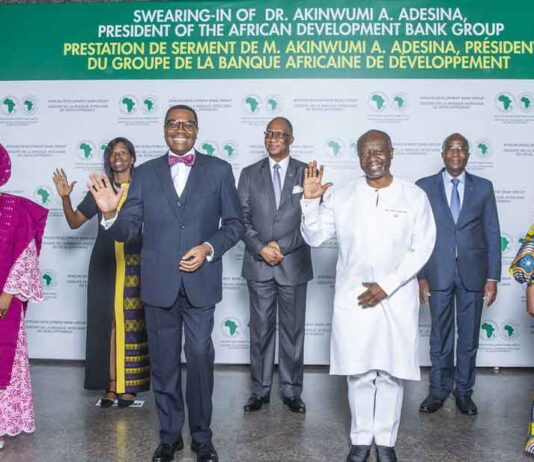
    The re-elected president of the African Development Bank (AfDB), Dr. Akinwunmi Adesina has assured African leaders and stakeholders that Africa will be stronger and more resilient in his second term at the continent’s biggest lender.

    Adesina, who gave the assurance in a speech during his swearing-in ceremony and oath-taking, which took place on Tuesday and broadcast virtually said:

    “We’ve achieved impressive results. The Bank’s High5 programmes have impacted 335 million people. That’s what the African Development Bank – your Bank – is all about…‘people impact.’

    “The COVID-19 pandemic has changed everything globally. It has thrown Africa’s growth back. The continent has lost gains and economic growth that were achieved over the last decade. Africa’s recovery will therefore be long and challenging.

    “Now, we must help Africa build back boldly, but smartly, paying greater attention to quality growth: especially in the areas of health, climate and the environment.

    “As we look to the future, working with the Board of Directors, the bank will pay increased attention to supporting Africa with quality health care infrastructure, and building on its comparative advantage in infrastructure.

    “The bank’s infrastructure work will focus on economic infrastructure, quality physical infrastructure and quality health infrastructure.

    “More than ever before, we will expand partnerships – financial partnerships, knowledge partnerships, and investment partnerships. Stronger inclusive partnerships with civil society, academia and knowledge centers of excellence.

    “So, our focus will be on ‘Institution,’ ‘People,’ ‘Delivery,’ and ‘Sustainability.’ Each of these are encapsulated in the following five areas which combine with the programmatic High 5s to transform the development landscape of Africa.

    “We will reach out and tilt more global capital towards Africa — joining investment hands across the globe to support the needs of the continent.

    “We will build on the great successes we have had in agriculture, by scaling up technologies to reach tens of millions of farmers and supporting Africa to build competitive agricultural value chains. We will add value to what we produce in Africa, and provide creative and high-tech opportunities for massive youth engagement in agriculture and agribusiness.

    “The future beckons the bank to be more agile and more selective; to scale up what’s working already and reinforce its own institutional and human capacity.

    READ ALSO:

    Ghana Replies FG, Describes 700 Nigerians Deported in 2019 as Criminals‎

    “Our bank must ensure its own long-term financial sustainability to drive Africa’s growth further, deeper and faster in the years to come. We must realise the dreams of a more prosperous Africa. A healthier Africa. A more resilient Africa. And, a more developed Africa.”

    With these words, Akinwumi Adesina assumed office as the newly re-elected eighth President of the African Development Bank (AfDB) for a second term.

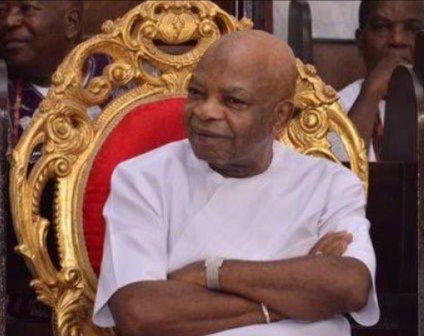
    The event was attended by Heads of States, governors, Nigeria’s former vice president, Atiku Abubakar, and over 200 external stakeholders who joined physically and virtually.

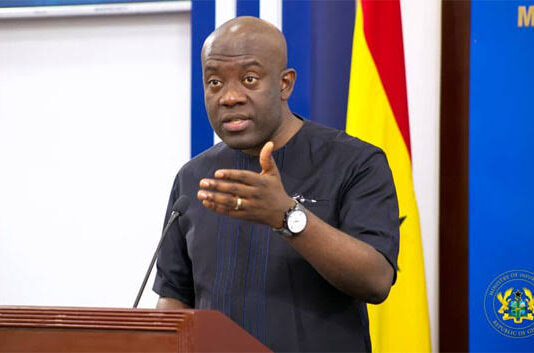
    The new AfDB Chairperson, Board of Governors and Ghana’s Finance Minister, Kenneth Ofori-Attah, administered the oath of office.

    In their various tributes, African leaders took turns to commend Adesina and charged him to prepare for future tasks.

    President George Weah of Liberia told Adesina: “Your reelection signifies Africa and the world’s confidence in your leadership. Liberia looks forward to continued partnership under your leadership. All the best my brother, and congratulations.”

    To President Umaro Sissoco Embaló Guinea Bissau, “Having an election with 100 per cent of votes is something that could serve as a roadmap for you to forge ahead in your mission. I wish you congratulate you and your family and the African Development Bank team.”

    Also, President Paul Kagame of Rwanda said: “You have our full support as you continue to lead the African Development Bank through this COVID-19 period, marked by turmoil, but also the prospect of new opportunity for our continent.

    “Dr. Adesina has led the bank with integrity and purpose over the past five years. The next five years promise to be even more noteworthy. Know that you have our full support…”

    Adesina, Nigeria’s former Minister of Agriculture and Rural Development, was re-elected on August 27 to serve a second five-year term, after a unanimous vote of all governors, regional and non-regional members of the bank.

    READ ALSO:

    Easing Tension in Middle East…Historic 1st Israel-UAE Plane Flies Directly over Saudi Arabia

    The election was announced by the immediate past Chairperson of the bank’s Board of Governors, Niale Kaba, who is also Minister of National Planning of Côte d’Ivoire.

    The reelection, which took place on the last day of the 2020 55th Annual Meetings of bank, was described by Adesina as historic.

    Read the full text of the speech by Akinwumi Adesina here:

    Being the Text of Inauguration Speech by Dr. Akinwumi A. Adesina for the Second Term in Office on September 1, 2020

    Protocols,

    Your Excellency, President Alassane Ouattara, President of the Republic of Côte d’Ivoire

    Your Excellency, President Muhammadu Buhari, President of the Federal Republic of Nigeria

    Your Excellencies, Heads of State and Governments

    Excellencies former Heads of State and Governments

    Chairperson of the African Union Commission

    The Former Commonwealth Secretary General

    Honourable Niale Kaba, the outgoing Chairperson of the Bureau of Governors of the African Development Bank Group and Minister of National Planning of Côte d’Ivoire— Madam “Quiet Force” or “Force tranquille”

    The new Chairperson of the Bureau of the Board of Governors, Honourable Ken Ofori Ata, Minister of Finance of Ghana

    Governors of the African Development Bank, from 81 capitals around the world

    Members of the Board of Directors of the African Development Bank

    Honourable Ministers, Heads of Regional Economic Communities

    Excellencies, Executive Governors of States from Nigeria

    Heads of diplomatic institutions

    Members of staff of the African Development Bank

    My friends and family members

    My darling wife, Grace — my rock, my helper, my counselor, my sweetheart and my children, Rotimi and Segun, Alex, Emily, and our granddaughters, Noemi, and Audra…who was born just two days ago!

    Distinguished ladies and gentlemen

    I thank God Almighty for making me able to stand before you today. I give God all the glory for all He has done and continues to do in my life – a life which I have dedicated to Him for selfless service to humanity. And above all, I am grateful for the opportunity to serve Africa passionately, to the very best of my God-given ability.

    READ ALSO:

    Ghana to Host African Development Bank 2021 Annual Meetings

    I stand before you today to speak, but I speak for two people: myself and my darling wife, Grace. For without Grace (Yemisi) I will not be here today. I love you honey — thank you for always standing with me, with prayers, and encouragement. I love you!

    I would definitely not be here without the extraordinary support of my country, Nigeria, and my President H.E. Muhammadu Buhari.

    Mr. President, you nominated me, you stood by me, you supported me. Thank you very much Sir.

    I am grateful to the Minister of Finance, the Minister of Foreign Affairs, and the entire Government and people of Nigeria who supported me.

    I would not be here without the strong support of the African Union.

    I would not be here without the strong support of all African Heads of State and governments, starting with my host President – H.E. President Alassane Ouattara.

    I would not be here without the strong support of Africa’s retired heads of state and government, led by H.E. President Olusegun Obasanjo.

    I would not be here without the youth of Africa, the elders of Africa, the women of Africa and the prayers of Africa.

    I would not be here without the incredible decision of all my governors, shareholders of the Bank, from 81 countries around the world, for getting me here. I stand on their collective pedestal.

    I stand tall today because of you all … your support, prayers, and good wishes inspired us.

    We are grateful to you all. Thank you all very much!

    Your Excellencies,

    Four days ago, on August 27, 2020, I was re-elected as President of the African Development Bank Group. I wish to thank you all for your incredible support and for the mark of confidence you all collectively placed in me. You elected me with 100% of all the votes of regional and non-regional shareholders of the Bank — without any exception. This is unparalleled in the Bank’s 56-year history. And for this, I am exceedingly grateful.

    What honor. What confidence. And what affirmation!

    You our shareholders have showcased the African Development Bank’s exceptionally high standards and its commitment to transparency and good corporate governance. I am deeply grateful for your collective trust, confidence and support. Above all, I am greatly honored — and humbled.

    Your Excellencies,

    Today, a rainbow stretches from the 81 member countries of the African Development Bank across the deep blue skies of Africa, with one message — the rain is gone. Gone are the dark clouds that held us down.

    I stand today, with all humility, as the President elected by all.

    I will be the President for all.

    Your Excellencies, ladies and gentlemen,

    Over the past five years, since you first elected me as President, we have collectively charted a new way forward for Africa; one that has given stronger hope for the continent’s development.

    The High5s of the Bank (Light up and Power Africa; Feed Africa; Industrialize Africa; Integrate Africa; and Improve the Quality of Life of the people of Africa) which were developed to accelerate the delivery of the Ten-Year Strategy, have been implemented with deliberateness, speed and rigor.

    The High5s have taken hold on the continent and become the keys for accelerating Africa’s development. The UNDP has shown that achieving the High5s would lead to achievement of 90% of the SDGs and the Agenda 2063 of the African Union.

    Your Excellencies,

    Over the past five years, the Bank has delivered impressive results on these High 5s:

    18 million people with access to electricity
    141 million people had access to improved agricultural technologies for food security
    15 million people with access to finance from private investments
    101 million people with access to improved transport from infrastructure
    60 million people with access to water and sanitation
    We’ve achieved impressive results. The Bank’s High5 programmes have impacted 335 million people. That’s what the African Development Bank – your Bank – is all about … ‘people impact’.

    Our non-sovereign operations for the private sector increased 40% from $1.5 billion in 2015 to $ 2.1 billion in 2019, with the highest level of $ 2.5 billion achieved in 2016.

    We have been accountable for the climate since COP 21 in Paris. The Bank’s climate financing expanded from 9% when you elected me in 2015 to 36 % by 2019 – an increase of 400%. We’ve now targeted to reach $25 billion in climate finance by 2021.

    Through the innovative and groundbreaking Africa Investment Forum in 2018 and 2019, we were able to attract a combined $78.8 billion worth of investment interests into Africa.

    In every country, the Bank’s impacts are felt. We expanded our presence to 44 countries, including across fragile states. Our staff risk their lives to deliver.

    READ ALSO:

    Innocent Ike Succeeds Abiru as Polaris Bank Acting MD/CEO

    And we are delivering more for women with the implementation of the Affirmative Finance Action for Women (AFAWA), to leverage $3 billion for women and women businesses.

    We have launched a Gender Equality Trust Fund, the first ever in the Bank, and are advancing on gender markers for all projects of the Bank. We must continue to strongly support women. When women win, Africa wins!

    Your Excellencies, Governors,

    Winning for Africa’s development is what you set us up to do!

    You the shareholders supported the historic General Capital Increase of the Bank, raising the capital of the Bank from $93 billion to $208 billion. This represents an increase of $115 billion, the highest in the history of the Bank.

    As shareholders, you strongly supported a 32% increase in resources for the African Development Fund (ADF) 15th replenishment, to support low income countries and fragile states. Today, the ADF countries receive 700% larger resources than they did in 2015.

    Your Excellencies,

    We’ve delivering value for money for our shareholders. The Bank has the lowest cost among all multilateral development banks.

    The African Development Fund has also been rated as the 2nd best managed concessional financing institution globally.
    Over the past five years we have maintained our AAA rating by all three major rating agencies — thanks to your continued extraordinary support as shareholders.

    The Multilateral Organization Performance Assessment Network, otherwise known as MOPAN, ranked the African Development Bank as number one along with the World Bank.

    Publish What You Fund ranked the Bank as the fourth most transparent globally.
    In terms of organizations that people wish to work for in Africa, the Bank’s position as an employer of choice increased from number 82 out of 100 top companies in 2015, to number 4 in 2018 and number 3 in 2019.

    Your Excellencies,

    We are also a very responsive Bank.

    As COVID-19 shocks began, the Bank’s Board of Directors approved a $10 billion COVID-19 response facility to address immediate and project investments for countries, especially to contain fiscal meltdowns.

    We launched a $3 billion social bond on the global market – the largest US dollar denominated social bond ever in world history.

    These actions reflect our ambitions, our unshaken commitment and unyielding responsibility to support, stabilize and strengthen African economies.

    The COVID-19 pandemic has changed everything globally. It has thrown Africa’s growth back. The continent has lost gains and economic growth that were achieved over the last decade. Africa’s recovery will therefore be long and challenging.

    Now, we must help Africa build back boldly, but smartly, paying greater attention to quality growth: especially in the areas of health, climate and the environment.

    As we look to the future, working with the Board of Directors, the Bank will pay increased attention to supporting Africa with quality health care infrastructure, and building on its comparative advantage in infrastructure.

    The Bank’s infrastructure work will focus on economic infrastructure, quality physical infrastructure and quality health infrastructure.

    COVID-19 opens up new opportunities and a greater sense of urgency to build up Africa’s manufacturing capacity, industrial development, and critically needed industrial value chains, that must be supported by enabling infrastructure and policies.

    Special attention will be given to regional industrial value chains and the strengthening of financial markets in order to expand intra-regional trade and competitiveness, and boost the Africa Continental Free Trade Area.

    Your Excellencies, let there be no doubt, the challenges ahead are still many — including poverty, inequality, fragility, high youth unemployment, significant infrastructure financing gaps, and sustainable debt management.

    As we look to the future, let me assure you that the Bank will play a greater role in policy dialogues with countries. We will support sustainable debt management, boost green growth and accelerate the promotion of jobs for youth on the continent.

    More than ever before, we will expand partnerships – financial partnerships, knowledge partnerships, and investment partnerships. Stronger inclusive partnerships with civil society, academia and knowledge centers of excellence.

    We will reach out and tilt more global capital towards Africa — joining investment hands across the globe to support the needs of the continent.

    The Bank will leverage its brand, its knowledge and resources to help do more and better for Africa. We will deepen the Africa Investment Forum and make it a critical driver for this bold investment partnership to help move Africa forward.

    Your Excellencies,

    We will ensure that Africa’s youth potential is fully unleashed. In this regard, the Bank will support the establishment of Youth Entrepreneurship Investment Banks. Banks that will help to mobilize and deploy capital to drive the entrepreneurship of the youth of Africa — in ways that are systemic, scalable and sustainable.

    The shadows of youth unemployment and migration out of Africa must give way to a glowing light of successful youth-driven businesses across Africa. Africa’s youth must stay in Africa, develop Africa, and project Africa’s future.

    We will build on the great successes we have had in agriculture, by scaling up technologies to reach tens of millions of farmers and supporting Africa to build competitive agricultural value chains. We will add value to what we produce in Africa, and provide creative and high-tech opportunities for massive youth engagement in agriculture and agribusiness.

    The future beckons the Bank to be more agile and more selective; to scale up what’s working already and reinforce its own institutional and human capacity.

    Our Bank must ensure its own long-term financial sustainability to drive Africa’s growth further, deeper and faster in the years to come. We must realise the dreams of a more prosperous Africa. A healthier Africa. A more resilient Africa. And, a more developed Africa.

    Your Excellencies, Governors, distinguished ladies and gentlemen,

    When you first elected me five years ago, I had a vision. Five years later, I have yet a vision to build on our collective achievements over the next five years. A vision to build a much stronger and resilient African Development Bank Group with the leadership and capacity to deliver greater quality impacts for the people of Africa, while remaining financially strong and sustainable.

    So, our focus will be on ‘Institution’, ‘People’, ‘Delivery, and ‘Sustainability.’ Each of these are encapsulated in the following five areas which combine with the programmatic High 5s to transform the development landscape of Africa.

    Build a stronger institution
    Strengthen human capacity
    Enhance effectiveness
    Deepen quality and impact
    Maintain financial sustainability
    Stronger institution

    Strengthen institutional capacity
    Improve Human Resources
    Build a top-notch IT capacity to enhance effectiveness and productivity in an increasingly digital age
    Strengthen accountability, oversight and compliance systems
    Promote a stronger performance culture
    Strengthening human capacity

    Preferred employer in Africa
    Hire and retain top talent
    Improve staff experiences and value propositions
    Enhance career development and mobility
    Enhanced Effectiveness

    Improving responsiveness to clients
    Decentralized decision making
    More efficient systems and processes
    Cost effectiveness and value for money
    Accelerated Quality and Impacts

    Quality operations
    Enhance policy dialogues, knowledge, and debt management
    Strengthen environmental and social safeguards
    Accelerate development impacts
    Financial Sustainability

    Stabilize prudential ratios
    Drive a culture of cost effectiveness
    Balance development objectives and financial sustainability
    Optimize the Bank’s balance sheet
    Leverage global private capital to complement Bank resources
    Ensure the Bank attains its own intrinsic stand-alone ‘AAA’ rating for long term sustainability

    With the strong support of the African Heads of State and Governments, Governors of the Bank, Ministers of Finance, the Board of Directors and staff, we will be ready from today, yet again, to roll up our sleeves and continue our collective work to deliver even greater results on our High5s to: Light up and Power Africa; Feed Africa; Industrialize Africa; Integrate Africa; and Improve the Quality of Life of the People of Africa.

    The future beckons us for a more developed Africa and a much stronger and resilient African Development Bank.

    In our time, Africa must shine like the brightness of the sun.

    Together … united, we will achieve this.

    So, today, yet again, let us move forward, driven by the power of our mission, inspired by the primacy of our vision and emboldened by the strength of our togetherness.

    Together — we are stronger
    Together — we achieve more
    Together — we become resilient
    Together — we build a better Bank
    Together — we win for Africa!

    Thank you very much!

    God bless you all – and God bless Africa.

  • Easing Tension in Middle East…Historic 1st Israel-UAE Plane Flies Directly over Saudi Arabia

    Easing Tension in Middle East…Historic 1st Israel-UAE Plane Flies Directly over Saudi Arabia

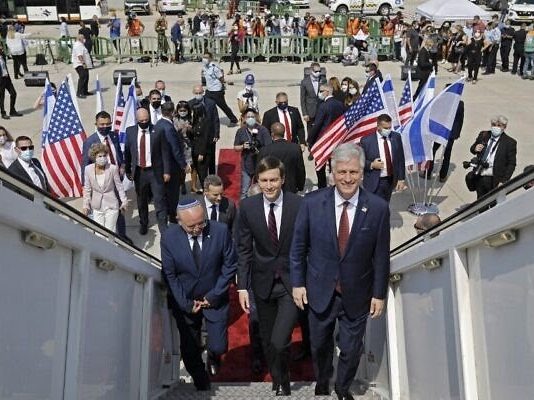
    In a sign of easing tension in the Middle East, history was made on Monday with the first direct flight from Israel to the United Arab Emirates (UAE), The Independent has reported.

    El Al flight 971 took off from Tel Aviv at 11.14am local time, and initially routed over Jordanian territory.

    Forty minutes later, the Boeing 737 crossed into Saudi Arabian airspace, from which the Israeli national airline had previously been banned.

    El Al has suspended normal passenger operations until October at the earliest, but dispatched the flight to mark an Israel-UAE agreement to normalise relations.

    The passengers on board are members of a US-Israeli delegation, led by Jared Kushner – President Trump’s son-in-law and adviser – and Israel’s national security advisor, Meir Ben Shabbat.

    The agreement has been claimed as a foreign policy success by Donald Trump. But Palestinian groups have described the deal as a “stab in the back.”

    The word “peace” was painted on the aircraft in English, Hebrew and Arabic.

    The flight number, 971, was chosen as it is the international dialling code for the UAE.

    The return flight is numbered 972, which is the code for Israel.

    Until now, the only Arab nations to establish relations with Israel have been Egypt and Jordan.

    Travellers in the region have long faced problems if they have an Israeli stamp in their passport, or a stamp from Egypt or Jordan that indicates they have used a land border with Israel.

    Some people have even been refused entry if they have old baggage tags indicating Israeli airports on their luggage.

    While Israeli citizens could visit the UAE, previously they have had to take connecting flights.

    Ahead of the flight, Israel’s health ministry removed the obligation for arrivals from the UAE to self-isolate for 14 days.

    Idowu Sowunmi