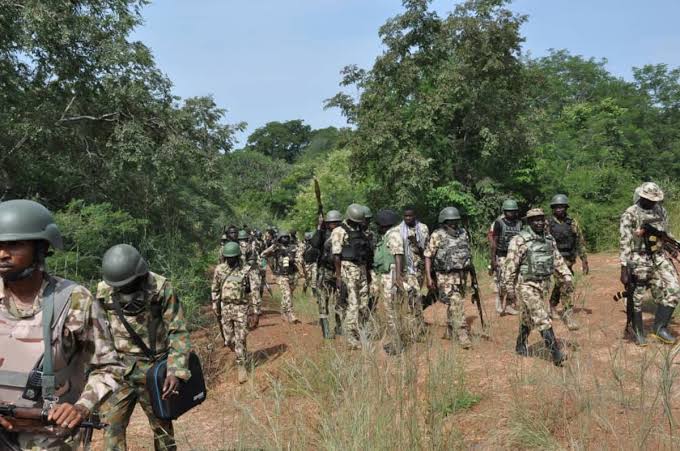
Afraid of being sanctioned by the United Kingdom Government over the handling of the #EndSARS protests which turned bloody in Nigeria, the President Muhammadu Buhari-led Federal Government has moved to placate the British government to present its own side of the story.
The Federal Government’s latest position was coming as the United Kingdom Parliament passed a resolution calling for an imposition of sanctions on some Nigerian officials over their role in the “violent suppression” of the protests.
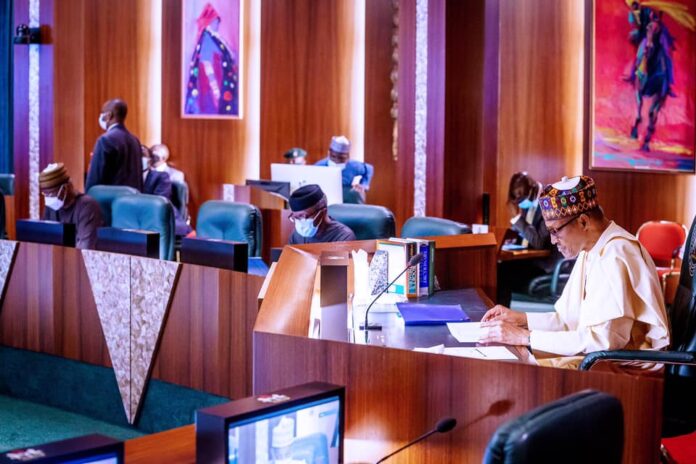
But, briefing State House correspondents at the end of the weekly Federal Executive Council (FEC) meeting in Abuja in Thursday, Minister of Foreign Affairs, Geoffrey Onyeama, said though British legislators may not be legally binding to impose sanctions, Nigerian Government would use the opportunity to clear air on some grey areas over the #EndSARSProtestsTurnedBloody in the country.
According to him, “The UK Government has been briefed. There was a UK parliamentarian meeting and the UK Government, which acts for the United Kingdom, has also heard the side of the (Nigerian) government regarding everything that has happened.
“So, we have been in touch with them and engaging them. As in every democracy, members of parliament are also able to air their views.
“What is important is that a balanced picture is made available to them before they take any decision.”
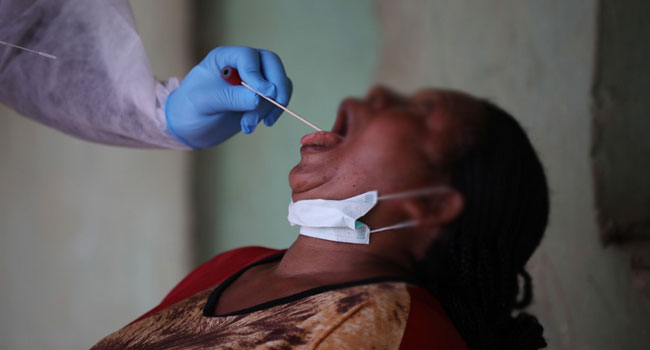
File photo: A health worker takes a swab from a woman during a community COVID-19 coronavirus testing campaign in Abuja on April 15, 2020. Kola Sulaimon / AFP
President of African Development Bank, Akinwumi Adesina; Chair of the Graça Machel Trust, Graça Machel; and a musician, businessman and former Culture and Tourism Minister of Senegal, Youssou N’Dour, have reaffirmed the need to engage the civil society organisations (CSOs) towards building back Africa following the devastating effects of the Coronavirus (COVID-19) on the continent’s socio-economic life.
Speaking at the opening of the 2020 African Development Bank Civil Society Forum on Thursday in Abidjan, Cote D’Ivoire, Adesina said: “The role of civil society in monitoring interventions is crucial and important to ensure they are effectively deployed to reach the poor and vulnerable, who are most affected.”
Adesina, who stated this while engaging in a conversation with Machel and N’Dour, assured that the African Development Bank would step up its efforts in reaching out to the vulnerable.
He said the critical issue was not the amount of funds that are provided by the bank and others, but who they reach, noting that transparency and accountability are also critical.
Thus, Adesina said: “We will work much harder, collectively and in unison, to accelerate the impact of our work.”
Also speaking at the event, Machel commended the African Development Bank’s strong track record of working with governments and the private sector.
She, however, appealed for an increase in the bank’s funding to directly support civil society efforts to address the impact of the pandemic on the most vulnerable and hard-to-reach families in Africa’s societies.
Machel charged African leaders to harness civil society’s “incredible potential to accelerate social change at a larger scale” in the continent.
According to him, “These organisations stepped up, often with limited resources and in very dangerous conditions, to save lives and restore dignity to communities in the midst of this pandemic.
“Resources for organisations working with women, children and those living with disabilities and in the rural areas are desperately needed.”
To N’Dour, artists should be on the frontline of Africa’s development, given their pivotal role as communicators.
“Even in a place where there is oil, if there is no culture to explain this to the people, there is war…
“We should be able to say after (President Adesina’s) term that culture has been involved in the development of Africa.
“Culture is profitable and I’m available to provide my assistance, to work with my staff to create other champions in Africa, to take the African Development Bank’s work to another level.
“Africa’s time is now. This should not only be words or prayers. It is within reach. I’m sure (the African Development Bank will be able to meet this challenge,” he said, while speaking in French via an interpreter.
The two-day virtual Civil Society Forum, which kicked off on Thursday with the theme: “Engaging Civil Society in Building Back Better after COVID-19,” would explore cost-effective strategies and reflect on best practices to enhance collaboration between the bank and civil society in response to the COVID-19 pandemic.
The virtual event was declared opened with remarks from senior officials of the bank: Acting Vice President for Agriculture, Human and Social Development, Wambui Gichuri; and Director for Gender, Women and Civil Society, Vanessa Moungar.
The second day of the forum would provide an opportunity for the civil society organisations to develop innovative grassroots ideas.
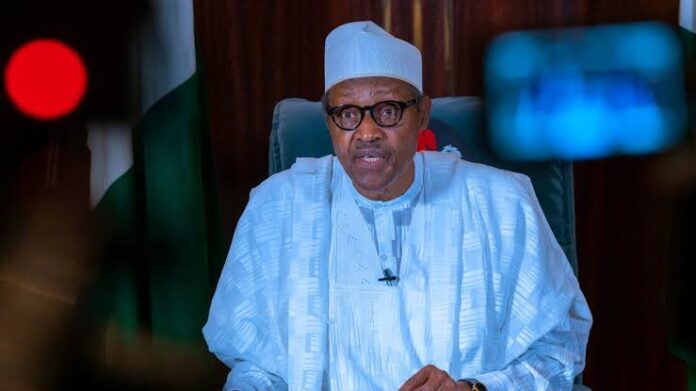
President Muhammadu Buhari Tuesday said the establishment of modular refineries in the country will make petroleum products available in the country and eliminate importation.
The President spoke at the virtual inauguration of the 5,000 barrels per day Waltersmith modular refinery in Ibigwe, Imo State, as well as the Ground-Breaking Ceremony for the Phase-2 works to expand the capacity of the refinery to 50,000 barrels/day, Presidency spokesman, Femi Adesina said in a statement.
President Buhari said the deployment of modular refineries was one of the four key elements of his administration’s Refinery Roadmap rolled out in 2018, adding that its implementation will make Nigeria a net exporter of petroleum products.
He expressed delight that Waltersmith refinery in Ohaji Egbema Local Government Area of Imo State was coming on stream within two years of the commencement of the Roadmap, after many years of granting licenses for the establishment of modular refineries with nothing to show for it.
”Furthermore, there is increased momentum in the other three focus areas under the Roadmap covering the Rehabilitation of existing refineries, Co-location of new refineries, and Construction of greenfield refineries.
”The realization of the Refinery Roadmap will ultimately lead us to becoming a net exporter of petroleum products not only to our neighbouring countries but to the worldwide market.
”This modular refinery is the largest commissioned modular refinery in the country today.
”The role played by the Federal Government through the Nigerian Content Development and Monitoring Board (NCDMB) in going into collaboration with Waltersmith Refining and Petrochemical Company is novel in concept and superb in delivery,” he said.
The President described plans to commence the expansion of the capacity of the refinery to 50,000 barrels per day to refine crude oil and condensates as an important part of economic reforms the country is undergoing.
”I look forward to seeing this new phase completed within the target timeframe,” he said.
President Buhari, therefore, directed the Ministry of Petroleum Resources, Department of Petroleum Resources (DPR), NNPC, as well as all relevant Government Agencies to provide Waltersmith Company all the necessary support to access crude oil and condensate feedstock for the timely delivery of the additional capacity.
In line with his administration’s agenda on jobs creation, the President said he was pleased to note that hundreds of direct and indirect jobs were created during the construction of the first phase of the project in addition to the various business opportunities.
Equally, he expressed hope that the construction of the second phase of the project will create bigger additional employment opportunities.
President Buhari thanked the local community and the people of Imo State for hosting the refinery, which, he stressed, will bring prosperity and economic development to the area.
The President commended the Ministry of Petroleum Resources, the Honourable Minister of State for Petroleum Resources, Timipre Sylva, the Chairman and members of the Governing Council, and the management and staff of the Nigerian Content Development Board for making the public-private partnership a success.
He also commended the Chairman, Board, Management and Staff of Waltersmith Refining and Petrochemical Limited for their professionalism and focus in getting the project completed.
Governor Hope Uzodinma of Imo State and the Minister of State, Petroleum, cut the tape on behalf of the President at the event which was also attended by the Group Managing Director of NNPC, Mele Kyari, the Executive Secretary, NCDMB, Engr. Simbi Wabote and the Chairman of WalterSmith, Abdulrazaq Isa.
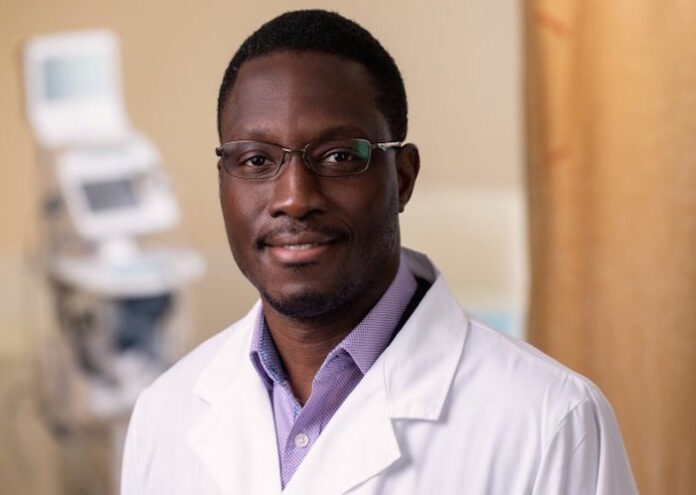
Nigerian-born researcher and medical doctor, Onyema Ogbuagbu
The world has continued to celebrate a Nigerian-born researcher and medical doctor, Onyema Ogbuagbu, for his crucial role in the development of a novel Coronavirus (COVID-19) vaccine.
The latest of such jillion of accolades was coming from the United States Embassy in Nigeria.
The Embassy showered encomiums on Ogbuagbu for his wonderful contribution towards the development of the vaccine, saying: “Nigerians contribute to the world in so many ways. Our hats off to Dr. Onyema Ogbuagbu at Yale who helped develop a COVID-19 vaccine!”
The US Embassy described Ogbuagu’s effort as an “incredible contribution to ending this world-wide pandemic.”
Ogbuagbu led Pfizer research team for a COVID-19 vaccine using his several years of medical research experience.
It would be recalled that Pfizer/BioNTech recently announced that the first vaccine already developed against COVID-19 could prevent more than 90 per cent of people from getting infected.
Good news!
It has also been reported that the vaccine has been tested on 43,500 people in six countries and no safety concerns have been raised.
To this end, Pfizer has assured that it would supply 50 million doses of the vaccine by the end of 2020, and around 1.3 billion by the end of 2021.
Ogbuagbu studied Medicine at University of Calabar, Cross River State. He interned at Ebonyi State University Teaching Hospital, Abakaliki and later travelled to the United States of America.
Ogbuagbu is an Associate Professor of Medicine in the Clinician-Educator Track and Director of HIV Clinical Trials Programme of Yale AIDS Programme at Yale School of Medicine.
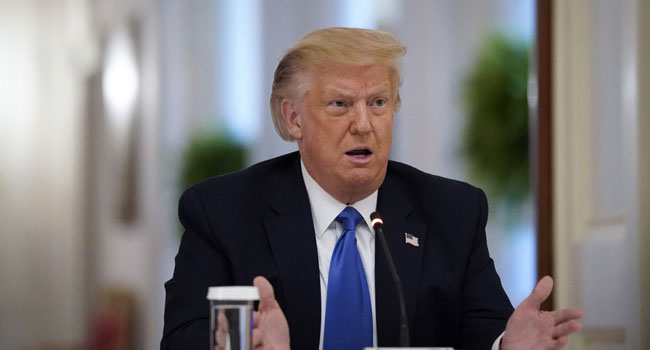
File Photo: U.S. President Donald Trump speaks during an event about citizens positively impacted by law enforcement, in the East Room of the White House on July 13, 2020 in Washington, DC. Drew Angerer/Getty Images/AFP
The United States President Donald Trump has taken a massive step towards admitting defeat in the country’s last presidential election Monday night by saying he was allowing the transition to Joe Biden to begin – but immediately claimed he could still overturn his defeat at the hands of voters.
MailOnline reports that General Services Administration Chief, Emily Murphy, told President-elect Biden in a letter that he could start accessing federal resources to begin the presidential transition process early Monday evening.
Murphy, in a letter to Biden, announced the move, but dedicated a considerable portion to defending her own reputation and claiming she had been threatened and harassed.
Her letter, notably, does not go so far as “ascertain” that Joe Biden is the winner of the election, despite networks calling the race 16 days ago, numerous states certifying their tallies, and Biden winning 306 electoral votes to Trump’s 232. She also called him “Mr.” instead of president-elect or vice president.
It came just over an hour after Michigan certified that Biden had won the state, putting another nail in the coffin of Trump’s bid to overturn the election result.
The move ends much of the controversy over Trump’s refusal to concede and means that a concession would be purely symbolic.
It allows Biden to get the same intelligence briefing as Trump, order FBI background checks on his picks for office and talk to senior officials in key roles – most notably, Dr. Tony Fauci.
But Trump tweeted defiantly that he had ordered Murphy to start the transition “for the sake of the country” and claimed he was sure he would win “the good fight.”
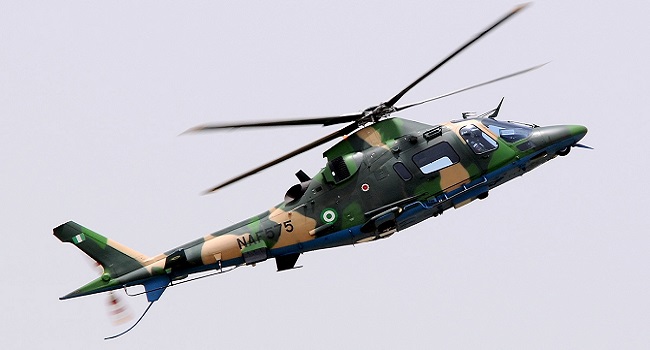
File photo of a Nigerian Air Force helicopter helicopteroto of ephoto
The Federal Government of Nigeria says it is expecting some hardwares to reinforce efforts of the Air Force in combatting insurgency in the Nation’s North-East.
A statement posted on the Nigerian Goverent twitter page quoted Chief of air staff, Air Marshall, sadique Abubakar stating that: “We are expecting 3 JF-17 Thunder fighter aircraft from Pakistan, 12 A-29 Super Tucano from the United States, and one Mi-171E. Out of the 12 Super Tucano from the US, six are almost here, as those to handle them have been sent on training for that purpose.
“A total of 200 Nigeria Air Force personnel are receiving training in 9 different countries of the world on handling combat aircraft. They will soon join their colleagues in the fight against insecurity and in particular, insurgency in the North East”, the statement read.
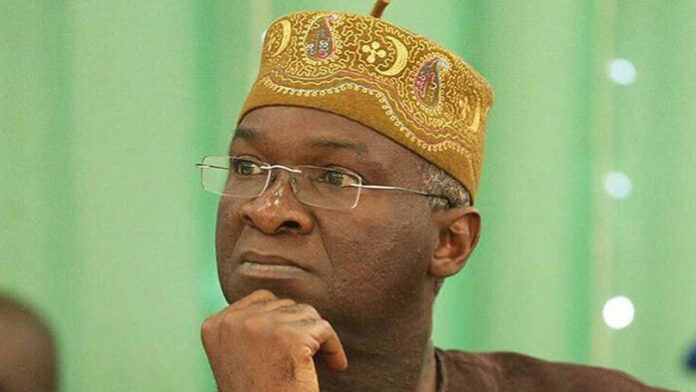
File Photo: Nigeria's Minister of Works and Housing, Babatunde Raji Fashola.
Minister of Works and Housing, Babatunde Raji Fashola SAN, has rebutted what has been described as a “mischievous and sensational report” by Premium Times on alleged illegal payments in the erstwhile Ministry of Power, Works and Housing.
Describing the report as “irresponsible journalism,” Fashola said if anything has been stolen, it’s the trust of the public by Premium Times, noting that he would not believe anything the online newspaper write again.
Read the full text of Fashola’s statement below:
“The stupidity of the THOUGHT that a public officer will take such money on a consistent and repeated basis with impunity reveals the mindset of Premium Times about what they can do in such circumstances.
“That stupidity is magnified by the thought that the public officer who is trying to steal would be paying the money into his bank account where it can be found.
“The stupidity initially informed my decision not to respond to Premium Times in their latest publication headlined under my Name. It is a continuing line of a series of Attack FASHOLA.
“Regrettably, what Premium Times has done is to damage its reputation as a news medium for those who seek the truth.
“Clearly, no investigation was undertaken in respect of this publication as the report was from ‘Open Portal.’
“If it was from the Open Portal then there was nothing to hide.
“If Premium Times had conducted any investigation it will find and report that payments like this occurred in many other ministries and have been a source of concern reported in other media by Compliance Authorities.
“If Premium Times investigated, it would have found and reported that Ministers do not manage accounts and finances of Ministries.
“A little investigation would have shown Premium Times that Directors of Finance and Accounts (DFAs) are those who do this job and they are staff of the Office of the Accountant General of the Federation and seconded to the Ministries as part of financial controls.
IPPIS
“If Premium Times investigated it would have found and reported that government in 2007 initiated a payment platform called Integrated Payment Platform and Information System (IPPIS).
“Any well meaning and right thinking member of the public will recall that this administration has been engaging all sectors of Government to fully migrate to the IPPIS platform.
“What has happened is that not all Government Officials who, from time to time, needed to be paid for approved expenses were registered on the platform.
“In order to ensure that government work was not hampered, the DFAs sought and obtained approval of the Accountant General to pay these monies through the Accounts of an Approved few who were on the platform.
“Those so approved then collect the money and disburse to the beneficiaries who sign Receipts all of which are retired and available for verification as approved by the Accountant General.
“The Accountant General has recently issued new guidelines to deal with this process because not all public officials have fully enrolled on IPPIS and the DFAs have the mandate to comply and not FASHOLA.
“In all, no money was stolen or is missing. There is No Smoking Gun to criminalize Fashola.
“If anything has been stolen it is the Trust of the public by Premium Times.
“I will not believe anything they write again.
“This is not investigative Journalism. It is Irresponsible Journalism.”
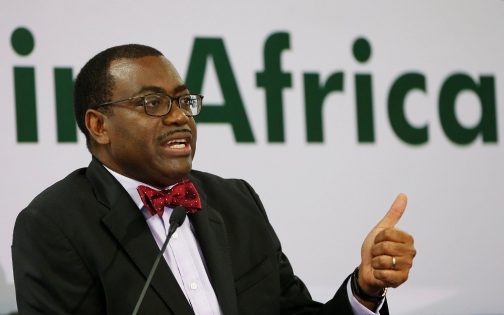
File photo: African Development Bank (AfDB), Akinwunmi Adesina.
African Development Bank (AfDB) has urged the continent to accelerate industrialisation for the transformation of African economies.
The multilateral development bank has been at the forefront in promoting smart industrial policies and mobilising infrastructure development funding for Africa.
To this end, the bank has described Industrialising Africa as one of its High-5 key strategic aims, critical for the transformation of African economies.
“Industrialisation, where we add value to what we competitively produce and then export, and also trade among ourselves on the back of African Continental Free Trade Area (AfCFTA) within a market of 1.3 billion people, should be prioritised and delivered,” said the bank’s Vice President, Private Sector, Infrastructure and Industrialisation, Solomon Quaynor, in a message to mark Africa Industrialisation Day 2020, themed: “Inclusive and Sustainable Industrialisation in AfCFTA Era.”
Quaynor noted that the Coronavirus (COVID-19) pandemic had sharpened the need to accelerate industrialisation and urged a greater role for the private sector, including as a partner to the public sector.
“Resilience is key, and that means no matter the external shocks in the future, we should rebuild so that our people, particularly youth and women who head our households, have jobs and better incomes,” he said.
The bank assured of its commitment to the operationalisation of AfCFTA. In August 2019, the institution extended a sum of $4.8 million grant to support the establishment of AfCFTA Secretariat in Ghana.
AfDB is also working with African countries that are developing strategies for implementation of AfCFTA, helping them to build capacity and leverage opportunities provided by freer trade.
When businesses could trade across borders, then industry could expand, economies could be diversified, and countries could move up the value chain, said the bank’s 2020 Annual Development Effectiveness Review (ADER) released this week.
The report suggested that the bank’s investments in 2019 benefited one million people. Micro, small and medium enterprises (MSMEs) that benefited from bank projects trebled their turnover to $1 billion.
Several projects recently approved by the bank are expected to help regional member countries exploit opportunities, including the construction and operation of a submarine internet cable in Seychelles and a project to expand access to finance for small and medium-sized enterprises in West Africa, the report noted.
The African Development Bank is also promoting development of economic zones that bring together an enabling business environment, backbone integrated infrastructure and transport near to agricultural production hubs.
“Agro-Industrial Processing Zones aim to train young people in rural areas with the needed skills and attract companies, particularly SMEs,” the bank’s Director, Agricultural Finance and Rural Development, Atsuko Toda, also commented.
The pandemic has also spurred opportunities for Africa to strengthen local manufacturing capabilities for basic and essential medicines, personal protective equipment and other medical equipment.
“The bank is undertaking a ground-breaking study to develop a plan for this, which will be ready before the end of the year. The plan will highlight opportunities, challenges, policy reforms required, financing windows and strategic partnerships to be forged to make this happen,” said Director of Industrial and Trade Development at the African Development Bank, Abdu Mukhtar.
Celebrated each year on November 20, Africa Industrialisation Day offers governments and development partners opportunities to explore or highlight initiatives that advance Africa’s industrialisation.
Security agencies Friday night repelled armed bandits and rescued two persons: Sahabi Lawal and Dan Aliko, while Sani Khalil is still missing in Igabi Local Government Area of Kaduna State.
The agencies explained that the armed bandits ambushed troops and security operatives patrolling Rigasa-Link Road at Rugar Bello Junction.
The operatives added that the Armoured Personnel Carrier of the police was riddled with bullets.
“The bandits who were denied freedom of action escaped while stray bullets hit two citizens driving from Mando axis of Rigasa-Link Road.
“The two citizens were rushed to the 44 Nigerian Army Reference Hospital but sadly, one of them, one Rabiu Awwal, died while the second citizen (Umar El-Khattab) is responding to treatment,” said a statement by Kaduna State Commissioner for Internal Security and Home Affairs, Samuel Aruwan.
The statement noted that Kaduna State Governor, Nasir El-Rufai, has sent a condolence to the deceased’s family and offered prayers for the repose of his soul. He also wished the citizen recuperating a speedy recovery.
The governor also commended troops and police personnel that repelled the armed bandits and rescued two citizens.
As the troops and police continue to carry out aggressive patrols in the general area, the El-Rufai administration assured that it would keep keep citizens informed of security development in the state.
File photo: Professor Biodun Ogunyemi, National President, Association of Academic Staff Union of Universities (AsUU)
After the usual government’s fudge and mudge for more than eight months, the President Muhammadu Buhari-led administration has eventually been boxed into a corner and forcefully made to bend on its knees over avoidable confrontation with the Academic Staff Union of Universities (ASUU).
The recalcitrant stance of the Federal Government, insisting on using the Integrated Payroll and Personnel Information System (IPPIS) as the only viable platform in paying the lecturers’ salaries and emoluments fell on its face.
And ASUU won!
The Federal Government did not just agree to pay the lecturers’ outstanding salaries using the old methods, the Buhari administration, like a ductile substance which is capable of being drawn into wire, was constrained to adopt ASUU’s alternative University Transparency and Accountability Solution (UTAS) for payment of salaries and others.
Not done, ASUU also succeeded in forcing the Federal Government to offer a cumulative sum of N65 billion to address earned academic allowances and revitalisation of universities.
Minister of Labour and Employment, Chris Ngige, said a sum of N15 billion from the amount offered by the government would be used to revitalise the universities.
The minister added that the fund was in addition to N20 billion paid earlier, making it a total of N35 billion committed as revitalisation fund by the government.
Reacting to the development, ASUU said: “The negotiation between the Federal Government and ASUU today (November 20) yielded very good results.
“The government has agreed to use the old platform before IPPS to pay all withheld salaries.
“On revitalisation, the government offered N15 billion in addition to the N20 billion pledged earlier.
“ASUU would now consult with its council and then get back to the government in a short while to make their final intention known; if the strike will be suspended or not.”
Sure, our lecturers have upperhand now and they are expected to return to classes after eight months of avoidable disruption.
It’s hoped that going forward the Federal Government would make enough room for effective dialogue to take its primacy, so as to avoid future disruption of this magnitude.
We use cookies to ensure that we give you the best experience on our website. If you continue to use this site we will assume that you are happy with it.