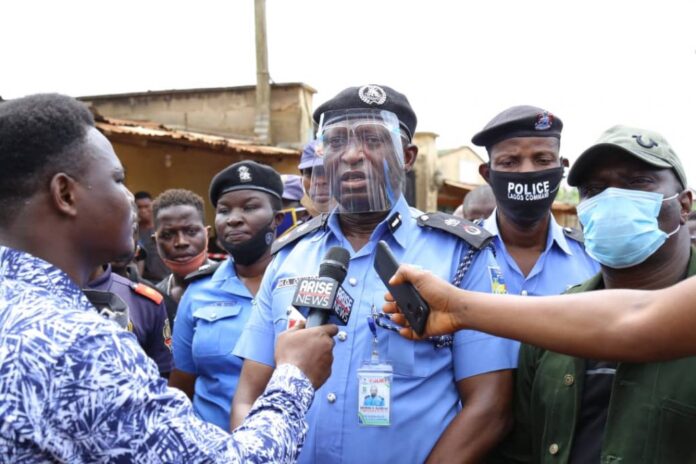
Commissioner of Police in Lagos State, Hakeem Odumosu
Lagos State Police Command has clarified that the shooting incident at Salvation Bus Stop in Opebi, Ikeja area of the state was not in anyway connected to the ongoing #EndSARS protest in the Centre of Excellence.
The command, however, explained that the shooting was carried out by a police officer identified as Eze Aiwansoba, who shot his lover, Joy Eze, over unknown matter which led to disagreement.
“At about 9.21pm of Thursday, 8th October, 2020, one Joy Eze, f, of Owonikoko Street, Idiagbon, College Road, Ogba, Lagos, was shot at the mouth by a policeman, who was later identified to be one Sergeant Eze Aiwansoba, m, attached to the Special Protection Unit, Base 16, Ikeja, Lagos State, after fierce argument between the duo who are in a relationship.
“As at the time of the incident, the identity of the policeman was unknown, until the Commissioner of Police, Lagos State, CP Hakeem Odumosu, ordered the Divisional Police Officer, Ikeja, to trace the whereabout of the victim, ascertain her health condition and get more information on the incident and identify the policeman for further necessary actions.
“Based on the preliminary investigation, the said police sergeant was off duty and not issued with a police rifle or arms as at the time of the incident, hence the police’s concern on the ownership and/or possession of the arms he used in perpetrating the act.
“The Commissioner of Police has ordered that the fleeing policeman, who is attached to another police formation within the state, be arrested by all means and made to face the consequences of his criminal act.
While the Commissioner of Police condemns the act, the command will not in anyway leave any stone unturned in getting justice for the victim and sustain the ethics and Standard Operating Procedure of the Nigeria Police Force; and protect the fundamental human rights of all and sundry across the state,” the command said, in a statement by its Public Relations Officer, Olumuyiwa Adejobi.
The commissioner has also appealed to all Lagosians especially protesters across the state, to maintain law and order while they embark on peaceful protests as the police would do everything possible not to infringe on their rights.
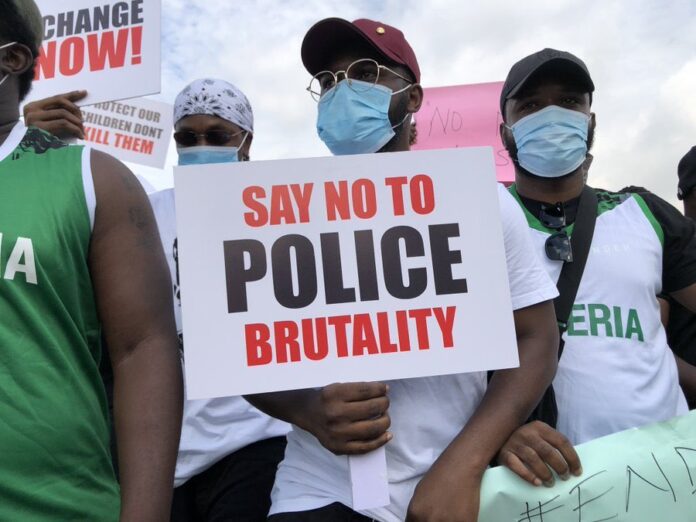
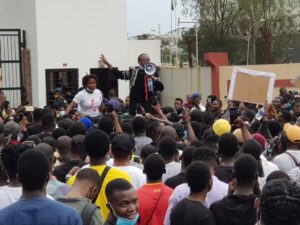
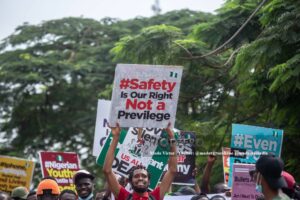
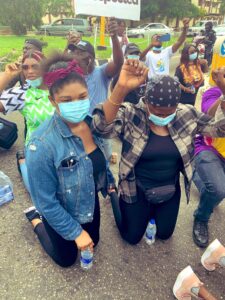
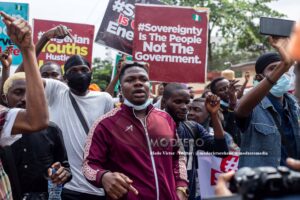
The #EndSARS protest against the brutality and misconduct of officers of the Nigerian Police Force, especially its tactical unit, Special Anti Robbery Squad, notoriously known as SARS again for the third day gained momentum casing massive gridlock on Lagos-Ibadan Expressway.
The protesters who thronged the streets had earlier caused massive gridlock in Alausa when they marched to the State House of Assembly and their after to the Alausa section of the Lagos-Ibadan expressway.
Armed with placards that reinforce their demand, the protesters barricaded the highway from the Secretariat bus-stop, opposite Magodo Phase II.
As a result of the blockage, traffic gridlock extended to the Otedola Bridge along the Lagos-Ibadan Expressway.
Friday witnessed thousands of protesters, they stormed the State House of Assembly to demand outright disbandment of the Special Anti-Robbery Squad, SARS, over series of atrocities committed by the operatives, killing and maiming innocent citizens.
The Lagos State Deputy Governor, Dr. Kadri Hamzat, while addressing the protesters charged the police authority to ensure it put a stop to the incessant harassment of Nigerians by some officers of the anti-robbery squad, adding that any officer of the squad found to have harassed innocent Nigerian should be arrested and prosecuted.
‘It’s okay to protest but I say clearly that it is wrong for any law enforcement agent to maim or criminalise another Nigerian without reasonable course. The police or the law enforcement agents must do their job. In doing that job, you cannot trample on the right of the citizens.
“You cannot say our youths, because of their looks or they are carrying computer are guilty of a crime. The police job is to arrest people and send them for prosecution if they do something wrong. That tenets must be adhered to.
“We are not against police fighting robbery but we are saying do not unjustifiably hurt our children because of their looks. Whoever is responsible should be arrested and prosecuted,” he said.
The Street protests against the notorious Nigerian police unit, SARS, have caught the attention of the international community with supports from celebrities.
On Friday, which is day 3 of the protest, the #EndSARS hashtag did not only trend in Nigeria but in the UK, Canada, and the United States.
While protests have been taking place in at least six states in Nigeria including the FCT, the #EndSARS hashtag has remained on Twitter’s Nigeria top 10 trend table since the weekend, The Guardian reported.
One of the many international celebrity who has shown and voiced his support for the cause was British-Nigerian actor John Boyega, just as Nigerian music stars Davido, Wizkid, Tiwa Savage, Runtown, Falz and DJ Spinal have participated in the March against the notoriously perceived SARS that have for long been accused of brutalising, harassing and extorting Nigerian youths, including extrajudicial killings.
Popular international cyber-activists known as Anonymous, also joined in the campaign.
In the UK a Nigerian professional athlete, who owns the first Black-owned cigar line, Mike Edwards has also called for a protest in London.
According to a report by The Guardian Nigeria Edwards would be leading a protest to the Nigerian High Commission in London on Sunday. In support of the protest by Edward, award-winning actress, Nse Ikpe-Etim tweeted to join in the London protest.
Similarly, plans are ongoing to kickstart #EndSARS protest in other foreign countries such as Germany, USA and Canada.
Nigerians are protesting, yet again, after years of horror stories of brazen extortion, illegal detentions, and illegal murders of Nigerians, mostly youths, by the notorious police unit, at the hands of local police. The protesters are demanding the government to scrap the police’s notorious unit.
The recent fury was sparked after graphic footage showing officers from the SARS police unit dragging two men from a hotel in Lagos and shooting one of them in the street.
In the disturbing footage taken by visitors at a hotel and posted on to social media on Saturday, armed officers of the SARS can be seen dragging two limp bodies from the hotel compound into the street before one of the men is shot.
The video has sparked a deluge of footage and stories posted on to social media alleging recent atrocities and brutality by the notorious SARS unit, long accused of rampant abuses.
On Sunday, Nigeria’s inspector of police, Mohammed Adamu, banned SARS, and other “tactical” police units focused on armed crimes from stop and searches, from setting up roadblocks and said officers would always be uniformed.
The governor of Lagos, Babajide Sanwo-Olu, promised “appropriate actions will be taken, and speedily too”. According to the police, a dedicated complaints unit has in recent years improved accountability for police abuses, The Guardian Nigeria reported.
.
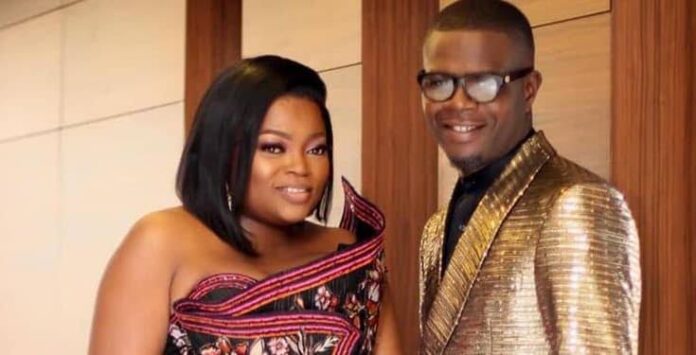
Celebrity couple, Funke Akindele-Bello and her husband, Abdulrasheed Bello, widely known as JJC Skills.
Lagos State Governor, Babajide Sanwo-Olu has granted State pardon to Nollywood actress, Funke Akindele-Bello and her husband, Abdulrasheed Bello, widely known as JJC Skills, who were both convicted for violating COVID-19 lockdown regulation.
The pardon by Governor Sanwo-Olu was disclosed in a statement signed by the
Director, Public Affairs, Ministry of Justice, Kayode Oyekanmi, who quoted the State Attorney-General and Commissioner for Justice, Mr. Moyosore Onigbanjo, SAN.
According to the Commissioner, Governor Sanwo-Olu acted based on the recommendations of the State Advisory Council on Prerogative of Mercy, under the powers conferred on the Governor by Section 212 (1) & (2) of the Constitution of the Federal Republic of Nigeria as amended.
The Nollywood star actress and her music artiste husband had incurred the wrath of the Lagos government when they hosted a birthday party for Skillz and invited giests to their home during the Coronavirus lockdown, thereby violating laid down protocols that were aimed at combatting the pandemic.
The couple were pronounced guilty and sentenced by a Magistrate’s Court in Ogba in a non-custodial sentence.
The Governor also approved the release of 56 inmates from various Correctional Centres in the State.
The 56 released inmates were recommended by the Advisory Council after due examination of their case files and consideration of the length of time served, the gravity of offence, old age and ill-health among other parameters.
Lending some advice to the beneficiaries, the Attorney General also enjoined them to be good citizens and stay away from crime.
The eight-member Advisory Council on Prerogative of Mercy, headed by Dr. Abayomi Finnih was inaugurated by Governor Sanwo-Olu in December 2019.
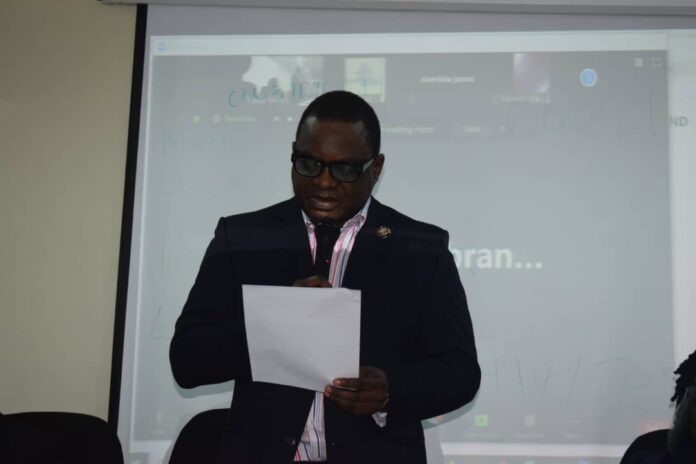
Lagos Commissioner for Youth and Social Development, Mr. Segun Dawodu
A call has gone out to youths to channel their energy into productive activities as they are pivotal actors in the achievement of peace and sustainable development in the country.
This appeal was made by Lagos Commissioner for Youth and Social Development, Mr. Segun Dawodu, on Thursday, during a virtual youth dialogue on peace and conflict resolution organised by the Ministry of Youth and Social Development.
The Commissioner noted that the effect of COVID-9 pandemic on youths has been tremendous, creating personal and group conflict in the society, hence the need to dialogue and find lasting solutions to issues that may trigger conflict in the society.
Conflict, the Commissioner noted, may arise as a result of lack of education, skills or adequate information, pointing out that idle youths can be easily lured into violence and manipulated by extremist groups.
Dawodu observed that because conflict as a form of human character cannot be wished away, it is essential to address conflicting issues and resolve them effectively before they escalate into violence, abuse or war.
He maintained that peace and conflict resolution allow people to thrive economically, socially and politically by addressing the root causes of violence.
Dawodu charged youths to take advantage of the many opportunities created by the administration of Governor Babajide Sanwo-Olu for building a network for peace and prevention of conflicts and violence.
While charging youths to avoid idleness, the Commissioner advised them to key into the entrepreneurship drive of the State as well as agriculture, saying “an idle hand is the devil’s workshop”.
The Permanent Secretary, Ministry of Youth and Social Development, Mrs. Yewande Falugba noted that youths possess a strong potential to drive change at all levels and can be heroes of strong positive action.
She noted that although youths may be at the centre of negative security related issues, large numbers of them are making a positive impact in the society, urging youths to embrace non-violence and channel their energy into making good use of the technological advances available.
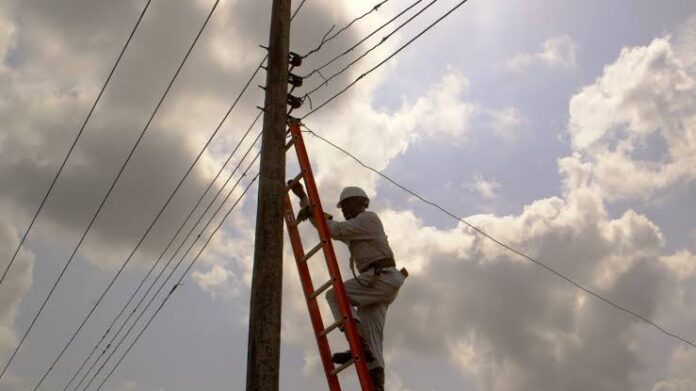
A picture illustration of an official of one of Nigeria's electricity distribution company reaching up to power cables.
By Dapo Akande
Many years ago in the Uk, The Sun newspaper, a very popular national daily, openly identified as a Conservative Party sympathizer, did something on the very day of a general election which had looked as good as won for the Labour Party victory; and it nailed the coffin of all predictions. Neil Kinnock was the Labour Party’s flagbearer and after all the years he had spent knocking on the doors of No.10 Downing Street, it looked like it was finally going to let him in as Prime Minister. The Sun newspaper had other plans.
On that fateful day, its publication carried the mischievous headline, “If Neil Kinnock wins today will the last person to leave Britain please turn out the lights?” Shortly after his defeat at the elections, Kinnock gave a farewell speech to announce his resignation as Party leader. That one action, almost singlehandedly, put paid to his long political career and equally long held ambition. He pointedly blamed The Sun newspaper’s headline for this loss.
With the way Nigerians have been trooping out of the country in the last few years, I wouldn’t be at all surprised to see a similar headline here soon. The most popular destinations are known to everyone, with Canada being the hot favourite for some time now, due to their inviting immigration laws. Sadly though, even the most unlikely destinations now appear more attractive alternatives to staying put in Nigeria for many of our youths. We’ve lost count of just how many of our most productive age bracket have lost their lives to the unforgiving elements of the desert or the treacherous sea in desperate search of hope.
But if one was to run a similar headline here, what would it say? Asking the last person to leave the shores of Nigeria to switch off the light may only confuse the poor fellow. From which power source, the electricity supplier or generator? If it’s a generator then I can understand but if it’s the electricity supplier, is there any need? That would simply amount to what bankers call “double entry”. Or maybe the headline will make more sense to ask the person to turn off the water tap. But in a country still struggling to provide adequate supply of potable water, that too may not make too much sense.
If statistics gathered by Aid agencies are anything to go by, 60 million Nigerians, or 33 percent of the population, still don’t have access to clean water. Environmental and water experts insist this is a highly conservative figure. Aha! I’ve got it. The last person to leave should be asked to lock the gate. That sounds more appropriate in a nation where the state of insecurity is such that everyone who can afford to, lives in fortress-like conditions and moves around ensconced in a battalion of policemen.
According to The United Nations Office on Drugs and Crimes, about 64,000 Nigerians are murdered in Nigeria annually with the North East suffering the biggest losses due to rampant terrorist activities there. In its Global Study on Homicide 2019, the agency listed drivers of homicide to include inequality, unemployment, political instability, prevalence of gender stereotypes in the society and organised crime. It was Mike Leavitt who said, “There is a time in the life of every problem when it is big enough to see, yet small enough to solve.” I sincerely hope we haven’t passed this point.
However, a nation sincere about rising from an economically comatose state, a primary cause of the current distressing state of insecurity would neither run away from it’s obvious challenges, pretend they don’t exist nor bury it’s head in the proverbial sand with the hope that it will go away. Instead it would man up to face it’s very real and current realities.
As if speaking to us directly Abraham Lincoln once warned, “You cannot escape the responsibility of tomorrow by evading it today.” Just as another great leader, Lee Kuan Yew, also remarked on the futility of looking for an easy way out. “A soft people will vote for those who promised a soft way out, when in truth there is none” he once said.
Equally sound advice can be found in Jim Collins’ life transforming book, Good To Great, where he prescribes facing up to the brutal facts. In tandem with what he calls the Stockdale Paradox theory, he says such entity (or individual) must “retain faith that it will prevail in the end, regardless of the difficulties and at the same time confront the most brutal facts of it’s current reality, whatever they might be.”
I cannot with good conscience say our governments see this as necessary to succeed. A nation where we thought we had hit rock bottom in 2007 when statistics informed us that with a figure of 8.6 million we had the largest number of out of school children globally but by 2019 we clocked yet another unenviable record by shamefully hitting the 13.5 million mark, according to a survey conducted by UNICEF.
With these number of children denied basic education and the nonchalant attitude by government to reverse it, how do we hope to improve in the poverty index talk less of building a robust nation? A continent where 40% of the population over the age of 15 and 50% of women above 25 are illiterate will remain what the oyinbos like to call it, the dark continent. And there’s little point in raising dust over what oyinbos say as we are wont to do. If we don’t like it we should face the issue squarely so we can change our story.
The role of infrastructure in general and that which a social infrastructure like Education in particular plays in nation building cannot be overemphasized. Without it, reduction in poverty, desired economic growth, improved standards of living and an increase in life expectancy will forever remain a pipe dream for our dear country.
We read for knowledge, we study for understanding but we memorize, meditate and personalize scripture for wisdom. This wisdom becomes self-evident when we value what God values and devalue what God devalues. God made his thoughts on education quite clear where He said, “Study to shew thyself approved unto God”. If we’re indeed sincere in our quest to rebuild the nation then we must as a matter of urgency redesign our educational system to impart knowledge, imbue understanding and inspire wisdom. With this, hope can yet be rekindled.
Also this, I believe is a good a time as any to correct the erroneously held belief that where there is life, there’s hope. I beg to differ. It’s only where there’s hope that you’ll find life worth living. Where hope is absent, desire for life can rarely be found. Ironically, as religiously correct as this often spouted mantra sounds, the Bible itself corroborates my position where it says, ”Hope deferred makes the heart sick, but a longing fulfilled is like a tree of life.” Unfortunately, the ever fading vision of a meaningful future has turned many of our people, hitherto known the world over for our joyful and positive disposition, into latter day alcoholics.
Forced to wake up at 3.30am in order to make it to work on time and rarely making it back home till 11pm throughout the week, has effectively rendered life close to useless. Little time to rest. Even less time to enjoy the company of family and other pleasant things life has to offer, has driven many to seek and effortlessly find perhaps the cheapest form of escapism for now. Something to dull the anguish and to temporarily fill the emptiness; N50 sachets of “hot” drinks. A gift which the manufacturers of such have so “thoughtfully” made available at a price within the reach of just about everybody.
At any given time, whether that be early in the morning or in the afternoon we’ll find our people taking their “pick me up” shot. The unemployed who resorts to it to drown his sorrows may be foolish because I don’t see how this can possibly help him to get a job or even think creatively to create a job for himself. In a macabre kind of way one may see where he’s coming from though. He just wants to forget his predicament, even for a moment. But the driver who needs to have his wits about him or the policeman manning his post in possession of a gun? That, I can never understand.
Unfortunately, we have an ecosystem which not only encourages people to misbehave but enables it. And that brings me to the morality of the companies whose innovatively priced products enable this behaviour and who are subsequently making a fortune from our people’s increasing sense of hopelessness but that’s an argument I’ll leave for another day. For now I’d rather reserve my comment than comment on my reservations.
Changing the nation…one mind at a time
Oladapo Akande is a Surrey University (UK) English graduate with a Masters in Professional Ethics. He’s an alumnus of the National Institute for Transformation and a two time author; The Last Flight and Shifting Anchors. He writes from Lagos.
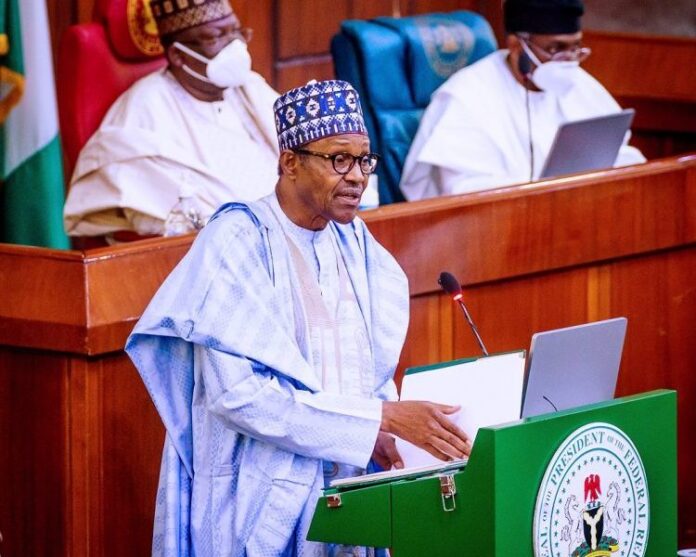
President Muhammadu Buhari presents a ₦13.08 trillion budget before a joint session of the National Assembly on Thursday, Oct 8, 2020, in Abuja.
2021 BUDGET SPEECH: Budget of Economic Recovery and Resilience Delivered By: His Excellency, President Muhammadu Buhari President, Federal Republic of Nigeria At the Joint Session of the National Assembly, Abuja
Thursday, 8th October 2020
PROTOCOLS
1. It is with pleasure that I present the 2021 Federal Budget Proposals to this Joint Session of the National Assembly.
2. Distinguished and Honourable Leaders, and Members of the National Assembly, at this juncture, I wish to commend your tremendous efforts in approving the revision of the 2020 – 2022 Medium-Term Expenditure Framework and Fiscal Strategy Paper, and passage of the 2020 Appropriation (Repeal and Amendment) Act, in response to the Coronavirus Pandemic.
3. Today marks an important occasion in our quest to accord the federal budget process the seriousness it deserves. In line with our commitment, we have worked extra hard to ensure early submission of the 2021 –2023 Medium-term Expenditure Framework and Fiscal Strategy Paper, as well as the 2021 Appropriation Bill. It is my sincere hope that the National Assembly will pass this Bill into law early enough to enable implementation by 1st January 2021, given the collaborative manner in which the budget was prepared.
4. In the course of this address, I will present the highlights of our budget proposals for the next fiscal year. The Honourable Minister of Finance, Budget and National Planning will, later, provide the full details of these proposals.
Recent Developments
1. The 2021 Budget was prepared amidst a challenging global and domestic environment due to the persistent headwinds from the Coronavirus Pandemic. The resulting global economic recession, low oil prices and heightened global economic uncertainty have had important implications for our economy.
2. The Nigerian economy is currently facing serious challenges, with the macroeconomic environment being significantly disrupted by the Coronavirus Pandemic. Real Gross Domestic Product (‘GDP’) growth declined by 6.1 percent in the second quarter of 2020. This ended the 3-year trend of positive, but modest, real GDP growth recorded since the second quarter of 2017. I am glad to note that, through our collective efforts, our economy performed relatively better than that of many other developed and emerging economies.
3. GDP growth is projected to be negative in the third quarter of this year. As such, our economy may lapse into the second recession in four years, with significant adverse consequences. However, we are working assiduously to ensure a rapid recovery in 2021. We remain committed to implementing programmes to lift 100 million Nigerians out of poverty over the next 10 years.
4. As skills’ deficits limit employment opportunities in the formal economy, various skills’ development programmes are being implemented simultaneously to address this problem frontally. For instance, the Government is implementing the Special Public Works programme to provide employment opportunities to 774,000 youths across the 774 local government areas of Nigeria. We have also recently introduced the N75 billion Nigeria Youth Investment Fund, of which N25 billion have been provided in 2021 Budget.
5. We thank all Nigerians, for your perseverance and continued support during these difficult times. We remain unwavering in our commitment to actualize our vision of a bright future for everyone.
President Muhammadu Buhari presents a ₦13.08 trillion budget before a joint session of the National Assembly on Thursday, Oct 8, 2020, in Abuja.
Performance of the 2020 Budget
6. Distinguished and Honourable Members of the National Assembly, you will recall that the 2020 ‘Budget of Sustaining Growth and Job Creation’ was amended in response to recent fiscal pressures. I am glad to report that these efforts enabled us to effectively respond to the public health challenge of Coronavirus outbreak and moderate economic impact.
7. Pursuant to our revised assumptions, the amended 2020 Budget was based on a benchmark oil price of 28 US Dollars per barrel; oil production of 1.80 million barrels per day; and exchange rate of N360 to the US Dollar.
8. Based on these budget parameters, aggregate revenue of N5.84 trillion was projected to fund N10.81 trillion in expenditure. The projected deficit of N4.98 trillion, or 3.57 percent of GDP, is expected to be financed mainly by borrowing.
9. In 2020, average daily oil production was 1.88 mbpd up to June, as against the revised estimate of 1.80 mbpd for the entire year. However, the market price of Bonny Light crude averaged 40.79 US Dollars per barrel, significantly higher than the revised benchmark price of 28 US Dollars.
10. As at July 2020, the Federal Government’s actual revenue available for the budget was N2.10 trillion. This revenue performance was only 68 percent of our pro-rated target in the revised 2020 budget. At N992.45 billion, oil revenue performed well above our budget target, by 168 percent. Non-oil tax revenues totalled N692.83 billion, which was 73 percent of the revised target.
11. To improve independent revenue performance, I have directed that the cost profiles of Government Owned Enterprises (‘GOEs’) should be scrutinized and limits imposed on their cost-to-revenue ratios. Supervising Ministers have also been directed to ensure closer monitoring of the revenue generating activities and expenditures of the Government Owned Enterprises.
12. On the expenditure side, as at end of July 2020, a total of N5.37 trillion had been spent as against the pro-rated expenditure of N5.82 trillion. Accordingly, the deficit was N3.27 trillion. This represents 66 percent of the revised budgeted deficit for the full year.
13. Despite these challenges, we met our debt service obligations. We are also up to date on the payment of statutory transfers and staff salaries, while overhead costs have been significantly covered.
14. For the first time in recent years, we commenced the implementation of this year’s capital budget in the first quarter. As at 15th September 2020 a total of about N1.2 trillion had been released for capital projects. Every Federal MDA has received at least 50 percent of its 2020 capital expenditure budget, in line with my earlier directives.
15. Let me emphasise that revenue generation remains our major challenge. Nevertheless, Government is determined to tackle the persisting problems with domestic resource mobilization, as there is a limit to deficit financing through borrowing. The time has come for us to maintain a healthy balance between meeting our growing expenditure commitments and our long-term public financial health.
Key Achievements in the 2020 Fiscal Year
34. Over the last year, this Administration has implemented several priority projects. I am happy to report that much progress has been made on several fronts and our Government has delivered on key policies, programmes and projects in these priority areas.
16. In agriculture, we have recorded appreciable success in rice and other crops mainly through the Anchor Borrowers Programme and the Presidential Fertilizer Initiative, anchored by the Central Bank of Nigeria and the Nigeria Sovereign Investment Authority, respectively. We are also accelerating the construction of 337 rural roads around key agricultural corridors to enhance access to market and reduce post-harvest losses. These efforts have reduced the adverse impact of Coronavirus on our food availability, prices and security.
17. We have made progress on the railway projects connecting different parts of the country. The Lagos-Ibadan Line will soon be operational. The Abuja-Kaduna Line is running efficiently. The Itakpe-Ajaokuta Line was finally completed after over 30 years since it was initiated and commissioned in September 2020.
18. Arrangements are underway to complete the Ibadan-Kano Line. Also, work will soon commence on the Port Harcourt-Maiduguri Line and Calabar-Lagos Coastal Line, which will connect the Southern and Eastern States to the North, and the South-South as well as South-East to the North, and South-West, respectively.
19. The Second Niger Bridge is at about 46 percent completion. We hope to commission the project before the end of our tenure in 2023. We have awarded several contracts to rehabilitate, reconstruct and construct major arterial roads, in order to reduce the hardship to commuters and increase economic activity.
20. To bridge the infrastructure deficit, we are also implementing innovative financing strategies to pull-in private sector investment. The Infrastructure Company, which I recently approved, will become a world-class infrastructure development vehicle, wholly focused on making critical infrastructural investments in Nigeria. This Infrastructure Company will raise funding from the Central Bank of Nigeria, the Nigeria Sovereign Investment Authority, the Africa Finance Corporation, pension funds as well as local and foreign private sector development financiers.
21. Under the Road Infrastructure Tax Credit Scheme, we are undertaking the construction and rehabilitation of over 780km of roads and bridges, nationwide, to be financed by the grant of tax credits to investing business. Ongoing projects under this scheme include:
a. Construction and Rehabilitation of Lokoja-Obajana-Kabba-Ilorin Road Section II (Obajana-Kabba) in Kogi and Kwara States;
b. Construction of Apapa-Oworonshoki-Ojota Expressway in Lagos State; and
c. Construction of Bodo-Bonny road with a Bridge across the Opobo Channel in Rivers State.
22. To enhance good governance, we strengthened our anti-corruption agencies to ensure they work independently and jointly, while respecting the rule of law. We have also worked to address emergent cases of insecurity and insurgency, nationwide, with innovative approaches. Our security operations in the Niger Delta, North Central and North West are yielding desired results. We are determined to get rid of bandits, kidnappers and criminal behaviour from our midst.
Theme & Priorities of the 2021 Budget
23. Distinguished Senators; Honourable Members; let me now turn to the 2021 Appropriation Bill, which is designed to further deliver on the goals of our Economic Sustainability Plan. This Plan provides a clear road map for our post- Coronavirus economic recovery as a transitional plan to take us from the Economic Recovery and Growth Plan (2017 – 2020) to the successor Medium-Term National Development Plan (2021 – 2025).
24. In view of the many challenges confronting us, we must accelerate our economic recovery process, promote social inclusion and strengthen the resilience of the economy. The 2021 Appropriation has, therefore, been themed the ‘Budget of Economic Recovery and Resilience’. It is expected to accelerate the pace of our economic recovery, promote economic diversification, enhance competitiveness and ensure social inclusion.
Parameters & Fiscal Assumptions Underpinning the 2021 Appropriation
25. Distinguished Members of the National Assembly, the 2021 – 2023 Medium Term Expenditure Framework and Fiscal Strategy Paper set out the parameters for the 2021 Budget, which include:
a. Benchmark oil price of 40 US Dollars per barrel;
b. Daily oil production estimate of 1.86 million barrels (inclusive of Condensates of 300,000 to 400,000 barrels per day);
c. Exchange rate of N379 per US Dollar; and
d. GDP growth projected at 3.0 percent and inflation closing at 11.95 percent.
Finance Bill 2020
26. Distinguished and Honourable Members; I have directed the Minister of Finance, Budget and National Planning to finalise the Finance Bill 2020, which will be forwarded for your kind consideration and passage into law, shortly after today’s 2021 Budget presentation. The Finance Bill is to support the realization of our 2021 revenue projections, adopt appropriate counter-cyclical fiscal policies and enhance the efficiency of fiscal incentives.
Tax Expenditure Statement
27. In compliance with the Fiscal Responsibility Act of 2007, we will prepare and publish, a Tax Expenditures Statement for 2019. The 2019 Statement will be the first of these annual Statements, setting out the estimated cost of tax exemptions, incentives and rebates provided under Nigeria’s revenue and other laws. The 2019 Statement is expected to contribute to public discussion on the use of our tax policies and system to achieve socio-economic development.
Federal Government Revenue Estimates
28. Based on the foregoing fiscal assumptions and parameters, total federally distributable revenue is estimated at N8.433 trillion in 2021. Total revenue available to fund the 2021 Federal Budget is estimated at N7.886 trillion. This includes Grants and Aid of N354.85 billion as well as the revenues of 60 Government-Owned Enterprises.
29. Oil revenue is projected at N2.01 trillion. Non-oil revenue is estimated at N1.49 trillion. As you will observe, the format of the 2021 Appropriation Bill has been modified to include budgeted revenues, no matter how small, for each MDA, to focus on internal revenue generation. Accordingly, I implore you to pay as much attention to the revenue side as you do to the expenditure side.
Planned 2021 Expenditure
30. An aggregate expenditure of N13.08 trillion is proposed for the Federal Government in 2021. This includes N1.35 trillion spending by Government-Owned Enterprises and Grants and Aid funded expenditures of N354.85 billion. For 2021, the proposed N13.08 trillion expenditure comprises:
a. Non-debt Recurrent Costs of N5.65 trillion;
b. Personnel Costs of N3.76 trillion;
c. Pensions, Gratuities and Retirees’ Benefits of N501.19 billion;
d. Overheads of N625.50 billion;
e. Debt Service of N3.124 trillion;
f. Statutory Transfers of N484.49 billion; and
g. Sinking Fund of N220 billion (to retire certain maturing bonds).
Fiscal Balance
1. The 2021 Budget deficit (inclusive of Government Owned Enterprises and project-tied loans), is projected at N5.20 trillion. This represents 3.64 percent of estimated GDP, slightly above the 3 percent threshold set by the Fiscal Responsibility Act, 2007. It is, however, to be noted that we still face the existential challenge of Coronavirus Pandemic and its aftermath; I believe that this provides a justification to exceed the threshold as provided for by this law.
31. The deficit will be financed mainly by new borrowings totalling N4.28 trillion, N205.15 billion from Privatization Proceeds and N709.69 billion in drawdowns on multilateral and bilateral loans secured for specific projects and programmes.
Statutory Transfers
32. The sum of N484.49 billion provided for Statutory Transfers in the 2021 Budget represents an increase of N56.46 billion (or 13 percent) over the revised 2020 provision. The Statutory Transfer provisions are:
a. Niger Delta Development Commission – N63.51 billion;
b. North East Development Commission – N29.70 billion;
c. National Judicial Council – N110.00 billion;
d. Universal Basic Education Commission – N70.05 billion;
e. Independent National Electoral Commission – N40.00 billion;
f. National Assembly – N128.00 billion;
g. Public Complaints Commission – N5.20 billion;
h. Human Rights Commission – N3.00 billion; and
i. Basic Health Care Provision Fund – N35.03 billion.
33. In compliance with the Fiscal Responsibility Act 2007, all beneficiaries of Statutory Transfers will be required to provide the Budget Office of the Federation with periodic reports on the allocation and expenditure of funds for inclusion in the quarterly Budget Implementation Report.
Recurrent Expenditure
34. In our efforts to enhance national security and human capital development, a major part of the 2021 recurrent cost estimate is allocated to paying salaries and overheads in MDAs providing these critical public services. These include:
a. N227.02 billion for the Ministry of Interior;
b. N441.39 billion for the Ministry of Police Affairs;
c. N545.10 billion for Ministry of Education;
d. N840.56 billion for Ministry of Defence; and
e. N380.21 billion for Ministry of Health.
Personnel Costs
35. Personnel cost is still our largest single item of expenditure. In the 7 months to 31st July 2020, it accounted for 34 percent of total Federal Government spending and is projected at 33 percent of 2021 expenditure.
36. To check the incidence of payments to non-existent personnel and unauthorised allowances, only Federal staff that have been captured on the Integrated Personnel Payroll Information System (‘IPPIS’) platform will receive salaries.
37. All agencies have been directed to ensure that they obtain all necessary approvals before embarking on any fresh recruitment. Any breach of these directives will be severely sanctioned.
Debt Service
38. We remain committed to meeting our debt service obligations. Hence, we have provisioned N3.12 trillion for this in 2021, representing an increase of N445.57 billion from N2.68 trillion in 2020. A total of N2.183 trillion has been set aside to service domestic debts while N940.89 billion has been provided for foreign debt service. N220 billion is provided for transfers to the Sinking Fund to pay off maturing bonds issued to local contractors and creditors.
Overhead Costs
39. Total overhead costs of MDAs and Government Owned Enterprises are projected to rise to N625.50 billion in 2021, mainly due to the inclusion of the overheads of an additional 50 Government Owned Enterprises. Overhead provisions have also been made for newly created agencies. To keep a tab on running costs, MDAs must adhere to extant expenditure controls.
Capital Expenditure
40. An aggregate sum of N3.85 trillion is expected to be available for capital projects in 2021, as summarised below:
a. N1.80 trillion for MDAs’ capital expenditure;
b. N745 billion for Capital Supplementation;
c. N355 billion for Grants and Aid-funded projects;
d. N20 billion for the Family Homes Fund;
e. N25 billion for the Nigeria Youth Investment fund;
f. N336 billion for 60 Government Owned Enterprises;
g. N247 billion for capital component of Statutory Transfers; and
h. N710 billion for projects funded by Multi-lateral and Bi-lateral loans.
41. The 2021 capital budget is N1.15 trillion higher than the 2020 provision of N2.69 trillion. At 29 percent of aggregate expenditure, the provision moves closer to this Administration’s policy target of 30 percent.
42. Capital expenditure in 2021 remains focused on the completion of as many ongoing projects as possible, rather than the commencement of new ones. We have also made efforts to ensure equity in the distribution of projects and programmes in the proposed budget. I will be providing the National Assembly a list of some of the most critical projects which we must work collectively to ensure they receive adequate funding. Until projects reach completion, they do not deliver the dividends of democracy that Nigerians rightly deserve.
Highlights of the 2021 Capital Projects
43. Key capital spending allocations in the 2021 Budget include:
a. Power: N198 billion (inclusive of N150 billion for the Power Sector Recovery Plan);
b. Works and Housing: N404 billion;
c. Transportation: N256 billion;
d. Defence: N121 billion;
e. Agriculture and Rural Development: N110 billion;
f. Water Resources: N153 billion;
g. Industry, Trade and Investment: N51 billion;
h. Education: N127 billion;
i. Universal Basic Education Commission: N70 billion;
j. Health: N132 billion;
k. Zonal Intervention Projects: N100 billion; and
l. Niger Delta Development Commission: N64 billion.
44. The Ministry of Agriculture and Rural Development will facilitate the integrated development of its sector by promoting crops’ value chains; as well as providing rural roads, water and sanitation, veterinary and pest controls, grazing, food and strategic reserves, and access to inputs and extension services.
45. The 157 percent increase in the capital allocation to the health sector is to enhance the capacity to deliver healthcare services through the procurement of equipment, vaccines and other facilities. Two centres of excellence, as well as one Accident and Emergency Centre, will be equipped in Federal Teaching Hospitals in each geopolitical zone.
46. In addition, numerous Primary Health Care Centres will be equipped and upgraded across the six geopolitical zones. Furthermore, funds have been allocated for the expansion of Midwives Service Scheme in the six geopolitical zones. To enhance occupational safety, funds have been provided for the provision of Personal Protective Equipment for health workers.
47. The Ministry of Education’s capital allocation has been increased by 65 percent to improve the education of our children. Funds have been provided for the provision of scholarship awards to Nigerian students at home and abroad.
48. We have provided funds for the upgrade of security and other infrastructural facilities in our Unity Colleges nationwide. To improve access to education, we have made provision for the establishment of five new Federal Science and Technical Colleges. We have also provided for the payment of allowances to 5,000 teachers under the Federal Teachers Scheme.
READ ALSO Buhari condoles with Emir of Daura over wife’s death
49. In line with our commitment to invest in Transportation Infrastructure, capital allocation to the Works and Housing sector is to facilitate the completion of several critical projects in 2021. I have directed the Minister of Finance, Budget and National Planning to provide a detailed breakdown of key infrastructural projects in her subsequent Press Briefing.
50. Key projects for implementation in the Power sector include several Rural Electrification Projects in the 36 States and Abuja, Rural Electrification Access Programme in Federal Universities, the Kaduna LPFO Gas Fired power Plant, the Mambilla Hydro Power Project and the Zungeru Hydropower Project.
51. Provisions have been made for legacy debts owed to local contractors compensation and resettlement of project-affected communities, the Renewable Energy Micro Utility (Solar) project, and the construction of transmission lines and substations nationwide. These project’s implementation is expected to have positive impact on electricity supply nationwide, as well as boost productivity and employment.
52. Projects to be implemented by the Ministry of Water Resources in 2021 include provision of potable water in the North East, construction of irrigation and dams across the country, and the provision of Water, Sanitation and Hygiene facilities.
53. The Ministry of Transportation has earmarked funds for projects such as the Lagos-Ibadan-Kano Line, Abuja-Kaduna Line, Port-Harcourt-Maiduguri Line and Itakpe-Ajaokuta-Warri Line. These projects, when completed, will minimize the cost of transporting people and goods around the country.
54. To maintain the peace in the Niger Delta region for economic and social activities to thrive, the provision of N65 billion for the Presidential Amnesty Programme has been retained in the 2021 Budget. In addition, the sum of N63.51 billion has been appropriated for the Niger Delta Development Commission and N24.27 billion has been provided for the capital projects of the Ministry of Niger Delta Affairs. These allocations should further support the development of the region by facilitating the completion of important ongoing projects, such as the East-West Road.
Government Fiscal Strategy in 2021
55. The government is already implementing several measures to overcome our fiscal constraints. In addition to the Strategic Revenue Growth Initiatives, we are leveraging technology and automation, as well as more effective monitoring of Independently Generated Revenues. Our efforts are aimed at addressing revenue leakages and redirecting scarce resources to the poor and vulnerable. These efforts include:
a. Deregulation of the price of petroleum products;
b. Ongoing verification exercise with IPPIS; and
c. Implementation of service-based electricity tariffs.
56. The new petrol pricing regime has freed up resources that was allocated to subsidise petroleum products. Similarly, the ongoing IPPIS verification exercise has closed gaps that encourage ghost workers or pensioners. The service reflective electricity tariffs will help resolve liquidity crisis in the power sector and make the sector attractive to foreign investment. These reforms have released trillions of Naira for allocation to other priority areas.
57. Distinguished Senators, Honourable Members, permit me to reiterate that the main thrust of our capital spending programme in 2021 is the completion of as many ongoing projects as possible across the country. Accordingly, we have prioritized projects that can be rapidly completed to benefit our people.
58. Distinguished Senators and Honourable Members, I note, with satisfaction, your determination to promptly consider and pass the Petroleum Industry Bill into law. The enactment of this Bill will boost confidence and attract further investments into our oil and gas sector, as well as increase revenues.
59. I fully understand the difficulties many of our people are going through with the implementation of our reform agenda. However, the measures we are implementing are necessary for sustainable public finance, better allocation of our scarce resources and improved public service delivery. As we implement these reforms, social safety nets will be implemented to cushion the effect of the most vulnerable of our citizens as well as business owners.
60. In furtherance of our inclusiveness agenda, the sum of N420 billion has been provided to sustain the Social Investment Programme. N20 billion has also been set aside for the Family Homes Fund, our Social Housing Programme. We have expanded our National Social Register, to include an additional one million Nigerians following the onset of Coronavirus. We recently introduced the N75 billion Survival Fund Programme to support and protect businesses from potential vulnerabilities. Furthermore, the Central Bank of Nigeria is reducing the interest rate on its intervention facilities from 9% to 5% with a 1-year moratorium till 31st March 2021, to provide concessional lending of:
. N100 billion to households and small businesses;
a. N100 billion to the healthcare and pharmaceutical industry; and
b. N1 trillion to large agricultural and manufacturing businesses.
61. We urge Nigerian businesses and individuals to make the most of these concessional credit facilities and other such opportunities.
Conclusion
62. Mr. Senate President, Mr. Speaker, Distinguished and Honourable Members of the 9th National Assembly; let me use this opportunity to, again, commend your firm commitment towards ensuring a very harmonious and productive relationship with the Executive. It is important to further deepen this relationship in the interest of our people.
63. As you review the 2021 Budget estimates, we believe the legislative process will be expedited to ensure its prompt passage to sustain the restoration of a predictable January – December fiscal year. In this regard, I have directed all Ministers and Heads of Agencies to be personally available for budget defence.
64. Let me re-emphasize that Nigerians expect that the 2021 Budget will contain only implementable and critical projects, which when completed, will significantly address current structural challenges of the economy, improve the business environment and accelerate economic recovery.
65. May I conclude my remarks by commending the National Assembly for its support in steering our economy during these very challenging times. We remain committed to sustaining this partnership. We believe that as we work together, we will jointly deliver on our joint mandate to our people.
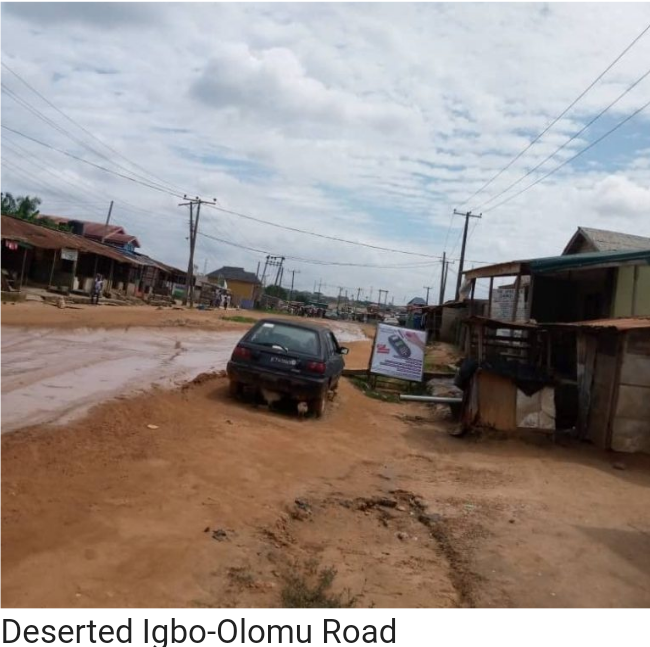
There was pandemonium on Thursday morning in Igbo-Olomu in the Ikorodu area of Lagos State as a result of a brutal clash between Hausa and Yoruba residents .
The clash, according to PM News, which started Thursday morning caused serious panic among traders and other residents who fled into their houses to escape dangerous weapons being freely used.
The cause of the fracas was attributed to a Yoruba man who refused to pay a Hausa okada rider who had conveyed him into the area.
Reports stated that the refusal of the Yoruba man to pay the fare resulted in altercation, that almost immediately degenerated into an ethnic clash.
According to report by PM News, an eyewitness in the area, who said he fled into his house with his family, stated that Igbo-Olomu was now like a ghost town as residents fled into their houses to avoid being caught in the clash.
PM News further reported that an unconfirmed source said that a man had been spotted dropped to the ground, but could not tell whether he was dead or not.
It was said that the Onyabo security outfit had joined in the battle, which reportedly began at Baale/Ola Imam area of Igbo-Olomu.
When contacted, the Police Public Relations Officer, PPRO, Lagos State Police Command, Muyiwa Adejobi said he could not hear what the reporter was saying as he was in a noisy environment, scene of the gas explosion at Baruwa area of Lagos, PM News reported.
However, a top police source was said to have confirmed that policemen had been drafted to the area to maintain peace.
President Muhammadu Buhari presents a ₦13.08 trillion budget before a joint session of the National Assembly on Thursday, Oct 8, 2020, in Abuja.
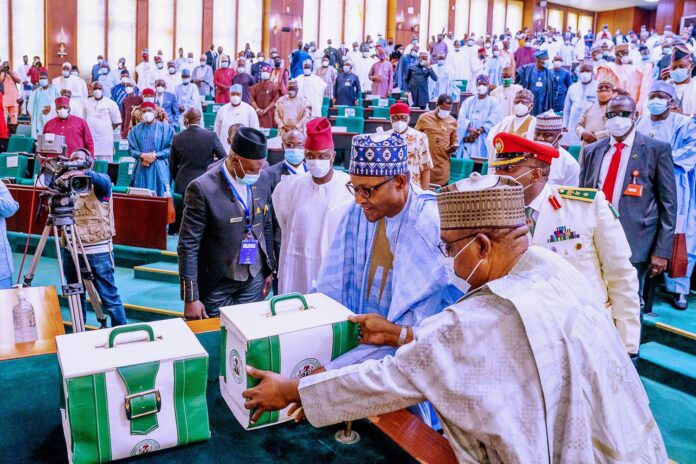
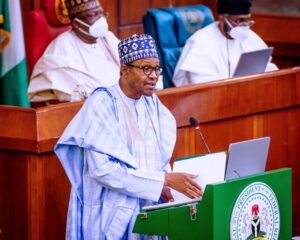
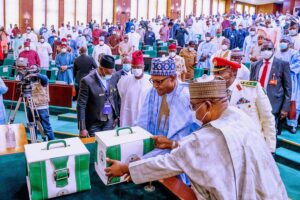
Nigeria’s President, Muhammadu Buhari on Thursday presented before a joint session of the National Assembly a ₦13.08 trillion 2021 budget estimates for approval.
The President in his presentation of the budget estimates, which he tagged: “Budget of economic recovery and resilience,” explained that the main thrust of the document was to complete as many ongoing projects as possible.
President Muhammadu Buhari presents a ₦13.08 trillion budget before a joint session of the National Assembly on Thursday, Oct 8, 2020, in Abuja.
Buhari emphasised that priority is giving to projects that directly affect the lives of Nigerians.
Further in his presentation, the President stated that the 2021 budget would drive the MDAs to generate revenue, no matter how little.
He appealed to the legislature to pay attention to the revenue as much as they did to the expenditure, saying the 2021 budget was the roadmap for post-coronavirus economy and was aimed at accelerating the economic recovery process.
On crude oil projection, Buhari put the figure at $40bpd. He also projected the exchange rate at N379 to $1, GDP at three percent and inflation rate at 11.95 per cent.
He disclosed that for consideration and passage, he had directed the Minister of Finance to finalise the Finance Bill and transmit accordingly.
Allocation of funds as contained in the budget Include a ₦128 billion to the National Assembly, and a ₦380.21 billion to the health ministry.
The President noted that the 2021 budget has the following as critical areas: Multiple Rural Electrification Projects, Mambilla Hydro Power Project, Zungeru Hydro Power Project, among others.
For the Social Investment Programmes, ₦420 billion has been earmarked, while the Social Housing Programmes been allocated ₦20 billion.
A file photo of Peoples Democratic Party (PDP) stalwart, Senator Bukola Saraki
Immediate past Senate President, Dr. Abubakar Bukola Saraki has urged the Independent National Electoral Commission (INEC), security officials and the electorate that will participate in next Saturday’s governorship election in Ondo State to ensure that the peaceful, credible, free and fair process witnessed during a similar election in nearby Edo State is not only sustained but improved upon.
Saraki, in a statement issued from his Media Office in Abuja today, advised the INEC and security officials to quickly do a comprehensive review of how it achieved the commendable process in Edo State and ensure that nothing less than that is repeated in Ondo State.
“These isolated polls as we have in Ondo State next Saturday and the last one in Edo State give us the opportunity to perfect the electoral system. We must continue to improve on the system with every one of these out-of-season elections so that the next general elections will perhaps be the best the country has witnessed in the last 60 years.
“It is a good omen that the election is coming a few days after the 60th Independence Anniversary. INEC, security officials and all individuals involved in the October 10 election in Ondo State must present a credible poll to all Nigerians as part of the Independence Anniversary gifts.
“From the Edo experience, we have seen that when the process is free and fair, the post-election contestation and the tension they usually generate are easily eliminated. The sides that do not win will be graceful in defeat while the one that is victorious will be magnanimous in victory. This is how we can build our democracy and make the system work for the benefit of the people.
“So, INEC should replicate the transparent process we saw in Edo State in which results were transmitted electronically from polling stations to the collation centers and it was possible for all interested parties to monitor the returns as they come in”, Saraki stated.
He further urged the registered voters in Ondo State to vote for the candidate of the Peoples Democratic Party (PDP), Mr. Eyitayo Jegede (SAN) who he described as experienced, mature, committed and brilliant professional that has the ability to think out of the box in finding solutions to the socio-economic problems confronting the state.
“I appeal to the people of Ondo State to vote for Jegede because he will faithfully fulfill all the promises he made to the people and implement the lofty programmes of the PDP. Let me also state that it is not too late for candidates of the other parties who share the same programmes, policies and plans with the PDP to drop out of the race and team up with our candidate for maximum victory and the resultant formation of an all inclusive government”, he stated.
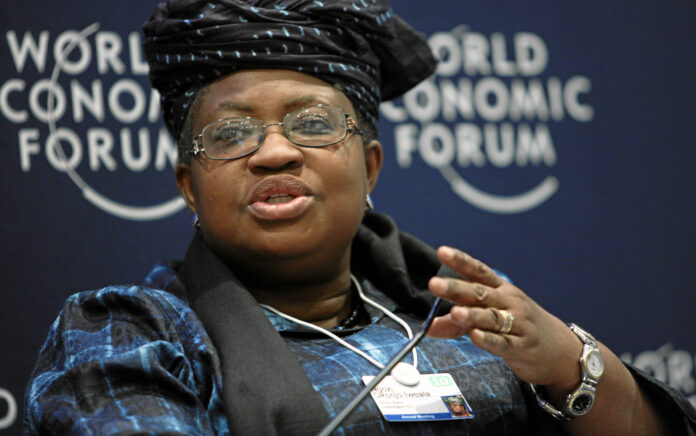
File Photo: DAVOS/SWITZERLAND, 30JAN10 - Ngozi Okonjo-Iweala, was Managing Director, World Bank, Washington DC; Global Agenda Council on Corruption, is captured during the session 'Zero Option for Corruption' in the Congress Centre of the Annual Meeting 2010 of the World Economic Forum in Davos, Switzerland, January 30, 2010.
Copyright by World Economic Forum
swiss-image.ch/Photo by Remy Steinegger
Nigeria’s Ngozi Okonjo-Iweala and South Korea’s Yoo Myung-hee, are the two candidates, out of five, who made the final round of the selection process for the top job of Director General of the World Trade Organization (WTO).
Reports stated that the trio of United Kingdom’s Liam Fox, Kenya’s Amina Chawahir Mohamed Jibril, and Saudi Arabia’s Mohammad Maziad Al-Tuwaijri did not secure enough support needed to scale the second round of consultations.
With two women scaling through to the final round, it is almost certain that the WTO will be led by a woman DG for the first time in the organization’s 25-year history, a report by Reuters stated.
Nigerian born Okonjo-Iweala was Nigeria’s finance minister twice, first in the Olusegun Obasanjo administration and second in the Goodluck Jonathan administration. She has experience working at international governance bodies as a former managing director of the World Bank and as a chairman at the Global Alliance for Vaccines and Immunization.
Yoo has a 25-year career in government and is South Korea’s trade minister. She has helped expand her country’s trade network through bilateral accords with the U.S., China, and the U.K.
WTO General Council Chairman David Walker plans to formally announce the results to the institution’s delegates on Thursday morning in Geneva. The third and final phase of the consultation process will begin later this month and run until Nov. 6, after which the WTO will endeavor to name a consensus winner of the race.
Clouding the outlook for the selection process is the U.S. presidential election Nov. 3. The WTO makes decisions on a consensus basis, and a lack of American support for any of the finalists could mean delays in picking the new director-general.
If WTO members are unable to select a leader by consensus, a vote requiring a qualified majority could be held as a last resort, which would be an unprecedented development for the organization.
The campaign to lead the WTO during the most turbulent period of its 25-year existence is playing out against the backdrop of the pandemic, a worldwide recession, the U.S.-China battle for trade supremacy and the American election.
President Donald Trump has blasted the WTO as the worst trade deal in U.S. history and pledges to overhaul it to better suit the country’s interests.
The vacancy for the top WTO job arose when Brazil’s Roberto Azevedo decided to step down at the end of August, a year before his term was due to end.
WTO members view the race as an opportunity to reshape the organization, whose mission of economic integration is under threat from protectionist policies around the globe. Without reform, it risks being sidelined during the biggest economic crisis in a century.
We use cookies to ensure that we give you the best experience on our website. If you continue to use this site we will assume that you are happy with it.