Category: Business

  • Nigeria to become world’s leading cement and clinker exporter as Dangote begins shipment

    Nigeria to become world’s leading cement and clinker exporter as Dangote begins shipment

    Idowu Sowunmi

    To reaffirm its status as the biggest cement producer in Africa, Dangote Cement has set the pace with the exportation of 27,800 metric tonnes of clinker to a neighbouring African country, Senegal.

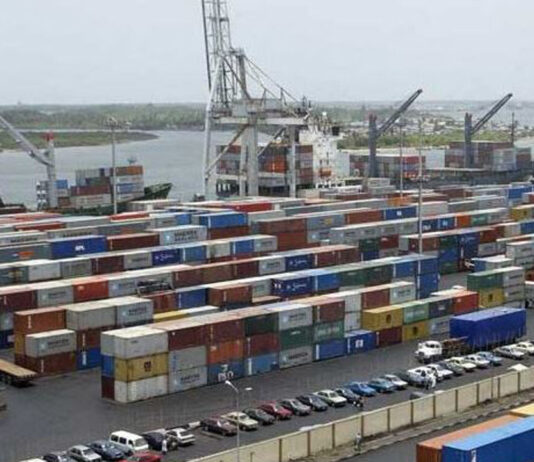
    With this historic maiden voyage from its Export Terminal located in Apapa Port, Lagos at the weekend, Dangote has gradually made Nigeria, which until recently was one of the world’s largest bulk importers of cement, first self-sufficient in cement production, and now an exporter of cement clinker to other countries.

    The exportation of clinker from the Dangote Cement Export Terminal would also place Nigeria as one of the leading clinker exporters in the world. The company is expected to increase the quantity of clinker export to other African countries within the next few weeks.

    It said this development would enable Dangote Cement take advantage of the African Continental Free Trade Area, and by so doing contribute to the improvement of intra-regional trade within the ECOWAS region.

    Speaking during the departure of the ship conveying clinker from the Export Terminal at the weekend, Group Executive Director, Dangote Group, Alhaji Sada Ladan-Baki, said the increased exportation of clinker and cement to other African countries would not only place Dangote Cement among top clinker exporters in the world, but would also boost Nigeria’s foreign exchange earnings and reduce unemployment in the country.

    “The beauty of what we have done is that we are going to be generating foreign exchange for the country in terms of dollars and Euros. For every batch of clinker we export, the money comes back to Nigeria. The amount we are talking about is not small.

    “Presently, Dangote Cement should either be number one or number two exporter of cement in Africa and the revenue we have generated in the form of foreign exchange is running into millions. Today, we have formally launched the Dangote Cement Export Terminal. We are still going to do another major launch when the second ship is going out of the country,” he added.

    Alhaji Ladan-Baki recalled that only a few years ago, Nigeria was one of the world’s largest bulk importers of cement, saying that “Dangote has gradually made Nigeria self-sufficient in cement production as well as an exporter of clinker to other countries.”

    He disclosed that the company would also be launching its export terminal in Onne in the next few days, adding that the export terminal would enable the company export clinker, initially to its grinding facility in Cameroon and then to new grinding plants the company is building across West Africa.

    Ladan-Baki explained that not only would this generate useful foreign currency for Dangote Cement to support other expansion projects outside Nigeria, it would also help to increase the output of the Nigerian plants, saying these would help to improve job creation and increase prosperity in Nigeria.

    According to him, “This terminal will assist Dangote to actualise the full potential of the company’s investment in cement. You know as usual, when the rain comes, sales decline, but not clinker export. This feat by Dangote is going to generate a lot of jobs because the Export Terminal has already created jobs to many Nigerians.

    “As at now, the numbers of employed Nigerians at the terminal have reached 100. We are targeting about 200 to 300 workers in Lagos Terminal alone.

    “But, apart from job creation opportunities, the exportation of clinker by Dangote will position the country to participate fully in the Africa Free Trade Liberalisation Agreement when it comes into being, so that Nigeria will be protected against foreign products. It will also help the country compete effectively with every country that are in the business of exportation of clinker. At Dangote Cement, we are going about it aggressively and we are seeing it as an opportunity.”

    Alhaji Ladan-Baki said the company has also concluded plans to increase its clinker and cement export to other countries. “This vessel, being the maiden ship is exporting 27,800 metric tonnes to Senegal and this is just a tip of the ice-berg as to what we have in plan. What we have in plan is to send clinker from Nigeria to Ivory Coast, Cameroon and Ghana. Cameroon as an example, takes about 82,000 metric tonnes every month. Our target is to export at least 4 million metric tonnes of clinker annually to various parts of Africa.

    “That is our target that we hope to achieve within the next one to two years. This particular voyage is going to our sister company in Senegal. We have an integrated plant of 1.5 million tonnes and this one is expected to give the plant additional clinker that is required for the plant to sustain production. In the next one week or two, we are going to be shipping 82,000 metric tonnes to Cameroon in batches of about 25,000 to 29,000 metric tonnes per voyage,” he added.

    The Manufacturing Association of Nigeria (MAN) has commended Dangote Cement for leading the way for Nigeria to become one of the biggest cement and clinker exporter in the world.

    Speaking on Dangote’s achievement, MAN Acting Director-General, Chuma Oruche, praised the wealthiest man in Africa, Alhaji Aliko Dangote, for leading the way in the export of product from Nigeria to other countries.

    According to him, this feat by Dangote Cement is capable of boosting Nigeria’s foreign earning and reduce unemployment in the country.

    He said: “The export of clinker by Dangote Cement at the weekend will definitely be beneficial to Nigerian economy in terms of export earnings, job creation and wealth creation for families connected with these achievements.”

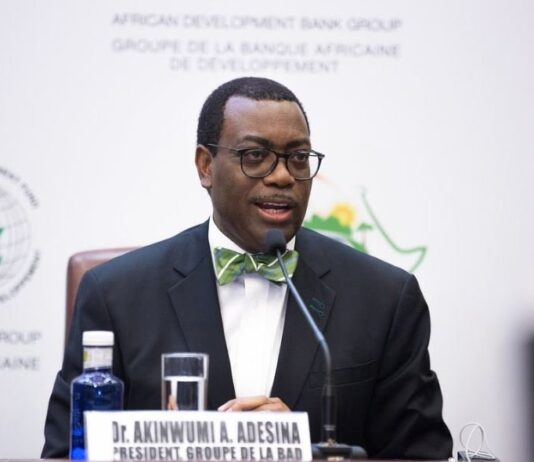
  • African Development Bank Presidency: I’ll Stand By You, Buhari Tells Adesina

    African Development Bank Presidency: I’ll Stand By You, Buhari Tells Adesina

    Idowu Sowunmi
    President Muhammadu Buhari Tuesday said Nigeria would stand solidly behind Dr. Akinwumi Adesina in his bid to get re-elected as President of the African Development Bank (AfDB).
    The President stated this at State House in Abuja, while hosting Adesina on a courtesy visit.
    According to him, “In 2015, when you were to be elected for the first term, I wrote to all African leaders, recommending you for the position.
    “I didn’t say because you were a Peoples Democratic Party (PDP) Minister, and I belonged to the All Progressives Congress (APC), so I would withhold my support. I’ll remain consistent with you, because no one has faulted the step I took on behalf of Nigeria.”
    The President, in a statement by his Special Adviser on Media and Publicity, Femi Adesina, pledged that Nigeria would work with all other leaders and stakeholders in AfDB to ensure that Adesina is elected for a second term built on the record of his achievements during his first term.
    The African Union had already endorsed the incumbent AfDB President as sole candidate for the continent, but some other stakeholders are trying to ensure that Adesina is re-investigated on some allegations, and rendered ineligible to run.
    Giving a background to what was happening in the bank, Adesina, a former Nigerian Minister for Agriculture, said the 16 allegations raised against him were trumped up, “and without facts, evidence, and documents, as required by the rules and regulations of the bank.”
    He added that the Ethics Committee of the bank cleared him of all the allegations, and calls for fresh investigation by the United States of America, were against the rules.”
    He said: “My defense ran into 250 pages, and not a single line was faulted or questioned. The law says that report of the Ethics Committee should be transmitted to the Chairman of Governors of the bank.
    “It was done, and the governors upheld the recommendations. That was the end of the matter, according to the rules. It was only if I was culpable that a fresh investigation could be launched.
    “I was exonerated, and any other investigation would amount to bending the rules of the bank, to arrive at a predetermined conclusion.”
    Stressing that the motive was to soil his name, and that of the bank, the AfDB President said he was proud to be Nigerian, and thanked President Buhari for his unflinching support.
    “You helped me to get elected in the first place, and you have supported me robustly all along, and the African Union unanimously endorsed my re-election,” he declared.
    While commiserating with President Buhari on the death of the former Chief of Staff, Mallam Abba Kyari, Dr Adesina described Professor Ibrahim Gambari, new Chief of Staff as “a man of integrity, and of global standing.”
  • Akinwummi Adesina: Sierra Leone President, ex-US AfDB representative strengthens support base

    Akinwummi Adesina: Sierra Leone President, ex-US AfDB representative strengthens support base

    The support base of embattled President of the African Development Bank (AfDB), DR. Akinwunmi Adesina has been strengthened by two top level individuals, Sierra Leone President, Julius Maada Bio and Harold Doley, the first United States representative to the AfDB. They are the latest joining in with their voice.

    In a message posted on twitter last Sunday, President Bio expressed solidarity to the man that is widely referred to, across the continent as Africa’s Chief Developer.

    Adesina, the 2013 Forbes Africa Person of the Year awardee did not only appreciate President Bio throwing his weight behind him, he also expressed gratitude to other African leaders who had spoken in his favour over controversies generated by some whistleblowers and fanned by the United States, a non-regional member of Africa’s multi billion dollar development bank.

    “Thank you very much Your Excellency President Bio of Sierra Leone for your heartwarming confidence and support and that of the good people of Sierra Leone. I am humbled and grateful. @CyrilRamaphosa (President Cyril Ramaphosa of South Africa), @MBuhari (President Muhammadu Buhari of Nigeria) @AUC_MoussaFaki (Chairperson, African Union Commission)”, Adesina wrote.

    On his part, Doley did not fail to emphasise Dr. Adesina’s impressive feat as head of the AfDB in an open letter to US President Donald Trump.

    READ ALSO: Regional road will relieve traffic pain on Lekki-Epe axis – Sanwo-Olu

    Doley stressed that Adesina, since he assumed office in 2015, has rapidly restructured the bank refining its focus through a High-5 strategy, driven by strategic investment in energy, and electricity, agriculture, technology that significantly improved food security, access to private sector finance, improved transport infrastructure, water and sanitation, which has directly impacted the lives of many Africans.

    While he noted that it is profitable for America to support the AfDB, Doley said: “In 2019, with US support, the AfDB stakeholders approved a general capital increase of 115 billion dollars, the largest in the bank’s 56 years history. The increase more than doubled capital from 93 billion dollars to 208 billion dollars.

    “Also in 2019, the bank’s concessional window, the African Development Fund, received a 35 percent replenishment with donor contributions.

    “US shares of $499,695,200 represents 7.81 percent of total subscriptions are a critically needed resource for low-income countries and transition states.

    READ ALSO: AfDB: Obasanjo knocks US over flagrant ridicule, rallies support for Adesina

    “Ultimately, supporting Africa’s private sector is critical for social and economic development. In 2018, Adesina led an unprecedented effort to attract global investment into Africa through the inaugural Africa Investment Forum”, Doley’s letter read in part.

    In separate statements written to the Ethics Committee and Board of Governors of the AfDB to register their support for Dr. Adesina, the Nigerian Government through the office of the Minister of Finance, Budget and National Planning, Zainab Ahmed, and 14 former African presidents and prime ministers led by Nigeria’s ex-President Olusegun Obasanjo including ex-President Goodluck Jonathan affirmed that an independent probe is stretching the matter too far since the Ethics Committee had cleared the Bank’s president of wrongdoing according to the governing procedures, to which an external independent probe is alien.

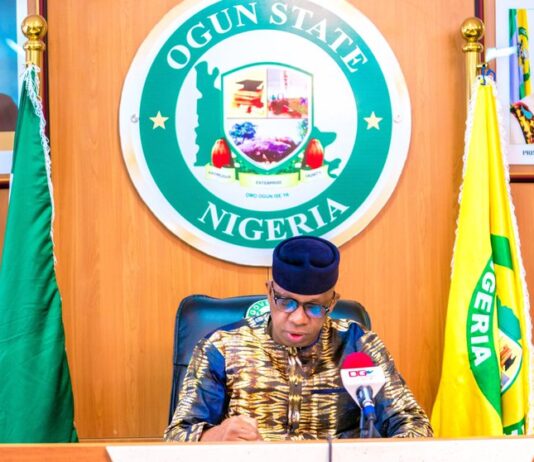
  • IGR: We earned over N81.4 billion in 2019 – says Ogun Government

    IGR: We earned over N81.4 billion in 2019 – says Ogun Government

    The Ogun State government has reacted to some media reports that erroneously claimed the state generated merely Seventy billion, nine hundred and twenty two million, five hundred and ninety thousand, four hundred and ninety five naira, eighty nine kobo (N70,922,590,495.89) as internally generated revenue for year 2019 In their review of Internally Generated Revenues record of the 36 States of the Federation.

    A statement by the Information Officer, Ministry of Finance, Segun Craig, Friday said “from the audited account of the state for 2019, which was published in some national newspapers, the actual figure of Ogun State Internally Generated Revenue stands at N81,420,131,107.30 (Eighty one Billion, four hundred and twenty million, one hundred and thirty one thousand, one hundred and seven naira, thirty kobo only)”.

    Craig noted that whatever figure that is being quoted differently from the official number by the State Ministry of Finance should be disregarded.

    READ ALSO: President Buhari requests house approval for fresh N5.513 billion

    In his words of caution, Craig advised all stakeholders, including the general public to stay guided by on information pertaining to he state so as not to be misled.

    “The State Government, through the office of the Hon. Commissioner of Finance and Chief Economic Adviser to the Governor hereby deems it highly expedient to advise all relevant stakeholders in the financial sector and beyond, and to also call on the reading public to be properly guided” he added.

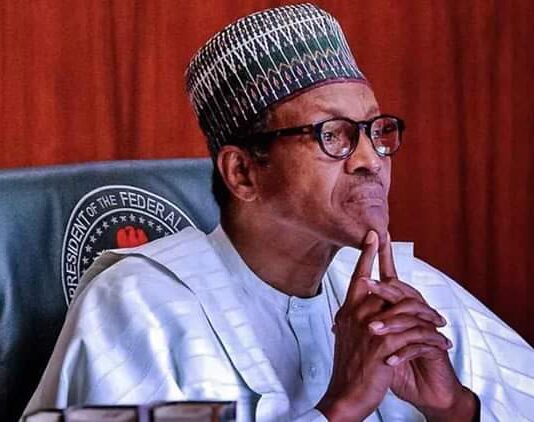
  • Breaking: President Buhari requests House approval for fresh $5.513 billion

    Breaking: President Buhari requests House approval for fresh $5.513 billion

    The Presidency says it will require additional fresh external loan of $5.513 billion to finance 2020 budget deficit.

    In a letter addressed to the House of Representatives to seek approval and read during Thursday’s plenary by the Speaker, Rt. Honourable Femi Gbajabiamila, President Muhammadu Buhari appealed that the fresh funds will be used to fund the 2020 budget deficit, finance critical projects and some States needing financial assistance.

    READ ALSO: NDDC Crisis: Acting Finance Director is dead, sources suspect poisoning

    As part of his correspondence to the House, President Buhari presented a reviewed 2020 Appropriation Bill and 2020-20222 Medium Term Expenditure Framework and Fiscal Strategy Paper.

    While another $22.79 billion request is still pending before the House, recall that the National Assembly had recently approved a loan of N850 billion for the use of the Federal Government.

  • Dangote, GTBank emerge most admired African brands

    Dangote, GTBank emerge most admired African brands

    Idowu Sowunmi

    For the third time in a row, Dangote Group has emerged as the most admired brand of African origin by consumers.

    Also, GTBank has emerged as the most admired financial brand in Africa and the United Kingdom’s BBC retained its media category ranking as the most admired media brand in separate category sub-surveys.

    This was disclosed in a survey of 100 Africa best brands announced in a novel global virtual event that incorporated the market openings of Kenya, South Africa and Nigeria.

    African brands only occupy 13 of the 100 entries, seven less from last year.

    The consumer-led survey sought to establish brand preferences across Africa. The survey was conducted among a representative sample of respondents 18 years and older, in 27 countries which collectively represent 50 per cent of the continent, covering all economic regions and accounting for an estimated 80 per cent of the population and the GDP of Africa.

    The 2020 survey was conducted between February and April 2020 and yielded over 15,000 brand mentions and over 2,000 unique brands.

    Established 10 years ago, the Brand Africa 100: Africa’s Best Brands survey and rankings have become the most authoritative survey, analysis, and metric of brands in Africa.

    READ ALSO: Interview: Self-sufficiency, infrastructure and reparation for slavery – Ituah Ighodalo tasks Akinwunmi Adesina

    Founder and Chairman of Brand Africa and Brand Leadership, Thebe Ikalafeng, during an online interactive session via Zoom, said: “African brands have an important role in helping to build the image, competitiveness and transforming the continent’s promise into a real change.”

    He expressed concerns that 10 years after “the triumphant FIFA World Cup in South Africa which globally highlighted the promise and capability of Africa, and despite the vibrant entrepreneurial environment, Africa is not creating more competitive brands to meet the needs of its growing consumer market”.

    Global Client Development Manager, GeoPoll, Caitlin van Niekerk, in his remarks, said: “The reach and accessibility of mobile across the continent enabled us to survey respondents across a representative sample of countries quickly and effectively, giving us vital and timely results at a critical time. Kantar has been the insight lead for Brand Africa since inception in 2010.”

    In his reaction, Group Chief Corporate Communication Officer of Dangote Group, Anthony Chiejina, said the management was not unexpected of the ranking because the company has a long standing reputation for quality, relevance compliance and social stewardship.

    According to him, “Our mission and vision engage and inspire us to by extension connects us with both our internal and external stakeholders.

    “We fervently believe that only Africans can develop Africa, and this gives us stronger sense of relevance in all the countries where we have our operations.

    “We are touching lives by providing their basic needs and empowering Africans more than ever before; creating jobs reducing capital flight, helping government conserve foreign exchange drain by supporting different industrial infrastructural projects of African government.”

    Chiejina noted that Dangote Cement has been producing high quality and affordable cement, reducing poverty, engaging in unprecedented philanthropy and above all respecting the laws of the land where we operate.

    He said: “All these are our credo and we do not compromise it, it is our way. And the ranking is just an acknowledgement of all these by our stakeholders, We keep our brand promise and stay authentic.”

    Out of the top 100 brands in 2010/11, only half still appear in this year’s list due to mergers, acquisitions and the obsolescence of many brands.

    READ ALSO: Lagos to evacuate drainage silts as early morning rainfall causes building collapse in Yaba

    The most prominent changes are in the technology category with the demise Blackberry (#32 in 2010/11), the consolidation of Vodafone (#54 in 2010/11 and now #13 in 2020) which acquired Vodacom in 2008 and re-branded in 2011, Etisalat (#40 in 2010/11) re-branding to 9 Mobile in 2017 and Motorola (#39) being acquired by Lenovo in 2014.

    A Chinese brand, Tecno, has raced up the ranking from #33 to #5 in the rankings – a dominant performance for one of China’s premier global brands that are not even sold in China.

  • PPLD International to train 1 million young graduates in 2019

    PPLD International to train 1 million young graduates in 2019

    By Tobiloba Kolawole


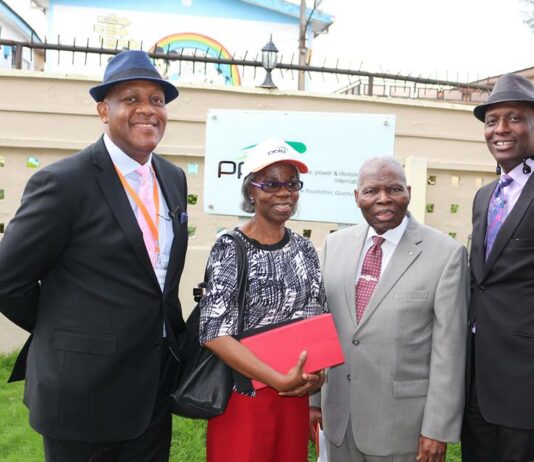
    A training and development organization, Purpose Power and Lifestyle Design (PPLD)  International is set to train young graduates through its Prep for Success (PFS) programme.

    According to the Chief Inspiration Officer of the organization, Tunde Makun, the PFS will hold for two days, Thursday 24th and Friday 25th.  

    The Prep for Success programme, which is in its 13th edition, is the company’s initiative to breeding a new crop of business and thought leaders who will drive the emerging African continental growth.

    Makun said: “Our young graduate population continues to grow rapidly in the job market. And while that’s going on, confusion and disenchantment deepen. For the few who are lucky to be invited for interview, most employers aren’t pleased with the quality of the interview candidates. Clearly, we have a duty to not only provide for them, but also to guide them.

    “That’s why we created the hugely experiential graduate Prep for Success

    PFS training program to help Young Graduates lay an amazing foundation for a fast-track into the future; securing and growing in a choice career or business”, Makun noted.  

    Some of the facilitators and sponsors that will attend the training are Mrs Gbemisola Adetola, a Public Relations Consultant; Mrs Adebola Fashaun, a retired Judicial Officer and Mrs Bioye Animashaun, a Legal Practitioner.

    Makun added that, “The truly transformational 2-day PFS program is the code you need to navigate the future with confidence. Now in its 13th class, the testimonials from this program have been phenomenal.

    Tunde Makun, a successful entrepreneur in the oil and Gas marketing industry also expressed regret that the country is not thinking much about the young ones. He noted that in 2019, PPLD will do a lot to deepen its connection with the youth especially, helping them to navigate through tortuous environment to attaining successful careers.  

    He said: “Our connection with the youth this year is very ambitious. We are looking at reaching to as much as a 1 million youth. The idea is to make sure that there are some key deliverables. Leadership is one of them, and helping them to redefine how to live in a community.

    “We want to train the youth to lead themselves in a community where they live according to rules of engagement that works for communal living rather than individual living”, Makun said.

    Notable past facilitators and mentors at PPD training programmes include Prof. Pat Utomi, Dr. Doyin Abiola, Mr Leo Stan Ekeh, Dr. Christopher Kolade and many others.

    The internationally certified coach said he is collaborating with partners in the United States of America, who would become mentors and share resources to help PPLD achieve its goal of catapulting young graduates to success in Nigeria.

  • Lagos Ports: ‘Irresponsible government destroying lives, businesses and bridges’

    Lagos Ports: ‘Irresponsible government destroying lives, businesses and bridges’

    By Tobiloba Kolawole

    The Federal Government has been advised to decentralize Lagos ports in order to achieve efficiency in the sector and solve the perennial gridlock on the Apapa-Oshodi expressway, which continues to cripple economic activities and make life difficult for residents of the State.

    The Chairman, Association of Corporate Governance Professionals, Sam Ohuabunwa made this call in a chat at his Maryland home in Lagos. He said that a long lasting solution to the hardship that is being experienced on the road by Lagos residents is to decentralize Lagos ports and get other ports in the South South and the recently inaugurated dry port in Kaduna functional.

    Ohuabunwa decried the lack of will by government in bringing sanity back to the Apapa-Oshodi road. He said ‘everyone’ is forced to use the Apapa port because it is the only port that is allowed to function and service the entire nation.

    “Nigeria has Port Harcourt port, Calabar port, Onne Port, Warri port; why are they not being put to use? Everyone is forced to come to Lagos port; it is the port with the best facility, why?” Ohuabunwa said.

    The former CEO of Neimeth Pharmaceuticals PLC said that the use of the Lagos Port and the neglect of others in the east dates back to the Nigeria civil war, which started in 1967 and ended in 1970.  

    Ohuabunwa said: “It was like a policy, during the war, those eastern ports were shut understandably so that arms couldn’t go to Biafra. Since the war ended, we have maintained a form of discrimination against those ports. Some of them have become so shallow, government says it has no money and they are not willing to properly privatise the ports so that people with money can come and deepen the ports.

    “I think that the issue is that government should decentralise port operations. If government says in the next six months nobody should open Apapa or Lagos ports, the place will change. Or remove some of those restrictions that are making it more difficult to do business in other ports.”

    It is obvious that the traffic constraint as a result of activities in Lagos ports is not the only issue to worry about. The trickledown effect on infrastructures like road and especially some bridges in Lagos is of critical concern as Ohuabunwa stated.

    He said: “It is just that everybody is coming to Lagos. Do you see the vehicles occupying the streets? Do you see where stationary trucks stay on bridges for months?  You think that’s a normal thing? Bridges that are supposed to carry transient weight are carrying static weight and not only blocking traffic but also damaging those infrastructures. Wait until a few years and we shall see the impact of these static weights these flyovers are carrying. It is irresponsible governance; I have not seen anything like it.”

    Traffic gridlock along the ports in Lagos, especially around Apapa and the indiscriminate packing of trucks on the highways, including bridges has become a menace that has defied government interventions. Last July, Vice President Yemi Osinbajo had ordered a 72-hour operation to remove trucks parked indiscriminately and restore order in the area. But in less than three months, the wrath and perennial gridlock persist.

    Some road users who spoke to The Guardian said the order didn’t go far because security and traffic management personnel in charge were inefficient and corrupt. They also noted that one critical underlying factor causing the menace – bad roads has not been fixed.

  • Federal and State governments to deploy ICT for economic recovery.

    Federal and State governments to deploy ICT for economic recovery.

    By Tobiloba Kolawole

    The Federal Government and State governments in Nigeria are consolidating efforts to take advantage of the far-reaching potentials in the deployment of information and communications technology for social and economic gains.

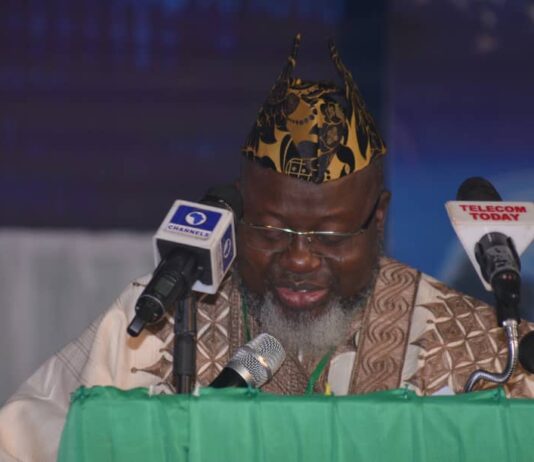
    At the opening ceremony of the 6th regular meeting of the National Council on Communications Technology, which held last Thursday in Abeokuta, the Ogun State capital, the Executive Governor of Ogun State, His Excellency, Ibikunle Amosun reinforced the need for governments at all level and the private sector to invest in ICT to fast track development and reduce unemployment rate to the barest minimum.

    In his opening address, Governor Ibikunle Amosun, who was the chief host of this year’s NCCT meeting underscores the impact of communication technology on development. He said, “The interests to share and the ideas to exchange among the people have assumed a multi-dimensional proportion and have totally become driven by technology. These evolving challenges of information management have led to advancements in Big Data, Cloud Computing, Artificial Intelligence (AI), Cryptography and Robotic Engineering.”

    It is imperative that a society that is desirous of continued growth and development must not only put in place necessary machinery to ensure seamless information and communication but must also place a high premium on the various means of communication. This is why the conception and hosting of the 6th National Council on Communication Technology in our dear State, is a welcome development at this critical time in our nation’s development.”

    Governor Amosun further emphasized that there is a nexus between modern development and Information technology, which necessitates that any country that is desirous of achieving a turn around transformation in the economy, social welfare delivery, employment, effective agricultural process, education, and other areas must proactively invest in ICT.

    Amosun said “on our part as an Administration in Ogun State, we appreciate the need to deploy technology in all our programmes and policies. Our belief is that, in Ogun State, by building an ICT ecosystem and leveraging on the benefits of technology, we will not only sustain the momentum of the achievement of our Administration, but we will also fast-track the process of development.”

    The Ogun State Governor highlighted his government’s efforts to identify and help channel the exuberant energy of youths in Ogun State towards innovation. He said the aim is to encourage a crop of tech-savvy people who will deploy disruptive innovation technologies to solve society’s socio-economic challenges.

    “This is one of the major reasons, amongst others, for featuring Technology in our 2018 Investors Forum and, the hosting of the 2018 TechSummit Ogun on Thursday 18th January 2018”, Amosun said.

    He also said “Apart from opening up a wide range of opportunities in employment generation for our teeming youth on a macro level, the TechSummit Ogun was also conceived to explore the potential for creating new economies along the ICT value chain, such as web development and maintenance; programming; software design and hardware engineering. It is my joy that our dear State has continued to take full advantage of the expected manpower needs by facilitating ICT hubs to provide needed skills acquisitions.”

    FrontPage recalls that about two weeks ago, the Ogun State Executive Council approved a new ICT policy that highlights the development of human resources; provision of infrastructure; the roles of Government and other stakeholders; and strategies to be adopted in the deployment of ICT towards the development of vital economic sectors such as education, health, Agric, commerce and industry, tourism, etc.

    The Chairman of the National Council of Communications Technology and Minister for Communications, Hon. Adebayo Shittu reiterated the impact of ICT as a veritable tool for advancing the growth and economic diversification in countries. The minister noted that a World Bank econometric study carried out in 2009 showed that every 10% increase in ICT investments generates a 1.38% increase in GDP.

    In his address, Shittu said that “the Nigerian ICT sector today is one of the fastest-growing despite the economic recession and contributed 9.8% in GDP in 2014. The challenge is how to address the issues of revenue, investments, cost savings, employment generation, and national productivity among others.

    “In pursuit of national agenda, we have continued to reposition the ICT sector in the areas of infrastructure and industry development, local content optimization, enabling policy, legal and regulatory framework; deepening of ICT in Government and mainstreaming of ICT into all spheres of national life among others”, Shittu said.

    While highlighting some of government’s efforts towards ICT integration, the Minister said that through Galaxy Backbone, internet access has been provided to about 40 MDAs, over 11,000 nodes of wireless LAN to all MDAs at the Federal Secretariat, over 40,000 email addresses for government officials under the gov.ng and mil.ng domains, which is aimed at ensuring that government data is hosted locally on a secured website with data back-up to MDAs and 200 servers hosting 94 MDAs.

    “We are working to have ICT infrastructure designated as critical national infrastructure. Efforts are being made to procure additional communication satellites to complement the existing NigComSat-2 as a means of reaching areas that cannot easily be covered by terrestrial fiber”, the Minister explained.

    He said further “we are also working to make more investments in building the capacity and harnessing the talents of our youth. In particular, we are increasing Accelerators and Incubator programmes as a means of building and harnessing the capacity of our increasingly ICT savvy youth population.”

    “Going forward, the government will expand its investment in ICT infrastructure to extend connectivity to un-served and underserved areas. In this regard, attention will be paid to the issue of multiple taxations of ICT infrastructure. A robust, safe and resilient infrastructure is the key enabler of a digital economy.”

    Also, the Special Adviser on ICT to the Governor of Ogun State, Bunmi Adebayo stressed the need for a synergy between ICT professionals and service providers on one hand with the aim to recognize problems and attendant solutions for alleviation. He further emphasized the Government’s role in creating and enacting necessary social policies to address such problems.

    Adebayo highlighted some of the achievements of the Ogun State Government through the Bureau of ICT.

    “We have been innovative in this end in Ogun State and it may interest you that Ogun State is the First State to provide the longest Government Sponsored 250-kilometer Fiber optic layout in the Country in partnership with MainOne Cable, a private sector company, in a “Quid pro quo” arrangement by giving concession on Right of Way fees. The first to deploy a Satellite-based ICT solution to deliver Precision Management to Agricultural potentiality of our land, Pertinent positioning of our Agro-cluster and Agricultural yields.”

    The first to host the only CISCO Networks Academy Support center (ASC) for English Speaking West and Central Africa stretching to the Gambia and Southern Nigeria which is managed by the center”, Adebayo said.

    The theme for this year’s meeting of the National Council on Communications Technology was Leveraging ICT as a Vehicle for Economic Recovery and Growth. It began with a technical session on Monday 19th November and ended on Friday 23rd November. The meeting focused on how the highly acknowledged potentials of the ICT sector can be used to achieve the main policy objectives of economic recovery and growth.

    The National Council on Communications Technology is the highest governmental policy advisory body in the ICT sector with the Federal Minister for Communications as the Chairman.

    Members of the NCC includes the permanent secretary of the Federal Ministry of Communications, State Commissioners and highest state official in charge of ICT matters across the 36 states of the Federation; Chief Executives of Government agencies and parastatals in charge of ICT and key private sector stakeholders.

  • Tony Elumelu Foundation invests $7.35 million in African entrepreneurs

    Tony Elumelu Foundation invests $7.35 million in African entrepreneurs

    By Tobiloba Kolawole

    No less than 5,000 African entrepreneurs, private and public sector leaders and the broader entrepreneurship ecosystem converged on Lagos on Thursday, October 25, 2018 for the annual Tony Elumelu Foundation (TEF) Entrepreneurship Forum. The event is a unique opportunity for bringing together young business talent, creating dynamic networks and transmitting the message to policymakers that a vibrant and responsible private sector will deliver economic transformation.

    The forum which is now in its fourth year,  is the graduation of the 2018 cohort of the TEF Entrepreneurship Programme, after a tedious nine-month duration of training, mentorship and funding. This brought the total number of beneficiaries of the Programme to 4,470 and about 300,000 applications received since the start of the entrepreneurial initiative.

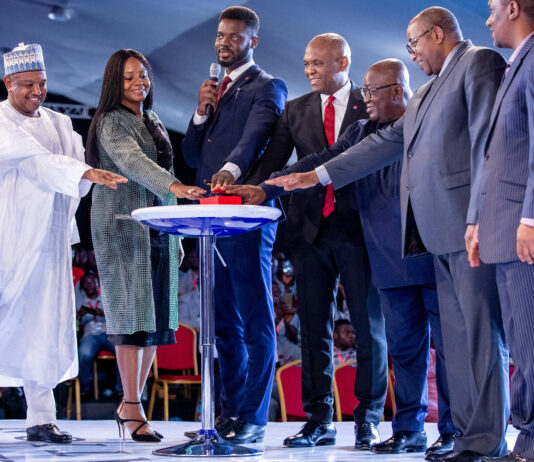
    A major highlight of this year’s forum was the unveiling of TEFConnect, a revolutionary digital community that serves as a complete convergence of the entrepreneurship ecosystem across Africa and beyond. The platform includes entrepreneurs, investors and the broader business community in one digital community, connecting them with three vital elements for success – capital, market and business tools. TEFConnect brings to fulfillment a key responsibility in bringing together entrepreneurs across the Africa, a continent that is riding a wave of rapid technological driven change spreading through payment systems, education, agriculture and infrastructure.

    The event commenced with a battery of goodwill messages from major stakeholders in the investment, governmental and development communities. Other important highlights were pitching competition, panel discussions, as well as a vibrant interactive session between the Ghanaian President Nana Akufo-Addo and entrepreneurs; and moderated by TEF Founder, Tony O. Elumelu.

    The event also included a marketplace exhibition where past beneficiaries of the programme showcased their products and services.