Opinion: Nation Building Over Party Politics – Nigeria’s Path for the Next 24 Years
Nigeria stands at a crossroads where the choice between perpetual political brinkmanship and purposeful nation building will determine the fate of over 200 million people. For decades, our politics has revolved around personalities, ethnic arithmetic, and empty party slogans, rather than coherent ideologies or long-term visions. Today, no major political party in Nigeria sincerely advances a consistent political philosophy; instead, parties often serve as shifting platforms for elites to capture power, switch allegiances, and share spoils.
Given this reality, it is neither radical nor undemocratic to argue that the country’s focus over the next generation must shift decisively from party-centered politics to nation-centered governance. If those entrusted with leadership — regardless of partisan labels — dedicate themselves to genuine social and economic transformation, it should matter less whether they belong to one party or a hundred. What matters is progress, stability, and prosperity.
Critics may call this a drift toward a de facto one-party state, but it is better understood as a call for ideological unity on nation building. Nigeria desperately needs leaders who see beyond election cycles and prioritize industrialization, quality education, universal healthcare, modern infrastructure, and social justice. We need continuity in policies that work, not endless resets every four or eight years just because a new party wants to mark its territory.
History shows us that countries like Singapore and Rwanda achieved rapid development not by fetishizing partisan competition but by forging a national consensus on discipline, economic planning, and inclusive growth. In these contexts, the energy spent on political bickering was redirected into building systems, attracting investment, and delivering results.
Of course, the danger of unchecked power is real; accountability must never be sacrificed. But accountability can come through institutions — independent courts, vibrant civil society, free media — rather than the illusion of multiparty rivalry that offers no ideological choice. When opposition parties simply mirror ruling parties in opportunism, democracy becomes a hollow ritual.
For Nigeria, the question is simple: if a government is genuinely transforming the economy, empowering citizens, and entrenching good governance, why should the nation interrupt that trajectory in the name of an election that merely swaps one set of self-interested politicians for another? Why not build a broad coalition of stakeholders — across regions, ethnicities, faiths — around a shared developmental agenda and hold leaders accountable to that, rather than to party colors?
Over the next 24 years, what Nigeria needs is not a rotating door of politicians but a sustained national project: one that creates jobs, ends poverty, secures lives and property, modernizes agriculture, and raises Nigeria’s human capital. We should champion policies, not parties; performance, not propaganda; and unity, not division.
The time has come for Nigerians to reject the empty spectacle of party politics without ideology and embrace a renewed, patriotic commitment to nation building — for the sake of today’s citizens and generations yet unborn.
As rescue efforts continue in the search for missing persons at the collapsed seven-storey building at Banana Island in Ikoyi area of Lagos State, the authorities in Lagos engaged in buck-passing. The building, which was being developed by Joe Faraday, collapsed while workers were still on site on April 12, 2023.
The Lagos State government has now directed that all developments on Banana Island be placed on hold pending a comprehensive audit by the Lagos State Building Control Agency (LASBCA). The audit will also be extended to other estates and gated communities.
In a statement, the Ministry of Physical Planning and Urban Development, led by Tayo Bamgbose-Martins, revealed that the collapsed seven-floor building was unapproved by the Ministry. The statement released by Deputy Director, Public Affairs, Mukaila Sanusi, confirmed that there were no fatalities and that the few people who sustained injuries during the unfortunate incident while casting was being done were being treated.
Officials from the Lagos State Emergency Management Agency (LASEMA), who arrived on the site less than an hour after the building collapsed, claimed that only one person was missing in the incident. However, some construction workers insisted that an engineer and a 30-year-old man lost their lives, and others were yet to be found.
The management of Banana Island Property Owners and Residents Association (BIPORAL) prevented newsmen from accessing the collapsed building site, with only foreign media practitioners allowed access.
Speaking to newsmen, the Special Assistant to the Lagos State Governor, Babajide Sanwo-Olu, on Special Duty and Intergovernmental Relations, Mobolaji Ogunlende, said seven persons who sustained minor injuries were treated on the spot, without any record of major casualties, while only one person was unaccounted for. The Permanent Secretary of LASEMA, Dr. Oluwafemi Oke-Osanyintolu, reassured the public that the government was on top of the situation and would take appropriate action.
He said: “We moved in swiftly when the incident happened with all the primary stakeholders. Our response time was 10 minutes. We checked with our life detector and did not locate anybody under the debris. We were able to rescue seven people alive and only one of the persons injured was taken to a private hospital, and he’s receiving adequate care.
“Regarding other buildings, we are going to carry out a holistic investigation.”
Dr. Akingbehin Samuel, the Head of Environmental Services in Ikoyi-Obalende, provided his assessment of the environmental health of the construction site, said: “Getting here, we can say there is no biological effect in this place. So, what we have to do is that people are cordoned off, we want to take stock of people coming here.
“We are much on the ground to prevent possible contamination and spread of diseases. Residents should maintain their peace because there is no danger to their health and the environment. Everyone should remain calm and this shouldn’t be seen as a tourist centre.”
Gbolahan Owodunni Oki, the General Manager of LASBCA, has instructed the private security personnel stationed at the facility to vacate the premises, as it is now under the ownership of the Lagos State government. He oversaw the welding of all gates on the property to secure it.
Meanwhile, the former President of the Nigerian Institute of Building (NIOB), Mr. Kunle Awobodu, has decried the collapse of a building in Banana Island estate, citing it as evidence of a lack of professionalism in the country. He urged the Lagos authorities to apprehend and prosecute those responsible for the structural failure.
In an interview with The Guardian in Lagos, Awobodu expressed his disappointment that a building of such magnitude could collapse if professionals were involved in its construction and management. He also noted that the Building Collapse Prevention Guild (BCPG) has revised its tally of building collapses in Nigeria from 1974 to 2023 to 552, with Lagos State accounting for 59.06% of the incidents.
Awobodu stressed the need for the government to identify and punish those responsible for overseeing the building’s construction.
“This culture of forgiving or verbally reprimanding those who committed offences or fouled building regulations will encourage them to go back home and commit more wrongs, and it is not helping. That is why we keep having a repeat of such incidents.
“Building collapse within the most expensive terrain, a community well-organised or deemed well-organised in Nigeria sounded an aberration. Banana Island is the pride of all who admire the environment. This is a threat to the safety of human life and the value of land in one of the highly rated and secured abodes in Africa.”
“The image and reputation of those of us in the Nigerian building industry are at stake before the whole world. What excuses are we going to offer for the latest building collapse? It is unfortunate that nobody has been successfully prosecuted for building collapse offences in Nigeria.
“Quackery, compromise and impunity proceed unchecked. When human beings are not subjected to the law of consequence, misdeeds are absolved in sentiments. Alas, loss of life and property becomes a continuum,” he added.
The Lagos State government has initiated an investigation into the incident on the directive of Governor Babajide Sanwo-Olu, while stating that no fatalities occurred. In a statement released by the commissioner for Information and Strategy, Gbenga Omotoso, yesterday, it was revealed that 25 individuals were rescued from the site. Additionally, LASEMA utilized a high-precision 3-D Laser Imagery System to search for any signs of individuals trapped in the rubble, but found no evidence. Site supervisors have also conducted a roll call and confirmed that everyone is accounted for.
He said: “LASEMA has continued with the excavation of the site, using the architectural designs. The site has been divided into quadrants for a painstaking search and rescue operation.
“Presently, quadrants two and three have been levelled to ground zero, with the search operation completed. Quadrants one and four are ongoing.
“Physical Planning and Urban Development Commissioner, Bamgbose-Martins, an engineer, and Special Duties Adviser, Mobolaji Ogunlende, are co-ordinating the operations. LASEMA Permanent Secretary, Dr. Olufemi Oke-Osanyintolu, is leading the search-and-rescue efforts.
“Commissioner for Health, Prof. Akin Abayomi has visited the site and hospitals where victims of the incident were admitted.
“Of the 25 persons rescued by LASEMA, 16 with moderate injuries were admitted at General Hospital, Odan, Lagos Island and Police Hospital Falomo for treatment and care. Nine others with minor injuries, such as bruises, were treated and discharged at the site by Lagos State Ambulance Services (LASAMBUS).
“Of the 16 persons on admission, 11 were taken to Police Hospital Falomo. Some are required to come for daily follow-up and management. Three with various injuries, including blunt traumatic chest injury, knee injuries, deep lacerations and others, are on admission.
“At the General Hospital Odan, Lagos Island, there are five patients with more serious injuries.
“The state government, as a matter of policy, will be responsible for the emergency treatment and care, including the medical bills of the patients on admission, It will also provide a post-trauma counselling support and care for all victims through the Lagos MiND programme (Mental Health in Development), a free mental health counselling and support service provided by the Ministry of Health.”
On Thursday, the All Progressives Congress (APC) announced that Bola Tinubu, the President-elect, is currently taking a break in Europe before his inauguration on May 29.
This information was provided by Felix Morka, the APC National Publicity Secretary, during an appearance on Channels Television’s Politics Today show. Morka added that Tinubu will be ready to take action as soon as he returns from Europe.
When questioned about Tinubu’s location, Morka responded, “He [Tinubu] is likely in Europe. He’s doing well. After the strenuous election period, he decided to take some time to rest.”
“Once he returns and he’s inaugurated on May 29, there will be no dulling. He’ll be saddled with the responsibility of running a country as massive and complex as Nigeria.
“I know he’ll be back in the country very shortly.”
He added, “It is working rest because even in his rest, he is also taking the time to reach out to heads of government and other levels of leadership of other countries that are vital to the agenda that he’s bringing in his new government.
“So, he’s not sleeping in his bed; he’s also in meetings regularly with all kinds of people who are travelling from other countries to see him preparatory to his inauguration. So, it’s a working visit.”
INEC declared Tinubu as the President-Elect on February 25 following his victory in the Presidential election.
On Wednesday, during a visit from a delegation led by Middle Belt Forum President, Dr. Bitrus Pogu in Makurdi, Benue State Governor, Samuel Ortom urged the Federal Government to suspend the National Population Census scheduled for May 2023.
Ortom claimed that there may be a hidden agenda behind the census and requested that the exercise be halted until the return of Internally Displaced Persons (IDPs) to their homes.
He said, “The FG should suspend the issue of the census because it looks like the proposed census is coming with an agenda.
“So until they are able to restore security and all our IDPs return to their ancestral homes to give all of them opportunities to be counted in their homes of birth.
“Because I understand from the National Population Commission that those to be counted must be counted in their localities”.
With thousands of deaths within a year due to herdsmen attacks, Benue state holds the record for the highest number of attacks in the country.
Over two million people reside in various IDP camps across the state. Just a week ago, the notorious killer herdsmen raided one of these camps, resulting in the deaths of at least 35 individuals.
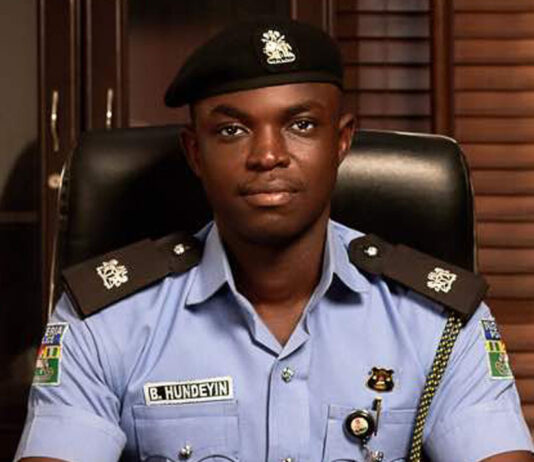
The Osun State Command of the Nigeria Police has reaffirmed its commitment to protecting the lives and properties of residents in the state.
The command provided an update on its efforts to track down the kidnappers of Muhammad Jubril, who was abducted from his Ago-Igbira Fulani settlement in Ila-Orangun on Wednesday.
Reports indicate that the Amotekun Osun, along with other security agencies, had initiated a rescue operation to recover the victim and apprehend the kidnappers. In a statement released by the Command’s spokesperson, Yemisi Opalola, the Osun Commissioner of Police, Patrick Kehinde Longe, revealed that on April 12, 2023, at approximately 7 am, a Sekiri Fulani, Mohammed Kajibo, reported that eight unknown gunmen, believed to be Fulani of the Bororo stock, had attacked the Ago Igbira settlement between 11 pm on April 11 and 12 am on April 12, 2023.
The statement further indicated that the attackers abducted Mohammed Jubril, aged 30, and injured Hassan Jubril during the invasion. The Police Command, in collaboration with the local vigilantes and hunters, swiftly sprang into action to locate the abductors. The Command thoroughly searched the forest area and deployed technical platforms to locate the position of the hoodlums.
“The Police Command will not rest on its oars until all criminal elements are apprehended and made to face justice,” Longe assured.
Meanwhile, The Osun Masterminds group has raised concerns about the frequent incidents of kidnapping, killings, and other criminal activities in the state.
According to the group’s Executive Director, Professor Wasiu Oyedokun Alli, the situation has created a state of insecurity and terror.
The group is disappointed that their earlier warning was not taken seriously by the authorities.
“We advise Governor Ademola Adeleke to act immediately, to restore confidence and peace in the state,” he said.
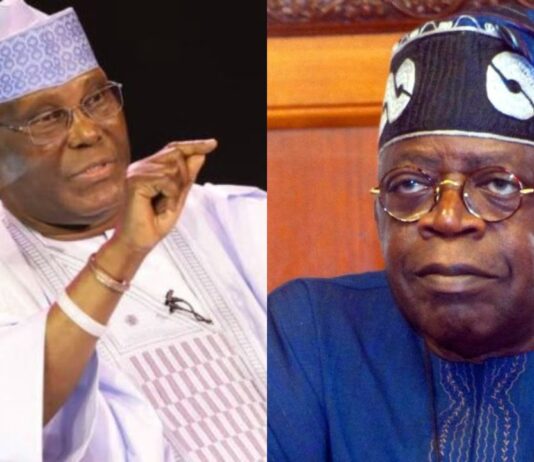
The All Progressives Congress (APC) candidate, Bola Tinubu, who won the presidential election held on Saturday, February 25, is facing a petition filed by the Peoples Democratic Party (PDP) and its candidate, Atiku Abubakar, at the Presidential Election Petitions Tribunal in Abuja.
However, the Independent National Electoral Commission (INEC) has requested that the court dismiss the petition. INEC attorney, Abubakar Mahmoud, argued that Tinubu had fulfilled all the legal requirements to be declared the winner of the election.
The petitioners are requesting that the court sets aside Tinubu’s victory, directs INEC to revoke the APC candidate’s certificate of return, and declares Abubakar the winner of the election.
INEC maintained that Tinubu met all legal requirements to be named the election’s winner and clarified that a candidate does not need to win 25% of the vote in the Federal Capital Territory (FCT) to be declared the winner.
Tinubu defeated 17 other candidates in the election, scoring a total of 8,794,726 votes, while Abubakar came in second with 6,984,520 votes, and Peter Obi, the candidate of the Labour Party, came in third with 6,101,533 votes.
“Having scored at least one-quarter of the valid votes cast in 29 states, which is over and above the 2/3 states threshold required by the constitution, in addition to scoring the majority of the lawful votes cast at the election, the 2nd respondent was properly declared winner and returned as the president-elect of the Federal Republic of Nigeria,” INEC noted.
INEC has stated that Bola Tinubu, the candidate of the All Progressives Congress (APC), should be declared the winner of the election as he scored the highest number of valid votes cast, as well as at least 25% of the votes cast in not less than two-thirds of the states of the federation and the country’s capital.
The commission argued that the declaration and return of Tinubu was made in accordance with the provisions of Section 134 (2) (b) of the Constitution, having scored one-quarter (25%) of the valid votes cast in 29 states, which exceeds the constitutional threshold for such a declaration.
In response to Atiku Abubakar’s petition, INEC claimed that the PDP candidate could not have been declared the victor by the tribunal due to his failure to comply with the constitutional requirement.
“The petitioners neither scored the majority of the lawful votes cast at the election nor scored not less than one-quarter of the lawful votes cast in at least two-thirds of the 36 states of the Federation and the Federal Capital Territory, and therefore the 1st petitioner (Atiku) is not entitled to be returned as the winner of the presidential election conducted on Feb. 25,” INEC noted.
The Independent National Electoral Commission (INEC) has stated that the 2022 general election was conducted in accordance with the Electoral Act and was not tainted by any form of malpractice.
INEC also reiterated its commitment to holding free, fair, and credible elections by utilizing the BVAS device for electronic voter accreditation and uploading scanned copies of polling unit election results to the IRev portal.
Consequently, the commission has urged the court to reject Atiku’s petition.
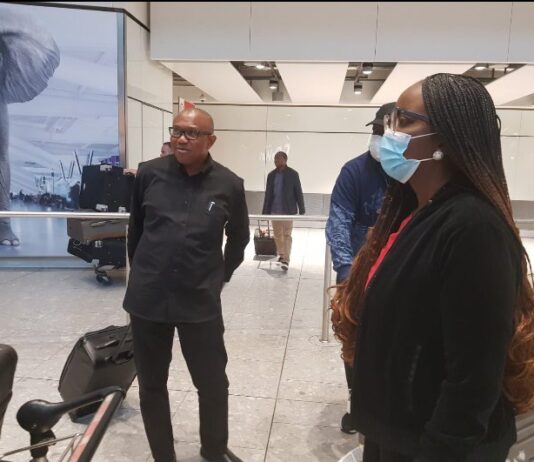
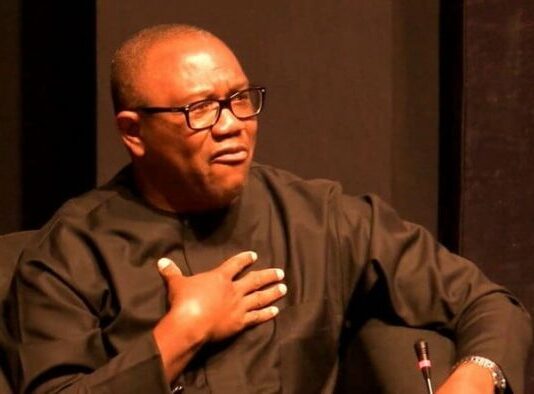
Obi’s supporters, also known as Obidients, intervened to prevent Labour Party Presidential Candidate Peter Obi from spending more hours in detention over alleged impersonation.
Reports had earlier stated that Obi was detained at Heathrow Airport in London on charges of duplication, indicating that someone had been impersonating him in the UK.
Diran Onifade, spokesman for the Campaign Council, explained that Obi’s questioning was a result of the alleged offense.
However, the spontaneous reaction of Obi’s supporters at the airport saved him from further detention, following his return from an Easter celebration trip in London.
“He was questioned for a long time and it was very strange for a man who lived for over a decade in that country.
“Since Obi’s face was already an international frame, especially for Nigerians, Africans home, and in Diaspora who are likely to be Obidients, the people quickly raised their voices wondering why he was being delayed.
“The immigration officials who were also taken aback at the reaction of the people were forced to reveal that Obi was being questioned for a ‘DUPLICATION offense’ meaning that someone has been impersonating him in London.
“The high implication of the offense is that the impersonator could be committing all kinds of weighty crimes and other dubious acts and it would be recorded in Obi’s name,” Onifade said.
On Friday, the UK immigration officials reportedly detained Peter Obi, the Labour Party’s presidential candidate, for hours and questioned him after his British Airways flight arrived at Heathrow Airport.
This was disclosed on Wednesday by Prof Chinyere Okunna, a renowned Mass Communications scholar, Deputy Vice Chancellor of Paul University Awka, and Obi’s confidant.
Okunna, who worked with Obi in various capacities, stated that the former governor narrated the ordeal to her in private and expressed distress about the situation, which he believed was designed to hound and force him out of Nigeria.
Okunna said: “I suppose he told me all this confidentially. My very sincere apologies, Your Excellency, for ‘breaking’ this confidentiality, but History beckons and I CANNOT KEEP QUIET.
“Obi spoke to me at the Official Opening of the Specialist Hospital of the Immaculate Heart of Mary (IHM) Sisters, Nkpor (on Tuesday). He had arrived at the event after flying in from London.
“I actually had no idea he had travelled out of the country, until the ovation over his presence in a London Church went viral on the Internet.
“He arrived at Heathrow Airport and joined the usual queue to pass through Immigration, and that was when his ordeal began.
“He was stopped and questioned for a long time and subsequently handed a detention note and told to wait for further interrogation and investigation.
“This was terribly unusual for a man who had lived honourably in the UK for a long time.
“In the face of this harassment, some well-meaning Nigerians, knowing who he is, raised their voices in protest, demanding to know why he was being treated that way.”
Okunna revealed that in the face of seeming protest by some Nigerians, the immigration officials revealed that someone was impersonating Obi in the country.
“The shocking revelation by the Immigration Officer was that his (Obi’s) identity ‘was duplicated’. This revelation has definitely set off alarm bells.
“For people who are knowledgeable about such matters, this is a very dangerous development because the implication is that someone is impersonating Peter Obi.
“And that someone could implicate Obi in all manner of dubious and even criminal activities, and rope him into any number of offences; he could get Obi framed for one criminal act or another. The frightening scenario of what can happen is unimaginable!!!
“This is the height of it all for a man who has been under sundry intimidation and emotional torture: Bugging of his phone and those of his wife and children; keeping him constantly under surveillance; calling him names; putting him under severe pressure to leave (run away from) the country; wrongly accusing him of negative things he knows absolutely nothing about, etc.
“As he was telling me his ‘Heathrow tale of woe’ at Nkpor today, I could see a man who was in severe pain and under unbearable stress, who many would expect to be at the point of despair.
“But, as he confirmed, he is ready to suffer this pain and is as determined as ever to pursue the path which he has chosen to enable him arrive at the destination which well-meaning people in Nigeria and far far beyond are expecting him to arrive at.”
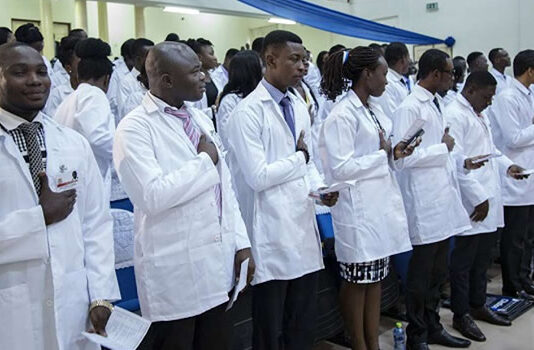
Nigeria’s House of Representatives is in the spotlight for proposing a bill that would prevent medical doctors from seeking better job opportunities within five years of completing their medical education.
The bill was introduced in response to the alarming trend of brain drain in the country’s healthcare sector, with many healthcare professionals leaving Nigeria for other countries.
This crisis has left government officials scrambling for a solution, as the nation suffers from an acute shortage of doctors, with a doctor-patient ratio over five times lower than the World Health Organization’s recommendation. The problem has been particularly acute in the United Kingdom, which has seen an exodus of over 5,600 Nigerian medical doctors in the last eight years.
FILE PHOTO: Members of the House of Representatives during plenary
The Nigerian Medical Association has warned that the health sector is on the brink of collapse if urgent measures are not taken to address the issue of brain drain.
The association has called for an emergency solution, stating that Nigeria may need to recruit doctors from foreign countries in the future. Recently, the National President of the Medical and Dental Consultants of Nigeria revealed that over 500 medical consultants have left the country in the past two years.
“This figure is as of March last year; so it is far more than that,” Makanjuola said during a National Executive Committee meeting of the Association in Enugu.
He added that, “we are not where we are supposed to be; we are faced with poor budgetary allocation, poor infrastructure, lack of incentives leading to brain-drain, challenge of power generation and distribution in most of our facilities.
“It has become difficult for administrators to run the facilities smoothly and provide efficient medical care for the citizens.”
The Kaduna State Chapter of the Nigeria Medical Association (NMA) sounded the alarm in October of last year, urging authorities to take immediate action to curb the ongoing brain drain of medical personnel in the state.
The NMA noted that over the last seven years, no fewer than 10,000 doctors had left Nigeria in search of better opportunities, a worrisome trend.
Similarly, the Nigeria Governors’ Forum, comprising the governors of all 36 states, expressed concern about the prevalence of brain drain in the health sector towards the end of last year. Sokoto State Governor and Forum Chairman Aminu Waziri Tambuwal highlighted these concerns during a visit to Dr Osagie Ehanire, the Minister of Health, in Abuja.
“We are witnessing brain drain over the years. It is alarming, and I believe it has something to do with the welfare of medical personnel.
“I urge the federal government to do something about this urgently,” Tambuwal said.
In March of this year, the World Health Organization (WHO) identified 55 countries, including Nigeria, as facing the most significant workforce challenges related to Universal Health Coverage. In response, the UK placed Nigeria and 53 other countries on its red list, advising health and social care employers not to actively target recruitment from these nations. Factors contributing to this problem include low salaries, poor working conditions, lack of career advancement opportunities, inadequate resources and infrastructure, political instability, and insecurity.
Concerned about the impending threat of brain drain in Nigeria’s healthcare sector, the House of Representatives proposed a bill to address the crisis.
Sponsored by Ganiyu Johnson, who represents Oshodi-Isolo Federal Constituency 2 of Lagos State in the House of Representatives, the bill aims to amend the Medical and Dental Practitioners Act to require Nigerian-trained medical or dental practitioners to work in the country for at least five years before being granted full licenses. However, the bill has encountered opposition from healthcare professionals.
According to Johnson, “It was only fair for medical practitioners, who enjoyed taxpayer subsidies on their training, to give back to society”.
Uzoma Nkem-Abonta, who represents Abia State on the platform of the Peoples Democratic Party (PDP), voiced opposition to the bill, arguing that it would restrict doctors in Nigeria for five years before they could pursue employment opportunities in foreign countries.
Similarly, Mark Gbillah, a lawmaker from Benue, opposed the bill, citing clauses that would infringe on the fundamental human rights of Nigerian-trained doctors.
“A person in such a critical field as medicine — how would you give somebody a temporary licence? You would need a licence to be certified to practice.
“Do we try to restrict these people and infringe on their fundamental human rights or apportion more resources to the medical profession?” Gbillah said.
The National Association of Resident Doctors (NARD) expressed its opposition to the bill, as stated in a communique issued at the end of the association’s extended National Officers’ Committee (NOC) meeting.
“The extended NOC observed with shock and disappointment the infuriating attempts by Honourable Ganiyu Abiodun Johnson and the Federal House of Representatives to enslave Nigerian-Trained Medical Doctors for five years post-graduation before they can be issued full practising licences or allowed to travel abroad if they so wished,” it said.
In an interview with DAILY POST, Dr Okwudili Obayi, a Consultant Psychiatrist at the Alex Ekwueme Federal University Teaching Hospital, Abakaliki, and a Public Relations Officer of the Association of Psychiatrists in Nigeria, expressed his disappointment with the bill proposed by the National Assembly.
Dr Obayi believed that the bill infringes on the freedom of young health practitioners by denying them a licence unless they practise for at least five years. He also argued that the bill would not alleviate the problem of brain drain but would instead exacerbate it.
He said, “It is a very unfortunate thing for anybody to think; very unfortunate in the sense that you are infringing on people’s human right to freedom.
“Even if the person was sponsored or trained free by the country, the country can not say don’t leave, unless there is a bond signed. Look at it; why select doctors? Every other person has the right to travel; why should it only be doctors that should not travel?
“Brain drain is in all aspects. In recent times, we have witnessed a wave of people leaving the health sector; doctors, nurses, pharmacists and all that; it is higher than what it used to be in the past. But then denying them a licence unless they practise for at least five years is not the answer to it.”
According to the psychiatrist, “We know the main causes of brain drain; and that they are large. Supposing one wants to look at what makes people leave the health sector, one may say services, salary, rewards, poor working conditions, general insecurity ( doctors have been kidnapped more than any other profession in the country), unemployment of young doctors even in the state of this mass exodus and many others are responsible.”
Obayi further advised the government to create an enabling environment and address the issue of insecurity head-on in order to curtail brain drain.
“Regarding the proposed bill, it is unfortunate that a normal human should think about it. It is an embarrassing bill, to say the least.
“If they would want to proffer a solution to brain drain in the health sector, they should look at the working condition, enabling environment, and take home an average worker. A doctor’s lifespan is known to be low compared to any other profession simply because of overworking.
“Burnout is high in the health profession, both among doctors, nurses and other healthcare workers. These are the major reasons people say, ‘we should leave to where our services are more appreciated and our reward better’.
“The impact is much when people leave; it is enormous. It is not good for any country that its young graduates are leaving en masse.
“The government should create an enabling environment and address the issue of insecurity head-on,” he said.
In an interview with DAILY POST, Dr Okwudili Obayi, a Consultant Psychiatrist at the Alex Ekwueme Federal University Teaching Hospital, Abakaliki, and a Public Relations Officer of the Association of Psychiatrists in Nigeria, expressed his disappointment with the bill proposed by the National Assembly.
Dr Obayi believed that the bill infringes on the freedom of young health practitioners by denying them a licence unless they practise for at least five years. He also argued that the bill would not alleviate the problem of brain drain but would instead exacerbate it.
“Well, I think in the first instance, the bill smarks ignorance on the person proposing the bill. I have tried to read the bill a bit, and it does not even look like somebody who understands the dynamics of the medical profession, training and practice.
“I give one example- in the entire world, there is no place where anybody has to wait for five years before he would be given a licence to practise medicine. It supposes that there would be a kind of five years of house-manship; it does not happen in any part of the world. The maximum anywhere anybody has done is a year.
“As a matter of fact, in some countries, when they have a crisis, even as recent as the Ebola crisis, people shorten such a period. In some places, medical students were not even examined; they were brought out to help in the workforce.
“What it means is that if you say somebody would stay five years before licensing the person, you are saying that the person cannot take responsibility for managing a patient. The brain he is trying to gain, he is not actually gaining it; he is losing it because you finish training the person for another five years – a post-training, yet he is not a doctor; he is a supervisee to be supervised.
“So he cannot take responsibility for a patient. So what kind of gain is it in a human being who is only existing in name and not in activity?
“The other aspect of it is that the labour law says you cannot force somebody to do a particular work or to work in a particular place or work under a particular circumstance. This is modern-day slavery. This is subjecting and forcing people to say, ‘You must work here’. This is actually usurping their rights as human beings to move.
“The mobility of labour is known all over the world; people can choose where they want to be.”
According to him, the proposed bill will compound brain drain more than it can solve the problem.
The health expert believed that the government should identify the causes before it could proffer a good solution to the crisis.
“What is even the status of these people vis-a-vis their salaries? They won’t have any status in Nigerian medical practice where we have levels of employment. What are you calling them? Even when someone is fully employed, promotion takes place every three years.
“So when are they going to be promoted? Are you going to promote them after three years or what? Because their careers don’t really start until they have a full licence. So these are the issues.
“Talking about the bursary, saying medical students are paid with taxpayers’ money; they get bursaries from the government. Is there anybody who attended a public university who got a different treatment vis-a-vis expenses from the rest?
“Engineers, lawyers, sociologists, teachers, all of us that went to Nigerian public universities, let’s assume there is a subsidy, everybody enjoyed that subsidy. How can you single out medical doctors to say, ‘Okay, you cannot move around; you cannot choose where to go because the government funded your education. Whose education was not funded by the government?
“This is the same National Assembly that has recently thrown away a bill trying to stop them from sending their children abroad for education. This is the same National Assembly that is refusing the Medical and Dental Council of Nigeria to regulate the influx of foreign-trained doctors into this country. I mean Nigerians that trained abroad.
“Some people have gone to places where their medical education is sub-optimal. And the National Assembly refuses MDCN to re-examine these people before they can be licensed; they have refused it to happen. I cannot explain what they are thinking about healthcare delivery in our country. The reality of what they are proposing will compound brain drain more than it can solve it.
“The bill targets people who just graduated, but professors and consultants are leaving, and very senior medical doctors are leaving the country too.
“The bill did not even identify the causes of brain drain. Unless you identify the causes, you cannot proffer a good solution. And that is exactly what this bill has failed to do- to identify and properly diagnose the problem and proffer a very good solution,” he said.
Medical Doctors Draw Battle Line Over Proposed Five-Year Mandatory Practice Bill
Nigeria’s House of Representatives is in the spotlight for proposing a bill that would prevent medical doctors from seeking better job opportunities within five years of completing their medical education.
The bill was introduced in response to the alarming trend of brain drain in the country’s healthcare sector, with many healthcare professionals leaving Nigeria for other countries.
This crisis has left government officials scrambling for a solution, as the nation suffers from an acute shortage of doctors, with a doctor-patient ratio over five times lower than the World Health Organization’s recommendation. The problem has been particularly acute in the United Kingdom, which has seen an exodus of over 5,600 Nigerian medical doctors in the last eight years.
The Nigerian Medical Association has warned that the health sector is on the brink of collapse if urgent measures are not taken to address the issue of brain drain.
The association has called for an emergency solution, stating that Nigeria may need to recruit doctors from foreign countries in the future. Recently, the National President of the Medical and Dental Consultants of Nigeria revealed that over 500 medical consultants have left the country in the past two years.
“This figure is as of March last year; so it is far more than that,” Makanjuola said during a National Executive Committee meeting of the Association in Enugu.
He added that, “we are not where we are supposed to be; we are faced with poor budgetary allocation, poor infrastructure, lack of incentives leading to brain-drain, challenge of power generation and distribution in most of our facilities.
“It has become difficult for administrators to run the facilities smoothly and provide efficient medical care for the citizens.”
The Kaduna State Chapter of the Nigeria Medical Association (NMA) sounded the alarm in October of last year, urging authorities to take immediate action to curb the ongoing brain drain of medical personnel in the state.
The NMA noted that over the last seven years, no fewer than 10,000 doctors had left Nigeria in search of better opportunities, a worrisome trend.
Similarly, the Nigeria Governors’ Forum, comprising the governors of all 36 states, expressed concern about the prevalence of brain drain in the health sector towards the end of last year. Sokoto State Governor and Forum Chairman Aminu Waziri Tambuwal highlighted these concerns during a visit to Dr Osagie Ehanire, the Minister of Health, in Abuja.
“We are witnessing brain drain over the years. It is alarming, and I believe it has something to do with the welfare of medical personnel.
“I urge the federal government to do something about this urgently,” Tambuwal said.
In March of this year, the World Health Organization (WHO) identified 55 countries, including Nigeria, as facing the most significant workforce challenges related to Universal Health Coverage. In response, the UK placed Nigeria and 53 other countries on its red list, advising health and social care employers not to actively target recruitment from these nations. Factors contributing to this problem include low salaries, poor working conditions, lack of career advancement opportunities, inadequate resources and infrastructure, political instability, and insecurity.
Concerned about the impending threat of brain drain in Nigeria’s healthcare sector, the House of Representatives proposed a bill to address the crisis.
Sponsored by Ganiyu Johnson, who represents Oshodi-Isolo Federal Constituency 2 of Lagos State in the House of Representatives, the bill aims to amend the Medical and Dental Practitioners Act to require Nigerian-trained medical or dental practitioners to work in the country for at least five years before being granted full licenses. However, the bill has encountered opposition from healthcare professionals.
According to Johnson, “It was only fair for medical practitioners, who enjoyed taxpayer subsidies on their training, to give back to society”.
Uzoma Nkem-Abonta, who represents Abia State on the platform of the Peoples Democratic Party (PDP), voiced opposition to the bill, arguing that it would restrict doctors in Nigeria for five years before they could pursue employment opportunities in foreign countries.
Similarly, Mark Gbillah, a lawmaker from Benue, opposed the bill, citing clauses that would infringe on the fundamental human rights of Nigerian-trained doctors.
“A person in such a critical field as medicine — how would you give somebody a temporary licence? You would need a licence to be certified to practice.
“Do we try to restrict these people and infringe on their fundamental human rights or apportion more resources to the medical profession?” Gbillah said.
The National Association of Resident Doctors (NARD) expressed its opposition to the bill, as stated in a communique issued at the end of the association’s extended National Officers’ Committee (NOC) meeting.
“The extended NOC observed with shock and disappointment the infuriating attempts by Honourable Ganiyu Abiodun Johnson and the Federal House of Representatives to enslave Nigerian-Trained Medical Doctors for five years post-graduation before they can be issued full practising licences or allowed to travel abroad if they so wished,” it said.
In an interview with DAILY POST, Dr Okwudili Obayi, a Consultant Psychiatrist at the Alex Ekwueme Federal University Teaching Hospital, Abakaliki, and a Public Relations Officer of the Association of Psychiatrists in Nigeria, expressed his disappointment with the bill proposed by the National Assembly.
Dr Obayi believed that the bill infringes on the freedom of young health practitioners by denying them a licence unless they practise for at least five years. He also argued that the bill would not alleviate the problem of brain drain but would instead exacerbate it.
He said, “It is a very unfortunate thing for anybody to think; very unfortunate in the sense that you are infringing on people’s human right to freedom.
“Even if the person was sponsored or trained free by the country, the country can not say don’t leave, unless there is a bond signed. Look at it; why select doctors? Every other person has the right to travel; why should it only be doctors that should not travel?
“Brain drain is in all aspects. In recent times, we have witnessed a wave of people leaving the health sector; doctors, nurses, pharmacists and all that; it is higher than what it used to be in the past. But then denying them a licence unless they practise for at least five years is not the answer to it.”
According to the psychiatrist, “We know the main causes of brain drain; and that they are large. Supposing one wants to look at what makes people leave the health sector, one may say services, salary, rewards, poor working conditions, general insecurity ( doctors have been kidnapped more than any other profession in the country), unemployment of young doctors even in the state of this mass exodus and many others are responsible.”
Obayi further advised the government to create an enabling environment and address the issue of insecurity head-on in order to curtail brain drain.
“Regarding the proposed bill, it is unfortunate that a normal human should think about it. It is an embarrassing bill, to say the least.
“If they would want to proffer a solution to brain drain in the health sector, they should look at the working condition, enabling environment, and take home an average worker. A doctor’s lifespan is known to be low compared to any other profession simply because of overworking.
“Burnout is high in the health profession, both among doctors, nurses and other healthcare workers. These are the major reasons people say, ‘we should leave to where our services are more appreciated and our reward better’.
“The impact is much when people leave; it is enormous. It is not good for any country that its young graduates are leaving en masse.
“The government should create an enabling environment and address the issue of insecurity head-on,” he said.
In an interview with DAILY POST, Dr Okwudili Obayi, a Consultant Psychiatrist at the Alex Ekwueme Federal University Teaching Hospital, Abakaliki, and a Public Relations Officer of the Association of Psychiatrists in Nigeria, expressed his disappointment with the bill proposed by the National Assembly.
Dr Obayi believed that the bill infringes on the freedom of young health practitioners by denying them a licence unless they practise for at least five years. He also argued that the bill would not alleviate the problem of brain drain but would instead exacerbate it.
“Well, I think in the first instance, the bill smarks ignorance on the person proposing the bill. I have tried to read the bill a bit, and it does not even look like somebody who understands the dynamics of the medical profession, training and practice.
“I give one example- in the entire world, there is no place where anybody has to wait for five years before he would be given a licence to practise medicine. It supposes that there would be a kind of five years of house-manship; it does not happen in any part of the world. The maximum anywhere anybody has done is a year.
“As a matter of fact, in some countries, when they have a crisis, even as recent as the Ebola crisis, people shorten such a period. In some places, medical students were not even examined; they were brought out to help in the workforce.
“What it means is that if you say somebody would stay five years before licensing the person, you are saying that the person cannot take responsibility for managing a patient. The brain he is trying to gain, he is not actually gaining it; he is losing it because you finish training the person for another five years – a post-training, yet he is not a doctor; he is a supervisee to be supervised.
“So he cannot take responsibility for a patient. So what kind of gain is it in a human being who is only existing in name and not in activity?
“The other aspect of it is that the labour law says you cannot force somebody to do a particular work or to work in a particular place or work under a particular circumstance. This is modern-day slavery. This is subjecting and forcing people to say, ‘You must work here’. This is actually usurping their rights as human beings to move.
“The mobility of labour is known all over the world; people can choose where they want to be.”
According to him, the proposed bill will compound brain drain more than it can solve the problem.
The health expert believed that the government should identify the causes before it could proffer a good solution to the crisis.
“What is even the status of these people vis-a-vis their salaries? They won’t have any status in Nigerian medical practice where we have levels of employment. What are you calling them? Even when someone is fully employed, promotion takes place every three years.
“So when are they going to be promoted? Are you going to promote them after three years or what? Because their careers don’t really start until they have a full licence. So these are the issues.
“Talking about the bursary, saying medical students are paid with taxpayers’ money; they get bursaries from the government. Is there anybody who attended a public university who got a different treatment vis-a-vis expenses from the rest?
“Engineers, lawyers, sociologists, teachers, all of us that went to Nigerian public universities, let’s assume there is a subsidy, everybody enjoyed that subsidy. How can you single out medical doctors to say, ‘Okay, you cannot move around; you cannot choose where to go because the government funded your education. Whose education was not funded by the government?
“This is the same National Assembly that has recently thrown away a bill trying to stop them from sending their children abroad for education. This is the same National Assembly that is refusing the Medical and Dental Council of Nigeria to regulate the influx of foreign-trained doctors into this country. I mean Nigerians that trained abroad.
“Some people have gone to places where their medical education is sub-optimal. And the National Assembly refuses MDCN to re-examine these people before they can be licensed; they have refused it to happen. I cannot explain what they are thinking about healthcare delivery in our country. The reality of what they are proposing will compound brain drain more than it can solve it.
“The bill targets people who just graduated, but professors and consultants are leaving, and very senior medical doctors are leaving the country too.
“The bill did not even identify the causes of brain drain. Unless you identify the causes, you cannot proffer a good solution. And that is exactly what this bill has failed to do- to identify and properly diagnose the problem and proffer a very good solution,” he said.
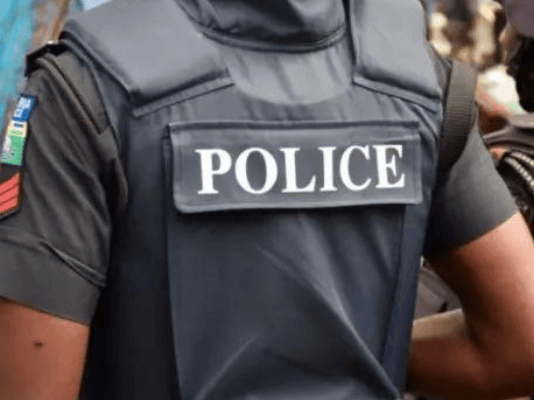
A young trader, Onyeka Emmanuel Ibe, was reportedly shot dead at a checkpoint in Anwai-Ugbolu road, near Asaba, the capital of Delta State, by a policeman with the Delta State Police Command who was subsequently detained for alleged murder. The policeman has since recounted the incident, stating that it was not intentional, ‘Before I could drag it from him, my belt entered the trigger then it fired. It was not intentional or deliberate to kill him.’ This incident caused public unrest as angry youths blocked major roads in Asaba over the alleged extrajudicial killing by the police.
According to his colleagues, Ibe was on his way to work when he was stopped by policemen at a checkpoint along the Ugbolu-Asaba Highway. They allege that he refused to offer a N100 bribe which angered one of the policemen who shot him in the head, killing him on the spot.
The protesters took the protest to the police headquarters in Asaba where the state police commissioner was on hand to receive them, promising that investigations into the unfortunate incident are underway and the policeman involved is already in custody. The Commissioner of Police, Ari Ali, said, ‘I can assure you nobody can cover this. It is an ugly situation and we are not happy that it happened the way it happened.’
Unsatisfied with the police response, the protesters left with the corpse of the victim to the Government House to seek the intervention of the state Governor, Ifeanyi Okowa for thorough investigation. Until his unfortunate death, Ibe traded in phones and phone accessories. His death has left his wife and other members of his family devastated.
We use cookies to ensure that we give you the best experience on our website. If you continue to use this site we will assume that you are happy with it.