Category: World

  • Mali: Buhari urges unconstitutional ‘authority’ to restore order, fears regional instability

    Mali: Buhari urges unconstitutional ‘authority’ to restore order, fears regional instability

    For the first time since Malian Soldiers staged a mutiny and executed a coup to topple the almost seven year administration of Ibrahim Keita on Tuesday, Nigeria’s President, Muhammadu Buhari has called on the unconstitutional ‘authority’ in the landlocked Sahel nation to restore constitutional order forthwith.

    President Buhari Thursday afternoon described the events in Mali as a setback for regional diplomacy, according to a statement posted on his verified Twitter page.

    READ ALSO:

    ECOWAS set on resolving Mali’s political crisis

    “The events in Mali are great setbacks for regional diplomacy, with grave consequences for the peace and security of West Africa. It is time for the unconstitutional ‘authority’ in Mali to act responsibly and ensure restoration of constitutional order, peace and stability”, the President said.

    President Buhari, who was among a delegation of leaders in the West African bloc that visited Bamako, the Malian capital on July 24 with the hope of a successful intervention to broker peace between Keita’s government and opposition movement expressed fear that if sanity isn’t restored in Mali, the peace of the region may be at risk. International allies such as France, the United Nations (UN), and the European Union (EU) have also expressed this sentiment.

    President Muhammadu Buhari paid a one-day visit to Mali on July 23, 2020.

    “Nigeria strongly supports the efforts of ECOWAS Chairman, President Mahamadou Issoufou, for wider regional and continental consultations with ECOWAS, the AU and the UN, and the adoption of strong measures to bring speedy resolution to the situation.

    “A politically stable Mali is paramount and crucial to the stability of the sub-region. We must all join efforts, ECOWAS, the AU, the UN and other stakeholders, and work together until sanity returns to Mali with the restoration of Civil Administration, the President said.

    At the peace talk meeting in Mali on July 24 were ECOWAS Special Envoy, former President Goodluck Jonathan, and leader of the opposition, Imam Mahmoud Dicko and representatives of opposition alliance, M5 and Civil Society Organisations, who all briefed the high power delegate that include President Muhammadu Buhari of Nigeria, host President, Ibrahim Boubacar Keita and Presidents Machy Sall of Senegal, Nana Akufo-Addo of Ghana and Alassane Ouattara of Cote d’Ivoire.

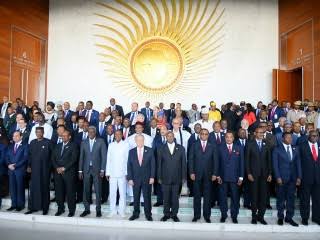
    A file photo of the presidents of Senegal, Ivory Coast, Ghana, Nigeria and Niger in a peace talk meeting with Malian President and leaders of a protest movement clamouring for the resignation of their President.

    The coup in Mali happened only hours after former President Goodluck Jonathan, who is among a special ECOWAS envoy tasked with brokering peace in the troubled Mali, on Tuesday led the ECOWAS Mission team to Mali on a visit to President Muhammadu Buhari at the State House in Abuja, Nigeria’s capital.

    READ ALSO:

    Mali Crisis: Ex-President Jonathan leads ECOWAS Mission to to Buhari

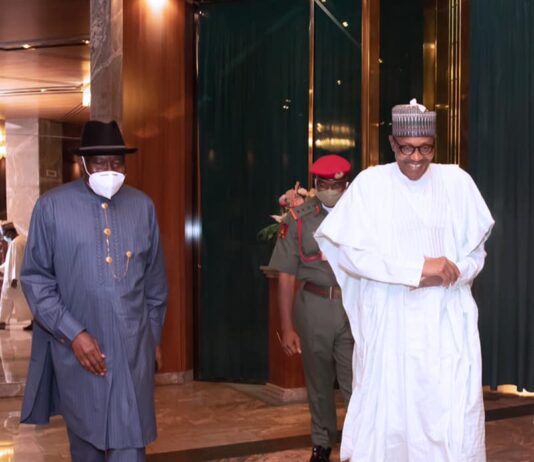
    President Muhammadu Buhari receives ex-President Goodluck Jonathan at the State House Abuja, Tuesday August 18, 2020. Photo: Femi Adesina

    “We told them that no international organization, including the African Union (AU), United Nations (UN), and others, would agree with their position. We continued to emphasize the need for dialogue,” Jonathan was quoted as saying while briefing President Buhari at the State House on Tuesday.

    By Tobiloba Kolawole

  • African Trade Insurance Agency Appoints Moses, Others into Management Team

    African Trade Insurance Agency Appoints Moses, Others into Management Team

    African Trade Insurance Agency (ATI) has confirmed key senior-level positions that would play an important role in steering critical support to member governments.

    The appointments, which were approved by the Board of Directors, included a veteran of the World Bank’s IFC, Manuel Moses, who has been appointed as the new ATI Chief Executive Officer.

    Moses would assume office on November 1, 2020.

    During its recently concluded virtual 20th annual meeting, ATI’s shareholders ratified the appointment of Moses as the new Chief Executive Officer based on the board’s recommendation.

    Moses is a Zimbabwean national, who brings 15 years of experience from the IFC, where he most recently held the post of Country Manager of Kenya. He holds an MBA from University of Leicester in the UK and a BSc in Civil Engineering from University of Zimbabwe.

    In the interim, ATI’s Chief Financial Officer (CFO), Toavina Ramamonjiarisoa, would fill the position of Acting Chief Executive Officer.

    Ramamonjiarisoa has been an integral part of ATI’s management team since she was appointed CFO in 2011, where, in this position, she has helped guide the institution towards its current eight-year record-setting growth rates along with ensuring maintenance of ATI’s investment grade ratings from both S&P and Moody’s (A/Stable and A3/Stable respectively)

    While Ramamonjiarisoa would be serving as the Acting CEO, the board approved Rodgers Siachitema would serve as the Acting CFO.

    In addition, Benjamin Mugisha has been confirmed as the substantive ATI Chief Underwriting Officer (CUO).

    Mugisha, a Senior Underwriter, who joined ATI in 2010, has been Acting CUO for the past year. He has served various functions including as ATI’s Uganda Representative, where he was responsible for field offices in Burundi, Rwanda and Uganda; and, subsequently as Senior Underwriter, where he managed ATI’s day-to-day business and a portfolio of international financial partners.

    The board also recognised the substantial contribution and 19 years of service to ATI by the General Counsel and Corporate Secretary, Cyprien Sakubu, who has recently retired from the institution.

    The board has constituted a special committee to oversee the recruitment of a new General Counsel and in the interim, the current Legal Expert, Elizabeth Mutafungwa, has been appointed Acting General Counsel.

    ATI is increasingly recognised by the IMF, S&P, Moody’s and others as a strategic development institution for Africa that is well-positioned to provide effective support to its member governments through the pandemic.

    Specifically, with the support of ATI, governments are able to manage their growing debt levels by re-profiling their costlier and riskier debts and replacing them with longer-term, cheaper debts from international commercial lenders.

    ATI is currently insuring one to two per cent of the GDP of its member countries and is expected to facilitate US$2 billion of additional investments to the continent in the next 12 to 24 months.

    ATI was founded in 2001 by African states to cover the trade and investment risks of companies doing business in Africa.

    ATI predominantly provides political risk, credit insurance and, surety insurance. In 2019, ATI closed the year with exposures of US$6.4 billion and continued to post record results for the eighth consecutive year with 132 per cent growth on the net profit over 2018 owing to strong demand for ATI’s insurance solutions from the international financial sector and from African governments.

    Since inception, ATI has supported US$62 billion worth of investments and trade into Africa. And for over a decade, ATI has maintained an ‘A/Stable’ rating for Financial Strength and Counterparty Credit by Standard & Poor’s, and in 2019, ATI obtained an A3/Stable rating from Moody’s.

    Idowu Sowunmi

  • Mali: Coup plotters promise elections “within a reasonable time”

    Mali: Coup plotters promise elections “within a reasonable time”

    Soldiers behind the coup tagged “popular inssurrection” that toppled the about seven years administration of Ibrahim Keita as President of Mali have promised to conduct elections within a “reasonable” time.

    The interventionist soldiers made this commitment on Wednesday, amidst pressure from the international community calling for civil, constitutional and peaceful resolution of the crisis that has ravaged the nation of about 20million people.

    Yesterday’s mutiny and military intervention in the political unrest, which was already inflamed was followed by Keita’s resignation on national TV, a move the opposition movement celebrated across the streets of Bamako. Keita’s announcement on national TV came only hours after Mutinous troops detained him at gunpoint.

    READ ALSO:

    Terrorism: ISWAP fighters hold hundreds hostage in Nigerian town- sources say

    In a swift reaction, the Economic Community of West African States (ECOWAS), the region’s fifteen-nation group, moved to suspend Mali from its membership. The forceful removal of Keita sparked fears among leading nations and allies of the region, including the European Union (EU), that the region could be destabilised.

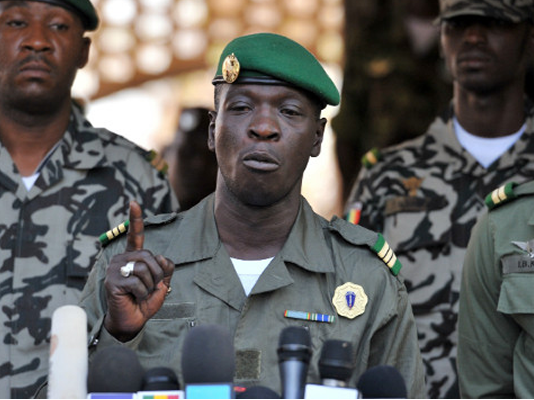
    While it still wasn’t clear on Wednesday morning who was leading the military revolt or who would act instead of the ousted President, a spokesman of the mutineers, labelled National Committee for the Salvation of the People (NCSP) justified the forceful removal of Keita and Cisse-led democratic government saying they acted to prevent Mali from falling further into chaos.

    However, the officer, Colonel Ismael Wague stretched a hand of invitation to Mali’s civil society and political movements to join them to create conditions for a political transition.

    “Our country is sinking into chaos, anarchy and insecurity mostly due to the fault of the people who are in charge of its destiny,” he said in a statement broadcast on national TV.

    “We are not keen on power, but we are keen on the stability of the country, which will allow us to organise general elections to allow Mali to equip itself with strong institutions within the reasonable time limit,” he added.

    There was no immediate reaction to Colonel Wague’s offer from the opposition and leaders of recent protests. However, the presidency of the G5 Sahel group of neighbouring states called on Malians to resolve the crisis peacefully, and demanded the release of President Keita and other senior officials.

    READ ALSO:

    EU Condemns ‘Attempted Coup’ In Mali, as region risks being destabilized

    On Wednesday, European Union Industry Commissioner Thierry Breton echoed that the bloc would insist on new elections within a reasonable timeframe.

    In a violent run-up to Tuesday’s coup following months of protests against alleged corruption, at least fourteen people were killed last month in protests called by a coalition of Mr. Keita’s political opponents.

    Mali, the landlocked nation has struggled to regain stability since a Tuareg rebellion in 2012 which was hijacked by Islamist militants linked to al Qaeda, and a subsequent coup in the capital, Bamako, plunged the country into chaos.

    The about eight year long violence has left thousands of citizens homeless

  • Mali Coup: Keita Resigns as President, Dissolves Parliament

    Mali Coup: Keita Resigns as President, Dissolves Parliament

    Mali’s President Ibrahim Boubacar Keita resigned late on Tuesday, hours after mutinying soldiers seized him from his home following months of mass protests against alleged corruption and worsening security in the West African country, Al Jazeera Media Network has reported.

    Speaking on national broadcaster ORTM just before midnight, a distressed Keita said his resignation – three years before his final term was due to end – was effective immediately. He also declared the dissolution of his government and the National Assembly.

    READ ALSO:

    Video: Nigerian Air Task Force hits terrorist targets, neutralises several ISWAP fighters

    “If today, certain elements of our armed forces want this to end through their intervention, do I really have a choice?” Keita said in a brief address from a military base in Kati outside the capital Bamako where he had been detained earlier in the day.

    “I wish no blood to be shed to keep me in power,” he said. “I have decided to step down from office.”

    It was not immediately clear who was leading the revolt, who would govern in Keita’s absence or what the mutineers wanted.

    Images posted earlier on social media said to be taken at the Kati garrison showed Keita and his Prime Minister Boubou Cisse surrounded by armed soldiers.

    The M5-RFP coalition behind the protests signalled support for the mutineers’ action on Tuesday, with spokesman Nouhoum Togo telling Reuters news agency it was “not a military coup but a popular insurrection.”

    The news of Keita’s detention was met with alarm by the United Nations, the former colonial power France and elsewhere in the international community. But in the capital, anti-government protesters who first took to the streets back in June to demand Keita’s resignation, cheered the soldiers’ actions.

    “All the Malian people are tired – we have had enough,” one demonstrator said.

    The political upheaval unfolded months after disputed legislative elections, and came as support for Keita tumbled amid criticism of his government’s handling of a spiralling security situation in the northern and central regions that has entangled regional and international governments, as well as a United Nations mission.

    The downfall of Keita, who was first elected in 2013 and returned to office five years later, closely mirrors that of his predecessor.

    Amadou Toumani Toure was forced out of the presidency in a coup in 2012 after a series of punishing military defeats. That time, the attacks were carried out by ethnic Tuareg separatist rebels. This time, Mali’s military has sometimes seemed powerless to stop fighters linked to al-Qaeda and the Islamic State of Iraq and the Levant (ISIL, or ISIS).

    The 2012 mutiny also erupted at the same Kati military camp, and hastened the fall of Mali’s north to armed groups. Ultimately a French-led military operation ousted the fighters, but they merely regrouped and expanded their reach into central Mali during Keita’s presidency.

    In recent weeks, anxiety had mounted about another military-led change of power in Mali after regional mediators from ECOWAS failed to bridge the impasse between Keita’s government and opposition leaders.

    Keita tried to meet protesters’ demands through a series of concessions, and even said he was open to redoing disputed legislative elections. But those overtures were swiftly rejected by opposition leaders who said they would not stop short of Keita’s resignation.

    Then on Tuesday, soldiers in Kati took weapons from the armoury at the barracks and detained senior military officers. Anti-government protesters immediately cheered the soldiers’ actions, and some set fire to a building that belongs to Mali’s justice minister in the capital.

    Cisse urged the soldiers to put down their arms.

    “There is no problem whose solution cannot be found through dialogue,” he said in a statement.

    But the wheels already were in motion – armed men began detaining people in Bamako too, including Keita, Cisse and the country’s finance minister, Abdoulaye Daffe.

    READ ALSO:

    Mali Coup: Mutinying Soldiers Arrest President, Prime Minister as Country’s Crisis Deepens

    Tuesday’s developments were condemned by the African Union, the United States, and the regional bloc ECOWAS. UN Secretary-General Antonio Guterres sought “the immediate restoration of constitutional order and rule of law,” according to his spokesman.

    Chairman of the African Union, Moussa Faki Mahamat, said he “energetically” condemned Keita and Cisse’s arrest and called “for their immediate liberation.”

    French Foreign Minister Jean-Yves Le Drian said France “condemns in the strongest terms this grave event.” J Peter Pham, the US envoy to the Sahel, said on Twitter that the US was “opposed to all extra-constitutional changes of government.”

    ECOWAS denounced “the overthrow by putschist soldiers of the democratically elected government” and ordered the closing of regional borders with Mali as well as the suspension of all financial flows between Mali and its 15 members states.

    Idowu Sowunmi

  • EU Condemns ‘Attempted Coup’ In Mali, as region risks being destabilized

    EU Condemns ‘Attempted Coup’ In Mali, as region risks being destabilized

    The European Union (EU) has on Tuesday condemned an “attempted coup” in Mali where Soldiers staged a mutiny, capturing the nation’s President, Prime Minister, Military Chiefs and political leaders.

    A statement by the bloc’s diplomatic chief, Josep Borrell, read that:  “The European Union condemns the attempted coup d’etat underway in Mali and rejects all unconstitutional change

    READ ALSO:

    Mali Coup: Mutinying Soldiers Arrest President, Prime Minister as Country’s Crisis Deepens

    “This can in no way be a response to the profound socio-economic crisis which has been hitting Mali for some months.”

    The EU, which has operated a mission training the armed forces in Mali since 2013, joined the UN and regional bloc ECOWAS in calling for dialogue.

    “A consensual outcome respecting constitutional principles, international law and human rights is the only way to avoid destabilising not only Mali but the whole region,” Borrell said in his statement

    One of the leaders of the mutineering soldiers told AFP that “the president and the prime minister are under our control” after being “arrested” at Keita’s residence in the capital Bamako.

    READ ALSO:

    African Union Commission Inaugurates AfCFTA Permanent Secretariat in Ghana

    President Keita and Prime Minister Cisse are now being held in an army base in the town of Kati, an official at the prime minister’s office said.

    The mutiny comes after months of protests calling for Keita’s resignation that have rocked the crisis-torn country.


  • Mali Coup: Mutinying Soldiers Arrest President, Prime Minister as Country’s Crisis Deepens

    Mali Coup: Mutinying Soldiers Arrest President, Prime Minister as Country’s Crisis Deepens

    Mali’s President, Ibrahim Boubacar Keita, and Prime Minister, Boubou Cisse, have been arrested by mutinying soldiers, according to several reports.

    Al Jazeera Media Network reports that the development on Tuesday came hours after soldiers took up arms and staged an apparent mutiny at a key base in Kati, a town close to the capital, Bamako.

    Boubou-Cissé-Keita
    A collage of arrested Malian President , Ibrahim Keïta and Prime Minister, Boubou CissëIt followed a weeks-long political crisis that has seen opposition protesters taking to the streets to demand the departure of Keita, accusing him of allowing the country’s economy to collapse and mishandling a worsening security situation.

    Earlier, protesters gathered at a square in Bamako while regional and international powers urged the soldiers to return to the barracks and foreign embassies advised their citizens to stay indoors.

    READ ALSO:

    Mali Crisis: Ex-President Jonathan leads ECOWAS Mission to to Buhari

    The Chairperson of the African Union Commission, Moussa Faki Mahamat, has condemned the arrests of Keita, Cisse and other officials.

    Mahamat also condemned any attempt at “anti-constitutional” change and called on the mutinying soldier’s to respect the state’s institutions.

    “I energetically condemn the arrest of President Ibrahim Boubacar Keita, the prime minister and other members of the Malian government and call for their immediate liberation,” he wrote on Twitter.

    Russian Deputy Foreign Minister Mikhail Bogdanov has said Russia has received information about the arrests of Mali’s president and prime minister, RIA news agency reported without providing further details.

    He also said, according to the media outlet, that Moscow is concerned about the events in Mali.

    Developments are moving fast in Mali.

    AFP news agency, citing a source identified as a leader of the mutiny, said the soldiers have detained Keita and Cisse.

    “We can tell you that the president and the prime minister are under our control,” the leader, who requested anonymity, told AFP.

    READ ALSO:

    Jonathan briefs Buhari on Mali crisis, expresses gratitude for name on railway complex

    He added that the pair had been “arrested” at Keita’s residence in Bamako.

    Another military official, who also declined to be named, said the president and prime minister were in an armoured vehicle en route to Kati.

    Reuters news agency has reported, citing two security sources, that Keita has been arrested by mutinying soldiers in Bamako.

    The arrest came after soldiers mutinied at the Kati army base and rounded up a number of senior civilian and military officials, according to Reuters.

    French President Emmanuel Macron discussed the soldiers’ mutiny in Mali on Tuesday with his Malian counterpart and other West African leaders, expressing his support for mediation efforts by the ECOWAS regional bloc, the presidency in Paris said.

    Macron discussed the unfolding situation with Keita and the leaders of Niger, Ivory Coast and Senegal, and “condemned the attempted mutiny under way,” the Elysee Palace said in a statement.

    The French presidency did not say precisely when Macron’s talks with the African leaders took place.

    In Bamako, hundreds of people have poured into the square around the Independence Monument, the site of mass protests since June, calling for Keita to quit over alleged corruption and worsening security.

    “Whether he’s been arrested or not, what is certain is that his end is near. God is granting our prayers. IBK is finished,” Haidara Assetou Cisse, a teacher, told Reuters news agency, referring to the president by his initials.

    “We have come out today to call for the total resignation of Ibrahim Boubacar Keita. Because we heard there were shots fired by the military and we have come out to help our soldiers get rid of IBK,” opposition supporter Aboubacar Ibrahim Maiga said.

    Protesters have also attacked the justice minister’s personal offices, setting parts of them on fire, a Reuters witness said.

    Cisse, the Malian prime minister, called on the mutinying soldiers to stand down and urged dialogue to resolve the situation.

    In a statement, he said the mutiny “reflects a certain frustration that could have legitimate causes. The government of Mali asks all the authors of these acts to stand down.”

    France denounced “in the strongest terms” what it described as a mutiny launched by soldiers in Mali.

    “France has become aware of the mutiny that has taken place today in Kati, Mali. It condemns in the strongest terms this serious event,” Foreign Minister Jean Yves Le Drian said in a statement that also urged the soldiers to return to their barracks “without delay.”

    Opposition supporters react to the news of a possible mutiny of soldiers in the military base in Kati, outside the capital Bamako, at Independence Square in Bamako, Mali August 18, 2020.

    The West African bloc ECOWAS called on the soldiers “to return to their barracks without delay”.

    READ ALSO:

    ECOWAS set on resolving Mali’s political crisis

    “This mutiny comes at a time when, for several months now, ECOWAS has been taking initiatives and conducting mediation efforts with all the Malian parties,” the bloc said in a statement.

    Gunfire was heard at an army base near Bamako, with the Norwegian embassy talking of a possible military mutiny. Soldiers fired their guns into the air in the base in Kati, some 15km (9 miles) from Bamako.

    Witnesses said armoured tanks and military vehicles could be seen on the streets of Kati, The Associated Press news agency reported.

    Idowu Sowunmi

  • Mali Crisis: Ex-President Jonathan leads ECOWAS Mission to to Buhari

    Mali Crisis: Ex-President Jonathan leads ECOWAS Mission to to Buhari

    Former President Goodluck Jonathan on Tuesday led a team of Economic Community of West African States (ECOWAS) Mission to Mali on a visit to President Muhammadu Buhari at the State House in Abuja, Nigeria’s capital.

    Jonathan, who is ECOWAS Special Envoy on restoring peace to Mali was at the State House to brief President Buhari on the update in the troubled nation, said Special Adviser to the President on Media and Publicity, Femi Adesina.

    A file photo of the presidents of Senegal, Ivory Coast, Ghana, Nigeria and Niger in a peace talk meeting with Malian President and leaders of a protest movement clamouring for the resignation of their President.

    “We told them that no international organization, including the African Union (AU), United Nations (UN), and others, would agree with their position. We continued to emphasize the need for dialogue,” Jonathan was quoted as saying.

    READ ALSO:

    African Union Commission Inaugurates AfCFTA Permanent Secretariat in Ghana

    According to Adesina, the former President stated that the Constitutional Court had been reconstituted and inaugurated, while vacancies in the Supreme Court had been filled, thus sorting out the judicial arm of government.

    In his remark, President Buhari thanked his predecessor, according to him, for “the stamina you have displayed” on the Mali issue.

    He counselled further consultations with the Chairman of ECOWAS, President Mahamadou Issoufou of Niger Republic.

    About a month ago, Jonathan was at the State House to brief President Buhari on the political development in Mali.

    During an unexpected visit on August 11, the night before opposition-led demonstrations against embattled President Ibrahim Boubacar Keita, Jonathan at a press briefing said “demonstrations do not solve problems per se”.

    The lingering crisis led West African leaders in their quest to broker peace in the landlocked nation flew to Bamako on July 24 in the heat of protests calling for President Keita’s resignation.

    However, as the intervention failed to seal a deal, Niger’s President Mahamadou Issoufou — at the talks along with the leaders of Senegal, Ivory Coast, Ghana, Nigeria — said Western African bloc ECOWAS would hold a summit on July 27.

    The lingering crisis: The opposition movement continues to mount pressure on President Keita, who came to power in 2013, to end the nation’s jihadist conflict that has been ongoing for many years.

    Despite the presence of foreign troops, the insurgency in the small nation of about 20 million people, mostly poor, has since 2012 displaced hundreds of thousands of people who are now homeless.


    President of Niger Mahamadou Issoufou arrives in Bamako on July 23, 2020, where West African leaders will gather in a fresh push to end an escalating political crisis in the fragile state of Mali. (Photo by MICHELE CATTANI / AFP)

    In a recent violence according to French officials, a French soldier was killed and two others were wounded in a suicide bomb  attack in northern Mali.

    But much of the current tension was sparked in April, when the constitutional court tossed out 31 results from the parliamentary elections, benefiting Keita’s party and sparking protests.

    Tensions then ratcheted up into a crisis on July 10 when an anti-Keita rally organised by the June 5 Movement turned violent.

    READ ALSO:

    Bandits abduct foreign national, Nigerian in Niger State- Police confirms

    Three days of clashes between protesters and security forces left 11 dead and 158 injured in the worst political unrest Mali had seen in years.

    Seeking a way out, ECOWAS mediators suggested forming a new unity government including opposition members and appointing new constitutional court judges who could potentially re-examine disputed election results.

    Photos of Jonathan’s visit.

  • African Union Commission Inaugurates AfCFTA Permanent Secretariat in Ghana

    African Union Commission Inaugurates AfCFTA Permanent Secretariat in Ghana

    With a provision of a $5 million institutional support grant by the African Development Bank Group, African Union Commission has launched the permanent secretariat of the African Continental Free Trade Area (AfCFTA) to ensure the economic transformation of the continent.

    AfCFTA permanent secretariat would be located in an ultra-modern office complex in the Central Business District of Ghanaian capital, Accra.

    Ghana’s President Nana Akufo-Addo hands over the AfCFTA permanent secretariat to African Union, Monday August 17, 2020. Image: CGTN

    Speaking at the ceremony on Monday, Ghana’s President Nana Akufo-Addo and Chairperson, AU Commission, Moussa Faki Mahamat, reaffirmed the importance of the body to the continent’s economic transformation agenda.

    “The economic integration of Africa will lay strong foundations for an Africa beyond aid. Africa’s new sense of urgency and aspiration of true self-reliance will be amply demonstrated by today’s ceremony,” Akufo-Addo said.

    Akufo-Addo appealed to member states that have not ratified to do so before the next AU summit in December in order “to pave the way for the smooth commencement of trading from 1 January, 2021.”

    The global novel Coronavirus (COVID-19) pandemic has heightened the importance of the success of AfCFTA, the Ghanaian president said.

    “The destruction of global supply chains has reinforced the necessity for closer integration amongst us so that we can boost our mutual self-sufficiency, strengthen our economies and reduce our dependence on external sources,” he said.

    Ghana was selected as the venue for the headquarters by African leaders during a Summit of AU Heads of states in Niamey in July last year, to launch the implementation phase of the agreement, which is expected to spur regional trade among member countries.

    Currently, 54 states have signed on to AfCFTA, out of which 28 have ratified the agreement.

    AfCFTA, the world’s largest free trade area, has the potential to transform the continent with its potential market of 1.2 billion people and combined GDP of around $3 trillion across the 54-member states of AU.

    Mahamat said the opening of the secretariat marked a milestone in the vision of Africa’s founding founders for continental integration.

    Also speaking, the first AfCFTA Secretary-General, Wamkele Mene, said the agreement offered an opportunity for Africa to confront the significant trade and economic development challenges: market fragmentation, small national economies, over-reliance on primary commodity exports, narrow export base, lack of export specialisation, under-developed regional value chains and high regulatory and tariff barriers to trade.

    “We have to take action now. We have to take action to dismantle the colonial economic model that we inherited,” Mene reiterated.

    The Vice President for the Private Sector, Infrastructure and Industrialisation of the African Development Bank, Solomon Quaynor, said the establishment of AfCFTA permanent secretariat is in keeping with the bank’s role of continental leadership in helping to build special-purpose vehicles that are critical to the successful implementation of crucial institutions to accelerate Africa’s economic development objectives.

    “The African Development Bank congratulates the AU/AfCFTA on the investiture of the Secretariat hosted by Ghana on 17 August 2020.

    “The bank is delighted to be associated with this groundbreaking, game-changing, transformational continental initiative in furtherance of the objective to create the Africa we want.

    “Our support to AfCFTA is in keeping with the bank’s role of continental leadership in helping to build special-purpose vehicles that are critical to the successful implementation of crucial institutions to accelerate Africa’s economic development objectives,” Quaynor added.

    The event also featured virtual goodwill remarks from AU Chairman, President Cyril Ramaphosa of South Africa, and Nigerien President Mahamadou Issoufou.

    Idowu Sowunmi

  • African Development: Gbajabiamila pushes for debt cancellation, spearheads Conference of Speakers

    African Development: Gbajabiamila pushes for debt cancellation, spearheads Conference of Speakers

    • Nigeria to host maiden Conference of African Speakers and Heads of Parliament

    The Speaker of the House of Representatives, Femi Gbajabiamila on Monday convened a meeting of some African Speakers of Parliaments where it was agreed that there is an urgent need to push for debt cancellation for the continent from their multilateral and bilateral partners.

    At the virtual meeting, the Speaker’s proposed initiative to establish the Conference of African Speakers and Heads of Parliament (CoSAP), a body that will facilitate increased collaboration between Speakers, Heads of Parliament and National Assemblies across Africa got a boost.

    READ ALSO:

    International Flight Operations Resume in Nigeria Aug 29, Says FG

    The African Speakers will also seek to advance the African development agenda within and outside the continent in conjunction with both the executive arms of government as well as African regional institutions.

    African Heads of Parliament who participated in the meeting include Hon. Tagesse Chafo, Speaker, House of Peoples Representatives, Ethiopia; Rt. Hon. Prof. Aaron Mike Oquaye, PhD, Speaker of Parliament, Ghana; Hon. Justin Bedan Muturi, Speaker, National Assembly, Republic of Kenya; Rt. Hon. Donatille Mukabalisa, Speaker, Chamber of Deputies, Rwanda; and President Moustapha Niasse, AFP, President, National Assembly, Senegal.

    In his opening remarks, Gbajabiamila said there was an urgent need to join local and global efforts to push for the cancellation of external debt owed by various countries on the continent.

    He submitted that development across the continent has become stunted due to the heavy burden of the debts, noting that the outbreak of the coronavirus (COVID-19) has compounded the issue for the continent, considering the socio-political and economic consequences of the disease.

    “We all agree that Africa’s debt burden has become an existential threat to our societies, our economies and the future; we leave to posterity, and we need to do something about this and treat it as a continent-wide priority.

    “It is safe to say that the burden of debt servicing, vis-à-vis spending on education and health care for example, is a threat to our continent’s stability and development, especially in the era of Covid-19.

    “When we find ourselves having to make policy choices between paying debts or saving lives, we know something is not morally right. And as democratically elected representatives of our people, we cannot be silent. We must speak up and we must act. And the time to act is now.

    “Furthermore, is the need for us to reflect on, the processes that led to Africa’s heavy indebtedness in the first place, the role parliamentarians can play to address this going forward and what assurances we as parliamentarians can give our borrowers that if our debt is cancelled, the freed-up resources will be invested in social and economic development of our citizens.

    “If we want debt cancellation, we must be able to build the confidence of the borrowers that the cancellation will indeed save lives and livelihoods across the continent, and we, as Speakers and Heads of our parliaments, will ensure that is indeed the case”.

    READ ALSO:

    Buhari’s aide tells Oyedepo – Abide by CAMA or manufacture your own country


    On the need for the establishment of the Pan-African Speaker’s Conference, Gbajabiamila noted that collective efforts at tackling challenges facing the continent have become expedient.

    He said: “The motive behind this initiative is that each year we identify a theme, issue, or challenge that is pan-African in scope and we meet to deliberate on how we can work together across parliaments in Africa to tackle these continental issues and challenges.

    “As heads of our respective parliamentary entities, it will also be a good platform to share experiences and expertise in different aspects of our legislative duties pertinent to the growth, development and sustenance of our economies and our societies; and on ways to enhance the capacity and impact of our parliaments on our democracies and the lives of the peoples we all represent.

    “We have spent decades learning from the rest of the world, now we must begin to learn from one another”.

    Throwing his weight behind the two initiatives, Hon. Tagesse Chafo, Speaker, House of Peoples Representatives, Ethiopia, noted that though almost every government on the continent has been trying to seek debt forgiveness, this should not, however, stop the parliaments from contributing to the efforts through a platform such as this.

    “As representatives of our people, we are to come together, advise and campaign about the issue, we don’t have to keep quiet because debt cancellation would be good for the resuscitation of our economies that have been ravaged by the COVID-19 pandemic,” he added.

    In the same vein, Rt. Hon. Prof. Aaron Mike Oquaye, Speaker of Parliament, Ghana noted that the debt burden is essentially a common challenge on the continent, as most African countries have to depend on foreign loans to execute their national budgets.

    He, however, noted that the Speaker’s group, in its efforts to push for debt cancellation must be able to convince the creditors about accountability if they hope to succeed.

    He said: “Donor agencies are interested in accountability because they are confounded about the issue of corruption, and we must be able to give the assurance and that is why the Speakers Conference is critical. And if nothing is done, there may be no economy to service the loans”

    Hon. Justin Bedan Muturi, Speaker, National Assembly, Republic of Kenya also emphasised the need for the initiative, adding that, the coronavirus pandemic has undermined most African economies because conditions attached to most of the loans have been eroded by the consequences of the novel pandemic.

    On her part, Rt. Hon. Donatille Mukabalisa, Speaker, Chamber of Deputies, Rwanda, while noting that African countries depend on and are heavily burdened by loans even before the pandemic, however, added that the group must be clear about the kind of debt it is seeking to address and from which partners.

    READ ALSO:

    Bayelsa Governor Heads to Appeal Court over Tribunal Ruling


    While President Moustapha Niasse, AFP, President, National Assembly, Senegal also regretted that the pandemic has affected all economies on the continent negatively, he, however, suggested that opinions of members of the forum must be sought on how to solve the issues between suspension or cancellation of debt

    “We must be convinced that we have a job to do at the level of parliament,” he added.

    It was also agreed that a Communique would be released in the first week of September 2020, while the campaign for implementations of the plan of action would begin in the second week of September 2020 as well.

    According to the forum, the third week of September would be devoted to the planning for the 2021 conference by the Secretariat.

    While it was decided that Nigeria would host the maiden edition of CoSAP, chaired by Nigerian Speaker the Rt. Hon Femi Gbajabiamila, the new body is expected to meet again in the first week of September to approve the plans and swing into action.

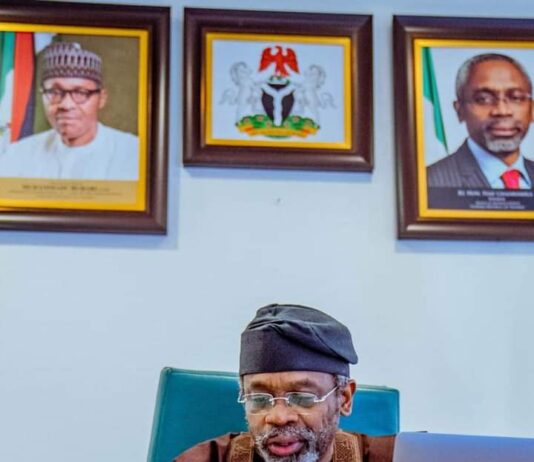
    Nigeria Speaker, House of Representatives, Rt. Honourable Femi Gbajabiamila. Monday, August 17, 2020. Photo- Office of the Speaker.

    Tobiloba Kolawole

  • Video: Another ‘Trade War’ is Brewing Between Nigeria and Ghana

    Video: Another ‘Trade War’ is Brewing Between Nigeria and Ghana

    Another round of ‘retail trade war’ is now brewing between Nigerian traders and their Ghanaian counterparts over the legal status of traders that should operate at the retail market located at Kwame Nkrumah Interchange (Circle) in Ghana.

    While Nigerians under the aegies of the Nigerian Union of Traders Association Ghana (NUTAG) expressed shock at the Ministry of Trade and Industry for locking up nearly 50 shops of its members in Accra on Thursday under what it described as questionable circumstances, the Ghana Union of Traders Association (GUTA) claimed that majority of foreign retailers in the country do not have permits to engage in retailing.

    But, NUTAG President, Chukwuemeka Nnaji, said his members have the right documentation to operate in the retail market and they also comply with the taxes they are expected to pay.

    Nnaji, in an interview, said the Nigerian traders were not treated fairly, even with their official and legal documentations to support their business operations in Ghana.

    According to him, “We got a notice that a Ghanaian committee will come to inspect the documentations of the Nigerian traders. We alerted all our members to get ready for the inspection.

    “The Ghanaian Task Force began the inspection at Abossey Okai and arrived at Kwame Nkrumah Interchange (Circle) on Thursday.

    “But we were shocked to see the task force forcefully try to lock up our shops even though we have the right documents to operate in Ghana.”

    It’s alleged that Ghanaian traders have been mounting pressure on their Nigerian counterparts to pay more for their business operations in Ghana.

    The Nigerian traders were initially asked to pay a sum of $300,000 to register for retail trade in Ghana, which runs contrary to the treaty of the Economic Community of West African States (ECOWAS). For them to remain in business, the traders rallied round themselves and put resources together to get a group licence with which they were able to secure different shop outlets.

    The latest information alleged that Ghanaian government is now demanding for a sum of $1 million to be paid by the Nigerian traders in order to remain in business.

    It would be recalled that GUTA had been accusing majority of foreign retailers in Ghana of not having permits to engage in retailing.

    Relying on the GIPC Act, 2013 (865), GUTA argued that the law spells out the terms and conditions under which foreigners can engage in retailing in Ghana.

    The law bars the “sale of goods or provision of services in a market, petty trading or hawking or selling of goods in a stall at any place” by foreigners.

    GUTA recently warned Ghanaian government of an impending massive job losses in the retail market if proposals to review restrictions in that space are allowed.

    In November 2019, GUTA closed about 600 shops owned by foreigners, mainly Nigerians, relying on the GIPC Act.

    The shops were reopened after months of closure. In order to address all the grey areas, a Presidential Committee on Foreign Retail Trade was instituted in February 2020.

    Speaking on the matter on February 4, 2020, a representative of the Minster of Trade, Ntim Odonkor, said: “The issue of foreigners taking over trading activities reserved for Ghanaians which has been your concern sometime has also come to the notice of government.

    “As directed by his Excellency, a technical sub-committee has been put together to ensure the implementation of the president’s directives on this matter.

    “Secondly, parliament has charged its subsidiary committee on Trade, Industry to study and make recommendations in a by-partisan manner with a view to finding a sustainable solution to this issue.”

    It’s not cleared if the the Ghanaian Task Force is implementing the modified directives of Mr. President (Nana Akufo-Addo) or fresh recommendations by the subsidiary committee on trade and industry in the parliament.

    Video:


    By Idowu Sowunmi