People carry bags of food on their heads during a mass looting of a warehouse with COVID-19 food palliatives that were not given during lockdown to relieve people of hunger, in Abuja, Nigeria, Oct. 26, 2020. Photo- VOA
By Dapo Akande
Still on the Lekki Massacre, the Nigerian Army quickly denied it was anywhere near where the tragic incident took place. When it became obvious that narrative was no longer tenable, it admitted it was there after all, but only on the behest of the Lagos State government. Next, it vehemently denied shooting at the unarmed youths only for it to capitulate again and say it did shoot but only used rubber bullets. The Lagos State Governor on the other hand denies he invited the army. Reminiscent of Pontius Pilate, he too publicly washed his hands by saying the murderous acts were carried out by forces beyond his control. Thankfully, he at least admitted he was aware of two protesters who lost their lives. So which one is it? Everyone seems to be changing his story as often as a chameleon changes it’s colours. As I cast my mind back, I remember vividly as if it was yesterday, my dear parents (God bless their souls) telling me that truth remains constant. Always. I’ve come to learn they were right.
The Nigerian state has by it’s own body language and sometimes overt conduct, remained at the vanguard of insincere behaviour and many of our people have taken a cue from this; to the detriment of everybody including the state itself. In 1985 our country “won” the Under 17 FIFA World Cup, fielding men already in their early and mid twenties and we all celebrated our astonishing victory even when we all knew the shenanigans that had gone on.
There was a time too, several decades ago, when a European football club boasted of a superbly talented Nigerian player they had discovered. They had high hopes of this young sensation. They just couldn’t disguise their excitement and were already dreaming of what this prodigious talent would grow up to become in the future. The only little thing they needed to work on was his diminutive size which needed to be robust enough to cope with the physicality of the beautiful game played at that level. So, they drew up a special diet for him to achieve this goal. After several months, they were confounded by the results they were seeing. Instead of becoming bigger and stronger, his stomach began to protrude. They couldn’t understand it. Little did they know baba’s midrib bulge was just the beginning of a middle age pouch because of all the extra food they were pumping into him. The man became sluggish and could barely carry himself around the pitch. His rise to football stardom ended as abruptly as it began. In the end, deceit didn’t pay.
I find it a little hypocritical for me to lecture my children and other people’s children too, when invited to speak about the evils of cheating. How do I reconcile that with boasting about our Junior World Cup victories when I’m in the know of what actually transpired? We must be careful about the things we espouse because once the majority support it, it automatically alters our collective moral code.
Cultural Relativism, as an ethical theory describes morality as behaviour accepted as good conduct by the majority of people in that society; which means moral values will naturally differ across cultural divides. A good example could be how most Western countries have evolved their moral code over the years to accept same sex relationships as okay, to the point where many have enshrined it in their laws. Abortion laws too vary from country to country, often influenced by the views of the majority in that particular society. This is not a discourse on those issues but an attempt to illustrate how a society’s moral code is often determined by what the majority consider to be acceptable.
If a large section of the Nigerian populace continues to implicitly encourage lying and cheating as a way of life, then it could soon permeate (if it hasn’t already) to the point where it not only becomes the social norm but is no longer even considered immoral. You may think you’re clever by passively supporting it when it pays you but then a day will come when it won’t.
Returning to the football Junior World Cup victories; at the end of the day, did we really win? The nation may have earned a World Cup title and basked in the euphoria of hoisting up the winner’s trophy but in the process, our society lost more than it gained. Of course, our reputation suffered when we eventually got found out but we still lost more than that. The institutional fraud and the people’s failure to call it out only succeeded in lowering our collective moral standard. In our haste to celebrate a clearly fraudulent victory, our values began to evolve; no longer clearly defined and settled, they became confused and somewhat nebulous, changing from one instance to another.
Our perception of right and wrong would typically depend on who the agent or beneficiary is. Winning at all cost became the name of the game and this quietly seeped into our culture. “All’s fair in love and war” seems to have become the unwritten motto. It’s unfortunate because like so many things in life, once you get a taste of it and it tastes good, it becomes difficult to stop hence the admonition to run from anything that appears evil. Evil is seldom ugly on the outside. If it is, everyone would scamper. No, it’s beautiful and enticing much like the forbidden fruit.
Jonathan Schulz, an experimental economist at Yale University co-authored a study which examined the theory that in societies where high level institutional corruption and fraudulent conduct persists, the citizens will likely toe the same path. His discovery was that, “what individuals justify as honest seems to vary according to their environment”. Schulz went on to say, “It seems that people benchmark their dishonesty with what they’re surrounded by in their daily life”. Labelling this, ‘justified cheating”, this may help us to understand why many of us, just like those who looted the homes of perceived looters, bend the rules at times and feel justified in doing so because we live in an environment where everyone else seems to be doing same. Having witnessed how an averagely well off government official became a multi billionaire overnight, coupled with the constant barrage of nauseating stories of executive looting, it’s not too hard to see how the hungry and angry man may have justified his actions in his mind. He merely benchmarked it against institutional behaviour and saw little wrong in looting the “looters”. What a shame.
Changing the nation…one mind at a time.
Oladapo Akande is a Surrey University (UK) English graduate with a Masters in Professional Ethics. He’s an alumnus of the National Institute for Transformation and a two time author; The Last Flight and Shifting Anchors. He writes from Lagos.
International Criminal Court (ICC) has told BBC that it would “analyse materials” it has received about the violence which hit Nigeria last month following protests against police brutality.
ICC chief prosecutor’s office said contrary to an earlier report, it has not already opened a “formal preliminary examination” into the unrest.
ICC Prosecutor Fatou Bensouda & Vice President of Nigeria, H.E. Yemi Osinbajo in Abuja, Monday, October 14, 2019.
For weeks crowds of peaceful protesters gathered in streets in major cities of Nigeria to demonstrate against police brutality.
The protests were held under the #EndSARS banner, a reference to demands for the disbandment of the notorious Special Anti-Robbery Squad, whose officers were repeatedly accused of criminal activity ranging from extortion to extra-judicial killings.
It led to a crackdown, with security forces and armed thugs accused of killing protesters.
Some 51 civilians, 11 police officers and seven soldiers were killed in the unrest, according to President Muhammadu Buhari.
Rights group, Amnesty International, said security forces opened fire on protesters at Lekki toll gate in the commercial hub of Lagos, killing 10 people there.
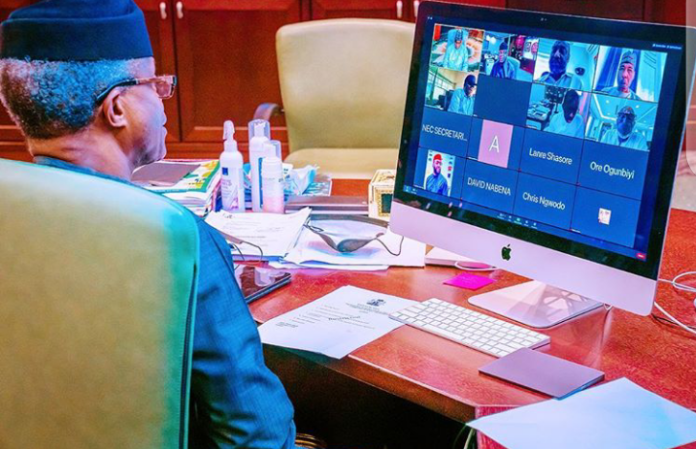
Vice President Yemi Osinbajo interacting with members of the NEC via teleconference, State House, Abuja.
In furtherance of the resolution of an emergency meeting of the Vice President Yemi Osinbajo-led National Economic Council (NEC) last week, the Ad-Hoc Committee set up to engage with youths, civil society organisations, and different strands of leadership across the nation in the wake of the recent protests have swung into action.
At a meeting presided over by Osinbajo on Tuesday, the committee decided to promptly embark on a two-pronged engagement process: zonal and state-based respectively.
Vice President Yemi Osinbajo interacting with members of the NEC via teleconference, State House, Abuja.
For the state-based engagements, each of the 36 governors and the Federal Capital Territory (FCT) minister would meet with the leadership and representatives of the identified groups.
This would then be immediately followed by zonal interactions where Osinbajo and members of the committee would feature.
The engagements would not only include youth groups but also traditional, religious and political leaders. Civil society groups would also be involved as well as opinion moulders like the media.
The interactions would feature issues around employment, social safety nets and national unity and security of lives and properties, among others.
Tuesday’s meeting, which was attended virtually by all governors representing each of the six geopolitical zones in the country, also formally adopted some terms of reference.
These include: “To engage representatives of youths, cvil society organisations and others, political, religious and traditional leaders on employment and social safety net programmes among other issues;
“To engage with the security agencies and develop ways of delivering more control to governors who are the Chief Security Officers of their states;
“To recommend effective solutions to the rising divisiveness and propose ways of strengthening national unity;
“To develop a framework for the coordination of action steps to be taken by both the federal and state governments in response to the fundamental issues underlying the #EndSARS protests.
“To co-opt and or invite any individual or corporate body that may facilitate the work of the committee; and
“Report to council with such recommendations as may be considered appropriate.”
It would be recalled that last Thursday after more than four hours of deliberations at NEC emergency meeting, it was resolved that the deeper reasons behind the #EndSARS protests and its fallout should be addressed by both the federal and state governments.
Members of NEC Adhoc Committee on Public Engagements all of whom attended today’s meeting are: Osinbajo – Chairman; Governors Aminu Waziri Tambuwal of Sokoto State representing North-west; Babagana Zulum of Borno State representing North-east; Abubakar Bello of Niger State representing North-central; Rotimi Akeredolu of Ondo State representing South-west; Dave Umahi of Ebonyi State representing South-east; and Ifeanyi Okowa of Delta State representing South-south.
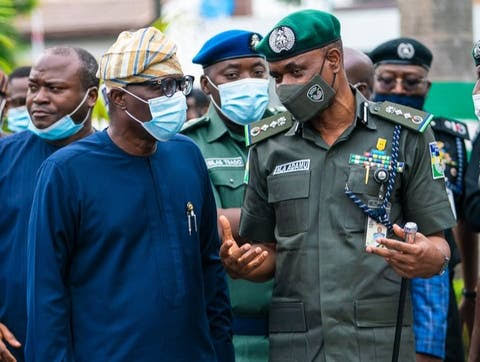
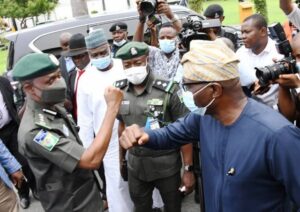
Inspector General of Police (IGP) visits Lagos State Governor, Babajide Sanwo-Olu at the Governor's Office, Alausa, Ikeja, as part of assessment tour of states affected by violence and destruction that followed the #EndSARS protest against police brutality by Nigerian youths.
Inspector General of Police (IGP), Muhammed Adamu, Tuesday visited Lagos State Governor, Babajide Sanwo-Olu, at the State House in Marina where he declared that the #EndSARSProtestsTurnedBloody won’t discourage the men and women of the Nigeria Police Force from performing their constitutional duties.
Briefing journalists on his mission in Lagos, IGP said he was in the state for an assessment of the police assets vandalised after the protest and to commiserate with residents.
Inspector General of Police (IGP) visits Lagos State Governor, Babajide Sanwo-Olu as part of assessment tour of states affected by violence and destruction that followed the #EndSARS protest against police brutality by Nigerian youths.
Adamu consoled the governor and people of Lagos over the coordinated arson, which left strategic assets of the state in ruins. He said the police had widened its intelligence to trace and arrest those that carried out the act.
According to him, “Lagos was the epicentre where the #EndSARS protest took place and the number of destruction in the subsequent violence was more in Lagos than any other part. I came to commiserate with the governor and people of the state. The destruction they suffered was uncalled for.
“The second leg of my visit is to see the police stations destroyed and boost the morale of our men in Lagos. We don’t want them to be demoralised by the event in which they suffered personal attacks. Policemen are trained to take such pain. Now that the event has happened, it shouldn’t discourage us from performing our constitutional duties.”
The police chief said he observed that the morale of some officers had dampened in the light of the violence, he noted that his visit would encourage them to give their all in protecting the lives and properties of the citizens.
Adamu said the scale of the destruction witnessed in Lagos and around the country called for the need by Nigerians to adopt standard protocols for public protests whenever they wanted to express their grievances against the system.
“It is very important to set up protocols that will prevent hoodlums to hijack peaceful protest organised with good intentions. The moment the protest organisers don’t have leadership, the purpose and intent of the effort would be defeated. As we have seen in the case of #EndSARS protest, no economy will be able to bear the loss that we have seen in Lagos,” IGP said.
Adamu visited some of the assets torched in Lagos, including the vandalised palace of Oba of Lagos,
Lagos State was the epicentre of the #EndSARS protest, which later snowballed to coordinated violence that led to a large-scale destruction of assets belonging to the state, Federal Government, police and private individuals.
Six police officers were lynched in Lagos, 36 critically injured, while 46 police stations were torched.
Responding, Sanwo-Olu commiserated with Adamu over the mob attacks on police personnel and torching of their stations.
Despite the violence visited on the police formations by hoodlums who hijacked the protest, the governor commended the officers in Lagos State Police Command for exercising restraint in the face of the attacks.
Sanwo-Olu intimated IGP on the move by Lagos State Government to rebuild the razed police stations and offer scholarship awards to the children of the officers killed in the violence.
The governor assured Adamu that all the requests sent to Lagos State Government by the police would be fulfilled, while pledging that the state would be championing a cause to improve citizen-police relationship in order to prevent re-occurrence of the issues that led to the #EndSARS protest.
Those who accompanied IGP include: Deputy Inspector General (DIG) in charge of Research and Planning, Leye Oyebade; his counterpart in Force Intelligence, Ibrahim Lamorde; Assistant Inspector General (AIG) in charge of Force Operations, Hosea Karma; AIG Zone 2, Ahmed Ilyasu; and Lagos State Commissioner of Police, Hakeem Odumosu; among others.
A total of 1,003,668 candidates, representing 65.24 per cent of candidates that sat for 2020 West African Senior School Certificate Examination obtained credits and above in a minimum of five subjects, including English Language and Mathematics.
Of this number 497,139 representing 49.53 per cent were male candidates, while 506,529 (50.47 per cent) were female candidates.
Comparatively, the percentage of 2019 WASSCE candidates that obtained credit and above in a minimum of five subjects, including English Language and Mathematics, was 64.18 per cent. This represents a marginal increase of 1.06 per cent in performance in 2020 WASSCE.
Announcing the results in Lagos on Monday, the Head of West African Examinations Council (WAEC) in Nigeria, Patrick Areghan, a total number of 215,149 candidates had their results withheld, representing 13.98 per cent of the total number of candidates who wrote the examination.
He noted that the results were withheld over sundry offences ranging from examination malpractices among others.
According to him, “The cases are being investigated and reports of the investigations will be presented to the appropriate committee of the council for determination in due course. The committee’s decisions will be communicated to the affected candidates through their various schools.
“81,718 candidates, representing 5.31 per cent have a few of their subjects still being processed due to some errors on the part of the candidates.
“Efforts are, however, being made to speedily complete the processing to enable all the affected candidates to get their results fully processed and released, subsequently.
“The analysis of the statistics of the performance of candidates in the examination shows that out of the 1,538,445 candidates that sat the examination, 1,338,348 candidates, representing 86.99 per cent, obtained credit and above in a minimum of any five subjects (i.e with or without English Language and/or Mathematics.
“1,003,668 candidates, representing 65.24 per cent, obtained credits and above in a minimum of five subjects, including English Language and Mathematics.
“Of this number 497,139, that is, 49.53 per cent were male candidates, while 506,529 i.e. 50.47 per cent were female candidates.
“The percentage of candidates in this category in the WASSCE for School Candidates, 2019, that is, those who obtained credit and above in a minimum of five subjects, including English Language and Mathematics, was 64.18 per cent. Thus, there is a marginal 1.06 per cent improvement in performance in this regard.”
Areghan added that the “certificates of candidates whose results have been fully processed and released will be ready within the next 90 days, counting from today (November 2).”
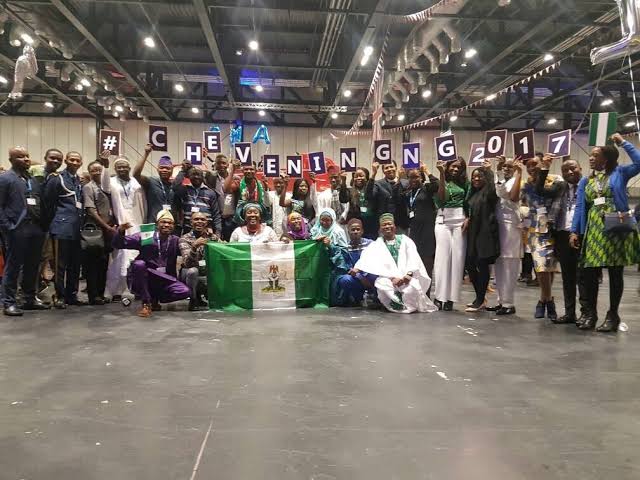
As the Chevening UK Scholarship 2021 nears the November 3, 12noon deadline, some scholars of the programme have put together tips on how applicants can increase their chances of winning the award, which opened for application September 3, 2021.
Ugochukwu Stephen Ugwudi, who is currently taking MSc in Entrepreneurship and Innovation at the University of Sussex under the Chevening UK Scholarship programme is the lead in the organized remote mentoring programme that is helping over 200 young Africans through applications for the renowned award.
In a chat, he expressed enthusiasm about the leverage and impact that the Chevening programme would have on his career.
He said: “it would afford me the opportunity to study for an MSc program in one of the world’s most prestigious universities in a country considered to be among the most diverse in term of multi cultural population. Being a fully sponsored scholarship program, I will have the opportunity to focus more on my studies and not have any reason to worry because the scholarship provides me with stipend to take care of my socio-economic needs”, Stephen Ugwudi said.
He disclosed that: “this is an opportunity I have been longing for; to progress my career. To connect with world class experts, stakeholders in various spheres of life.
“Chevening alumni network has over 53,000 members, for me this is a community with the most diverse group of people from over 160 countries. I believe I can make reasonable connection, build strategic partnership and cross pollinate grass root ideas with both peers and experts. These will further help me to achieve my set goals as well as contribute to national development by building cross border initiatives.”
Leadership Essay
Another Chevening scholar, Terhemen Agabo, an economist and social researcher based in Nigeria, now studying MA Development Economics at the University of Sussex, Brighton, shared tips on writing the Chevening leadership esssay during one of the mentoring session
In giving a good account of leadership experience, Agabo pointed out thus:
“Points to note while Developing your essay.
“Chevening wants you to list instances where you demonstrated leadership. An ideal example will have you show how you helped to solve a problem or achieve a goal for your team and the impact of your leadership action.
“Follow the STAR approach: A great friend used to say “never change the winning team”, the STAR approach to writing your Chevening essays is very effective. It makes your essays concise and makes a good impression of you before the reviewers. Please follow the STAR approach as it would help you manage your essay word count too.
“It is Good to List many Leadership Examples: Imagine that as a reviewer I am tasked to choose one essay out of ten and all essays were well written. I would probably consider the person who mentioned four examples of leadership ahead of the one that mentioned only two.
“Yes its true that you only have 500 words to cover in your leadership essay but you can list up to 5 examples. In my essay I mentioned five, I elaborated on 3 and wrote two lines for the remaining two.
“Every sentence should be a hit: Yes friends, Chevening is very competitive. While writing your leadership essay, make sure every sentence conveys a strong message. Avoid repeating points already mentioned as your word count is limited.
“Some leadership Examples may stand out So if you take a look at the score guide for Chevening interviews. The criteria for scoring the highest in your leadership section highlights that candidate holds a leadership position in a professional capacity including voluntary organisation (NGO, University ,society etc) provides strong evidence that they have shaped opinion through debating, blogging, social media or policy work.
“As you can see, leadership roles such as leading in school or in a community matters and you need to show that.
“Brew your essays over a long time: So, as you know Chevening is very competitive and often shocks many competent young leaders. So if you think you will write your essays in ten days and succeed, I will say you can but your chances are slim as preparation takes time. And the best prepared candidate takes weeks and some months to write their essays.
“Tell a fine and touching story: Yes, Chevening scholars are heroes. So, tell a story of a heroic leader. Use touching words e.g. “My forum saved 40 orphan children from dropping out of school”. It will increase your chances of beign chosen.
“Facts: Your leadership essay should be very specific to mention names of places, persons, programs that played out. No room for ambiguity.
“I began my leadership essay with a quote: Progress occurs when courageous, skillful leaders seize the opportunity to change things for the better- Harry S. Trueman.
“Then followed by an example in the next paragraph: As a teacher in 2017, I organized a forum in response to the high number of secondary school students that skipped school activities in Jalingo town, Taraba state in Nigeria. The forum focused on students from Government schools, and sought to provide the missing motivation that made students skip classes.
“I arranged for motivational talks, bringing in speakers from diverse backgrounds to speak to the students. The students were taught different skills to nurture their creativity including poem writing. 800 students benefited from the motivation that the forum provided.
“Through feedback it was recorded that over 400 students improved their participation in academic activities at school after the forum. Currently, 20 of the participants under my mentorship have proceeded to higher institutions.
“Mentioned three more examples then conclude thus: “A Chevening scholarship will strengthen my leadership capability and enable me exert a positive influence over a greater number of young and vulnerable Nigerians”, Terhemen Agabo, Chevening 2020 scholar advised.
While responding to a question from one of the participants in the mentorship session, which sought to know if applicant who has a record of social initiative stands a higher chance of qualifying, Agbo posited that: “No, I wouldn’t say so. This is because the Chevening Scholarship is judged on leadership, networking, academic and career potential as well as on potential impact on society. Social impact, scientific impact and other kinds of impact matter equally.
“Hence, a scientist who has never left the lab can also win the Scholarship judging from the impact of his laboratory activities.
“During my application a friend told me not to bother if I didn’t own an NGO. I wasn’t discouraged and I am here today. So whatever it is that you do to move society forward you are good for a Chevening award.”
Networking Essay
Another Chevening 2020 scholar, Hawa a legal practitioner and founder of Westwood Law, an Abuja firm that speciises in human rights law, election petitions and corporate law advised 2021 Chevening Award applicants on writing compelling networking essay.
Hawa, also a consultant at Waiza Rafique Advocates and Legal Consultants (WRALC), Lahore- Pakistan, emphasised that many people “many people find this part of the Chevening Essays to be the most difficult, ambiguous and tasking”.
Hawa, who had scaled through the application a year ago and now selected to study a one year LLM programme in International Development Law & Human Rights at the University of Warwick, United Kingdom suite that: “You don’t need to define what networking means to you here.
“Also, try to take a timeline, it makes the story more sequential and captivating to the reader.
“In this essay area, also try and give submissions using at least three distinct examples in three separate paragraphs.
“These examples do not have to relate to your discipline or subject area.
“What you must try to do here, is to show how you establish relationships with preferably important people, and how you nurture such relationships and ultimately, went ahead to leverage these relationships to find solutions to problems within your own context.
“In each paragraph, for the networking essay, you can do what I call the “modified STAR approach.
“Preferably, the easiest way to open the paragraph is to start by a conference/meeting/community engagement/dinner/social gathering you once attended.
“State the name of the meeting, the date, the location and possibly the purpose of the gathering. Be explicit!
“Then try to convince the reader of how you met an important or influential person at that meeting and what kind of discussions or engagements you had.
“Again, mention the name of the person, what his/her status/portfolio was at that time and what position the person holds now. Try to also convince the reader that you are still in touch with this person.
“Now, try to convince the reader how you used this contact to get access to possibly another very important personality, or how that contact was able to catapult you into a space that was hitherto not possible.
“Again, you must show that the progress you made impacted a group of people positively, whether directly or indirectly.
“For the second paragraph, you can open it by stating some professional associations/fraternity/political affiliations/community groups you belong to. You can also embed this in any of the three paragraphs. It is not cast in stone.
“Chevening is looking for persons who already have a trajectory. That is, have strong networks, know important people, have valuable contacts whether politically or professionally. Just think about it as though you are the Manager of Real Madrid football club and you are looking for players to buy in the transfer market.
“Chevening wants super stars.
“Convince them that you are one by linking yourself to some strong associations.
“Try to convince the reader of how you leveraged such associations you belonged to, to unlock opportunities to meet people who mattered in any discipline. Then, drive your points again of how you leveraged the contacts to bring change or solve a problem.
“Repeat the drill for the third paragraph
“To score the maximum marks in the Networking essay area, it is strategic to include a brief 4th paragraph.
“This paragraph will briefly state how you hope to engage the Chevening network in the future and this has to align with your long term goals which you will elaborate in the 4th section of the Chevening essays (Career goals).
“Me personally, the example I used was…. I went to a paralegal conference in Abuja and we were saddled with the responsibility of drafting a legal framework for paralegals….. I met Mrs Aimee Ongeso from Kenya in that Conference….. through this connection I made I became part of the Global Legal Empowerment Network that gives access to justice at grass roots across the globe.
“Notice how i made connection at the conference.
“For the 4th paragraph you can mention how you connected with Chevening scholars like Hawa and Stephen via telegram
“Mention names of scholars and alumni in your essays.
“It shows you are already engaging chevening community”.
UK University Choices
Arafa Mahayadine Salah a Chevening scholar from Chad who holds a masters degree in International Business Law and another in Expertise and Taxes advice work at The National Water Fund as Tax and Legal advisor.
Salah, who is now pursuing a LLM International Human Rights Law at the University of Sussex dealt with choosing a UK University in the 20221 Chevening Scholarship Award.
” 1) First of all choose wisely the course you want to do in the UK. It must be coherent with your career plan and with your background!
” 2) Chevening offers the possibility to applicants to choose 3 different courses in the same university or 3 same courses in 3 different universities (highly recommended). Take a deep look at universities ranks,modules, entry requirements, city of location etc. As all of us want to study in the highly ranked universities, people must be realistic in their choices and pick universities that are likely to accept them.
“British higher education is among the best in the world so no matter the university rank, you can be sure that the education will be excellent. Also, be aware that you cannot change your university choices after the interview. So you have until mid February-March to make the right choices.
” 3) In your essay, start by putting an emphasy on why you choose this specific area for your study and what your degree will help you to accomplish in your country. After that explain your university choices one by one by specifying what you particularly liked and what makes these universities special for you.
“Last tip: go to universities website, look at student’s YouTube channels or personal websites, it can help you in choosing wisely.
“I think so because for my course for example they’ve asked a background in law or related fields. But sometimes they study case by case especially when the student doesn’t have the background but have experience in the same field
When probed about choosing a university that isn’t listed among Chevening partners, Salah said: “chosing a university that does not have partnership with chevening doesn’t affect your application”.
As an addition to Salah’s points, Steven Ugothe convener of the mentorship sessions for 2021 Chevening Scholarship Award applicants added that: “although you are at liberty to choose any university.
“It is advisable you choose a partner university (this you can see on Chevening website). This is so because in the event that the non Chevening partner university that you choose refuses to pay the 20% contribution to the programme then it will be paid by you”, he added.
On the possibility of being accepted by all 3 university choices, Salah said: “Yes it’s possible. I have been accepted in my 3 universities. If this happens, you’re suppose to choose your first choice. But if you want to go with your 2nd or third choice you will have the obligation to explain to chevening why and have a valuable reason.
Giving her thoughts on what makes a compelling essay, she said:
“Essays: Be yourself! Don’t copy another scholar’s essay and be coherent. Leadership and influence: give concrete examples of your leadership skills in different areas (school, work, neighborhood or family).
“Before my application I had the wrong idea that chevening was looking for people who already accomplished great things like creating associations or having a leadership position. Chevening is also looking for potential leaders and people who serve others in their own small way. I gave example on how I’ve helped some student in university with some modules, how I’ve convinced my uncle to let my niece go to school etc. Your achievement can seem small to you but chevening will still consider it.
“Networking: again give examples of how you built your network and how your networking skills advantage you in personal and professional life.
“Studying in the UK: I think that this is the most important part of the essays. Choose wisely your course and your universities (take a look at universities rank, modules, entry requirements). Explain why you choose these universities and why they’re your first second or third choice.
“Career Plan: in this part you need to make a link between your background, your future career, UK work in your country and your course choice. Explain your short term, mid term and long term goal that your chosen course will enable you to reach.”
Career Goals Essay
Yusuf has spent considerable years in social works, a community development practitioner, who is passionate about leveraging development projects to influence social change within the domain of security, governance, inequalities, poverty and development advised on writing the career goals essay.
Armed with a Bachelor’s degree in Geography, with first class honours from Ahmadu Bello University, Yusuf was awarded the Chevening scholarship to study a masters program in Conflict, Statebuilding and Development at the University of Birmingham.
Yusuf advised thus: ” 1. Take as much time as you can to digest the essay prompt. If possible, take a whole day until you’re certain to be up for the task. This is the most important essay you’ll write as the return on investment for the UK is dependent on it.
“Next, utilize the scoreguide below in every step of the .
” 2. Essay Scoreguide:
” a. Applicant is at senior level in his/her field.
” b. Potentials to achieve ambitious but realistic innovative goals in his/her chosen sector.
” c. Demonstrated how the Chevening program will help develop the chosen sector.
” d. Demonstrates a strong understanding of the UK priorities in the country.
” e. Shows how the Chevening Scholarship would increase his/her ability to have influence and enable change in his/her work and home country.
Do not fret if you’re not in a senior position yet, he said.
“One way to solve that problem is to envision yourself as a highly profiled individual in the future, and then present yourself that way in the essay
“You can fulfil 2b, 2c, 2d and 2e with ease by leveraging your imagination and also studying the UKDFID (Now UKFCDO) projects in your country.
“Then connect your imagination to the problems and/or UK projects in your country
“3. Essay Structure
Now that you have an understanding of the essay prompt, you should then proceed with drafting your essay in a very organized manner.
“Like the usual academic essays we write in school, your Career Plan essay should be organized in three distinct structure:
a. Introduction
b. Body
c. Conclusion
“3a. Introduction
It is very important that you hook the reviewer with an engaging opening—most preferably a problem statement. Try to be concise and straightforward with what you want. Take my example below for instance:
“Problem statement in BOLD TEXT (aim for 50 to 70 words)
“I seek to develop a career that will ultimately position me to influence policy and advisory services necessary to foster peace, state-building and development in Nigeria. Conflict and insecurity is currently a problem that can reverse decades of development in the country. It has disrupted local and foreign trades, destroyed infrastructures, halted educational development of displaced youths and children, and has subjected millions of Nigerians to extreme poverty – 65 words.
“3b Body
“The bulk of the Chevening investment is directed to this part of your essay. Therefore, you should consider this section as a business deal where you pitch yourself as a long term viable investment.
“It should be clear from your essay what the UK stands to gain.
“Question: are they investing in a student who wants to explore the UK or an internationl trade expert?
“As you write this part of your essay, endeavour to work closely with the essay prompt and score guide highlight as 1&2 above.
“The structure of the body should be classified in 3 paragraphs.
1. Short term plan (2 years post-study)
2. Mid term plan (2-5 years)
3. Long term plan (5 years and above)
“For the three parts of the BODY, it is highly recommended that you use the SMART Approach.
S-Specific
M-Measurable
A-Actionable
R-Realistic
T-Time bound
“Avoid a statement that looks like this: I plan to reduce unemployment and empower youths. Or, I will contribute by working with many youths and mentoring them, or:
“I will work to address gender inequalities in my country and become a youth minister in future, or:
“I will institute public health programmes to address the worrisome spate of maternal and child mortality in Mozambique.
“I’ll show you what the SMART Approach looks like using a snippet from my essay
“Ensure to use proper signage when writing each paragraph e.g.
“Use openings like: In the short term (or Upon completion of my masters) I intend to…
“In the mid-term (or 5 years down the line) I intend to…
“In the long term (or going forward) I aspire to…..
“You may choose to adopt a different format but make your plans clear
“Short Term Plan: Using SMART approach
“In the short-term, I envisage working with conflict-oriented organizations like ActionAid International Nigeria as a Programme Coordinator, where I will seize the opportunity to leverage the skills gained from my study, to practice conflict policy planning, advocacy, and peacebuilding projects especially in the North-east region of Nigeria, with the aim to strengthen the resilience of at least 2,000 vulnerable youths against extremism recruitment over 2 years.
“Specific- Work with ActionAid as a Program Officer
“Measureable- 2,000 vulnerable youths
“Actionable- presence of required skill-set to actualize the project.
“Realistic- 1,000 youths per year, approximately 3 youths per day.
“Time bound- 2 years…
“Although, this example helped me through the review stage but I will advise that you use shorter sentences. Mine can be killing actually.
Yusuf gave more tips: “Try to be as ambitious as you can, but do not exaggerate in this part of the essay. My final example presented me as someone who will be leading as a Rapporteur at UN meetings.
“Bottom line, dream as wide as you can but make sure you tell them how you’ll get there.
“3c. Conclusion
“Now that all has been said, you should give an overview that captures how your plan fits with what the UK is doing in your country, and how you’ll be a useful tool to effect a positive change THROUGH THE CHEVENING SCHOLARSHIP.
“Here’s the conclusion I used in my own essay: Overall, my training in the UK will equip me with the relevant skills needed to spearhead peace and development in Nigeria, by connecting to an invaluable network of resources and collaborations that will contribute to Nigeria’s pursuit for improved economic growth and development, a major objective of the UK’s DFID due to its significance in strengthening future bilateral affairs.”
Yusuf explained further on his background experience and do of study.
“I studied Geography, worked as a computer operator in a Cyber cafe and I’m pursuing Conflict studies.
“So from my experience, you work experience doesn’t have to match up with you chosen course. What is important is that you have identified a problem in your country, and that you’re passionate about being a part of the solution to that problem. The only way you need to CONNECT the two is to present the Chevening scholarship as the bridge for you to achieving your goals.
“Forget your work experience and focus on how the obtainable skills from your program will propel you to reach the position you’re aspiring for.
“One thing is that Chevening wants people who are ambitious and aspiring to lead regardless of the organizational structure. As a prospective Chevening scholar, it is okay to return and still work as an employee BUT at a higher level, probably a managerial role not an errand fellow.
“On the other hand, if you want to be independent, for instance a Founder of an NGO, it is still okay to present your plans that way.
“What Chevening look out for is your aspiration to rise above where you are—not for a selfish aim, but for the greater good of the society or the people your work with.”
Contrary to some reports, the Director General of the World Health Organisation (WHO), Tedros Ghebreyesus, has not tested positive for the Coronavirus (COVID-19).
The clarification was made by WHO through its official Twitter handle, saying: “Contrary to some incorrect reports, @DrTedros hasn’t tested positive for #COVID19. He has been identified as a contact of a person who tested positive.
Dr. Tedros is feeling well and is in self-quarantine as a precautionary measure, in line with WHO protocols.”
It would be recalled that Ghebreyesus has announced in a series of tweet via his verified handle that he’s in self-isolation over the coming days and self-quarantine from home.
According to him: “I’ve been identified as a contact person of someone who has COVID-19 symptoms, I am well and without symptoms but will self quarantine over the coming days and self quarantine from home.
“It is critically important that we all comply with health guidance. This is how we will break chains of #COVID19 transmission, suppress the virus, and protect health systems.
“My colleagues and I at WHO will continue to engage with partners in solidarity to save lives and protect the vulnerable.”
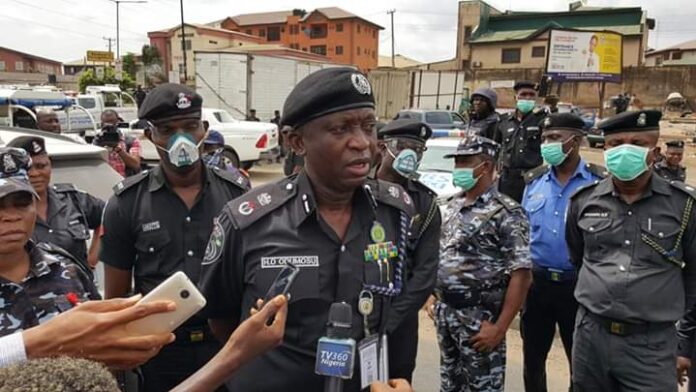
File photo of Commissioner of Police in Lagos, Hakeem Odumosu
Lagos State Commissioner of Police, Hakeem Odumosu, weekend visited some police formations and vehicles that were burnt by hoodlums during the recent #EndSARS unrest in the state.
He, however, said the command has put in place strategies in returning policemen to the affected stations for routine police duties with a view to providing adequate security for lives and properties of the people in the communities where the hoodlums wrecked havocs.
The police stations/formations visited include: Ebutte Ero, Makinde, Layeni, Ilasamaja, defunct SARS Office at Ajegunle, Amukoko, Orile, Defunct Anti-Kidnapping Unit at Surulere, Onipanu, Alade, Pen Cinema, Isokoko, Igando and Ikotun.
The inspection was to carry out an on-the-spot assessment and having first hand information about the burnt police stations/formations and vehicles, both official and personal, across the state.
The commissioner reiterated that despite the trauma and challenges the policemen in the command experienced, the police would leave no stone unturned in maintaining law and order and projecting public safety within the state, particularly, during the ember months which is usually characterised by security challenges.
During the tour of inspection, Odumosu ordered that the Divisional Police Officers and men attached to the burnt stations return back to their duties since the government as well as some concerned communities have provided temporary office accommodations, pending the general reconstruction of the burnt stations across the state.
He said: “Wherever there is temporary office accommodation, take over and continue your duties.”
The commissioner, in a statement by the command’s Public Relations Officer, Olumuyiwa Adejobi, reassured the general public of adequate police visibility and regular patrols across the length and breadth of Lagos State to curtail any security challenges in the state. Similarly, he encouraged members of the public to relate with the police and support them to discharge thier duties as expected.
Odumosu was accompanied by the Deputy Commissioner of Police, Department of Operations, Mohammed Ali; Area Commanders Area F, Ali Zongo; Area B, Soji Akinbayo; Area C, Fatai Tijani; Area G, Ibrahim Zungura; Area M, Ifaeyin Ohuruzor; Officer in-chrage of the state Intelligence Bureau and some affected Divisional Police Officers.
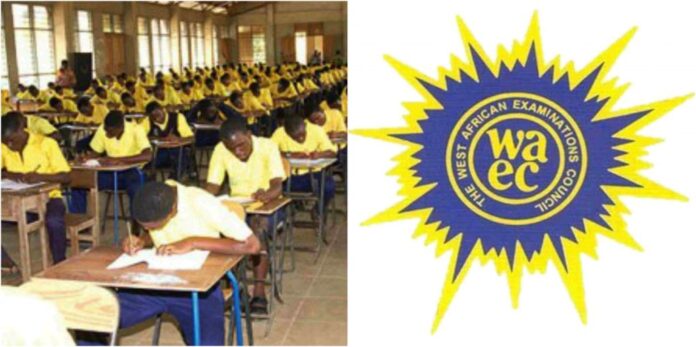
West African Examination Council (WAEC) has said the results for the 2020 Senior Secondary School Examination (SSCE) would be released today, Monday, November 2, 2020.
The announcement was by WAEC via its Twitter handle on Sunday.
“This is to inform candidates that sat West African Senior School Certificate Examination (WASSCE) for school candidates, 2020, that the results of that exam will be released by @waecnigeria tomorrow, Monday, November 2, 2020 by 10:30am,” the tweet stated.
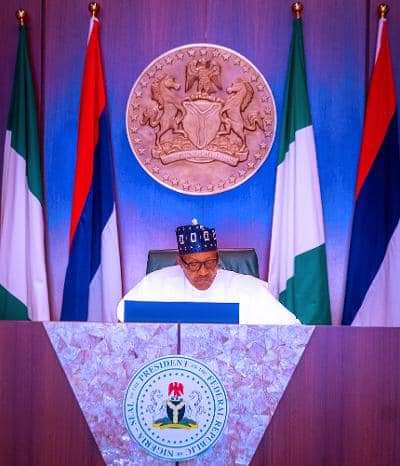
File Photo of President Muhammadu Buhari of Nigeria in Virtual Meeting with Former Heads of State and Presidents in State House on 23rd Oct 2020.
Nigeria’s President Muhammadu Buhari on Sunday night again indicates his readiness to move forward with the demands of the Nigerian youth through the EndSARS protest by appealing to come to the negotiation table and not be afraid.
The President made the appeal in his remarks at the maiden National Youth Day celebration, observed on November 1, which coincides with the African Youth Day celebration in Abuja.
At the event with the theme: ”Invest in the Youth, Secure Our Future”, where winners of the Federal Ministry of Youth and Sports Development 60-day App Challenge and Youth Innovators were recognised and received cash rewards, the President assured that his administration will not attempt to stop or suppress their voices, President Buhari further appealed to Nigerian youths to end street protests and participate in meaningful discussions with government aimed at comprehensive reforms to end all forms of police brutality against Nigerians.
In the same vain, President Buhari has also condemned wrongful use and imposition of violent force against any innocent, law-abiding persons, particularly young people, a stigma that compelled Nigerian youths to recently take to the streets in protest against police brutality in the country. The agitation le to the disbandment of the Special Anti-Robbery Squad, SARS, a unit in the Nigerian Police Force.
President Buhari, who was represented at the event by the Federal Capital Territory (FCT) Minister, Muhammad Bello, reiterated that the pleas of Nigerian youths have been heard by his administration and advised them not to be afraid to come out to dialogue with the government on the best way to reform the police.
He said that the Federal Government ‘‘now wants to hear concrete and practical ideas,’’ from the youths, while acknowledging their constitutional right to peaceful protests.
”You must realize that protests cannot last indefinitely. My government will not lift a hand to stop or suppress you.
”However, the fact of the matter is that other forces and actors will seek to take over your protests that they may redirect them in ways you did not intend and perhaps do not agree with.
”Every successful protest movement the world over has understood that there comes a time when activity must move from the street to the negotiation table. That time for you has come. Do not be afraid of this reality. You should welcome it.
”It is important that we all strive to use this moment constructively. Too many people have already sacrificed too dearly. It is our duty to use this fateful situation to move ourselves to a more just and caring society.
”As youth, you have a nation and a future to build. My government will always be your faithful partner in this essential and patriotic endeavours.”
He said, ”No one who is obeying the law, whether they are in line waiting for a taxi or in a peaceful protest line, should be harassed or brutalized by law enforcement agencies.
”It is because of my abiding belief in the people’s constitutional rights that we moved with dispatch to abolish SARS and to consider other reforms that will enhance the quality of law enforcement and improve the relationship between the police and public which is a pre-requisite in a just society.
”To allow protests is not a sign of weakness. It is a sign of strength and belief in democracy, and faith in the innate goodness of our people.
”This also shows confidence in the ability of our government to work with the people toward a reasonable and practical resolution to any challenge,” he said.
The president highlighted that in order to empower youths across the nation, whom he described as agents for social change, economic growth and sustainable development, his administration has established no fewer than 25 initiatives.
He noted that these noble initiatives, ongoing in the last five years, were aimed at placing Nigerian youths on the path of career development, entrepreneurship, skills development and direct employment.
”Today we will unveil the official logo of the N75 billion Nigeria Youth Investment Fund for the period of 2020 – 2023.
”This novel fund is dedicated to investing in the innovative ideas, skills and talents of Nigerian Youths and to provide our youths with a special window to access much needed financing, business management skills and other inputs critical for sustainable enterprise,” he said.
The President announced that over one million applications have already been received since the Youth Investment Fund Portal went live on 12th of October 2020.
He listed other youth-based initiatives, consistent with his administration’s policy of positioning youths for strategic leadership in different fields of endeavour, as follows:
”The birth of the Nigerian Youth Policy in 2019, the Nigeria Youth Investment Fund in July 2020, Young Farmers Initiative, Digital Skills, Entrepreneurship, Employability and Leadership/Mentoring (DEEL) programme, which recently received an approval of N4 billion naira for implementation, and the Not Too Young to Run Act.”
Other initiatives, according to the President, include the Presidential Youth Empowerment Scheme (P-YES) , the N-Power, SI and Disaster Management, the Youth Entrepreneurship Support (YES) Programme , Graduate Internship Scheme (GIS) and the Youth Enterprise with Innovation In Nigeria (YouWIN).
The President also added the $20 million Technology Fund for Young Innovators as some of the major initiatives empowering youths across the country.
Restating his call for national unity, President Buhari said Nigerian youths are better positioned to drive the indivisibility of Nigeria and collectively overcome whatever challenges bedevilling the nation.
He said, ”On this special occasion, we affirm our faith and confidence in the indivisible entity called Nigeria and in its future.
”We face many challenges but, in you, this nation has the collective ability and drive to overcome that which confronts us”, President Buhari affirmed.
We use cookies to ensure that we give you the best experience on our website. If you continue to use this site we will assume that you are happy with it.