Category: Features

Featured posts

  • Emefiele Denies Terror-Funding Claims, Labels Report “Fabricated”

    Emefiele Denies Terror-Funding Claims, Labels Report “Fabricated”

    Former Central Bank of Nigeria governor Godwin Emefiele has rejected reports alleging he is among those financing terrorism in Nigeria. He described the allegation as fake and baseless, saying it was designed to tarnish his reputation and mislead the public. 

    Emefiele said he has never been involved in terrorism financing, has not been invited, questioned, or investigated over such claims, and has no connection with the person referenced in the allegation. He urged Nigerians to disregard the report and called on the media to verify sensitive claims before publication. 

    Source credit: Vanguard News — “Emefiele rejects terrorism funding allegation,” published December 7, 2025.

    URL: https://www.vanguardngr.com/2025/12/emefiele-rejects-terrorism-funding-allegation/

  • Tinted Glass Permits: Why Nigerians Shouldn’t Pay Twice for One Car

    Tinted Glass Permits: Why Nigerians Shouldn’t Pay Twice for One Car


    Policeman checking vehicle particulars of a vehicle
    Policeman checking vehicle particulars of a vehicle

    For years, motorists in Nigeria have endured a frustrating ritual: registering their vehicles with the state licensing offices, only to be stopped on the highway by police officers demanding an additional permit for factory-fitted tinted glass. The irony is painful — every new vehicle, including those with tinted or shielded glass, is already captured in the National Vehicle Identification Scheme (NVIS), the centralized database managed by the Federal Road Safety Corps (FRSC). So why are Nigerians being compelled to re-register with the police?

    The answer lies not in necessity but in bureaucratic silos and institutional turf wars. By law, the Nigerian Police Force (NPF) retains the authority to issue tinted glass permits under the Motor Vehicles (Prohibition of Tinted Glass) Act of 1991. But in practice, FRSC already has the data. Every plate number, chassis number, and glass specification is captured the moment a car is registered. The logical solution would be for the police to access NVIS directly, extract a filtered report of all vehicles with factory-fitted shields, and enforce compliance seamlessly.

    Instead, motorists are dragged through a second, often opaque process at police stations. This duplication breeds confusion, harassment, and informal revenue collection on the highways. Worse, it undermines public trust in law enforcement, turning a legitimate security concern into yet another avenue for extortion.

    Yes, there are genuine worries. Aftermarket tinting is a security risk. Criminals exploit heavily darkened windows to evade detection. Police must have the authority to check and sanction illegal modifications. But this can be done through inspection points and digital cross-checks, not endless manual registrations.

    Nigeria cannot claim to be pursuing digital transformation while its agencies cling to outdated silos. A simple reform could save time, money, and lives:
    • Mandate FRSC to auto-flag tinted vehicles at registration.
    • Provide NPF secure access to NVIS.
    • Automate permit issuance electronically, with a transparent fee schedule.

    This way, motorists deal with one system, not two. Police officers enforce compliance using real-time data, not roadside guesswork. And the state builds trust by showing that regulation is about safety, not rent-seeking.

    The time has come to end this double compliance burden. Nigerians deserve a system where technology replaces intimidation, and where institutions collaborate rather than compete. In an era of insecurity, the Police need the public’s confidence more than ever. Simplifying tinted glass permits would be a small but powerful step in that direction.


  • Editorial Opinion: When Nigeria Happens to the Powerful: A Wake-Up Call for Leadership Beyond Privilege

    Editorial Opinion: When Nigeria Happens to the Powerful: A Wake-Up Call for Leadership Beyond Privilege

    An imaginary former Senator of the Federal republic of Nigeria lamenting among helpless Nigerians

    Not too long ago, a former senator of the Federal Republic of Nigeria—no longer in office, no longer surrounded by the trappings of power—was approached by a young citizen. In response to a casual exchange, the former lawmaker, with a tone of sincerity and fatigue, uttered a deeply revealing phrase:

    “May Nigeria not happen to you.”

    That brief remark has reverberated beyond its moment. It wasn’t just a statement—it was a confession, an admission of how quickly the illusion of safety and privilege dissolves when public office ends. It was also a mirror held up to the very soul of Nigeria’s dysfunctional socio-political system.

    This man had once been part of the machinery that ran the country. He had the power to influence budgets, pass laws, and shape policy. And yet, as soon as his tenure ended, he found himself swallowed by the same dysfunction that haunts ordinary Nigerians daily: insecurity, administrative chaos, crumbling infrastructure, and the silent indifference of the system.

    If a former senator can be so brutally vulnerable, what hope is there for the average Nigerian—those who never had the benefit of title, privilege, or armed escort?

    This story is not unique, but it is symbolic. It exposes a fundamental failure in our approach to governance. Public office in Nigeria is too often treated as a sanctuary from the hardship of the nation, rather than as a platform to transform that hardship. For many, leadership is reduced to a fleeting window of protection and accumulation—a time to secure wealth, enjoy prestige, and escape the daily grind of the masses.

    But here’s the painful truth: that escape is temporary.

    When power fades, the failing system you helped uphold comes for you too. That reality should frighten anyone in leadership who still believes that political office is about securing the moment instead of changing the system.

    This is a moral reckoning. We must ask: Why should any citizen have to fear that their country might “happen” to them? Why do even our lawmakers, governors, and ministers dread the same system they once managed? Why is Nigeria a place you survive while in office, but suffer once you’re out?

    Until we abandon the model of power as refuge and embrace leadership as responsibility, we will remain in this cycle. We need leaders who understand that the true measure of success is not what they gain while in power, but what they leave behind after power.

    A senator should not have to plead for mercy from the same country he helped lead. And a citizen should not have to pray that their nation does not “happen” to them.

    Leadership must become a legacy, not an escape.

    It is time to stop using the privilege of office for pecuniary gain, and start using it to build the kind of nation we won’t have to apologize for—even after we leave office.

  • EDITORIAL : Budget integrity is NOT budget padding.

    EDITORIAL : Budget integrity is NOT budget padding.

    Nigerian National Assembly

    A recent statement by Senator Solomon Adeola, Chairman of the Senate Committee on Appropriations and Senator representing Ogun West Senatorial District, published under the title “The Role of Legislature in Shaping a Holistic Budget for Nigeria,” has reignited public debate over the controversial practice of legislative budget insertions—commonly referred to as “budget padding.”

    In his article, the Senator defends the legislature’s role in adjusting the federal budget, dismissing terms like “padding,” “insertions,” and “constituency projects” as misrepresentations of legitimate legislative contributions to the budgetary process.

    At Echotitbits.com, we fully acknowledge the constitutional role of the National Assembly in reviewing and approving the national budget. However, we must respectfully challenge the narrative that legislative insertions are harmless or beneficial acts of “democracy in action.” On the contrary, such adjustments—when carried out outside the framework of national planning—continue to undermine Nigeria’s development agenda, weaken fiscal discipline, and compromise the integrity of public finance.

    The Purpose of the Envelope

    Nigeria operates a Medium-Term Expenditure Framework (MTEF), an internationally recognized tool designed to align national spending with realistic revenue projections, development priorities, and sustainable debt levels.

    Within this framework, each sector—education, health, roads, power—is assigned a budget “envelope” based on available funds and national strategic plans. These envelopes are not arbitrary figures. They are carefully calculated to ensure that the nation’s most pressing needs are funded first and that public spending remains sustainable.

    When the legislature inserts hundreds of small, fragmented projects into the budget without reference to the MTEF, these envelopes are breached. Ministries are then forced to spread their limited resources across too many projects—many of which are duplicative, unviable, or politically motivated.

    This is not merely a budgeting problem. It is a national development crisis.

    A Real-World Example

    Consider a real scenario:

    • Let’s assume under the MTEF, ₦2 trillion is allocated to the Federal Ministry of Works and Housing.

    • National Planning identifies critical projects, including:

    • The Lagos–Ibadan Expressway

    • The Abuja–Kaduna–Zaria–Kano Road

    • However, during the budget process, the National Assembly inserts hundreds of new road projects, each valued between ₦50 million and ₦200 million, scattered across various constituencies nationwide.

    The result?

    • Funding for the major highways—projects vital for national connectivity and economic growth—is slashed.

    • Many of the smaller inserted roads are abandoned or remain incomplete due to inadequate funding and planning.

    • The national transport strategy suffers, and Nigeria’s development goals are delayed.

    This is a clear example of how legislative insertions can derail national priorities, waste resources, and leave citizens stranded with half-completed projects.

    Insertions vs. National Priorities

    Legislative insertions are often justified under the banner of promoting equity or delivering development to neglected areas. While this may sound noble in theory, it frequently leads to waste and inefficiency in practice. Projects inserted late into the budget process are rarely subjected to rigorous planning. They often lack feasibility studies, are poorly costed, and fail to align with sectoral strategies.

    We have witnessed the consequences firsthand: unfinished health centres, abandoned rural roads, ghost ICT hubs, and duplicated training workshops. Meanwhile, large-scale national infrastructure—projects with the potential to drive economic growth, create jobs, and reduce poverty—remains underfunded or delayed.

    This is not equity. It is inefficiency.

    Who Really Benefits?

    The Senator is correct in stating that lawmakers do not execute projects directly; instead, implementation falls to Ministries, Departments, and Agencies (MDAs). However, this misses the critical issue. The core concern is how these projects enter the budget in the first place—and whose interests they ultimately serve.

    Many inserted projects are awarded to politically connected contractors with little or no accountability to the communities they are meant to benefit. The result is an erosion of public trust in both the budget process and governance as a whole.

    Strengthening the Budget Process

    A credible budget process demands transparency, fiscal discipline, and a clear connection to national priorities. To achieve this:

    1. All budget insertions must be made public, including details of their origin and justification.

    2. Constituency needs should be integrated into national planning frameworks through structured dialogue—not through last-minute lobbying.

    3. Sectoral envelopes must be respected, not breached.

    4. The National Assembly should focus on strong oversight, ensuring that public funds deliver value for money rather than becoming vehicles for political patronage.

    This is how democracy should function—not through distortions of the budget, but through accountability and measurable results.

    Conclusion

    The term “budget padding” is not a media invention. It reflects a budgeting culture that too often prioritizes political interests over Nigeria’s broader development goals. Rebranding insertions as “legislative adjustments” does not erase the very real consequences they have had on project execution, fiscal stability, and the welfare of ordinary Nigerians.

    At Echotitbits.com, we believe that budget integrity is the cornerstone of responsible governance. If democracy is truly about the people, then our budget must reflect their genuine needs—not merely the influence of political actors.

     Echotitbits.com Editorial Board

     July 7, 2025

  • Art: Between the Snake Goddess and Bust of Nefertiti

    Art: Between the Snake Goddess and Bust of Nefertiti

    Comparing Ancient and Classical Art

    The Snake Goddess art and Bust of Nefertiti are two renowned pieces of art from distinct civilizations that showcase their unique styles, cultural values, and design elements. The Snake Goddess art, crafted around 1600 BCE, is a Minoan sculpture discovered in ancient Crete. It portrays a female figure holding snakes, draped in a long, flowing dress and a headdress. The sculpture’s material is faience, a ceramic material popular in the Bronze Age, and it stands at a height of approximately 12 inches.

    The Mysterious Minoan Snake Goddess. Credit: Erik Törner/Flickr CC BY-NC-SA 2.0

    In contrast, the Bust of Nefertiti is a limestone sculpture from the Amarna period of ancient Egypt, created approximately in 1340 BCE. It portrays the queen Nefertiti, the wife of Pharaoh Akhenaten, wearing a unique crown with a long neck and an exquisite face. The sculpture stands at around 20 inches tall. The Snake Goddess and the Bust of Nefertiti share some similarities and differences.

    Both sculptures depict powerful female figures, but the Snake Goddess is more stylized and abstract, while the Bust of Nefertiti is more realistic and intricate. Although they use a blue and gold color palette, the Snake Goddess’s color scheme is more vibrant and playful, while the Bust of Nefertiti is more restrained and elegant.

    Nefertiti’s bust (c1350s-1340s BCE) on display at the Neues Museum in Berlin in 2012. Photo by Michael Sohn/Reuters

    Each artwork’s design elements reflect its distinctive style and place of origin. The Snake Goddess art incorporates curvilinear shapes, asymmetry, and flowing lines, which are typical of Minoan art. Conversely, the Bust of Nefertiti has a more balanced and symmetrical composition, with meticulous attention to detail and precise proportions, typical of Egyptian art.

    READ ALSO: Police Seizes Nearly 1000 Ilegal Weapons and Ammo

    The cultural values of the civilizations that created them are also evident in the works. The Minoans had a deep reverence for nature and goddesses, as well as a focus on beauty, sensuality, and creativity, which the Snake Goddess art embodies through its expressive style, feminine form, and playful colors. In contrast, the Egyptians valued order, stability, and eternity, as well as their rulers and gods, which the Bust of Nefertiti captures through its idealized portrayal of the queen, elegant style, and precise proportions.

    Today, both works serve as significant cultural artifacts, offering insights into their respective civilizations’ art, culture, and history, and are celebrated for their beauty, craftsmanship, and artistic merit. The Heraklion Archaeological Museum in Crete houses the Snake Goddess art, while the Bust of Nefertiti is on display at the Neues Museum in Berlin, Germany.

    To summarize, the Snake Goddess art and the Bust of Nefertiti are two exceptional artworks that highlight their civilizations’ unique styles, cultural values, and design elements. They continue to captivate and inspire people today, reminding us of the rich artistic legacy of ancient civilizations.

    Classical Periods in Art History

    Middle Ages (400-1300 CE): Visual arts flourished during the Middle Ages, reflecting the period’s aesthetic values. The Catholic Church heavily influenced the art of this period, and the wealthiest members of society commissioned artworks for religious purposes. Gothic architecture, with tall spires, pointed arches, and intricate stone carvings, became popular. Artworks during this period often featured religious themes, emphasizing symbolic representations of religious stories rather than realistic portrayals. The Middle Ages laid the groundwork for the development of art in the following Renaissance era.

    Renaissance (1400-1600 CE): During the Renaissance era, there was a renewed fascination with classical art forms and the human form. Artists in this era aimed to create realistic and lifelike depictions of people and the world around them, popularizing the use of perspective and chiaroscuro to create the illusion of depth through light and shadow. Renaissance artists were interested in exploring the natural world through their art and placed great emphasis on individualism. The Renaissance movement subsequently influenced the Baroque era that followed.

    READ ALSO: Controversial Actor Accuses 2baba of Not Giving Scholarship to Sound Sultan’s Children

    Baroque Era (1600-1750 CE): Grandeur, dramatic lighting, and intense emotions defined the Baroque era. Baroque artists utilized light and shadow to produce dramatic effects and utilized ornate embellishment to convey the grandeur of the period. Artworks of this era were typically large and featured intricate details. The Neoclassical era that followed was influenced by the Baroque era.

    Neoclassical Era (1750-1820 CE): Classical art of ancient Greece and Rome had a profound influence on the Neoclassical era. This period emphasized simplicity, order, and rationality and artists strived to create idealized depictions of the human form. The art of this era often portrayed historical and mythological themes and was marked by clean lines, symmetry, and balance. The Neoclassical period’s impact was evident in the Romanticism era that succeeded it.

    Romanticism Era (1790-1860 CE): The Romanticism era was identified by its emphasis on emotion and imagination. Romantic artists placed importance on individualism, nature, and the supernatural. Natural landscapes were a frequent subject of Romantic art, and it explored themes of love, death, and the sublime. The era was a response to the Neoclassical period’s emphasis on rationality and order, and it had an influence on the art’s development in the 19th century.

  • Giants of Industry: Adesola Falaiye, MD, AFKAR Printing and Publishing

    Giants of Industry: Adesola Falaiye, MD, AFKAR Printing and Publishing

    “Nigerian Paper Mills Exist Only in History Books, a National Economic Reflection”  

    In a post-COVID-19 era shock, the challenges facing businesses in Nigeria have not abated and still require doggedness and unshakable resolve to conquer variable impossibilities that confront executives in steering the wheels of their organisations to profitability.

    Moribund paper mills, high import tariff, and foreign exchange rate amongst others is the bane of Nigeria’s printing and publishing industry says the Managing Director of AFKAR Printing and Publishing Company Limited, Dr. Adesola Falaiye in a chat with Tobiloba Kolawole.


    The industry post-COVID-19

    COVID came, and then it was like everything was going to go down.  But going back to innovation, that’s where boys were separated from men.  In terms of management, we came up with a few innovations, like in the area of light packaging; you still need printing to produce light packaging products. So, we enhanced our participation in that line of our business.

    A lot of print magazines are no longer in circulation because now they circulate by soft copy. Most Nigerian publishers would also prefer to patronise foreign rather than Nigerian printers, but we are striving to work with as many publishers to produce school books as much as we can. Publishing works are still areas of prospect for printers, especially in this part of the world where you don’t have the technology and amenities to back online reading. The biggest consideration, however, is the economy. People’s purchasing power has dwindled because of the downturn in the economy. For example, now there’s no cash, and there’s no fuel.  So, it’s no longer about COVID now, it’s about the economy. Running a business or managing a business in Nigeria now is a big task because you have to be on your feet. You have to think of innovation, you have to think of a better way to do things.

    Doing business in Nigeria is quite turbulent; I’m a positive person, but sometimes you just have to be realistic.  In the printing business, 95% of our raw materials or consumables are imported. So, we are directly involved in foreign exchange fluctuation, inflation and import duties.

    READ ALSO: Giants of Industry: Gavin Young GMD/CEO, Chams PLC

    Meanwhile, when you bring in a complete book from outside the country…we signed on to a treaty called the Florence Treaty that says when you bring complete work to Nigeria, we don’t pay duties on it. But for everything we use to produce these works here, the paper, the inks, the chemicals, you pay duties on them. So, we’re operating in a very disadvantaged position.  But now, because it’s more difficult to even source for foreign exchange, people are looking more inward.

    Like we keep saying, our economy is consumer based rather than production based.  And when you consume, that means you deal a lot with foreign exchange and foreign exchange fluctuations directly affect your business. So, there are a lot of issues surrounding the business world generally and the printing and publishing business in particular. That’s where innovation comes in as a leader, ensuring to provide solutions for customers.  So, when you run a business, and you know that you are providing solutions, you know that whatever you do, you are thinking from that basis, and you do things to make your business work.  There’s always room to expand, there’s always room to close a section and open up another section, provided you are providing solutions, and you are meeting people’s needs. We’re trying to take it one day at a time and have a large share of the market.  And it’s not over until it is over.

    Made in Nigeria vs reality in the industry

    To make educational materials easily accessible to people, Nigeria had to sign into the Florence treaty.  So, publishers can bring in their finished books from Asia and other foreign countries free of duty while Nigerian printers have to pay heavy duties on raw materials and consumables.  So, we are not operating on an equal scale, we’re not operating on a leveled ground.

    It’s quite unfortunate because Nigerian businesses don’t support Nigerian businesses.  Why would you take your job outside and leave those you should support dry?

    Foreign organizations and publishers believe more in us than our local publishers. We have US customers based in USA, South Africa, Ghana because our quality matches what they want. So why would Nigerian publishers and print buyers take their jobs abroad when we can compete favourably with them. Like I keep saying, it should be all about competence.

    READ ALSO: Earthquakes Death Toll Rises in Syria and Turkey

    What is required to get the industry back on track?

    A total overhaul of the value chain. Number one, we don’t even produce paper in Nigeria. I don’t know whether you were taught about paper mills when you were maybe in primary or secondary school. Those things are in history books now. They have been grounded. All those equipment and machinery are wasted.  So, I think it’s a lack of will, It’s also our maintenance culture, It’s also we, the people.  Treat equipment and materials as if they are yours when you are in a leadership position. Run other people’s businesses as if they are yours. Don’t ruin businesses. We also need amenities, power and all resources.  Whatever is happening in the industry is a reflection of the total economy. So, the solution to the total economy is the solution.

    Elections as seasonal industry catalyst, what are the gains?

    I’m going to talk about INEC; I was part of a campaign train a few months ago. I was in my office when they came to record me, and we told them to print in Nigeria. When you are talking about quality, we have it. I just read a newsletter from the Chartered Institute of Professional Printers of Nigeria (CIPPON) saying that they got some improvement there because INEC did some jobs in Nigeria. We (AFKAR) didn’t get a job, and my company is one of the companies paying the highest subscription to CIPPON.

  • 5 Consequences of Staying Behind a Digital Future

    5 Consequences of Staying Behind a Digital Future

    By Tobiloba Kolawole

    We couldn’t have forgotten so soon how Ebola, Zika, and Severe Acute Respiratory Syndrome (SARS) viruses have in recent years ravaged the world’s social-economic settings.

    More than we could ever imagine, with thousands of people dead including many business and institutional deaths, the year 2020 will remain a remarkable year for millions of people around the world. From South Africa to Nigeria, Britain to United States, China to Korea, our lives, businesses have experienced a kind of disruption that is only to be imagined.

    In no small ways, organizations and businesses in Nigeria, just like in any other parts of the world have been severely impacted and are still experiencing COVID-19 disruptions. There were concerns about how Board of Directors of organizations would meet as the law requires, how Annual General Meeting were to hold and even conduct elections and how to keep the distribution channel running. In other areas, there were issues of how pensioners, who only rely on monthly pension allowances would be verified so their pay doesn’t stop. Organizations like cooperative societies, professional and societal associations whose administration rely on elected officials had to think outside the box to carry on pending election electronically, yes, this is possible with some electronic voting system.

    Organization’s exposure to COVID-19 did not only leave many Nigerians unemployed, it impaired distribution network, increased cyber security and fraud risk, increased the burden of both customer and employee relations.

    COVID-19 isn’t the only disruption that we have seen, it is a part of the black swan experience of 2020 if we consider the changes in global oil prices, Naira devaluation and the EndSARS protest that turned violent. All of these fuels the shocks that test the balance and survival of organizations – where their operations are directly or indirectly affected.

    As though the COVID-19 lockdown of not less than 4 months and attendant restrictions following the gradual easing wasn’t disruptive enough, the EndSARS protest also added its bite on an already stressed business environment.

    These disruptions gave credence to the campaign ‘The Future is Digital’. Organizations had to seek alternatives

    Because we haven’t possessed the capacity to really figure out when the next crisis will happen, it is important for businesses and organizations to position for resilience in the face of the next global threat.

    “We expect that the COVID-19 threat will eventually fade, as the Ebola, Zika, and Severe Acute Respiratory Syndrome (SARS) viruses have in recent years. However, social-economic impact will still be felt long after the virus fades”, KPMG stated in an introduction to its series of publications under the title COVID-19: A Business Impact Series.

    The words out there now is that The Future is Digital. Embracing digital processes is what has aided the survival of a many organizations in the tumultuous 2020 year of the COVID-19.

    In just three months from May to July, Zoom reportedly recorded higher sales and profit than it did in all of 2019, as more people work and learn remotely during the coronavirus pandemic.

    Getting onboard digital cannot be overemphasized as those who fail to do so will suffer the consequences. The world will apparently not remain the same, digital is its future. Whether for strategic meetings, corporate sector elections, verification processes and or any other identification needs, the solutions are available.

    For some organizations, digital transformation may appear costly and unnecessary investment. Although, the process takes time, investment and patience, ultimately, it’s the businesses that adapt and adopt that are reaping the rewards. In other words, going digital isn’t really an option. It’s a necessity.

    Here is what organizations and businesses that won’t digitalize are likely to suffer.

    1) Competitive disadvantage

    It is not easy keeping up when new companies come in with innovation that disrupt the industry. You should know that keeping up is pertinent, and digital capabilities are the best ways to stay sprightly. A popular reference is the Blockbuster and Netflix story.

    In the predigital era, you’d have to walk into a Blockbuster to rent a film or video game. Blockbuster is one of the most glaring examples of a business unwilling to adapt to digital. The mistake cost them an entire empire.

    You must have learned about the story. Netflix’s Reed Hastings approached former Blockbuster CEO John Antioco in 2000 and asked him to pay $50 million for the company he founded. Today Reed Hastings is worth $5 billion.

    Apparently, Antioco didn’t take the offer to buy Netflix as he couldn’t imagine a film business without customers walking into a rental store just like many Nigerians would not foresee that elections at all levels, especially private sector elections, can be conducted without voters walking into a polling venue and get the process done fast and with less cost.

    Netflix, an online DVD ordering and mailing service at the time saw a world of digital transactions and convenience.

    Take a big turn from that box of traditional methods and think outside it innovatively. Failure to think outside the box and innovate can keep companies moored to traditional tried and tested methods. In today’s digital landscape, experimentation is required to find new paths to a customer and new ways to make revenue.

    2) Inability to collect key analytics

    In today’s world, consumers are far less brand loyal than they were 3 decades ago. This is a wakeup call to businesses and organizations on the need to understand their stakeholders and consumers to promote loyalty.

    In the case of an election, unlike the paper-based polling process with all the attendant manual input of data, an electronic voting solution simplifies the rigorous processes and draw data in the simplest form.

    Data allows companies to tailor content, engage on the platforms that matter, and continuously learn what does and doesn’t work. Without this type of insight, companies and organizations can make detrimental strategy errors.

    Data provided by digital platforms is invaluable in shaping the knowledge a process or brand has of a stakeholders and customers respectively. By missing the opportunity to capitalize on data and take a digital approach, companies can struggle to thrive and even survive.

    3) Lose relevance

    It is so easy to be lost in an ocean of high speed-moving digital era when an organization is not digitally positioned. The speed at which digital move is as much as 5 times faster than traditional business methods.

    When the iPhone 6 launched consumers realized the new model of phones were prone to bending. Seeing an opportunity, Kit Kat’s marketing department took to Twitter to play off the news cycle.

    Kit Kat leveraged hashtags that were trending and news that was hyped across hundreds of news outlets to gain visibility.

    Their quick wit and digital effort made the brand relevant at the right moment, and the company achieved over 25,000 retweets bringing them timely exposure.

    Wise digital strategists look for these types of opportunities every day, and those who are successful continue to steal the spotlight. Without a digital presence, it is impossible to compete with the pace of modern marketers. https://digitalmarketinginstitute.com/blog/what-is-the-cost-of-not-going-digital-for-a-business

    4) Stifle company and revenue growth

    A lack of digital activity will make growth a challenge. Take Kodak as an example. The decades-long decline of film-based business ended in bankruptcy due to the resistance of change. For the company, digital change was realized as early as 1975.

    And, in 1981 researchers at Kodak suggested the company still had the chance to stay relevant if they embraced a digital transformation. Researchers anticipated, that for a full business revamp, the change would take approximately 10 years— but it was still possible.

    The problem is that, during the 10-year window, Kodak did little to change. Even as late as 2007, a Kodak marketing video continued to emphasize “Kodak is back” disregarding the new digital landscape.

    These strategic errors stifled the company’s ability to grow and in January 2012, Kodak filed for Chapter 11 bankruptcy.

    Acknowledging change is not enough, a company needs to embed that change into its practices, culture and processes in order to realize its full potential. The change apparent and it will sweep away resistance.

    In June, the Governor of Lagos State, Babajide Sanwo-Olu demonstrated an understanding of the changing times from traditional tom digital process when he approved the conduct of year 2020 biometric verification of pensioners tagged “I am Alive” virtually (online) in line with government’s efforts to reduce the effect of COVlD-19 pandemic in the state and ensure physical distancing.

    When it comes to digital transformation, brands and indeed organizations need to engage in the process and look at how it can be integrated to drive digital maturity.

    5) Struggle to retain (and hire) valuable talent

    The largest demographic in the current workforce is millennials, and soon Gen Z will infiltrate.

    Both of these generations grew up in a digital world, where technological innovations are an expectation rather than a novel thought. As such, when given the choice, it’s likely that these cohorts will opt to work for companies that embrace digital workflows.

    This is proving true with the rise of the gig economy, which now accounts for 34% of the US workforce.

    More specifically, we can point to Uber vs taxi services, and the growth of each industry. As taxis fail to take a digital approach, they continue to lose staff numbers.

    Currently, there are 13,587 yellow cabs on New York City streets. The total number of black cars associated with ride-hailing apps total 60,000, with more than 46,000 specifically connected with Uber.

    The imbalance between drivers for Uber and taxi are accounting for a large productivity difference. As of December 2017, ride-hail apps performed 65% more rides per month than taxi drivers did in New York City.

    Though yellow cabs are still in business, as more drivers shift to jobs at Uber, Lyft, and other app-driven taxi services, the fate of old-school taxi and cab services looks uncertain.

    As more digital disrupters enter the marketplace across industries, it’s key to have an agile workforce that can adapt to change and rise to challenges. Cultivate a culture of collaboration and learning that prepares employees for the pace of the digital world.

    #tech #technology #covid19 #future #digital #futureisdigital

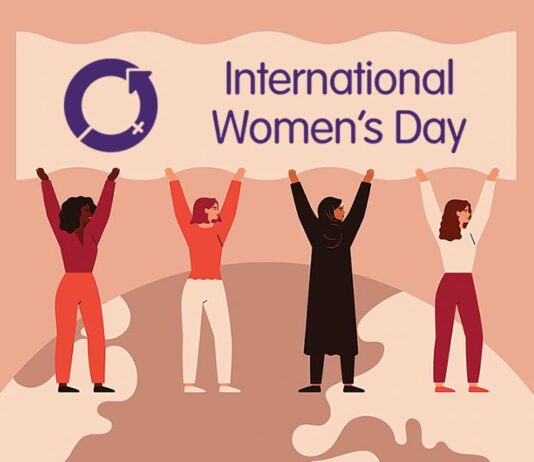
  • International Women’s Day 2021: Challenging Inequality

    International Women’s Day 2021: Challenging Inequality

    By Tobiloba Kolawole

    A week ago, First of March, when the deserving first Woman and African Director-General of the World Trade Organization, Ngozi Okonjo-Iweala, NOI was resuming to her new job in high spirit, enthusiastic about how to deliver reforms at the 26Year old international institution, CH Media, a newspaper operator based in Switzerland ran an article with the title: This Grandmother Will be the New Chief of the World Trade Centre.

    This headline was nothing but a bias. Collectively agreed by leaders of thought, it smacks of sexism, a remark that would likely not be made if NOI were a 66year old man taking up the job.

    Despite this setback however, something cheering happened. UN Women leaders and 124 Ambassadors in Geneva, among them men, rose in her defense and signed a petition calling out the sexist remarks in that newspaper. We need to call out this behaviour when it happens. This, is the very essence of the International Women’s Day, to challenge ourselves to do better as women to women, as men to women, as one equal people to one another and importantly to celebrate women for their contributions to the socio-economic advancement of our society for we cannot wish away their many resounding successes and important achievements in our society.

    According to WTO, women hold 21% of ministerial positions worldwide and, in business, make up 8% of Fortune 500 CEOs. This is not enough and we must choose to challenge the status quo, shatter the glass ceiling and close this gap of inequality.

    Do we really want change? Are the men comfortable with the statistics knowing that they have sisters and daughters who should not be caught in this imbalance.

    Gender bias and inequality problems still stare us in the face. Uneven access to education. Around the world, women still have less access to education than men, Lack of employment equality, Job segregation, Lack of legal protections, Lack of bodily autonomy, Poor medical care, Lack of religious freedom and Lack of political representation.

    In my opinion, I would think it is morally unacceptable for anyone to think it is ok to ostracize a gender. We must all join hands to change the narrative and make life better for scores of women out there, including generations yet unborn. We must #ChooseToChallenge.

    A world that is challenged stays alert, and as Individuals, we’re all responsible for our own thoughts and actions.

    We can all choose to challenge and call out gender bias and inequality. We can all choose to seek out and celebrate women’s achievements. Collectively, we can all help create an inclusive world.

    From challenge comes change, so let’s all choose to challenge and make our world a better place for all.

  • If Trump were a Nigerian President, 10 Things would Likely Happen

    If Trump were a Nigerian President, 10 Things would Likely Happen

    The just concluded US presidential election on many accounts births new records that earned it the ‘unprescedented’ label and also reserved it a frontline spot in the history of the one time world-power nation.

    President-elect Joe Biden tallied votes not less than 74 million, numbers described as the highest recorded by a candidate in the history of America’s presidential election.

    President-elect, Joe Biden and Vice President-elect, Kamala Harris at their acceptance speech event Saturday night, Nov 7, 2020.

    Similarly, running mate and now Vice President-elect Kamala Harris shattered the glass ceiling setting new records of not only becoming the first woman, but also the first black woman of Asian root to become Vice President of the United States of America. It was as though she knew of the election outcome before hand when she chose ‘Pioneer’ as her Secret Service call-sign many weeks ago.

    READ ALSO:

    Stakeholders in Nigeria’s South-West Demand Youth Empowerment After EndSARS

    In an article published on Sunday by National Geographic, Amy McKeever said: “Even though Joe Biden has secured enough votes to become president-elect of the United States, President Donald Trump has given every indication that he won’t accept the result as fair. Trump also has refused to commit to a peaceful transfer of power.

    “Both moves would be historical firsts if Trump refuses to concede even after all legal challenges are resolved. U.S. history has seen a handful of bitterly contested elections, most recently in 2000, when Democrat Al Gore called Republican George W. Bush to concede in the early hours after election night—only to call back and retract his concession when the race unexpectedly tightened up. While their first conversation was congenial, the second was tense, with Gore famously telling Bush.”

    In ways that are familiar to Nigerians, a London based Nigerian journalist, Ayo Akinfe on www.ayoakinfe.com highlights 10 things that would likely have happened had Donald Trump been a Nigerian president.

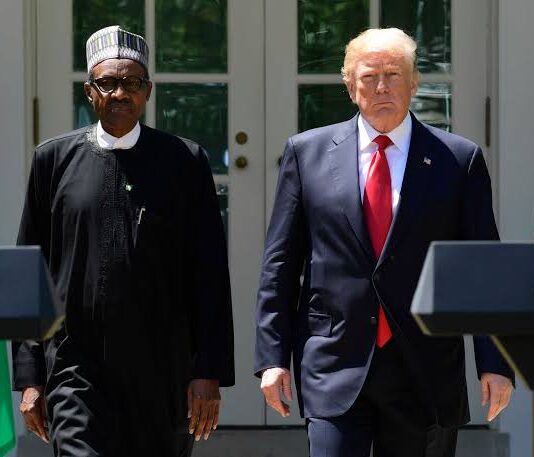
    File Photo: Nigeria President Muhammadu Buhari visits US President Donald Trump at the White House in Washington.

    (1) First of all, many Inec officials would have obeyed his instructions to stop counting the votes immediately the president called for it

    (2) Leaders from his ethnic group would have held meetings and declared their unalloyed support for him

    (3) Troops would have been dispatched to seize all those ballot papers at the counting centres

    (4) Troops, policemen and DSS operatives would have been dispatched to seal off any media networks that defied the order and continued reporting results

    (5) The youth from the president’s ethnic group would have held solidarity marches in his support

    (6) Counter-marches would of course been organised but troops would have been sent to open fire on them as we saw at the Lekki Toll Gate

    (7) Those Inec officials who refused to be intimidated, insisting on showing integrity, would have been picked up by the DSS

    (8) The EFCC and Code of Conduct Tribunal would have been used to arrest and bring charges against the owners of media houses who keep announcing results, as happened to Walter Onnoghen

    (9) There would have been no shortage of sycophants and praise singers taking to the media to back the president. His own party in particular would be solidly behind him

    (10) By now, the uncounted ballot papers would have been destroyed prompting calls for a fresh election. Court orders would have been obtained making this legal

    Against the popular finger pointing at Nigerian leaders as the main culprit in the many woes that the most popular black nation suffers, Akinfe differs that: “We complain about Nigeria a lot but refuse to accept that the only problem with Nigeria is Nigerians themselves.

    READ ALSO:

    US President Elect Will Have Challenges No Incoming President Ever Has

    “When I see how leaders of the #EndsSars movement are currently being persecuted and how a shameful meeting in Kaduna recently backed the government, I just shudder.

    “Nigerians are their own worst enemies. What is most scary is the number of sycophants wanting to eat crumbs from the oga-at-the-top’s table who will mortgage their consciences for a mess of porridge.”

    Also commenting about the heterogeneous ethnic nature of the Nigerian social milieu, a peculiar factor that has been critical in the many ethnic stress experienced from time to time, Akinfe stated that: “One other thing that makes my blood boil is the way Nigerians take sides based on ethnicity and religion. I just hope this latest US saga helps debunk the myth that the problem with Nigeria is bad leadership.

    “Our biggest problem is poor followership. Bad leaders like Trump exist everywhere but how far the people are prepared to go to resist them is what makes the difference between good and bad governance.”

    President Donald Trump’s refusal to acknowledge his loss in the 2020 election has sparked concerns that the presidential transition would be sabotaged.

    The Guardian on Monday reported that a Trump appointee refused to sign off on funding for the transition and the Trump campaign announced an expanded legal strategy in a quest to reverse the election result.

    The Center for Presidential Transition, a nonpartisan advisory board, urged the Trump administration on Sunday to begin the handoff to staff supporting Joe Biden, whose victory continued to grow in magnitude as states completed their ballot counts.

    READ ALSO:

    Zimbabwean Businessman, Socialite Dies In Car Accident After a Party [Video]

    “We urge the Trump administration to immediately begin the post-election transition process and the Biden team to take full advantage of the resources available under the presidential transition act,” the transition center said in a letter Sunday.

    “This was a hard-fought campaign, but history is replete with examples of presidents who emerged from such campaigns to graciously assist their successors.”

    However, neither Trump nor his campaign nor political appointees has the power to stop the transition, and there was no sign that the basic steps toward Biden’s installation as president were at risk of interruption.

    But non-cooperation by the Trump administration in the transition could slow the ability of some agencies to act on directives by Biden in essential areas such as pandemic response and the reinstatement of environmental regulations, protections for migrants and international accords, The Guardian wrote.

    By Tobiloba Kolawole

  • Wait! Before You Click Submit, See Review Tips Before Tues. Chevening Scholarship Deadline

    Wait! Before You Click Submit, See Review Tips Before Tues. Chevening Scholarship Deadline

    As the Chevening UK Scholarship 2021 nears the November 3, 12noon deadline, some scholars of the programme have put together tips on how applicants can increase their chances of winning the award, which opened for application September 3, 2021.

    Ugochukwu Stephen Ugwudi, who is currently taking MSc in Entrepreneurship and Innovation at the University of Sussex under the Chevening UK Scholarship programme is the lead in the organized remote mentoring programme that is helping over 200 young Africans through applications for the renowned award.

    In a chat, he expressed enthusiasm about the leverage and impact that the Chevening programme would have on his career.

    He said: “it would afford me the opportunity to study for an MSc program in one of the world’s most prestigious universities in a country considered to be among the most diverse in term of multi cultural population. Being a fully sponsored scholarship program, I will have the opportunity to focus more on my studies and not have any reason to worry because the scholarship provides me with stipend to take care of my socio-economic needs”, Stephen Ugwudi said.

    He disclosed that: “this is an opportunity I have been longing for; to progress my career. To connect with world class experts, stakeholders in various spheres of life.

    “Chevening alumni network has over 53,000 members, for me this is a community with the most diverse group of people from over 160 countries. I believe I can make reasonable connection, build strategic partnership and cross pollinate grass root ideas with both peers and experts. These will further help me to achieve my set goals as well as contribute to national development by building cross border initiatives.”

    Leadership Essay

    Another Chevening scholar, Terhemen Agabo, an economist and social researcher based in Nigeria, now studying MA Development Economics at the University of Sussex, Brighton, shared tips on writing the Chevening leadership esssay during one of the mentoring session

    In giving a good account of leadership experience, Agabo pointed out thus:

    “Points to note while Developing your essay.

    “Chevening wants you to list instances where you demonstrated leadership. An ideal example will have you show how you helped to solve a problem or achieve a goal for your team and the impact of your leadership action.

    “Follow the STAR approach: A great friend used to say “never change the winning team”, the STAR approach to writing your Chevening essays is very effective. It makes your essays concise and makes a good impression of you before the reviewers. Please follow the STAR approach as it would help you manage your essay word count too.

    “It is Good to List many Leadership Examples: Imagine that as a reviewer I am tasked to choose one essay out of ten and all essays were well written. I would probably consider the person who mentioned four examples of leadership ahead of the one that mentioned only two.

    “Yes its true that you only have 500 words to cover in your leadership essay but you can list up to 5 examples. In my essay I mentioned five, I elaborated on 3 and wrote two lines for the remaining two.

    “Every sentence should be a hit: Yes friends, Chevening is very competitive. While writing your leadership essay, make sure every sentence conveys a strong message. Avoid repeating points already mentioned as your word count is limited.

    “Some leadership Examples may stand out So if you take a look at the score guide for Chevening interviews. The criteria for scoring the highest in your leadership section highlights that candidate holds a leadership position in a professional capacity including voluntary organisation (NGO, University ,society etc) provides strong evidence that they have shaped opinion through debating, blogging, social media or policy work.

    “As you can see, leadership roles such as leading in school or in a community matters and you need to show that.

    “Brew your essays over a long time: So, as you know Chevening is very competitive and often shocks many competent young leaders. So if you think you will write your essays in ten days and succeed, I will say you can but your chances are slim as preparation takes time. And the best prepared candidate takes weeks and some months to write their essays.

    “Tell a fine and touching story: Yes, Chevening scholars are heroes. So, tell a story of a heroic leader. Use touching words e.g. “My forum saved 40 orphan children from dropping out of school”. It will increase your chances of beign chosen.

    “Facts: Your leadership essay should be very specific to mention names of places, persons, programs that played out. No room for ambiguity.

    “I began my leadership essay with a quote: Progress occurs when courageous, skillful leaders seize the opportunity to change things for the better- Harry S. Trueman.

    “Then followed by an example in the next paragraph: As a teacher in 2017, I organized a forum in response to the high number of secondary school students that skipped school activities in Jalingo town, Taraba state in Nigeria. The forum focused on students from Government schools, and sought to provide the missing motivation that made students skip classes.

    “I arranged for motivational talks, bringing in speakers from diverse backgrounds to speak to the students. The students were taught different skills to nurture their creativity including poem writing. 800 students benefited from the motivation that the forum provided.

    “Through feedback it was recorded that over 400 students improved their participation in academic activities at school after the forum. Currently, 20 of the participants under my mentorship have proceeded to higher institutions.

    “Mentioned three more examples then conclude thus: “A Chevening scholarship will strengthen my leadership capability and enable me exert a positive influence over a greater number of young and vulnerable Nigerians”, Terhemen Agabo, Chevening 2020 scholar advised.

    While responding to a question from one of the participants in the mentorship session, which sought to know if applicant who has a record of social initiative stands a higher chance of qualifying, Agbo posited that: “No, I wouldn’t say so. This is because the Chevening Scholarship is judged on leadership, networking, academic and career potential as well as on potential impact on society. Social impact, scientific impact and other kinds of impact matter equally.

    “Hence, a scientist who has never left the lab can also win the Scholarship judging from the impact of his laboratory activities.

    “During my application a friend told me not to bother if I didn’t own an NGO. I wasn’t discouraged and I am here today. So whatever it is that you do to move society forward you are good for a Chevening award.”

    Networking Essay

    Another Chevening 2020 scholar, Hawa a legal practitioner and founder of Westwood Law, an Abuja firm that speciises in human rights law, election petitions and corporate law advised 2021 Chevening Award applicants on writing compelling networking essay.

    Hawa, also a consultant at Waiza Rafique Advocates and Legal Consultants (WRALC), Lahore- Pakistan, emphasised that many people “many people find this part of the Chevening Essays to be the most difficult, ambiguous and tasking”.

    Hawa, who had scaled through the application a year ago and now selected to study a one year LLM programme in International Development Law & Human Rights at the University of Warwick, United Kingdom suite that: “You don’t need to define what networking means to you here.

    “Also, try to take a timeline, it makes the story more sequential and captivating to the reader.

    “In this essay area, also try and give submissions using at least three distinct examples in three separate paragraphs.

    “These examples do not have to relate to your discipline or subject area.

    “What you must try to do here, is to show how you establish relationships with preferably important people, and how you nurture such relationships and ultimately, went ahead to leverage these relationships to find solutions to problems within your own context.

    “In each paragraph, for the networking essay, you can do what I call the “modified STAR approach.

    “Preferably, the easiest way to open the paragraph is to start by a conference/meeting/community engagement/dinner/social gathering you once attended.

    “State the name of the meeting, the date, the location and possibly the purpose of the gathering. Be explicit!

    “Then try to convince the reader of how you met an important or influential person at that meeting and what kind of discussions or engagements you had.

    “Again, mention the name of the person, what his/her status/portfolio was at that time and what position the person holds now. Try to also convince the reader that you are still in touch with this person.

    “Now, try to convince the reader how you used this contact to get access to possibly another very important personality, or how that contact was able to catapult you into a space that was hitherto not possible.

    “Again, you must show that the progress you made impacted a group of people positively, whether directly or indirectly.

    “For the second paragraph, you can open it by stating some professional associations/fraternity/political affiliations/community groups you belong to. You can also embed this in any of the three paragraphs. It is not cast in stone.

    “Chevening is looking for persons who already have a trajectory. That is, have strong networks, know important people, have valuable contacts whether politically or professionally. Just think about it as though you are the Manager of Real Madrid football club and you are looking for players to buy in the transfer market.

    “Chevening wants super stars.

    “Convince them that you are one by linking yourself to some strong associations.

    “Try to convince the reader of how you leveraged such associations you belonged to, to unlock opportunities to meet people who mattered in any discipline. Then, drive your points again of how you leveraged the contacts to bring change or solve a problem.

    “Repeat the drill for the third paragraph

    “To score the maximum marks in the Networking essay area, it is strategic to include a brief 4th paragraph.

    “This paragraph will briefly state how you hope to engage the Chevening network in the future and this has to align with your long term goals which you will elaborate in the 4th section of the Chevening essays (Career goals).

    “Me personally, the example I used was…. I went to a paralegal conference in Abuja and we were saddled with the responsibility of drafting a legal framework for paralegals….. I met Mrs Aimee Ongeso from Kenya in that Conference….. through this connection I made I became part of the Global Legal Empowerment Network that gives access to justice at grass roots across the globe.

    “Notice how i made connection at the conference.

    “For the 4th paragraph you can mention how you connected with Chevening scholars like Hawa and Stephen via telegram

    “Mention names of scholars and alumni in your essays.

    “It shows you are already engaging chevening community”.

    UK University Choices

    Arafa Mahayadine Salah a Chevening scholar from Chad who holds a masters degree in International Business Law and another in Expertise and Taxes advice work at The National Water Fund as Tax and Legal advisor.

    Salah, who is now pursuing a LLM International Human Rights Law at the University of Sussex dealt with choosing a UK University in the 20221 Chevening Scholarship Award.

    ” 1) First of all choose wisely the course you want to do in the UK. It must be coherent with your career plan and with your background!

    ” 2) Chevening offers the possibility to applicants to choose 3 different courses in the same university or 3 same courses in 3 different universities (highly recommended). Take a deep look at universities ranks,modules, entry requirements, city of location etc. As all of us want to study in the highly ranked universities, people must be realistic in their choices and pick universities that are likely to accept them.

    “British higher education is among the best in the world so no matter the university rank, you can be sure that the education will be excellent. Also, be aware that you cannot change your university choices after the interview. So you have until mid February-March to make the right choices.

    ” 3) In your essay, start by putting an emphasy on why you choose this specific area for your study and what your degree will help you to accomplish in your country. After that explain your university choices one by one by specifying what you particularly liked and what makes these universities special for you.

    “Last tip: go to universities website, look at student’s YouTube channels or personal websites, it can help you in choosing wisely.

    “I think so because for my course for example they’ve asked a background in law or related fields. But sometimes they study case by case especially when the student doesn’t have the background but have experience in the same field

    When probed about choosing a university that isn’t listed among Chevening partners, Salah said: “chosing a university that does not have partnership with chevening doesn’t affect your application”.

    As an addition to Salah’s points, Steven Ugothe convener of the mentorship sessions for 2021 Chevening Scholarship Award applicants added that: “although you are at liberty to choose any university.

    “It is advisable you choose a partner university (this you can see on Chevening website). This is so because in the event that the non Chevening partner university that you choose refuses to pay the 20% contribution to the programme then it will be paid by you”, he added.

    On the possibility of being accepted by all 3 university choices, Salah said: “Yes it’s possible. I have been accepted in my 3 universities. If this happens, you’re suppose to choose your first choice. But if you want to go with your 2nd or third choice you will have the obligation to explain to chevening why and have a valuable reason.

    Giving her thoughts on what makes a compelling essay, she said:

    “Essays: Be yourself! Don’t copy another scholar’s essay and be coherent. Leadership and influence: give concrete examples of your leadership skills in different areas (school, work, neighborhood or family).

    “Before my application I had the wrong idea that chevening was looking for people who already accomplished great things like creating associations or having a leadership position. Chevening is also looking for potential leaders and people who serve others in their own small way. I gave example on how I’ve helped some student in university with some modules, how I’ve convinced my uncle to let my niece go to school etc. Your achievement can seem small to you but chevening will still consider it.

    “Networking: again give examples of how you built your network and how your networking skills advantage you in personal and professional life.

    “Studying in the UK: I think that this is the most important part of the essays. Choose wisely your course and your universities (take a look at universities rank, modules, entry requirements). Explain why you choose these universities and why they’re your first second or third choice.

    “Career Plan: in this part you need to make a link between your background, your future career, UK work in your country and your course choice. Explain your short term, mid term and long term goal that your chosen course will enable you to reach.”

    Career Goals Essay

    Yusuf has spent considerable years in social works, a community development practitioner, who is passionate about leveraging development projects to influence social change within the domain of security, governance, inequalities, poverty and development advised on writing the career goals essay.

    Armed with a Bachelor’s degree in Geography, with first class honours from Ahmadu Bello University, Yusuf was awarded the Chevening scholarship to study a masters program in Conflict, Statebuilding and Development at the University of Birmingham.

    Yusuf advised thus: ” 1. Take as much time as you can to digest the essay prompt. If possible, take a whole day until you’re certain to be up for the task. This is the most important essay you’ll write as the return on investment for the UK is dependent on it.

    “Next, utilize the scoreguide below in every step of the .

    ” 2. Essay Scoreguide:

    ” a. Applicant is at senior level in his/her field.

    ” b. Potentials to achieve ambitious but realistic innovative goals in his/her chosen sector.

    ” c. Demonstrated how the Chevening program will help develop the chosen sector.

    ” d. Demonstrates a strong understanding of the UK priorities in the country.

    ” e. Shows how the Chevening Scholarship would increase his/her ability to have influence and enable change in his/her work and home country.

    Do not fret if you’re not in a senior position yet, he said.

    “One way to solve that problem is to envision yourself as a highly profiled individual in the future, and then present yourself that way in the essay

    “You can fulfil 2b, 2c, 2d and 2e with ease by leveraging your imagination and also studying the UKDFID (Now UKFCDO) projects in your country.

    “Then connect your imagination to the problems and/or UK projects in your country

    “3. Essay Structure

    Now that you have an understanding of the essay prompt, you should then proceed with drafting your essay in a very organized manner.

    “Like the usual academic essays we write in school, your Career Plan essay should be organized in three distinct structure:

    a. Introduction

    b. Body

    c. Conclusion

    “3a. Introduction

    It is very important that you hook the reviewer with an engaging opening—most preferably a problem statement. Try to be concise and straightforward with what you want. Take my example below for instance:

    “Problem statement in BOLD TEXT (aim for 50 to 70 words)

    “I seek to develop a career that will ultimately position me to influence policy and advisory services necessary to foster peace, state-building and development in Nigeria. Conflict and insecurity is currently a problem that can reverse decades of development in the country. It has disrupted local and foreign trades, destroyed infrastructures, halted educational development of displaced youths and children, and has subjected millions of Nigerians to extreme poverty – 65 words.

    “3b Body

    “The bulk of the Chevening investment is directed to this part of your essay. Therefore, you should consider this section as a business deal where you pitch yourself as a long term viable investment.

    “It should be clear from your essay what the UK stands to gain.

    “Question: are they investing in a student who wants to explore the UK or an internationl trade expert?

    “As you write this part of your essay, endeavour to work closely with the essay prompt and score guide highlight as 1&2 above.

    “The structure of the body should be classified in 3 paragraphs.

    1. Short term plan (2 years post-study)

    2. Mid term plan (2-5 years)

    3. Long term plan (5 years and above)

    “For the three parts of the BODY, it is highly recommended that you use the SMART Approach.

    S-Specific

    M-Measurable

    A-Actionable

    R-Realistic

    T-Time bound

    “Avoid a statement that looks like this: I plan to reduce unemployment and empower youths. Or, I will contribute by working with many youths and mentoring them, or:

    “I will work to address gender inequalities in my country and become a youth minister in future, or:

    I will institute public health programmes to address the worrisome spate of maternal and child mortality in Mozambique.

    “I’ll show you what the SMART Approach looks like using a snippet from my essay

    “Ensure to use proper signage when writing each paragraph e.g.

    “Use openings like: In the short term (or Upon completion of my masters) I intend to…

    In the mid-term (or 5 years down the line) I intend to…

    In the long term (or going forward) I aspire to…..

    “You may choose to adopt a different format but make your plans clear

    “Short Term Plan: Using SMART approach

    “In the short-term, I envisage working with conflict-oriented organizations like ActionAid International Nigeria as a Programme Coordinator, where I will seize the opportunity to leverage the skills gained from my study, to practice conflict policy planning, advocacy, and peacebuilding projects especially in the North-east region of Nigeria, with the aim to strengthen the resilience of at least 2,000 vulnerable youths against extremism recruitment over 2 years.

    “Specific- Work with ActionAid as a Program Officer

    “Measureable- 2,000 vulnerable youths

    “Actionable- presence of required skill-set to actualize the project.

    “Realistic- 1,000 youths per year, approximately 3 youths per day.

    “Time bound- 2 years…

    “Although, this example helped me through the review stage but I will advise that you use shorter sentences. Mine can be killing actually.

    Yusuf gave more tips: “Try to be as ambitious as you can, but do not exaggerate in this part of the essay. My final example presented me as someone who will be leading as a Rapporteur at UN meetings.

    “Bottom line, dream as wide as you can but make sure you tell them how you’ll get there.

    “3c. Conclusion

    “Now that all has been said, you should give an overview that captures how your plan fits with what the UK is doing in your country, and how you’ll be a useful tool to effect a positive change THROUGH THE CHEVENING SCHOLARSHIP.

    “Here’s the conclusion I used in my own essay: Overall, my training in the UK will equip me with the relevant skills needed to spearhead peace and development in Nigeria, by connecting to an invaluable network of resources and collaborations that will contribute to Nigeria’s pursuit for improved economic growth and development, a major objective of the UK’s DFID due to its significance in strengthening future bilateral affairs.”

    Yusuf explained further on his background experience and do of study.

    “I studied Geography, worked as a computer operator in a Cyber cafe and I’m pursuing Conflict studies.

    “So from my experience, you work experience doesn’t have to match up with you chosen course. What is important is that you have identified a problem in your country, and that you’re passionate about being a part of the solution to that problem. The only way you need to CONNECT the two is to present the Chevening scholarship as the bridge for you to achieving your goals.

    “Forget your work experience and focus on how the obtainable skills from your program will propel you to reach the position you’re aspiring for.

    “One thing is that Chevening wants people who are ambitious and aspiring to lead regardless of the organizational structure. As a prospective Chevening scholar, it is okay to return and still work as an employee BUT at a higher level, probably a managerial role not an errand fellow.

    “On the other hand, if you want to be independent, for instance a Founder of an NGO, it is still okay to present your plans that way.

    “What Chevening look out for is your aspiration to rise above where you are—not for a selfish aim, but for the greater good of the society or the people your work with.”

    by Tobiloba Kolawole