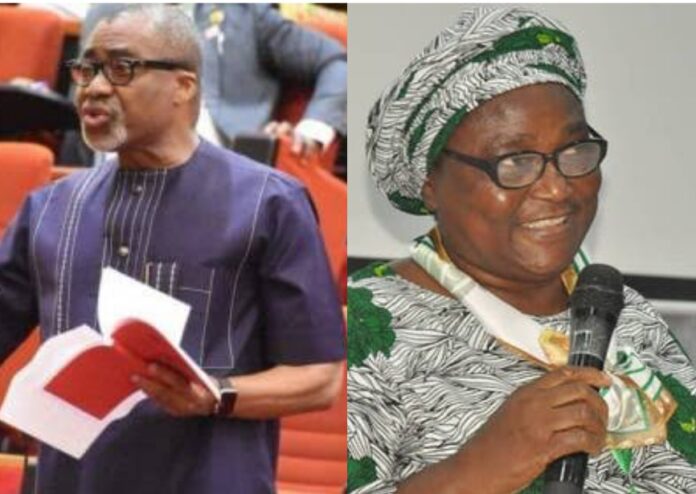
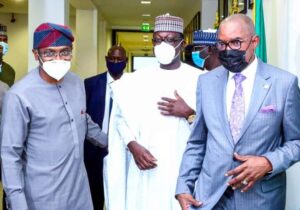
[File Photo] (L) Senator representing Abia South, also Senate Minority Leader, Enyinnaya Abaribe; (R) President of Nigeria Economic Society (NES), Professor Sarah Anyanwu.
The Nigeria Economic Society (NES) has accused the Muhamadu Buhari-led government of lacking seasoned economists which has led the nation into an unstable state of the economy.
The claim was made on Tuesday by the President of Nigeria Economic Society (NES), Professor Sarah Anyanwu, during a courtesy visit on the senator representing Abia South and Senate Minority Leader, Enyinnaya Abaribe.
The leader of the body of professional economists in her remark stated that the unsavoury state of the economy was due to the exclusion of NES members from National Economic Management Team.
“Members of the Nigeria Economic Society (NES) had in the past been included in the National Economic Management Team for the required professional advice and guidance on whatever economic policy to be adopted by the federal government.
“The practice assisted the past government in making sound economic policies required by circumstances or situations on the ground.
“But the exclusion of economists in the National Economic Team under the present administration has glaringly shown the adverse effects on the economy which by those who can read the indices and indicators correctly, is nose-diving.
“Our exclusion from the NEMT is seriously making the Nation’s economy to be unstable and somewhat directionless.”
Responding to Prof. Anyanwu’s remark, Senator Abaribe assured that the National Assembly would give expeditious passage to the Bill.
“We are not surprised that the economy went into recession and moving towards that direction again, since as disclosed here, required knowledge from the experts are not even sought for.”
Members of the NES visiting team include Professors Peter Shibayan of the Department of Economics, University of Abuja; Eyilola Olaniyi also from the same Department, University of Abuja, amongst others.
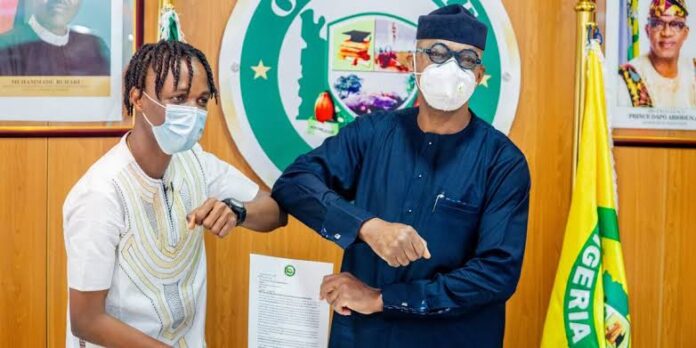
Ogun State Governor, Prince Dapo Abiodun appoints Big Brother Naija Lockdown Edition Winner as Youth Ambassador, at the Governor's Office, Abeokuta, the State Capital, Tuesday 6th October, 2020.
Winner of the Big Brother Naija Lockdown edition, Olamilekan Agbeleshe, popularly known as Laycon, has been appointed youth ambassador by Governor Dapo Abiodun of Ogun State.
The appointment was made known by the governor when he played host to the 26year old BBN winner at the executive chamber of the governor’s office in Abẹokuta, the state capital.
Ogun State Governor, Prince Dapo Abiodun appoints Big Brother Naija Lockdown Edition Winner as Youth Ambassador, at the Governor’s Office, Abeokuta, the State Capital, Tuesday 6th October, 2020.Ogun State Governor, Prince Dapo Abiodun appoints Big Brother Naija Lockdown Edition Winner as Youth Ambassador, at the Governor’s Office, Abeokuta, the State Capital, Tuesday 6th October, 2020.
Prince Abiodun also disclosed that the reality show winner received a three bedroom apartment and N5million gifts.
“Once again, I congratulate you and on this note, I hereby appoint you as Youth Ambassador of Ogun State. I look forward to working with you to be a model of good character, excellence, good virtues, calmness, integrity that are general attributes of Ogun State, and in fact, your homestead, Odeda.
“We believe that you will help inspire our teeming youths to channel their energies towards positive engagements and shun vices such as robbery, drug abuse, cultism, advanced fee fraud, cybercrimes and kidnapping amongst other negative tendencies,” the governor announced.
Further in his remark, Governor Abiodun revealed that his administration plans to establish an entertainment village for the purpose of nursing budding talents in the state.
“On behalf of the Government and good people of Ogun State, I join your fans across the world to welcome you to your Home State.
“I also want to congratulate you on your success after 71 days as a housemate at the Year 2020 Big Brother Naija, Lockdown Edition.”
While praising his guest for his good behaviour in the BBN House, Governor Abiodun diẹ not hesitate to note that young Nigerians can learn from Laycon’s demeanor based on how he related well with the other 19 housemates from different backgrounds.
Governor Abiodun said Laycon, “demonstrated the Omoluabi component which is the primary ingredient of an Ogun State-born Nigerian. Despite all the odds, temptations, and provocations in the House, I am proud that you came out unscathed and uninvolved in any scandal or immoral act.
“You have also demonstrated with the way you carried out your assigned tasks in the House with comportment; intellectual responses to questions and; your spirit of fair-play, that your academic achievement at the University of Lagos was earned. This has also shown that our Universities can and still produce graduates that are found worthy in character and good learning”, Governor Abiodun said.
The House of Representatives on Tuesday says it is ready to partner with the Federal Housing Authority (FHA) to deliver housing for Nigerians.
This was disclosed by Speaker, House of Representatives, Femi Gbajabiamila when he hosted the management of FHA, led by the Managing Director, Senator Gbenga Ashafa, on a courtesy call, a statement by the Special Adviser on Media and Publicity to the Speaker, Lanre Lasisi said.
Gbajabiamila said he believed Nigerians deserve the best in terms of housing, hence the House’s readiness to collaborate with the current management of FHA to achieve the mandate of the agency.
The Speaker said with the calibre of the team in the agency, he was of the firm conviction that they would take the agency to enviable heights.
“We’re happy that you’re here. We look forward to collaborating with you on very pertinent issues. I have no doubt that with the kind of team you have, the FHA is about to witness turnaround for good,” he said.
Gbajabiamila added that the current team, whose MD, Senator Ashafa and the Executive Director, Business Development, Hon. Abdulmumin Jibrin were former members of the National Assembly, has a responsibility, which they must carry out diligently.
“There’s no way you’ll talk about the development of any country without talking about housing or shelter.
“By God’s grace, with you guys on the saddle, Nigeria will witness a lot of roofs on our heads. So, we are very ready to collaborate and partner with you.”
Earlier, Senator Ashafa said they visited the Speaker to familiarise themselves and seek for collaboration with the House, having been recently appointed and inaugurated.
He appealed for the amendment of certain aspects of the Act establishing FHA, which he said would make their work more efficient and effective.
“I would want to emphasize the main reason why we are here, which is the collaboration with the National Assembly to achieve our mandate.
“We have found out of recent that some of the items under the Act needed to be worked on. It’s on this regard that we came for this visit and crave the indulgence of the House.”
The FHA team comprised of the MD and some top management staff, including Jibrin, who was the Director-General of the Gbajabiamila/Wase Speakership campaign team last year.
The West African regional bloc ECOWAS has lifted sanctions it imposed against Mali over military coup that ousted ex-president Ibrahim Boubacar Keita in August.
According to a statement on Tuesday, the Economic Community of West African States (ECOWAS) said it was ending the sanctions.
“Heads of state and government have decided to lift sanctions” after noting positive steps towards a constitutional government” the statement read.
For many months, agrieived opposition and civil groups campaigned for the removal of Keita, a situation that finally led to a coup by the nations military.
The bloodless coup in the landlocked nation was not well received by the 15-nation group, fearing that a polarised nation under a military rule might further pose security and instability in the region and so imposed tough sanctions against one of Africa’s poorest countries.
A coup in 2012 was followed by an uprising in northern Mali which morphed into a bloody Islamist insurgency, claiming thousands of lives and threatening neighbouring Niger and Burkina Faso.
The ECOWAS sanctions, imposed on August 20, included border closures and a ban on commercial trade and financial flows but not basic necessities, drugs, equipment to fight coronavirus, fuel or electricity.
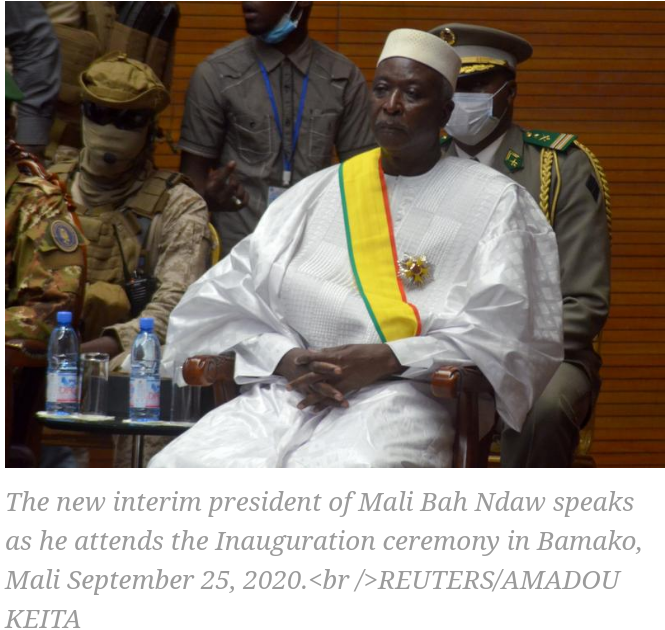
Under pressure, Mali’s junta endorsed a “charter” to restore civilian rule within 18 months and appointed a committee which chose 70-year-old retired colonel Bah Ndaw as interim president.
Despite this, ECOWAS insisted on the publication of the transition roadmap and warned it could not accept junta leader Colonel Assimi Goita, who is interim vice president, as Ndaw’s potential replacement.
The bloc has now taken into account “notable advances towards constitutional normalisation,” according to a French text of Tuesday’s statement, signed by President Nana Akufo-Addo of Ghana, who currently chairs ECOWAS.
It also called on “all bilateral and multilateral partners to support Mali.”
The communique also called for civilian and military officers detained during the coup to be released, and for the junta, which calls itself the National Council for the Salvation of the People (CNSP), to be dissolved.
The statement was issued a day after Ndaw appointed a government, headed by former foreign minister Moctar Ouane, in which junta members occupy key positions.
The “charter” also sets down the goals of re-establishing security across the nation, two-thirds of which are outside government control; of “restoring the state”; and of staging general elections, The Guardian reports.
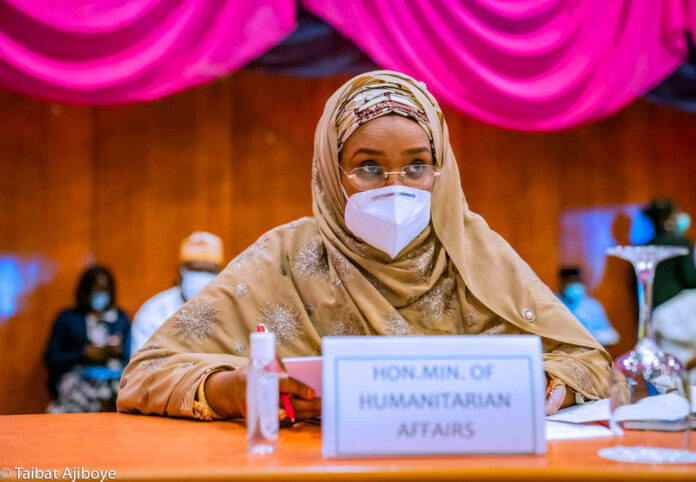
The Federal Ministry of Humanitarian Affairs, Disaster Management and Social Development (FMHDSD) says it has not paid monthly allowance of volunteers in the N-Power programme because their payment details were flagged by the Government Integrated Financial Management Information System (GIFMIS) platform.
This was disclosed in a statement by the National Social Investment Programme (NAIP) team on Tuesday.
“Your payment details were flagged by the GIFMIS payment platform, which resulted in non-payment of your monthly allowance from March 2020”, the ministry stated.
However, the ministry directed the N-Power volunteers who haven’t received payment since January to submit their documemts within 24 hours.
“In order for the Ministry to resolve this, kindly send your bank statement from January 2020 till date, and/or your NYSC Discharge Certificate and other relevant documents to your state National Orientation Agency.
“Please note you are expected to submit these documents within the next 24hrs”, the statement read.
Meanwhile, some N-Power volunteers have reacted to the directives of the ministry.
A Twitter user identified as @Opeemi77830893 wrote: “You’re playing our intelligent Abi?
Don’t worry, you’ll soon all pay for this.
You're playing our intelligent Abi? Don't worry, you'll soon all pay for this. pic.twitter.com/2w4HDMD7fc
— ExitedNpowerBeneficiariesLifeMatter (@OPEYEMI77830893) October 6, 2020
Another beneficiary stated that: “We have submitted all our document and profile to NOA, when should we be expecting our backlogs from March till date.”
We have submitted all our document and profile to NOA when should we be expecting our backlogs from March till date
Last February, SaharaReporters reported that since the social investment programme of the Nigerian Government was moved to the Ministry of Humanitarian Affairs and Disaster Management, the minister, Sadiya Farouq, had been making attempts to stop some of the programmes under the scheme.
The non payment of allowance due to beneficiaries compelled the National Association Of N-Power Volunteers to threaten government with strike action if their allowances were not paid, the February report by SaharaReporters said.
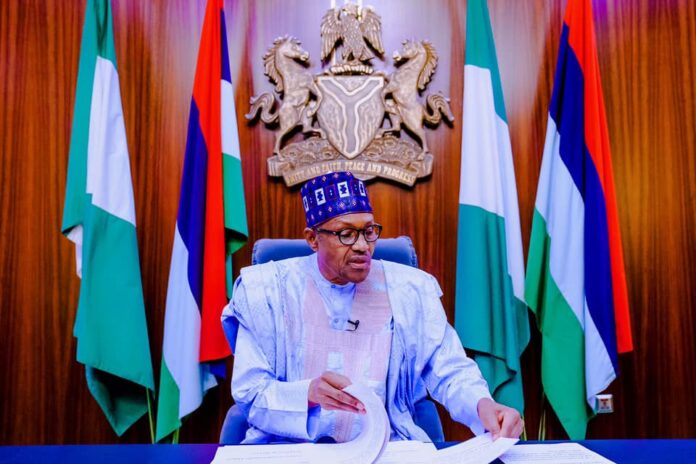
File Photo of President Mujammadu Buhari giving an independence day National broadcast on October 1st, 2020.
President Muhammadu Buhari will on Thursday present the 2021 budget estimate at a Joint session of both chambers of the National Assembly.
This was made known by Senate President Ahmad Lawn who during plenary on Tuesday acknowledged and read a letter from President Buhari.
President Buhari, notifying the Senate said: “May I crave the kind indulgence of the Distinguished Senate to grant me the slot of 11:00hrs on Thursday, 8th October, 2020, to formally present the 2021 Appropriation bill to the Joint Session of the National Assembly.
“While I look forward to addressing the Joint session, please, accept Mr. Senate President, the assurances of my highest regard”, Buhari said.
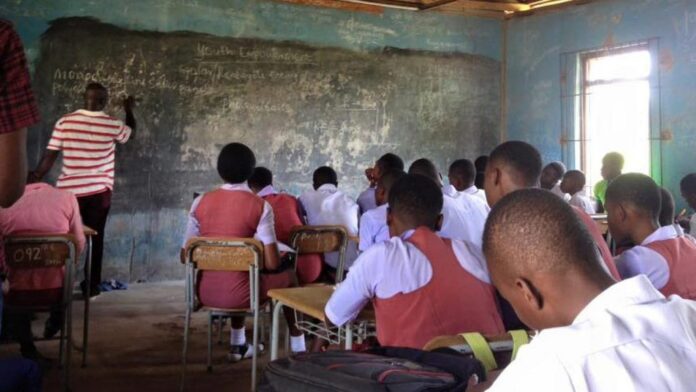
Some Secondary School teachers in Kwara State, under the aegis of Academic Staff Union of Secondary Schools (ASUSS),say they are withdrawing their membership of the Nigeria Union of Teachers (NUT) over difference in aspirations and employers.
The pull out by the teachers was made known by the group’s chairman, Mallam Jimoh Daudu, at a lecture organized to mark the 2020 World Teachers Day on Monday in Ilorin.
Daudu said that their membership of the NUT was “a marriage of inconvenience’’, hence the need to split out to better agitate and make the demand for their peculiar challenges, PM News reported.
“ASUSS belongs to the state government while NUT belongs to Local Government Councils and Federal Government. So, it is a marriage of inconvenience.
“If there is a problem within the state setting and you have somebody that is leading you, not working with the state, then automatically the state government will turn it down.
“But when we have somebody working within us and he is a state worker, whatever he says will be the right thing. The employers are different.
“NUT members are predominantly employed by local government councils and the federal government while states pay teachers of secondary schools.
“Since the employers are different, the aspirations will also differ. If there is a problem, NUT cannot shoulder our problem.
“For instance, some teachers were sent out of their job by the state government during the Bukola Saraki administration for spending eight years on a step. But this did not affect teachers in primary schools because they were never employed by the state,’’ Daudu said.
He explained further that their struggle had compelled the Kwara state government to approve secondary school teachers for Grade Level 17 before retirement as against a retirement cap of Grade Level 15 before ASUSS’s intervention..
“That is why we say we are to be on a parallel line with them. Academic Staff Union of Universities (ASUU) was with NUT before they left, College of Education Academic Staff Union (COEASU) was with them before they left them. The same thing was the Academic Staff Union of Polytechnic (ASUP).”
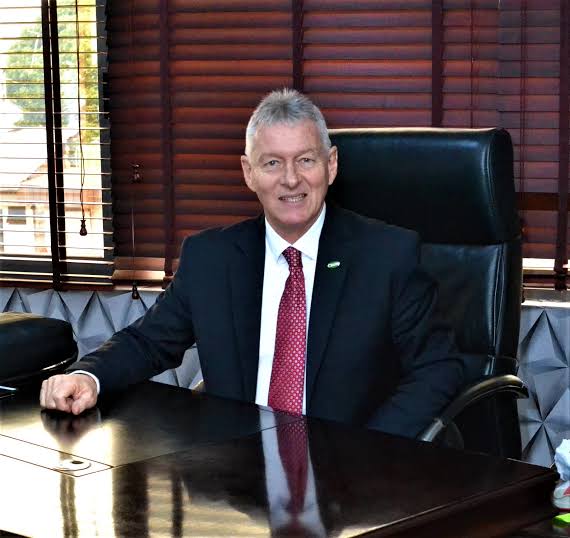
Group Managing Director/CEO, Chams PLC, Gavin Young
“The days of expecting Government to enrol all Nigerians to a national ID database through Government managed infrastructure, has already come and gone.”
In this first issue of Giants of Industry, the Group Managing Director/CEO of Chams PLC, Gavin Young speaks with Echotitbits’ Tobiloba Kolawole about the National Identity Number (NIN) program.
Prior to assuming the position of GMD/CEO of Chams Plc, a leading provider of integrated identity management and identity and payments transactional systems, Gavin Young since 2009, has worked (on a full-time and part-time basis) with the Chams Plc Group of Companies as Managing Director of ChamsSwitch and Deputy managing Director of Chams Mobile, among other roles.
His career cuts across 20 years at First National Bank of South Africa, seven years at Visa as Country Manager, sub-Saharan Africa. In 2007, he joined UBA as Senior General Manager, Cards.
Data as Bedrock for Efficient Public Service.
Correct and accurate data of individuals, linked to either BVN or NIN is absolutely essential to ensure that services and benefits are provided correctly, in an audited and transparent way, to those that require the benefit or service. Although BVN and NIN form the backbone of an individual’s identity, additional information from individuals is required for various purposes where BVN and NIN fields may not cater for information for specific purposes.
The BVN as Financial Enabler
BVN has an added advantage, in that it serves as an enabler for financial inclusion and therefore, both comprehensive data and an electronic means of receiving and spending funds are both very important. In addition, once a person has a BVN number, for which you don’t need to open an account, one also obtains a NIN number, negating the need to also enrol fully for a NIN.
Chams Group is working closely with Nigeria Inter-Bank Settlement System (NIBSS) to expand the number of BVNs in Nigeria this year, as this Covid-19 pandemic has made this an urgent priority, particularly across the private sector. NIBSS has recently introduced an enrolment app linked to a fingerprint scanner, which makes it a lot easier and more efficient to enrol the masses.
A Case for Private Sector Driven National Identity Programme
In my opinion, we shouldn’t be relying on Government to deliver on their NIN enrolment ambitions. It should really be up to the private sector to perform this role with NIBSS, then simply have that data also ported to NIMC for the issuance of a BVN. I’m sure that the private sector would be far more efficient at performing this data collection role and also expanding financial services and other benefits through capturing additional data.
Given the current oil price, pressure on foreign reserves and the need to support people over these difficult times, I don’t believe that Government should also be expected to provide funding for a mass NIN enrolment service, when this can be private sector led with very little cost to Government. This is one of the ways private sector can further support Government and the people of Nigeria over these challenging times.
NIMC and the Struggles of NIN Enrolment
Well, it’s not for me to speak for NIMC and why the majority of student and adult Nigerians have not been enrolled to the National Identity program. However, it is right that they remain the custodians of a true national ID program. However, as mentioned before, it’s enrolment of the masses to that program that has presented a challenge for Government.
However, I am very optimistic that the private sector, and companies such as Chams PLC, in partnership with NIBSS, will expand BVN enrolments significantly this year and next. Banks have also been playing an important role from inception of the BVN program. I am very optimistic that with the technology now in place, that over 100 million Nigerians would be enrolled before the end of 2021. I believe it’s a very realistic target because it’s private sector led.
I believe that Mobile telecommunications companies will also step-up BVN enrolment initiatives so that they could achieve their financial inclusion ambitions in the informal sector.
In summary, the days of expecting Government to enrol all Nigerians to a national ID database through Government managed infrastructure, has already come and gone. Private sector will now assist to achieve this for the benefit of all Nigerians, whilst meeting NIN criteria from which many Government agencies and the people they serve, would also benefit.
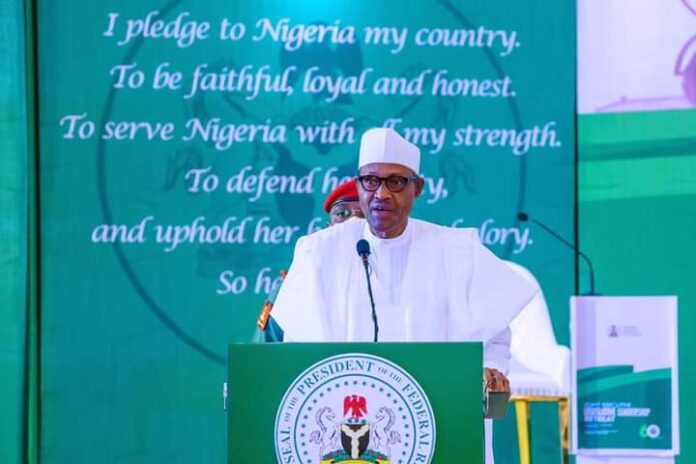
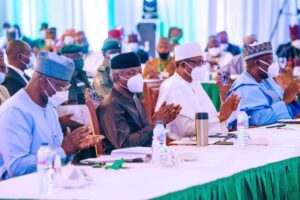
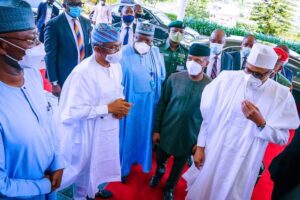
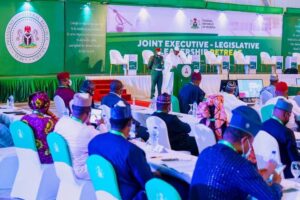
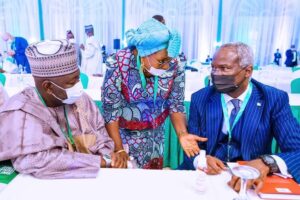
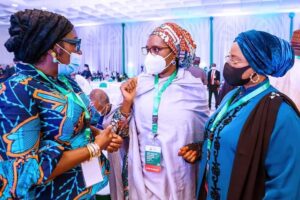
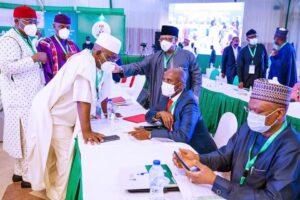
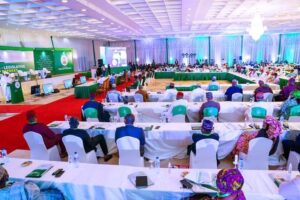
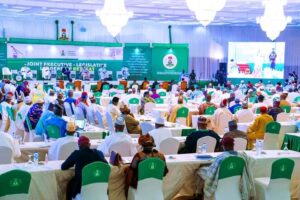
President Buhari declares Open 2-day Joint Executive-Legislative Leadership Retreat in State House on 5th Oct 2020
Appreciating members of the ninth National Assembly for understanding, support and quick response to policy directions of the government on Monday in Abuja, President Muhammadu Buhari called for more synergy to consolidate on the gains recorded, particularly the ongoing effort to lift 100 million Nigerians out of poverty in ten years.
According to the Special Adviser to the President on Media and Publicity, Femi Adesina, ìn a statement said the President equally charged the populace to be patient with government, advising that whenever there’s any legislation they have misgivings about, “they should engage the process for such laws in line with democratic processes.”
In his remarks at the Joint Executive-Legislative Leadership Retreat, held at the State House Conference Centre, President Buhari said the collaboration enjoyed from the leadership of the National Assembly had made it easier for the government to set and realize development goals, and respond to changes in the economy faster like the Coronavirus pandemic that necessitated review of the 2020 budget.
According to the President, some of the gains recorded from working together also include: accelerated passage of the 2020 Budget and its review in response to the Coronavirus pandemic, timely confirmation of nominees, and passage of critical legislations by the National Assembly.
“This retreat provides us another opportunity to interface, reflect, brainstorm and engage as One Government. I use the word One Government because there can only be one Government in a nation at a time and officials both elected and appointed in the Executive or Legislative arm must all be working for the peace, unity and development of our country.
“This Retreat named: “Promoting Effective Executive-Legislative Partnership: Finding a Middle Ground” is apt as it reflects the peculiarity of a Presidential system of government like ours.
“The experience of the last 20 years of steady democratic practice in Nigeria has underlined the need for effective partnership and collaboration between the executive and legislative arms of government to deliver on our mandate.’’
President Buhari told the legislators that the Federal Executive Council had already streamlined its priorities to nine areas of development, and ministers had been mandated to align their targets with the bigger picture of making life better for all Nigerians, urging the legislature to align its priorities as well.
“While all members of the Federal Executive Council have been given clear mandates and yearly targets towards achieving the set indicators and goals, I recognize the critical role of the National Assembly in helping to deliver this Agenda and the strategic goals set by this Government.
“We cannot do this alone without your support and collaboration. I am equally aware that both the Senate and the House of Representatives have adopted the new Legislative Agenda for the current Assembly. I must thank the Senate President and Rt. Honourable Speaker for the updated version of the Legislative Agenda of the 9th National Assembly.
“The urgent need for aligning the 9-Point priority Agenda and the Legislative Agenda of both the Senate and the House of Representatives cannot be over-emphasized. I will therefore suggest that a Technical Committee be established after this retreat to harmonise these critical and strategic documents to help improve synergy and coordination.’’
President Buhari said he had already inaugurated a National Steering Committee co-chaired by the Honourable Minister for Finance, Budget and National Planning, and Mr. Peterside Atedo with representation from the National Assembly to oversee the development of the Nigeria Agenda 2050 and Medium-Term National Development Plan (MTNDP) to succeed vision 20:2020 and the Economic Recovery and Growth Plan (ERGP) 2017-2020.
The President said the National Steering Committee will facilitate the linkage between policy-plans and budget in a manner that will help lift 100 million Nigerians out of poverty within the next 10 years.
“Similarly, I unveiled a (9) Nine-Point Priority Development Agenda of this administration aimed at improving the livelihood of Nigerians within the next three years. These include: building a thriving and sustainable economy; enhancing social inclusion and reducing poverty; enlarging agricultural output for food security and export and attaining energy sufficiency in power and petroleum products.
“Expand transport and other infrastructural development; expand business growth, entrepreneurship and industrialisation; expand access to quality education, affordable healthcare and productivity of Nigerians; build a system to fight corruption on a permanent basis, improve governance and create social cohesion and improve security for all.’’
President Buhari recommended the establishment of a Technical Working Group to synthesise the outcome of the retreat and make appropriate recommendations to the leadership of the Federal Executive Council and the National Assembly in order to drive effective implementation of the resolutions or agreements reached.
“Let me also remind our fellow patriots, countrymen and women, that the process of law-making and governance are dynamic and ever evolving. I will seek their indulgence to be patient with any legislation or law which they have certain misgivings about, and engage the process for reviewing such laws in line with democratic practices.’’
The President thanked the ninth National Assembly leadership and legislators for the cordial and warm relationship enjoyed in one year.
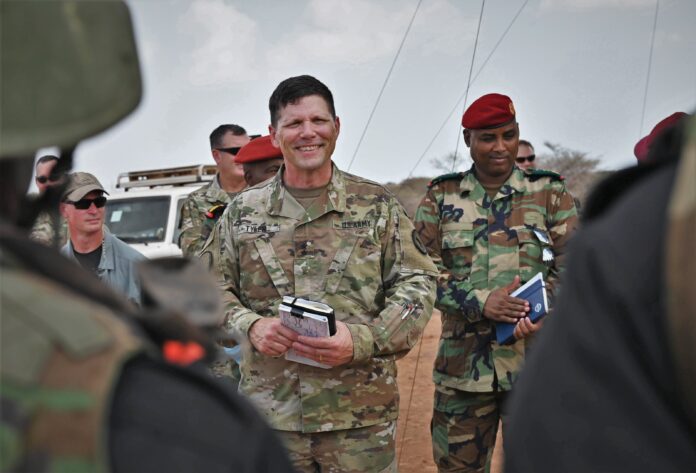
U.S. Army Maj. Gen. Joel Tyler, director of operations, U.S. Africa Command, traveled to the African continent to engage with partners, visit key U.S. military operating locations, and deepen his understanding of security in the region, Sept. 27 to Oct. 1.
During his engagement, Tyler visited Djibouti, Somalia, and Kenya.
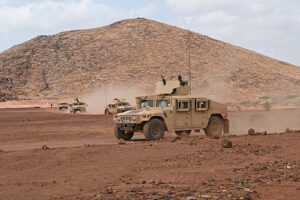
While in Djibouti, Tyler and other U.S. Africa Command representatives met with the Djiboutian Rapid Intervention Battalion (RIB).
The RIB’s mission is to serve as a reactionary force to accomplish specified tasks directed by their higher command in the Djiboutian army. It is the first Djiboutian Armed Forces Special Force fully supported by the U.S. government. U.S. Army Soldiers assigned to CJTF-HOA provide training to the RIB soldiers in U.S. Army basic warrior tasks, combat, and combat life-saving skills.
“The U.S. military has a longstanding relationship with Djibouti and our Djiboutian military partners,” said Tyler. “The training and equipment that U.S. Africa Command provides to the Rapid Intervention Battalion uniquely demonstrates the U.S. commitment to enhancing our shared goal of improving regional security and stability on the continent. Our partnership and training continue to be in demand.”
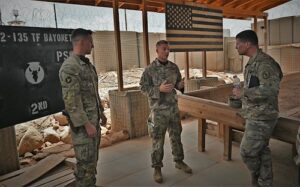
After departing Djibouti, Tyler went to several cooperative security locations (CSL) in Somalia and Kenya, including Manda Bay, Kenya, to reinforce the importance of security in the shared fight against al-Shabaab.
Tyler’s trip highlighted AFRICOM’s commitment to working with our East African partners and operating in a degraded pandemic environment. The U.S. continues to operate and train with our East African partners.
“Al-Shabaab remains a dangerous enemy,” said Tyler. “I saw first-hand the commitment of our Kenyan and Somali partners as we address a mutual threat in al-Shabaab. We will continue to sharpen our focus and counter this common threat.”
We use cookies to ensure that we give you the best experience on our website. If you continue to use this site we will assume that you are happy with it.