Category: Articles

  • Random Musings

    Random Musings

    By Dapo Akande

    I remember feeling so cool with myself when my headmaster told me during my primary school days that I had a photographic memory. For several weeks after that, I felt like I was on cloud nine. I’d never heard of that term before but boy, did it make me feel clever. The euphoric feeling didn’t last too long though. In fact it came to an abrupt end a few weeks later, when I flunked my maths and science exams, plus a couple of other subjects too, for good measure. So I wasn’t a yet to be discovered genius after all.

    As we grow up and as we grow older, it is expected that our understanding will increase. A child who misconstrues what a photographic memory means and mistakes it for genius can easily be excused for his ignorance but an adult who does the same when all evidence says otherwise, may not be described in such charitable terms. I remember that when I was a child, whenever I injured myself while playing (which unfortunately was quite often), my father would get so angry. I couldn’t quite understand it. Shouldn’t he have some pity and feel for me? My mum on the other hand would pet me and sympathize, but not him. It was only when I became a parent myself that I began to understand as life came round full circle. I found that whenever my children injured themselves, though I was very concerned, my initial reaction would be to tell them off. Why? I guess it felt as if they had put me in a position of helplessness and I resented that. If I could somehow remove the pain from their bodies and transfer it to mine instead, I would do so in an instant. That would be far easier to bear than to watch one’s child writhe in pain while feeling completely helpless. Now I know how my daddy felt. The natural instinct of a husband and a father to protect his brood sets in motion. But such instances only remind us of our limitations as human beings.

    Someone once said manhood or being a real man is to be a sacrificial servant and a willing partner in a partnership. It has as much to do with recognizing that one hasn’t been called to provide all the answers as it does with assuming leadership. Believe it or not, the two are not mutually exclusive. As Tammy Dollar rightly points out, there are different graces and abilities apportioned to each person and recognition and acceptance of one’s limitations is strength, not a weakness. Such understanding is often the source of making good judgments, itself a physical manifestation of wisdom or if you prefer, is wisdom in action. The good Book says, “the prudent see danger and take refuge (in wisdom) but the simple keep going and pay the penalty”. And if I may add to this, vulnerability is not the exclusive preserve of the female gender; it’s what makes us all human.

    It was Andrew Wommack who said many people believe life is all about “Get all you can, can all you get and then sit on your can”. It’s against this background that John Wesley’s words spoken well over two hundred years ago, still continues to reverberate. He pronounced that your primary pursuit in this world should be to, “Do all the good you can, by all the means you can, in all the ways you can, in all the places you can, at all the times you can, to all the people you can, as long as ever you can.” I think you get the gist. Don’t stop.

    There’s no experience, pleasant or agonizing that lacks value. Like I heard a man once say, we shouldn’t “waste our pain”. It was Friedrich Nietzsche who rightly observed that there are no beautiful surfaces without a terrible depth.

    Use your life lessons to instruct, motivate, encourage, direct and empower others who might be going through or may still go through a similar situation. As a businessman, a career person or a parent, educate others to avoid pitfalls you may have fallen into during your journey. As a leader or a mentor, aim to inspire and ultimately enrich the lives of others by divulging secrets to success from your wealth of experience. Many a time in life, your biggest stories will have less to do with the actual subject matter than with their significance – less to do with all the facts of that situation or even what you did, and more to do with how it affected you and shaped you into who you’ve become. That’s the crucial element that really strikes a chord.

    The careless use of so many words, terms and phrases has emptied them of their meaning. Though success goes by many definitions, one which fails to highlight the profound benefit derivable by others, I believe lacks merit. John Calvin said, “all the blessings we enjoy are Divine deposits, committed to our trust on this condition, that they should be dispensed for the benefit of our neighbors.” We will do well to remember that not all blessings appear as glittering gold, lest we carelessly let them pass us by.

    I’m sure the last thing any of us would want would be to find ourselves lumped in the same bracket as the man seen squeezing his face like a smart person who’s thinking of the solution to a problem but who never ever has the answers…Lol. Such a person is of no good to anyone.

    Changing the nation…one mind at a time.

    Oladapo Akande is a Surrey University (UK) English graduate with a Masters in Professional Ethics. He’s an alumnus of the National Institute for Transformation and a two time author; The Last Flight and Shifting Anchors. He writes from Lagos.

  • For We Are Nigerian

    For We Are Nigerian

    By Dapo Akande

    I read a few weeks ago, during the run up to the General Election, that the newly re-elected British Prime Minister was getting some flack from the opposition for displaying racist tendencies. They referred to a comment he made when he was still a journalist. In an Independent on Sunday publication of October 1999 he had regrettably quipped, “All the young people I know — i.e. those under 30 — are just as avaricious as we flinty Thatcherite yuppies of the 1980s… In fact, they have an almost Nigerian interest in money and gadgets of all kinds.” A remarkably distasteful comment by any standard and how patently unfair it is to paint a whole nationality with the same brush. How I just wish we hadn’t given him the ammunition to shoot us with though.

    One thing I know for sure is that we need to change the narrative about us as a people and to do that, we need to ask ourselves, who is the Nigerian? What do we stand for, believe in or hold dear? What is our general outlook on life and what do we believe life should be about? It behoves us to truly understand who we are and to promote it with much gusto, plenty of swag and much clarity to the world. We need to deliberately project our strengths and virtues and believe or not, there are many. We need to tell the world of our hospitable and ebullient nature, our generosity of spirit, our love for life, the confidence which by nature, we have in our abilities; our can do spirit even in the face of overwhelming odds, our diligence, dexterity and fathomless ability to innovate. No matter what, we are a good people and we need to present ourselves as such to the world instead of complaining while we allow the foreign media to control the world’s perception about us.

    In August 2018 Bloomberg ranked Nigerians working in the United States as the eighth most hard working and most skilled immigrant group. It boggles the mind to think what that could and should have translated to here, if only the environment was more enabling. And that’s what makes our modest achievements here so amazing. In many ways, we still manage to move forward in spite of and not because of.

    Believe it or not , Oyinbo isn’t all good either but he has been able to put systems in place which curb man’s natural tendency towards excesses and the focus on self. Of course, like anything, it doesn’t always work but it has certainly gone a long way to making their society a more functional one. I remember when I was still at boarding school in the Uk. The story went round that a Nigerian boy had just been expelled from one of the top schools. The boy’s father quickly offered to donate a million pounds to upgrade the school library. Bear in mind this was about thirty four years ago and then you’re likely to appreciate just how large a sum that was back then. Pronto! The school swiftly readmitted the boy and explained it away as an unfortunate misunderstanding. Who told you oyinbo doesn’t like money too?

    Until each and every Nigerian sees the success or otherwise of our society as a collective responsibility, we will remain where we are. No, you cannot leave it all to government unless you see yourself as having less stake than government officials. You don’t. There is a part for us all to play and it begins with taking ownership of the Nigerian project backed by sane, rational, intentionally disciplined and civil behaviour which always contributes immensely to corporate progress and well being in a way that can hardly be measured. We need to guide our adolescents and youth to cultivate the best of habits because no one else will do it for us. Throwing money at the problem by giving them everything they desire without instilling priceless values simply won’t cut it.

    The Nigerian story is not one entirely of doom and gloom. It depends on how we decide to tell it. Of course we can tell it in a way that quenches any remaining glimmer and kills the spirit or we can decide to tell it in way that restores hope. And we all know hope is an essential commodity in and for life. Hope for a better tomorrow is what pushes us on even when all around us looks bleak.

    Hope of making it to an infinitely better and eternal after life makes the present situation which in comparison is so ephemeral, more bearable. But when hope is lost, so essentially is life. Everything loses meaning and value. To a patient who has come to the painful reality of his mortality as he gradually succumbs to a terminal illness, to surround him at that point with all known luxuries of life shall hold no meaning to him. The only hope remaining for him is one that transcends this life. In the same way, all who see our dear country as one in the throes of a terminal sickness, leaving it no hope, no future, will never lift a finger to salvage it. What’s the point? We should never allow the Nigerian spirit to atrophy. We must not allow the Nigerian spirit to die. To inspire the younger generation aright, we need a whole new set of national heroes. Those who have the love of God, love of their fellow man and the genuine love of country.

    What makes us Nigerians? Our ability to stand and yet innovate; our boldness not just in conquering the most adverse of circumstances but our cheek in even believing we can. Faced with daily and often compounding challenges in one of the most unforgiving environments this side of life, we still find time to laugh, to dance and to love. I do not believe that we will be broken, I do not believe will give in for we are Nigerian. But we must tell our own story and stop leaving it to be told by those who do not understand our nuances, or feel our pain or truly appreciate what motivates us. We must not allow our story to be told by those who love to toy with the little hope we continue to hold on to. We must not let our story be told by those to whom we’re just that, a headline story. Truth is, they have no stake but we do.

    Every parent owes the nation a duty to bring his or her child up well, by inculcating them with the right values. We Yoruba will call such a child, “Omoluabi”. Once you abdicate this responsibility, you lose the moral right to complain about the state of the nation because when your child grows up, his behaviour will only compound the problem. It behoves you to do your bit. But first, you must lead in the way you would want to be led. Happy Independence Day!

    Changing the nation…one mind at a time.

    Oladapo Akande is a Surrey University (UK) English graduate with a Masters in Professional Ethics. He’s an alumnus of the National Institute for Transformation and a two time author; The Last Flight and Shifting Anchors. He writes from Lagos.

  • Ease of Doing Business and Pursuit of Economic Objectives

    Ease of Doing Business and Pursuit of Economic Objectives

    By Sanmi Obasa

    Nigerian government officials at federal and states level are often heard making passionate presentation about doing everything possible to make it easy for investors and entrepreneurs to carry out their activities of producing and growing the economy. In this mode, they cast a genuine desire to achieve the growth objective of monetary and fiscal policies.

    The term or phrase they often use is ‘ease of doing business in Nigeria’. They also sometime use the phrase “creating the enabling environment”. From this background it is assumed they really know and appreciate the term ease of doing business or creating enabling environment for enterprises; which are the real engine of economic growth and development. Do they really know? Do they really conceptualize it within the environment they are operating from?

    Capital is the engine oil, the blood that fosters the economy. But capital has choice. It only goes to where there is profit to be made. If it’s therefore constrained by any circumstances, most especially policies, it will adversely select such discriminating economy. Because of its importance, governments that covet real growth and development do everything to appease capital. And that is where ease of doing business or creating conducive atmosphere for investors emanated from.

    When capital has completed its evaluation of the market/economy and it is convinced that profit will be made without much hindrance, businesses/enterprises are opened and begin to flourish.

    It beholds therefore that a policy maker must have an understanding of his or her policy in order to effectively implement. It is tantamount to knowing the truth for the truth to set one free. This is where lies the problem with Nigerian officials who parrot ‘ease of doing business’ but has no connection with its ideals.

    To enunciate ease of doing business, we firstly must come into term why business. We must know that the whole economy at the micro level is about the firm or business as the unit of production and that no production can take place without the firm. And if there is no firm and no production there can’t be employment, income, growth and development. With business and the concomitant production there will be tax revenue to governments that will pave the way for continuous investment on infrastructure and social projects and programmes.

    While the above fact can be comprehended by government officials in other countries it may be hard for a Nigerian government official to appreciate. Reason being that a typical Nigerian government official has always eternally known that job and income come from the government and oil money. The Nigerian government official has never connected microeconomic role of firms and households to economic growth, prosperity and development. The Nigerian government official is a macroeconomic thinker of the government as the godfather and Santa Claus of everybody, who gives jobs and money, develop infrastructure, etc. Such a macro thinker may not be able to appreciate the real value of ease of doing business.

    On the other hand, if we understand and agree that capital/business is the producer of products/services, employment, income, taxes, growth and development, our attitude to its needs and requirements will change positively. For example, if we know that capital uncompromisingly desires profit and will not move without it, we will remove every obstacle that will prevent it from attaining that goal.

    Hindrances to profit goal of capital includes, uneconomic interests charged by Nigerian financial institutions, prohibitive fees by financial markets, taxes and tariffs, lawyers, accountants, engineers and the legion of security forces at our ports and borders, etc.

    At the heart of the Nigerian government official’s inability to understand what ease of doing business and its real application is, is the structure of the Nigerian economy and state. Nigeria doesn’t operate like the normal economy. The Nigerian economy is based on oil revenue being shared by the federal, states and local governments.  Everybody and activity in Nigeria depends on the oil money. For example, the bank doesn’t need to go through the route of the traditional demand deposit creation of money model to create its revenue and expenses. All a typical Nigerian bank has been doing is, attract deposit from one government ministry or any soft source. The minister and top officials of the ministry deposit the ministry money in the bank and the bank uses it as it likes because the ministry will likely spend less than 10% of the deposit on its obligations while the rest is embezzled by the officials.

    The route to modernizing the Nigerian economy, making it responsive to policies and achieve economic objectives is for government to embrace full market economy in its entirety. What this means is, allowing the market forces to determine economic and even non economic activities. The economy must also be totally deregulated and privatized.

    To fully realize the objectives of market economy, deregulation and privatization, Nigerian government must pursue true federalism and restructuring as being currently agitated for. Market economy, true federalism and restructuring are very critical in fashioning an economy that will generate employment, income, including poverty and corruption reduction. It’s in this framework that real ease of doing business can be realized.

    Sanmi Obasa is a research analyst, he teaches business studies at Centennial College, Toronto.

  • Does One Size Fit All?

    Does One Size Fit All?

    By Dapo Akande

    Thank God for cable or satellite television; depending on what you like to call it. Whenever you receive visitors at home, you’re assured the variety of global news and other assorted programs will keep them entertained for a while. At least until you’re ready to attend to them. And even as you do attend to them, it’s always there, ever ready to provide current issues for you and your guest to discuss, debate or just laugh at; especially during those awkward quiet moments.

    Children of nowadays have it so easy. In our days, we the children were the entertainment; albeit reluctant ones. Much like court jesters called to amuse the King in his palace at his own expense, our parents would summon us to come and dance for their guests. One major difference however is that if the court jester failed in his unenviable task of quickly reversing the King’s mood, there’s a high chance he’ll lose his head at the gallows within the hour. He literally had to perform his duty as if his life depended on it, because it did.

    We faced no such threat to our lives, only the pang of humiliation and wishing every single time that the floor would be so kind as to open up beneath us. Funny, but I don’t think I ever remembered to raise this issue before either of my parents passed. I’m sure the mere introduction of the matter would have elicited guffaws of laughter. Back then, they would call us into their midst, introduce us to their guests as their youngest kids, place the vinyl record in the player and ask us to start dancing. Just like that! Whether we were not in the best of moods, busy having fun elsewhere already or simply had no inclination to dance at that moment really didn’t concern them. Dance they say, so dance we must.

    Till this day I squirm when I remember how my older brother Banky and I would step from side to side on one spot, while swinging our arms in the same fashion. Sorry, I still can’t bring myself to call it dancing. I pitied the guests who were compelled to watch because if they had been expecting some sort of Jackson 5 elaborate repertoire, they must have been horribly disappointed.

    Our movements lacked no such imagination or enthusiasm so were certainly less pleasant to the eyes. But at least they always had a good laugh, even if it was always at our expense. Till date I’m a terrible dancer and I’ll be the first to admit it. I’m sure the permanent scars these episodes must have left somewhere in my psyche played a part in this. No one can convince me otherwise. Anyway, it’s a convenient excuse so let’s leave it at that. But believe me, it was tortuous.

    Although the above is on a lighter note, there are times when we put our children through things which affect them for life. The intent may not be malicious but the consequences can only be described as adverse. It’s important we get to know and understand each and everyone of our children as unique individuals in themselves. And merely for the fact that they are human beings with an innate ability to reason, perceive and feel emotions, ethical consideration demands they be accorded the respect and dignity this bestows upon them. Every child is wired differently, with his own strengths and abilities, weaknesses, areas he naturally gravitates toward and others which cause him to scamper. And so when we’re making choices for them, satisfying our ego should not be our primary concern but what’s best for him or her.

    Utilitarianism, a teleological ethical theory, states an action or decision would be considered morally correct only if it causes the greatest amount of pleasure and the least amount of pain, to the greatest number of people. Meaning, more people must benefit than those who lose or are disadvantaged by it. But there’s yet another theory which holds highly the autonomous will and it says, “act so that you treat humanity whether in your own person or that of another, always as an end and never as a means only”. The crux of this is that we should not use people.

    Changing the nation…one mind at a time.

    Oladapo Akande is a Surrey University (UK) English graduate with a Masters in Professional Ethics. He’s an alumnus of the National Institute for Transformation and a two time author; The Last Flight and Shifting Anchors. He writes from Lagos.

  • Obaseki Wins Edo Guber Poll, Defeats Ize-Iyamu

    Obaseki Wins Edo Guber Poll, Defeats Ize-Iyamu

    Godwin Obaseki of the Peoples Democratic Party (PDP) has defeated Osagie Ize-Iyamu of the All Progressives Congress (APC) to secure another four-year term as governor of Edo State.

    Obaseki was returned elected after scoring highest number of votes in the Saturday poll, said the Returning Officer for Edo State governorship election, Akpofure Rim-Ruke.

    He said the incumbent governor secured 307,955 of the total votes, 84,336 more votes than his closest rival Ize-Iyamu, who got 223,619 votes.

    [Leaked Video] PDP to Buhari: Pull in Gambari, Oshiomhole for Questioning

    The announcement by the returning officer was coming after the collation of the results from all the 18 local government areas of Edo State where the election was conducted.

    Obaseki won in 13 local government areas, while Ize-Iyamu won in five local government areas of the state

    More than 12 political parties fielded candidates for the election, but the election was keenly contested between PDP and APC.

    Atiku Celebrates Obaseki’s Re-election, Describes Victory as Independence from Godfatherism

    Ironically, Obaseki ran against Ize-Iyamu four years ago. The former was elected on APC platform after defecting the latter who ran on the platform of PDP. Obaseki decamped to PDP earlier this year after being denied APC ticket owing to intra-party politics.

    Idowu Sowunmi

  • If Only

    If Only

    By Dapo Akande

    Somebody I hold dear and admire greatly for his keen insight on life issues says something which never fails to strike me each time, because it’s an obvious truth that very few people actually see. He says, an individual who doesn’t have plans for his life runs a very high risk of being conscripted into the plans of others. And more often than not, this “other” will see him only as a means to fulfilling his own selfish agenda rather than seeing the individual as an end in himself.

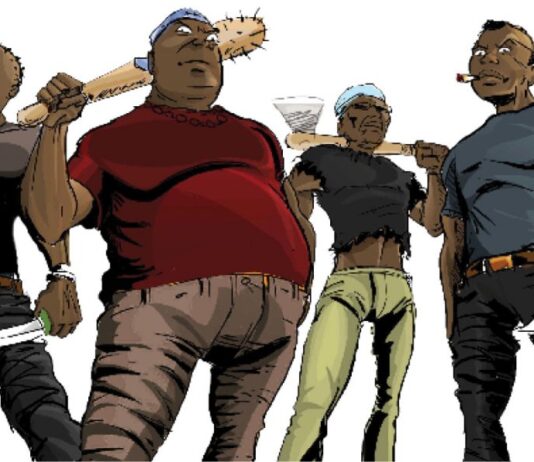
    Let me give you an example. The thugs our dear politicians use to cause mayhem and intimidate supporters of political rivals as elections approach, perfectly exemplify the rudderless individual who patently failed to make any plans of his own, making him an easy target to be used and abused by a smarter man.

    Education serves many purposes for both the individual and the society he or she lives in. If we start listing them all now, I won’t be able to pass any other message across in this article because the list is literally endless. Some are to prepare one for his career, to bring development in all ramifications to society, to equip an individual to be able to provide for himself and live a useful life as a process which conduces holistic development of the individual, to raise solution providers and to mould the ideal citizen are just a few.

    Nwagwu and Fafunwa both define it in ways I particularly like. Fafunwa avers, “education as the aggregate of the process by which a child or young adult develops the abilities, attitude and other forms of behaviour which are of positive value to the society in which he lives.” Nwagwu on the other hand defines education as, “the process used by society to preserve and upgrade the accumulated knowledge, skills and attitude of its people and foster the well being of mankind.” There are others who insist education loses its definition if it doesn’t provide the mental capacity and an interrogative mind that challenges accepted norms to prove their efficacy.

    However, if we’re to come down to the basics, we may need to start by saying the primary aim of education is to furnish the individual with the ability to reason and think for himself. This forms the foundation of almost every other definition.

    Returning to our “lost boys” who appear to have failed to plan, I often wonder if they’re always entirely at fault. Why would a grown man risk his life fighting for a politician who he may never meet? And for how much? Sometimes, for as little as N500 or N1000 by the time the money is shared. There are few things in life more dangerous than a man devoid of hope. He will always be the first to bring the whole house crashing down. Why care about an entity you don’t think you have a stake in? No man in his right senses will use his hands to destroy his own house.

    This is the predicament our nation currently faces. With bourgeoning youth demography, accounting for about 65% of a total population of over 200m Nigerians, most of whom are unemployed and many, unemployable, we’re sitting on a ticking time bomb. But that’s not new, it’s been said before. How different things might have been though, if we people could put aside how we look and focus on what’s really important. An army where everyone wants to be a General and no one wants to be a foot soldier cannot win a single battle because it’s common knowledge Generals don’t fight, they only command and coordinate.

    I wonder how different things could have been if successive governments had cast their sights in the direction of countries such as Finland who separate into two groups at the beginning of senior secondary school, those who will take matriculation exams to gain admission to university in three years time and those whose strengths obviously lie in their technical abilities. They too are prepared for several years before gaining admission to technical school. So there’s a deliberate policy to cater for both academic and vocational further education equally, without a hint of bias.

    Being an egalitarian society, both University educated and technical school trained citizens can look forward to equally respectable and rewarding careers. The positive effect this must have on their students, who having acquired the ability to reason through basic education, being able to decide for themselves which path to tow so they can become their best selves is immeasurable. Equally impossible to quantify is what these options, which enable them to make viable plans during their formative years, does to boost confidence and build up self-esteem. Self esteem often comes from having hope for the future.

    Education is not solely an academic enterprise but is also a moral venture. The fact that it enables self-actualization is of moral value in itself as every human being has the right to try to become the best he can possibly be.  The moral benefit shouldn’t end with the individual though. It should also serve the moral purpose of raising individuals who will place the interest of their society alongside their own. Anything short of this may pass as schooling but lacks the moral foundation to be termed education.

    I’ve often asked why a country like ours “blessed” with leaders in possession of multiple academic certificates is in such a state. And by leaders, I don’t mean only those in the political sphere. Our educational system needs to be critically examined so it churns out more people with ingrained leadership traits and less clever crooks who use their “cleverness” to devise increasingly ingenious ways to loot and defraud. Whenever I come across our “lost boys” I can’t help but think, “if only”.

    Changing the nation…one mind at a time.

    Oladapo Akande is a Surrey University (UK) English graduate with a Masters in Professional Ethics. He’s an alumnus of the National Institute for Transformation and a two time author; The Last Flight and Shifting Anchors. He writes from Lagos.

  • Yes, I Can

    Yes, I Can

    By Dapo Akande

    I was watching a cookery program with my younger daughter and her elder brother, whose feigned interest was so easy to see through. He was far more concerned with getting the latest premiership team news on his phone but I chose to ignore this and dragged him into our conversation anyway.

    The host of the cookery program, himself a celebrated chef, was praising one of the junior “chefs” (a child who couldn’t have been more than 11 years old) that his pasta dish was one of the best he had ever tasted. Not one of the best made by a child but by anybody, even other chefs. This got me thinking. How did this child make a dish so much better than so-called experts? I turned to my children and asked them a question which I know has a very obvious answer. “What makes adult cooks better than young cooks?” At least generally. And of course they blurted out the obvious, which were all absolutely correct. Adult chefs have more know-how, as a result of age, experience and so on.

    I then asked the question which took us to where I actually wanted to go. “Why is it that at times, child cooks produce magically good dishes that blow seasoned chefs totally out of the water? What enables them to achieve this?” Thankfully, they both pretty much got it, so I was saved the agony of spending the rest of the evening agonizing and wondering why I’ve been spending quite so much on their school fees. Still, I tried to explain further and put it in my own words, just to give them greater clarity in understanding.

    Children are by nature less held captive by convention. They dare to peer at and are subsequently able to see what adults dare not even take a peek into, all because they (adults) have been taught over time, the combinations that work and those that supposedly don’t.

    Sometimes, it goes beyond what they’ve been told though. Experience, which we place so much premium on, may have conditioned their minds to accept what works and what apparently doesn’t. Numerous failed attempts could have evaporated the last drop of adventure in them and whipped them into the line of conventional thinking. Children on the other hand are not constrained by such. To them, anything is possible once they can imagine it. Rather than an uncanny knack of peering at a knotty issue, the best thing children have going for them is actually the opposite. They succeed where adults fail because they just get on with it without any doubt that they will succeed. Unlike adults, they’re not hindered by 1001 reasons of why it won’t work. They just make it happen because they refuse to entertain the thought of it not working.

    In that wonderful book, Nudge, by Richard H. Thaler and Cass R. Sunstein, we learn that the authorities at Schiphol Airport in Amsterdam came up with an ingenious strategy to tackle the problem of careless aiming into the urinals by travellers who patronize their public lavatories. I want to believe they must have already trod the usual route of putting up notices, soliciting the cooperation of their patrons but hadn’t enjoyed much success. They then employed a method which took everybody’s eyes off the problem they were trying to tackle but instead appealed to the little boy within all of us, who doesn’t just love playing games but always wants to win.

    A strategically positioned image of a housefly was etched in each urinal and because boys will always be boys, irrespective of their age, their attention shifted to “aiming” at the fly as soon as they saw it. Little did they know, it was simply a nudge for them to aim correctly. Careless shooting which had always left the floor in a terrible mess was reduced by a staggering 80% and essentially became history from that point onwards. Clever, eh? Possibly exasperated having tried so many different strategies and failed, it was time to think out of the box. It was time to try a less frontal and less obvious approach. But was it simple? Very. It’s one of the many things we hear about that makes us ask, “why didn’t I think of that?”

    Many a time, we’re better off keeping things simple. In the book, “Good To Great”, the author Professor Jim Collins, came to a conclusion after spending several years tediously researching businesses and trying to understand why some were able to make the leap from good to great. Supported by volumes of largely incontrovertible statistics, he affirmed that those who made the transition from good corporate entities to becoming great organizations were the ones who were wise enough to streamline their operations, narrow their ambitions and aim for simple goals.

    They identified what they could do better than everyone else while acknowledging and confronting the brutal facts. Those whose nebulous ambition was just to become “the biggest and the best” never achieved either. The great companies had succeeded in making their company goals simple by removing unnecessary complexities. They managed to focus the attention of their employees in a particular direction. Clear, precise and simple goals did the trick. Oh yes, there were a couple of other things too but to put it in his own words, one of the most critical was an ability to, “Retain faith that you will prevail in the end, regardless of the difficulties”. He called this the Stockdale Paradox and it’s a notion totally unrelated to baseless optimism. It’s a sturdy belief in oneself even after taking all factors into consideration, that one will succeed.

    To parents whose children are still young, my advice is that you allow them to remain in the naïveté that anything is possible for as long as you possibly can. There’s no special place in history kept for those whose mantra is, “forget it, it can’t be done”. Only for those who managed to take us beyond what we ever dared believe possible. It’s time many of us unlearn some of the “facts” that have held us back for so long and quickly acquaint ourselves with truths that can set us free to fly. Great men and women have always emerged from the company of those who said “Yes, I can”.

    Changing the nation…one mind at a time.

    Oladapo Akande is a Surrey University (UK) English graduate with a Masters in Professional Ethics. He’s an alumnus of the National Institute for Transformation and a two time author; The Last Flight and Shifting Anchors. He writes from Lagos.

  • Power Is Nothing Without Control – Part 2

    Power Is Nothing Without Control – Part 2

    By Dapo Akande

    The Aussies, known for their love of beer or the Amber Nectar, as they like to call it, are an interesting people. If you think you’re a big beer drinker, then try challenging an Australian to a drinking contest. I can assure you, he’lI drink you under the table, any day. Aussies literally drink like fish.

    There was a great advert in the United Kingdom for Castlemaine 4X which parodied this, several decades ago. In preparation for a barbecue (another thing Aussies are known for) party, two men were seen leaning on a truck in the outback (desert like area of Australia) and patiently watching while the drinks for the party were being loaded up. What were they being loaded unto? A trailer. What were the variety of drinks? No variety, only Castlemaine 4X.

    Only after totally overloading the trailer with Castlemaine 4X beer to the point where one could clearly hear the trailer creaking under the sheer weight of it, did they remember that they hadn’t packed any drinks for the women. Very casually, with folded arms and a can of Castlemaine 4X he was already drinking in hand, one of the two men said to the other who was doing exactly the same, “I guess we better add a couple of bottles of wine for the Sheilas (ladies)?” His friend agreed and promptly, two bottles of wine were plonked on top of the hundreds of crates of beer. The two men were shown looking satisfied that they had done a good job and then the camera quickly shot back to the trailer as we heard the creaking increase and before we knew it the trailer came crashing down. Without the slightest hint of any panic but with undisguised regret, one of the two men said to the other, “I guess we over did it for the Sheilas”, to which his friend in equal regret just uttered, “yeah”.

    The men in the advert above who felt, “Na we dey there” packed the trailer to overload with beer, pampering to their selfish whims and giving little to no thought to the interest of others. Their greed, powerlessness to rein in their voracious appetite when opportunity came knocking to satisfy it and total misuse of position and chance to meet the needs of all, eventually caused the trailer to collapse, so it could not even move anywhere. In the end it didn’t serve anyone’s interest as the drinks were needed at their party.

    Forecourt of the State House/Presidential Villa, Abuja, the Nigerian Government seat of power.

    But the saddest part about the whole scenario was this; they didn’t ascribe the trailer’s collapse to their greed at all. They blamed it on the two bottles of wine they patted themselves on the back for so thoughtfully including for the women.

    Likewise, the problem with Nigeria from the perspective of our political leaders is not current poor leadership but the people who are in too much of a hurry to enjoy a good life. The same good life the majority have been denied all their lives, frustratingly in the midst of plenty. Our leaders will brag in the media about accomplishments which the ordinary man can barely see or feel and explain it away with the usual mantra that government resources are limited, therefore people should understand.

    As far as they’re concerned, the lack of good hospitals, good roads, good educational system and the most dismal looking future for coming generations of Nigerians actually has little to do with their current performance and only to do with the corruption and profligacy of past leaders. Like the two Aussie men, they calmly try to explain away something which is so painfully obvious.

    We urgently need to do something about the average Nigerian’s “do you know me?” attitude. “Don’t try me, I’m a mad man. My head no dey correct o” mentality. It beats me, why anyone would boast of not being normal in the head. I just can’t understand why people brag about something which should ordinarily be a source of concern to any normal person.

    Both the “big men” and “small men” in the streets boast of their “power” and threaten to show their antagonists who they are. It’s just unfortunate that neither the big nor the small oppressor has yet realized that they’re both in the same category – they’re both small minded people – who only feel big by demeaning others. All such are nothing but “small men” no matter their position or financial wherewithal.

    I don’t see how such oppressors are any different to wife beaters. Included in this category of wife beaters are the few bad eggs amongst our uniformed men, whose presence ought to be a source of comfort to the citizenry but decide instead to use it to physically or psychologically brutalize those unable to fight back. In the same category are people in positions of authority who instead of using their position to provide an enabling environment and make things happen opt instead to plant endless bureaucratic bottlenecks and strangulate all effort to catalyze industry, just because they can. I ask you, how different to wife beaters are those who boast of past appointments held, not to remind us of how well they transformed the lives of ordinary Nigerians while they were there but to now brandish such credentials as a licence to intimidate and belittle those they supposedly went there to serve? All the above are “little men” but if only they knew. Nigerians are still reeling from one such case but I doff my hat to the individual in question for offering an unreserved apology to the victim and Nigerians in general; a rarity in these climes, I must say.

    Sadly, like the case of the two Aussies who were presented with a golden opportunity to meet the needs of all but were blinded by an unrestrained desire to satisfy themselves only, the ship called Nigeria is stuck and currently appears to be moving no where. Power, just for the sake of it is far from a blessing, it’s an albatross.

    Changing the nation…one mind at a time

    Oladapo Akande is a Surrey University (UK) English graduate with a Masters in Professional Ethics. He’s an alumnus of the National Institute for Transformation and a two time author; The Last Flight and Shifting Anchors. He writes from Lagos.

  • Power is nothing without control

    Power is nothing without control

    By Oladapo Akande

    I remember the mid 1990s Pirelli advert where the world famous Italian tyre brand introduced it’s iconic slogan for the first time. The advert featured my school boy hero and one of the greatest Olympians of all time, the incomparable Carl Lewis. Not only did he sport the perfect “flat top” hairstyle, which I dutifully copied but he specialized in the same athletic events as I did, namely the 100m and 200m sprints and the Long Jump. With his perfect and effortless looking running style, “King Carl” as many of us liked to call him because of his total dominance on the world stage, was the perfect candidate for the advert.

    Unleashing his explosive power and speed, he took the bends at breakneck speed and all the while maintained perfect balance. Of course, this impossible feat was only made “possible” by the Pirelli tyre thread which made up the soul of his feet, providing perfect grip. And what was the brand’s slogan? “Power is nothing without control”.

    The advert was so cool. I thought so back then and I guess I still do. Then, there was another Pirelli advert which featured King Carl but this time, it was a still picture of him in a sprinter’s position at the starting block, wearing a pair of red stilettos. Weird, right? But the significance wasn’t lost on me. Without a moderating influence on power, power can be far more destructive than constructive. Even for the person wielding it.

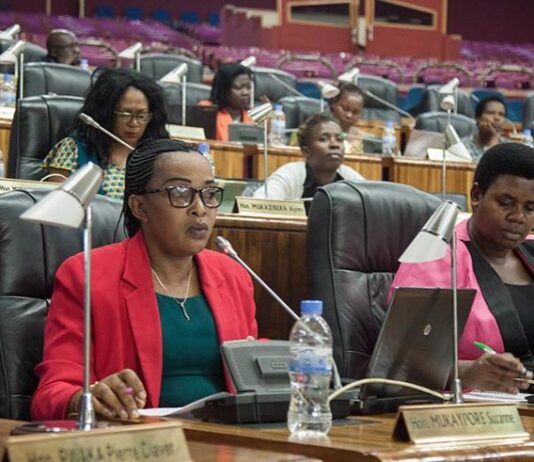
    When God says he created the woman to be a help mate to man, one of the helps I earnestly believe He has in mind, is to provide a balance. This could simply be a balanced view on issues or an alternative approach to moderate a testosterone driven rash line of action. It could mean to provide a much needed eye of compassion regarding a matter. It could on the other hand be to offer a forward focused intervention, required to nurture and build thereby countering the “grab it all now” syndrome which often besets us men. It could even be to massage our male ego while cleverly steering us away from a counter productive stance. Of course it would be foolish to say all women are the same, but with the higher propensity for women to show compassion and to care about the welfare of others, (which is what government is meant to be about). I strongly believe a government which lacks a sufficient number of women will be handicapped by having one hand tied behind it’s back.

    Women by their very nature are more inclined to ensure policies are passed that will provide an enabling environment for their children and future generations to thrive. God is well aware of how boys and men will gladly scatter everything rather than be seen to step down. The intervention of women can stop us from doing what we will almost certainly regret later on, even if we’re not wise or humble enough to admit it. Without that balance in our lives, we’re almost certainly doomed, as we’ll keep taking actions which are so obviously not in anybody’s long term interest, including ours.

    A help mate is not a lesser person but someone who complements you to make you more complete. For those who have watched ralley racing, you would have noticed that there are always two people in the racing cars; the driver and the navigator. Should the driver decide to go it alone, there are really only two possible outcomes. One, he would crash out of the race or two, in order to avoid crashing, he would have to drive very slowly. Either way, he can’t possibly win.

    This tells us very clearly that the navigator is not superfluous. He’s neither unnecessary nor is he a passenger. He’s actually half of a team because without him both the driver’s dexterity and the car’s huge horsepower would be as good as useless. Without him, the driver wouldn’t know what’s ahead. He wouldn’t know when it’s safe to accelerate or when it’s prudent to decelerate. He wouldn’t know when a bend is coming up or where he can make up for lost time. For all intents and purposes, the power at his feet would amount to nothing if he doesn’t know how best to control it. A sudden rush of blood to the head, causing him to speed up at the wrong moment could land him in a ditch that he won’t be able to get out of. The help mate is therefore not an appendage but a crucial partner in your journey if you’re to have any hope of finishing on time or even finishing at all. She sees what you don’t see and ensures you both cross the finish line. It’s one thing to have the throttle at your feet but it’s another thing to know how to get to where you want to go.

    The motive behind having women in government and in positions of authority should not be to merely play to the gallery as that doesn’t do anybody any good. Neither should it be a cosmetic gesture, as if we’re doing the womenfolk a favour. Instead, it should be because we recognize it’s necessity as we’ll merely be shooting ourselves in the foot by doing otherwise. If we genuinely desire to make progress as a nation then we must be intentional and we must take deliberate steps that will give us the best chance of success. I close with this. We should always keep in mind that with the right mindset, there can be great strength in what appears to be weakness. Equally wise is it to keep in mind, just how brittle and weak power can be when there’s an absence of restraint or a moderating influence. I couldn’t agree more with Pirelli’s submission that power really does amount to nothing without control.

    Changing the nation…one mind at a time.

    Oladapo Akande is a Surrey University (UK) English graduate with a Masters in Professional Ethics. He’s an alumnus of the National Institute for Transformation and a two time author; The Last Flight and Shifting Anchors. He writes from Lagos.

  • Sanwo-Olu, Tinubu Pay Glowing Tributes to APC Chieftain, Lanre Razaq

    Sanwo-Olu, Tinubu Pay Glowing Tributes to APC Chieftain, Lanre Razaq

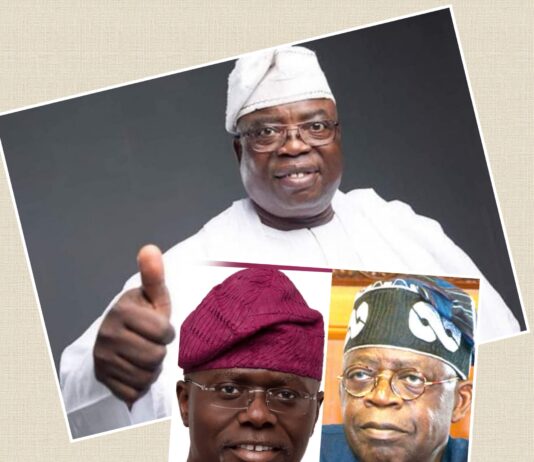
    Lagos State Governor, Babajide Sanwo-Olu, and National Leader of the All Progressives Congress (APC), Asiwaju Bola Ahmed Tinubu, have expressed sadness over the death of a member of the Governor’s Advisory Council (GAC) of Lagos State APC, Lanre Razaq, who passed away on Saturday morning at the age of 74 after a brief illness.

    Sanwo-Olu, who described late Razaq’s death as a rude shock, said the deceased was a great politician, a strong party man and an advocate of masses oriented programmes.

    Tinubu also described the passing of prominent politician, businessman and APC chieftain in Lagos State as a big loss to the state.

    Razaq, Balogun of Epe, died on Saturday at Reddington Hospital in Lagos after a brief illness.

    Omotola Jalade-Ekeinde Tests Positive for COVID-19

    Sanwo-Olu, in a condolence message by his Chief Press Secretary (CPS), Gboyega Akosile, said the deceased, in his lifetime stood for what is right, always championing policies that would lift the lot of the poor masses.

    The governor added that late Razaq, popularly called KLM did not hide his love and support of his administration especially the Babajide Sanwo-Olu’s T.H.E.M.E.S. agenda.

    “I am saddened by the death of one of our political leaders in Lagos APC, Chief Lanre Razaq. He was a loyal party man and committed democrat, with a deep understanding of the state’s political landscape. He was an extremely loyal politician, who did his best for our party, the All Progressives Congress.

    “Chief Razaq served his people and Lagos State passionately as Chairman of Epe Local Government Area and Commissioner of Public Transportation. He brought a lot of development to Epe as a council boss and also made a lot of positive contributions to turn around public transportation in Lagos during his tenure as member of the State Executive Council.

    “Chief Razaq was a great politician, a strong party man and an advocate of masses oriented programmes. His support for our T.H.E.M.E.S. agenda was exemplary. He always propelled us to do more for the people of Lagos State.

    “There is no doubting the fact that he would be missed by the entire political class, particularly the people of Epe, the Lagos East Senatorial District and the atate as a whole,” Sanwo-Olu said.

    Order EFCC to Unseal Our Properties in Abia Now, Trademore Tells Court

    The governor also condoled with the immediate family of the departed, Tinubu, other GAC members, Lagos State APC and the entire people of Epe, praying God to grant the soul of the beloved Razaq eternal rest in Aljannah firdaus.

    On his part, Tinubu said Rasaq was a grassroots politician, party loyalist and believer in the progressive cause.

    Tinubu, in a condolence message issued by his Media Office and signed by his Media Aide, Tunde Rahman, said: “I’m deeply saddened by the passing of Chief Lanre Rasaq, a grassroots politician, well-known ally and a defender of the progressive cause.

    “A member of our Governor’s Advisory Council in Lagos and one of the apex leaders in Lagos East, Chief Rasaq is an important part of our political movement.

    “He was a loyal and energetic party man who did a lot for APC, Lagos State and his Epe hometown.

    “Since he joined politics to meaningfully contribute his quota to the development of the people and betterment of the society, Chief Rasaq had had his hand on the plough and never to look back.

    “He served Epe and Lagos State in various capacities including as Chairman of Epe Local Government Area and later Commissioner for Public Transportation in the state.

    “So influential is Rasaq in his hometown that he was gifted the traditional title of Balogun of Epe. His death is a big loss to Lagos and Epe town. Lagos APC and members of the progressive family across the country will deeply miss him.

    Baba Eto of Lagos, Folarin Coker dies at 97

    “I mourn with his wife and children and the entire Rasaq family. May Almighty Allah give them the strength to live after their father and patriarch.

    “I commiserate with Governor Babajide Sanwo-Olu, the government and people of the state, particularly the entire people of Epe for the loss of an illustrious son.

    “May Almighty Allah forgive the late politician of his shortcomings, reward his good deeds and grant him Aljanna Fridaus. Amin.”