Category: Features

Featured posts

  • Trafficking in Nuclear Materials Potential Threat to International Peace- President Buhari Warns

    Trafficking in Nuclear Materials Potential Threat to International Peace- President Buhari Warns

    Trafficking in Nuclear Materials Potential Threat to International Peace- President Buhari Warns

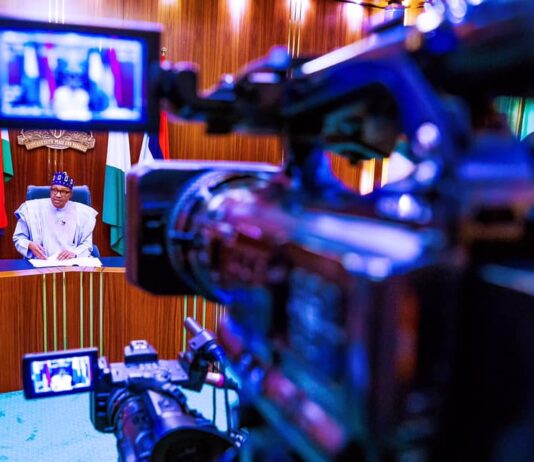
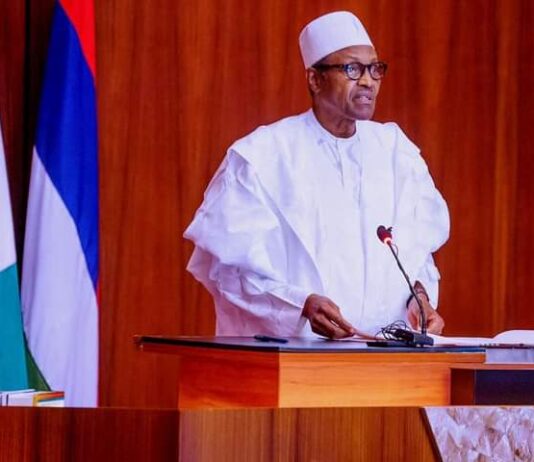
    President Muhammadu Buhari Friday called for the total elimination of nuclear weapons, warning that trafficking in nuclear materials remains a potential threat to international peace and security.

    In his video-message to the UN High-level meeting to commemorate and promote the International Day for the Total Elimination of Nuclear Weapons, President Buhari restated Nigeria’s commitment to the peaceful uses of nuclear energy.

    He, however, expressed concern about the ‘‘slow pace’’ of States possessing nuclear weapons in disarming and decommissioning their existing nuclear facilities.

    ”We are concerned about the slow pace of progress by nuclear-weapon States to accomplish the total elimination of their nuclear arsenals, in accordance with their legal obligations and undertakings under Article VI of the Non-Proliferation Treaty (NPT),” President Buhari said.

    Reiterating the need for the United Nations to continue engaging Nuclear Weapon States to speed up their efforts in disarming and decommissioning their existing nuclear facilities, the Nigerian leader said:

    ”The best approach to avoid damage associated with nuclear materials such as humanitarian crisis, accidents, disasters and criminality is the total elimination of nuclear weapons.”

    President Buhari told world leaders at the virtual summit that the universalization of the NPT was dependent upon strict compliance with its three pillars namely, disarmament, non-proliferation and peaceful uses of nuclear energy.

    He, therefore, enjoined other Member States to ratify the Treaty, noting that Nigeria had played a major role in negotiations leading to the coming into force of the African Nuclear-Weapon-Free-Zone Treaty (Pelindaba Treaty).

    ”We will continue to galvanize other African States to abide by the tenets of the Pelindaba Treaty. This is to ensure that the entire continent remains nuclear-free.

    ”While there are no easy solutions when we confront one of the gravest existential threats to the survival of the human race, we must remain undeterred and committed to a world of safety and security, one without the volatility posed by Nuclear Weapons,” he said.

    The Nigerian President said it was noteworthy that this year marks the 75th Anniversary of the use of the atomic bomb on Hiroshima and Nagasaki in Japan that terminated the lives of thousands of people with severe long-term damages to the environment.

    ”The Anniversary is a forceful reminder of the catastrophic humanitarian consequences of nuclear weapons which undermine global, national and human security.

    ”Hence, there is need for all states to comply with applicable international laws and conventions to ensure a world free of nuclear weapons.

    ”We must, therefore, redouble our efforts to implement the provisions of the Nuclear NPT being the basis of Non-Proliferation Regime.

    ”This is to enable us achieve our desire for total elimination of nuclear weapons,’’ he said.

    President Buhari used the occasion to highlight how Nigeria had demonstrated support for multilateral efforts towards the total elimination of nuclear weapons.

    The President recounted that as one of the countries in the vanguard of the campaign for the total elimination of nuclear weapons, Nigeria signed the Treaty on the Prohibition of Nuclear Weapons on 20th September 2017 and recently ratified it on 6th August, 2020.

    He noted that Nigeria joined like-minded states to sponsor the resolution titled “Taking Forward Multilateral Nuclear Disarmament Negotiations” which led to the legally binding Treaty on the Prohibition of Nuclear Weapons.

    ”Nigeria has been involved in the promotion of peaceful application of nuclear science and technology at national and international levels.

    ”Accordingly, Nigeria ratified several international treaties and conventions in the area of nuclear safety and security.

    ”We have also expressed political commitment to the IAEA Code of Conduct on safety and security of radioactive sources.

    ”More so, we have developed and approved the first International Atomic Energy Agency (IAEA) Integrated Nuclear Security Plan for the period 2010-2012 with further review to cover 2019-2021 period.

    ”In this connection, Nigeria commends the continued efforts of the IAEA, particularly its role in monitoring and inspecting nuclear facilities. We urge States to ensure compliance with IAEA safeguards and standards at all times as well as nuclear verification disarmament measures,” he said.

    The President added that in order to facilitate the development and peaceful deployment of nuclear technology, Nigeria regulates and implements its energy aspiration through the relevant agencies.

    ”In addition, we are reforming the National Nuclear Security Sector to make it robust and reliable.

    ”These reforms involve the domestication of The International Convention for the Suppression of Acts of Nuclear Terrorism; Review of Nuclear Safety and Radiation Protection Act; and Review of Nigeria Nuclear Regulatory Authority Act.

    ”To further demonstrate our commitment to nuclear security, Nigeria successfully converted the Nigeria Research Reactor (NIRR-1), a 31 kilowatts miniature neutron source reactor from highly enriched uranium to low enriched uranium fuel.

    ”Also in 2019, the administration set up Nigeria’s Nuclear Security Support Centre and developed a Nuclear Security Detection Architecture to serve as a sustainable safeguard for maintaining nuclear security and detection of radioactive materials out of regulatory control,’’ he said.

    President Buhari also reminded the Summit that the 1996 Advisory Opinion of the International Court of Justice affirms that the threat or use of nuclear weapons constitute a crime against humanity and a violation of international law, including international humanitarian law.

    Femi Adesina
    Special Adviser to the President
    (Media & Publicity)
    October 2, 2020

  • Video Highlight: Nigeria at 60 Celebration in Abuja

    Video Highlight: Nigeria at 60 Celebration in Abuja

    60th Independence Anniversary Celebration at Eagle Square Abuja on 1st Oct 2020

    Video by @emmanuelanrihi001

    Photos:

  • Random Musings

    Random Musings

    By Dapo Akande

    I remember feeling so cool with myself when my headmaster told me during my primary school days that I had a photographic memory. For several weeks after that, I felt like I was on cloud nine. I’d never heard of that term before but boy, did it make me feel clever. The euphoric feeling didn’t last too long though. In fact it came to an abrupt end a few weeks later, when I flunked my maths and science exams, plus a couple of other subjects too, for good measure. So I wasn’t a yet to be discovered genius after all.

    As we grow up and as we grow older, it is expected that our understanding will increase. A child who misconstrues what a photographic memory means and mistakes it for genius can easily be excused for his ignorance but an adult who does the same when all evidence says otherwise, may not be described in such charitable terms. I remember that when I was a child, whenever I injured myself while playing (which unfortunately was quite often), my father would get so angry. I couldn’t quite understand it. Shouldn’t he have some pity and feel for me? My mum on the other hand would pet me and sympathize, but not him. It was only when I became a parent myself that I began to understand as life came round full circle. I found that whenever my children injured themselves, though I was very concerned, my initial reaction would be to tell them off. Why? I guess it felt as if they had put me in a position of helplessness and I resented that. If I could somehow remove the pain from their bodies and transfer it to mine instead, I would do so in an instant. That would be far easier to bear than to watch one’s child writhe in pain while feeling completely helpless. Now I know how my daddy felt. The natural instinct of a husband and a father to protect his brood sets in motion. But such instances only remind us of our limitations as human beings.

    Someone once said manhood or being a real man is to be a sacrificial servant and a willing partner in a partnership. It has as much to do with recognizing that one hasn’t been called to provide all the answers as it does with assuming leadership. Believe it or not, the two are not mutually exclusive. As Tammy Dollar rightly points out, there are different graces and abilities apportioned to each person and recognition and acceptance of one’s limitations is strength, not a weakness. Such understanding is often the source of making good judgments, itself a physical manifestation of wisdom or if you prefer, is wisdom in action. The good Book says, “the prudent see danger and take refuge (in wisdom) but the simple keep going and pay the penalty”. And if I may add to this, vulnerability is not the exclusive preserve of the female gender; it’s what makes us all human.

    It was Andrew Wommack who said many people believe life is all about “Get all you can, can all you get and then sit on your can”. It’s against this background that John Wesley’s words spoken well over two hundred years ago, still continues to reverberate. He pronounced that your primary pursuit in this world should be to, “Do all the good you can, by all the means you can, in all the ways you can, in all the places you can, at all the times you can, to all the people you can, as long as ever you can.” I think you get the gist. Don’t stop.

    There’s no experience, pleasant or agonizing that lacks value. Like I heard a man once say, we shouldn’t “waste our pain”. It was Friedrich Nietzsche who rightly observed that there are no beautiful surfaces without a terrible depth.

    Use your life lessons to instruct, motivate, encourage, direct and empower others who might be going through or may still go through a similar situation. As a businessman, a career person or a parent, educate others to avoid pitfalls you may have fallen into during your journey. As a leader or a mentor, aim to inspire and ultimately enrich the lives of others by divulging secrets to success from your wealth of experience. Many a time in life, your biggest stories will have less to do with the actual subject matter than with their significance – less to do with all the facts of that situation or even what you did, and more to do with how it affected you and shaped you into who you’ve become. That’s the crucial element that really strikes a chord.

    The careless use of so many words, terms and phrases has emptied them of their meaning. Though success goes by many definitions, one which fails to highlight the profound benefit derivable by others, I believe lacks merit. John Calvin said, “all the blessings we enjoy are Divine deposits, committed to our trust on this condition, that they should be dispensed for the benefit of our neighbors.” We will do well to remember that not all blessings appear as glittering gold, lest we carelessly let them pass us by.

    I’m sure the last thing any of us would want would be to find ourselves lumped in the same bracket as the man seen squeezing his face like a smart person who’s thinking of the solution to a problem but who never ever has the answers…Lol. Such a person is of no good to anyone.

    Changing the nation…one mind at a time.

    Oladapo Akande is a Surrey University (UK) English graduate with a Masters in Professional Ethics. He’s an alumnus of the National Institute for Transformation and a two time author; The Last Flight and Shifting Anchors. He writes from Lagos.

  • Breaking: Trump tests Positive to Coronavirus

    Breaking: Trump tests Positive to Coronavirus

    The President of the United States, Donald Trump and the First Lady, Melania Trump both tested Positive to the deadly coronavirus.

    In a Twitter post by POTUS tonight, he shared the information.
    The President twitted:
    “Tonight, @FLOTUS and I tested positive for COVID-19. We will begin our quarantine and recovery process immediately. We will get through this TOGETHER!”

    It was reported earlier Hope Hicks, one of aides closest to President Donald Trump, had tested positive for the coronavirus.

    The White house however reported that the President and the First Lady will continue to carry out their daily duties while in quarantine. No details on this yet
    More details will be coming later

    Bunmi Adebayo

  • UK record label signs Nigerian teenage sensation

    UK record label signs Nigerian teenage sensation

    19-year old singer songwriter Shalom Olaleye has been signed to a record deal by a Manchester based record label.
    Shalom who is known by fans as Troy – omo iya ijo was offered what many artists in his position would consider a lifetime opportunity, when his single titled Duro – caught the attention of an executive of the UK based record label on You Tube.

    “It wasn’t just the song…there was also something special about Troy, he has what we call in the music business the X factor, and he’s young” says Ms Champagne Jaye – the vice president of Afristar Records (https://afristarrecords.com)
    For Shalom though, this whole new development means he would have to make a decision about his education and his music career which appear to have received a boost, but the unassuming and somewhat shy teenager was quick to emphasise that his education was non negotiable and that he is working out an arrangement with Afristar Records that allow him to fulfil his contractual obligations only on weekends and during school breaks.

    Shalom is currently studying mass communication at the prestigious Moshood Abiola Polytechnic Abeokuta, in Ogun State Nigeria.

    He credits his music career to the support from his mum and dad, both of whom are church leaders, as young Shalom was born and raised in a church environment and has been singing since he was four years of age and his stage name “omo iya ijo” is a tribute to his mother who is the “iya ijo” of the local church.

    His debut EP titled TROY has just been released with hit tracks such as DURO, STAR, IJO OPE and MONEY TALKS and available for sale on iTunes, Amazon, Apple Music and other major streaming platforms.

    Omo Iya Ijo on ITunes

    Troy Omo Iya Ijo on Kkbox
    Omo Iya Ijo on Boomplay For free

    According to Afristar Records, local and international tour dates for 2021 will be announced before the end of the year.

  • Nigeria at 60: A Dance by the Precipice- Politics, Governance, Policy Making [Part 1]

    Nigeria at 60: A Dance by the Precipice- Politics, Governance, Policy Making [Part 1]

    As Nigeria clocks 60 years of independence, amidst the struggle to come out from the shock of COVID-19 on its economy, and the recent impasse between labour and the Federal Government over the hike in petrol and electricity tariff, an assessment of the nation’s progress in governance, politics and policy making starting from alleged Interference from international financial organizations such as the IMF, World Bank and AfDB is a good way to begin.

    The first duty of any government is to ensure the security, both economically and socially, of its people. Any other consideration should be secondary. Primary duty, ensure that your citizens are comfortable, give them every opportunity to succeed, to have a good life, live a sustainable life, help their living standard. That’s what every government should be bothered about. So when it comes to external influences it should be based on what your people would have to go through to achieve those demands or whatsoever. So it is worrisome that for whatever reasons government deals with international financial organizations, they would have to put Nigerians in a very difficult situation. Nigeria is currently adjudged, if not the nation with poorest people in the world. So with this, why would our leaders want to overburden its citizens with its many policies? Anti-people policies to state it rightly.

    There have been several commentaries in the wake of the pandemic that serious nations would rather give palliatives to its people and this issue came up at the time anyway. So there were talks about how much would be given to whom and at what point would they determine who was going to get what? But of course we never heard anything about it again save for N20,000 that was said to have been given to some 10,695,360 individuals in 35 states across the country, the poorest and most vulnerable Nigerians they said; an exercise that was alleged to have been largely fraught with embezzlement. Does this government sincerely have the interest of Nigerians at heart? Sometimes that answer is mostly no. And it is not only under the Buhari-led government. If we look back, it’s always been an endemic, where our government, the people in leadership only concern themselves about what they can get from governance and not what they can give to people, or a good legacy of comfort they can leave for the people. By all means, it is morally wrong for you to put your own people in a difficult situation and even worsen their pains just to gain favours from international financial organizations like the IMF, World Bank and AfDB.

    A lot of people have insinuated that the leadership of the NLC has been infiltrated, have been bought and that that’s why they are not really pressing to fight for more, for this injustice done by the Federal Government. Questions have been raised, asking should the NLC have gone ahead with the planned strike last Monday despite attempts by the FG to douse the tension.

    Over time we’ve always had situations that caused us to believe that the NLC were infiltrated by government officials. However, if the NLC had gone on that strike action, it would have caused Nigeria, more so Nigerians billions of dollars, a loss that would further compound the effect of the coronavirus pandemic. It is believed that if the strike had held, many people, businesses, income would suffer. It would have caused untold economic hardship. Taking a positive look at it, at least a win. And what is that win? That is a backtrack on electricity tariff hike, where within two weeks as agreed by both parties, certain issues that are critical to the negotiations would have been dealt with. It is not just the right time for those hikes. For example, it is outrageous that electricity distribution companies (DISCOS) will not distribute meters to its customers but enforce estimated billing on them. To make the sore hurt even more, electricity tariff was increased. It behooves on the government and Discos to be alive to their responsibility firstly before any other expectations from the masses. They should live by example. So these are the conditions, government and their allies in the Discos should do the needful by not only providing meters but making electricity supply stable, and then we can look at tariff increase and how it would help the power sector and indeed the economy.

    It is an obvious secret that the administration of President Goodluck Jonathan cheaply gave out the nation’s power holding electricity distribution assets to their cronies.  Just as it had been prevalent over the years even up until October 1, 2020 when we celebrate Nigeria at 60, a trend is constant, and that is always vested interest, not the interest of the people, only theirs and that of their cronies, to the detriment of the larger population. It might not be wrong to assume that officials involved in the sales of the Discos have shares in these companies hence the hypocrisy that surrounds its operational policy. It is always about their interest. If anything, it is high time that a drastic action was taken to hold government to the jugular, look them in the face and demand accountability, to say “we put you there and you must do what we want, what we make us comfortable and not the other way round”. Government should not overburden the people; it should rather get on to think on its toes and be creative.

    How can the nation have non-working refineries for years, yet our leaders explore oil, export to Europe to refine and then import the refined product for Nigerians to buy? It is a big shame. How can you have hydro electric dams, yet we do not have power. It is unimaginable the lows we continue to sink to 60 years after independence.

    The conversation around true federalism and restructuring is still ongoing. When you sum it up, one of the major problems of Nigeria is its foundational culture, attitude. When you take a careful look, one might not be far from the truth to think that the construct of colonialism had a great impact on our psyche including the way we behave as a people and to one another. We might not be certain what our attitude towards social growth and shared interests was before colonization. However, when you look at the idea or ideals of colonialism itself, it was about a philosophy to subdue and take for oneself. The British colonial construct, we would think left the shores of Nigeria in its entirety after relinquishing administration between 1960 and 1962. But we might be wrong to assume so, as it is probable that the British’s philosophy of ‘subdue and take’ embedded in colonialism stayed with us.

    If the ideals of colonialism was to subdue and take for oneself, that is about what we see play out at every level of our society. In an attempt not to paint this as solely a leadership problem and then drop the bag at their doorstep because leaders are just a small fraction of people who emerge from the larger society, they mirror the society’s ills and good alike. More succinctly, the idea to subdue and appropriate for oneself seems to be the default act of most Nigerians. It is mostly about what I can take for myself only. The act of selflessness doesn’t seem to preoccupy the minds of an average Nigerian. This very much feels like the basis of Nigeria’s problems. We just want to amass for ourselves; we really don’t care about the other person. So when you ask an average Nigerian on the street about taking leadership positions, you will be shocked the expectation would be to get to office and take care of him or herself at the expense of the larger society.

    In essence, amongst other things, a restructuring of the mind, our value system first and foremost is crucial. When a people do not have a solid foundation as to what their values should be they would misbehave and act out of line. For example, the very first step a serious organization should take is to define their values, objectives, mission and goals. This is what guides the operational methods of the organization. But what is the value system of Nigeria and Nigerians, it is obvious, everyone to himself, herself, an attitude of taking for oneself alone. So a restructuring of the mind is crucial.

    Recall in 2014, former President Goodluck Jonathan assembled a group of people from across the country for a National Conference- Confab, which he politicized and failed to implement. So while it is ok to give kudos to the Bayelsa-born ex-president for conceding defeat to Muhammadu Buhari in the 2015 general election, even though he had no choice but to leave power anyway, he would have left his footprint in the sands of time had he ensured that 2014 confab was in the best interest of Nigerians, not his reelection bid, and if he took a bold step to ensure that the outcome of the conference was debated and implemented. He lost a very big opportunity there.

    The problems of Nigeria had started just about when it began its journey as an independent nation. The ethnic stresses, strife, mistrust, unhealthy competitiveness that currently hold us bound have been there since inception. For example, in 1963, the Mid West region was created with the aim of solving the purported imbalance thought to be a part of the root course of instability in the West at the time. Despite this, the ethnic stresses never abated, they are even much worse in the present time. Even within a political party, ethnic rivalry persists, approaching issues from the prism of ethnicity. So ultimately, we should achieve a restructuring of the mind, our value system, and every other salient issue that are important to us as peoples. Even in some religious teachings, there is a saying that: “can two work together except they agree”? So how can we live together peacefully, achieve development, except we sit together to agree? We need to have a restructuring of the mind, a restructuring of our value system, where we are going to as a people, our goals, mission, and importantly what we want to become together.

    By Tobiloba Kolawole

  • For We Are Nigerian

    For We Are Nigerian

    By Dapo Akande

    I read a few weeks ago, during the run up to the General Election, that the newly re-elected British Prime Minister was getting some flack from the opposition for displaying racist tendencies. They referred to a comment he made when he was still a journalist. In an Independent on Sunday publication of October 1999 he had regrettably quipped, “All the young people I know — i.e. those under 30 — are just as avaricious as we flinty Thatcherite yuppies of the 1980s… In fact, they have an almost Nigerian interest in money and gadgets of all kinds.” A remarkably distasteful comment by any standard and how patently unfair it is to paint a whole nationality with the same brush. How I just wish we hadn’t given him the ammunition to shoot us with though.

    One thing I know for sure is that we need to change the narrative about us as a people and to do that, we need to ask ourselves, who is the Nigerian? What do we stand for, believe in or hold dear? What is our general outlook on life and what do we believe life should be about? It behoves us to truly understand who we are and to promote it with much gusto, plenty of swag and much clarity to the world. We need to deliberately project our strengths and virtues and believe or not, there are many. We need to tell the world of our hospitable and ebullient nature, our generosity of spirit, our love for life, the confidence which by nature, we have in our abilities; our can do spirit even in the face of overwhelming odds, our diligence, dexterity and fathomless ability to innovate. No matter what, we are a good people and we need to present ourselves as such to the world instead of complaining while we allow the foreign media to control the world’s perception about us.

    In August 2018 Bloomberg ranked Nigerians working in the United States as the eighth most hard working and most skilled immigrant group. It boggles the mind to think what that could and should have translated to here, if only the environment was more enabling. And that’s what makes our modest achievements here so amazing. In many ways, we still manage to move forward in spite of and not because of.

    Believe it or not , Oyinbo isn’t all good either but he has been able to put systems in place which curb man’s natural tendency towards excesses and the focus on self. Of course, like anything, it doesn’t always work but it has certainly gone a long way to making their society a more functional one. I remember when I was still at boarding school in the Uk. The story went round that a Nigerian boy had just been expelled from one of the top schools. The boy’s father quickly offered to donate a million pounds to upgrade the school library. Bear in mind this was about thirty four years ago and then you’re likely to appreciate just how large a sum that was back then. Pronto! The school swiftly readmitted the boy and explained it away as an unfortunate misunderstanding. Who told you oyinbo doesn’t like money too?

    Until each and every Nigerian sees the success or otherwise of our society as a collective responsibility, we will remain where we are. No, you cannot leave it all to government unless you see yourself as having less stake than government officials. You don’t. There is a part for us all to play and it begins with taking ownership of the Nigerian project backed by sane, rational, intentionally disciplined and civil behaviour which always contributes immensely to corporate progress and well being in a way that can hardly be measured. We need to guide our adolescents and youth to cultivate the best of habits because no one else will do it for us. Throwing money at the problem by giving them everything they desire without instilling priceless values simply won’t cut it.

    The Nigerian story is not one entirely of doom and gloom. It depends on how we decide to tell it. Of course we can tell it in a way that quenches any remaining glimmer and kills the spirit or we can decide to tell it in way that restores hope. And we all know hope is an essential commodity in and for life. Hope for a better tomorrow is what pushes us on even when all around us looks bleak.

    Hope of making it to an infinitely better and eternal after life makes the present situation which in comparison is so ephemeral, more bearable. But when hope is lost, so essentially is life. Everything loses meaning and value. To a patient who has come to the painful reality of his mortality as he gradually succumbs to a terminal illness, to surround him at that point with all known luxuries of life shall hold no meaning to him. The only hope remaining for him is one that transcends this life. In the same way, all who see our dear country as one in the throes of a terminal sickness, leaving it no hope, no future, will never lift a finger to salvage it. What’s the point? We should never allow the Nigerian spirit to atrophy. We must not allow the Nigerian spirit to die. To inspire the younger generation aright, we need a whole new set of national heroes. Those who have the love of God, love of their fellow man and the genuine love of country.

    What makes us Nigerians? Our ability to stand and yet innovate; our boldness not just in conquering the most adverse of circumstances but our cheek in even believing we can. Faced with daily and often compounding challenges in one of the most unforgiving environments this side of life, we still find time to laugh, to dance and to love. I do not believe that we will be broken, I do not believe will give in for we are Nigerian. But we must tell our own story and stop leaving it to be told by those who do not understand our nuances, or feel our pain or truly appreciate what motivates us. We must not allow our story to be told by those who love to toy with the little hope we continue to hold on to. We must not let our story be told by those to whom we’re just that, a headline story. Truth is, they have no stake but we do.

    Every parent owes the nation a duty to bring his or her child up well, by inculcating them with the right values. We Yoruba will call such a child, “Omoluabi”. Once you abdicate this responsibility, you lose the moral right to complain about the state of the nation because when your child grows up, his behaviour will only compound the problem. It behoves you to do your bit. But first, you must lead in the way you would want to be led. Happy Independence Day!

    Changing the nation…one mind at a time.

    Oladapo Akande is a Surrey University (UK) English graduate with a Masters in Professional Ethics. He’s an alumnus of the National Institute for Transformation and a two time author; The Last Flight and Shifting Anchors. He writes from Lagos.

  • We’ve Introduced Measures to Support Economy, Weakest Members of Society & More – Buhari’s Nigeria @60 Address

    We’ve Introduced Measures to Support Economy, Weakest Members of Society & More – Buhari’s Nigeria @60 Address

    INDEPENDENCE DAY ADDRESS BY HIS EXCELLENCY, MUHAMMADU BUHARI, PRESIDENT OF THE FEDERAL REPUBLIC OF NIGERIA ON THE OCCASION OF NIGERIA’S SIXTIETH INDEPENDENCE ANNIVERSARY, THURSDAY 1ST OCTOBER 2020

    Fellow Nigerians

    I speak to you today as your President and fellow citizen on this epoch occasion of our country’s 60th independence Anniversary. As President, I wish to renew my appreciation to Nigerians for entrusting me with your hopes and aspirations for a better and greater Nigeria.

    Nigeria’s President Muhammadu Buhari in a national broadcast session, delivering an address to mark the nation’s 60th independence day, October 1, 2020. PHOTO: FEMI ADESINA
    1. Today, it is my unique privilege to re-commit myself to the service of this great country of great people with profound diversities and opportunities. We are bound by destiny to be the largest and greatest black nation on earth.
    2. At this stage in our nationhood it is important that we reflect how we got here to enable us work TOGETHER to get to where we aspire to be as a strong indivisible nation, united in hope and equal in opportunity.
    3. On October 1st 1960 when Prime Minister Alhaji Abubakar Tafawa Balewa received the constitutional instruments symbolizing Nigeria’s independence, he expressed his wish that having acquired our rightful status as an independent sovereign nation, history would record that the building of our nation proceeded at the wisest pace.
    4. This optimism was anchored on the peaceful planning, full and open consultation and harmonious cooperation with the different groups which culminated in Nigeria emerging as a country without bitterness and bloodshed.
    5. Our founding fathers understood the imperative of structuring a National identity using the power of the state and worked towards unification of Nigerians in a politically stable and viable entity.
    6. That philosophy guided the foundation that was laid for our young nation of 45 million people with an urban population of approximately 7million occupying an area of 910,768 square kilometers. These demographics led to development challenges for which major efforts were made to overcome.
    7. Today, we grapple with multiple challenges with a population exceeding 200million occupying the same land mass but 52% residing in urban areas.
    8. Sixty years of nationhood provides an opportunity to ask ourselves questions on the extent to which we have sustained the aspirations of our founding fathers. Where did we do the right things? Are we on course? If not where did we stray and how can we remedy and retrace our steps?
    9. Upon attaining independence, Nigeria’s growth trajectory was anchored on policies and programmes that positively impacted on all sectors of the economy. However, this journey was cut short by the 30-months of civil war.
    10. We came out of the civil war with a focus on reconstruction, rehabilitation and reconciliation that enabled the country to put in place world class development structures and a strengthened public service that well served the government. This positive trajectory continued with a return to democratic government which was truncated by another round of military rule.
    11. For a cumulative 29 of our 60 years existence as a nation, we have been under military rule.
    12. My summary of our journey so far as a nation is necessary to appropriately chart where we need to go and how to get there TOGETHER.
    13. Today, I am aware that our economy along with every single economy in the world is in crisis. We still face security challenges in parts of the country, while our society suffers from a high loss of moral rectitude which is driven by unbridled craving for political control.
    14. An underlying cause of most of the problems we have faced as a nation is our consistent harping on artificially contrived fault-lines that we have harboured and allowed unnecessarily to fester.
    15. In addition, institutions such as civil service, police, the judiciary, the military all suffered from a general decline.
    16. We need to begin a sincere process of national healing and this anniversary presents a genuine opportunity to eliminate old and outworn perceptions that are always put to test in the lie they always are.
    17. The stereotype of thinking of ourselves as coming from one part of the country before seeing ourselves as Nigerians is a key starting point to project us on the road to our deserved nation’s evolution and integration.
    18. To start this healing process, we are already blessed with the most important asset any nation requires for such – OUR PEOPLE – and this has manifested globally in the exploits of Nigerians in many fields.
    19. It has been demonstrated time and time again that Nigerians in the diaspora frequently excel in science, technology, medicine, sports, arts and many other fields.
    20. Similarly, the creativity, ingenuity and resourcefulness of the Nigerian at home have resulted in globally recognized endeavours.
    21. I am convinced that if we pursue our aspirations TOGETHER we would be able to achieve whatever we desire. That informed our adopting the theme TOGETHER to mark this epochal event.
    22. Together we can change our condition for the better and more importantly, together we can do much more for ourselves and for our country.
    23. I chose the path of self-reflection because this is what I do on a daily basis and I must confess that at most times, I always felt the need for a collective reflection as I know that the foundation for a solid future which this administration is laying can only be sustainable if there is a collective commitment by Nigerians.
    24. Nigeria is not a country for Mr. President, any ruling or opposition party but a country for all of us and we must play our part, irrespective of challenges we face, to make this country what we desire.
    25. To achieve this, we must focus our minds, TOGETHER as a people, on ways of resolving the identified critical challenges that underlie our present state. These include:
    26. Evolving and sustaining a democratic culture that leaves power in the hands of the people;
    27. Supporting the enthronement of the rule of law, demanding accountability of elected representatives and contributing to good governance;
    28. Increasing our commitment to peaceful co-existence in a peaceful, secure and united Nigeria;
    29. Harnessing and Optimizing our tremendous human and natural resources to attain our goal of being in the top twenty economies of the world and in the process;
    30. Lifting 100 million Nigerians out of poverty in 10 years;
    31. Strengthening institutions to make them stronger in protecting National Interests; and
    32. Imbibing tolerance in diversity.
    33. I am a firm believer in transparent, free, fair and credible elections as has been demonstrated during my period as a democratically elected President.
    34. The recent build-up and eventual outcome of the Edo State elections should encourage Nigerians that it is my commitment to bequeath to this country processes and procedures that would guarantee that the people’s votes count.
    35. The problems with our electoral process are mainly human induced as desperate desire for power leads to desperate attempts to gain power and office.
    36. Democracy, the world over and as I am pursuing in Nigeria, recognizes the power of the people. However, if some constituencies choose to bargain off their power, they should be prepared for denial of their rights.
    37. This call is made more urgent if we realise that even after a transparent, free, fair and credible election, desperation leads to compromising the judiciary to upturn legitimate decisions of the people.
    38. It is necessary to, therefore support the enthronement of the rule of law by avoiding actions which compromise the judiciary.
    39. Fellow Nigerians, our history has shown that we are a people that have the capacity to live peacefully with one another.
    40. As a government, we remain committed to our constitutional oath of securing the lives and properties of the citizenry. I, however, call on the citizenry to also support government by providing the necessary community level intelligence in addressing these challenges.
    41. In moving forward together, it is important to strengthen our economy to provide sustainable means of livelihood for as many Nigerians as possible so as to eradicate absolute poverty from our midst.
    42. I want to re-emphasize my dedication and commitment, a dedication and commitment that propelled my public service career and informed my quest to continually seek for an opportunity to improve the lives of Nigerians, set the country on the path of prosperity and lead the country to a better future.
    43. This administration has been focused on rebuilding and laying the foundations for a sustainable Nigeria. Of course, we have met and are still meeting the challenges inherent in any rebuilding initiative – more so that of a nation like Nigeria that has undergone avoidable levels of deprivation – but can be surmounted if we all work together.
    44. I wish to re-iterate that our people and our spirit of excellence remains our most important asset.
    45. In this wise, the need to return to our age-old ethical and high moral values would be necessary and this informed my launching of the National Ethics and Integrity Policy on Monday 28th September, 2020.
    46. The policy would not implement itself and the first contact of the visibility of its implementation is the Public Service whose on-going reforms would be expected to be sustainable and give a radical re-direction in providing services to all Nigerians.
    47. Fellow Nigerians, in addition to public health challenges of working to contain the spread of the Coronavirus, we have suffered a significant drop in our foreign exchange earnings and internal revenues due to 40 per cent drop in oil prices and steep drop in economic activities, leading to a 60 per cent drop in government revenue.
    48. Our government is grappling with the dual challenge of saving lives and livelihoods in face of drastically reduced resources.
    49. In this regard, sustaining the level of petroleum prices is no longer possible. The government, since coming into office has recognized the economic argument for adjusting the price of petroleum. But the social argument about the knock-on effect of any adjustment weighed heavily with the government.
    50. Accordingly, in the last three years, we have introduced unprecedented measures in support of the economy and to the weakest members of our society in the shape of:
    51. Tradermoni
    52. Farmermoni
    53. School Feeding Programme
    54. Job creation efforts
    55. Agricultural intervention programmes
    56. No government in the past did what we are doing with such scarce resources. We have managed to keep things going in spite of the disproportionate spending on security. Those in the previous Governments from 1999 – 2015 who presided over the near destruction of the country have now the impudence to attempt to criticize our efforts.
    57. In the circumstances, a responsible government must face realities and take tough decisions.
    58. Petroleum prices in Nigeria are to be adjusted. We sell now at N161 per litre. A comparison with our neighbours will illustrate the point;
    59. Chad which is an oil producing country charges N362 per litre
    60. Niger, also an oil producing country sells 1 litre at N346.
    61. In Ghana, another oil producing country, petroleum pump price is N326 per litre.
    62. Further afield, Egypt charges N211 per litre. Saudi Arabia charges N168 per litre. It makes no sense for oil to be cheaper in Nigeria than in Saudi Arabia.
    63. Fellow Nigerians, to achieve the great country we desire, we need to solidify our strength, increase our commitment and encourage ourselves to do that which is right and proper even when no one is watching.
    64. Fellow Nigerians, let us collectively resolve to continue our journey beyond the sixty years on the clear understanding that as a nation we are greater together than being smaller units of nationalities. By the special grace of God we shall come through any transient challenges.
    65. It is my sincere hope that by the end of this anniversary on September 30th 2021, we will all be proud of taking this individual and collective self-assessment for the progress of our great Nation.

    Long Live the Federal Republic of Nigeria.

    God Bless us all. Thank you.

    Photos:

  • Ease of Doing Business and Pursuit of Economic Objectives

    Ease of Doing Business and Pursuit of Economic Objectives

    By Sanmi Obasa

    Nigerian government officials at federal and states level are often heard making passionate presentation about doing everything possible to make it easy for investors and entrepreneurs to carry out their activities of producing and growing the economy. In this mode, they cast a genuine desire to achieve the growth objective of monetary and fiscal policies.

    The term or phrase they often use is ‘ease of doing business in Nigeria’. They also sometime use the phrase “creating the enabling environment”. From this background it is assumed they really know and appreciate the term ease of doing business or creating enabling environment for enterprises; which are the real engine of economic growth and development. Do they really know? Do they really conceptualize it within the environment they are operating from?

    Capital is the engine oil, the blood that fosters the economy. But capital has choice. It only goes to where there is profit to be made. If it’s therefore constrained by any circumstances, most especially policies, it will adversely select such discriminating economy. Because of its importance, governments that covet real growth and development do everything to appease capital. And that is where ease of doing business or creating conducive atmosphere for investors emanated from.

    When capital has completed its evaluation of the market/economy and it is convinced that profit will be made without much hindrance, businesses/enterprises are opened and begin to flourish.

    It beholds therefore that a policy maker must have an understanding of his or her policy in order to effectively implement. It is tantamount to knowing the truth for the truth to set one free. This is where lies the problem with Nigerian officials who parrot ‘ease of doing business’ but has no connection with its ideals.

    To enunciate ease of doing business, we firstly must come into term why business. We must know that the whole economy at the micro level is about the firm or business as the unit of production and that no production can take place without the firm. And if there is no firm and no production there can’t be employment, income, growth and development. With business and the concomitant production there will be tax revenue to governments that will pave the way for continuous investment on infrastructure and social projects and programmes.

    While the above fact can be comprehended by government officials in other countries it may be hard for a Nigerian government official to appreciate. Reason being that a typical Nigerian government official has always eternally known that job and income come from the government and oil money. The Nigerian government official has never connected microeconomic role of firms and households to economic growth, prosperity and development. The Nigerian government official is a macroeconomic thinker of the government as the godfather and Santa Claus of everybody, who gives jobs and money, develop infrastructure, etc. Such a macro thinker may not be able to appreciate the real value of ease of doing business.

    On the other hand, if we understand and agree that capital/business is the producer of products/services, employment, income, taxes, growth and development, our attitude to its needs and requirements will change positively. For example, if we know that capital uncompromisingly desires profit and will not move without it, we will remove every obstacle that will prevent it from attaining that goal.

    Hindrances to profit goal of capital includes, uneconomic interests charged by Nigerian financial institutions, prohibitive fees by financial markets, taxes and tariffs, lawyers, accountants, engineers and the legion of security forces at our ports and borders, etc.

    At the heart of the Nigerian government official’s inability to understand what ease of doing business and its real application is, is the structure of the Nigerian economy and state. Nigeria doesn’t operate like the normal economy. The Nigerian economy is based on oil revenue being shared by the federal, states and local governments.  Everybody and activity in Nigeria depends on the oil money. For example, the bank doesn’t need to go through the route of the traditional demand deposit creation of money model to create its revenue and expenses. All a typical Nigerian bank has been doing is, attract deposit from one government ministry or any soft source. The minister and top officials of the ministry deposit the ministry money in the bank and the bank uses it as it likes because the ministry will likely spend less than 10% of the deposit on its obligations while the rest is embezzled by the officials.

    The route to modernizing the Nigerian economy, making it responsive to policies and achieve economic objectives is for government to embrace full market economy in its entirety. What this means is, allowing the market forces to determine economic and even non economic activities. The economy must also be totally deregulated and privatized.

    To fully realize the objectives of market economy, deregulation and privatization, Nigerian government must pursue true federalism and restructuring as being currently agitated for. Market economy, true federalism and restructuring are very critical in fashioning an economy that will generate employment, income, including poverty and corruption reduction. It’s in this framework that real ease of doing business can be realized.

    Sanmi Obasa is a research analyst, he teaches business studies at Centennial College, Toronto.

  • Plateau: Suspected herdsmen have So Far Struck 10 Traditional Rulers Dead

    Plateau: Suspected herdsmen have So Far Struck 10 Traditional Rulers Dead

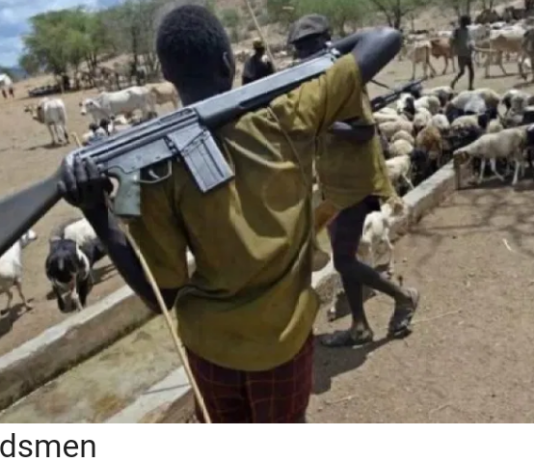
    Ten traditional rulers in Plateau state have so far been murdered by suspected herdsmen, the Nigerian Senate has said during Tuesday’s plenary.

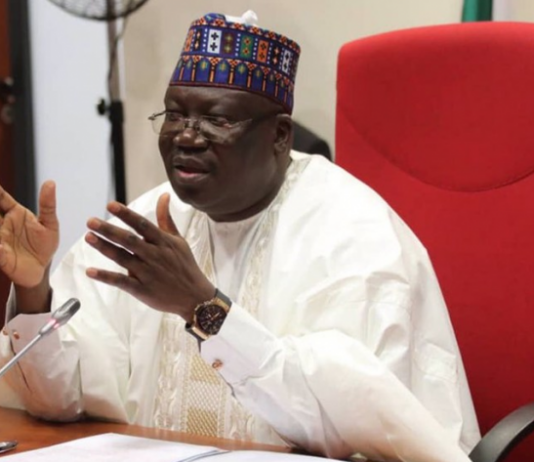
    As a result of the killings, Senate President, Ahmad Lawan, called on the Inspector General of Police (IGP), Mohammad Adamu, to as a matter of urgency, deploy security for the protection of traditional rulers in Plateau State.

    A point of order 43 raised on the matter by Senator Istifanus Gyang (PDP), representating Plateau North had instigated the urgent security call by Senate President Lawan.

    While lementing the various murder of traditional rulers, Senator Gyang said: “the latest is the killing of Gwom Rwei of Foron, His Royal Highness, Da Bulus Chuwang Jang, who was assassinated at his palace last week, and the burial is due for this Friday.

    “Mr. President, this trend is quite disturbing, because not less than ten other traditional rulers have unfortunately suffered death through the same circumstances.

    “This development calls for the need for security to be tightened around our traditional rulers, to ensure that the increasing threat to their safety is averted.

    “It is also unfortunate that just last week, five of our youths who were resting and having an evening out were brutally assassinated in Vom district, Jos South Local Government Area. All of these developments are providing increasing insecurity in my constituency.

    “Plateau State and my constituency which had experienced the return of peace is suddenly again being visited with these very ugly attacks. And of course, it is common knowledge that the attackers are suspected to be killer herdsmen.

    “This is very disturbing in a nation where we need to be our brother’s keeper,” Gyang said.

    In his remark, the Senate President, Ahmad Lawan, who condoled with the Government and people of Plateau State, called on security agencies in the country to provide security for traditional rulers as well as the people of Plateau State.

    “Let me on behalf of the Senate send our condolences to the Government and people of Plateau State, particularly Plateau North Senatorial district, where all of these incidents took place.

    “We pray that the security agencies should provide sufficient security around traditional rulers, as well as for everybody.

    “The situation requires that we continue to work together with the Executive arm of Government until we find enduring solutions to the security challenges which the country faces,” Lawan said.