
Category: Health & Fitness

  • Road crashes, cancer top death causes in tertiary hospitals

    Road crashes, cancer top death causes in tertiary hospitals

    A 2025 health statistics report from the Federal Ministry of Health and Social Welfare identifies road traffic accidents as the most frequently reported cause of death in federal tertiary hospitals, followed by cancer, hypertension, and diabetes. Punch highlights that the findings underscore the twin burden of preventable trauma and rising non-communicable diseases. The report also points to maternal and infection-related causes such as postpartum haemorrhage and sepsis among significant contributors. Beyond the mortality list, the ministry’s data reportedly flags the need for stronger health system monitoring, better resource allocation, and improved data quality, including resolving inconsistencies in hospital reporting. Source: Punch, December 7, 2025.

  • How to Save a Choking Baby from Dying

    How to Save a Choking Baby from Dying

    A Nigerian medical doctor based in Lagos has advised on steps to take in order to save babies and toddlers who choke on food substances.

    The medical doctor, Chinonso Egemba, who is popular on twitter as Aproko Doctor highlighted these steps following the death of a baby.

    According to Egemba on Twitter, a baby “died because a piece of groundnut entered her windpipe and blocked her airway. Her toddler sibling was trying to feed her while the mom was bathing”.

    The Aproko Doctor further highlighted steps to take, which stated “might save a baby’s life” in situations where a baby has choked on food substance.

    He said: “Step one: Call for help!

    “Shout! Call your neighbors! Scream like a life depends on it.

    “Step 2. Give back blows


    “If it’s a baby under one year: Lay the baby face down across your laps and use the heel of your hands to give back blows.

    “The back blows is done to cause a vibration that might dislodge the object blocking the airway.

    “Use the heel of your hand.

    “Your blows should be firm but not too hard.

    “If that doesn’t work, Lay the baby face up, feel the bone in the middle of the chest called the breastbone

    “Place two fingers on it and push sharply five times! Push as though you’re pushing upwards and inwards.

    “Remember that you are still calling for help if no one has shown up
    If this child is older, like a toddler

    “Kneel behind the child and wrap your hands around the child’s abdomen between the navel and ribs and pull sharply towards you upwards and inwards, (you are behind the child)”, the doctor stated.

    Doctor Egemba however warned that in this circumstances, parents should avoid inserting fingers into the mouth of a choking baby.

    “What not to do! Never leave the child alone.

    “Do not put your fingers into the mouth of a choking baby if you haven’t seen the object. It’s called a blind sweep. Don’t do it.

    “Never give an obviously choking child water to drink”, Aproko Doctor warned.


  • 500 Women Screen for Breast Cancer at Mrs Amosun-Led Programme

    500 Women Screen for Breast Cancer at Mrs Amosun-Led Programme

    More than five hundred women in the Ogun Central Senatorial District of Ogun State, were on Thursday in Abeokuta screened during a breast cancer and lumpectomy programme organised by wife of former Governor of Ogun State, Dr. Olufunso Amosun ìn collaboration with Nigerian Medical Association (NMA) and the Federal Medical Centre, Abeokuta.

    The free cancer screening and lumpectomy programme by Dr. Mrs Amosun, holds annually during the Breast Cancer Awareness Month, marked in countries across the world every October to Increase attention and support for the awareness and early detection and treatment as well as palliative care for those in need.

    Founder, UPLIFT Development Foundation, Dr. Mrs Olufunso Amosun at the free Breast Cancer Screening and Lumpectomy Programme organised for over 500 women in Ògùn Central Senatorial District of Ogun State.

    The former first lady, who is the Founder of UPLIFT Development Foundation stated in her remark that her husband, “Senator Ibikunle Amosun has made fund available for lumpectomy sugery for any lump that we find during this year’s cancer screening programme”.

    Medical experts have reiterated that Breast cancer, touted to be the most common cancer disease amongst women worldwide is a major cause of death.

    In his remark, the Medical Director of Federal Medical Centre, Abeokuta, Prof. Musa Adewale-Olomu, adviced women that: “when you go to the toilet every morning try to rob your breast yourself to see if you can detect anything”.

    Apart from free breast cancer screening exercise, the beneficiaries were trained on how to personally examine their breast and what to do if they noticed a lump.

    By Tobiloba Kolawole

  • For the Third Time, FMC in Yola Successfully Separates Another Co-joined Twins

    For the Third Time, FMC in Yola Successfully Separates Another Co-joined Twins

    Federal Medical Centre (FMC) in Yola, Adamawa State has successfully operated and separated another co-joined twins, thereby increasing the tally to three the number of co-joined twins victoriously separated in the hospital.

    The Prof. Auwal Abubakar-led medical team at FMC Yola said the latest successful separation surgery was as a result of collective efforts of medical professionals as well as support received from various quarters, including the Nigerian Air Force (NAF).

    READ ALSO:

    COVID-19: Health Minister warns states on relenting despite case fatality rate drop

    Abubakar, a Professor of Paediatric Surgery, recounted that the twins, Mercy and Grace Aiyebemi, were delivered on December 12, 2019, through a cesarean section in Bayelsa State and were taken to FMC in Yenagoa after they were identified to be conjoined and were stabilised.

    He said the co-joined twins were discovered to be joined at the abdomen, had many separate organs but shared only one liver, explaining that the team of surgeons have to go around this challenge, which culminated in the successful surgery of August 20, 2020.

    With supports from governments and well meaning Nigerians, FMC in Yola took care of the co-joined twins free of charge and also carried out the surgery free of charge.

    The co-joined twins, who were airlifted on January 2, 2020 from Yenagoa, Bayelsa State to Yola via NAF aircraft, were separately brought back to Yenagoa onboard a NAF Beechcraft KingAir 350i aircraft on August 29, 2020.

    It was a moment of joy, jubilation and triumphant entry as the twins along with their parents, Raphael Aiyebemi and Godsgift Ibiyyefa, returned to Yenagoa after a successful separation surgery at FMC in Yola.

    READ ALSO:

    LAWMA Gets Another MD/CEO, One Year after Gbadegesin Assumed Office


    They were received on arrival by Bayelsa State Deputy Governor, Lawrence Ewhrudjakpo, as well as other members of Bayelsa State Executive Council and the Chief Medical Director (CMD) of FMC Yenagoa, Dennis Allagoa, who all expressed their appreciation to the Chief of the Air Staff, Sadique Abubakar, and the entire NAF family for the humanitarian airlift as well as the support provided throughout the process.

    It would be recalled that FMC in Yola had successfully carried out similar surgeries in 2013 and 2018.

    Idowu Sowunmi

  • Putin: World’s First Vaccine against COVID-19 to Be Registered in Russia

    Putin: World’s First Vaccine against COVID-19 to Be Registered in Russia

    Russian President Vladimir Putin Monday disclosed that the world’s first vaccine against the novel Coronavirus (COVID-19) would be registered in his country in a few days.

    Putin, who stated this on his Facebook page, explained that Russian scientists have passed necessary test stages and proved the safety and effectiveness of the drug.

    India records over 30,000 coronavirus deaths as US tops 4m cases

    According to him, “The world’s first vaccine against coronavirus will be registered in Russia in a few days.

    “Russian scientists passed necessary test stages and proved the safety and effectiveness of the drug.

    “Our medicine has adequately coped with the epidemic and now gives hope not only to our country, but to the whole world.

    After 11 days in isolation, Gov. Fayemi survives Coronavirus

    “Once the Soviet satellite paved the way for humanity into space, now the Russian vaccine will pave the way to the future without COVID-19, masks and social isolation.”

  • It’s Compulsory: Coronavirus Tests for Travellers Returning to Germany

    It’s Compulsory: Coronavirus Tests for Travellers Returning to Germany

    Germany’s coronavirus testing requirement for travellers flying in from high-risk countries has come into force with few complications on Saturday, DW News has reported.

    Operators of airport testing centres across the country reported minimal wait times and ample supplies. Meanwhile, EU members Romania and Bulgaria were added to Germany’s list of high-risk countries.

    Coronavirus testing booth operators at Germany’s largest airport, Frankfurt Airport, said they did not see any major problems or notice a large increase in the number of people waiting to be tested.

    READ ALSO…

    Post COVID-19 Market Recovery: OPEC, Nigeria hold dialogue

    “This is slightly more than in the past few days,” Benedikt Hart, the head of the German Red Cross-operated testing center at the airport told the DPA news agency. “The people have understanding. There are no disgruntled passengers.”

    A Hamburg Airport spokesperson echoed that statement, saying there were no complications related to the testing, and that passengers arriving from high-risk countries didn’t face more than a 30-minute wait to be tested. In Berlin, tests carried out at both Tegel and Schönefeld airports, as well as the central bus station were carried out with relative simplicity and only sporadic queues.

    The tests are typically to be taken directly upon arrival at airports, but are also available free of charge at separate testing centres and medical practices up to three days after arrival.

    DW correspondent Konrad Busen, who was at Frankfurt Airport, said the introduction of testing was expected to increase the number of cases identified.

    “Up until now here in Frankfurt the number of positive tests has been relatively small around about 1 per cent of the about 2,000 people tested her per day have been positive,” he said. “This number is expected to rise now as compulsory testing is introduced for people traveling from high-risk countries.”

    Praise and condemnation

    The largest German doctor’s union, the Marburger Bund, welcomed the move, citing a higher rate of positive tests in people coming from high-risk countries. “The obligatory testing could make this even more obvious, because people with a tendency toward risky behavior are more likely to bypass voluntary testing stations,” Marburger Bund Chairwoman Susanne Johne said.

    However, other practitioners have criticised the broad requirement. The risk areas are “much too general” and many general practitioners do not have the capacity to handle a “rush of people” asking to be tested, Ulrich Weigeldt, the chairman of the German Association of General Practitioners, told Die Welt newspaper.

    READ ALSO…

    COVID-19: 14 airports reopen for domestic operations – Aviation Minister 

    He also said it was “absurd” that returning travellers should have to give a doctor proof that they were abroad, adding that general practitioners are “not a branch of the Federal Ministry of Health.”

    As an alternative to being tested in Germany, people arriving from abroad can be tested in the country where they were vacationing within 48 hours of their flight. Health authorities are, however, encouraging travelers to be tested a second time five to seven days after their journey.

    Around 130 countries, including the United States, Egypt and Russia are listed as high-risk by the Robert Koch Institute, Germany’s health research agency. High-risk EU countries include Luxembourg, the Belgian province of Antwerp, several regions of Spain and parts of Romania and Bulgaria. A place is considered to be high risk once the number of new infections rises in the past week rises above 50 cases per 100,000 people.
    NDDC Scandal: PDP Reps insist independent panel probe allegations against lawmakers

    Photos: IGP decorates newly promoted senior officers in Abuja

    The number of infections in Germany has been steadily on the rise over the past weeks, with experts warning of a second wave. The daily number of new infections rose by over 1,000 for the third day in a row on Saturday, reflecting a trend not seen since May. The country has recorded nearly 217,000 cases and a death toll of 9,201.

    Idowu Sowunmi

  • Nigeria ranks second highest with 60 million who do open defecation

    Nigeria ranks second highest with 60 million who do open defecation

    • Tobiloba Kolawole

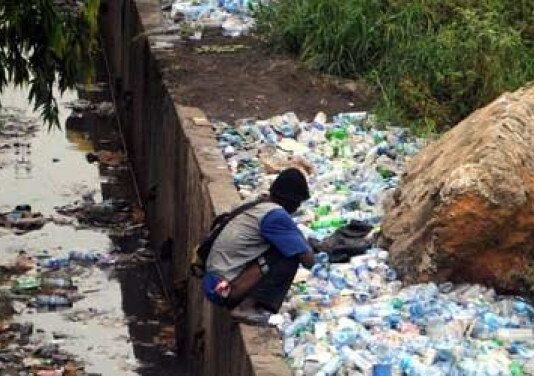
    Nigeria with about 200 million people is at the risk of a national disaster that could stem from diseases associated with open defecation.

    An environmental activist, Hamzat Lawal, who spoke to TVC News in Lagos on Monday stated that a situation where over 60 million people cannot access toilet facilities is dangerous.

    In November 15 of 2108, the Federal Government through the Ministry for Water Resources led by Engineer Suleiman Hussein Adamu launched a strategic document for Open Defecation Free Campaign.

    It is however worrisome that according to current information on the website of the United Nations Children’s Fund (UNICEF) Nigeria is ranked second highest in the world with cases of open defecation.

    The environmental activist stated that to avoid an uncontrollable breakout of cholera, government needs to declare a state of emergency to tackle open defecation.

    Lawal said: “they need to consolidate on their effort and this is not the sole role of government alone. As much as government needs to put in place policies and regulatory framework, this presents an opportunity here.”

    I think we all shy away from the fact that this is shit business; we need to ensure the private sector is involved. If you look at our major cities today, they don’t have mobile toilets where citizens can have access”, Lawal said.

    He emphasized the need for a policy roadmap that will encourage private sector investment in dealing with open defecation because government effort alone is not enough.

    “I think most importantly someone has to pay the price. We need to look at the investment chain, create an enabling environment to bring in the private sector’, Lawal said.

    He expressed worry that many Nigerians still do not understand the health Implication of open defecation.

    “Today we are experiencing cholera outbreak in most rural communities because where they defecate is the same place they have streams, which goes to the river bank and people will drink this water and use it to cook food.”

    Nigeria is battling with infant mortality, if we don’t deal with open defecation, particularly at the grass root, especially rural communities, we will keep losing lives and value for money”, Lawal said.

    He also spoke on how quickly the menace of open defecation should be dealt with and meeting the 2025 target for eradicating the scourge.

    “I think we need to decentralise. What I mean is that Federal Government must not only lead the effort. What are our local institutions doing, what are our state governments doing, most importantly how much is government budgeting at the local, state and national level?”

    Also, how much of this budget are being released and how are civil societies able to track the effective use of public resources?”

    I believe if we can effectively ensure that public resources are put to public use, then we will ensure that every citizen has access to public toilet facility.”

    Frontpage recalls that in 2016, during the 6th National Roundtable Conference on Community led Total sanitation, which held in Akwanga, Nasarawa State, the Ministry of Water Resources launched a campaign document titled Making Nigeria Open Defecation Free by 2025.

  • World Diabetes Day 2018: 400 people, including children around the world at risk

    World Diabetes Day 2018: 400 people, including children around the world at risk

    By Tobiloba Kolawole

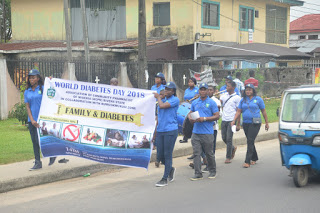
    The International Diabetes Federation has urged families to learn more about the warning signs of diabetes. This was the call by members of the body around the world to mark Diabetes Awareness Month and World Diabetes Day 2018, which also held in across Nigeria last Wednesday.

    In a statement, the body revealed that new research from IDF has discovered that parents would struggle to spot this serious life-long disease in their own children. Despite the majority of people surveyed having a family member with diabetes, an alarming four-in-five parents would have trouble recognizing the warning signs. One-in-three wouldn’t spot them at all. The IDF also said these challenges and recent findings underline the need for education and awareness to help people, particularly families, spot the diabetes warning signs early.

    This year’s event was marked with the theme of Diabetes and the Family because the impact of diabetes on the family has been described as a big challenge to raising healthy children.

    Since 1980 Diabetes cases have risen from 100million to 400 million people living with diabetes in 2018. In a television interview, a Lagos based medical doctor, Tuyi Mebawondu said: “as non-communicable disease, we are seeing a kind of pandemic of diabetes and its impact is essentially a burden on the family”.

    Tuyi emphasized that parents ought to make it a priority to ensure every member of the family is tested for diabetes, including children. He stressed that early detection will help in the effective treatment and management of the disease. “The diagnosis of diabetes at the early stage is key because if you don’t pick it at the early stage you will pick it when life-threatening complication sets in” he stated.

    “Our lifestyle has to change a lot. This is because as much as you want to alter your diet, as much as you don’t exercise, you smoke and live a sedentary life, the chances of having diabetes is higher” Tuyi said.

    Again, diabetes has a critical impact on the organs of the body. It increases the risk of heart diseases, stroke and hypertension; in fact, it is the most common cause of blindness and amputation.  Unfortunately, treating diabetes is becoming more challenging and expensive placing a burden on the family”.

    LIFESTYLE CHANGES

    The medical doctor advises people living with diabetes to have lifestyle changes starting with their diet. He said “the more your weight increases the more the challenge of your body using sugar, especially in type 2 diabetes. Type 2 diabetes constitutes about 90% of diabetes cases all over the world”.

    DIFFERENCE BETWEEN TYPE 1 & TYPE 2

    In his analysis, Tuyi explained that “the difference between type 1 and type 2diabetes is in their etiological factors, that is how they originate. Type 1 diabetes is what we call childhood-onset, which depends on insulin. In this case, the pancreas, the organ responsible for making insulin is not producing sufficient insulin”.

    He further said that “In type 2 the usage of sugar at the cellular level is having challenge because the body is not taking in the sugar and as you know sugar is the biological fuel that the body uses to get energy.  So because most adults have loads of sugar in their system there could be a challenge for the body to take care of those sugars”.

    HOW DIABETES IMPACT ON THE FAMILY

    “It could be a big challenge to diagnose or quickly spot diabetes in children. One of the signs could be a mother having to change her baby’s diaper frequently, or a child not seeing properly. If there is a family history of diabetes then it is important to screen the children for diabetes” Tuyi said.

    WHY WOMEN ARE MORE PRONE TO DIABETES

    Tuyi also explained why women might be more prone to diabetes than men. He said “the disease has sex and age preference. For women, it could be because women are more likely to gain lots of weight or lifestyle peculiar to women. Also, when women pass through pregnancy, they pass through what is called gestational diabetes. So that puts a lot of load on the system to process sugar. There are about 400million people living with diabetes worldwide and about $1.2 trillion is being spent in terms of direct spending for treatment.

    The theme for World Diabetes Day and diabetes awareness month 2018 and 2019 is The Family and Diabetes. A two-year time frame has been chosen to best facilitate planning, development, promotion, and participation. Materials and actions that IDF will develop over the two years of the campaign will aim to raise awareness of the impact that diabetes has on the family and support network of those affected. Also to promote the role of the family in the management, care, prevention, and education of diabetes.