
31 C
Lagos
Monday, February 9, 2026
Header1
Home Blog Page 181

Climate Financing in Africa: Experts Advocate Smarter Collaboration Among Funders

1
File Photo: Global Philanthropic Forum event held in 2019.

Experts at the 2020 Global Philanthropy Forum have called for greater collaboration among funders to address the severe threat that climate change poses to Africa’s development.

The experts, who at a virtual session oranised by the African Development Bank, highlighted the critical role of innovative approaches towards mobilising climate adaptation finance in Africa.

The session, which was titled: “Inclusive Green Economies – Harnessing Opportunities and Innovative Solutions for Investments in Climate-Resilient Development in Africa,” began with a call for sustainable ways for the continent to emerge stronger from the pandemic.

The event was moderated by the Senior Associate at the Global Climate Adaptation Partnership, Emily Ojoo-Massawa.

Speaking at the event, the Manager of Climate and Green Growth at the African Development Bank, Al Hamndou Dorsouma, said: “The path to a sustainable COVID-19 recovery will therefore require investments that simultaneously tackle the pandemic and prevailing climate risks while offering attractive co-benefits.”

Africa is among the world’s most climate-vulnerable regions, and the economic cost is high: as much as $15 billion in 2020, rising to potentially $50 billion by 2040, which is equivalent to 7% of the continent’s GDP.

Al Hamdou Doursouma noted that The the bank is on track to mobilise $25 billion between 2020 and 2025 to support investments in climate change.

In his remarks, the Senior Adaptation and Resilience Specialist, Climate Change Group at the World Bank, Arame Tall, called for the involvement of ministries of finance in outlining adaptation investment opportunities in different countries.

“The moment for adaptation has come. Interestingly, we have the attention of philanthropy, private sector and non-traditional investors, who want to invest in harnessing new opportunities in climate change adaptation.

“We need the ministries of finance to be involved in outlining adaptation investment opportunities in countries to better harness these opportunities, including clear investment and sectoral plans,” Tall explained.

With less than two per cent of philanthropic funding going to combat climate change, funders face a challenge.

Thus, the experts advocated for more collaboration in smarter ways in order to meet ambitious targets and rally support from all sectors, drawing attention to the unprecedented challenge posed by the COVID-19 pandemic.

“Collaboration is important to lay a solid foundation to achieve a greener post-COVID future,” said the African Development Bank’s Director for Agricultural Finance and Rural Infrastructure Development, Atsuko Toda.

She called for a paradigm shift in adaptation financing, noting the bank’s willingness to work with partners to accelerate Africa’s adaptation.

In October 2018, the bank’s Board of Directors approved a framework for the implementation of the Africa Disaster Risk Financing (ADRiFi) Programme, which offers regional member countries an opportunity to pool and transfer their climate-related risks by paying a sovereign insurance premium.

“The payout is made immediately after a disaster happens.

“The bank partners with the African Risk Capacity Insurance Company (ARC) to implement ADRiFi.

“The COVID-19 crisis has underscored the urgency of building healthier, more inclusive and more resilient economies, the meeting heard,” Toda said.

Chief Executive Officer of ARC, Lesley Ndlovu, noted the need for countries to plan for exposures and build resilience.

“At the African Risk Capacity, we work with countries to prepare them for the risk exposure they have and help them prepare for how to respond, including helping them to establish a rainy-day fund. We have also partnered with the African Development Bank for the Africa Disaster Risk Financing initiative and other financing instruments.

“We need broader collaborations to solve the problem that our continent faces. The problem is so big that all of us have a role to play,” Ndlovu said.

In 2019, the African Development Bank prioritised adaptation finance, with 55 per cent of its climate-focused financing invested in adaptation actions.

The bank’s adaptation finance rose from $500 million in 2012 to $2 billion in 2019, cumulatively representing $18.6 billion over this period.

Idowu Sowunmi
Inline1

We Just Have To Take Loans for Infrastructure – President Buhari Explains

0
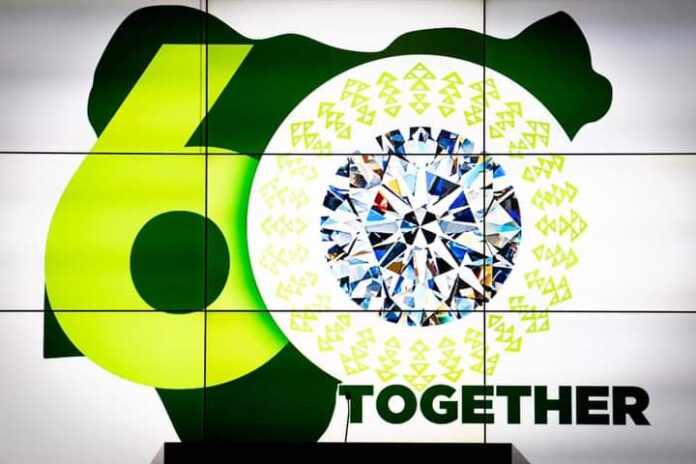
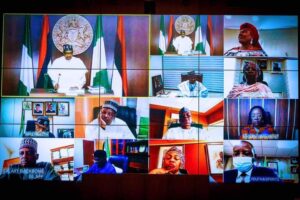
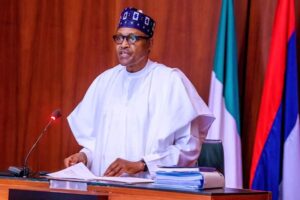
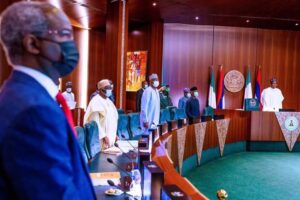
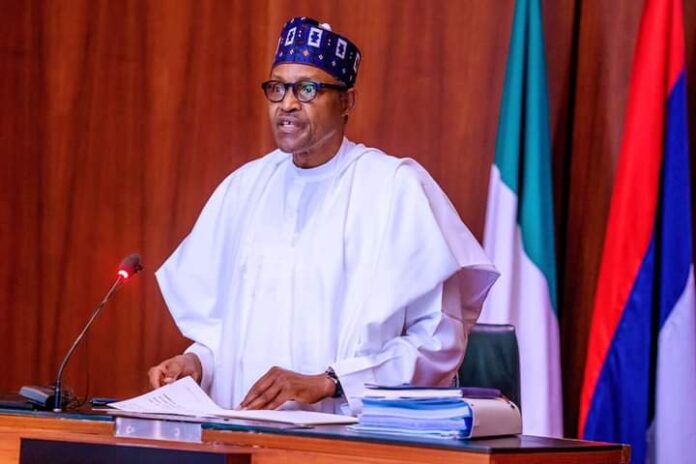
File Photo: President Muhammadu Buhari presides over Federal Executive Council Meeting and Unveils Nigeria at 60th Anniversary Logo in State House on 16th Sep 2020

President Muhammadu Buhari Tuesday justified government borrowing to finance infrastructure, asserting that his government took loans in the interest of the country to solve the dire shortfall in infrastructure.

Speaking at a virtual meeting with members of the Presidential Economic Advisory Council (PEAC) at the State House, in Abuja, President Buhari said the country must fix its roads to save lives from soaring road accidents.

“We have so many challenges with infrastructure. We just have to take loans to do roads, rail and power, so that investors will find us attractive and come here to put their money,’’ the President said after listening to a presentation by PEAC chaired by Professor Ayo Salami.

He regretted that the failure to provide the infrastructure for effective transportation deprived the country of its well-deserved status as the West African hub for Air cargo transportation and trans-shipment of goods.

On the issue of the economy, President Buhari noted the challenges posed by the “collapse of the oil market” and the decision of government to abide by the reduced oil production quota allocated by the Organisation of the Petroleum Exporting Countries (OPEC).

“We have to accept that decision; otherwise they (Middle-East producers) can flood the market and make the product unviable. So we have cooperated with what we get. With oil, we are in a difficult situation. The politics of oil is that the less you produce, the more you earn,” he said.

President Buhari also stressed the position of agriculture in the government’s scheme to reduce joblessness and poverty.

“For us to bounce back to productivity, especially in agriculture, the unemployed with many of them uneducated had to be persuaded to go into agriculture.

‘‘If we hadn’t gone back to the lands we would have been in trouble by now. That is why we virtually stopped the importation of food thereby saving jobs and foreign exchange.”

The President also broached the issue of COVID-19 pandemic and how it necessitated the recent government policies as they relate to energy (electricity) and fuel.

He said the Federal government took such decisions because it places the country above politics.

“COVID has reduced us to the same level as developed countries.

‘‘We are lucky we went back to the land. We eat what we produce. We are doing our best to secure the country and provide infrastructure for investment to be viable in the country,” he said.

Commending the Chairman and the members of the council for their patriotism and service to the nation, President Buhari pledged to continue to draw from their wisdom, knowledge and experiences as the nation deals with challenging economic times.

Earlier, Prof Salami had in his presentation highlighted the Council’s recommendations on poverty reduction and stimulation of non-debt investment inflows, as promised at their last meeting.

The council recommended steps for the effective implementation of government’s plan to lift 100 million Nigerians out of poverty, as well as measures to curb poverty disparity in Nigeria.

The council promised to set out a full policy paper that would, in the first instance, stop more Nigerians from falling into poverty and thereafter, further plans on reducing the poverty headcount in the country.

The PEAC also outlined a number of measures aimed at aggressively increasing the country’s non-debt investment inflow, including measures to improve investor perception of the country and the proposed establishment of a 5 billion – 10 billion dollars investment and growth fund to invest in.

The PEAC used the opportunity of the meeting to express support and solidarity with the administration on its recent policies.

It listed the implementation of reforms encapsulated in the Companies and Allied Matters Act (CAMA) 2020 recently signed into law, the reforms in the energy sector, bringing electricity and fuel prices in line with the market, and the decision of the Central Bank of Nigeria to merge the exchange rate of the naira versus other foreign currencies.

Inline1

Nestle Appoints Abega-Oyouomi First Female Factory Manager in Central & West Africa

0
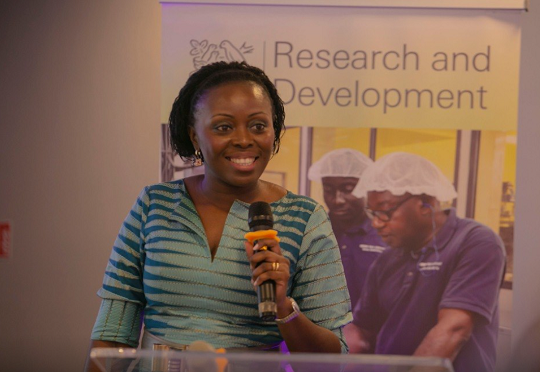
Joëlle Abega-Oyouomi appointed as first-ever female factory manager in Nestlé Central and West Africa

Joëlle Abega-Oyouomi has been appointed as the first-ever female factory manager in Nestlé Central and West Africa.

Abega-Oyouomi joined Nestlé as a Research Associate about 20 years ago. She started with high ambitions and she has remained consistent in her chosen career.

“I was young, hopeful and eager to learn. I had a narrow vision of where I could end up in my career, but Nestlé prepared me for much more than I expected,” said Abega-Oyouomi.

She was appointed as the first African woman to head a Nestlé factory in Central and West Africa, challenging prevalent notions about the traditionally male-dominated manufacturing sector.

Abega-Oyouomi heads the Yopougon factory in Côte d’Ivoire, which is the third largest Nestlé factory in the region. MAGGI cubes and seasonings are produced to serve the Central and West Africa region – the largest bouillon market for Nestlé in the world, with over 120 million MAGGI bouillons sold daily.

Educated as an engineer in food technology, Abega-Oyouomi joined Nestlé in 2001, working on product development at the Research and Development (R&D) Centre in Abidjan, Côte d’Ivoire.

She went on to gain international research and development experience at the R&D Centre in Shanghai, China, and at Nestlé Research Centre in Lausanne, Switzerland between 2003 and 2009.

She returned to Côte d’Ivoire as R&D Product Development Manager in 2009, then moved to Ghana as the Central and West Africa (CWA) Regional Manufacturing Services Manager in 2015.

A year later, Abega-Oyouomi was appointed as Head of R&D Abidjan in Côte d’Ivoire where she helped to transform the centre’s dairy business for healthy cereal solutions, drive its confectionery business with cocoa plant science, and refocus the facility’s commitment to bringing affordable nutrition to African consumers, before taking up her current position.

“Out of my 19 years with Nestlé, 17 were dedicated to innovating in R&D.

“I am happy to have this new management opportunity to bring me out of my comfort zone and help me grow and face new challenges, while still contributing to support our company’s growth in the region.

“It is also a good chance for me to use new skills that will complement those I previously developed. In doing this job that I love, I also hope that I inspire other young African women to realise that all dreams are attainable,” Abega-Oyouomi said.

Commenting on Abega-Oyouomi’s appointment, Chief Executive Officer of Nestlé Central and West Africa Limited, Mauricio Alarcón, said: “We believe that diversity is key to Nestlé’s growth. Empowering women and enhancing gender balance in our company enables us to serve our consumers better.

“We are fully dedicated to empowering more women to take roles in technical and management sectors, so that we can have many more ‘Joëlles’ in the future. It is the smart and right thing to do – for our company and for society.”

Idowu Sowunmi

Inline1

Gov Abiodun Releases ₦174M For Water Facilities In 51 Communities

0
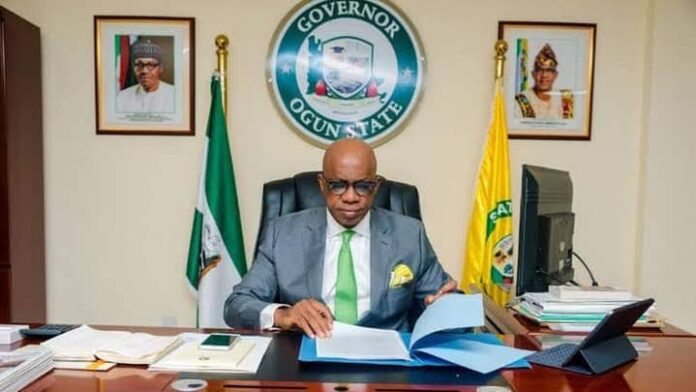
Ogun State Governor, Prince Dapo Abiodun at his Oke-Mosan Governor's Office, Abeokuta.

Ogun State Governor, Prince Dapo Abidoun, has approved the release of counterpart fund for the rehabilitation and construction of 51 water facilities across the Ogun West Senatorial District.

In a statement issued by the Governor’s Chief Press Secretary on Tuesday, the project would be implemented through Direct Labour Assisted Approach (DLAA).

For the implementation of Programme for Expanded Water Supply Sanitation and Hygiene (PEWASH) scheme in 13 locations in Yewa North Local Government Area, Governor Àbíọdún released the sum of ₦30million.

Also, the Governor approved ₦48million out of the expected ₦96million, for the rehabilitation and upgrading of Solar powered Borehole in 38 locations in Ado-Odo/Ota Local Government Area.
The first phase of the water project is being driven by the state’s Rural Water and Sanitation Agency (RUWATSAN).

According to the statement, the first phase of the Water scheme has commenced in Yewa North Area, while the one for Ado-Odo/Ota Local Government is also being implemented simultaneously.

The Programme Manager, RUWATSAN, Sola Ogunbo, assured residents that access to potable water supply would soon be a reality to the benefiting communities. He further noted that the solar powered project in Yewa North Local Government Area was at 85 percent completion, while the mobilisation and sensitisation of the benefiting communities in Ado-Odo/Ota Local Government Area has also commenced.

The provision of potable water, the statement said, is essential to human life, and would continue to get deserved attention of the Dapo Abiodun-led administration, adding that the projects would be replicated in other Senatorial Districts of the State.

Somorin added that, in releasing the funds, Governor Abiodun is keeping up with his promise to ensure that his administration does not relent in its effort at ensuring that donor agencies are given assurances of a more robust relationship.

Inline1

Food Price Hike Compounds With Border Closure, VAT Increment – University Don

0
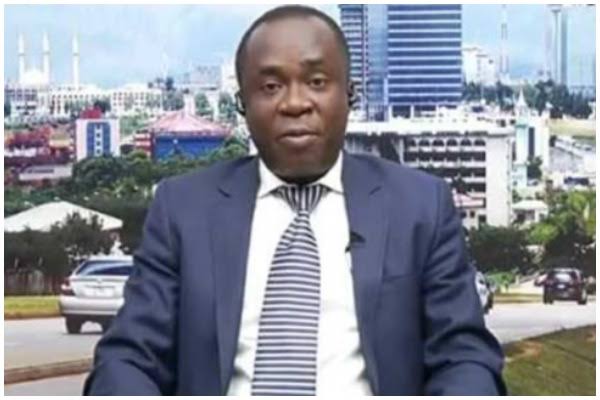
Professor of Finance and Capital Market at the Nassarawa State University, Uche Uwaleke

A professor of Finance and Capital Market at the Nassarawa State University, Uche Uwaleke, says the rise in commodity prices experienced across Nigeria was expected, but that it would trend down by December.

Reacting to inflation rates which picked at 13.22% according to Consumer Price Index (CPI), which measures prices of goods and services, released by the National Bureau of Statistics (NBS) on Tuesday, Prof Uwaleke stated that the pressure is not unconnected to the effect of the COVID-19 pandemic, security challenges in the country and other fiscal policies of government.

READ ALSO:

Food Price Hikes As Inflation Rate Hits 13.22% Amid VAT Regime, Others

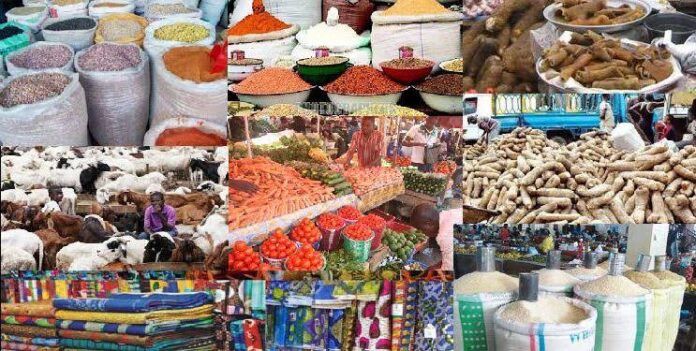
“The uptick in inflation rate in August was expected and will likely continue till the harvest season sets in,” Uwaleke said. “This is particularly so, given the fact that the inflationary pressure is coming more from the food component which increased by as much as 16 per cent.

“ It is not difficult to see where the pressure is coming from. The economy is still reeling from the negative impact of COVID’19 on the food supply chain. This situation is compounded by the border closure, increase in VAT, electricity tariff, stamp duties and upward exchange rate adjustments by the CBN to ease pressure on the market.”

The University don also observed that the recent increase in pump price of fuel presented downside risks to inflation, as well as insecurity.

READ ALSO:

It’s Fake News, There’s No Embankment Collapse at Kainji Dam, Says Commission

“There is also the insecurity challenge affecting the food belts of the country, and this partly explains the high rate of food inflation, at over 20 per cent, in states like Kogi. I expect the inflation rate to moderate towards the end of Q4 2020 in the wake of the harvest season as well as a likely increase in external reserves following gradual recovery in crude oil price, which helps stabilise exchange rate.

“I also think the COVID’19 interventions by government and the CBN, especially in the Agric value chain will begin to manifest in Q4 2020.The way forward to rein in inflation is for government to tackle insecurity so that farmers can return to their farms and put in place deliberate policy to promote large-scale mechanised Agriculture. This will involve scaling up interventions in Agriculture, including recapitalizing of Development Finance institutions like the Bank of Agriculture,” Prof. Uwaleke advised.

Inline1

Food Price Hikes As Inflation Rate Hits 13.22% Amid VAT Regime, Others

0
  • Prices would trend down soon – Buhari appeals for calm
  • CBN Governor, Emefiele expresses hope, blames fiscal measures

Inflation rate in Nigeria has spiralled up to hit 13.22% as the end of August, a record that broke a 29-month moving average.

The Consumer Price Index (CPI), which measures prices of goods and services, released by the National Bureau of Statistics (NBS) on Tuesday revealed that the 13.22 percent is 0.40 percent points higher than the 12.82 percent recorded in July.

The CPI stated that inflation rate rose by 1.34% on a month-on-month basis, indicating they August inflation rate was the highest since April 2018.https://echotitbits.com/poultry-farmers-demand-total-ban-on-importation-of-poultry-products/

READ ALSO:

Poultry Farmers Demand Total Ban on Importation of Poultry Products

Year-on-year inflation rate declined from 13.34 percent in March 2018 to 12.48 percent the following month. It had remained between 11 and 13 until last month.

According to The Guardian, data contained in the CPI report showed that the food category recorded 17.3 percent to emerge as the item with the highest price increase in the year. The prices of imported foods increased by 16.6 percent in the period.

Furthermore, items such as – food, imported food, footwear/clothing, transport, health, communication, education, restaurant/hotels, food/non-alcoholic beverage, recreation/culture, furnishings/household, equipment,, maintenance, housing, water, electricity, gas, other fuel and alcoholic beverage, tobacco, kola, as captured by CPI basket within the 12-month period reviewed experienced decrease in prices (deflation).

The CPI stated further in its review that year-on-year inflation in urban areas moved from 13.40 percent in July to 13.83 percent in August while month-on-month increased from 1.27 percent to 1.40 percent.

in rural areas, year-on-year inflation rose from 12.28 percent in July to 12.65 percent in August while as per month-on-month, it rose up slightly – from 1.23 percent to 1.27 percent.

States that led the pack being above national average in food inflation as at August 2020 were Kogi, Kwara, Edo and Delta, with 22 percent, 19.1 percent, 19 percent and 17.9 respectively. In the North, Gombe, Kano and Bauchi experienced lower than the national average.

However, Nigeria’s leader, President Muhammadu Buhari in his reaction to current food price hike across the country appealed to residents for calm.

File Photo of Nigeria’s President Muhammadu Buhari.

President Buhari, at the yearly Chartered Institute of Bankers of Nigeria (CIBN) Conference in Abuja, which he declared opened, assured Nigerians that prices would trend down soon

The president, represented by the Minister of Finance, Budget and National Planning, Mrs. Zainab Ahmed said: “Amidst the uncertainty created by the pandemic, we’re confident that the Nigerian economy will bounce back strongly within the near term with the right policy responses to the multidimensional crises.

“Since we cannot simply wait for things to get better on their own, we have to formulate appropriate policies and implement them steadfastly to address the challenges head on”, the President said.

Giving account of efforts to mitigating the economic challenges occasioned by the COVID-19 pandemic, the President explained that so far, the Federal Government had implemented a wide range of fiscal, prudential and monetary measures that squarely addressed four key necessities.

He said government is ensuring sufficient liquidity, in part to support its programmes for saving lives and livelihoods. He listed others to include maintaining stability of the financial system, ensuring continued delivery of financial services to the public, and shoring up confidence to cushion economic activity.

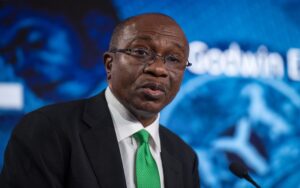
Also speaking at the conference, the Governor of the Central Bank of Nigeria [CBN], Mr. Godwin Emefiele expressed hope for price moderation, just as he blamed the increase in prices to some fiscal measures adopted recently.

File Photo: Governor of Central Bank of Nigeria, Godwin Emefiele speaks at the Nigeria Capital Markets and Banking Forum.
Chris J Ratcliffe / Bloomberg

He gave a historical perspective to the inflation trajectory in the country in the beginning of the first quarter of 2020 and response action taken by the apex bank to hedge the trend.

READ ALSO:

Vacate Marina Coastline Now, FG, Lagos Govt Direct Barge Operators

“Inflationary pressure persisted in the first and second half of the year due to several factors.

“In addition to the disruption to global and domestic supply chains as a result of COVID-19, inflation was exacerbated by the increase in VAT rate, exchange rate adjustment and seasonal food supply shocks due to the onset of the farming season and other structural bottlenecks.

“Inflation in July 2020 stood at 12.8 percent. We, however, expect inflation to begin to moderate towards the end of the fourth quarter, as we approach the harvest season, along with the phased withdrawal on restrictions of movement and other measures imposed as a result of COVID-19”, CBN Governor, Emefiele said.

Inline1

Vacate Marina Coastline Now, FG, Lagos Govt Direct Barge Operators

0

The Federal Government and Lagos State Government Tuesday agreed to stop barge operations along the coastline of Marina in Lagos Island with the aim of preserving its beauty and serenity.

To this end, the Federal Government in conjunction with Lagos State Government has ordered the stoppage of all such operations, which have desecrated the once beautiful and peaceful Marina coastline.

The Nigerian Ports Authority (NPA) has also been mandated to revoke barge approvals granted some companies operating in Lagos.

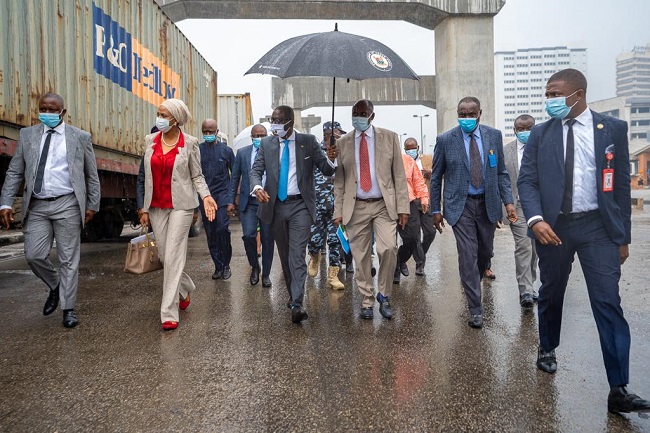
Inspecting the activities of the barge operators around the Marina coastline, Minister of Transportation, Rotimi Amaechi, and Lagos State Governor, Babajide Sanwo-Olu, directed the operators to stop forthwith.

READ ALSO:

LASTMA Boss Berates Lady Officer in Viral Video for Acting Unprofessionally

The duo, who went round the coastline, expressed their displeasure over the long row of trucks and containers that have constituted health and security hazards on the Marina. They said the activities of the barge operators have caused a major devastation along the coastline that used to be the pride of the state, attracting crowds of visitors.

Amaechi and Sanwo-Olu found the “unwholesome” activities on the coastline “shocking” and “unacceptable.”

The minister spoke of an urgent need to sanitise the entire Marina coastline and restore its tranquillity and beauty.

He ordered that trucks must immediately stop coming to Marina to load.

Amaechi said the National Inland Waterways Authority (NIWA) did not grant anyone permission to carry out barging operations, insisting that all such activities must stop immediately.

“The Federal Ministry of Transport has agreed with Lagos State Government to ensure that whoever is making use of the Marina coastline should stop. We have agreed with Lagos State Commissioner of Police to stop those using the roads and we have agreed with NPA to cancel all barge permits pending when each person will come back to NPA, NIWA and Lagos State Government to renew such approval,” he said.

On his part, Sanwo-Olu directed Lagos State Commissioner of Police, Hakeem Odumosu, to arrest and prosecute anyone who flouts the order to stop “unauthorised activities” on the Marina.

READ ALSO:

Edo Guber Poll: Tinubu, Obaseki taunt each other

The governor, in a statement by Lagos State Commissioner for Information and Strategy, Gbenga Omotoso, said the state givernment would do everything to bring sanity to the coastline.

“We are also talking to the Federal Ministry of Works and Housing because we understand that some of the approvals were from the Federal Ministry of Works. So, we are also taking up that responsibility and we would do what we need to do,” Sanwo-Olu said.

Also at the inspection were NPA Managing Director, Hadiza Bala Usman, representatives of NIWA, Ministries of Works as well as Waterfront Infrastructure Development and the Police.

Idowu Sowunmi

Inline1

LASTMA Boss Berates Lady Officer in Viral Video for Acting Unprofessionally

1
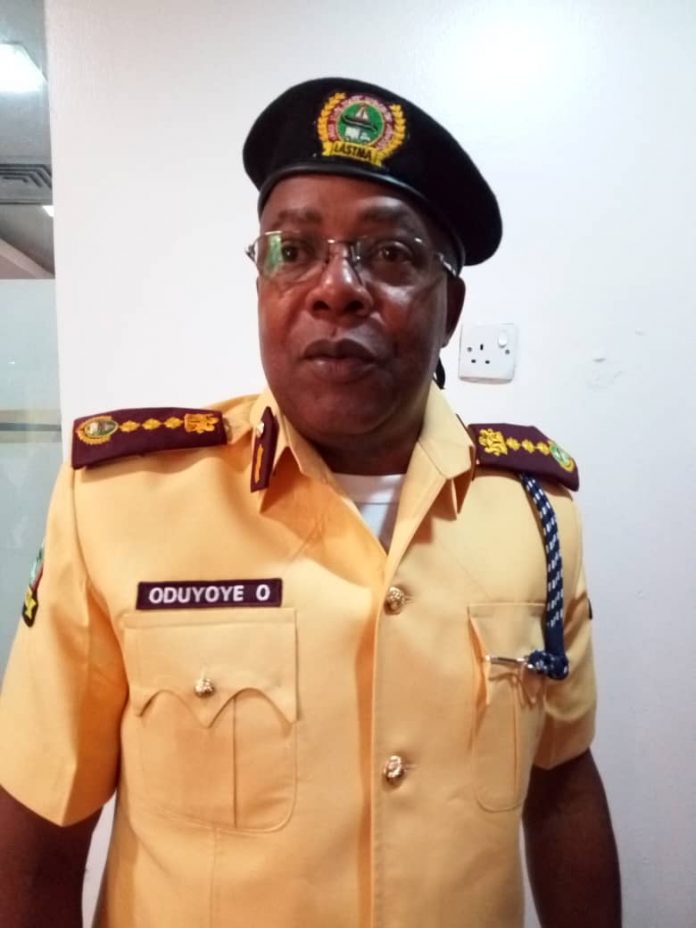
General Manager of Lagos State Traffic Management Authority (LASTMA), Olajide Oduyoye,

General Manager of Lagos State Traffic Management Authority (LASTMA), Olajide Oduyoye, has berated the lady officer, Odunlami Adepeju, in a viral video circulating online.

Oduyoye described the act of the lady officer as an “unprofessional conduct, misbehaviour and public display of violence,” saying Adepeju has demonstrated “poor professional judgement of the situation as a public servant” of Lagos State Government whose conduct is the focus of the public, thereby “misrepresenting and casting smear on the state government and the agency.”

READ ALSO:

Update: Sanwo-Olu, Amaechi visit scene where train kills 2

He said the lady officer and her male subordinate in the video have been “invited for investigation and that, on conclusion, disciplinary action for misrepresenting Lagos State Government and the agency would be meted out to the culprits as laid down in the rules of the extant laws of Lagos State Civil Service.”

LASTMA chief assured members of the public of “due diligence” over the incident which occurred at Aromire junction in Ikeja on September 11.

Recounting Adepeju’s statement in the course of interrogation, Oduyoye said: “Odunlami Adepeju, in her statement, claimed that at about 2.00pm on Friday, she sighted a black Honda vehicle with registration number SF 885 KJA running on red light at Aromire junction while the driver and passenger did not strap the seat belt on, she did not act at the material time but only warned the driver.

“She further said that to her dismay, on the vehicle’s return journey, the driver and the passenger were still not strapping the seat belt and she decided to apprehend the recalcitrant driver for the traffic infraction which led to altercation with the passenger biting her finger and the driver punching her head resulting in lacerations which she also said got her enraged.”

The general manager noted that though the driver of the vehicle actually committed a traffic infraction, “the LASTMA official should have simply documented the details of the vehicle for action by the Zonal authority instead of allowing the issue to degenerate to the level of being assaulted which led to her becoming angry according to her.”

READ ALSO:

Union Members Shutdown Governor Sanwo-Olu’s School Reopening Order Hours After

Oduyoye, in a statement by the agency’s Assistant Director, Public Affairs, Filade Olumide, explained that LASTMA as a government agency, trains and continues to retrain its staff on proper discharge of their functions and duties professionally, an example is the recent retraining of all field staff at Lagos State Law Enforcement Training Institute (LETI).

He enjoined the members of the public to continue to report all misdemeanors by any officer on Lagos roads, so that “we can make corrections and be better, more efficient and effective traffic managers/agency.”

Inline1

PDP to Tinubu: You’re Seeking Infantile Attention in a Political Dispensation That Has Moved Beyond Unnecessary Ego Trips

0
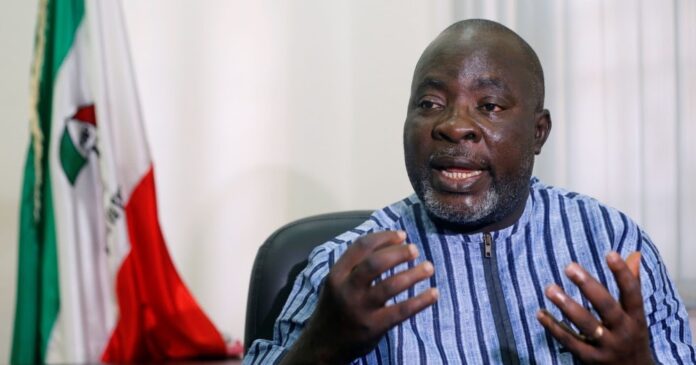
File photo of Spokesman of the opposition Peoples Democratic Party (PDP), Kola Ologbodiyan.

Peoples Democratic Party (PDP) has accused the National Leader of the All Progressives Congress (APC), Asiwaju Bola Ahmed Tinubu, of seeking infantile attention in a political dispensation that has moved beyond unnecessary ego trips.

PDP said it’s amused by “the amateur video released by the now regional leader of the APC, Asiwaju Bola Tinubu, in which he violated all tenets of democracy by attempting to arrogate to himself supremacy powers, lord over the people of Edo State and dictate their choice of leadership.”

READ ALSO:

Edo Guber Poll: Tinubu, Obaseki taunt each other

According to the opposition party, “It is indeed pathetic and derisory that Asiwaju is claiming to be the leader of all democrats in Nigeria, which obviously he is not, while at the same time violating the fundamental of democracy, which is allowing a people to freely chose their leaders without confrontations with lies, coercion, mudslinging, slanders and beguiling as exhibited in his amateur video.

“It smacks of unpardonable hypocrisy that an individual who claims to be a democrat will at the same time chose to sit in the comfort of his residence to insult the people of Edo State over their manifest choice of Governor Godwin Obaseki as their preferred leader, for another term of four years, due to his sterling democratic qualities and performance in office.

“Asiwaju cannot be claiming to be a democrat while campaigning for an individual that has already been rejected by the people of Edo State, having been exposed by none other than the former national chairman of his party, Adams Oshiomhole, as a thief, fake pastor, acid bather, a person of questionable character who is only fit for ‘night meetings’ and should not be trusted with the position of the governor of Edo state.

“We know that Asiwaju is desperate to re-launch himself into relevance but can someone who wants the nation to believe that he is a democrat be campaigning alongside self-confessed liar, who has been rejected by his kinsmen and suspended as national chairman of his party, all in the quest to install a stooge in office?

“Asiwaju must be reminded that Edo State is not part of his fiefdom and that the needless sanctimonious pomposity which he displayed in the broadcast will never sway the people.

“This is because Edo State is home to very eminent and exceedingly intelligent personalities including highly revered royal fathers, religious and community leaders, astute public administrators, outstanding politicians and captains of industry, who are not ready to alter their resolve for Governor Obaseki.

“If anything, Asiwaju’s broadcast has again exposed an imperialist agenda against the Edo people, a development that has further strengthened the resolve of the people of Edo State to permanently put an end to political godfatherism, which Asiwaju represents in the Nigerian political firmament.

READ ALSO:

Edo: PDP Supporter Boasts Obaseki’s Achievements Will Be Rewarded At Saturday Poll

“Furthermore, without conceding to Asiwaju’s jejune argument, we ask, what contribution to democracy did he found in President Muhammadu Buhari when he presented him, then as General Buhari, to Nigerians ahead of the 2015 presidential election?

“Moreover, Nigerians are gradually seeing through Asiwaju’s claims of having fought for democracy as mere myth. The true heroes of democracy include the founding fathers of our party and the regular people of Nigeria, who unlike most self-acclaimed leaders of democrats, never sneaked out of the shores of our country but stood firm to the very end.”

“Our party had severally cautioned Asiwaju Tinubu to steer clear of our candidates and desist from infantile attention seeking in a political dispensation that has moved beyond unnecessary ego trips.

“The people of Edo State had since made up their minds to re-elect Governor Obaseki and APC leaders such as Asiwaju, in their vanity should come to terms with that,” said a statement by PDP National Publicity Secretary, Kola Ologbondiyan.

Idowu Sowunmi

Inline1