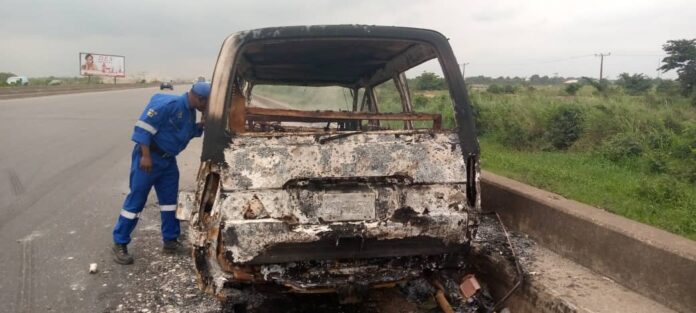
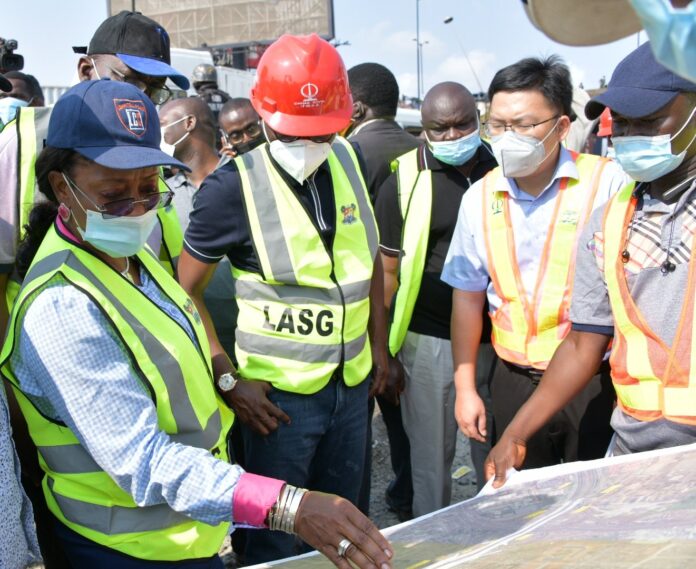
“The incident which involved a commercial vehicle with registration number LSD-715XV gutted by fire along the Lagos-Ibadan Expressway, claimed the life of a yet-to-be identified passenger that was burnt beyond recognition, injuring several others who were rescued by Police and FRSC Officers, while the LASEMA Response Team recovered the burnt vehicle off the road to ensure smooth vehicular activities in the axis.”
LASEMA, according to the statement, said its action was on the heels of the continued collaboration between Lagos and its neighbouring states in tackling emergencies to ensure safety of lives and properties.
The agency added that the cooperation between states led to LASEMA’s activation of its response team, Tiger Squad to the incident scene at the Long bridge inward Arepo, when the agency received a distress call on a burning vehicle.
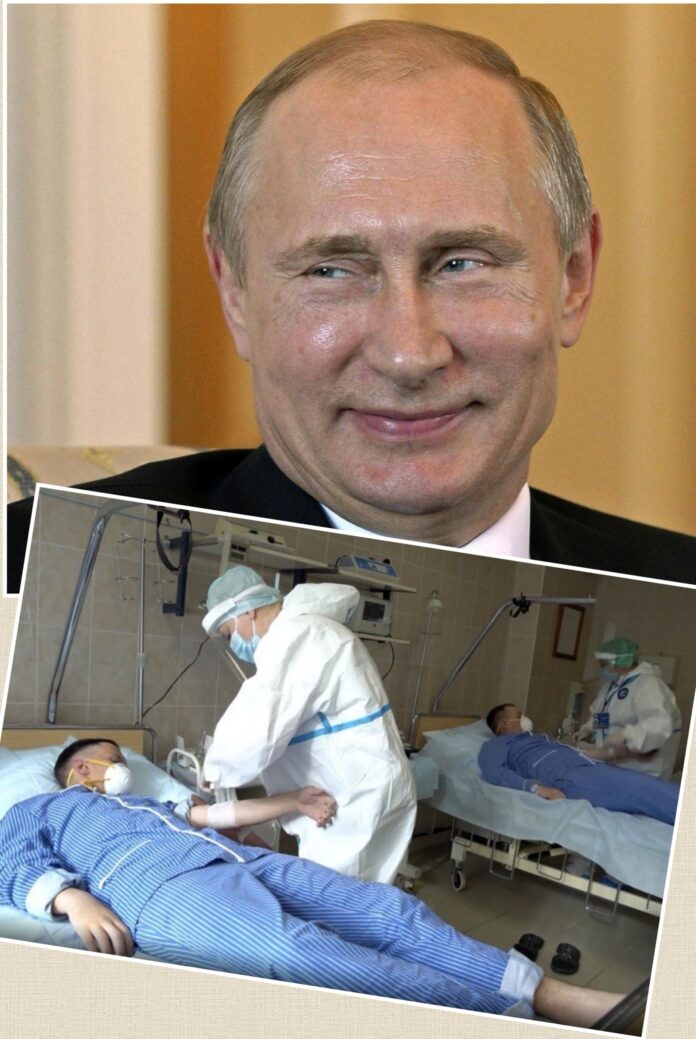
A Collage of President Putin and an insert as Medical workers prepare to draw blood from participants in a coronavirus vaccine trial at the Budenko Main Military Hospital outside Moscow.(Russian Defense Ministry Press Service)
Source :Associated Press and LAtimes
Russian President Vladimir Putin Monday disclosed that the world’s first vaccine against the novel Coronavirus (COVID-19) would be registered in his country in a few days.
Putin, who stated this on his Facebook page, explained that Russian scientists have passed necessary test stages and proved the safety and effectiveness of the drug.
“Once the Soviet satellite paved the way for humanity into space, now the Russian vaccine will pave the way to the future without COVID-19, masks and social isolation.”
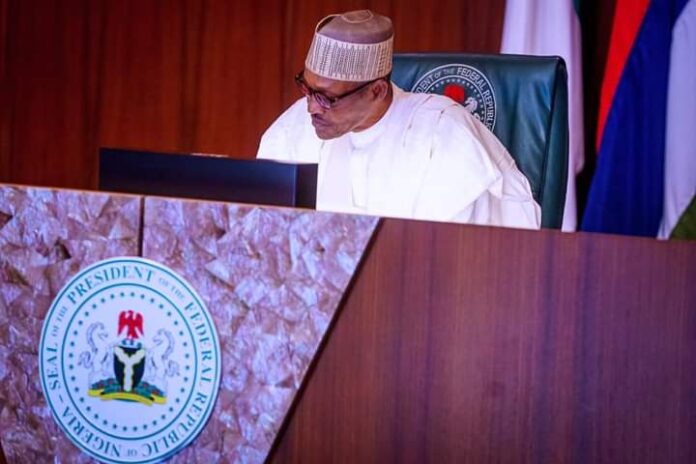
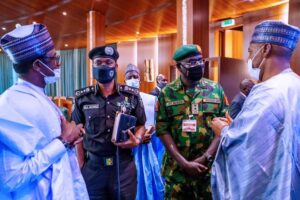
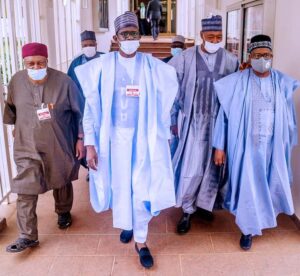
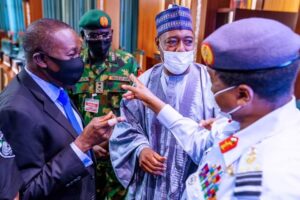
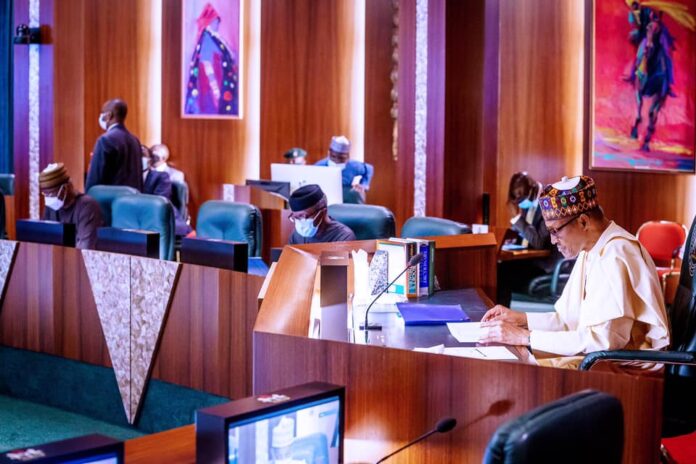
A photo of President Buhari when he received in audience Governors of North Eastern States of Nigeria in State House on 10th Aug 2020
President Muhammadu Buhari Monday gave strong assurances that security would be restored to Borno State in the North-east and the nation at large, following the recent adoption of new strategies, and the acquisition of modern military equipment.
Speaking at the State House in Abuja during a meeting with the five North-east State Governors, Buhari said: “Things will improve very soon. We are acquiring modern equipment; some are here, some are being cleared, and others still coming. We need patience with acquisition of equipment. You need to train the trainers for their usage ahead of their deployment to the field.”
The meeting was attended by Vice President Yemi Osinbajo, the Chief of Defence Staff, Service Chiefs, the Inspector-General of Police and the heads of intelligence agencies.
Reacting to the governors who spoke through their Chairman, also Borno State Governor, Babagana Zulum, the President added: “I have listened to your presentation. I assure you, the North-East Governors, especially that of Borno, that we go to bed and wake up thinking about you, how to secure our country, that is the responsibility of every government.
“Our party campaigned in 2015 on three major objectives, among which is Security. We said the same thing in 2019 and Nigerians believed us. We are doing our best and we will continue to do even better.”
Buhari lamented the impact of the novel Coronavirus (COVID-19) pandemic on the economy, making scarce resources even scarcer, coupled with its severe impact on the supply chain of military equipment and spare parts.
“Our government is doing its best on the question of equipment and the military personnel know. We have equipment coming from some countries. The acquisition of military wares and spares is not easy, especially if you are not the manufacturer,” the President said, in a statement by his Senior Special Assistant on Media and Publicity, Garba Shehu.
The Secretary to the Government of the Federation (SGF), the Chief of Staff, the National Security Adviser and all the Service Chiefs, who spoke in support of the President, assured that things would get better soon.
They made a strong case for strengthening ties among the military, state governments, traditional institutions and all communities and the residents of the region.
The Chief of Army Staff, Lt. General Tukur Buratai, gave an assessment of the current efforts, noting that Boko Haram terrorists have been flushed out of all the states in the region, leaving Borno State as the last stop.
He said: “There are no Boko Haram terrorists in neighbouring states. They have been pushed out, and now cornered in Borno State. We are coordinating with civil and traditional authorities, mobilising and reinforcing and all we need is patience. We will not relent.”
On his part, the Chief of Air Staff, Air Marshal Sadique Abubakar, briefed the meeting on the acquisition of military aircraft, explaining that the imminent arrival of Unmanned Aerial Vehicles, UAVs, known as drones with more than 10 hours of flying time, would strongly reinforce the battle front.
Briefs were also received on equipment needs of the police as well as the changing alliances between criminal gangs and terrorist groups in the region from the intelligence community.
In their address at the beginning of the meeting, the North-East Governors noted that the security situation in the region has now greatly improved, compared to the time the President assumed office.
While commending Buhari for the establishment of the North-East Development Commission and the take-off of Mambila Dam Power Project, they however, called for attention to the condition of most of their roads.
They also warned of the consequences of a “war economy” and the need to address the root causes of the insurgency.
The governors said: “A large population in the region, especially in Borno State, have no access to their homes and farmlands,” while calling for efforts to curtail the “increasing trust deficit between the population and the armed forces.”
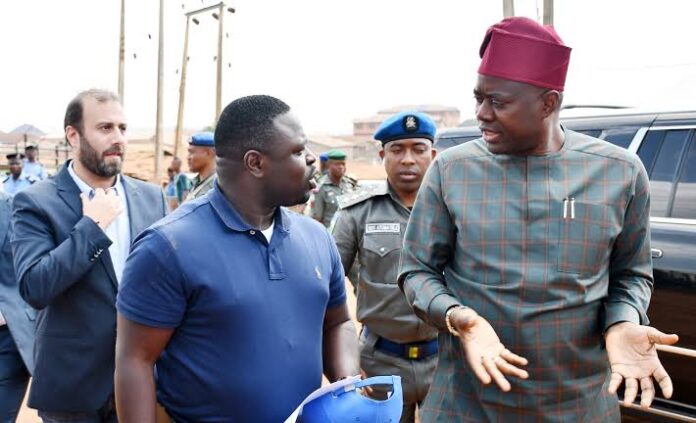
File photo of Oyo State Governor, Engr. Seyi makinde and ex-Commissioner for Works, Raphael Afonja.
Oyo State Governor, Seyi Makinde, Monday sacked his Commissioner for Works, Infrastructure and Transport, Raphael Afonja.
The governor, in a letter dated August 10 by the Secretary to the State Government (SSG), Olubamiwo Adeosun, said the termination of appointment takes immediate effect.
File photo of sacked Oyo Commissioner for Works, Raphael Afonja.
The letter entitled: “Termination of appointment” reads in part: “I wish to convey the approval of His Excellency, Governor Seyi Makinde, on the termination of your appointment as Honourable Commissioner, with immediate effect.
“Consequent upon the above development, you are hereby directed to hand over all the government items in your possession to the Permanent Secretary (Ministry of Works, Infrastructure and Transport).
“I am to add that, your contribution within the time of your sojourn is appreciated and commendable, and therefore, wish you successes in your future endeavours. I thank you.”
It would be recalled that the sacked commissioner recently tested negative for the novel Coronavirus (COVID-19) after 52 days of treatment in isolation and had hoped to resume work on Monday.
Makinde has also approved redeployment of two commissioners, who were asked to swap portfolios with immediate effect.
The governor, in an internal memo by Adeosun with the subject: “Redeployment of EXCO members,” said Commissioner for Special Duties, Bayo Lawal, has been moved to the Ministry of Local Government and Chieftaincy Affairs, while Funmilayo Orisadeyi is to move the Ministry of Special Duties.
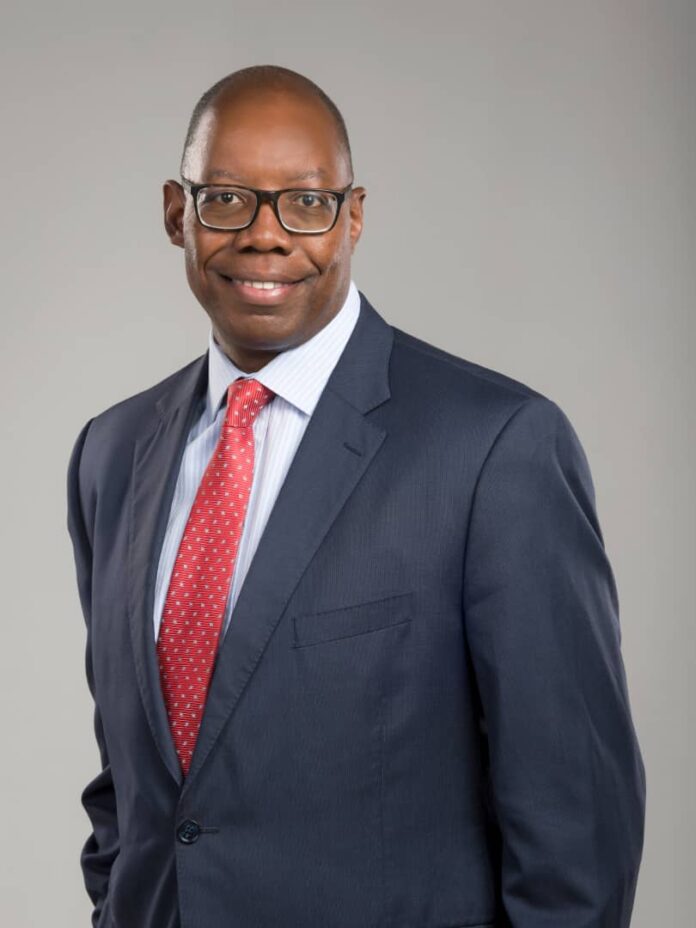
National Basketball Association appoints Sierra Leona-American, Victor Williams, Africa CEO
National Basketball Association (NBA) Monday named Victor Williams as the Chief Executive Officer of NBA Africa, effective August 17.
Announcing the new appointment, NBA Commissioner, Adam Silver, described Williams as an accomplished investment banking executive with extensive experience growing businesses across the United States of America and Africa.
CEO NBA Africa would be based in the league’s Johannesburg office and report to NBA Deputy Commissioner and Chief Operating Officer, Mark Tatum.
In this newly-created role, Williams would oversee the league’s basketball and business development initiatives in Africa and would be responsible for continuing to grow the popularity of basketball and NBA across the continent through grassroots development, media distribution, corporate partnerships, and more.
“Adding an executive of Victor’s caliber and experience is an important step in our continued efforts to grow basketball across the continent.
“We look forward to Victor leading NBA Africa’s operations and helping to accelerate the use of sports as an economic engine across Africa,” Silver added.
Commenting on his appointment, Williams said: “Becoming CEO of NBA Africa is a compelling opportunity to join the NBA – a widely-respected and admired, globally-oriented sports enterprise.
“It allows me to blend my professional experience building businesses in Africa with my passion for the sport of basketball.
“I look forward to working with our colleagues in Johannesburg and Dakar to help grow basketball’s commercial and social impact in Africa and on the world stage.”
In the last five years, Williams had served as the Executive Head of Corporate and Investment Banking (CIB), Africa Regions for Standard Bank Group, where he oversaw the strategy, execution and financial performance for Standard Bank’s business with corporate, sovereign and institutional investor clients in 19 countries across sub-Saharan Africa.
In this pan-continental role, Williams was responsible for growing a wide range of business lines across Africa, including global markets, investment banking and transactional products and services, and helped lead Standard Bank’s expansion into Côte d’Ivoire, Ethiopia and South Sudan.
Williams joined Standard Bank in 2011 as Head of Corporate and Investment Banking for East Africa and subsequently led Standard Bank’s Corporate and Investment banking business in Nigeria.
Previously, he worked at Wells Fargo Securities in Charlotte, North Carolina, where he was a Managing Director focused on mergers and acquisitions. In this role, he executed more than $5 billion in merger and acquisition transactions and advised senior executives and boards of directors of corporate and private equity firms on mergers, divestitures, acquisitions, joint ventures, recapitalisations and corporate defense.
Prior to Wells Fargo Securities, Williams was Vice President of Investment Banking at Goldman Sachs in New York City, where he provided strategic guidance to Fortune 500 companies in all aspects of merger and financing analysis and execution.
Williams, a dual citizen of Sierra Leone and the USA, holds an MBA from Harvard Business School and bachelor’s degrees in applied math and economics from Brown University.
He is a member of Harvard Business School’s Africa Advisory Board and has also served on the boards of publicly-listed companies and non-profit organisations in the USA, Nigeria and Kenya.
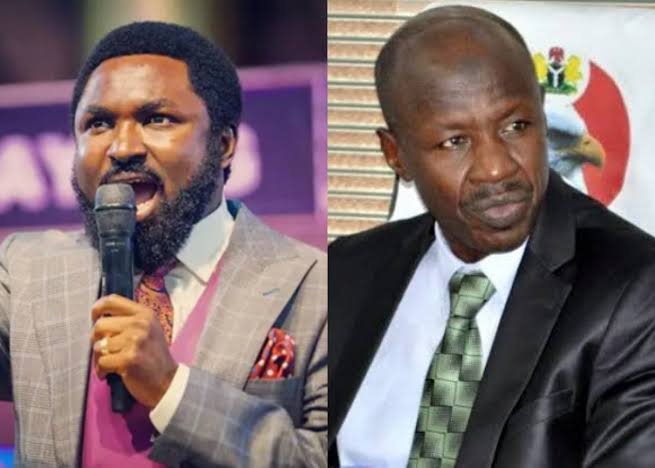
The Managing Director of First City Monument Bank (FCMB), Adam Nuru has appeared before the Presidential Committee on Audit of Recovered Assets (PCARA), which is probing former Accting Chairman of the Economic and Financial Commission (EFCC), Ibrahim Magu for alleged embezzlement and mismanagement of recovered looted funds.
The FCMB chief during his testimony explained that the his bank made an error by transferring ₦573 million into the church account of one Pastor Emmanuel Omale.
The ex-EFCC huncho was accused of allegedly using Omale, founder of the Divine Hand of God Prophetic Ministry, to launder funds abroad.
The accusation against Magu read that he had purchased a property in Dubai using Omale’s name as a front— an allegation the pastor has denied.
Nuru was reported to have said in his testimony last Thursday, that FCMB only just discovered the mistake upon invitation by the committee, which is four years after the money was posted.
“On January 16, 2016, we made a return to NFIU which indicated that there was a transaction of an inflow of well over N573million. (N573,228,40),” the bank MD said.
“This return was said to be in favour of Divine Hand of God Prophetic Ministries Account No 1486743019.
“After that report, we conducted an investigation and discovered that the lodgement which we reported to NFIU was an error.
“The error was as a result of the fact that we were using a bank application called Pinnacle-7. However, we migrated from that application to a newer version called Pinnacle-10.
“Usually, when the bank intends to migrate from one application to another, we utilize weekends to carry out the exercise. The migration involves moving all the balances of customers from the previous application to the new application. The account of the Divine Hand Ministries was moved during that migration.
“It was that balance of N573million that was wrongly posted as an inflow into Divine Hand Ministries as reported to NFIU. This error was not peculiar to Divine Hand of God Prophetic Ministries alone but was also ascribed to 27 other accounts”, FCMB said.
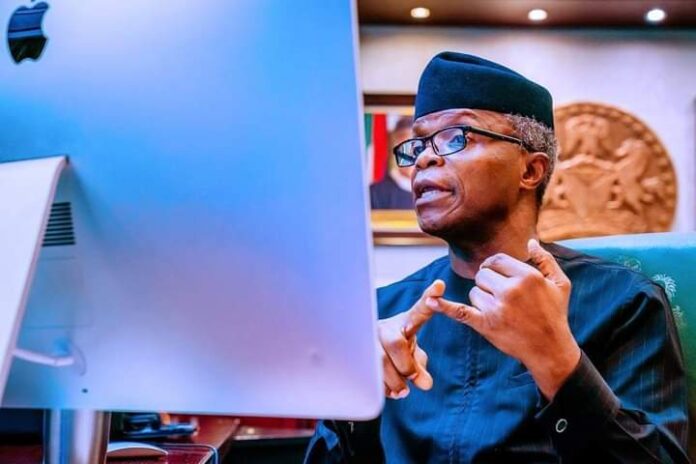
File Photo of Nigeria's Vice President Yemi Osinbajo at his State House office, Abuja, during a virtual roundtable dialogue organised by the Justice Research Institute.
Vice President Yemi Osinbajo has described the the Economic Sustainability Plan (ESP) with a stimulus package of N2.3 trillion, which is just about 1.5 per cent of Nigeria’s Gross Domestic Product (GDP), as the best the Federal Government could do given existing realities in the economy.
Osinbajo made the call weekend at the virtual edition of the Presidential Policy Dialogue of Lagos Chamber of Commerce and Industry (LCCI).
According to him, “Government developed the Economic Sustainability Plan with a stimulus package of N2.3trillion to give fillip to the economy across various sectors. The size of this stimulus which is just about 1.5 per cent of national income is not as large as we would have liked it to be but it was the best we could do given existing fiscal and monetary constraints. Based on the assumption of the price of crude averaging out at $30 per barrel throughout the year, we anticipate an economic growth of about -0.59 per cent in 2020.
“You would already be familiar with details of the Economic Sustainability Plan. In essence, it is intended to boost production, prevent business collapse, and provide liquidity. It will also promote the use of labour-intensive methods and direct labour interventions in key areas like agriculture, light manufacturing, housing construction and facility maintenance while increasing infrastructural investment in roads, bridges, solar power, and communications technologies. It is intended to do all this while extending protection to the poor and other vulnerable groups in our society.”
On the plan of government to address the disruptions on the economy by the novel Coronavirus (COVID-19) pandemic and the role that the private sector could play, the Vice President said: “These opportunities are the building blocks that will enable our medium-term goals to be achieved and make our long-term goals achievable.
“This is a drive we hope to continue into the medium term as we build up the economy over the next few years. We do need foreign direct investment to complement our domestic efforts but it is the success of our own investments that will attract such inflows. Investors are already aware of Nigeria’s huge market and its great potential, but they will only ‘want in’ when government by its own positive interventions and the private sector by its success stories show them what is possible to do here.
“No doubt, the task ahead is challenging. Nevertheless, government is focused on doing its bit so I call on the private sector to play its part and join us in this noble venture. We know that this will be a difficult year but expect that with our combined effort growth will resume to the order of about three per cent by the end of next year. We can do this working together.”
On the Ease of Doing Business reforms of the Federal Government, Osinbajo maintained that the commitment of the President Muhammadu Buhari to providing an enabling environment for business to thrive remained strong.
“In this regard, we have made some strides in improving the ease of doing business in Nigeria. Through the Presidential Enabling Business Environment Council (PEBEC), a lot has been achieved to fast-track processes, reduce bottlenecks and improve transparency across Government MDAs.
“As a result, we have moved 35 places upward in the World Bank’s Ease of Doing Business rankings. We have continued to scale up our business reform initiatives across regulatory agencies.
“Of course, there is still a lot more to be done. Our aim is to continue to improve our national ranking in the World Bank Doing Business Index Ranking to below 100 in the coming years. It is also very important to reduce the harassment and extortion of businesses by various government agencies,” the vice president added.
Osinbajo explained that as the Federal Government consolidates efforts designed to ward off a deep recession and effect significant changes in the economy, opportunities abound across different sectors in ESP for the private sector to lead the charge for Nigeria’s economic growth and development.
The vice president said ESP which is now being implemented by the Buhari administration is driven by the desire “to adapt to the challenges and make required changes in order to come out stronger than before.”
“I take this opportunity to encourage the private sector to be proactive in leading the charge against recession and poverty in our country. The Federal Government is not under any illusion that it can do this on its own.
“The opportunities that now exist in the short term in agriculture, infrastructural development, housing construction, in renewable energy, digital technology development, mining, financial inclusion, healthcare and pharmaceutical manufacturing, call for the private sector to take the bull by the horns and make them a reality.
“The priority of the Federal Government in response to the economic challenges caused by COVID-19 is to ward off a deep recession by an admixture of stimulus measures to support local businesses, retain and create jobs and ameliorate the circumstances of the most vulnerable,” he said.
In his remarks, the Minister of Industry, Trade and Investment, Niyi Adebayo, said the current focus of the Federal Government in the manufacturing sector “is on prioritising local production especially in the importation of machinery that utilize local materials.”
Earlier, LCCI President, Toki Mabogunje, commended the Federal Government’s “spirited effort” regarding its managing of the Nigerian economy, adding that members of the chamber and private sector players are willing to collaborate with the Buhari administration.
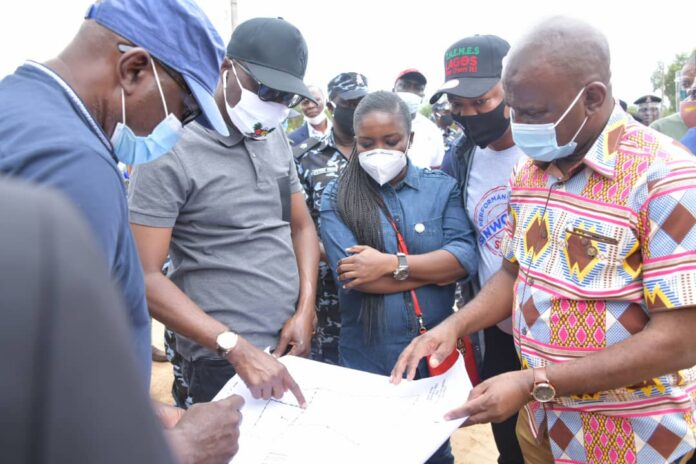
LAGOS State Governor, Babajide Sanwo-Olu during an inspection tour of projects over the weekend, August 9, 2020.
Lagos State Governor, Babajide Sanwo-Olu, has explained that to restore life back to Apapa, there’s need to agree and formalise the matrix of the trucks’ movement in and out of the ports.
The governor expressed displeasure over disturbing gridlock created along Apapa corridor in Lagos State by heavy-duty trucks clogging the major highways.
Speaking on Sunday while touring projects and infrastructure being developed on Apapa corridor to ease traffic congestion in the area, Sanwo-Olu sought to know why container-laden trucks usually disregard Lagos State’s traffic laws and park on roads.
The poser generated heated arguments among terminal operators, including Nigerian Port Authority (NPA) and Maritime Transport Unions and Associations (COMTUA).
In the ensuing blame game, the governor expressed disapproval of the truck drivers’ action and the failure of NPA to enforce extant regulations preventing trucks not yet approved for loading to park indiscriminately on the highways.
He pointed out the need to overhaul the terminal system at the ports, saying there was no reason for the trucks to park on the highways if their dedicated terminals were operational.
Sanwo-Olu disclosed that his administration has made a request to the Federal Government to prevail on the concessionaire that would operate the 700-truck capacity Lilypond Terminal at Apapa to open the facility for use without further delay.
He revealed that Lagos State Government has donated additional 30 hectares of land in Ijora area as part of the solutions initiated to address the problem, noting that the land would expand the holding capacity of the Lilypond terminal.
“Today, I have taken time to personally inspect some projects being developed both by the federal and state governments to improve traffic around Costain, Iganmu, Apapa and Mile 2 areas.
“The projects are initiated specifically to address the chaos created mainly by indiscriminate parking of trailers along the routes. Already, there is an ongoing rehabilitation work on Marine Bridge, where a stretch has completely been scarified.
“There is also a Lilypond Terminal, a major holding bay for heavy-duty trucks, which has not been operated after it was transferred to a concessionaire. We are aware that the concessionaire is meant to complete an agreement with NPA on the transfer of the facility. But, while this is being done, Lagos Government has donated 30 hectares of land in Ijora to raise the capacity of the Lilypond Terminal.
“These steps will be part of the solution of taking the trucks off Apapa highways. When the rehabilitation work on Marine Bridge is completed in another four months, there will be improvement in journey time towards Apapa.
“We will also be having meeting with various stakeholders operating at the port, including the truck owners. The system needs a total overhaul. We need to agree and formalise the matrix of the trucks’ movement in and out of the port,” Sanwo-Olu said.
The governor also decried the failure of the truck drivers to make use of over 30 holding bays around the port area, including the 320-capacity Tin Can Transit Park.
He pointed out that the gridlock created by the indiscriminate parking of trailers had impacted negatively on the businesses environment on the axis, adding that the menace had endangered the lives of people living on the corridor.
Sanwo-Olu observed that the volume of maritime business being carried out in Apapa and Tin Can Island ports had outgrown their capacities. He said the state government has started building another port in Lekki in collaboration with NPA to serve as alternative and ease the pressure on the two ports in Apapa.
The governor admitted that Apapa needs a complete regeneration, saying government has responded to the challenge with the re-construction work currently going on in the area.
According to him, “We need to set out our activities in a methodical order and see how we redevelop Apapa. There is a massive road construction that is going on in Apapa and the work is extensive. We are using concrete for roads that are being rebuilt. Liverpool and Creek roads have already been completed. By October, all the road network leading in and out of the port area would be opened up for public use.
“My message to our citizens residing and working on this corridor is that, we have assessed the issues and we will be meeting with various operators and stakeholders. We will fashion out how we will all work collaboratively to bring about an efficient system that will deliver permanent solution and diffuse the gridlock. This, we hope, will bring life back to Apapa.”
The governor also inspected a failed section of Mile 2 Interchange along Lagos-Badagry Expressway, where the state government has cleared 70 trucks of waste materials from the road drainage.
Sanwo-Olu promised that repair work would commence on Monday, but appealed to residents to desist from clogging the drainage with waste.
At the Costain Bridge being constructed by the Federal Government, the governor said there would be a re-adjustment of the turning radius to alleviate the difficulty being experienced by motorists in negotiating the descending point of the bridge.
He also visited Iganmu intersection in Apapa-Iganmu area, where illegal settlements are springing up and encroaching the right-of-way of the Blue Line Rail project.
The governor gave the slum occupants one month to remove their shanties and vacate the space.
He said: “The mess created under Iganmu intersection has encroached the right-of-way of our rail project. In the next one month, we will be taking a decisive action to eject those creating illegal settlements under the bridge. We will give them notice of eviction and we will clean up the place. Once it is cleaned up, we will hand over the space to corporate organisations to restore the aesthetic of the environment.”
The governor also inspected the on-going repair work on the failed section of Eko Bridge. The repair is expected to complete by the end of September.
The Federal Government has announced that it is rolling out a “survival fund” that will make payroll support available in order to save jobs and sustain local production.
The support initiative, which was announced on Monday is a part of the National Economic Sustainability Plan (NESP) that was presented to President Muhammadu Buhari by the Vice President Yemi Osinbajo-led committee in June.
The NESP, a policy response of the Buhari-led Federal Government to saving the country from a COVID-19 induced recession, include support schemes for Micro Small and Medium Enterprises (MSMEs) nationwide, a Guaranteed Offtake Scheme (guaranteeing off-take of priority products) among others.
According to the Federal Government’s announcement, details on how to access these MSME Support initiatives will be unveiled soon, by the Implementation Committee.
The leadership of the implementation committee comprises, Chairman, Minister of State for Trade and Investment, Amb Mariam Katagum; and Vice Chairman, Mrs. Ibukun Awosika, Founder, Chair Centre LTD., also Chairman, First Bank of Nigeria.
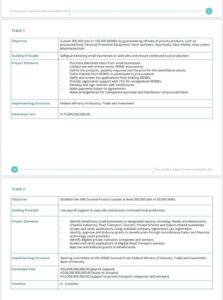
Below: Federal Government’s document containing intervention plan for MSMEs.
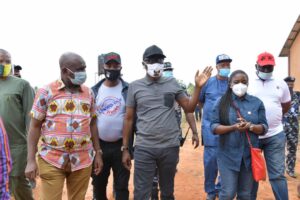
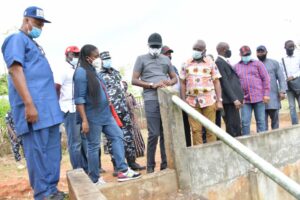
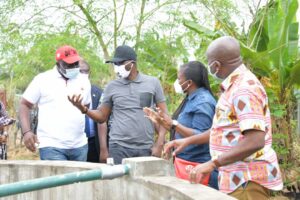
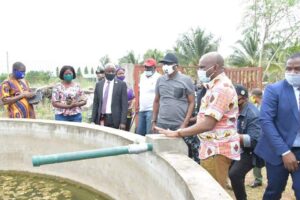
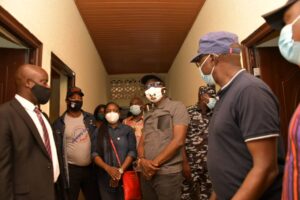
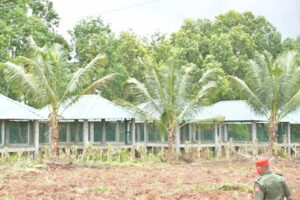
Governor Babajide Sanwo-Olu accompanied by State Official on an inspection tour of Lagos Food Production Centre in Badagry, Lagos. August 9, 2020.
In order to boost local food production, the Lagos State Government says it is now set to revive a 279-hectare Lagos Food Production Centre, formerly known as the Songhai Food Production Centre in Avia, Badagry.
The State Governor, Babajide Sanwo-Olu, who made this known over the weekend in Badagry while on a site inspection tour of the Centre, explained that this was necessary in preparation for the take-off of the State Government’s two food centres designed to attain food sufficiency.
The Governor pointed out that reviving the 279-hectare Food Production Centre, originally acquired by the State Government in 2012 for a commercial agricultural project, would encourage organic farming using simple biological methods to enhance production outputs with a model, based on new approaches and farming systems that rely heavily on the combined inputs from local experiences, indigenous technology, business communities and research institutions.
According to him, focusing on local food production would increase agricultural production to meet the food needs of the State’s growing population, transform agriculture to commercial and export-oriented production while at the same time generating employment.
Governor Sanwo-Olu added that some of the agricultural projects to be developed for commercial production at the Centre include fishing, poultry, piggery and agro-forestry among others.
Sanwo-Olu reckon that apart from delivering wholesome food items, training and creating employment, the Lagos Food Production Centre would also provide raw materials for the Agro-Industry, new environmental products and services, and feedstock for renewable energy supply.
The Governor added that the project will give rise to similar agro-allied businesses to open up Badagry’s economy for more growth, while also boosting its tourism business.
We use cookies to ensure that we give you the best experience on our website. If you continue to use this site we will assume that you are happy with it.