Category: Articles

  • FG Unveils New Digital Tools for Maritime Operations

    FG Unveils New Digital Tools for Maritime Operations

    The Federal Government has launched the Nigerian Shippers’ Council’s Enterprise Content Management System to digitise document handling in the maritime sector. The Marine and Blue Economy Ministry says it will improve transparency and reduce bottlenecks.

    PUNCH, 11 Dec 2025

  • EFCC Alleges Arik Funds Used to Float NG Eagle

    EFCC Alleges Arik Funds Used to Float NG Eagle

    At the Special Offences Court in Ikeja, the EFCC presented documents alleging that funds linked to Arik Air were used to float NG Eagle Airlines. The trial involves former AMCON officials and corporate entities.

    The matter was adjourned into early January 2026 for continuation of proceedings.

    Source: Vanguard, 2025-12-09

  • Power Sector Gets 450MW Relief

    Power Sector Gets 450MW Relief

    Nigeria’s power sector reportedly recorded a 450MW restoration to the national supply, offering temporary relief amid persistent outages.

    The improvement underscores the need for deeper investment in grid resilience, gas supply stability and distribution efficiency.

    Source: Punch, 2025-12-08

  • FG clarifies subject choices in new senior secondary curriculum

    FG clarifies subject choices in new senior secondary curriculum

    Vanguard reports that the Education Ministry has clarified that the new senior secondary curriculum remains flexible, allowing students to select across science, arts, and social science clusters where appropriate guidance exists. The minister also said the subject formerly known as ICT has been renamed “Digital Technology,” emphasising that the change is largely nomenclature rather than a shift in content, and that students remain eligible to register and sit relevant exams under the updated name. Source: Vanguard, December 2025.

  • FG’s electronic transfer levy revenue doubles to N360bn

    FG’s electronic transfer levy revenue doubles to N360bn

    Federal revenue from the electronic money transfer levy hit about N360.29 billion between January and October 2025, more than doubling the comparable 2024 figure, according to an internal FIRS document cited by Punch. The year-on-year jump suggests increased taxable transfer volumes and/or stronger compliance, with the report noting monthly gains across the period. The data adds another angle to ongoing debates about the balance between broadening non-oil revenue and the public sensitivity around transaction-related taxes. Source: Punch, December 7, 2025.

  • Police deploy special team to enforce ban on VIP escorts

    Police deploy special team to enforce ban on VIP escorts

    The Nigeria Police Force has launched a Special Enforcement Team to ensure compliance with the presidential directive banning police from providing VIP escort and guard duties. According to Punch, the operation began in Lagos on December 6, 2025, covering strategic locations including the Lekki-Ikoyi Link Bridge and the domestic wing of the Murtala Muhammed International Airport. The Force PRO said early monitoring showed commendable compliance, with no arrests reported during the initial sweep. The police leadership reiterated that the policy is intended to redeploy personnel to core policing tasks for broader public safety. Source: Punch, December 6, 2025.

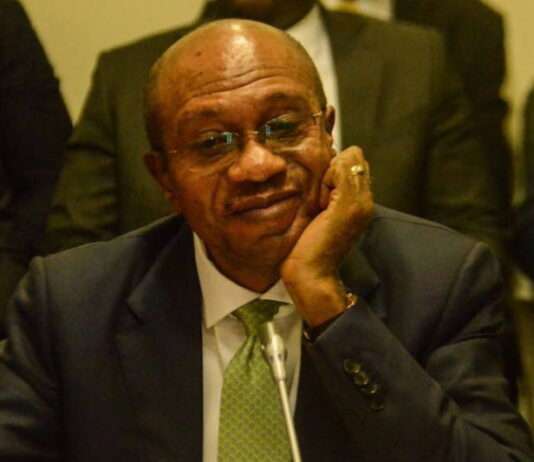
  • Emefiele Denies Terror-Funding Claims, Labels Report “Fabricated”

    Emefiele Denies Terror-Funding Claims, Labels Report “Fabricated”

    Former Central Bank of Nigeria governor Godwin Emefiele has rejected reports alleging he is among those financing terrorism in Nigeria. He described the allegation as fake and baseless, saying it was designed to tarnish his reputation and mislead the public. 

    Emefiele said he has never been involved in terrorism financing, has not been invited, questioned, or investigated over such claims, and has no connection with the person referenced in the allegation. He urged Nigerians to disregard the report and called on the media to verify sensitive claims before publication. 

    Source credit: Vanguard News — “Emefiele rejects terrorism funding allegation,” published December 7, 2025.

    URL: https://www.vanguardngr.com/2025/12/emefiele-rejects-terrorism-funding-allegation/

  • EDITORIAL : Budget integrity is NOT budget padding.

    EDITORIAL : Budget integrity is NOT budget padding.

    Nigerian National Assembly

    A recent statement by Senator Solomon Adeola, Chairman of the Senate Committee on Appropriations and Senator representing Ogun West Senatorial District, published under the title “The Role of Legislature in Shaping a Holistic Budget for Nigeria,” has reignited public debate over the controversial practice of legislative budget insertions—commonly referred to as “budget padding.”

    In his article, the Senator defends the legislature’s role in adjusting the federal budget, dismissing terms like “padding,” “insertions,” and “constituency projects” as misrepresentations of legitimate legislative contributions to the budgetary process.

    At Echotitbits.com, we fully acknowledge the constitutional role of the National Assembly in reviewing and approving the national budget. However, we must respectfully challenge the narrative that legislative insertions are harmless or beneficial acts of “democracy in action.” On the contrary, such adjustments—when carried out outside the framework of national planning—continue to undermine Nigeria’s development agenda, weaken fiscal discipline, and compromise the integrity of public finance.

    The Purpose of the Envelope

    Nigeria operates a Medium-Term Expenditure Framework (MTEF), an internationally recognized tool designed to align national spending with realistic revenue projections, development priorities, and sustainable debt levels.

    Within this framework, each sector—education, health, roads, power—is assigned a budget “envelope” based on available funds and national strategic plans. These envelopes are not arbitrary figures. They are carefully calculated to ensure that the nation’s most pressing needs are funded first and that public spending remains sustainable.

    When the legislature inserts hundreds of small, fragmented projects into the budget without reference to the MTEF, these envelopes are breached. Ministries are then forced to spread their limited resources across too many projects—many of which are duplicative, unviable, or politically motivated.

    This is not merely a budgeting problem. It is a national development crisis.

    A Real-World Example

    Consider a real scenario:

    • Let’s assume under the MTEF, ₦2 trillion is allocated to the Federal Ministry of Works and Housing.

    • National Planning identifies critical projects, including:

    • The Lagos–Ibadan Expressway

    • The Abuja–Kaduna–Zaria–Kano Road

    • However, during the budget process, the National Assembly inserts hundreds of new road projects, each valued between ₦50 million and ₦200 million, scattered across various constituencies nationwide.

    The result?

    • Funding for the major highways—projects vital for national connectivity and economic growth—is slashed.

    • Many of the smaller inserted roads are abandoned or remain incomplete due to inadequate funding and planning.

    • The national transport strategy suffers, and Nigeria’s development goals are delayed.

    This is a clear example of how legislative insertions can derail national priorities, waste resources, and leave citizens stranded with half-completed projects.

    Insertions vs. National Priorities

    Legislative insertions are often justified under the banner of promoting equity or delivering development to neglected areas. While this may sound noble in theory, it frequently leads to waste and inefficiency in practice. Projects inserted late into the budget process are rarely subjected to rigorous planning. They often lack feasibility studies, are poorly costed, and fail to align with sectoral strategies.

    We have witnessed the consequences firsthand: unfinished health centres, abandoned rural roads, ghost ICT hubs, and duplicated training workshops. Meanwhile, large-scale national infrastructure—projects with the potential to drive economic growth, create jobs, and reduce poverty—remains underfunded or delayed.

    This is not equity. It is inefficiency.

    Who Really Benefits?

    The Senator is correct in stating that lawmakers do not execute projects directly; instead, implementation falls to Ministries, Departments, and Agencies (MDAs). However, this misses the critical issue. The core concern is how these projects enter the budget in the first place—and whose interests they ultimately serve.

    Many inserted projects are awarded to politically connected contractors with little or no accountability to the communities they are meant to benefit. The result is an erosion of public trust in both the budget process and governance as a whole.

    Strengthening the Budget Process

    A credible budget process demands transparency, fiscal discipline, and a clear connection to national priorities. To achieve this:

    1. All budget insertions must be made public, including details of their origin and justification.

    2. Constituency needs should be integrated into national planning frameworks through structured dialogue—not through last-minute lobbying.

    3. Sectoral envelopes must be respected, not breached.

    4. The National Assembly should focus on strong oversight, ensuring that public funds deliver value for money rather than becoming vehicles for political patronage.

    This is how democracy should function—not through distortions of the budget, but through accountability and measurable results.

    Conclusion

    The term “budget padding” is not a media invention. It reflects a budgeting culture that too often prioritizes political interests over Nigeria’s broader development goals. Rebranding insertions as “legislative adjustments” does not erase the very real consequences they have had on project execution, fiscal stability, and the welfare of ordinary Nigerians.

    At Echotitbits.com, we believe that budget integrity is the cornerstone of responsible governance. If democracy is truly about the people, then our budget must reflect their genuine needs—not merely the influence of political actors.

     Echotitbits.com Editorial Board

     July 7, 2025

  • Art: Between the Snake Goddess and Bust of Nefertiti

    Art: Between the Snake Goddess and Bust of Nefertiti

    Comparing Ancient and Classical Art

    The Snake Goddess art and Bust of Nefertiti are two renowned pieces of art from distinct civilizations that showcase their unique styles, cultural values, and design elements. The Snake Goddess art, crafted around 1600 BCE, is a Minoan sculpture discovered in ancient Crete. It portrays a female figure holding snakes, draped in a long, flowing dress and a headdress. The sculpture’s material is faience, a ceramic material popular in the Bronze Age, and it stands at a height of approximately 12 inches.

    The Mysterious Minoan Snake Goddess. Credit: Erik Törner/Flickr CC BY-NC-SA 2.0

    In contrast, the Bust of Nefertiti is a limestone sculpture from the Amarna period of ancient Egypt, created approximately in 1340 BCE. It portrays the queen Nefertiti, the wife of Pharaoh Akhenaten, wearing a unique crown with a long neck and an exquisite face. The sculpture stands at around 20 inches tall. The Snake Goddess and the Bust of Nefertiti share some similarities and differences.

    Both sculptures depict powerful female figures, but the Snake Goddess is more stylized and abstract, while the Bust of Nefertiti is more realistic and intricate. Although they use a blue and gold color palette, the Snake Goddess’s color scheme is more vibrant and playful, while the Bust of Nefertiti is more restrained and elegant.

    Nefertiti’s bust (c1350s-1340s BCE) on display at the Neues Museum in Berlin in 2012. Photo by Michael Sohn/Reuters

    Each artwork’s design elements reflect its distinctive style and place of origin. The Snake Goddess art incorporates curvilinear shapes, asymmetry, and flowing lines, which are typical of Minoan art. Conversely, the Bust of Nefertiti has a more balanced and symmetrical composition, with meticulous attention to detail and precise proportions, typical of Egyptian art.

    READ ALSO: Police Seizes Nearly 1000 Ilegal Weapons and Ammo

    The cultural values of the civilizations that created them are also evident in the works. The Minoans had a deep reverence for nature and goddesses, as well as a focus on beauty, sensuality, and creativity, which the Snake Goddess art embodies through its expressive style, feminine form, and playful colors. In contrast, the Egyptians valued order, stability, and eternity, as well as their rulers and gods, which the Bust of Nefertiti captures through its idealized portrayal of the queen, elegant style, and precise proportions.

    Today, both works serve as significant cultural artifacts, offering insights into their respective civilizations’ art, culture, and history, and are celebrated for their beauty, craftsmanship, and artistic merit. The Heraklion Archaeological Museum in Crete houses the Snake Goddess art, while the Bust of Nefertiti is on display at the Neues Museum in Berlin, Germany.

    To summarize, the Snake Goddess art and the Bust of Nefertiti are two exceptional artworks that highlight their civilizations’ unique styles, cultural values, and design elements. They continue to captivate and inspire people today, reminding us of the rich artistic legacy of ancient civilizations.

    Classical Periods in Art History

    Middle Ages (400-1300 CE): Visual arts flourished during the Middle Ages, reflecting the period’s aesthetic values. The Catholic Church heavily influenced the art of this period, and the wealthiest members of society commissioned artworks for religious purposes. Gothic architecture, with tall spires, pointed arches, and intricate stone carvings, became popular. Artworks during this period often featured religious themes, emphasizing symbolic representations of religious stories rather than realistic portrayals. The Middle Ages laid the groundwork for the development of art in the following Renaissance era.

    Renaissance (1400-1600 CE): During the Renaissance era, there was a renewed fascination with classical art forms and the human form. Artists in this era aimed to create realistic and lifelike depictions of people and the world around them, popularizing the use of perspective and chiaroscuro to create the illusion of depth through light and shadow. Renaissance artists were interested in exploring the natural world through their art and placed great emphasis on individualism. The Renaissance movement subsequently influenced the Baroque era that followed.

    READ ALSO: Controversial Actor Accuses 2baba of Not Giving Scholarship to Sound Sultan’s Children

    Baroque Era (1600-1750 CE): Grandeur, dramatic lighting, and intense emotions defined the Baroque era. Baroque artists utilized light and shadow to produce dramatic effects and utilized ornate embellishment to convey the grandeur of the period. Artworks of this era were typically large and featured intricate details. The Neoclassical era that followed was influenced by the Baroque era.

    Neoclassical Era (1750-1820 CE): Classical art of ancient Greece and Rome had a profound influence on the Neoclassical era. This period emphasized simplicity, order, and rationality and artists strived to create idealized depictions of the human form. The art of this era often portrayed historical and mythological themes and was marked by clean lines, symmetry, and balance. The Neoclassical period’s impact was evident in the Romanticism era that succeeded it.

    Romanticism Era (1790-1860 CE): The Romanticism era was identified by its emphasis on emotion and imagination. Romantic artists placed importance on individualism, nature, and the supernatural. Natural landscapes were a frequent subject of Romantic art, and it explored themes of love, death, and the sublime. The era was a response to the Neoclassical period’s emphasis on rationality and order, and it had an influence on the art’s development in the 19th century.

  • 5 Consequences of Staying Behind a Digital Future

    5 Consequences of Staying Behind a Digital Future

    By Tobiloba Kolawole

    We couldn’t have forgotten so soon how Ebola, Zika, and Severe Acute Respiratory Syndrome (SARS) viruses have in recent years ravaged the world’s social-economic settings.

    More than we could ever imagine, with thousands of people dead including many business and institutional deaths, the year 2020 will remain a remarkable year for millions of people around the world. From South Africa to Nigeria, Britain to United States, China to Korea, our lives, businesses have experienced a kind of disruption that is only to be imagined.

    In no small ways, organizations and businesses in Nigeria, just like in any other parts of the world have been severely impacted and are still experiencing COVID-19 disruptions. There were concerns about how Board of Directors of organizations would meet as the law requires, how Annual General Meeting were to hold and even conduct elections and how to keep the distribution channel running. In other areas, there were issues of how pensioners, who only rely on monthly pension allowances would be verified so their pay doesn’t stop. Organizations like cooperative societies, professional and societal associations whose administration rely on elected officials had to think outside the box to carry on pending election electronically, yes, this is possible with some electronic voting system.

    Organization’s exposure to COVID-19 did not only leave many Nigerians unemployed, it impaired distribution network, increased cyber security and fraud risk, increased the burden of both customer and employee relations.

    COVID-19 isn’t the only disruption that we have seen, it is a part of the black swan experience of 2020 if we consider the changes in global oil prices, Naira devaluation and the EndSARS protest that turned violent. All of these fuels the shocks that test the balance and survival of organizations – where their operations are directly or indirectly affected.

    As though the COVID-19 lockdown of not less than 4 months and attendant restrictions following the gradual easing wasn’t disruptive enough, the EndSARS protest also added its bite on an already stressed business environment.

    These disruptions gave credence to the campaign ‘The Future is Digital’. Organizations had to seek alternatives

    Because we haven’t possessed the capacity to really figure out when the next crisis will happen, it is important for businesses and organizations to position for resilience in the face of the next global threat.

    “We expect that the COVID-19 threat will eventually fade, as the Ebola, Zika, and Severe Acute Respiratory Syndrome (SARS) viruses have in recent years. However, social-economic impact will still be felt long after the virus fades”, KPMG stated in an introduction to its series of publications under the title COVID-19: A Business Impact Series.

    The words out there now is that The Future is Digital. Embracing digital processes is what has aided the survival of a many organizations in the tumultuous 2020 year of the COVID-19.

    In just three months from May to July, Zoom reportedly recorded higher sales and profit than it did in all of 2019, as more people work and learn remotely during the coronavirus pandemic.

    Getting onboard digital cannot be overemphasized as those who fail to do so will suffer the consequences. The world will apparently not remain the same, digital is its future. Whether for strategic meetings, corporate sector elections, verification processes and or any other identification needs, the solutions are available.

    For some organizations, digital transformation may appear costly and unnecessary investment. Although, the process takes time, investment and patience, ultimately, it’s the businesses that adapt and adopt that are reaping the rewards. In other words, going digital isn’t really an option. It’s a necessity.

    Here is what organizations and businesses that won’t digitalize are likely to suffer.

    1) Competitive disadvantage

    It is not easy keeping up when new companies come in with innovation that disrupt the industry. You should know that keeping up is pertinent, and digital capabilities are the best ways to stay sprightly. A popular reference is the Blockbuster and Netflix story.

    In the predigital era, you’d have to walk into a Blockbuster to rent a film or video game. Blockbuster is one of the most glaring examples of a business unwilling to adapt to digital. The mistake cost them an entire empire.

    You must have learned about the story. Netflix’s Reed Hastings approached former Blockbuster CEO John Antioco in 2000 and asked him to pay $50 million for the company he founded. Today Reed Hastings is worth $5 billion.

    Apparently, Antioco didn’t take the offer to buy Netflix as he couldn’t imagine a film business without customers walking into a rental store just like many Nigerians would not foresee that elections at all levels, especially private sector elections, can be conducted without voters walking into a polling venue and get the process done fast and with less cost.

    Netflix, an online DVD ordering and mailing service at the time saw a world of digital transactions and convenience.

    Take a big turn from that box of traditional methods and think outside it innovatively. Failure to think outside the box and innovate can keep companies moored to traditional tried and tested methods. In today’s digital landscape, experimentation is required to find new paths to a customer and new ways to make revenue.

    2) Inability to collect key analytics

    In today’s world, consumers are far less brand loyal than they were 3 decades ago. This is a wakeup call to businesses and organizations on the need to understand their stakeholders and consumers to promote loyalty.

    In the case of an election, unlike the paper-based polling process with all the attendant manual input of data, an electronic voting solution simplifies the rigorous processes and draw data in the simplest form.

    Data allows companies to tailor content, engage on the platforms that matter, and continuously learn what does and doesn’t work. Without this type of insight, companies and organizations can make detrimental strategy errors.

    Data provided by digital platforms is invaluable in shaping the knowledge a process or brand has of a stakeholders and customers respectively. By missing the opportunity to capitalize on data and take a digital approach, companies can struggle to thrive and even survive.

    3) Lose relevance

    It is so easy to be lost in an ocean of high speed-moving digital era when an organization is not digitally positioned. The speed at which digital move is as much as 5 times faster than traditional business methods.

    When the iPhone 6 launched consumers realized the new model of phones were prone to bending. Seeing an opportunity, Kit Kat’s marketing department took to Twitter to play off the news cycle.

    Kit Kat leveraged hashtags that were trending and news that was hyped across hundreds of news outlets to gain visibility.

    Their quick wit and digital effort made the brand relevant at the right moment, and the company achieved over 25,000 retweets bringing them timely exposure.

    Wise digital strategists look for these types of opportunities every day, and those who are successful continue to steal the spotlight. Without a digital presence, it is impossible to compete with the pace of modern marketers. https://digitalmarketinginstitute.com/blog/what-is-the-cost-of-not-going-digital-for-a-business

    4) Stifle company and revenue growth

    A lack of digital activity will make growth a challenge. Take Kodak as an example. The decades-long decline of film-based business ended in bankruptcy due to the resistance of change. For the company, digital change was realized as early as 1975.

    And, in 1981 researchers at Kodak suggested the company still had the chance to stay relevant if they embraced a digital transformation. Researchers anticipated, that for a full business revamp, the change would take approximately 10 years— but it was still possible.

    The problem is that, during the 10-year window, Kodak did little to change. Even as late as 2007, a Kodak marketing video continued to emphasize “Kodak is back” disregarding the new digital landscape.

    These strategic errors stifled the company’s ability to grow and in January 2012, Kodak filed for Chapter 11 bankruptcy.

    Acknowledging change is not enough, a company needs to embed that change into its practices, culture and processes in order to realize its full potential. The change apparent and it will sweep away resistance.

    In June, the Governor of Lagos State, Babajide Sanwo-Olu demonstrated an understanding of the changing times from traditional tom digital process when he approved the conduct of year 2020 biometric verification of pensioners tagged “I am Alive” virtually (online) in line with government’s efforts to reduce the effect of COVlD-19 pandemic in the state and ensure physical distancing.

    When it comes to digital transformation, brands and indeed organizations need to engage in the process and look at how it can be integrated to drive digital maturity.

    5) Struggle to retain (and hire) valuable talent

    The largest demographic in the current workforce is millennials, and soon Gen Z will infiltrate.

    Both of these generations grew up in a digital world, where technological innovations are an expectation rather than a novel thought. As such, when given the choice, it’s likely that these cohorts will opt to work for companies that embrace digital workflows.

    This is proving true with the rise of the gig economy, which now accounts for 34% of the US workforce.

    More specifically, we can point to Uber vs taxi services, and the growth of each industry. As taxis fail to take a digital approach, they continue to lose staff numbers.

    Currently, there are 13,587 yellow cabs on New York City streets. The total number of black cars associated with ride-hailing apps total 60,000, with more than 46,000 specifically connected with Uber.

    The imbalance between drivers for Uber and taxi are accounting for a large productivity difference. As of December 2017, ride-hail apps performed 65% more rides per month than taxi drivers did in New York City.

    Though yellow cabs are still in business, as more drivers shift to jobs at Uber, Lyft, and other app-driven taxi services, the fate of old-school taxi and cab services looks uncertain.

    As more digital disrupters enter the marketplace across industries, it’s key to have an agile workforce that can adapt to change and rise to challenges. Cultivate a culture of collaboration and learning that prepares employees for the pace of the digital world.

    #tech #technology #covid19 #future #digital #futureisdigital